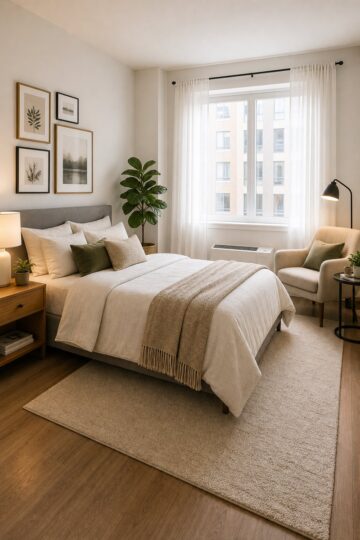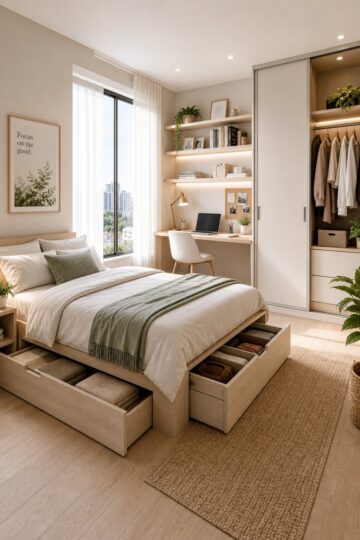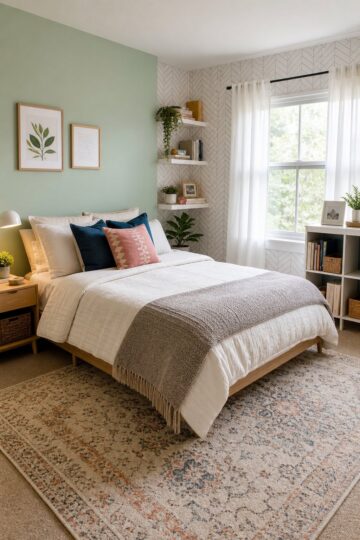
Your primary bedroom can look almost done and still feel like it's missing something. The edges aren't settled. The light looks unsure. Nothing is technically wrong, but the room doesn't quite read as finished.
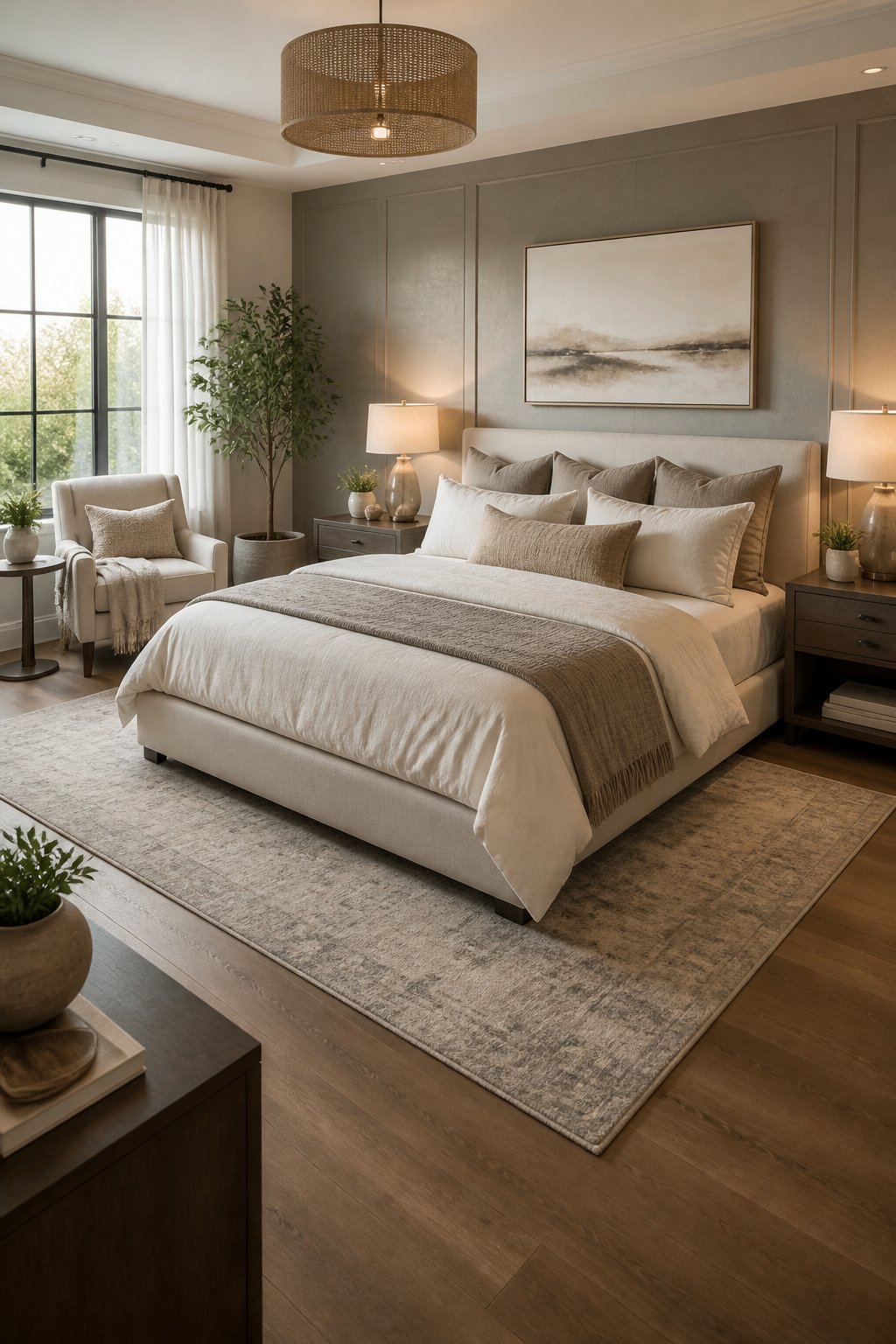
What you actually want is a space that feels calm, complete, and like someone thought about how it will be used - not just how it photographs.
You can get there by focusing on a handful of finishing pieces that bring texture, scale, and usable light into the room. Small shifts that make the bed, the bedside, and the walls feel intentional - so the whole room reads as pulled together without needing a full redo.
1) Layered Bedding: Linen Duvet Over Cotton Percale Sheets
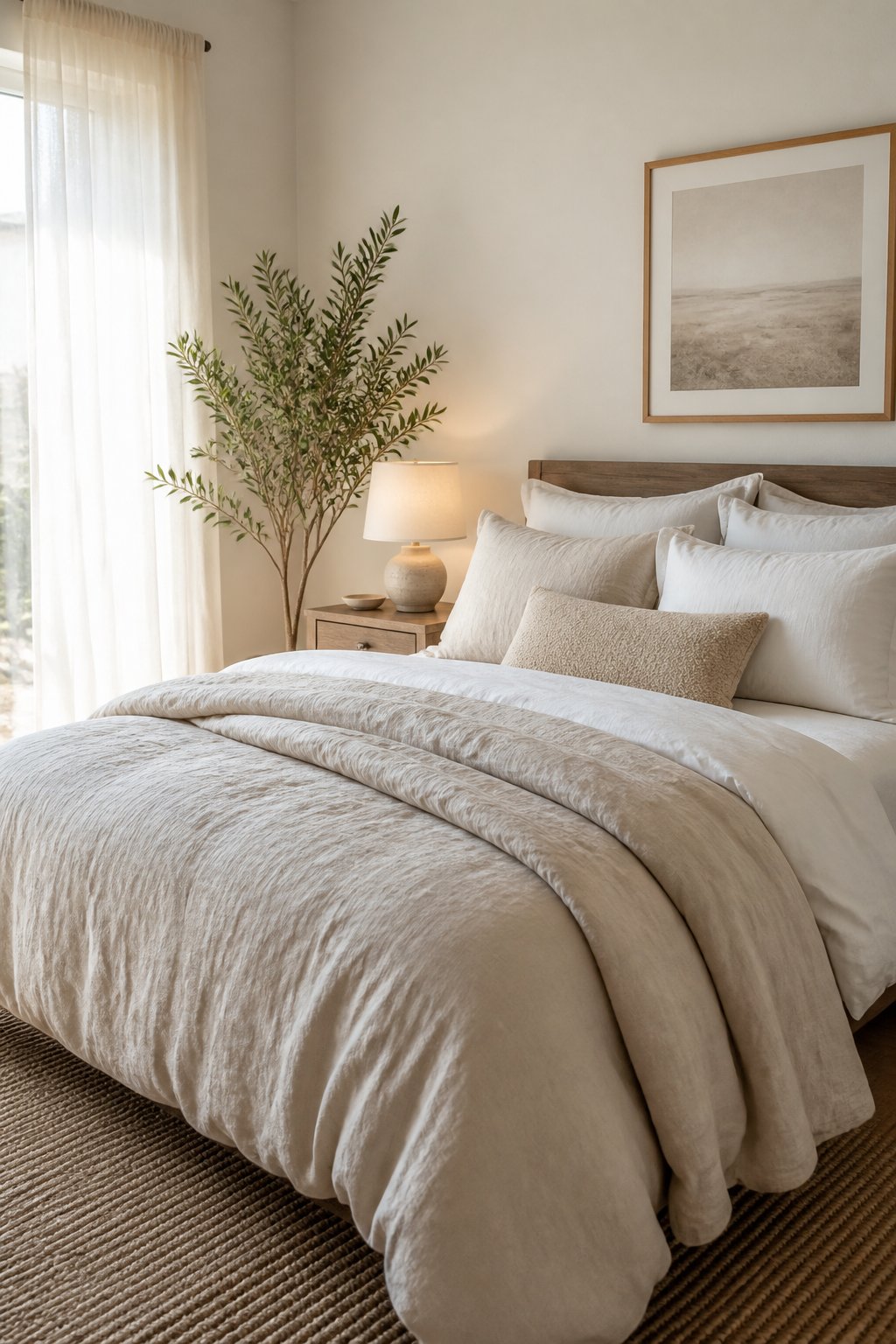
The bed is the first thing your eye goes to when you walk in the door. If it looks thrown together, the whole room feels unresolved - even if everything else is in order. A linen duvet layered over cotton percale sheets fixes this because the combination has both depth and intention. The textures are different enough to be interesting but calm enough to read as one cohesive surface.
Choose a washed linen duvet in a relaxed weave - slight wrinkles are fine, actually preferable. Pair it with crisp 300 to 400 thread count cotton percale sheets and make sure the fitted sheet matches your mattress depth. Soft white, oatmeal, or dusty blue all work well. Muted tones keep the palette quiet so the bed doesn't compete with everything else in the room.
Add one or two simple European shams and a lightweight throw folded at the foot. That's a tailored layer without effort. This setup helps most in rooms with minimal furniture, where the bed needs to carry the visual weight on its own.
2) A Pair of Tapered-Wood Bedside Tables
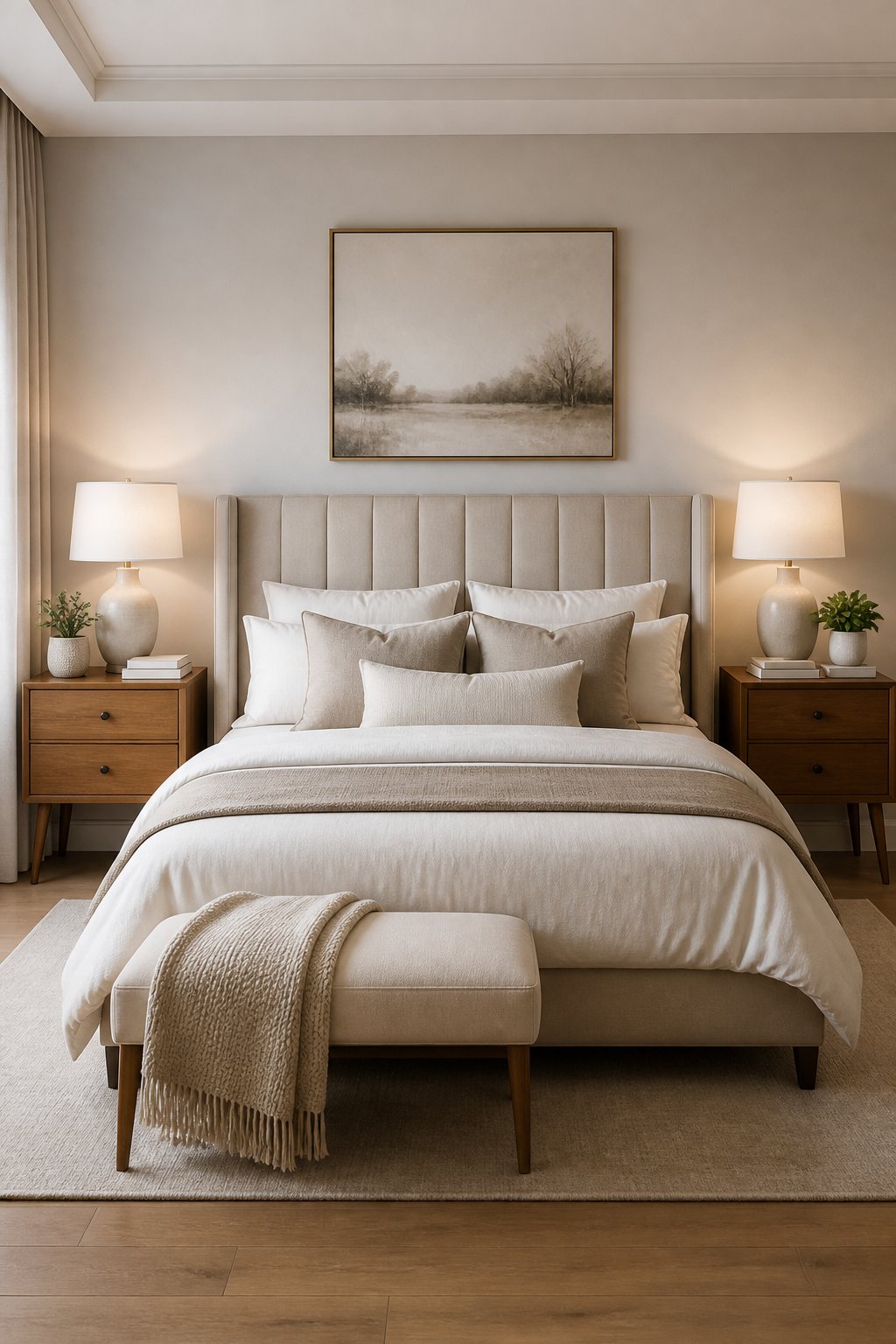
Matching bedside tables do something specific: they tell the room the bed belongs there. Without them, even a beautiful bed can look like it was rolled in and parked. Tapered-leg tables in warm wood - oak, walnut, or a muted painted finish - bring a light, mid-century quality that works with almost any style of bedding or headboard.
Aim for 24 to 28 inches tall so the surface sits close to your mattress height. Simple drawer fronts and a slim open shelf give you function without bulk. Keep the styling on top minimal: a lamp, a small stack of books, maybe one object with texture. The tables do the structural work; you don't need to pile them up.
This piece matters most when your bed is centered on a wall, or when mismatched furniture is making the room feel like it never quite settled.
3) What Soft, Dimmable Bedside Lighting Actually Does for a Room
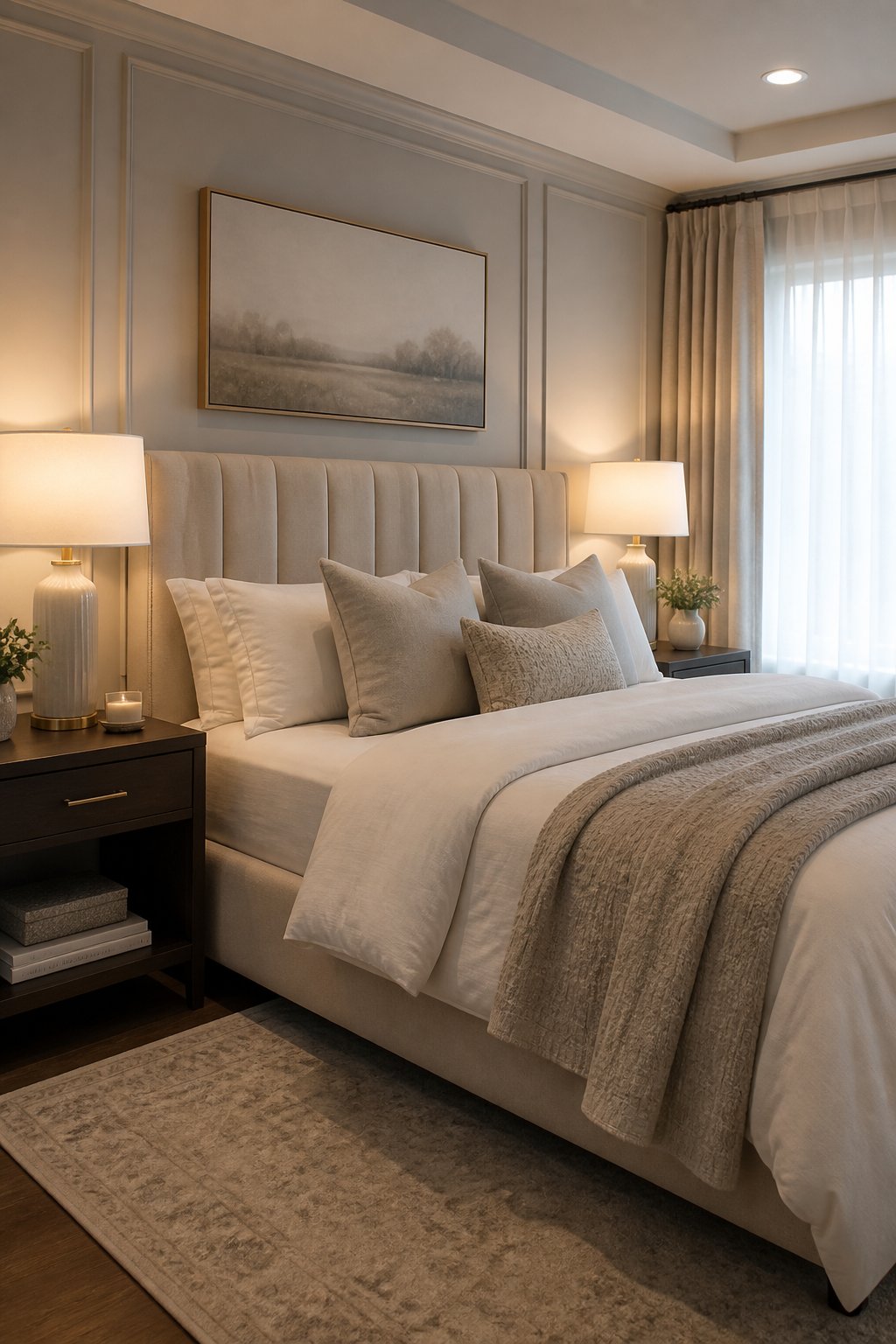
Matching lamps frame the bed the way a mat frames a print. They make the whole composition look intentional, and they set the light level for the room - which matters more than most people realize. Overhead lighting in a bedroom tends to be harsh and flat. Bedside lamps at the right height and color temperature make the room feel like a place you actually want to be at the end of the day.
Choose soft-white bulbs in the 2700 to 3000K range, and use dimmable LEDs with a compatible switch or lamps with built-in dimmers. Bases should sit 24 to 30 inches tall so the light source lands near eye level when you're sitting up in bed. Pick a material that echoes something already in the room: matte metal if you have modern hardware, warm wood if the room runs cozy, ceramic if you want a collected, layered feel.
Keep shades simple - slightly tapered, off-white or warm linen - to soften the glare without blocking the light. Matching pairs make the biggest difference if your bedside tables are different sizes or styles, because the lamps pull focus and the tables recede.
4) An Upholstered Headboard Gives the Wall Something to Do
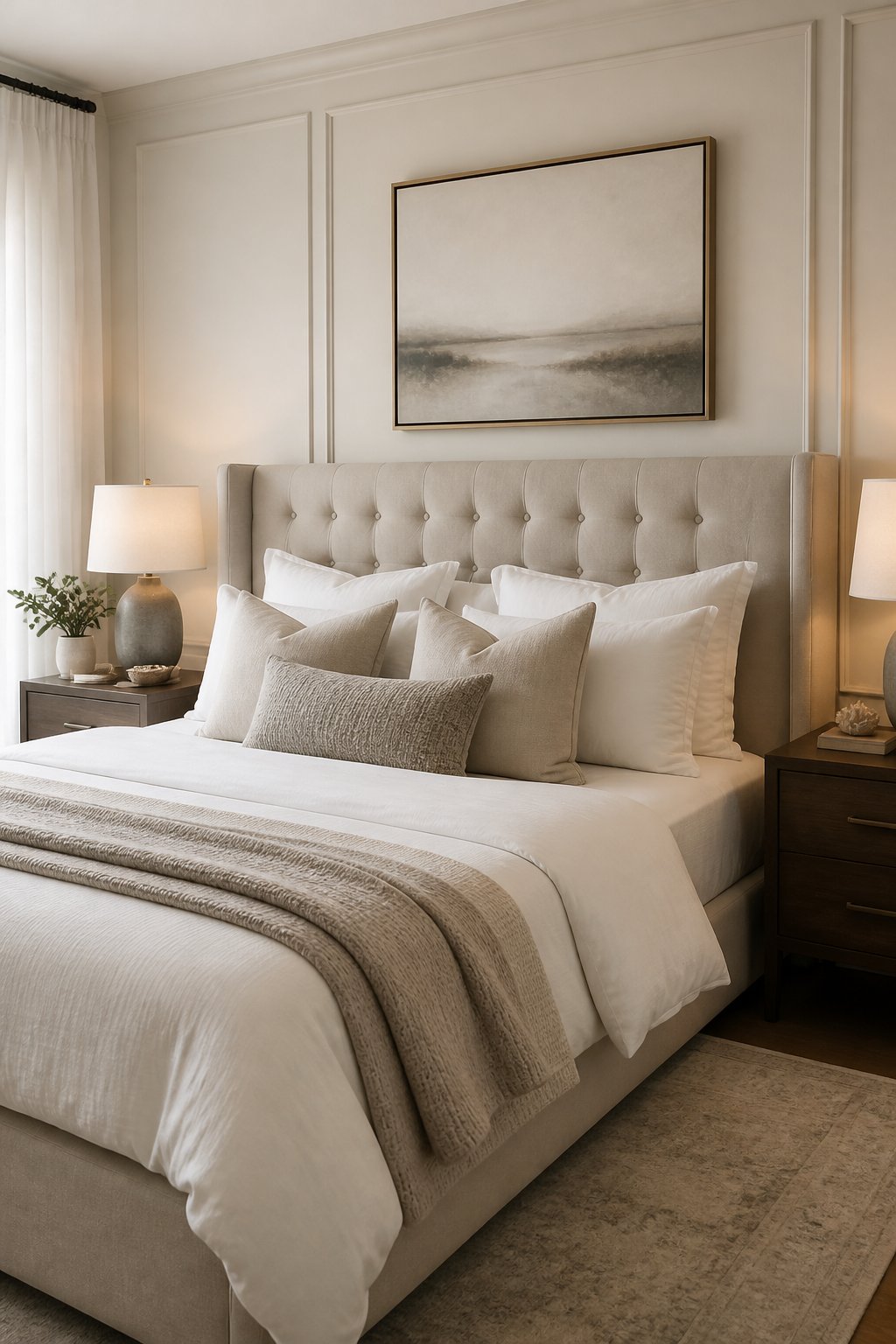
A bare wall behind a bed reads as unfinished more than almost anything else in a bedroom. An upholstered headboard solves that without artwork, paint, or a gallery wall. It gives the room a clear focal point and adds a layer of softness that makes the space feel considered.
Linen reads relaxed and textured, good for rooms that lean casual or Scandinavian. Low-pile velvet has a softer sheen that works well in rooms with warmer tones or richer colors. Height-wise, 48 to 60 inches suits standard ceilings; 36 to 44 inches keeps things proportional in a lower-ceilinged room. Width should match the mattress or extend 4 to 6 inches on each side. Neutral tones and subtle tufting are the classic choice for a reason - they age well and don't compete with bedding changes.
This is especially useful in rental rooms where you can't change the wall color. The headboard creates the sense that the room was designed, not just furnished.
"The bed is the room. Get that right and everything around it starts to fall into place."
5) Small-Scale Framed Art That Grounds the Walls
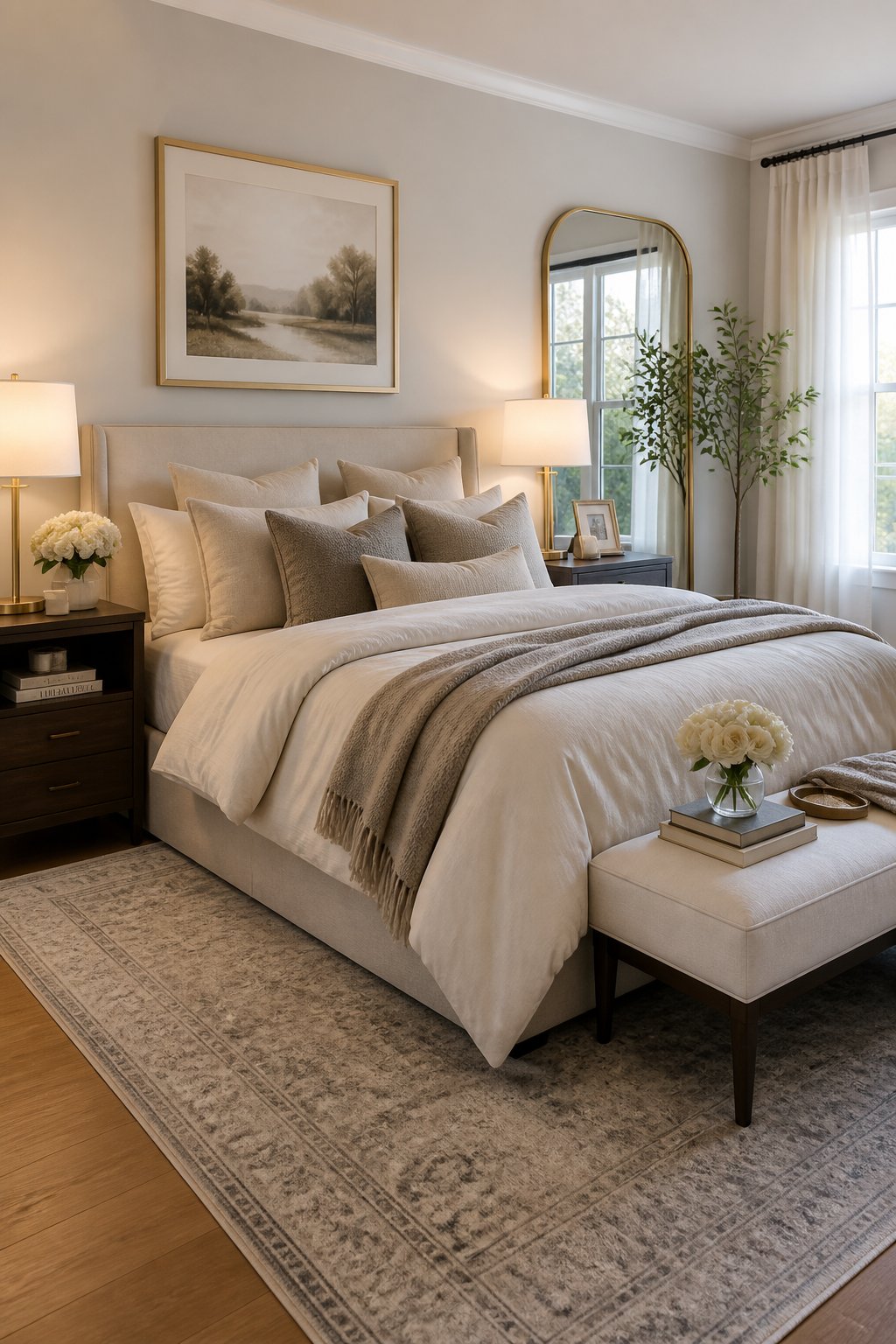
Bare walls make a room feel temporary - like someone moved in but hasn't decided to stay. You don't need large statement art to fix this. A small grouping of framed prints above a nightstand or dresser is enough to give the eye a resting point and the room a sense that it was put together on purpose.
Stick to frames in the 6×8 or 8×10 range and keep them consistent. Thin frames in black, white, or warm wood work across almost any palette. Use a matching mat size and keep spacing tight - about two inches between frames - for a collected look that doesn't sprawl. Matte archival prints avoid glare and sit quietly beside soft bedding without competing.
This works well in smaller rooms where a large single piece would feel heavy. It's also a good option when you want the walls to feel finished but you're not ready to commit to a dominant artwork choice.
Try This: Before hanging anything, lay your frames on the bed or floor and arrange them until the grouping feels balanced. Take a photo of that arrangement and use it as your guide on the wall. It saves a lot of unnecessary nail holes and second-guessing.
Most rooms don't need more. They need the right few things placed with some thought about how someone actually moves through and uses the space - and that's a much shorter list than it usually feels like.