When you live in a studio apartment, the bed is the elephant in the room. You can't hide it, so you have to figure out how to integrate it. For many, the instinct is to buy a matching duvet cover, pile on some throw pillows, and call it a day. But there is a distinct difference between decorating a studio and designing one.
Decorating is about adding things to a space. Designing is about manipulating space, light, and flow. When a studio feels "designed," the sleeping area feels like an intentional, architectural part of the home rather than an afterthought shoved into a corner. You don't need to gut your apartment or buy entirely new furniture to achieve this. It comes down to spatial reasoning, visual weight, and a few strategic layout shifts.
1. Anchor the Bed with an Oversized Rug
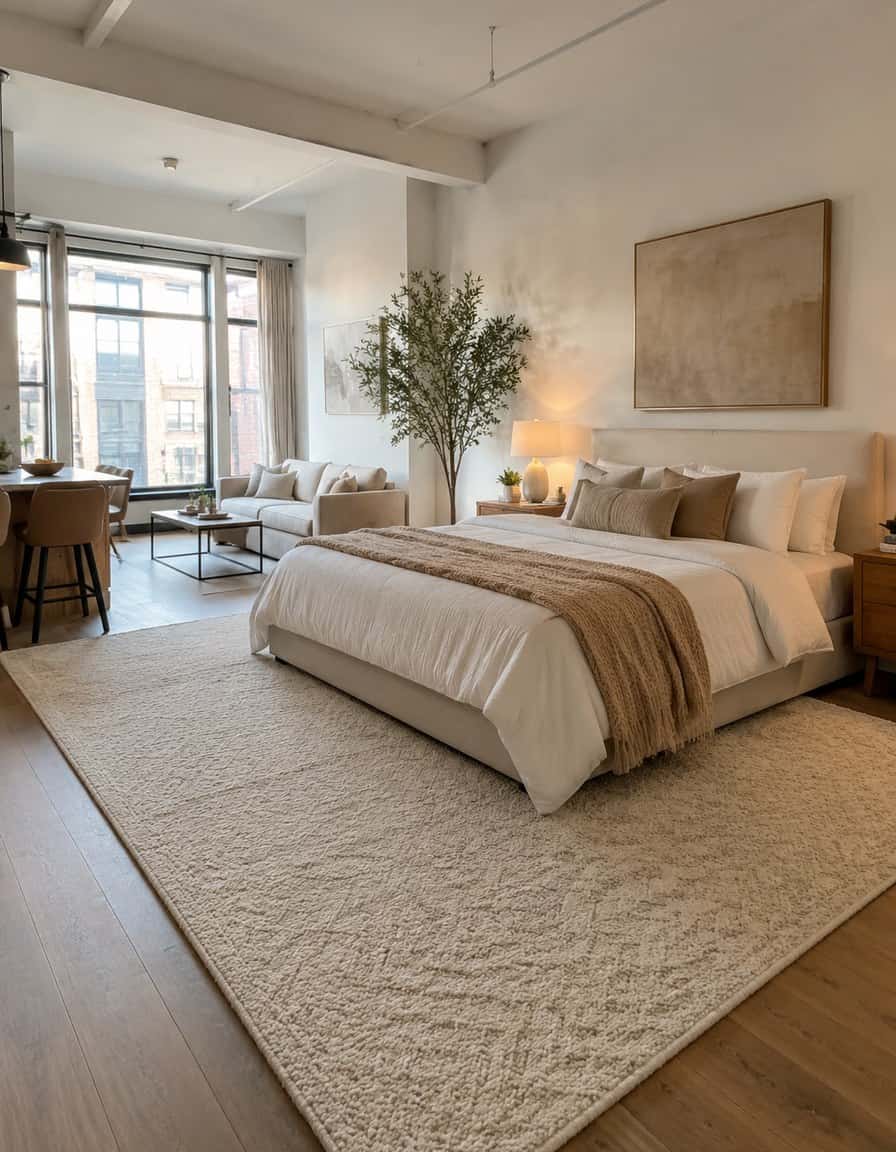
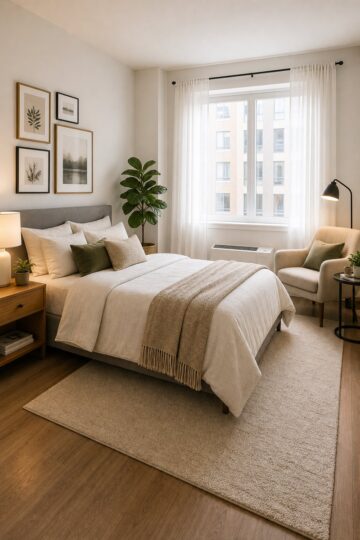
In a studio, rugs act as your floor plan. If your bedroom rug stops right at the edge of your mattress, the bed looks like a raft floating aimlessly in the room. Size up. An oversized rug that extends generously beyond the foot and sides of the bed establishes a clear, undeniable "bedroom" zone, even without walls.
2. Use an Open Bookshelf as a Porous Wall
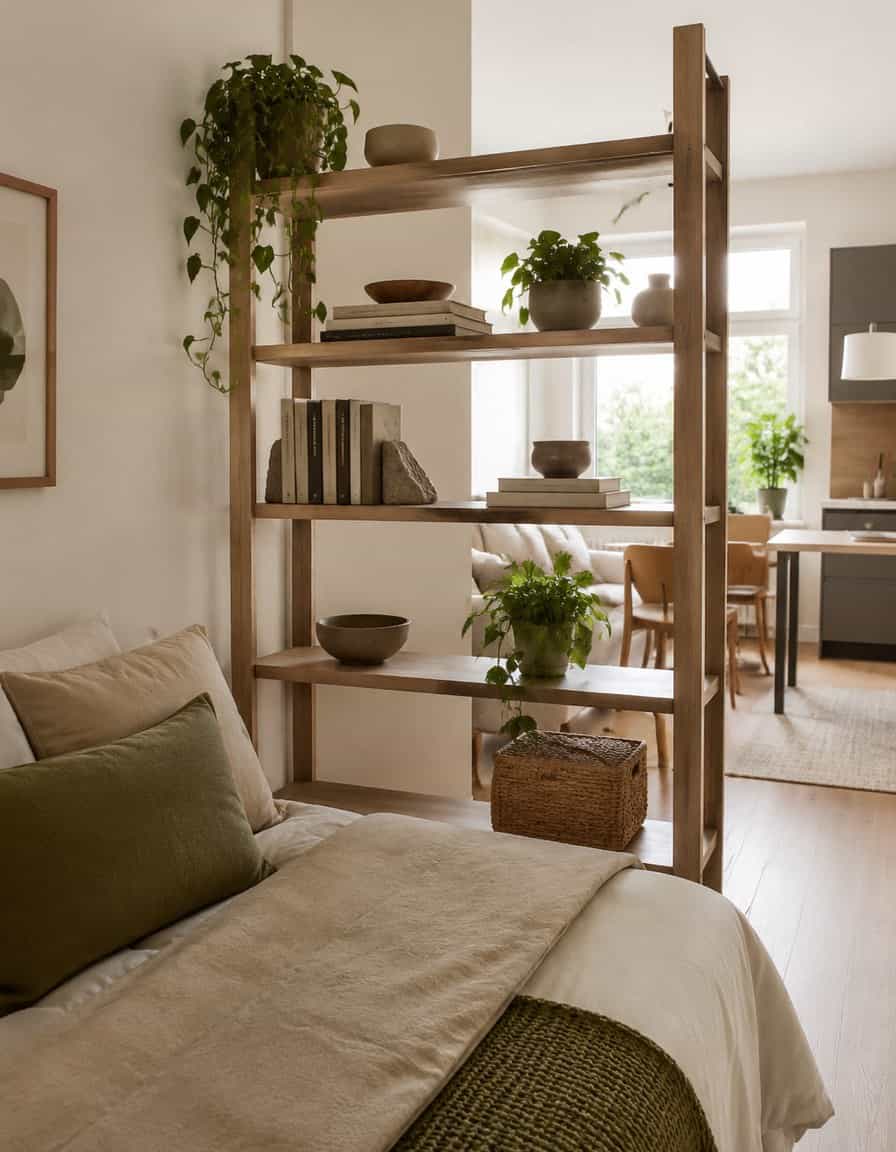
Solid room dividers can make a small studio feel claustrophobic by blocking natural light. Instead, position an open-backed bookshelf perpendicular to the wall at the foot or side of your bed. It creates a physical boundary and a sense of privacy, but because it's porous, the light and sightlines can still pass through. Style it sparsely with books, ceramics, and trailing plants.
3. Color-Drench the Sleep Zone
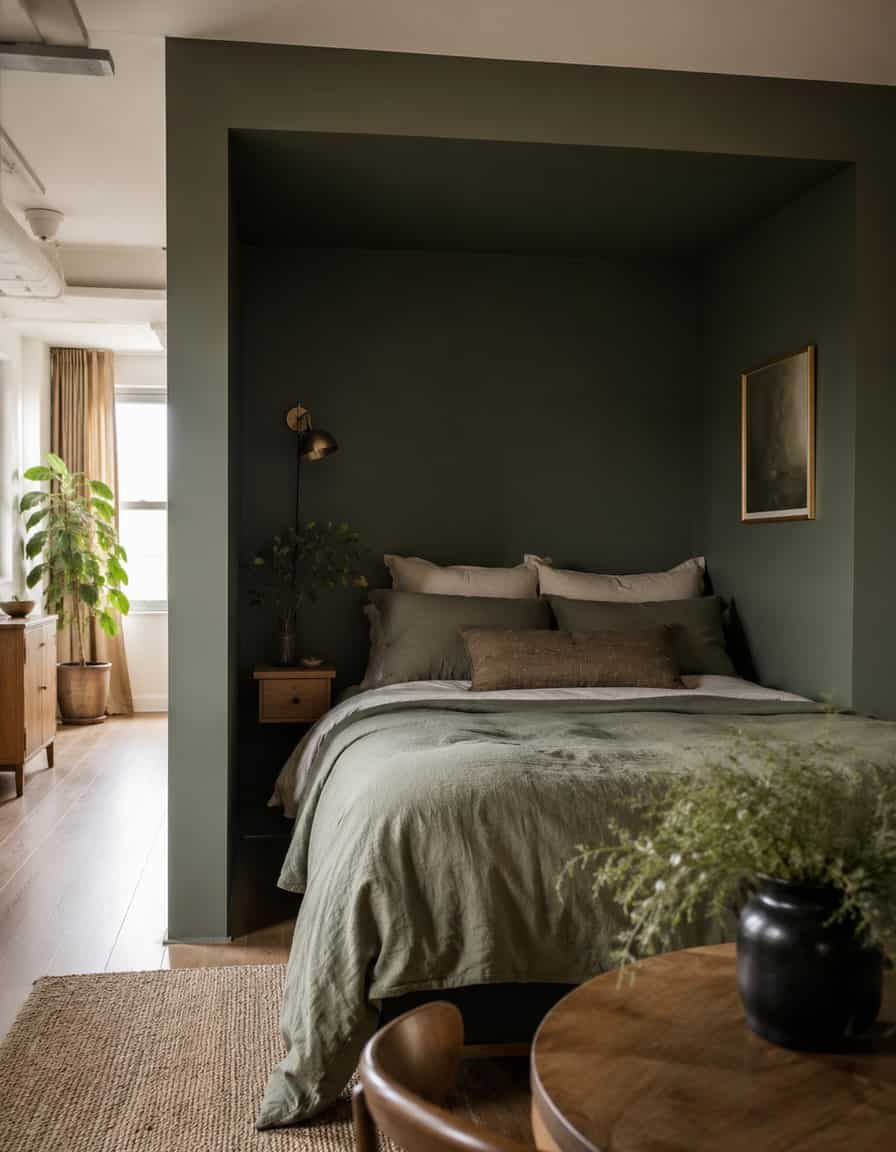
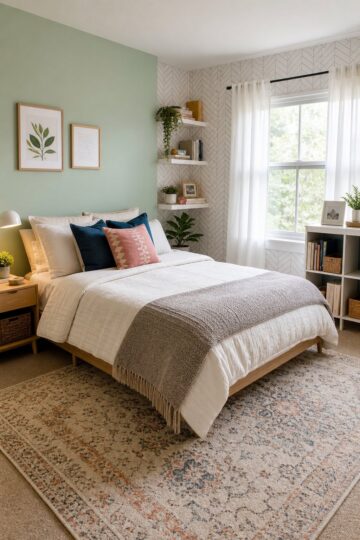
Color-drenching involves painting the walls, trim, and sometimes the ceiling of a specific area in a single, unified color. If your bed is tucked into an alcove or a specific corner, painting that entire micro-zone a deep, calming shade creates a visual boundary. It signals to the brain that this area has a different function than the rest of the apartment.
4. Float the Sofa at the Foot of the Bed
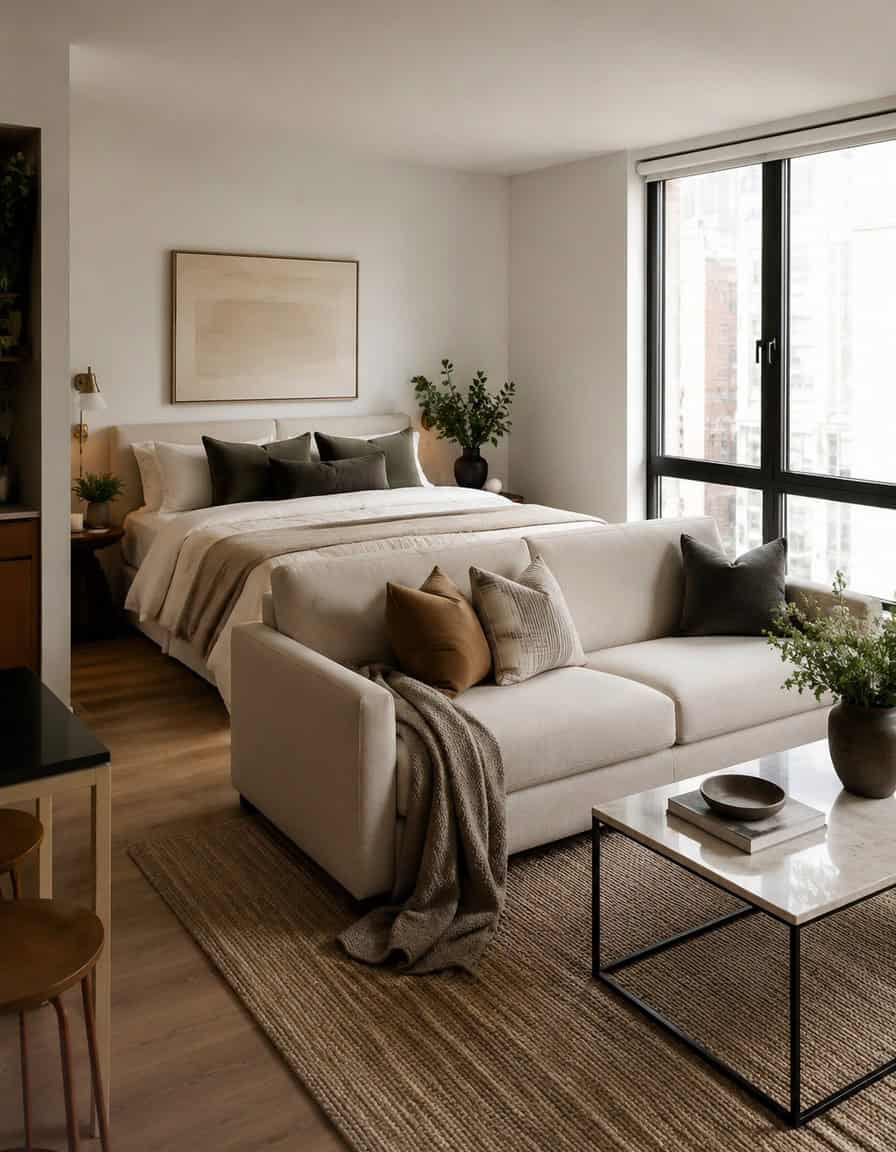
This is a classic studio layout for a reason. By placing the back of your sofa directly against the foot of your bed, you create a hard stop between the sleeping area and the living area. The back of the sofa acts as a half-wall, facing your living room outward and keeping your sleeping space tucked behind.
5. Install Ceiling-Mounted Curtains as a Soft Divider

If you want the option to completely hide your bed, skip the flimsy floor screens and look up. Install a ceiling-mounted hospital-style curtain track around the bed. Use high-quality, floor-to-ceiling linen panels. When open, they add beautiful vertical softness to the room. When closed, they create a cozy, tent-like sleeping quarter.
6. Choose Low-Profile Furniture to Preserve Sightlines
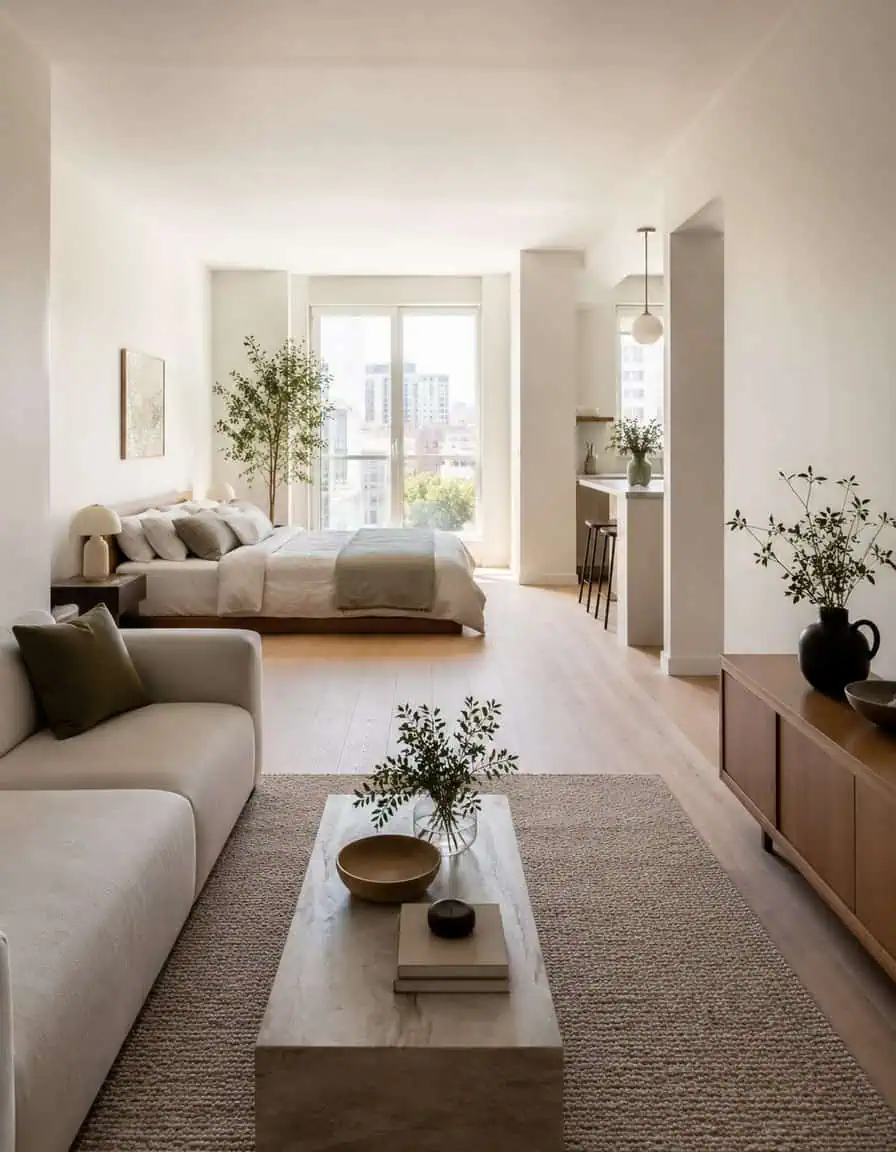
The more you can see of the floor and the walls, the larger a room feels. A massive, towering headboard will chop a studio in half. Opt for a low-profile platform bed and low-slung living room furniture. Keeping everything below waist height allows the eye to travel uninterrupted from one end of the apartment to the other.
7. Match Your Bedding to Your Wall Color
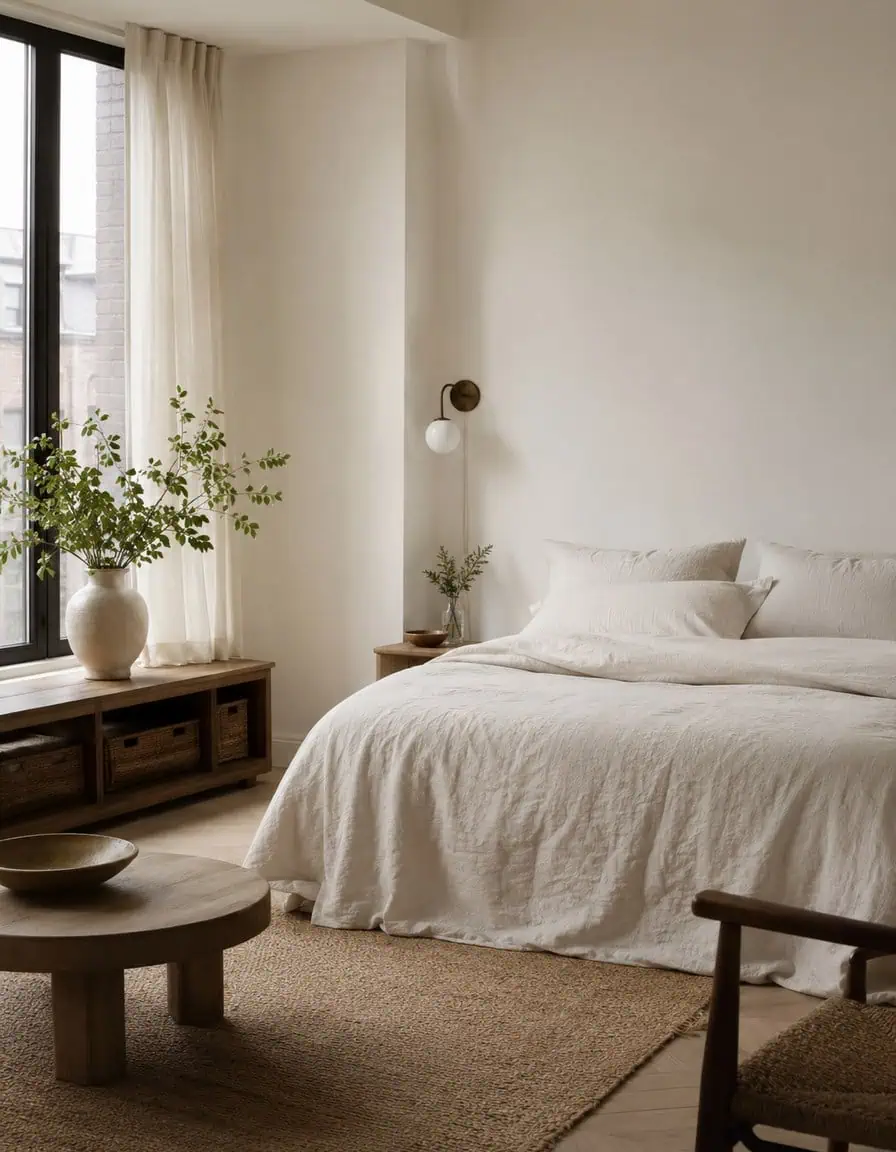
If you don't want your bed to be the focal point of your entire apartment, camouflage it. If your walls are warm white, choose warm white linen bedding. If your walls are sage green, find a matching sage duvet. By eliminating high-contrast colors, the bed visually recedes into the architecture of the room.
8. Opt for Hardwired-Look Plug-In Sconces Over Table Lamps
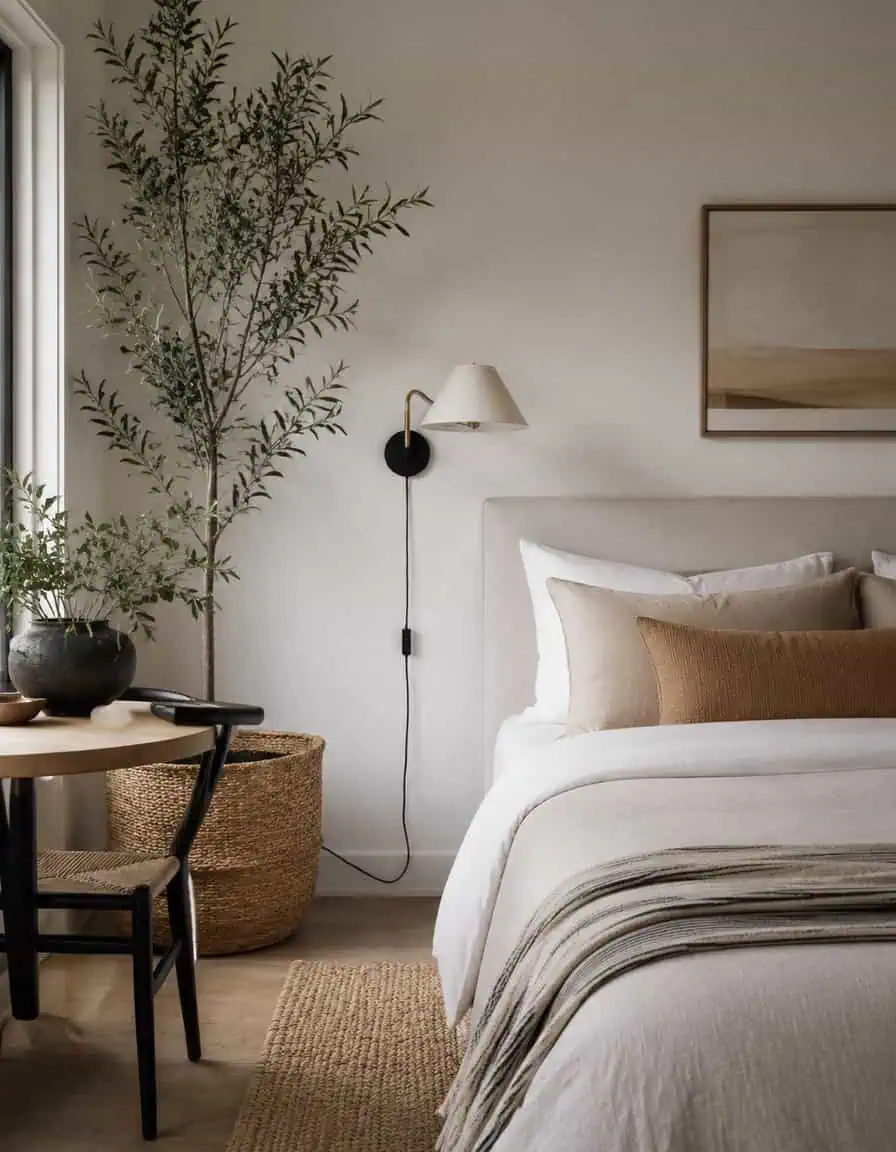
Table lamps require nightstands, and nightstands eat up valuable floor space. Wall-mounted sconces (even the plug-in kind that don't require an electrician) instantly make a space feel custom-designed. They draw the eye upward, highlighting the vertical space, and leave your bedside surfaces completely clear.
9. Create a Faux Entryway to Separate the Mindset
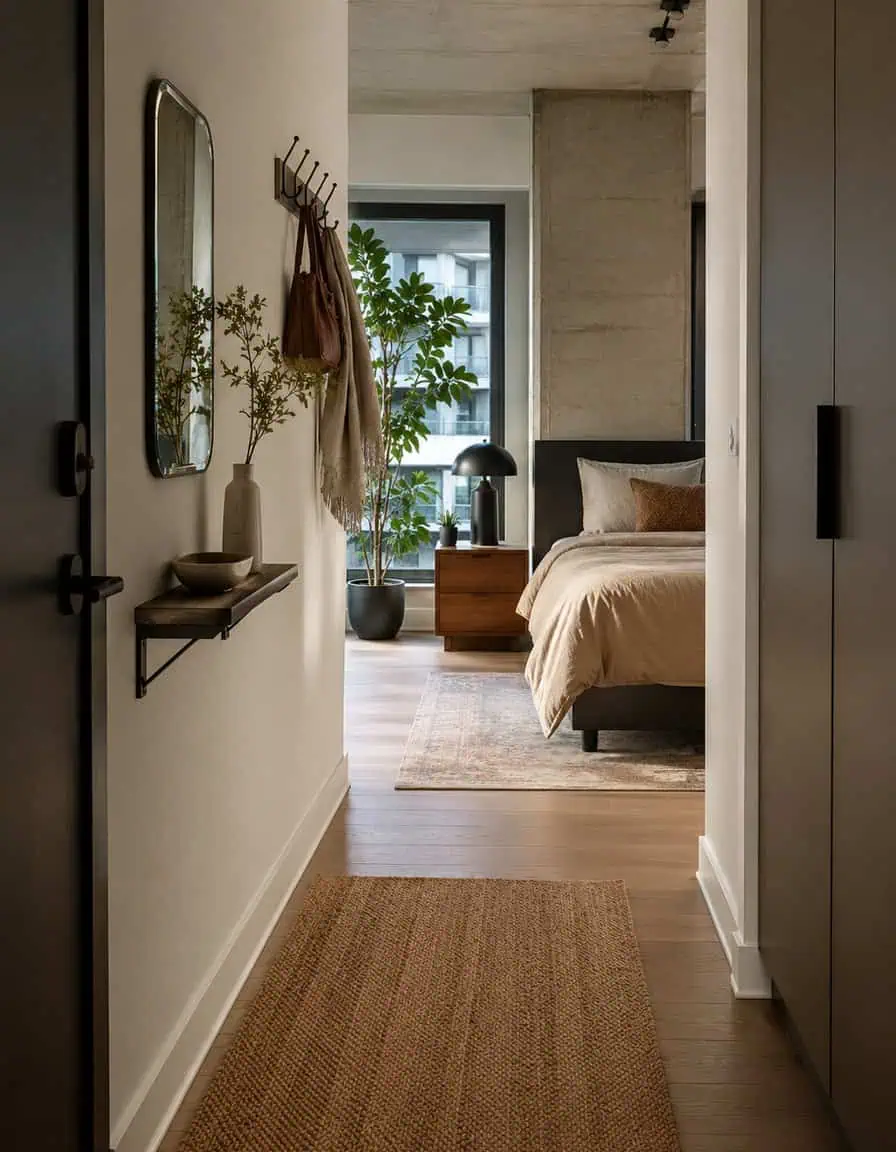
One of the hardest parts of studio living is walking through your front door and immediately feeling like you're in your bedroom. Carve out a faux entryway to act as a buffer. A small runner rug, a wall-mounted hook rack, and a narrow floating shelf near the door create a "drop zone" that mentally separates the entrance from the sleep space.
10. Use a Folding Screen for Flexible Privacy
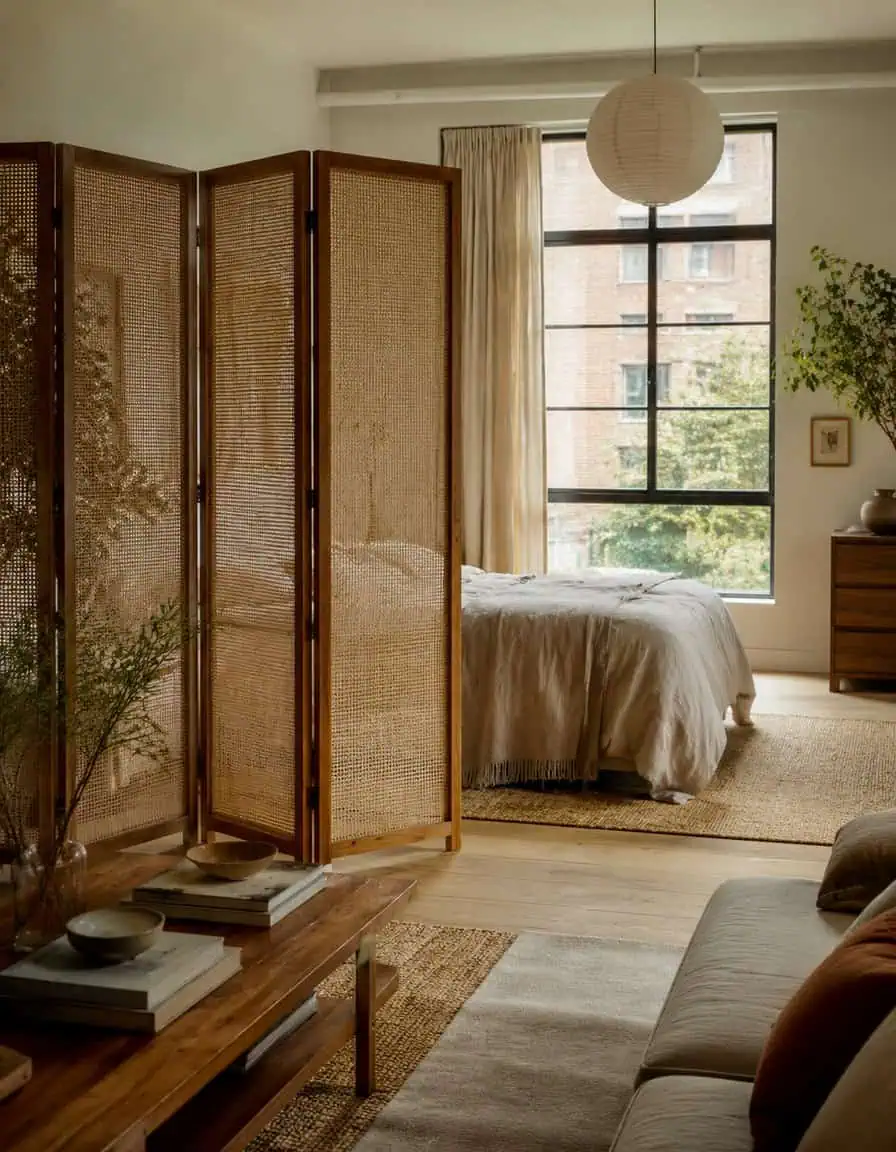
If you prefer a layout that can change on a whim, a high-quality folding screen is your best tool. Avoid cheap, flimsy materials. Look for woven rattan, solid wood slats, or upholstered canvas. A substantial screen acts as moveable architecture, allowing you to hide a messy bed when guests come over and open the space up when you're alone.
11. Elevate the Bed on a Seamless Storage Platform
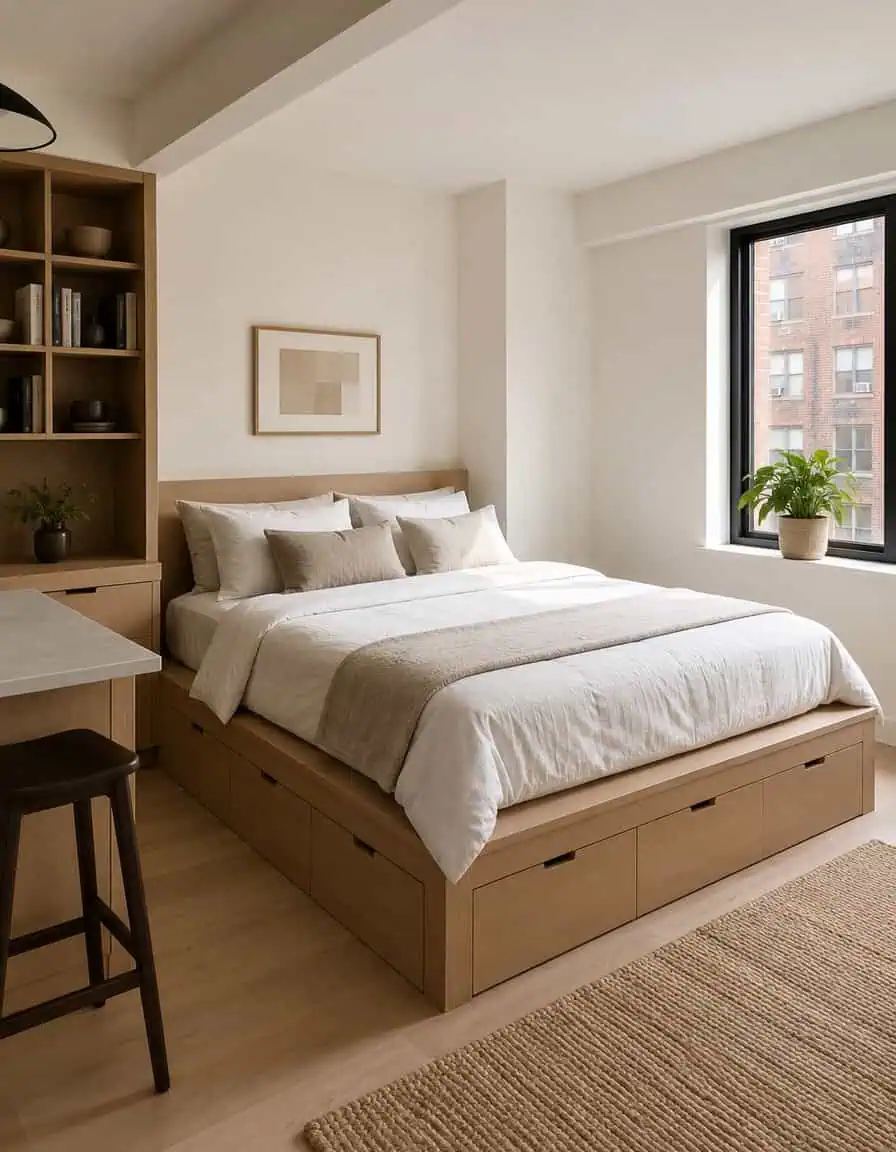
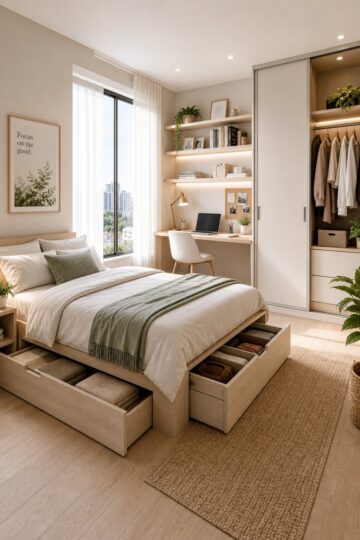
Under-bed storage is a necessity in a studio, but plastic bins peeking out from under a frame look cluttered. Instead, invest in or build a seamless storage platform. When the bed sits flush on a solid base of drawers, it looks like a built-in piece of custom cabinetry rather than a piece of freestanding furniture.
12. Keep the Entire Studio Palette Monochromatic
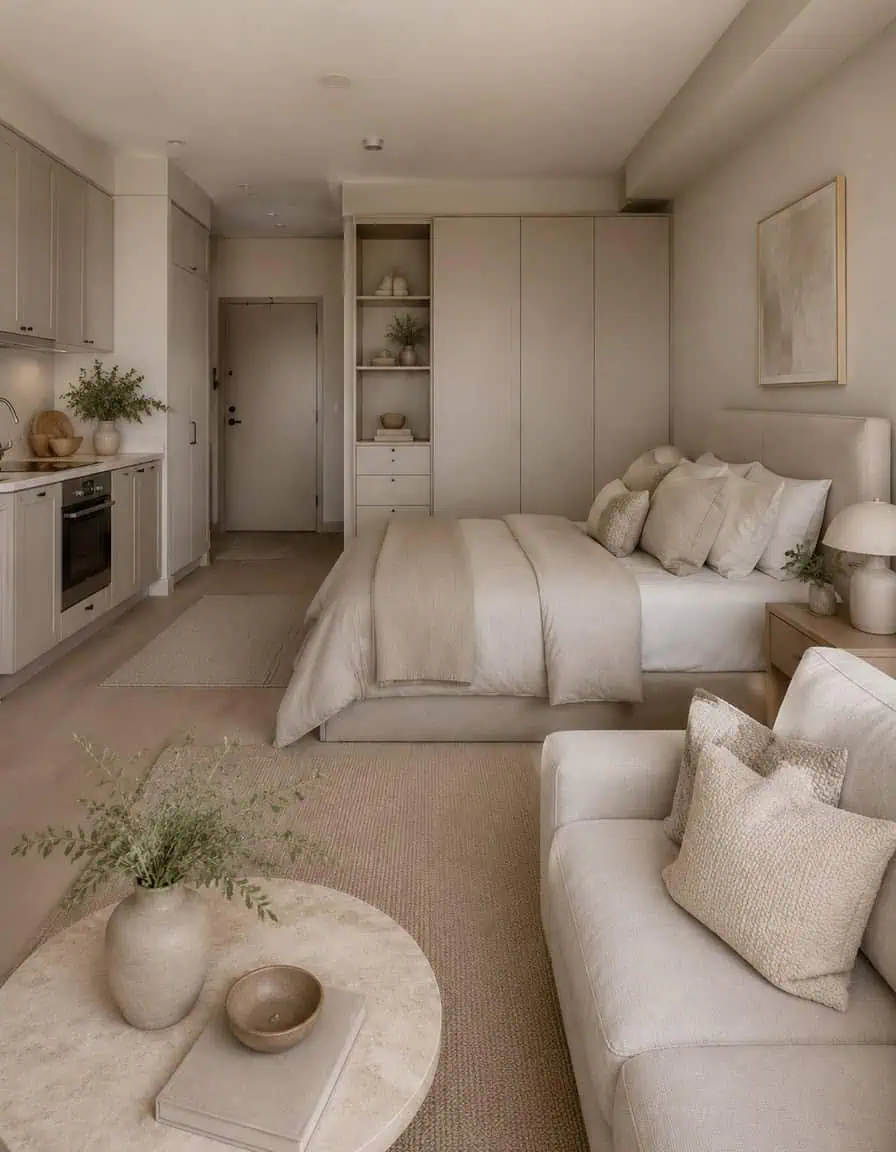
Visual quiet is the ultimate goal in a small space. If your kitchen is blue, your living area is red, and your bed is yellow, the studio will feel chaotic and chopped up. A monochromatic palette-layering different shades and textures of the same color family-allows the different zones to flow into one another seamlessly.
13. Hang Art Off-Center to Define Micro-Zones
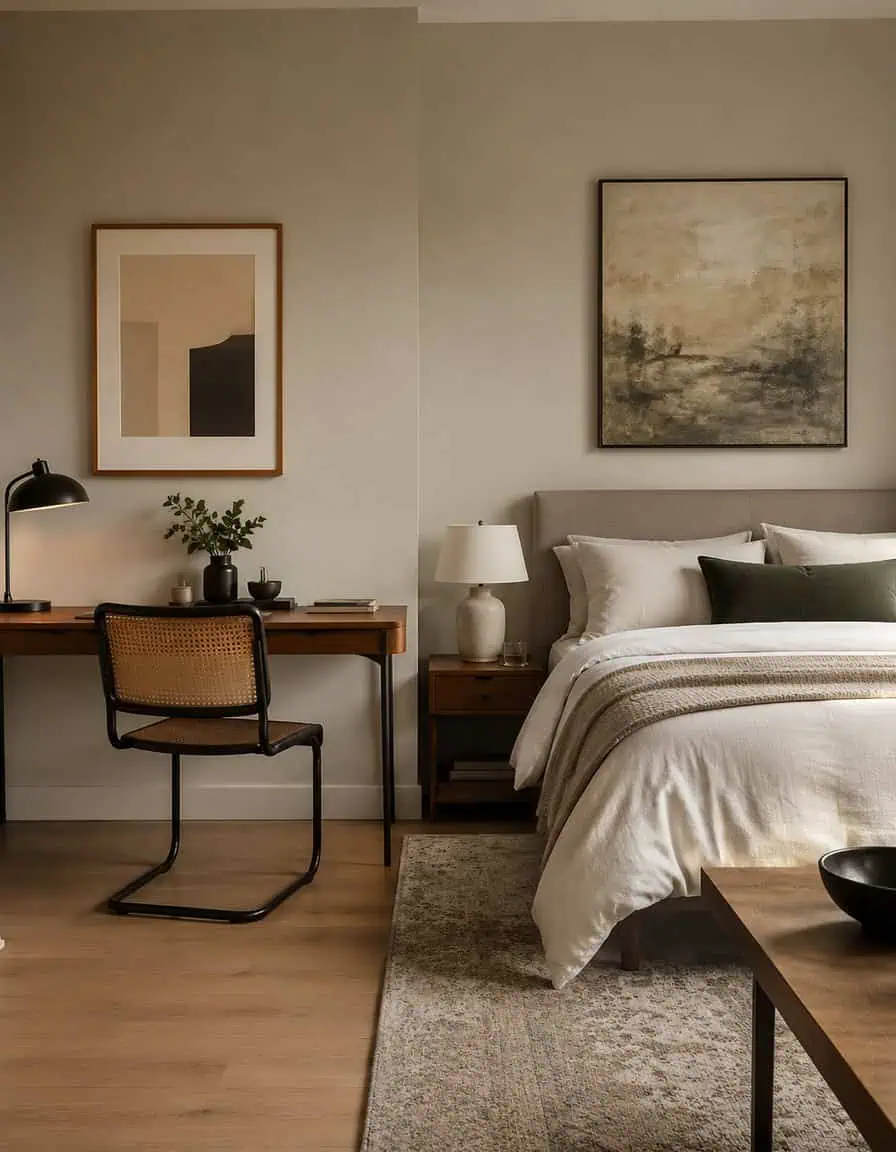
We are trained to center art on a wall, but in a studio, a single wall might serve two different zones. If your bed and your desk share the same wall, don't center a piece of art between them. Hang a specific piece of art low and centered directly over the desk, and another directly over the bed. The art anchors the micro-zone.
14. Position a Wardrobe as a Structural Divider
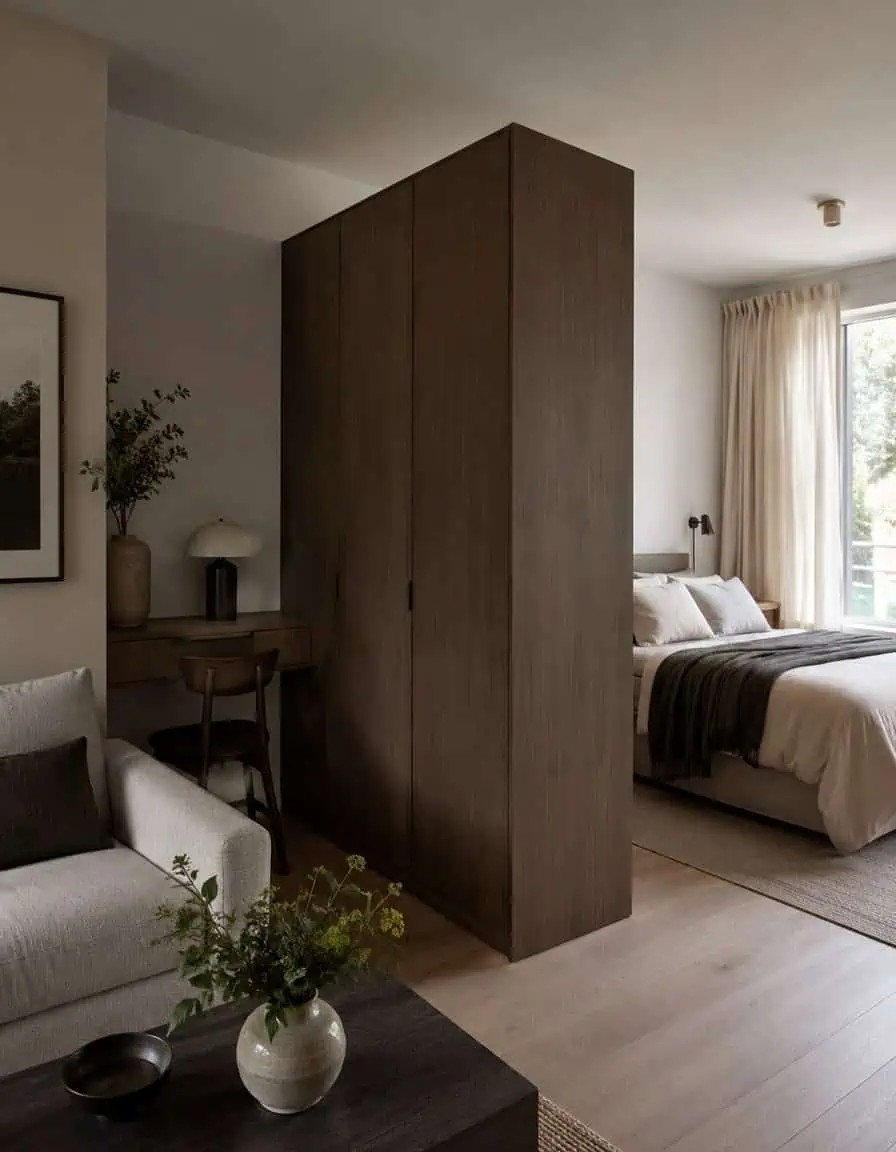
If your studio lacks closet space, use a freestanding wardrobe to your advantage. Position a tall, sleek wardrobe perpendicular to the wall to create a room divider. To make it feel built-in, you can paint or wallpaper the back panel of the wardrobe so it looks like a finished wall from the living room side.
15. Layer Lighting at Three Different Heights
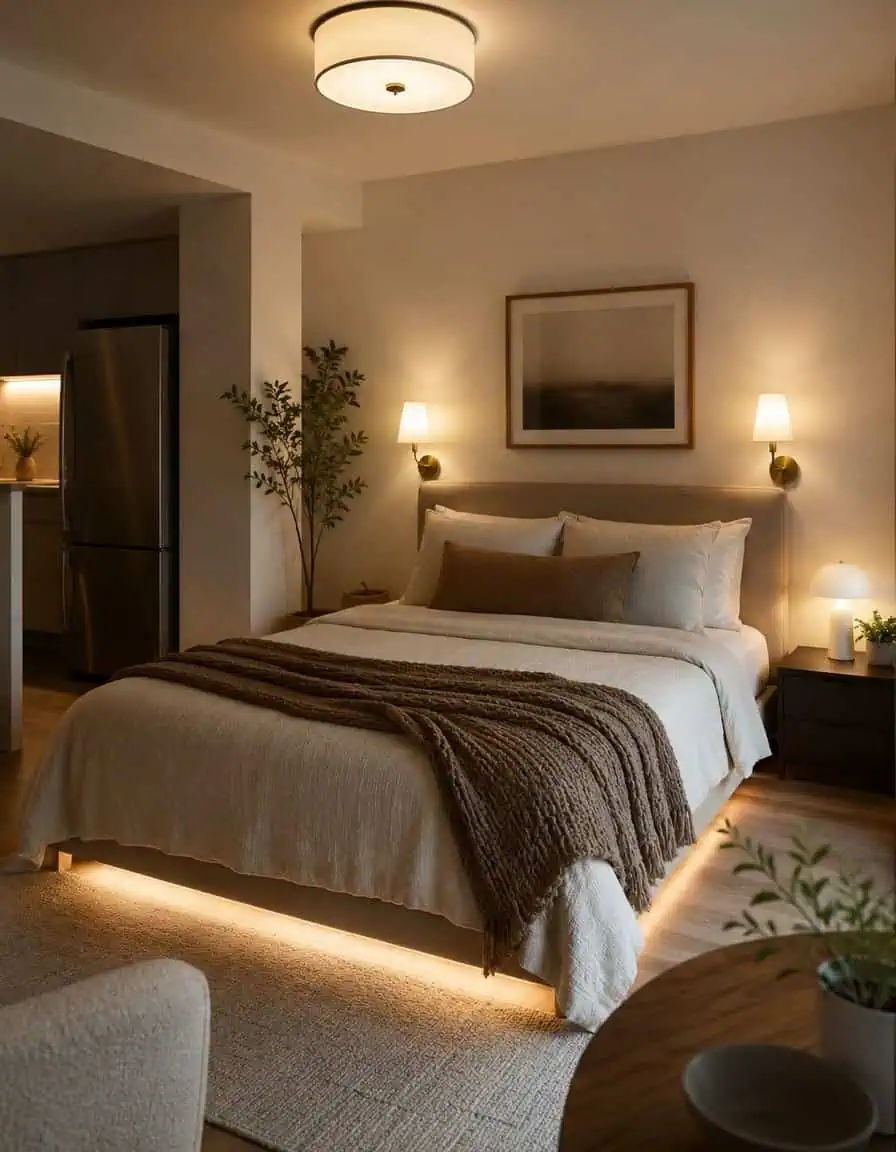
A single overhead light makes a studio feel like a dorm room. Designed spaces use layered lighting. Ensure your sleeping area has light at three levels: overhead (a flush mount or pendant), eye-level (wall sconces), and low-level (a small ambient lamp or under-bed LED strip). This creates depth and mood.
16. Skip the Traditional Nightstand for a Multi-Tasking Desk
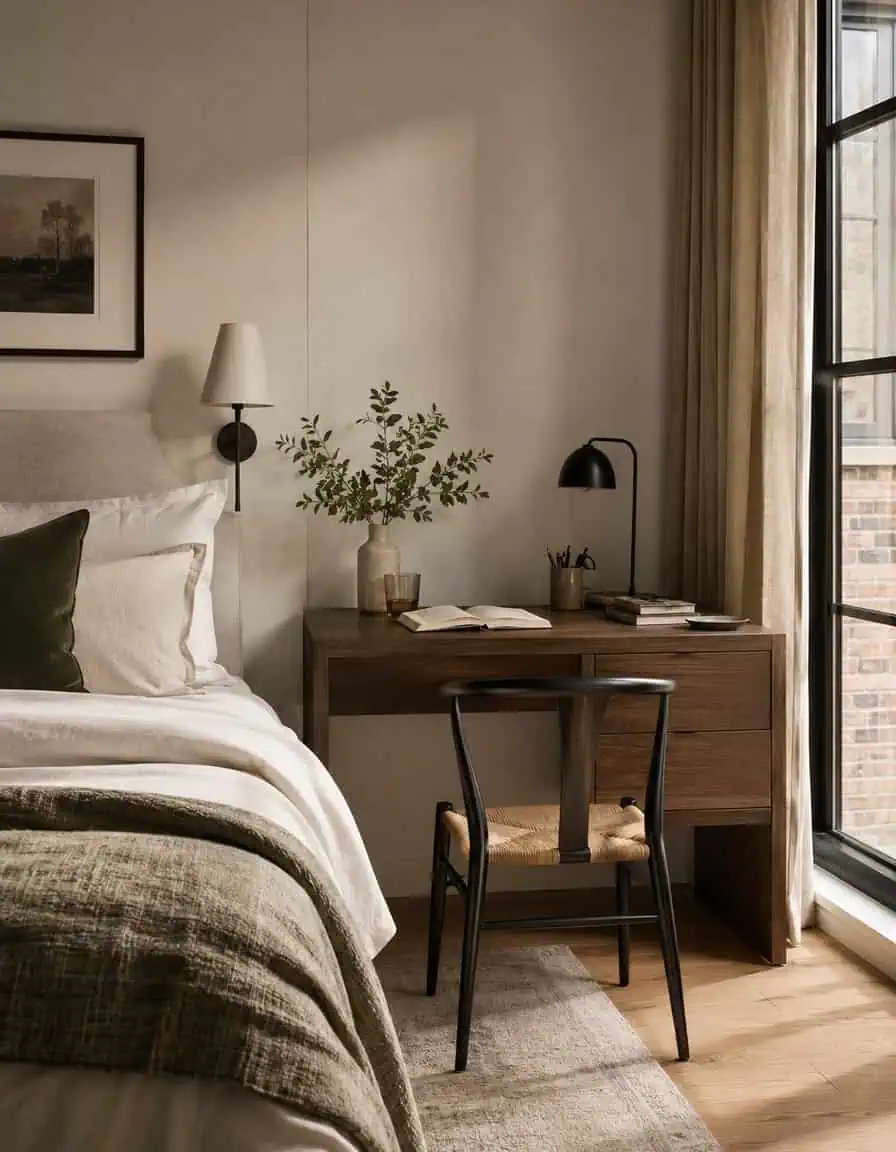
When square footage is tight, every piece of furniture needs to earn its keep. Instead of a tiny nightstand that only holds a glass of water, place a small writing desk right next to the bed. It serves as a bedside table at night and a dedicated workspace during the day.
17. Define the Space with a Slat Wood Partition
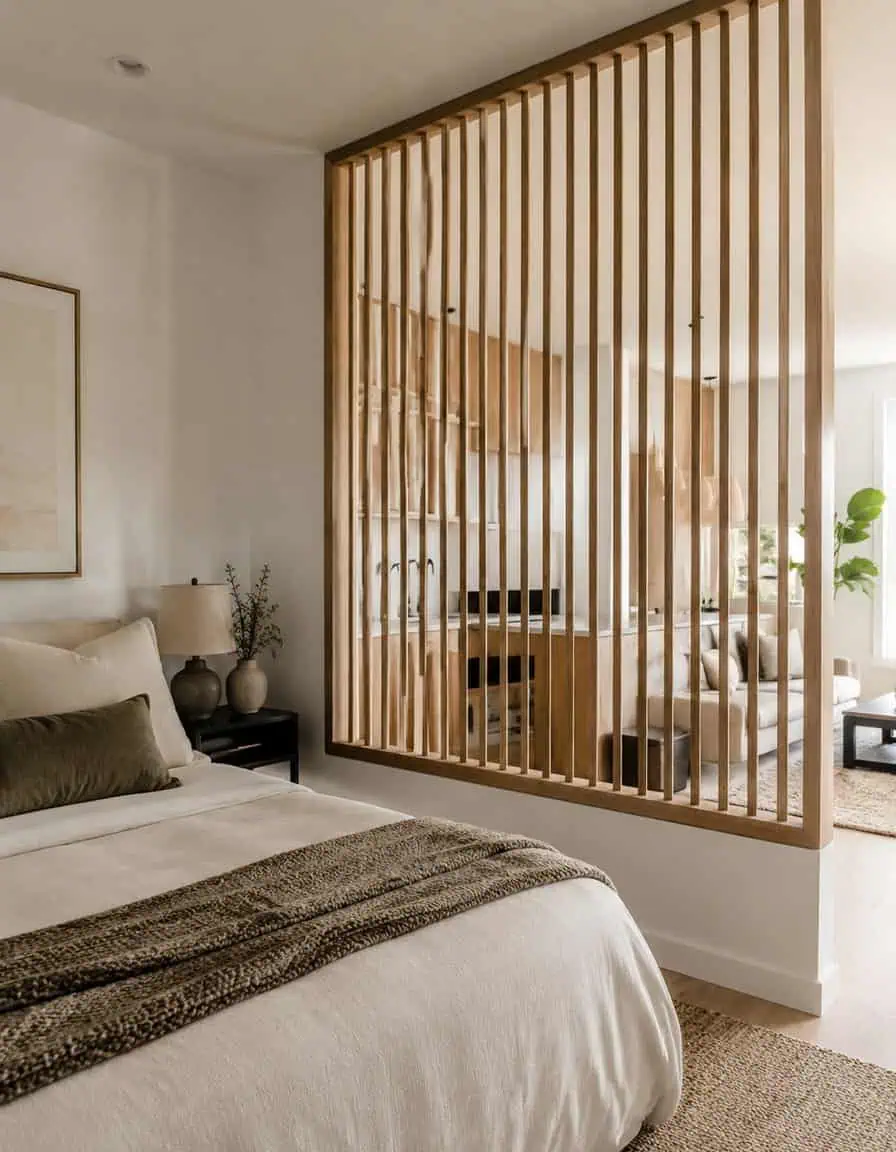
Vertical wood slats are an incredible architectural trick for studios. Installing a floor-to-ceiling slat wood partition at the foot or side of the bed provides a strong visual boundary while still allowing light to filter through the gaps. It adds warmth, texture, and a highly custom feel to a basic white box apartment.
18. Treat the Bed Like a Tailored Daybed
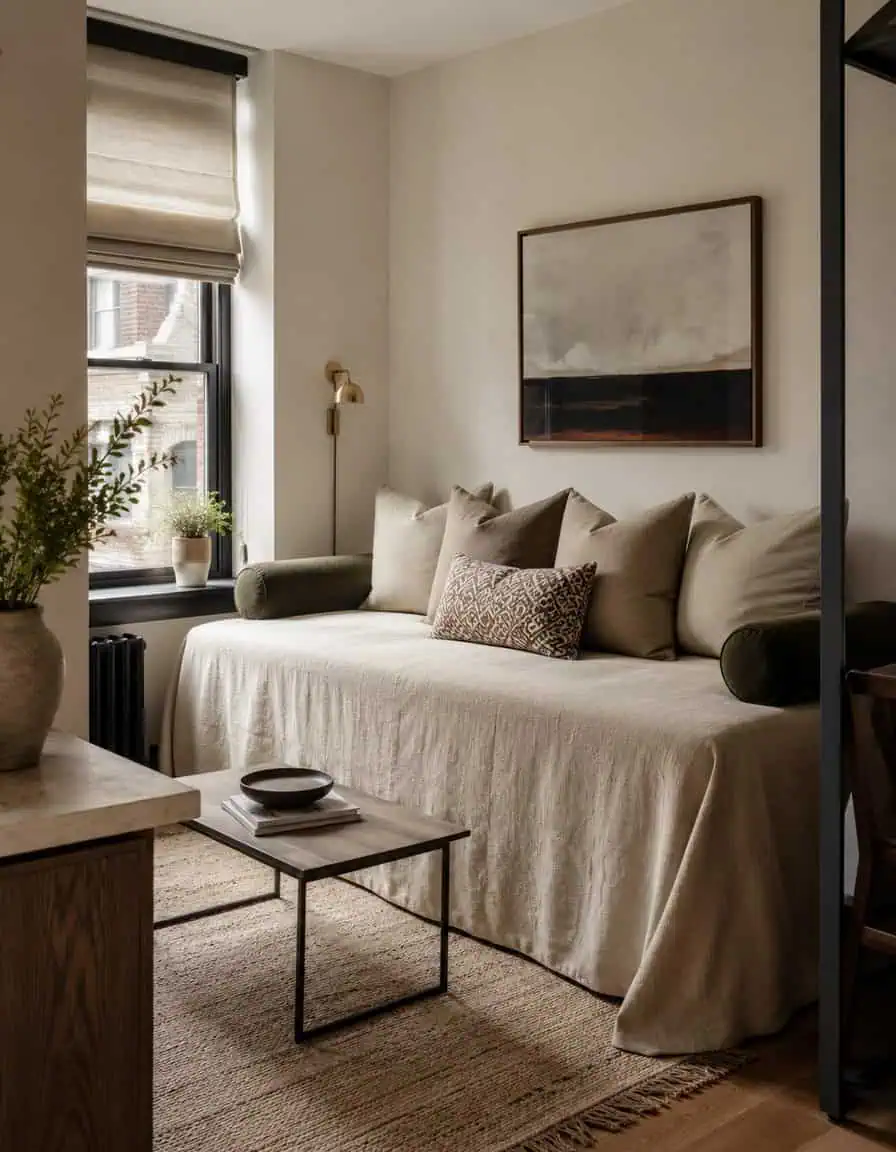
If your studio is so small that the bed must double as seating, lean into the daybed aesthetic. Push the long side of the bed against the wall. Skip the standard sleeping pillows during the day and line the back wall with firm, structured bolsters and oversized cushions. A tailored, tight-fitting coverlet will make it look like a piece of upholstery rather than a messy bed.
19. Use a Runner Rug to Direct Traffic Flow Away from the Bed
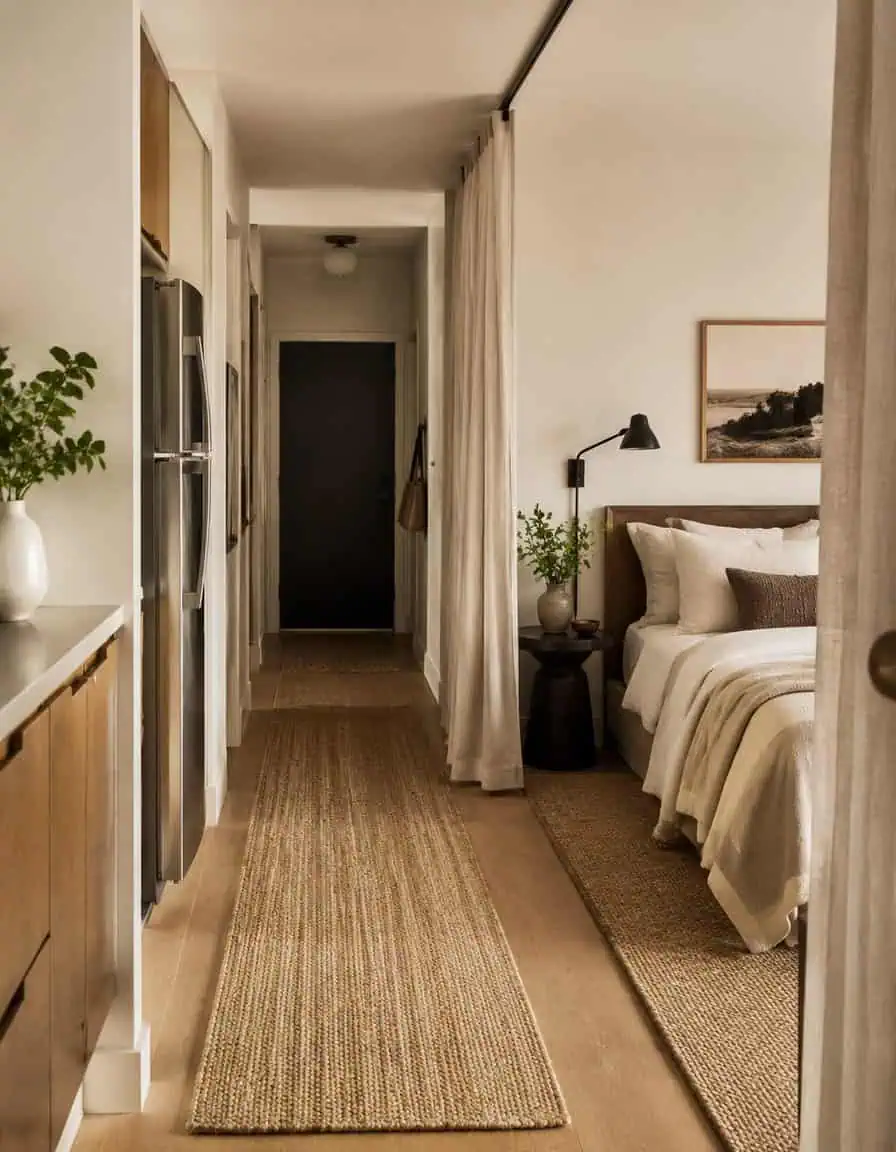
You can use rugs to tell people where to walk. If your bed is near the main walkway to the bathroom or kitchen, lay down a long runner rug that creates a clear "hallway" path. This visual cue subtly directs foot traffic and makes the bed feel like it sits in its own protected alcove.
20. Install a Floating Shelf as a Minimalist Headboard
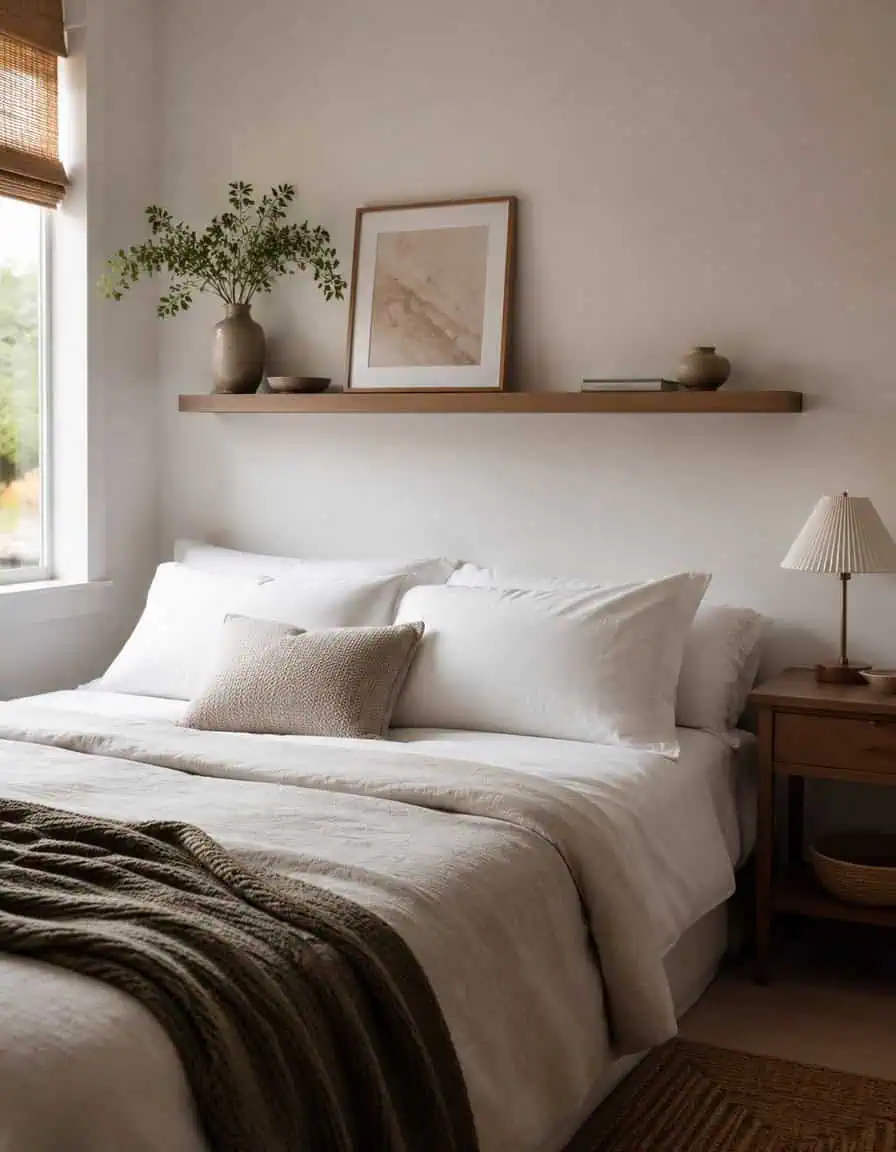
If you don't have the floor space for a bulky headboard, install a single, deep floating shelf about three feet above the mattress. It acts as a visual anchor for the bed, provides a surface for leaning art and placing a book, and takes up absolutely zero floor space.
21. Camouflage the Bed Frame with a Crisp, Tailored Skirt
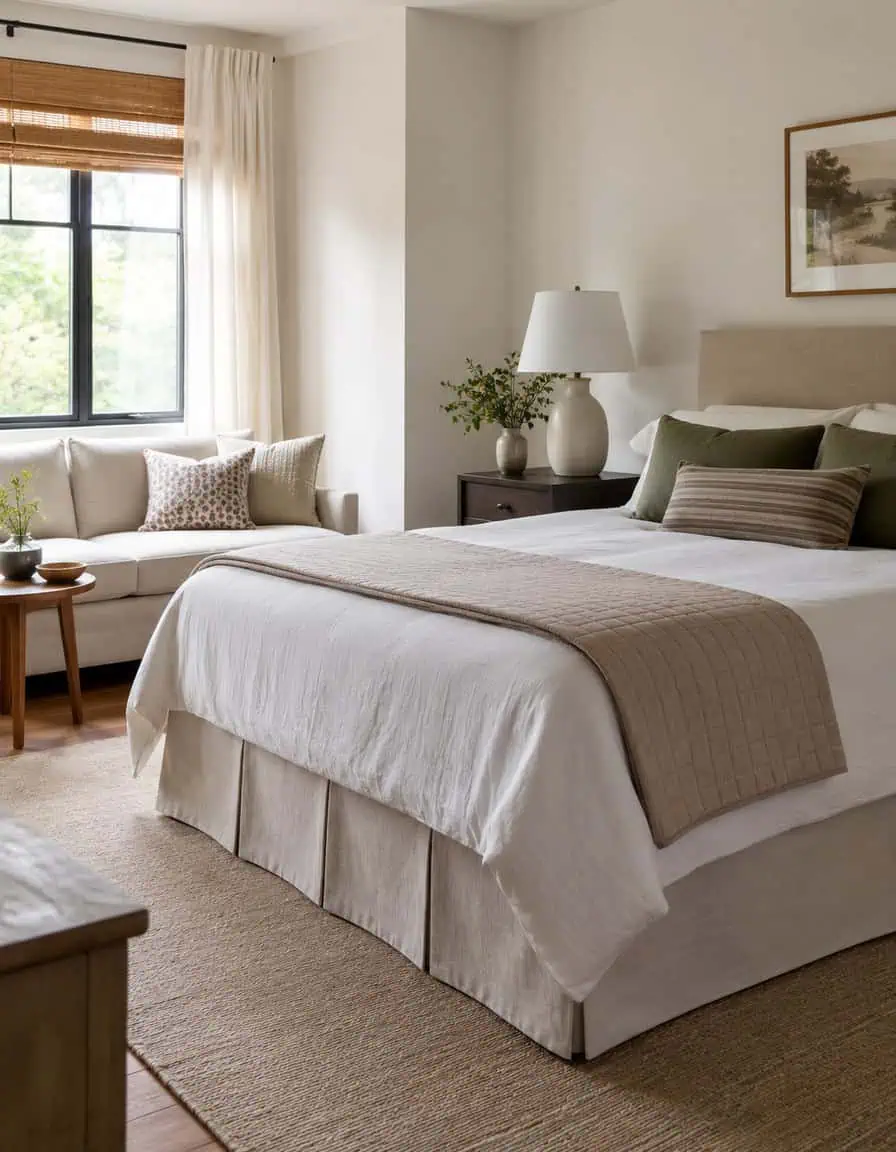
If you must use a standard metal bed frame to fit storage underneath, do not leave it exposed. A ruffled, flimsy bed skirt looks dated, but a crisp, tailored bed skirt with inverted pleats and heavy fabric looks like custom upholstery. It grounds the bed and hides the visual noise underneath.
22. Direct the Eye Upward with Vertical Lines
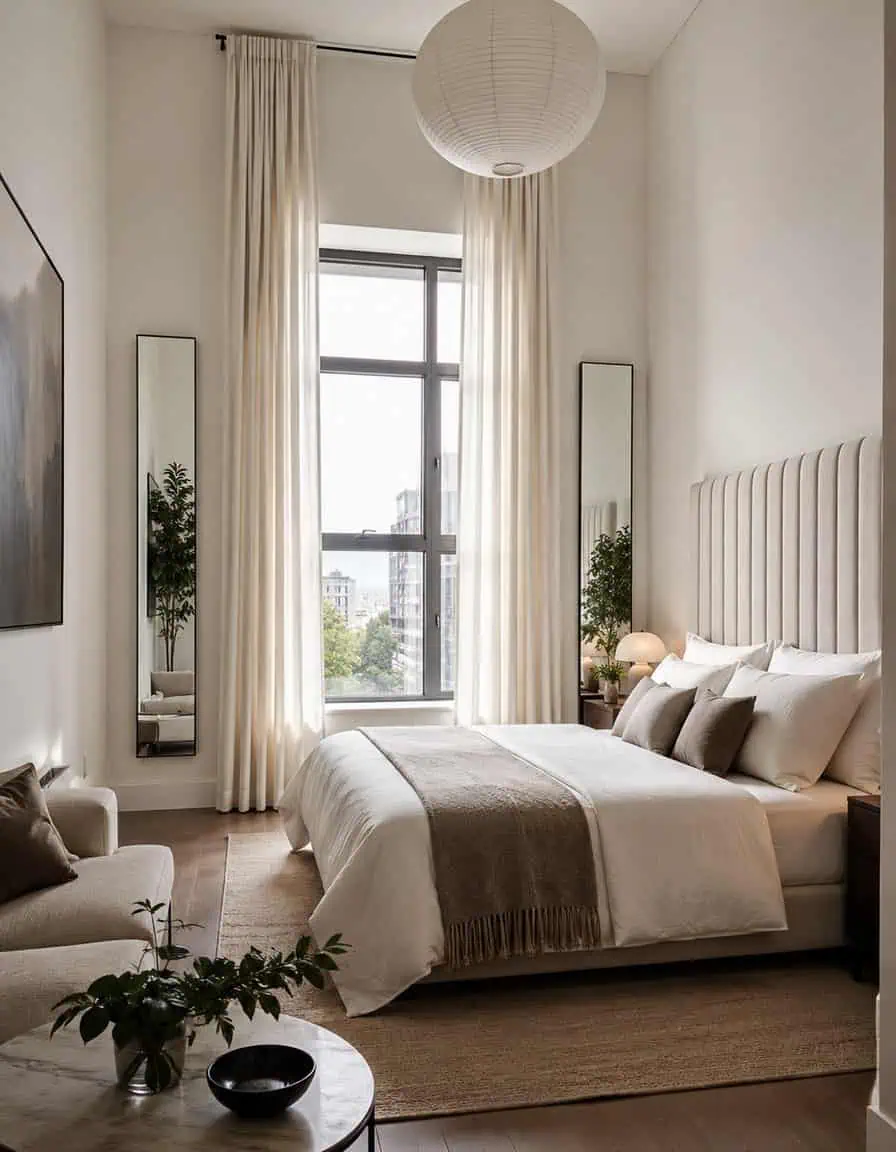
Make your studio feel taller by emphasizing vertical lines around the bed. Hang curtains as close to the ceiling as possible, letting them kiss the floor. Use tall, narrow mirrors. Choose a headboard with vertical channeling. When the eye is drawn upward, the footprint of the room feels less restrictive.
23. Edit Relentlessly for Visual Quiet
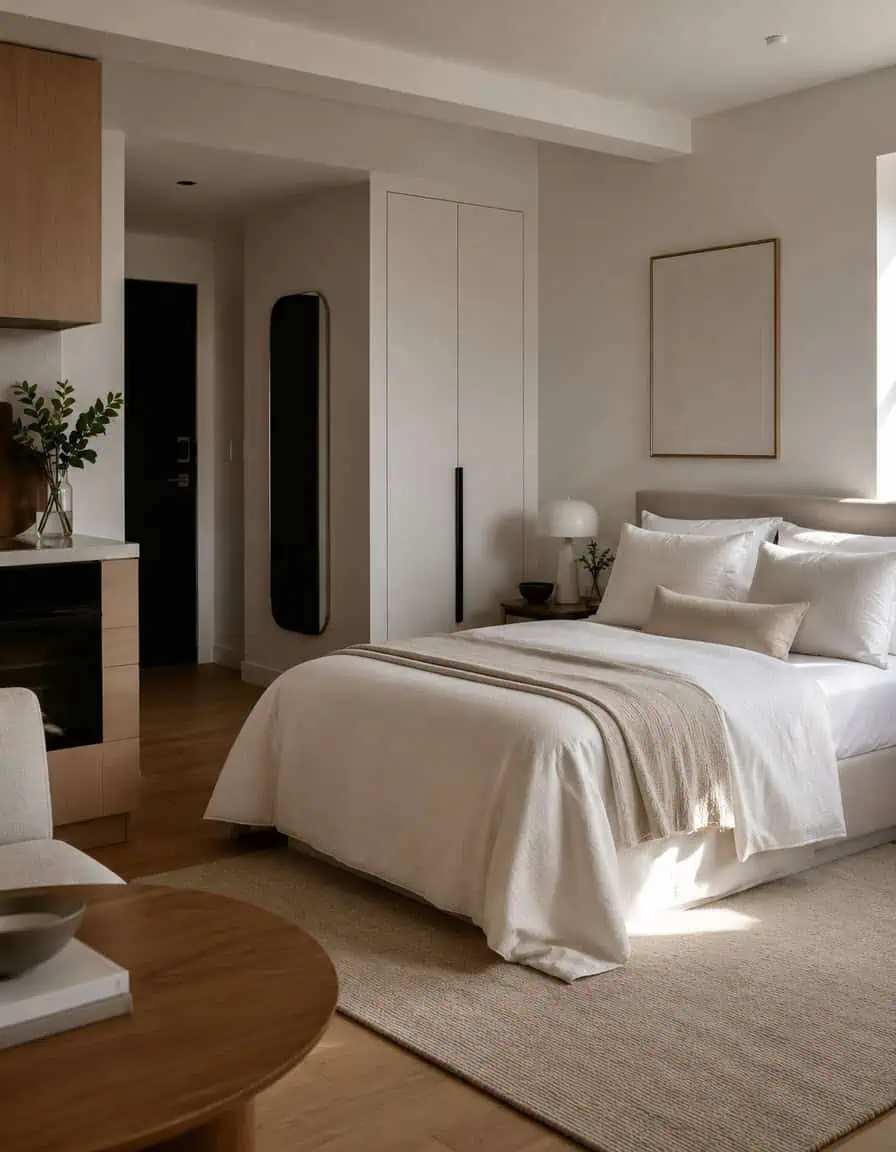
The most important design tool in a studio apartment is restraint. A designed space is an edited space. Clear the surfaces. Hide the cords. Put away the laundry. When the sleeping area is free of clutter, the architectural choices you've made-the lighting, the layout, the color palette-can actually be seen and appreciated.
Next Steps: The Studio Zoning Audit
Ready to rethink your layout? Use this quick checklist to audit your current studio setup. If you can check off most of these boxes, your space is functioning with strong spatial logic.
Studio Zoning Audit Checklist
- Sightlines: When I sit on my sofa, is my view of the bed partially obscured or visually separated?
- Traffic Flow: Is there a clear, unobstructed walking path from the front door to the kitchen and bathroom?
- Visual Weight: Are my heaviest pieces of furniture balanced across the room, rather than all clustered on one side?
- Lighting: Does my sleeping area have a dedicated, low-level light source separate from the main overhead light?
- Color Cohesion: Does the bedding share a color story with the living area, or does it clash?
- Storage: Is the storage visible from the bed closed (drawers/doors) rather than open (cluttered shelves)?
Living beautifully in a small footprint isn't about having less; it's about arranging what you have with intention. By treating your studio bedroom as a structural zone rather than just a place to put a mattress, you create a home that feels grounded, cohesive, and entirely your own.