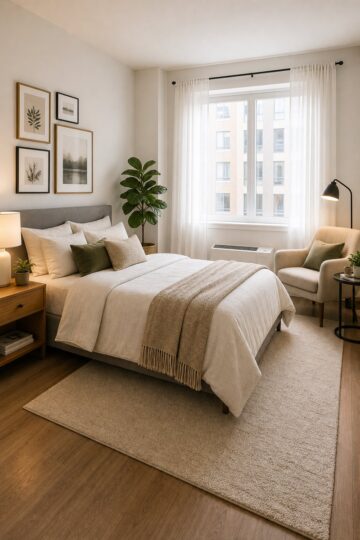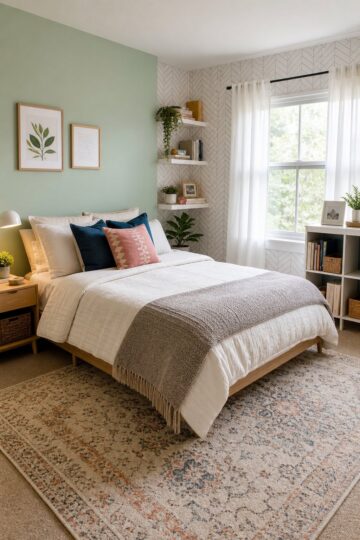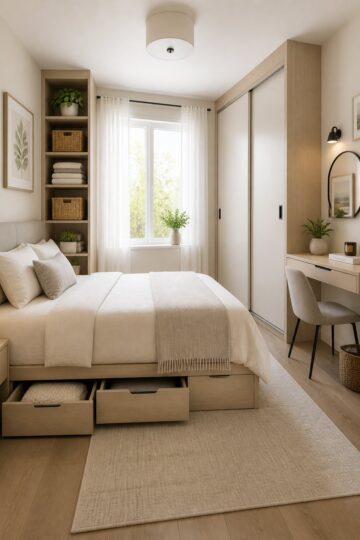
Imagine standing in your bedroom and feeling a growing sense of clutter, realizing that there seems to be no way to store the items. It can feel impossible to store items within bedroom apartments because most shelving units take up the floor space you need. But before you give up, consider these ideas that won't sacrifice your space.
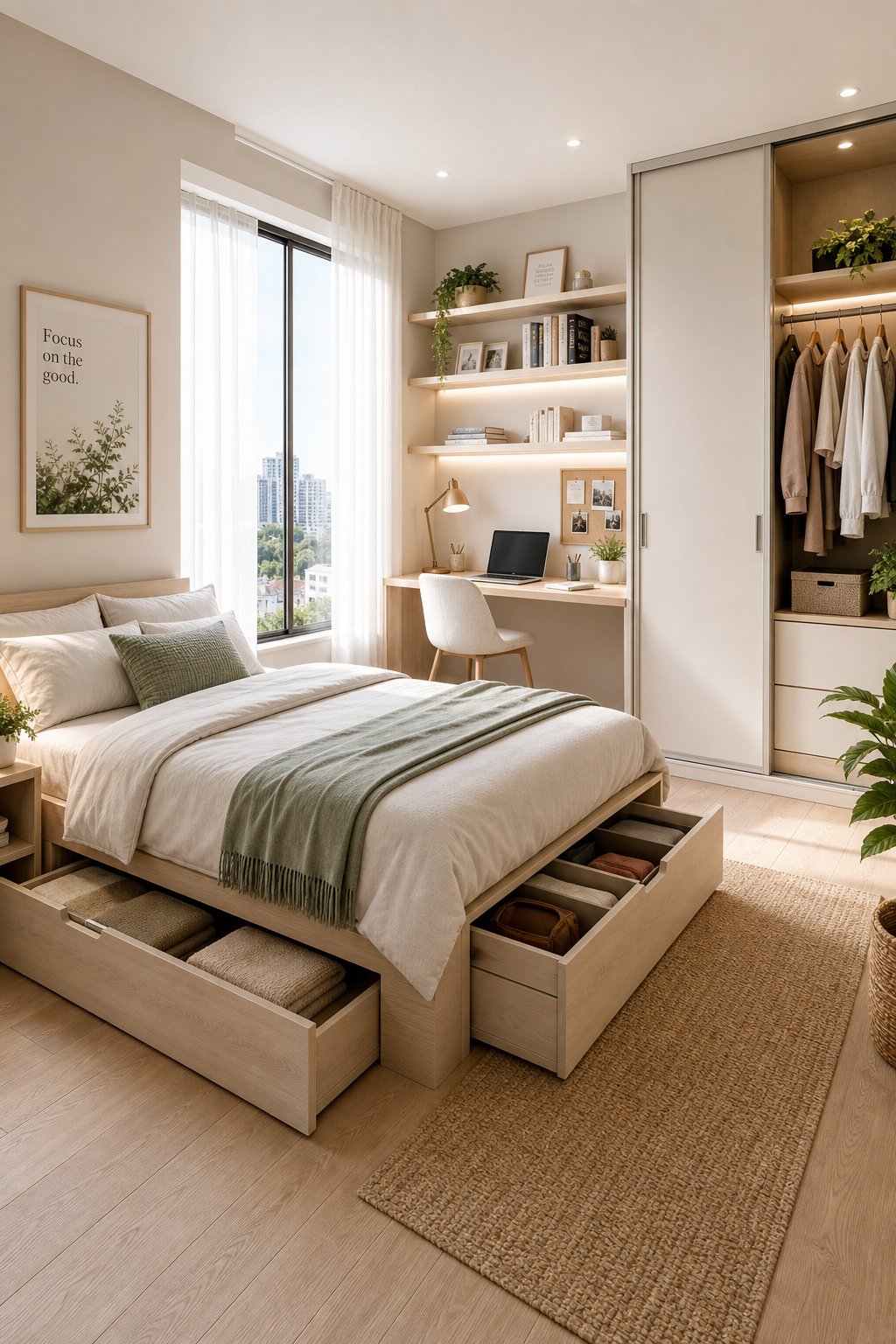
You can be creative when it comes to storage! Using your walls, space under your bed, and vertical slim furniture, you can pack a lot of storage in a small footprint. If you need to remove furniture after you move, there are renter-friendly options, no contractors needed.
I like to keep things as easy as possible, especially considering I write for people doing rentals on a budget. I keep complicated designs out that require a lot of drilling and are hard to take out and change for the renters. Look for sleek and slim profiles, hidden compartments, and multi-use furniture. Any small room can look intentional with the right approach.
1) Under-bed rolling storage bins
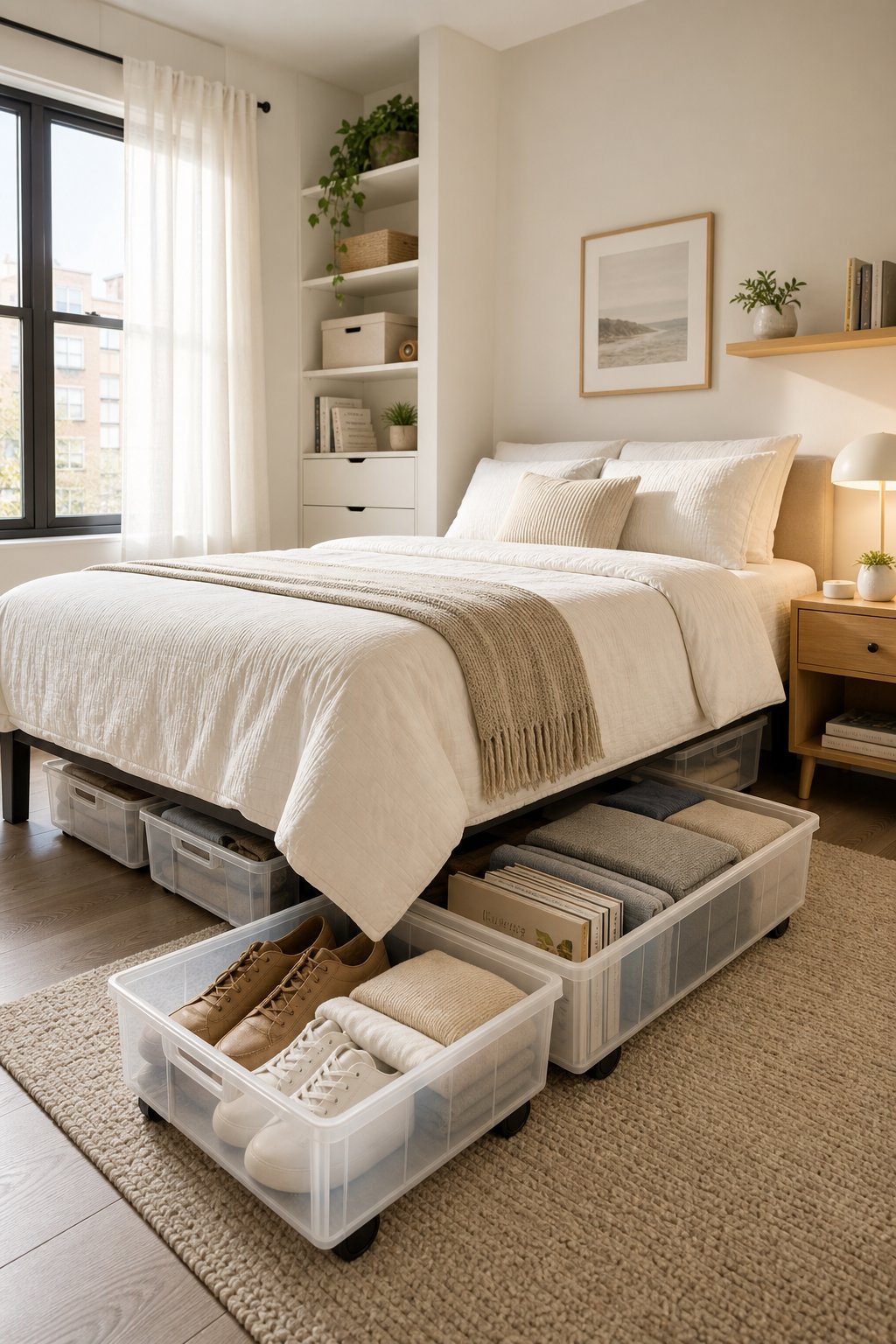
The best storage space in the room might very well be the empty area under the bed, yet most people overlook it. You can place extra clothes, shoes, or seasonal bedding to save space in your closet or drawers, and you won't have to add any storage furniture that would be visible.
Search for low-profile bins, ideally 5-8 inches in height, to fit under more bed frames. Dustproof options include clear bins and labeled fabric bins on wheels with a lid handle. For heavier items, hard plastic is better since it holds its shape, and for lighter items, fabric bins collapse flat. Since bed frames vary, check weight limits (typically 20-50 lbs) and measure your bed clearance before purchasing.
If your bed is very low, consider using slim flat bins or bed risers that will not scratch your floor. For this to be worth your effort, you want at least 4 to 6 inches of clearance.
2) Floating corner shelves instead of a nightstand
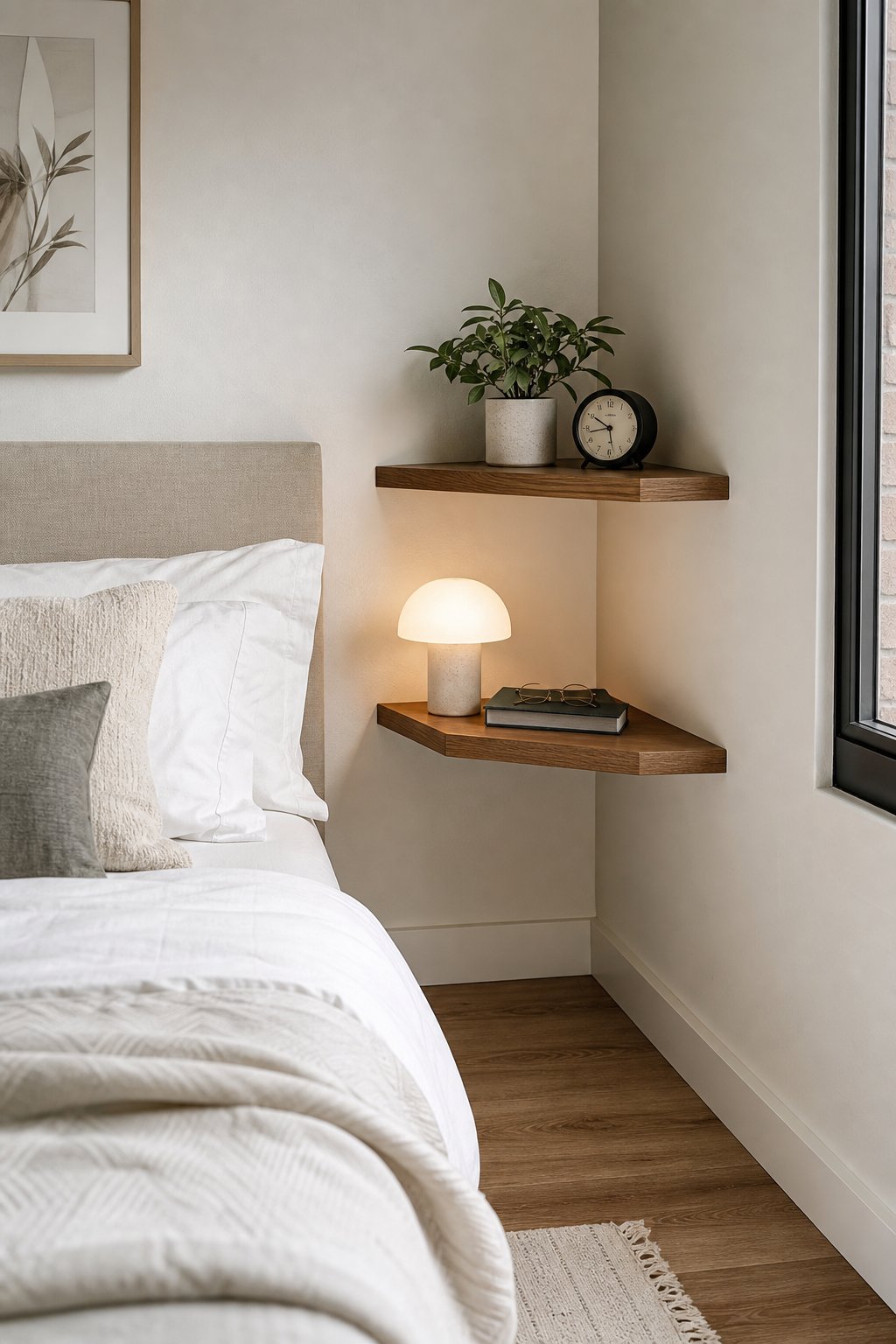
A large nightstand in a small room wastes valuable space for what it actually stores. Floating corner shelves use vertical space and keep the floor clear, which creates more usable space than most people realize until they actually experience it.
Find shelves that are 8 to 12 inches deep so they can hold a lamp, your phone, and a book without extending too far into the room. Plywood, solid wood, or MDF with a veneer look clean. For rentals, removable bracket systems or mini toggle anchors that can be patched are perfect. Before adding items, check the weight limit (typically 15 to 30 lbs).
If you want a clean, simple aesthetic next to your bed, this is a great solution. If having chapstick, three hair ties, a glass of water, a couple of books, a charging cable, etc., within reach is more your style, you might want to consider a shallow wall basket or a small tray. It will keep your shelf from turning into a cluttered mess.
3) Over-the-door shoe organizer for accessories
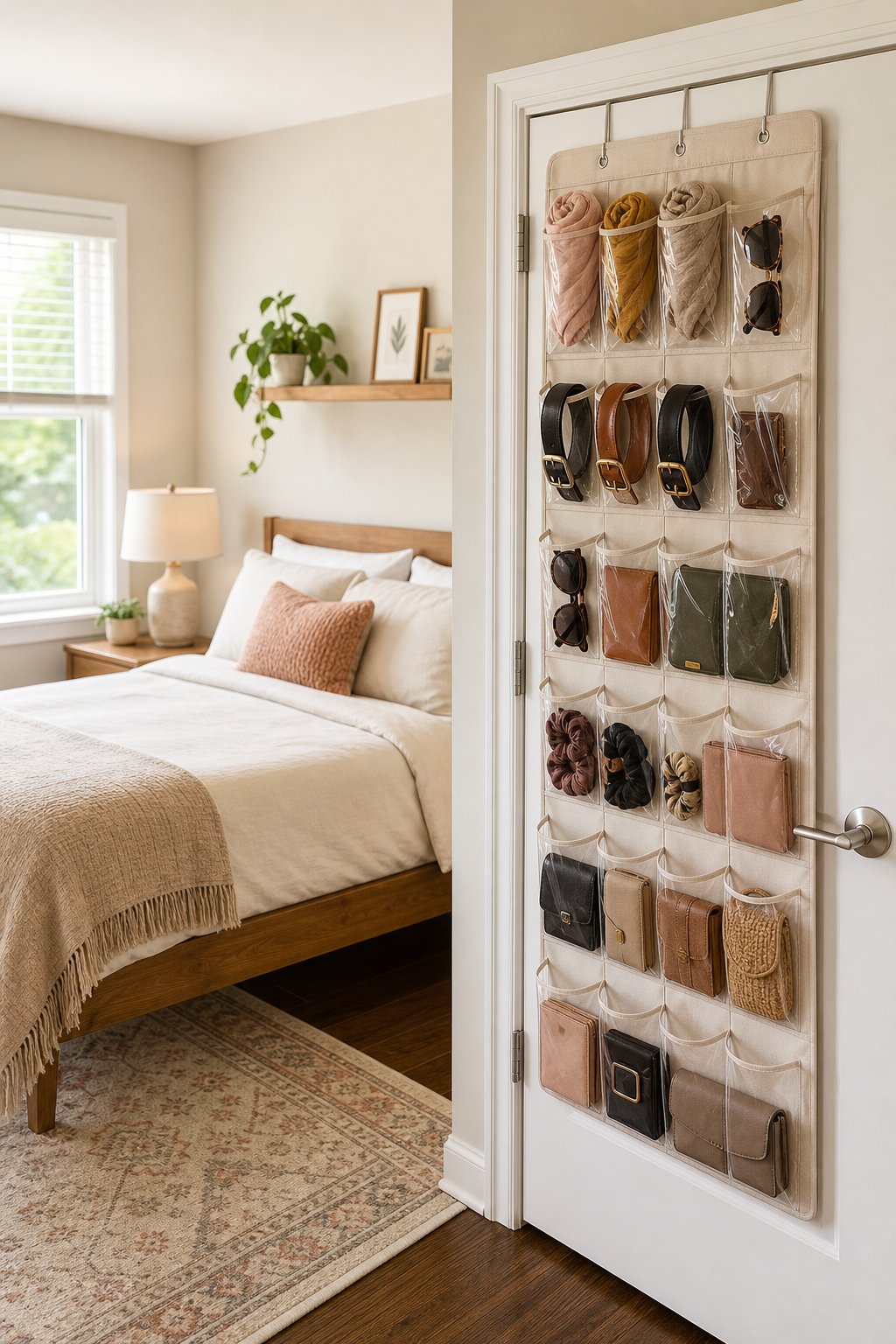
Staying organized can be difficult because of a few accessories. They scatter easily, end up taking drawer space that's needed for clothes, and always seem to be homeless.
Every item can be kept in a pocket with the help of an over-the-door organizer. It can store jewelry, belts, sunglasses, hair tools, and even charging cables, all without taking up any space on the floor. When buying one, look for clear or mesh pockets that are 4 to 6 inches deep so that items don't bulge. Pick an organizer with a fabric or vinyl body, metal grommets, and a hook made for a 1 to 1.5 inch thick door. If the door has no-drill straps or removable hooks, the door will have no-drill straps.
Keep in mind that on a very thin door or a mirror door, it may look a bit heavy. Choosing a neutral color and trimming any extra length at the bottom may create a less chaotic look.
4) Mounted pegboard above the dresser
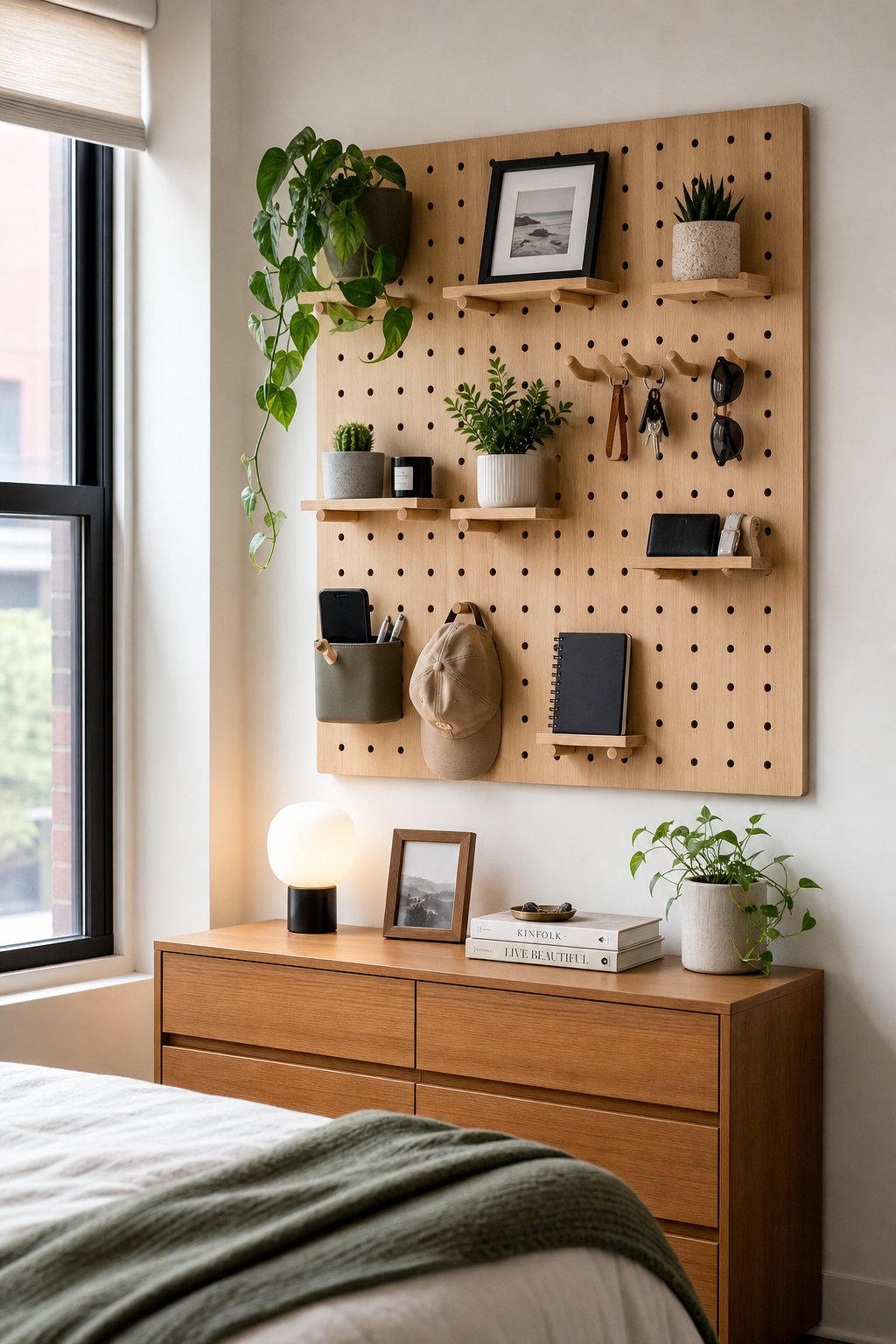
The wall above a dresser is usually empty. However, with a pegboard mounted on that wall, you can convert the neglected area into an adaptable storage solution for small baskets, keys, hats, jewelry, and more, all while keeping the floor space unaltered.
When shopping for pegboards, they should ideally be between 24 and 36 inches in width since they will likely fit with your dresser tops. Good material options include lightweight metals or perforated hardboard. Keep in mind, peg weight limits (about 5 to 15 lbs per peg). If you are renting and cannot drill, consider using picture-hanger strips or command hooks to mount it. If you do use them, try to select a neutral paint or powder-coated finish.
This isn't going to substitute a closet for major storage. However, for keeping daily use items visible and off the surfaces, it's one of the more affordable renter-friendly options for small bedrooms.
"A small room can look intentional with the right low-cost moves. The secret is being specific about what you're actually solving for."
5) Narrow ladder shelf leaning against the wall
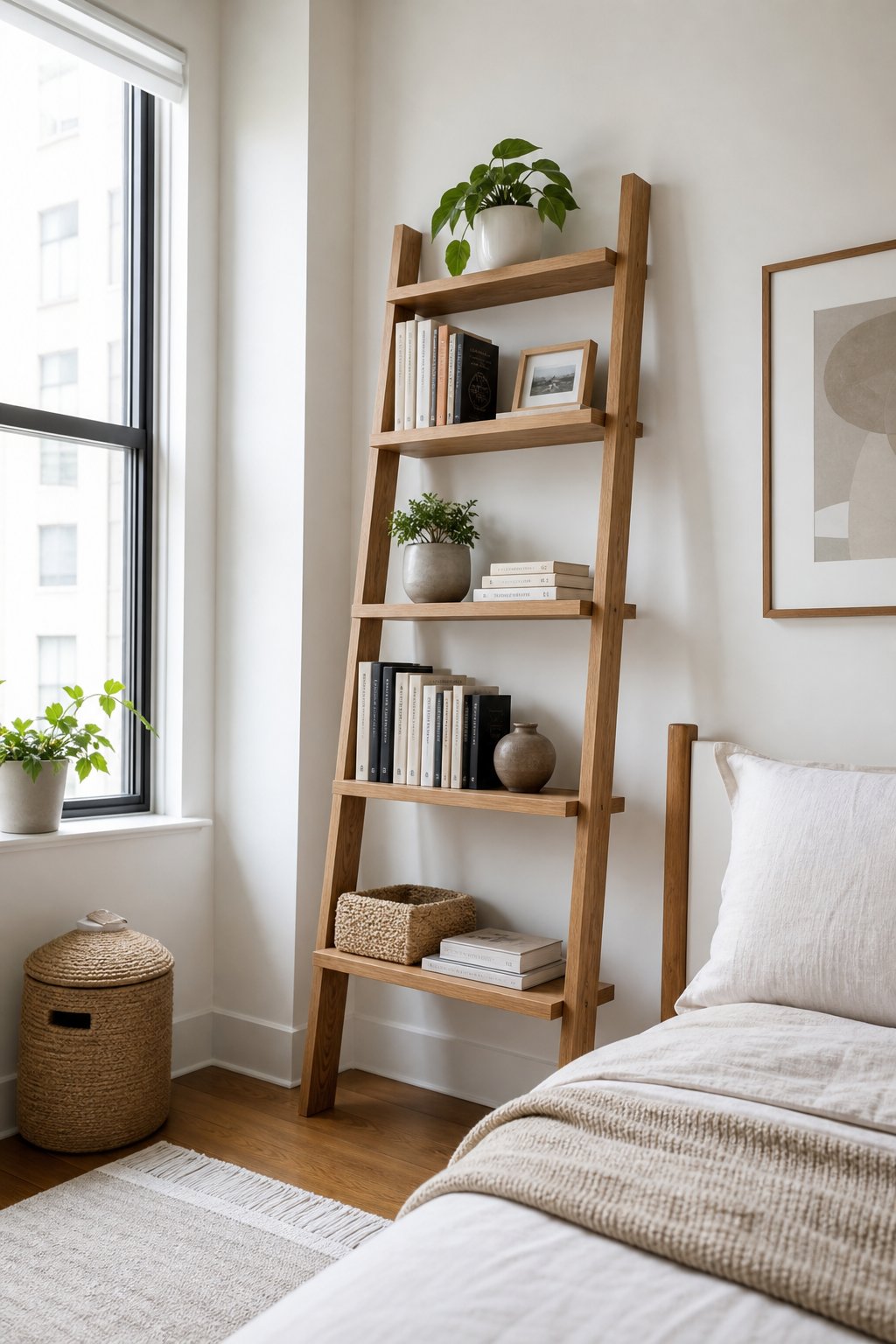
Utilizing vertical space is one of the best ways to reclaim real estate on a tight floor. A narrow ladder shelf takes up a small footprint for books, plants, and folded clothes, while leaving walking space for everything else.
Aim for a width between 12 and 18 inches and a height between 60 and 72 inches. This sizing will allow it to fit next to a dresser or behind a door. Frame materials (wood or metal) that limit shelf support to about 20 to 30 lbs are good; wood with thicker boards is better than thinner boards for basket support. The natural lean-back shelf angle means wall attachment isn't necessary (though check for non-slip feet if it's going on hardwoods).
Honestly, this is a piece of furniture that is pretty lightweight. It can hold a small stack of books, a few plants, and some baskets. For heavy boxes or large bins, you would need some sturdier anchored shelving units than this.
6) Storage ottoman at the foot of the bed
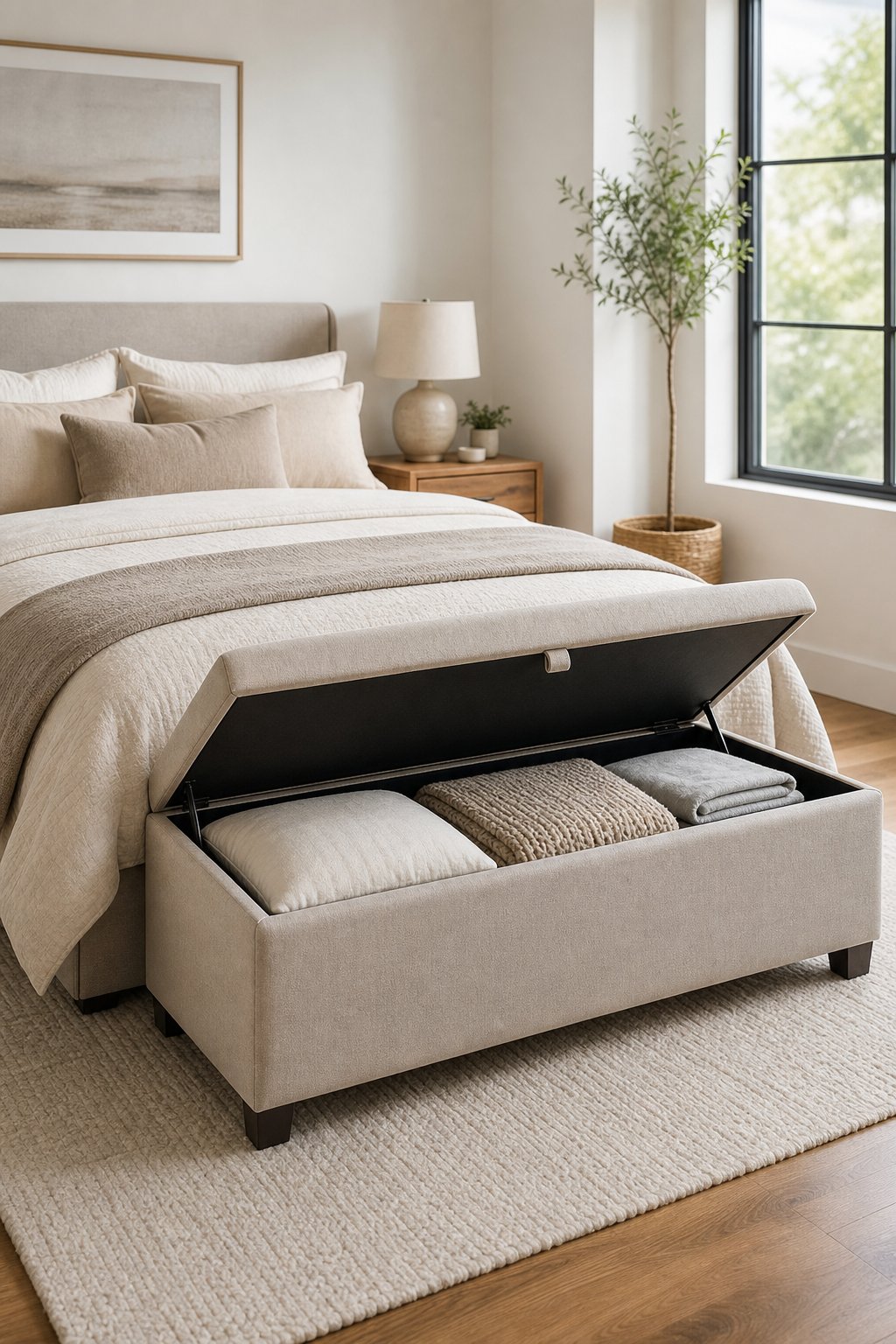
A storage ottoman is almost unbeatable. It also doubles as seating and can serve as a table for a tray or a book. Plus, the ottoman has a hidden compartment that can serve as storage for extra bedding, out-of-season clothes, or even that stack of paperwork you haven't gotten around to organizing.
In order to create more flexible layout options, consider using ottomans that are 30 - 40 inches in length or cube ottomans that are 15 - 20 inches if the space is smaller. Ottomans constructed from plywood and MDF that are fabric-covered tend to be less heavy and more portable. If the ottoman will be used for seating or to function as a coffee table, confirm that the weight capacity is in the range of 100 - 200 lbs, as this will be important to consider. In terms of gas hinges and removable lids, both are considered to be good; if you are a frequent mover, consider the ones that do not have overly complicated built-in assembly.
Some less expensive models can sag over time and very small ottomans may not fit an entire duvet. If you tend to relocate often, look for an ottoman that disassembles or folds so it can fit in a car.
7) Wall-mounted fold-down desk that doubles as a vanity
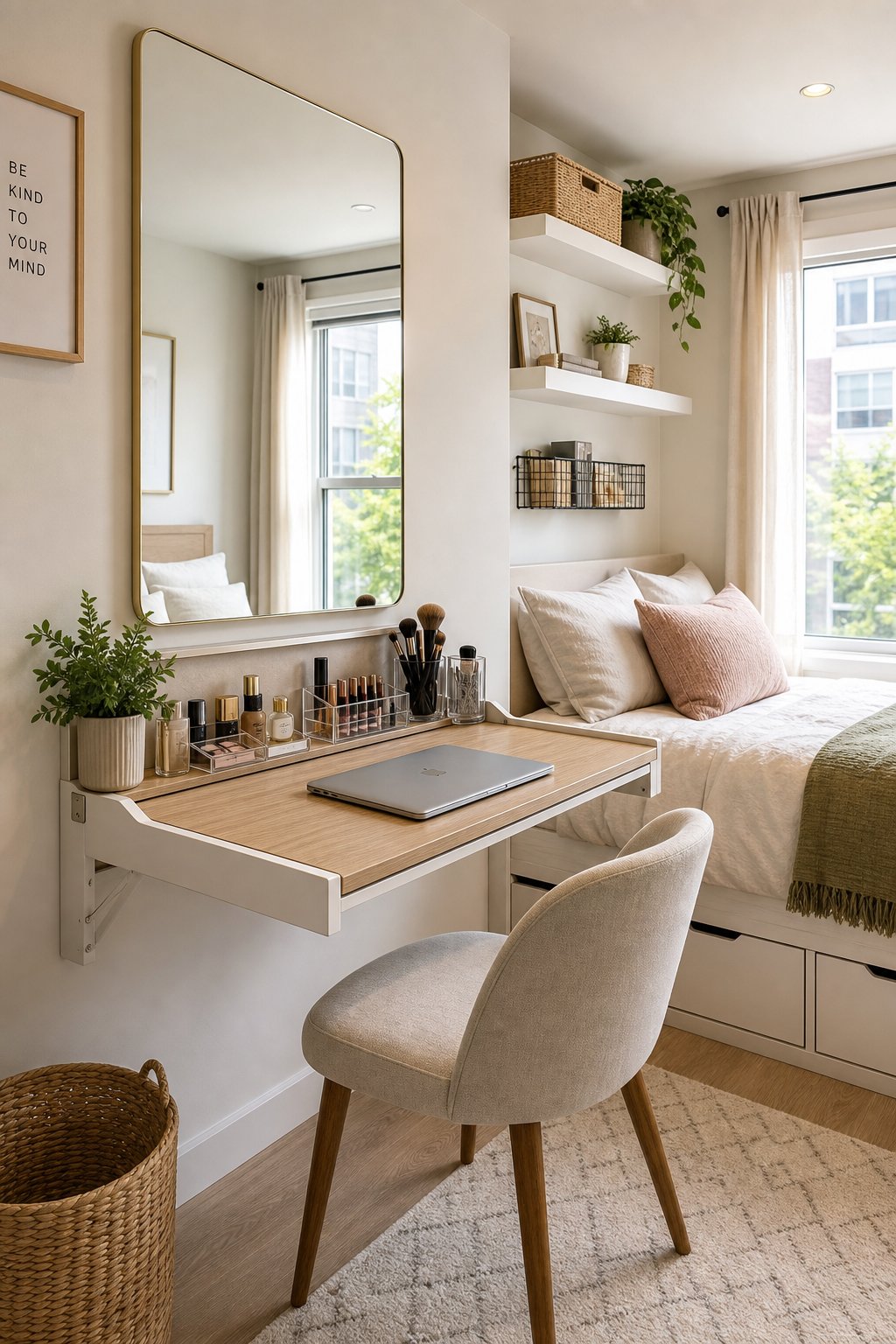
Desks that fold down provide a solution to a unique problem. They allow a workspace and/or a vanity surface to be available occasionally, but not always, and without permanently sacrificing square footage. When they fold down and are flat against the wall, you won't even know it's there.
While open, they should be around 24 to 30 inches wide and 12 to 16 inches deep. That should give enough room for a mirror, a few products, and a laptop. Wiping down plywood or MDF with a laminate surface is easy. For rentals, models that are stud-mounted or use heavy-duty picture hooks are reversible. Check the weight limit if putting a large mirror on it (at least 20 to 30 lbs).
If you need extra storage besides the desk surface, a shallow wall shelf above the desk or a slim drawer unit underneath will help, without taking up much footprint.
8) Magnetic spice racks repurposed for jewelry
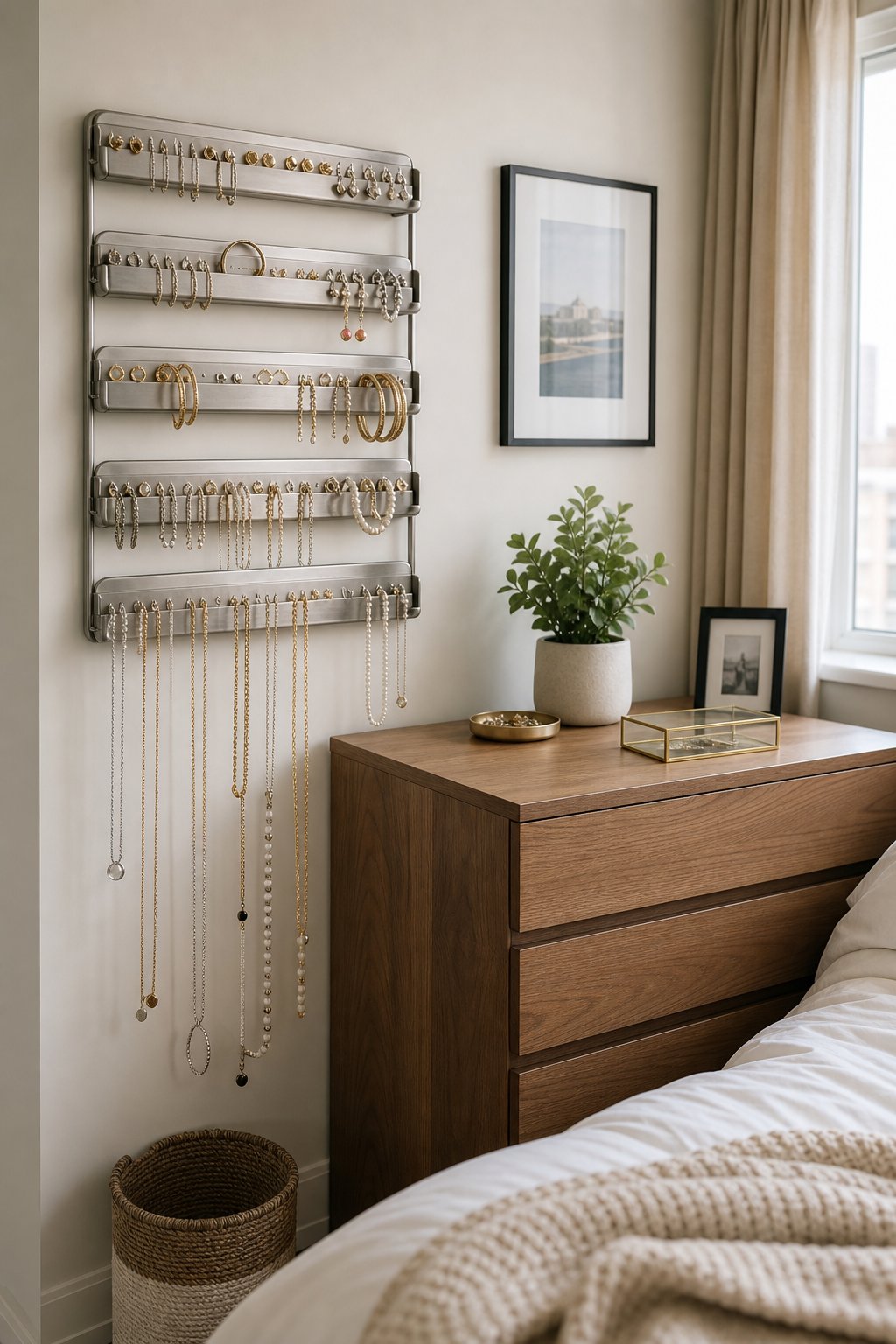
This budget option is decent enough to recommend. Wall-mounted magnetic spice racks are cheap and can be used to store small jewelry items. They keep your dresser organized by ensuring that items are visible and untangled.
The best options are shallow tins (2-3 inches deep, 3-4 inches wide) that have magnets or adhesives on the backs. For the lightest option, go with aluminum. If you want better organization, go with tins that have matte finishes or labeled lids. For smaller items, aim for around 1-2 lbs per tin, and you should be good.
For statement necklaces, use a few tins and sturdy hardware for splitting. Nobody wants to see a tin sag, and a magnetic rack coming loose off the wall looks reckless.
9) Curtained bed skirt to hide under-bed storage
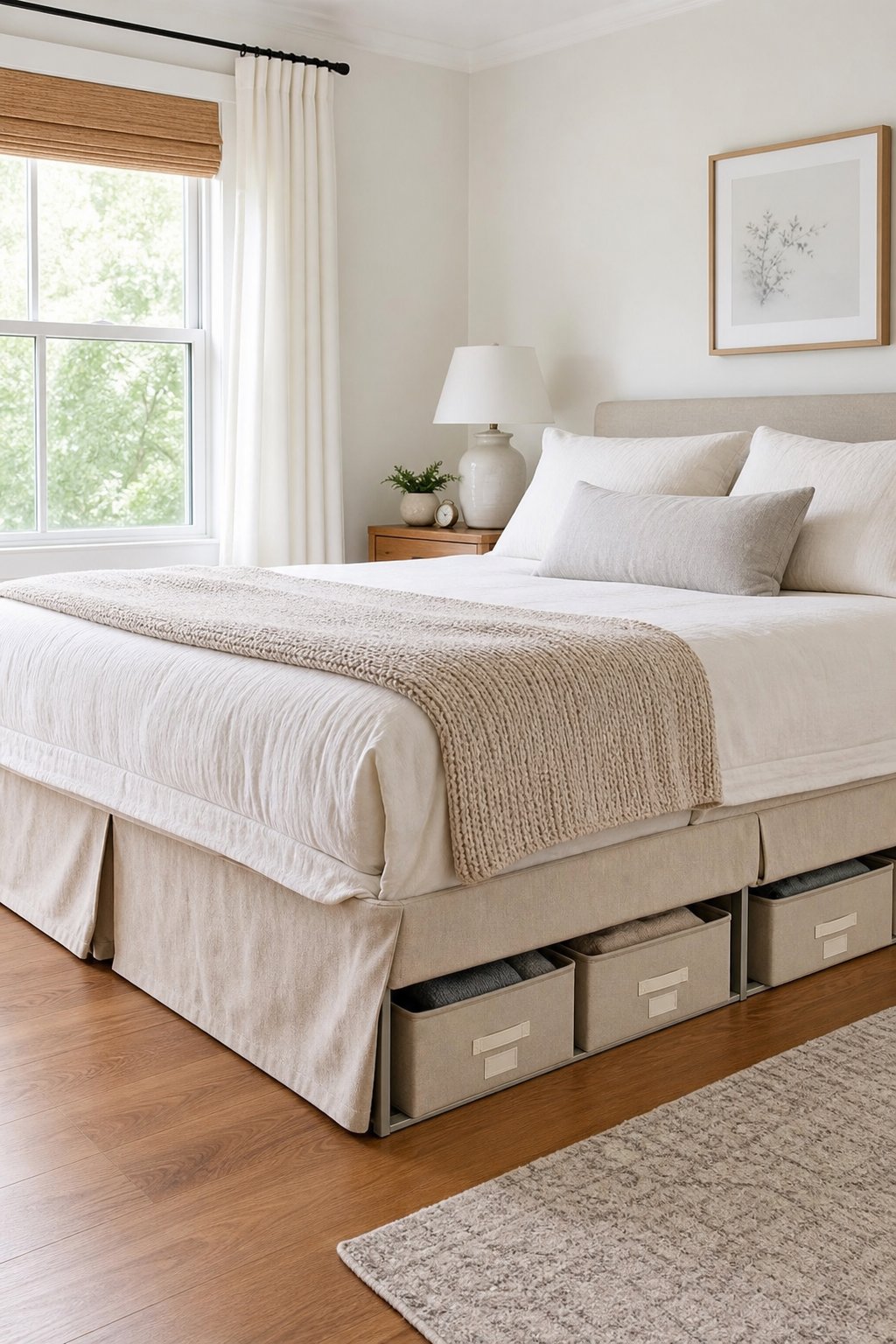
Bed skirt fabric can cover the visually unappealing under-bed bins while still letting you have easy access to open storage. The under-bed bins are an awesome storage option, but seeing just a row of plastic bins under your bed may not be the most pleasing sight.
Clip-on or tuck-under types are best since they do not involve any drilling or cutting. You should measure the bed clearance as most slim bins fit in the 7-14" range. Bin options include cotton, polyester (both washable), lightweight plastic, or fabric boxes that have 25-50 lb sliding limits.
The most suitable choices include platform frames and metal frames with a bit of space underneath. If your bed is extremely close to the ground, the skirt won't conceal very much. But when it goes over your bed frame, it is one of the least expensive and most rental-friendly changes that allows the entire room to appear more put-together.
10) Cube organizer with fabric bins
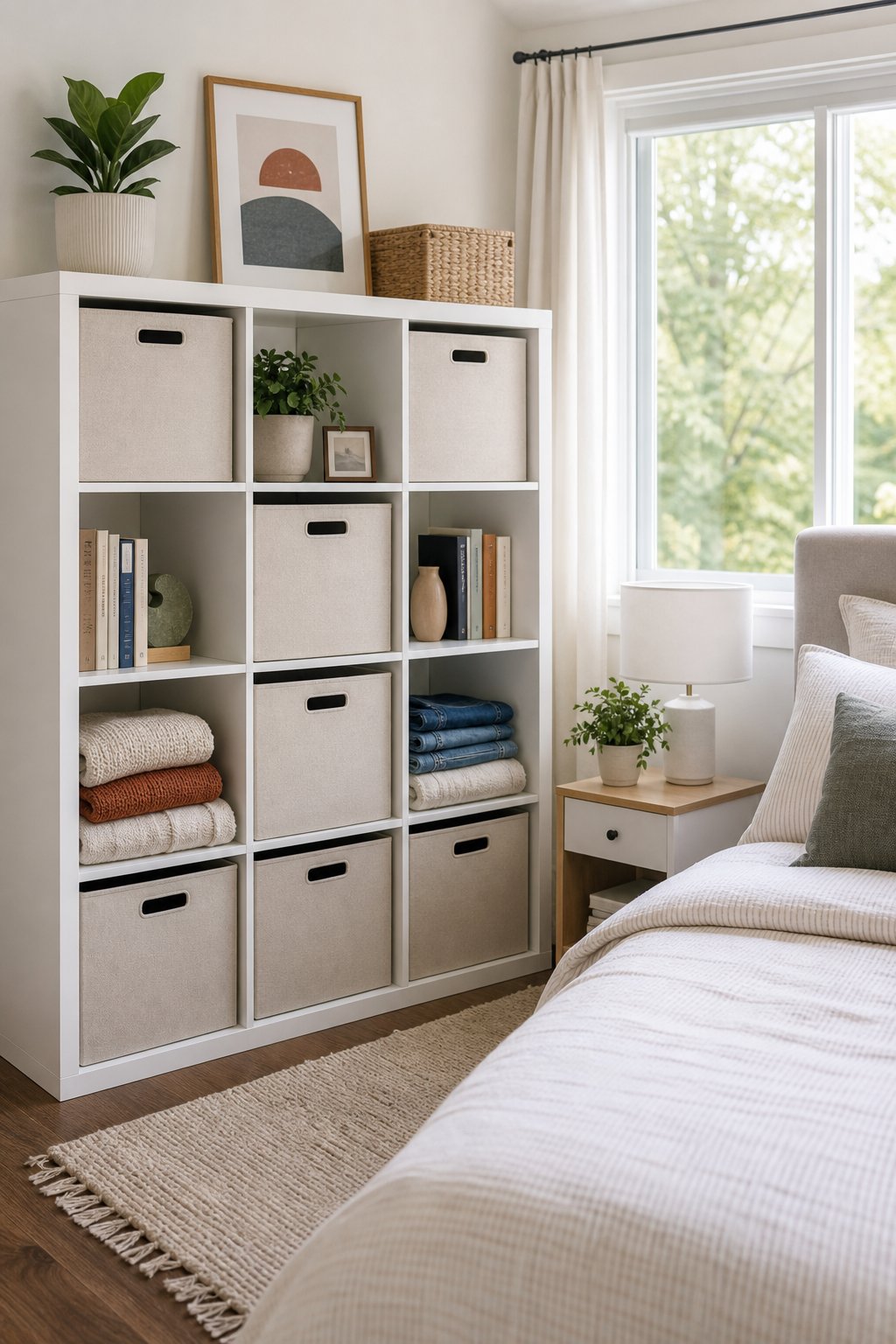
The cube organizer is an excellent storage option for small spaces. It provides a variety of storage options. In a small room, it can separate walls and act as a low room divider in a studio or multi-use room.
In smaller spaces, consider using a 4×2 or 2×2 configuration to keep a narrower footprint. Most cubes fit standard fabric bins that are approximately 13 by 13 inches, and those bins can be easily pulled in and out of the cubes. Bins with handles are best to choose to avoid going over each shelf's weight limit, which can be as low as 15 to 25 pounds. The room will feel more open as opposed to closed in with light colors and natural wood tones. The unit is intended to sit on the floor so no drilling is needed. However, if your landlord allows it, a wall strap can offer additional security.
These work well for storing folded clothes, shoes, and other light items. If you need to store something heavier like books or appliances, then you should get stronger shelving because the cheaper particleboard cubes will sag over time.
11) Bed risers to create high-clearance storage
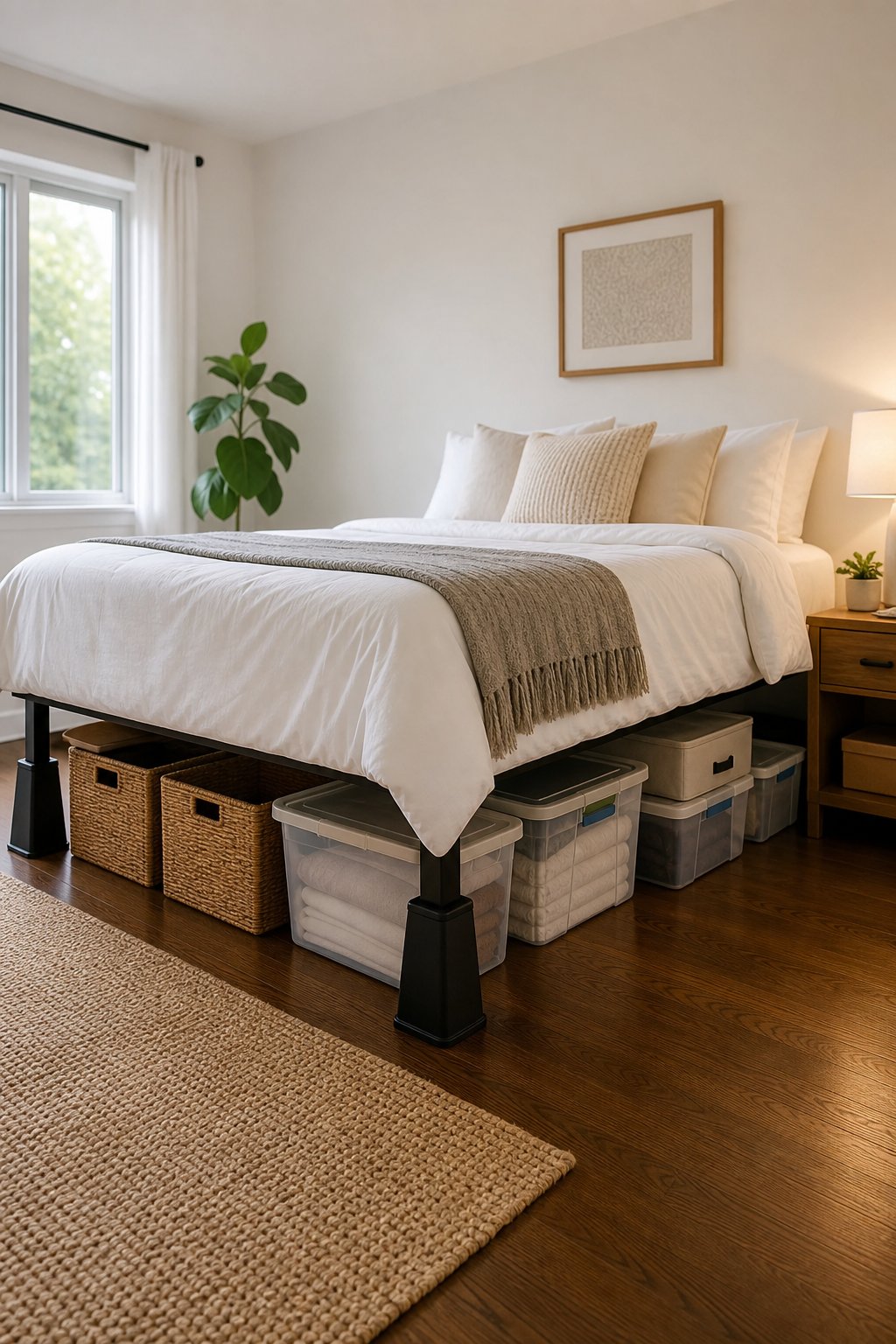
Do you have a mattress that sits too close to the ground? Then you're probably wasting storage space. Bed risers give you the ability to raise your mattress so you can create a secret area for storage boxes, shoes, or out-of-season clothes without the hassle of rearranging your furniture.
The best bed risers should give you an extra 6-12 inches of clearance. Make sure they can support 500 lbs and that they accommodate your bed's legs or slotted base. Bed risers that are made of sturdy metal or plastic and have non-slip tops are best. Do not use risers that stack, clamp-style risers, or use bolt-style risers, as the point is to be simple and reversible to raise the bed.
You can add shallow labeled bins or rolling drawers under the bed for extra and easy access. When you move out, you can remove bed risers, keep your floor untouched, and only spend around $15 to double your under-bed storage!
By The Numbers
The majority of basic beds come with about 3 to 4 inches of clearance, which is practically worthless. With 9-inch bed risers, you'll get an extra 12 to 13 inches, which is plenty of room for rolling storage bins, flat suitcases, and boxes for seasonal storage stacked.
12) Slim vertical dresser
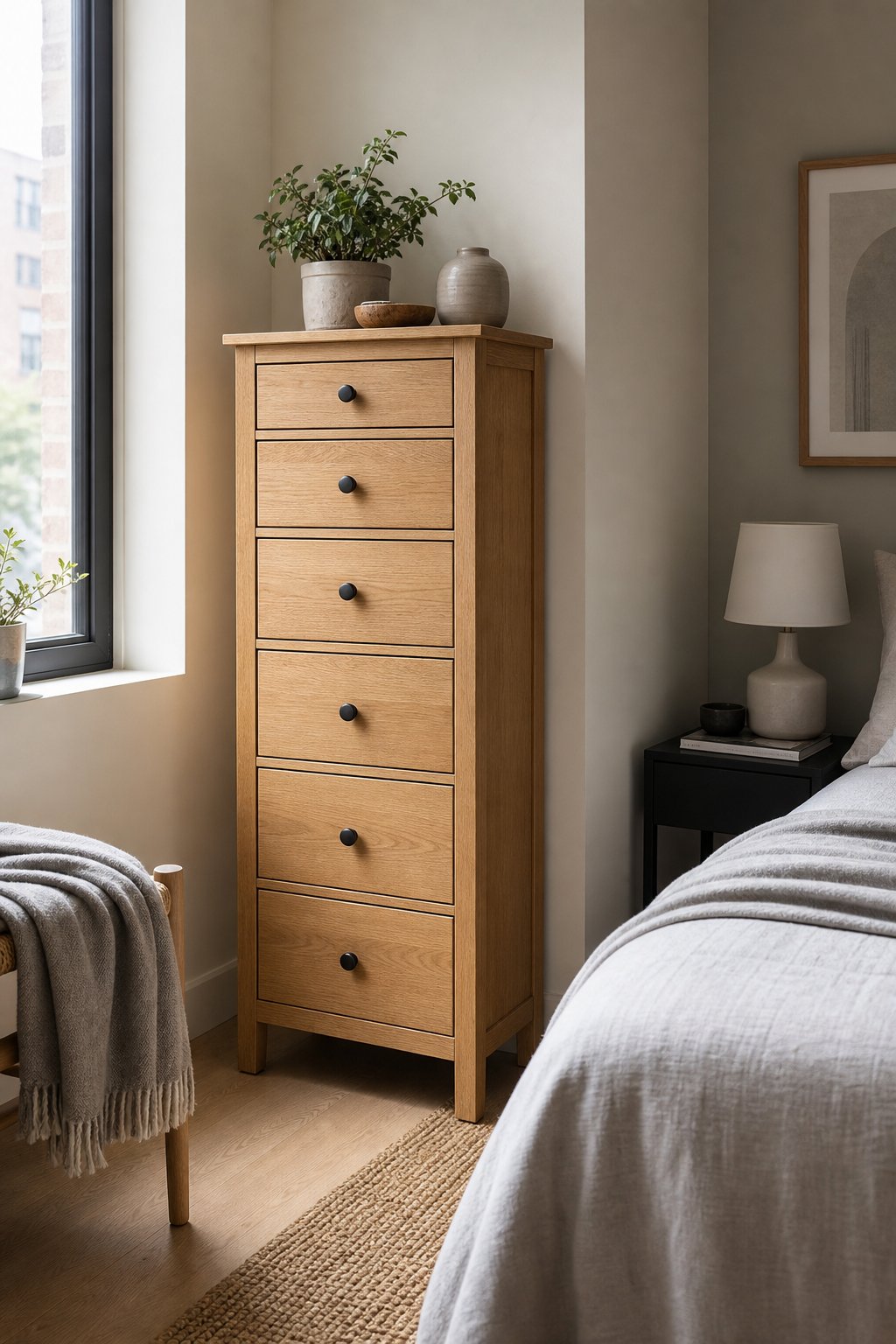
In small spaces, wide dressers are not going to work. Instead, you can go for a vertical slim dresser. It takes up less space, moves the storage up instead of out, and keeps your linens and clothes organized so you have more walking space.
Target a height of 60 to 80 inches and a depth of 12 to 20 inches for dressers. Construction using solid wood or plywood on the front is better at resisting warping than a thin veneer over fiberboard. If the drawers are going to be used frequently, they are worth spending more on. Drawers generally have weight limits of 10 to 25 lbs apiece so check the weight limits. Also, check to see if the dresser can be secured with a wall anti-tip strap as most landlords won't mind, as it is a safety item.
This option is great when you require additional space to store folded clothes as opposed to hanging clothes. If you move around a lot, look for a lighter model or one with removable top trim so it can fit through doorways. This is something people often discover the hard way.
13) Under-shelf baskets to max out closet space
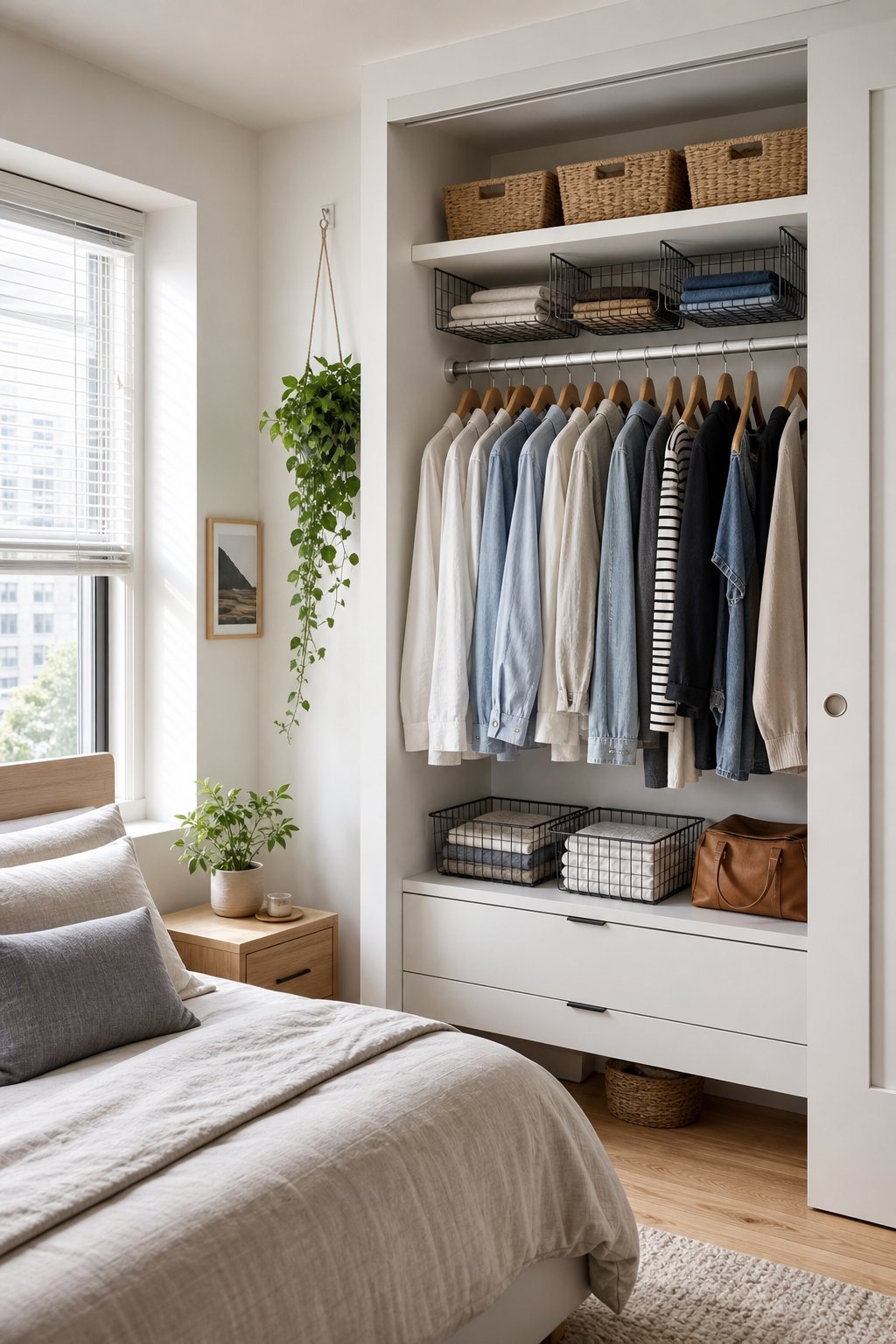
There is usually dead space in every closet: the open area between the bottom of the shelf and the top of the hanging clothes. Under-shelf baskets attach directly to the shelf and slide into that space to provide you with horizontal storage for t-shirts, scarves, or socks, and you won't even have to touch a single rod.
Find baskets that are 10 to 14 inches deep and between 12 and 18 inches wide. Wire or breathable mesh will keep things visible and also stave off that stale-closet smell. To avoid sagging, check the weight limit (10 to 20 lbs) and choose baskets with rubberized hooks or padded clips so that they don't scratch your painted or laminate shelves.
Before purchasing, measure the thickness of your shelves. Some baskets may not clip onto shelves that are too thick or have a lip at the front, and a sliding or falling basket is worse than no basket.
14) Floating shelf with baskets above the radiator
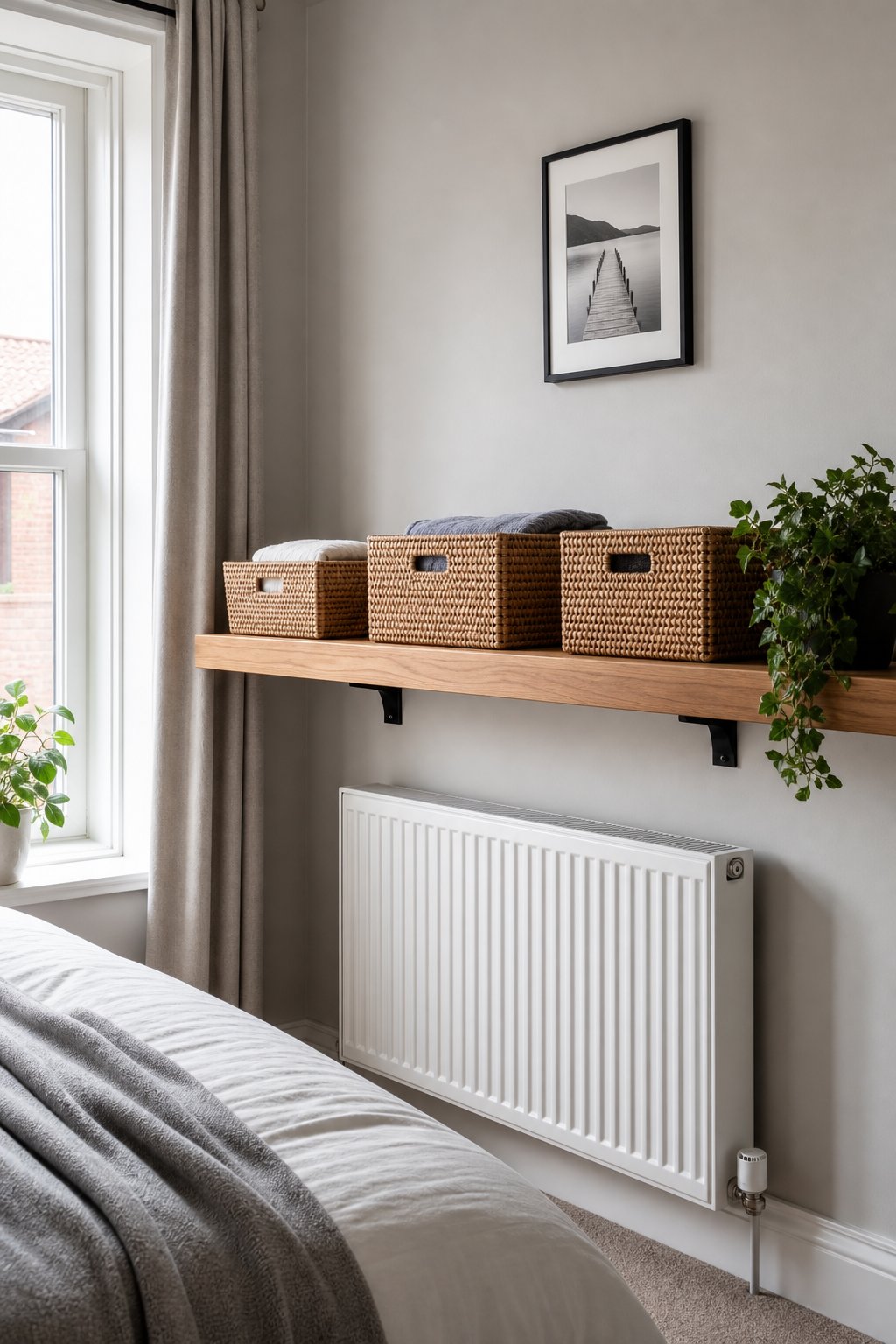
The small wall over my radiator is a spot that I find is usually overlooked by many in a bedroom. By placing a single floating shelf there, I am able to store items such as scarves, socks, small books, or even a plant, and do so without affecting the floor plan or adding to the clutter on my dresser.
Find a shelf that is 6 to 10 inches deep and long enough to span the radiator without being directly over the vents. Either wood or metal will work. Add sliding baskets or those that sit on the shelf and keep the weight to 20-40 lbs. For rentals, if you can't drill, high-temperature adhesive systems or sturdy tension-mounts work, but you should evaluate the wall type rating before doing so.
One real consideration is whether your radiator runs very hot. Then stick with metal or ventilated baskets and skip plastics that can warp over a heating season. Wood shelves are fine at a normal distance, but keep them at least a few inches above the radiator top.
15) Multi-hook wall rack for bags and coats
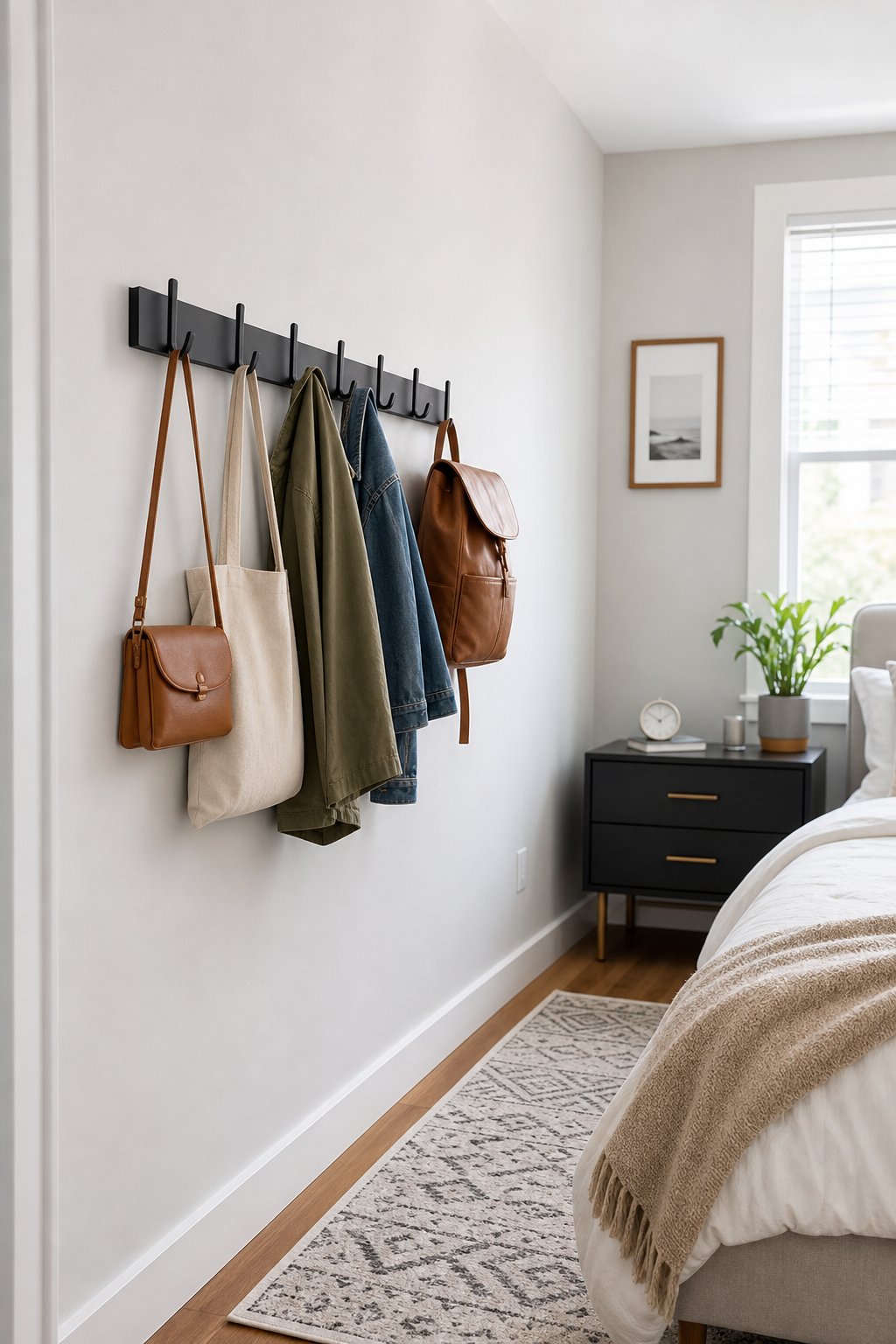
When closet space is limited, bags often end up on the floor, or they get draped over desk chairs. A wall-mounted hook rack will allow you to move your bags up to the wall, where they are easy to grab, and you won't lose any square footage to hang them.
Find a rack that is 24 to 36 inches wide and has 4 to 8 hooks (preferably 4) that are at least 3 to 4 inches apart so bulky bags don't crowd each other. Metal or solid wood handles weigh better than hollow plastic. Keep the profile under 3 inches deep so it doesn't catch you walking by. For rentals, adhesive strips or picture-hanger hooks that are rated for the rack's weight work well; small screws into studs are better if you're willing to patch two holes when you move.
If you tend to drop or hang bags in this area, especially if it's by your room door, this is useful. If you have big jackets, you'll want to mount the hooks to the studs instead of just the drywall, and you might be patching some holes come move-out day.
16) Slim rolling pantry cart beside the closet
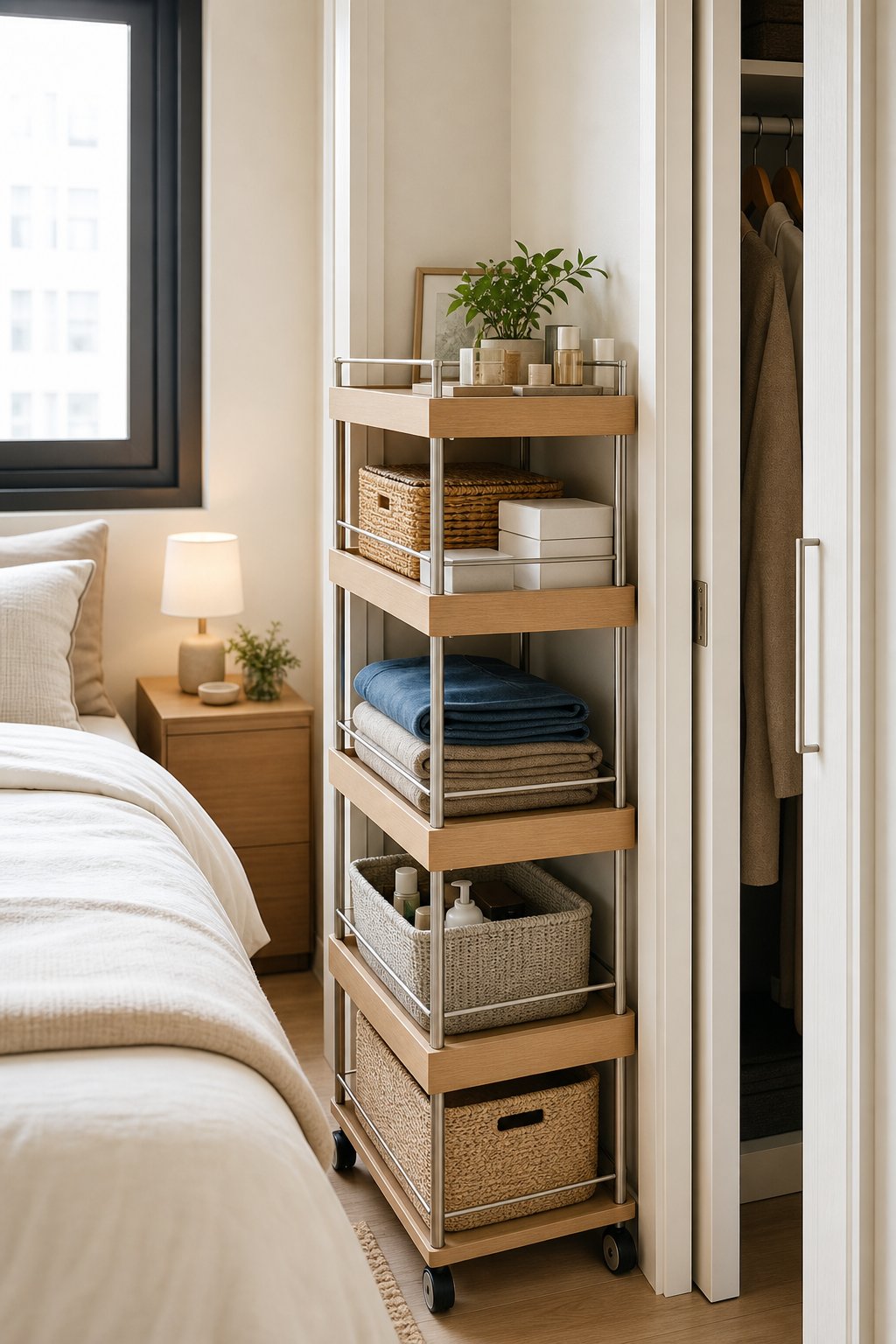
That small space next to your closet door frame is often overlooked. A vertical rolling pantry-style cart can be a great storage solution for items like toiletries, medicines, craft supplies, and other essentials that need to be easily accessible.
Think about a pantry cart that is 8 to 12 inches wide and 30 to 40 inches tall. It is easy to access metal or wire shelves because they roll and are moisture-resistant. However, small things might fall through their wire shelves, so use removable plastic bins. Consider caster quality because a cart that doesn't roll smoothly on carpet will be more frustrating than useful. Most bedroom setups will blend well with neutral finishes, and most carts are assembled tool-free.
If you need extra support for heavier boxes or bins, a wider shelving unit will be better suited for this purpose. This will be perfect for lightweight things that you need to grab on a daily basis and require a place by the closet that doesn't require the unit to live inside of it.
17) Peel-and-stick adhesive hooks for mapped-out zones
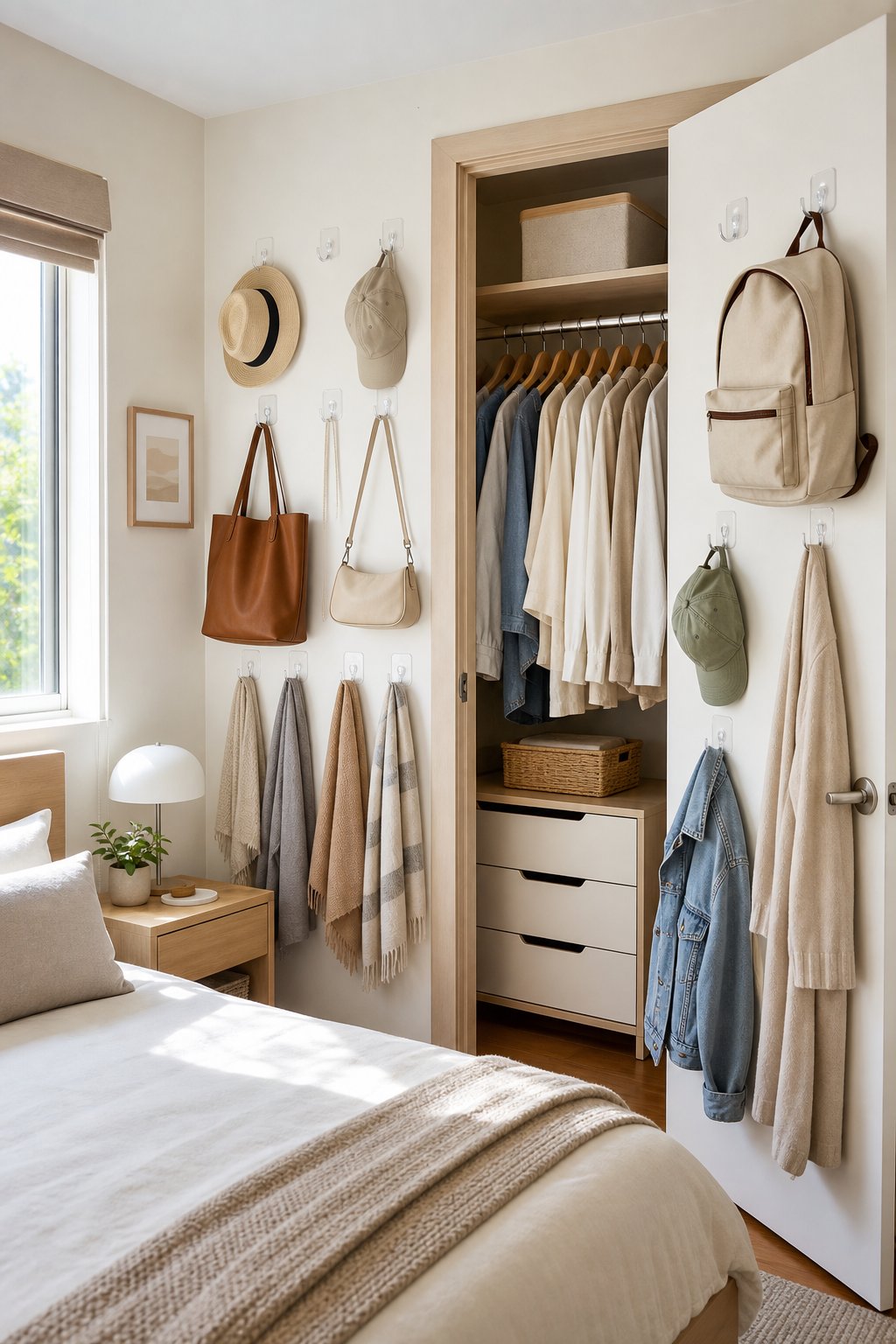
Though adhesive hooks are simple items, the impact of intentional placement as opposed to random use is the difference between a wall that looks cluttered and one that looks purposeful and designed.
Select adhesive hooks that have a weight limit of 2 to 10 pounds and a backing valid for your wall type. For your wall type, use adhesive pads that say removable and can be used on painted drywall or plaster. In a small room, hooks with a matte finish will be less obtrusive compared to shiny chrome hooks.
Each of your designated zones should have its own space: a bag hook by the door, a row of jewelry hooks by the mirror, etc. When each hook is used for a different purpose, the wall design seems purposeful. If one hook is being used to hold three items, however, everything quickly falls apart.
18) Tension rod organizer inside the closet
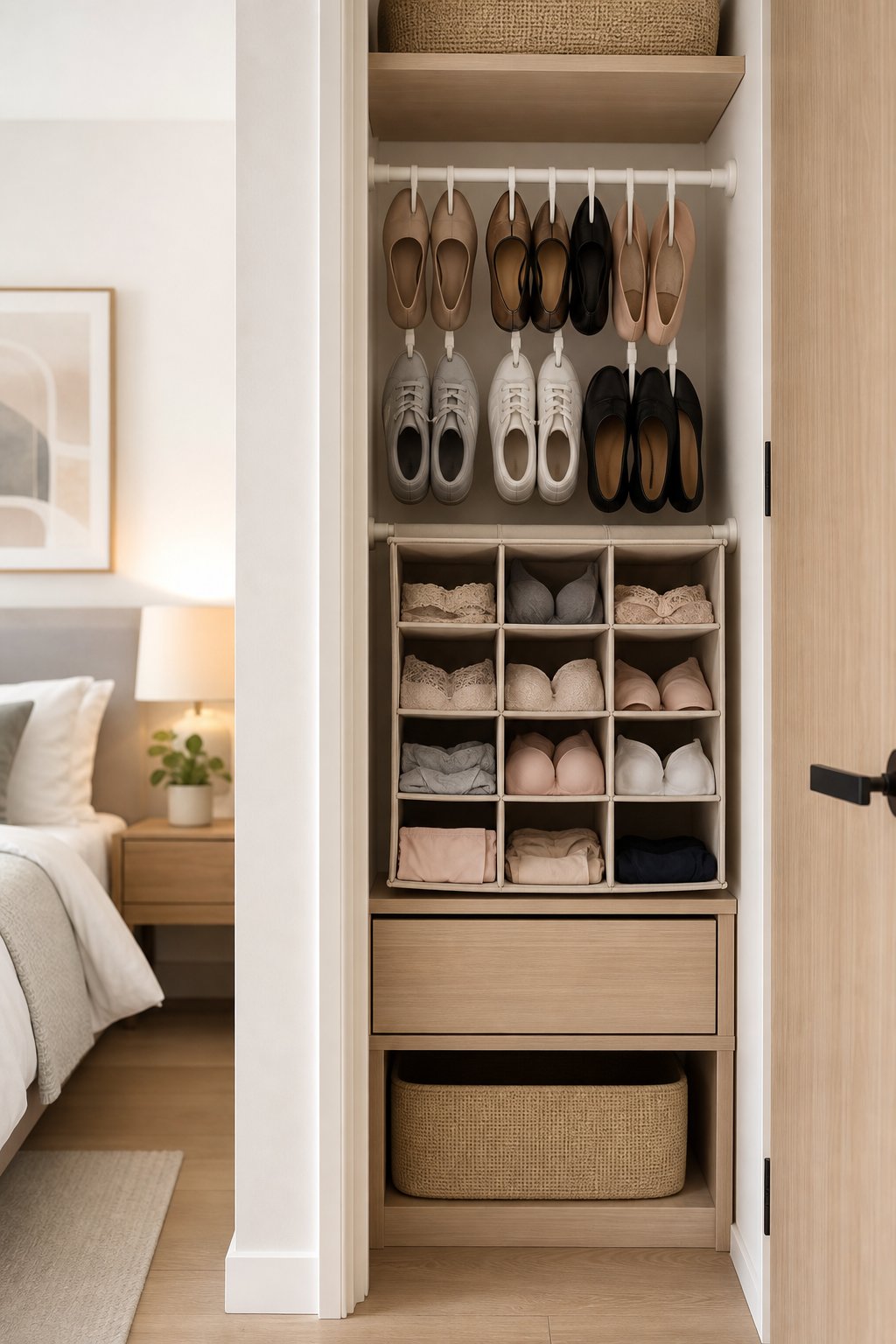
The same problem arises with small closets. They offer plenty of height to hang thing but not enough floor space. A tension rod with hanging pockets can help you use that vertical space to store shoes, undergarments, or socks without using up any floor space or having to screw anything into the walls.
Search for rods that will fit the width of your closet (usually 24-48 inches) with holders made from breathable materials such as cotton or mesh. Appropriate lightweight items include shoes and lingerie. However, fabric will sag and ultimately pull the rod down if heavy boots are stored. Use rust-free metal or heavy-duty plastic rods that have gripping end caps so they do not slide on the walls.
Some walls may be able to hold adhesive hooks or standalone racks better than a tension rod, especially under real weight. Simple, inexpensive, and completely reversible, however, walls with deeper texture and shallow closets may require more work.
19) Slim jewelry organizer mounted behind the door
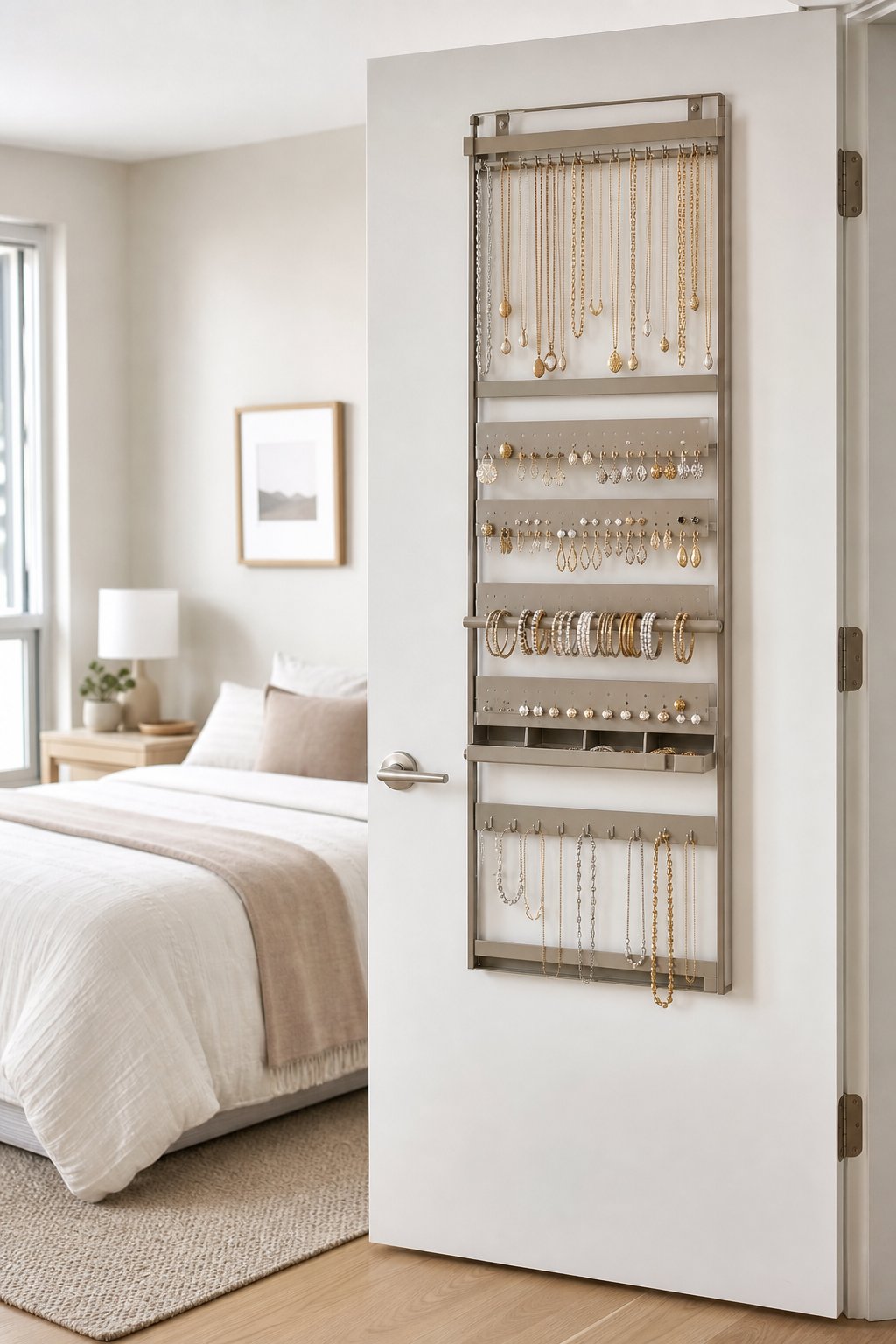
Having your dresser all messy with your necklaces will definitely not be the best way to start your day, and it usually makes everything so much difficult to do. A slim organizer that goes behind the door will keep that space clutter, tangle and necklaces free while you close the door.
Most bedroom doors have trim that gets damaged when something protrudes beyond the door. Therefore, the ideal measurements for these units are less than 12-18 inches wide and 2-3 inches deep. Good materials for these units are lightweight wood, clear acrylic, or a metal pegboard. If you're renting, over-the-door hooks or adhesive strips allow this to be reversible. If you plan to store heavier pieces, check weight limits and avoid loading it around 5 to 15 lbs.
A drawer for jewelry storage works well if you want to keep your rotating daily jewelry collection easy to reach and easy to see. If your collection includes many statement or costume necklaces, you may need a larger storage option. However, for most people's everyday jewelry, this is perfect to keep behind a door.
Honesty is key when it comes to storage in smaller bedrooms. Be honest with yourself with what you have and where you keep your things. Addressing your biggest concerns will create the feeling of added space in the room.