You know that feeling when you walk into a bedroom and immediately want to back out because the bed is eating the entire floor plan? I love helping people rethink their spaces, and small bedrooms are often the biggest offenders when it comes to feeling cramped, cluttered, and claustrophobic.
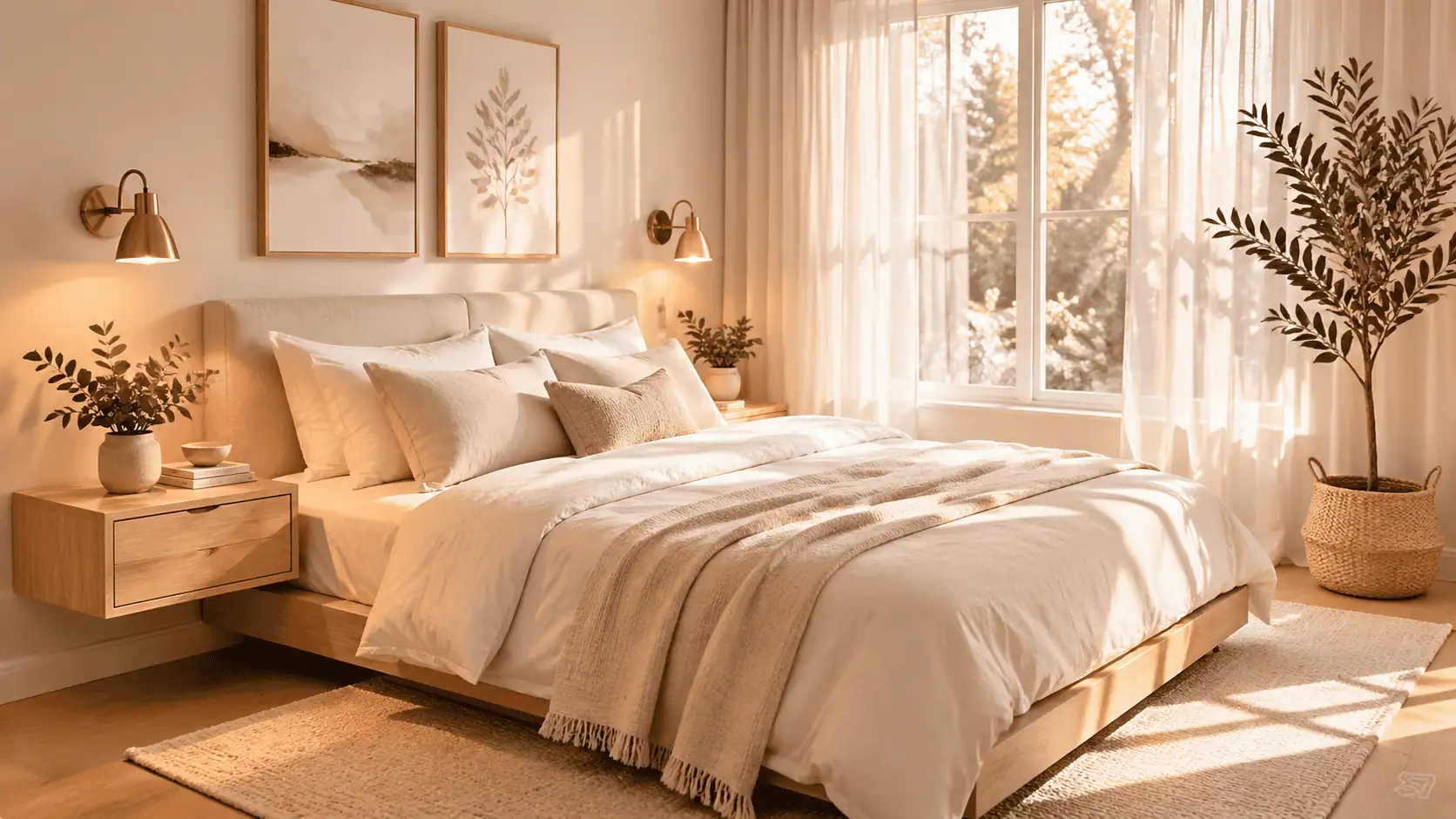
But a small bedroom doesn't have to feel like a closet. You don't need to knock down walls or replace everything you own to fix it. Usually, it comes down to how your eye moves around the room. When you tweak your layout, adjust your lighting, and make a few smart furniture swaps, you can trick the eye into seeing a much larger, more intentional space.
Before we dive into the specific ideas, let's look at a few quick furniture swaps that instantly reduce visual weight in a tight room.
Ready to reclaim your space? Here are 23 small bedroom ideas that will make your room feel open, functional, and beautifully styled.
1. Float Your Nightstands
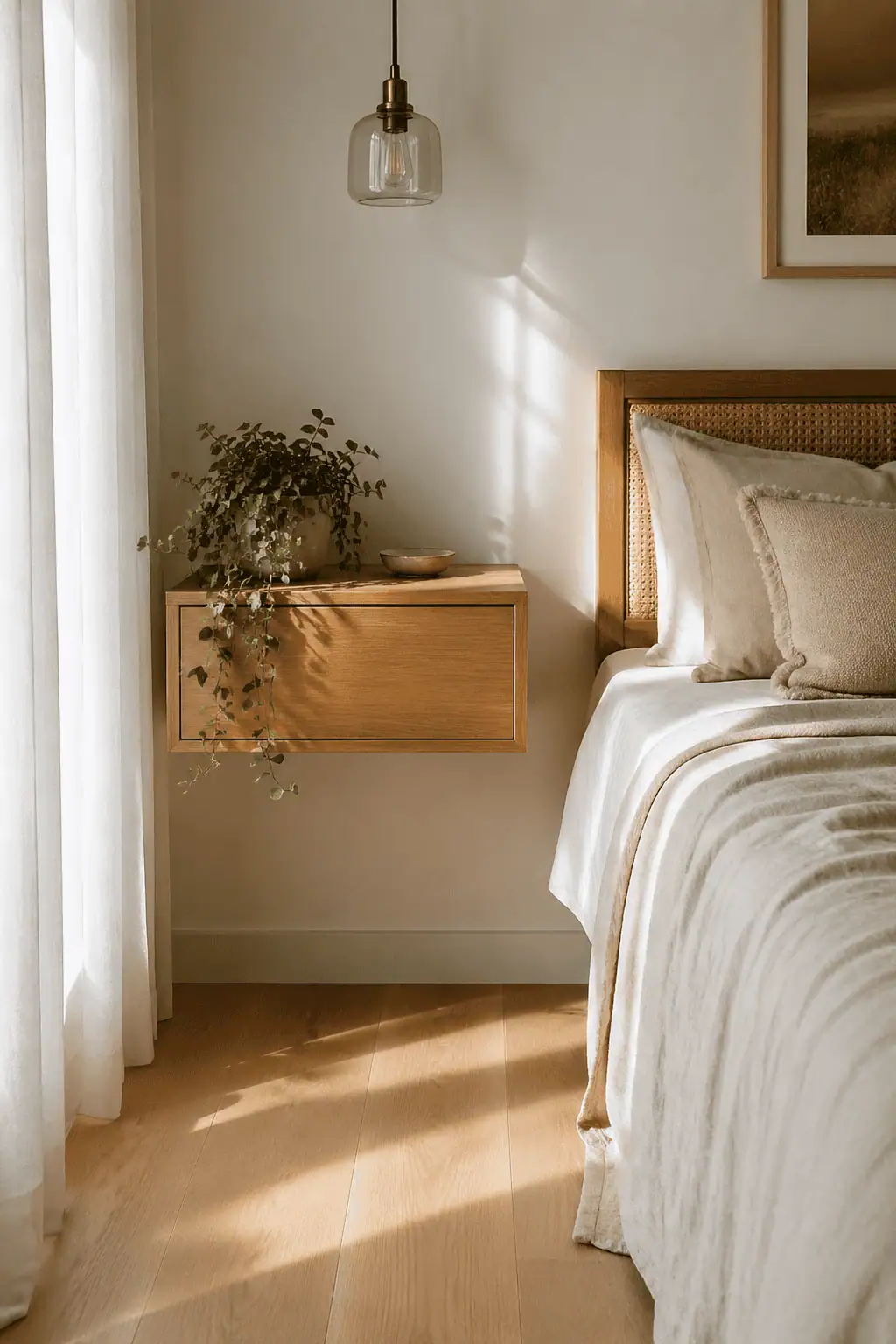
When floor space is at a premium, getting furniture off the ground is the easiest way to make a room feel larger. Mounting floating nightstands directly to the wall removes the bulky legs and base of traditional tables.
Because you can see the floor extending all the way to the wall, your brain registers the room as more spacious. Plus, it makes vacuuming underneath a breeze.
2. Push the Bed into a Corner
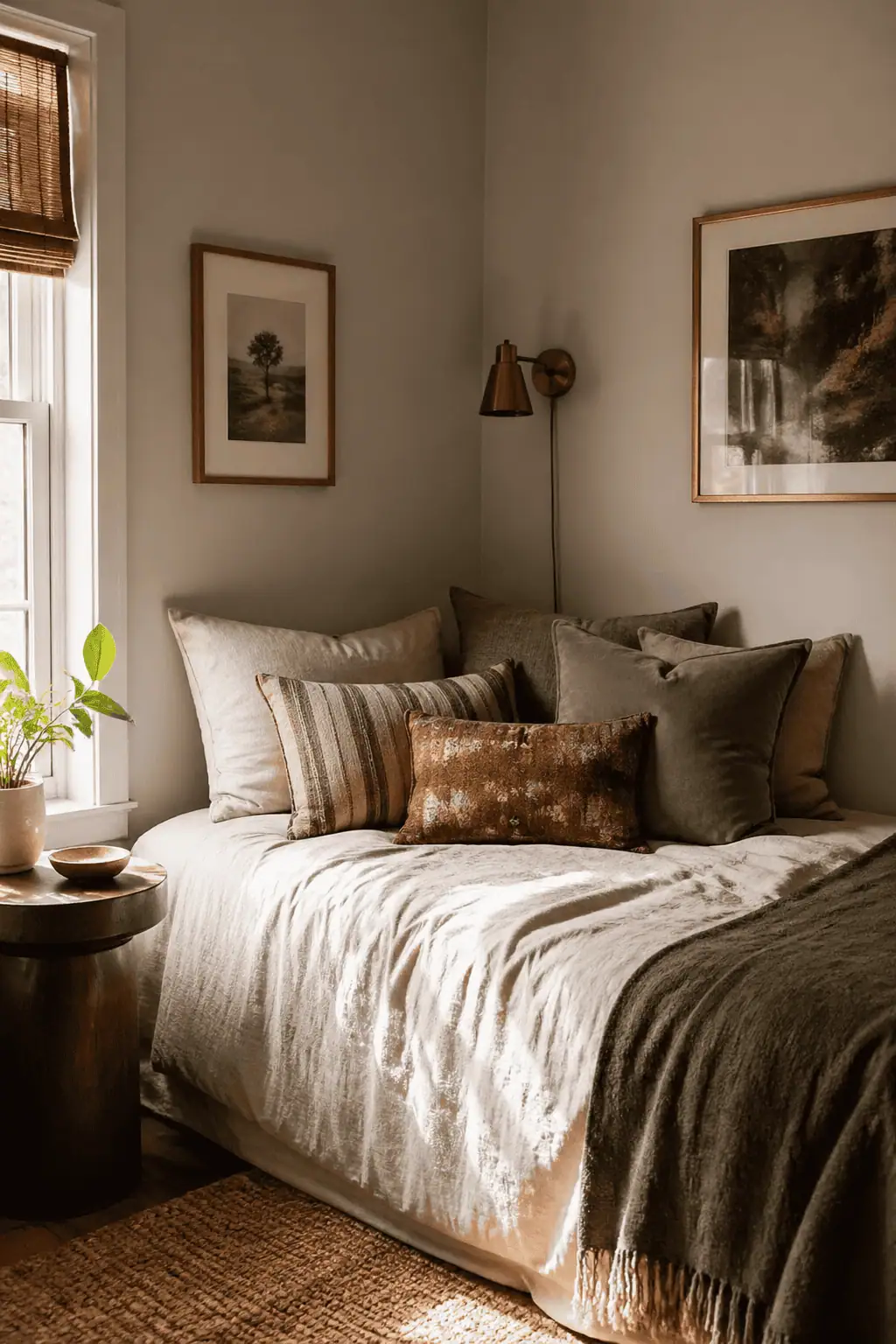
While the standard design rule is to center a bed on the longest wall, small rooms often require breaking the rules. Pushing your bed into a corner opens up the center of the room for walking, dressing, or adding a small desk.
To keep it from feeling like a dorm room, style it like a daybed. Add a mix of textured throw pillows along the side against the wall to create a cozy, intentional lounge area.
3. Ditch the Footboard
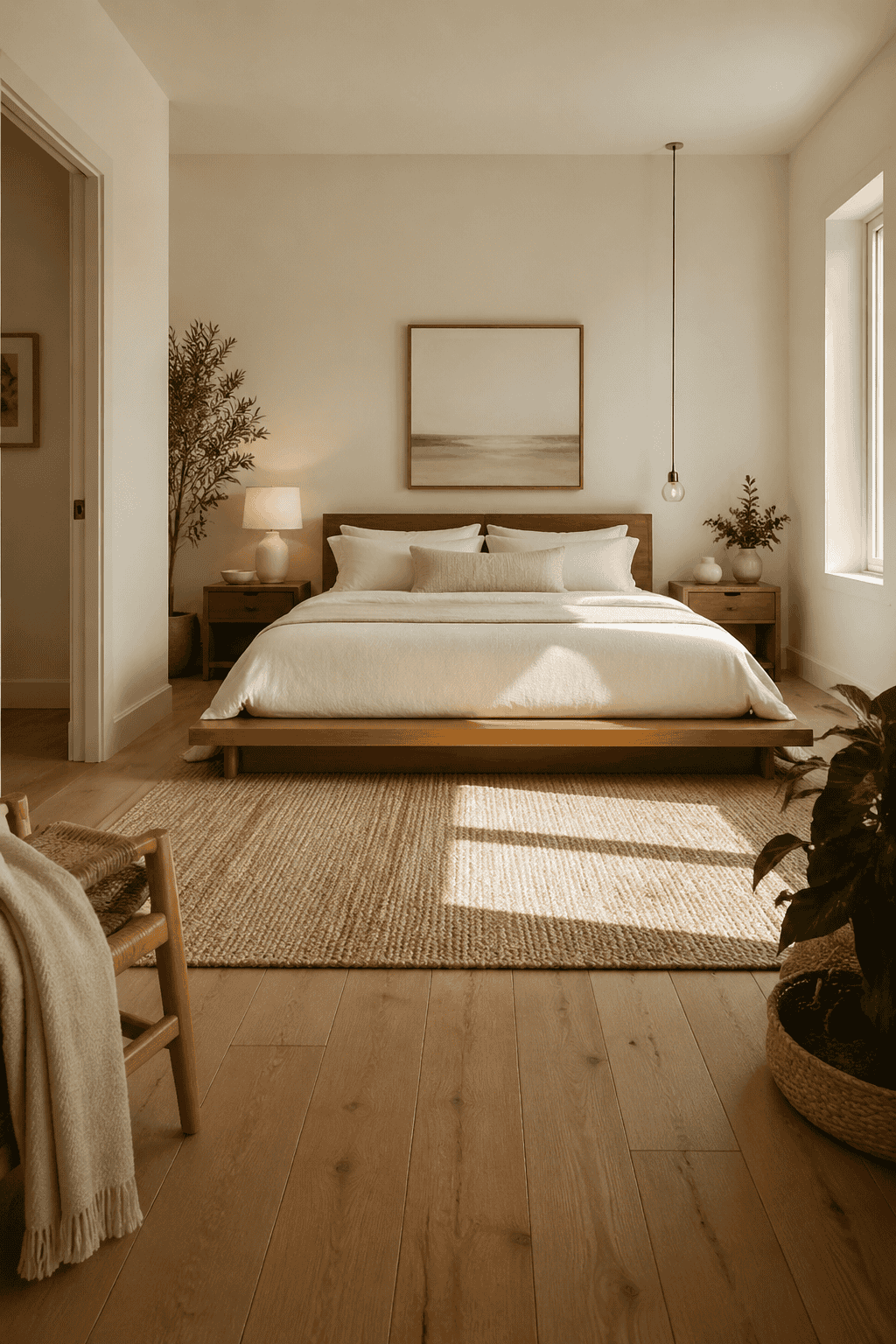
A footboard acts like a visual fence right in the middle of your room. It stops the eye and chops the space in half, making the distance between the door and the bed feel incredibly short.
Swapping to a simple platform bed or a frame with no footboard allows your gaze to travel smoothly over the bed, instantly making the room feel longer and less restricted.
4. Pull Furniture Slightly Away from the Wall
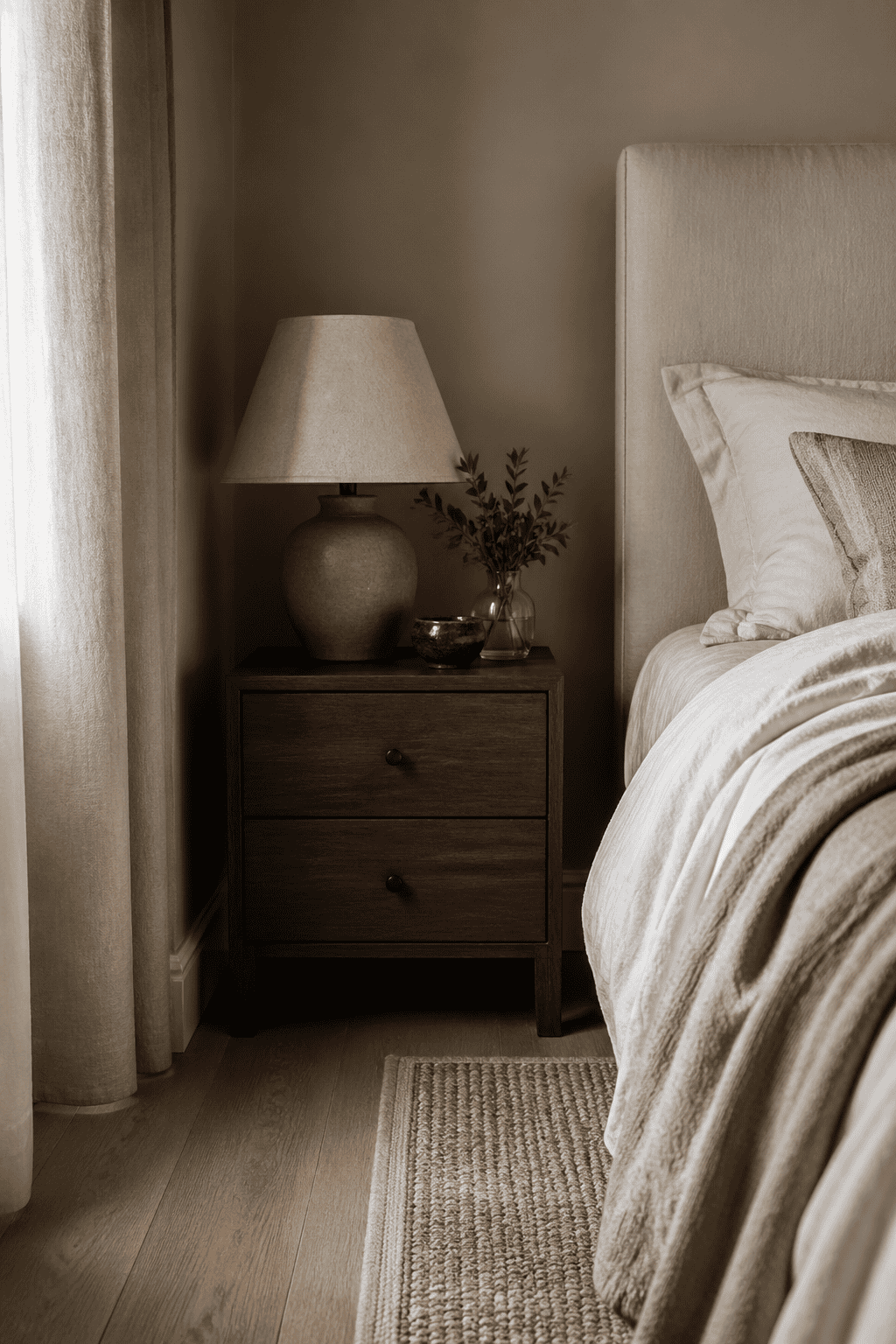
It sounds counterintuitive to pull furniture away from the wall in a small room, but jamming everything flush against the baseboards can actually make a space feel tighter, as if the walls are closing in.
Leaving just an inch or two of breathing room behind your headboard or dresser creates a sense of depth. It implies that there is space to spare, giving the room a more relaxed, airy feel.
5. Use a Storage Bench at the Foot of the Bed
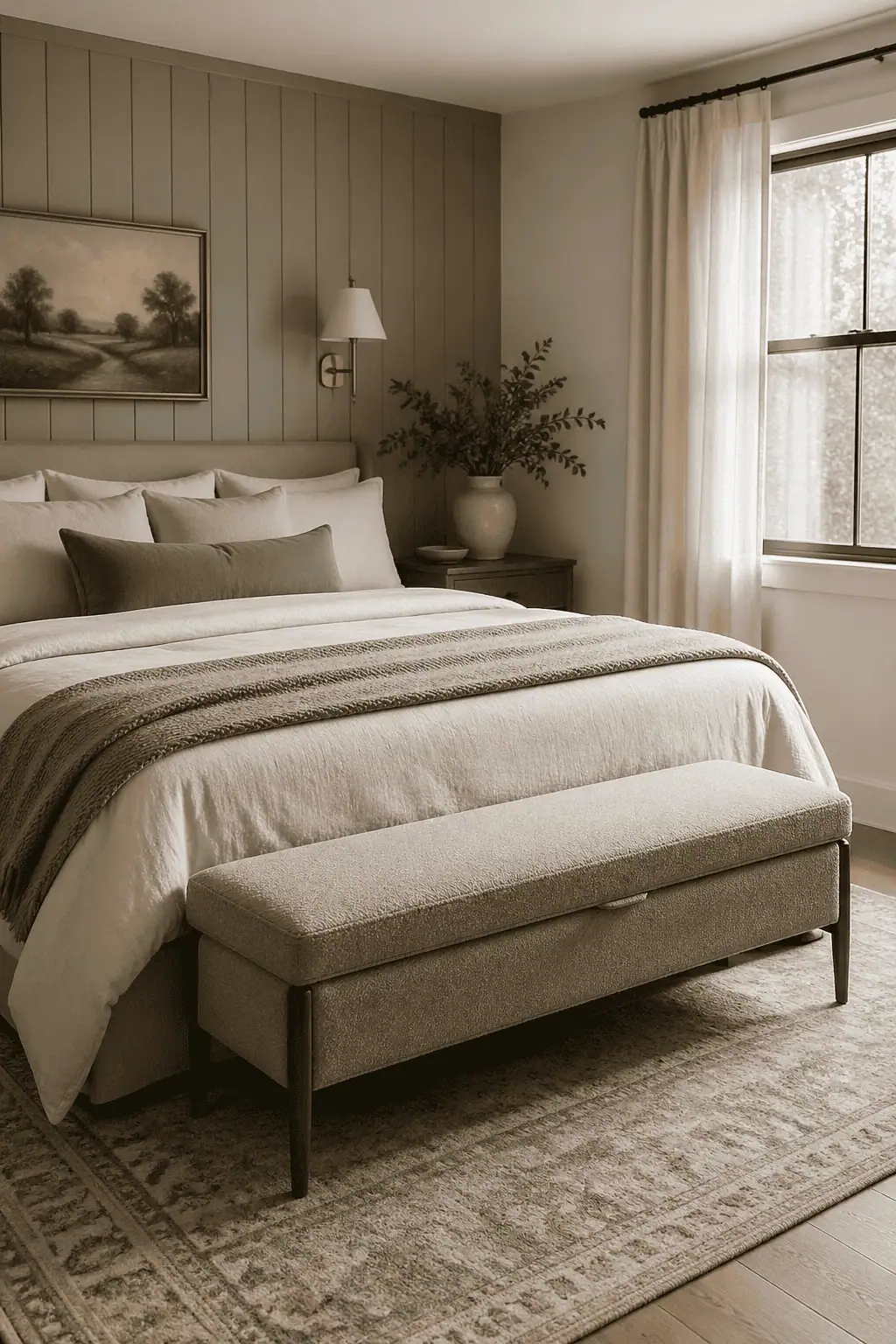
If you have a sliver of space at the end of your bed, a narrow storage bench is a lifesaver. It provides a spot to sit while putting on shoes and hides bulky items like extra blankets or out-of-season sweaters.
Look for a bench with legs rather than a solid base to keep the visual weight light. Upholstered options also add a nice layer of texture to the room.
6. Choose Leggy Furniture
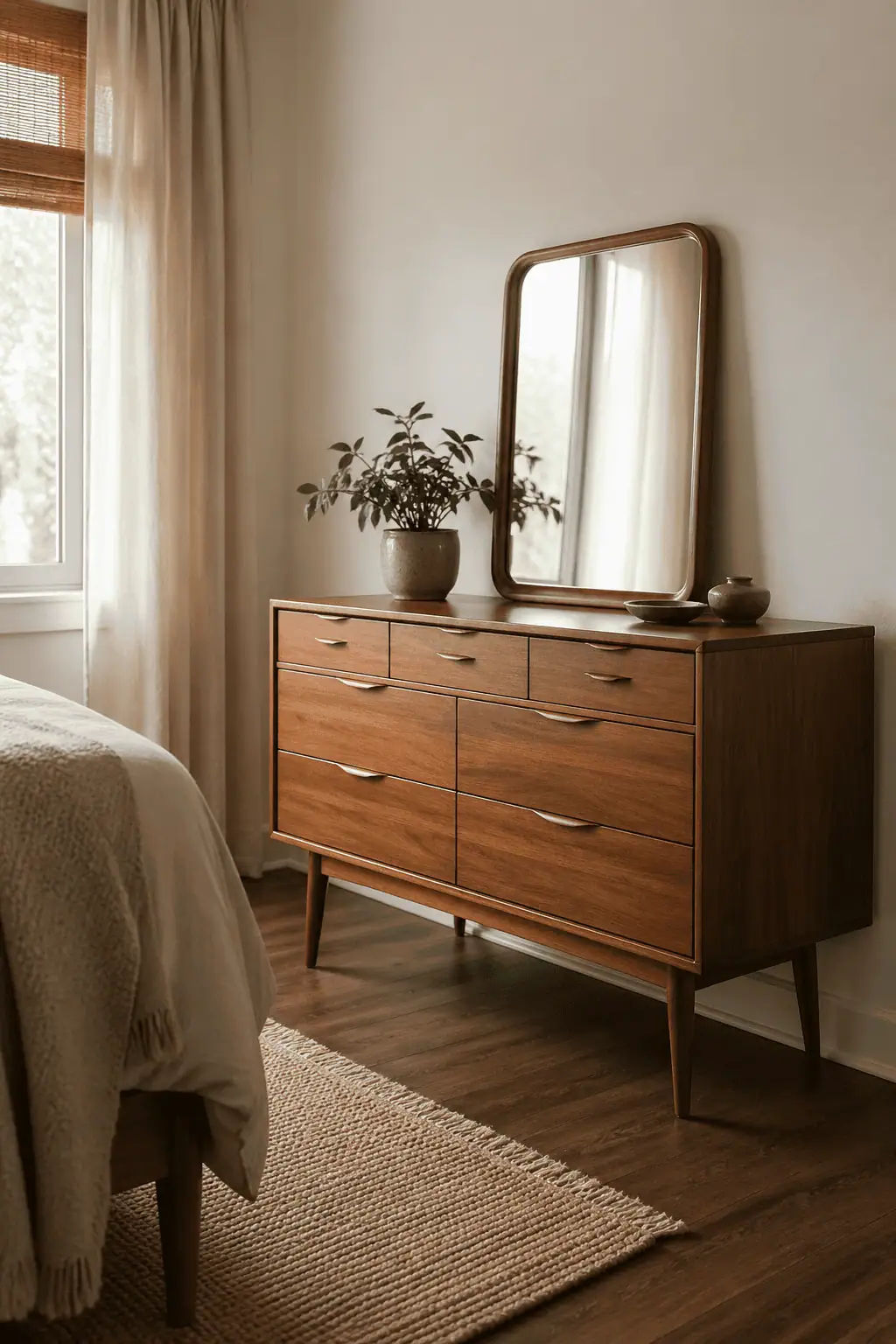
Furniture that sits directly on the floor-like a blocky dresser or a solid armchair-absorbs light and looks heavy. In a small bedroom, you want light to flow around and under your pieces.
Opt for mid-century modern inspired pieces or anything with tapered legs. The more floor you can see, the bigger the room will feel.
7. Color Drench the Room
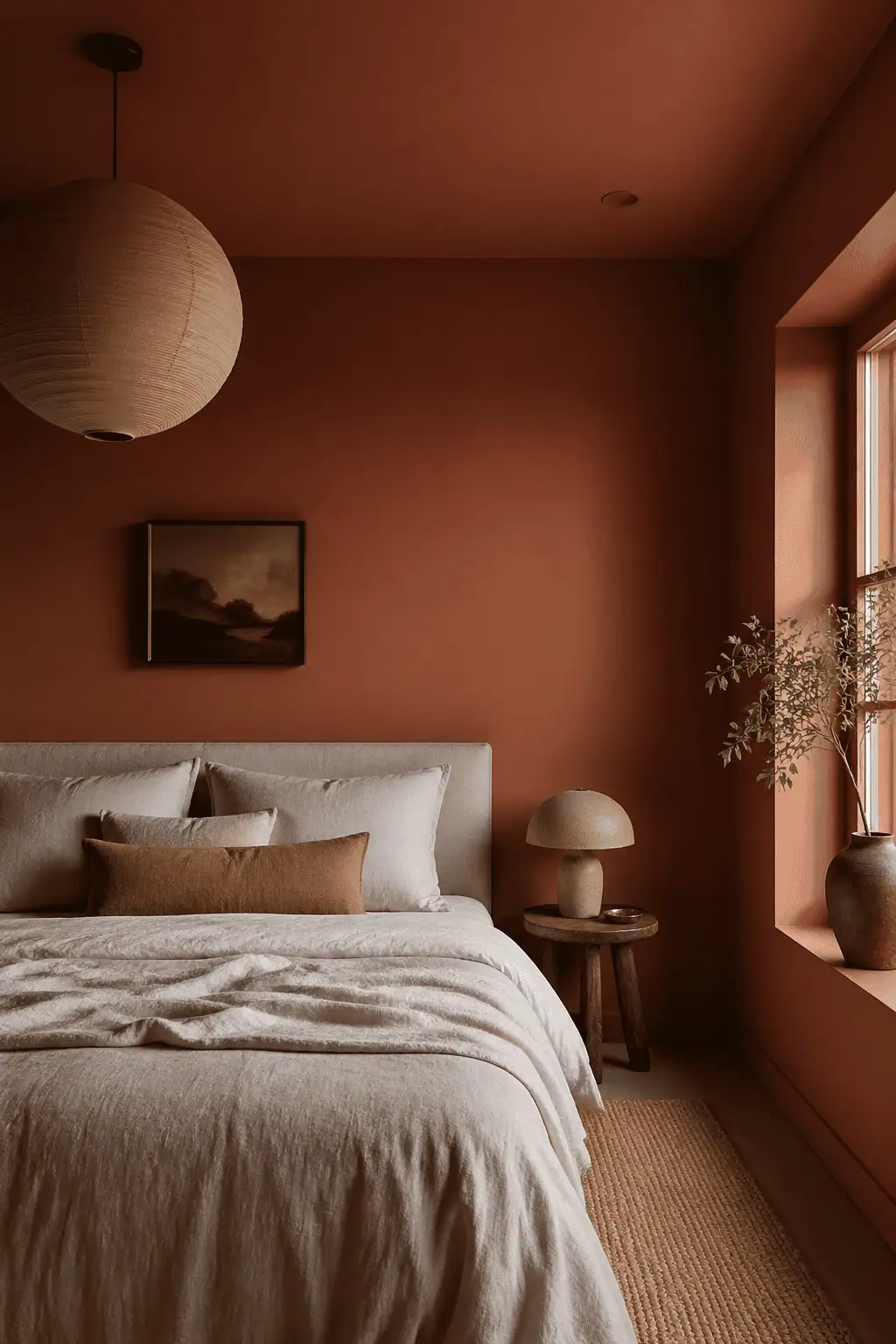
Painting your walls, trim, and ceiling the exact same color is known as color drenching. In a small bedroom, contrasting white trim against a dark wall outlines the exact dimensions of the room, highlighting how small it is.
By painting everything one cohesive color, you blur the hard lines where the walls meet the ceiling. The corners seem to recede, making the space feel expansive and incredibly cozy.
8. Mount Wall Sconces Instead of Table Lamps
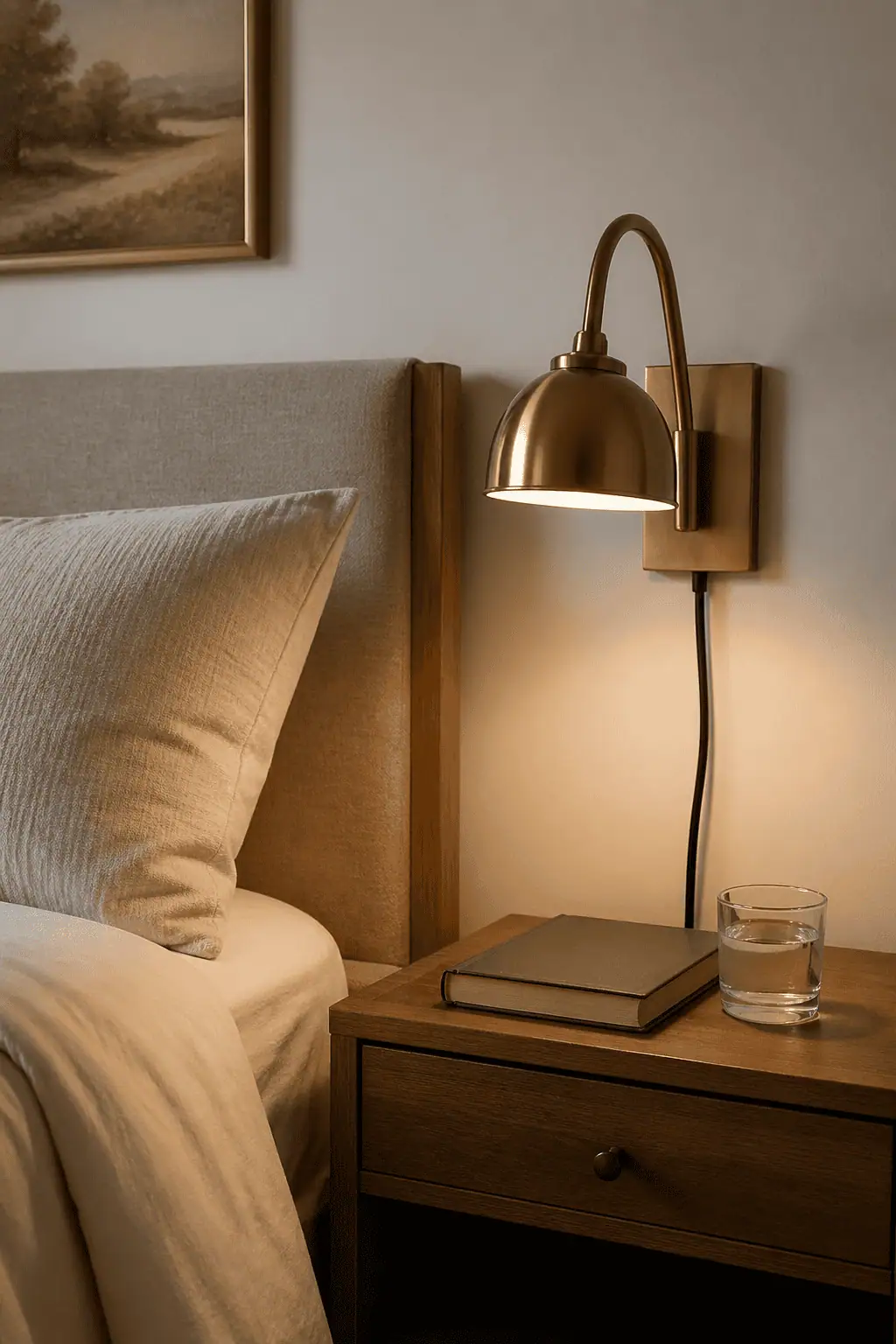
Table lamps take up a massive amount of real estate on a small nightstand, leaving you with no room for a book, a glass of water, or your phone charger.
Installing wall sconces frees up that surface area entirely. If you rent or don't want to deal with hardwiring, plug-in sconces with cord covers are a stylish, renter-friendly alternative.
9. Hang a Large Mirror Opposite the Window
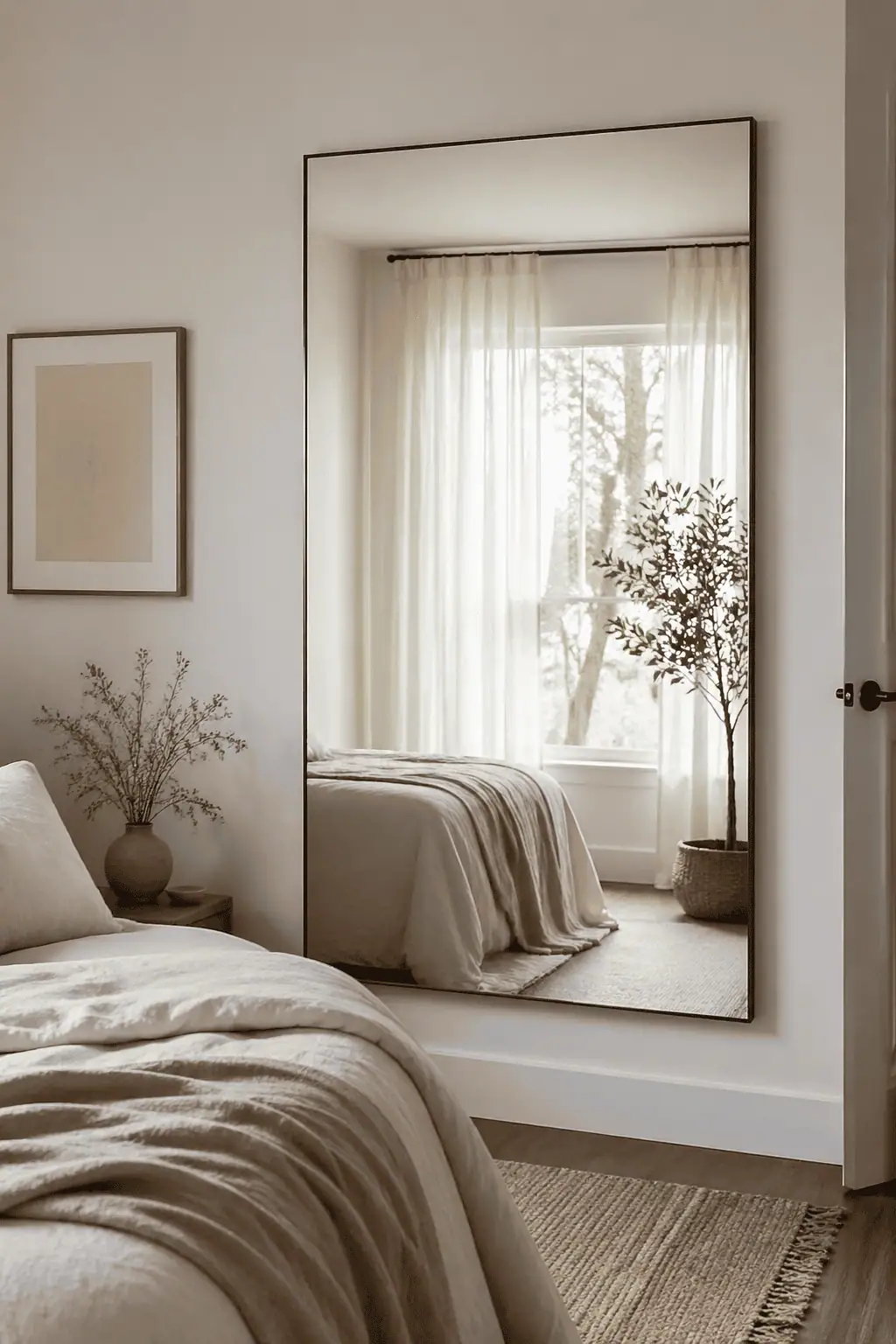
Mirrors are the oldest trick in the book for small spaces, but placement is everything. Hanging a large mirror directly opposite your window bounces natural light back into the room.
This effectively acts as a second window, doubling the light and creating the illusion of depth. Choose a simple, thin frame so the mirror doesn't feel too heavy on the wall.
10. Opt for a Monochromatic Color Palette
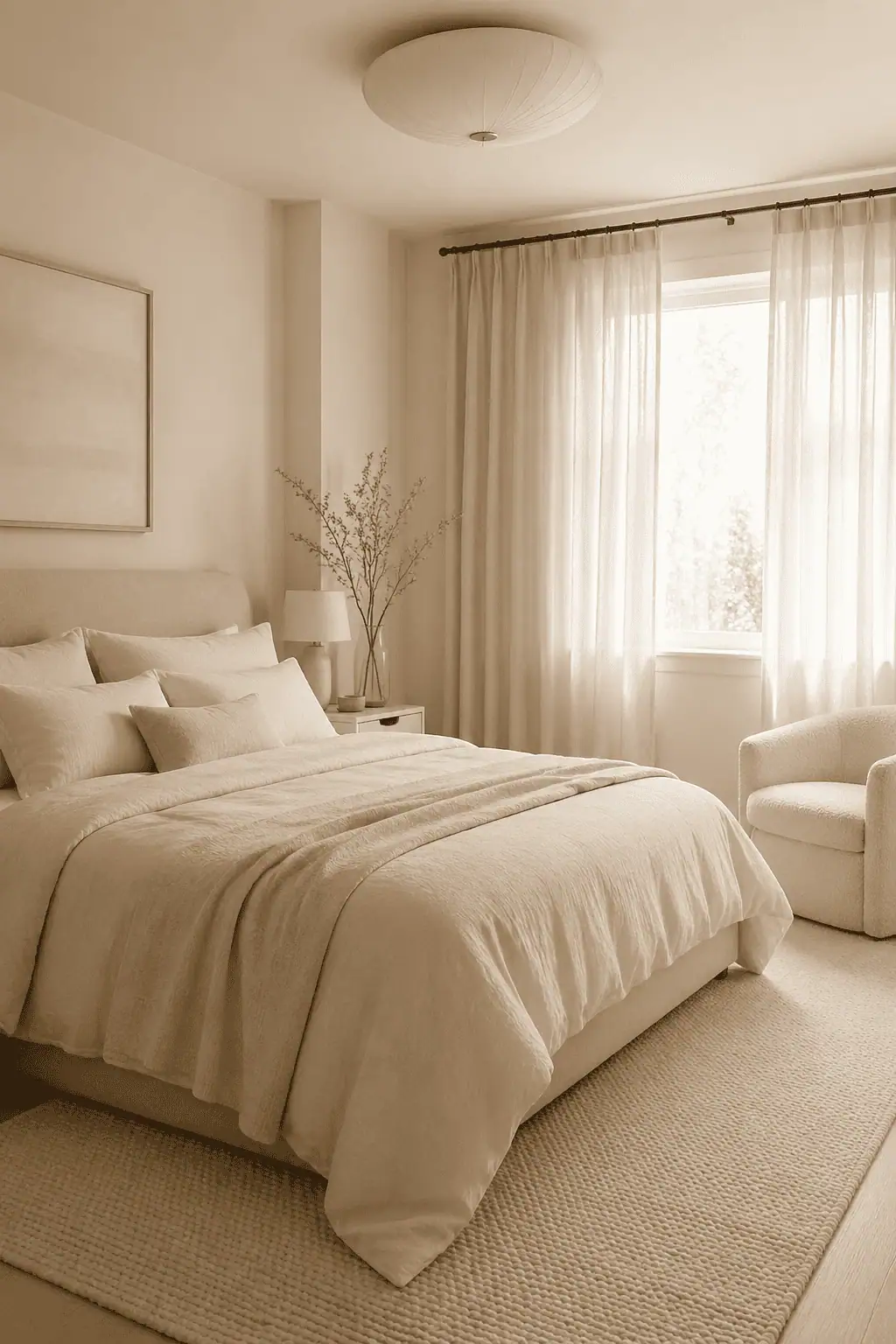
High-contrast patterns and wildly different colors can make a small room feel chaotic and visually cluttered. A monochromatic palette-using varying shades of the same color-creates a soothing, unified look.
If you love neutrals, layer creams, warm beiges, and soft whites. The lack of sharp contrast allows the eye to glide easily around the room, making it feel serene and spacious.
11. Keep Window Treatments Light and Breezy
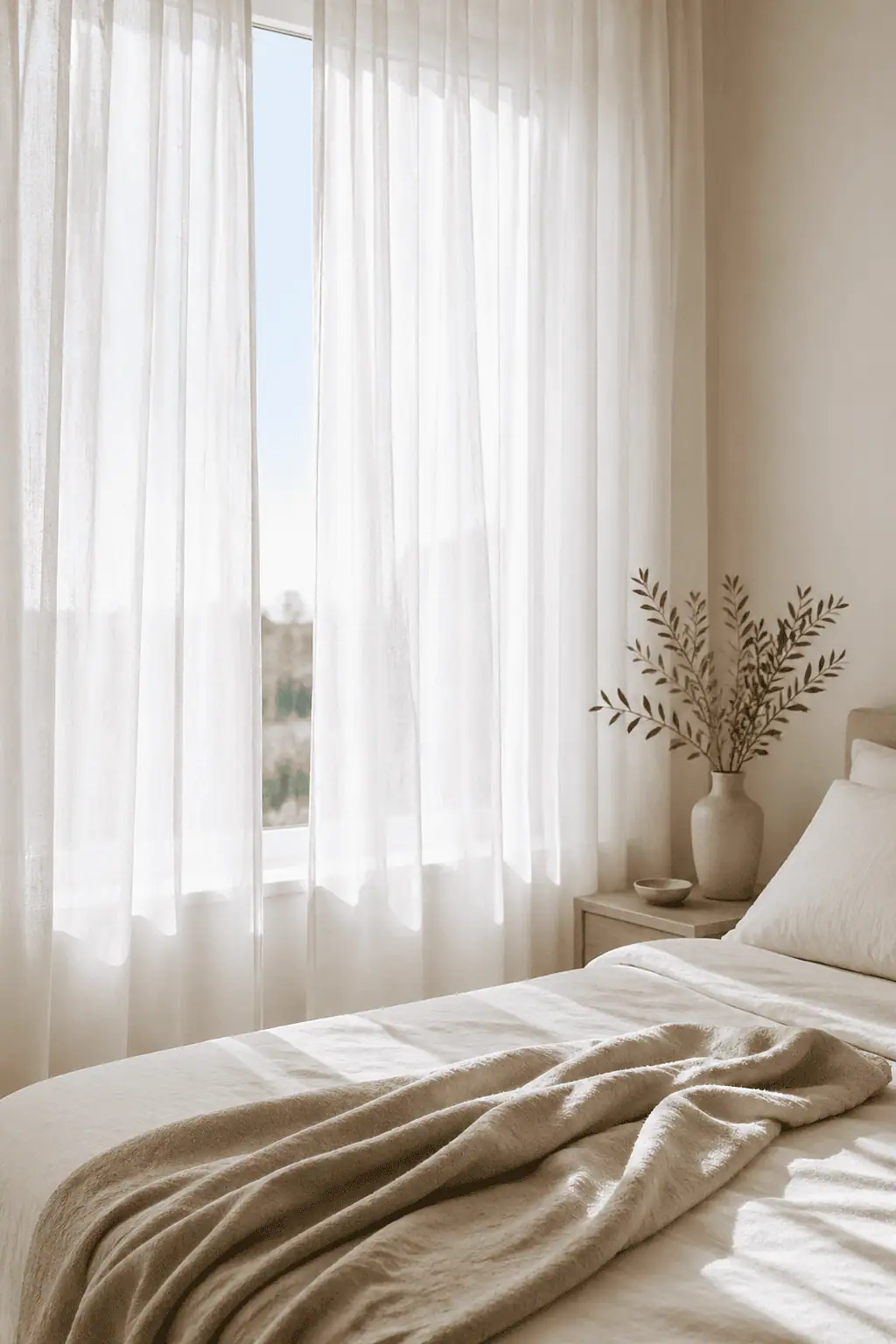
Heavy velvet drapes or dark, opaque curtains can make a small bedroom feel like a cave. You want to maximize whatever natural light you have.
Swap heavy fabrics for light-filtering linen or sheer cotton panels. If you need darkness to sleep, pair sheer curtains with a low-profile blackout roller shade mounted inside the window frame.
12. Lean a Floor Mirror Behind a Nightstand
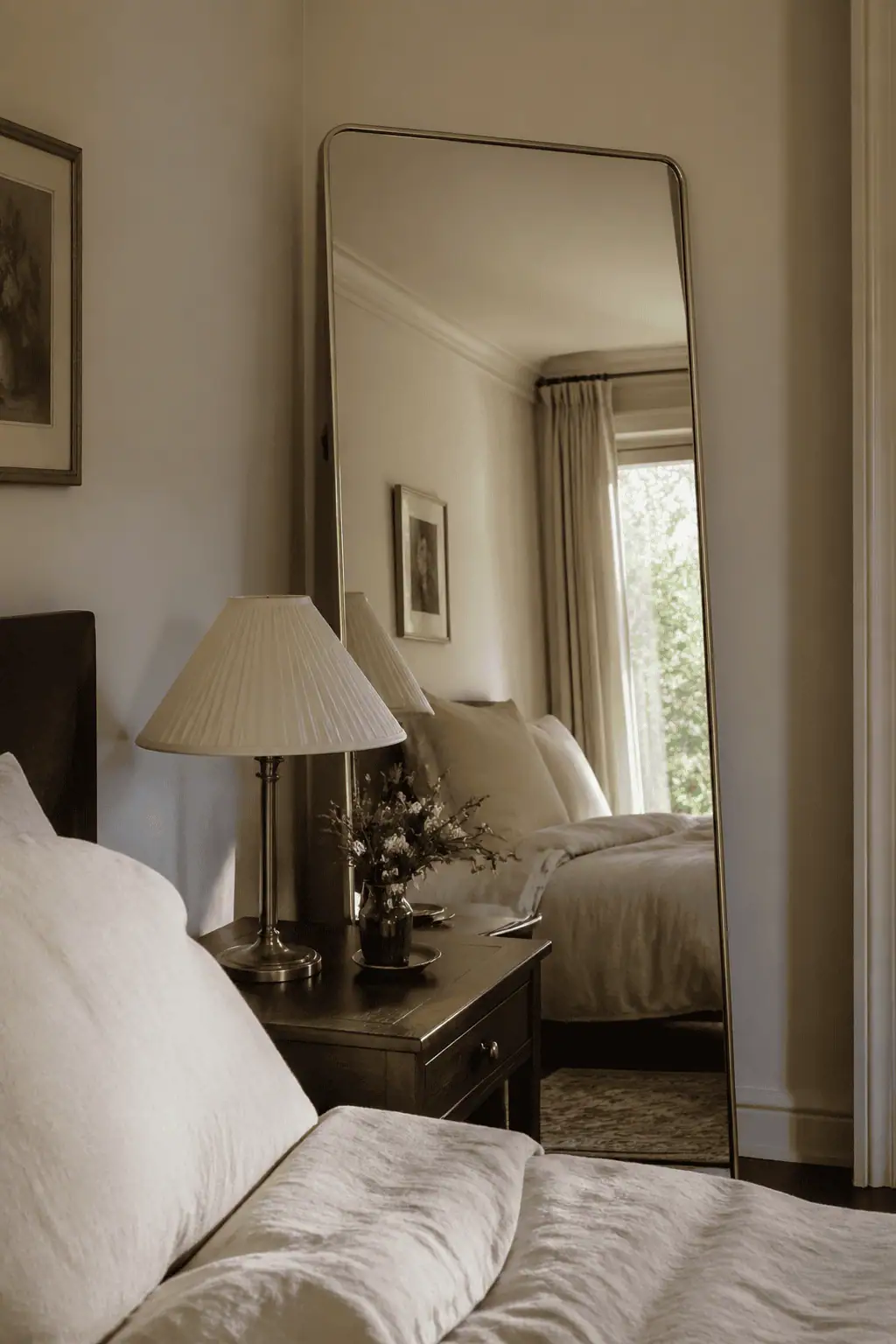
If you don't have wall space for a large mirror, try leaning a tall floor mirror behind one of your nightstands. It sounds unusual, but it creates a beautiful layered effect.
The mirror reflects the light from your lamp and gives the illusion that the floor extends further back than it actually does. It's a stylist secret that adds instant depth.
13. Maximize Under-Bed Storage with Rolling Bins
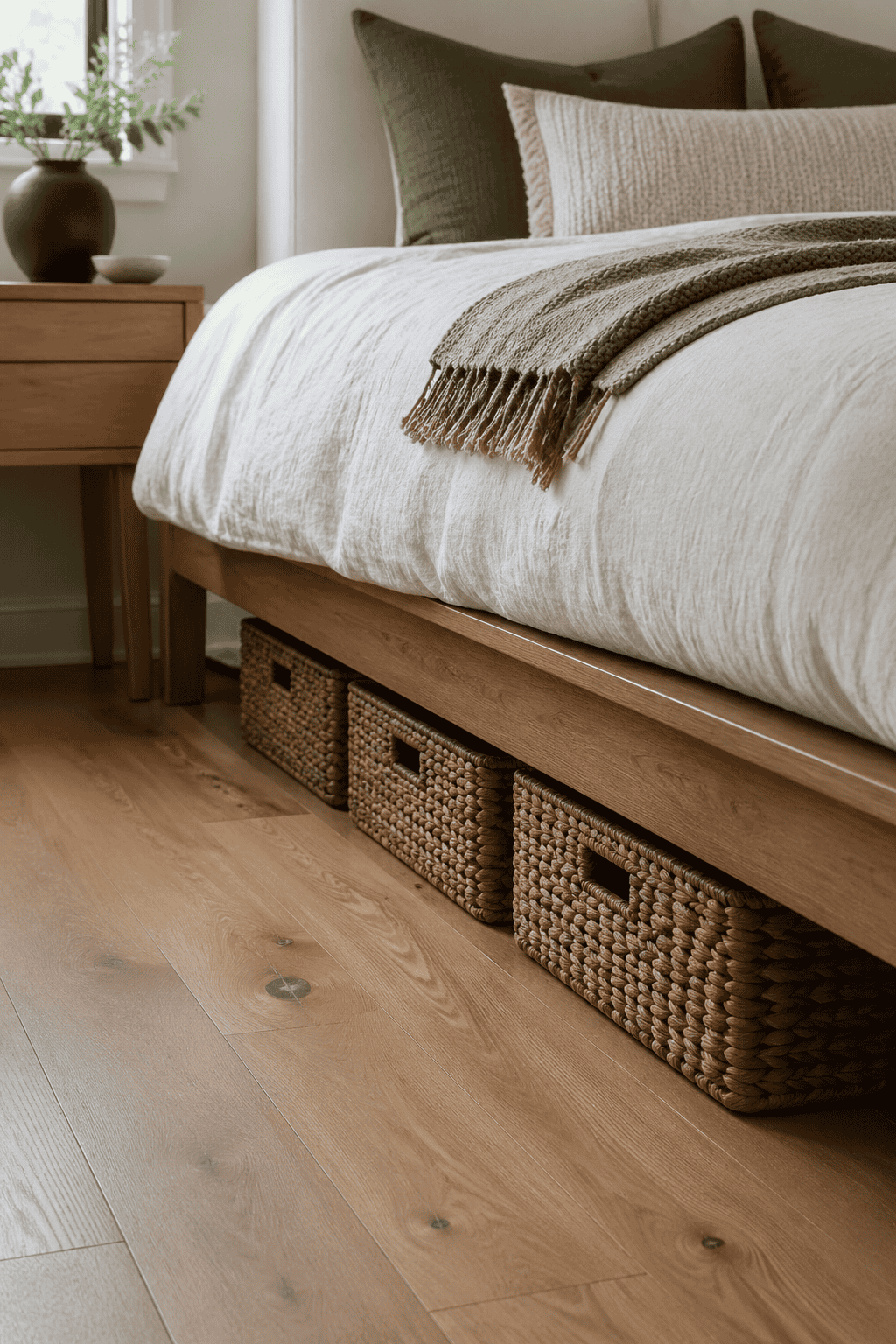
The space under your bed is prime real estate. If you don't have a storage bed, utilize this area to keep clutter out of sight, which is crucial for maintaining an airy feel.
Use low-profile rolling bins or beautiful woven baskets that slide easily. Keep them pushed back just enough so they aren't immediately visible when you walk into the room.
14. Install a Floating Shelf Above the Door
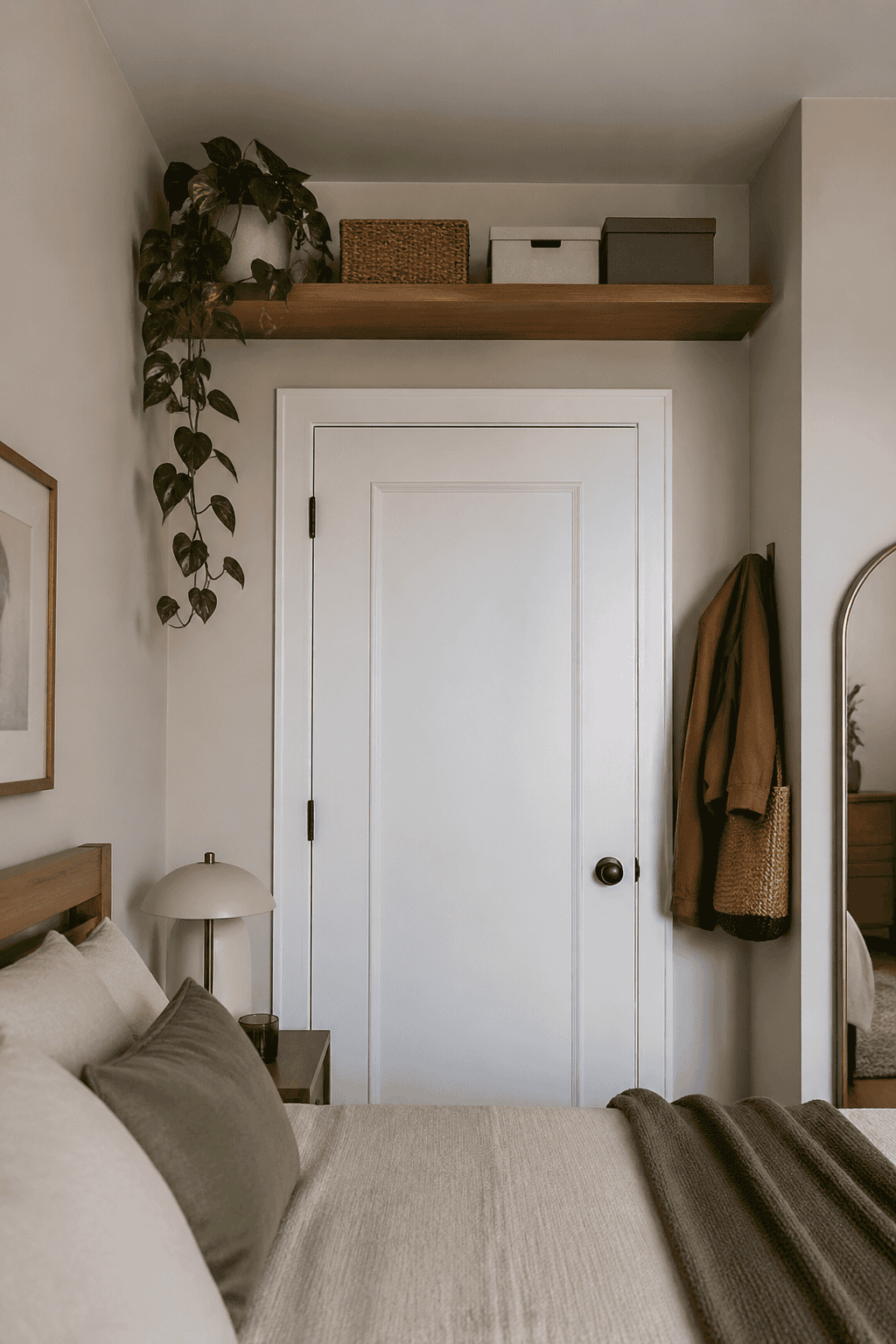
When floor space is gone, look up. The 12 to 18 inches of wall space above your bedroom door is almost always wasted.
Installing a simple floating shelf here provides a perfect spot for storing books, decorative boxes, or out-of-season items. It draws the eye upward and utilizes dead space without encroaching on the room.
15. Swap a Wide Dresser for a Tallboy
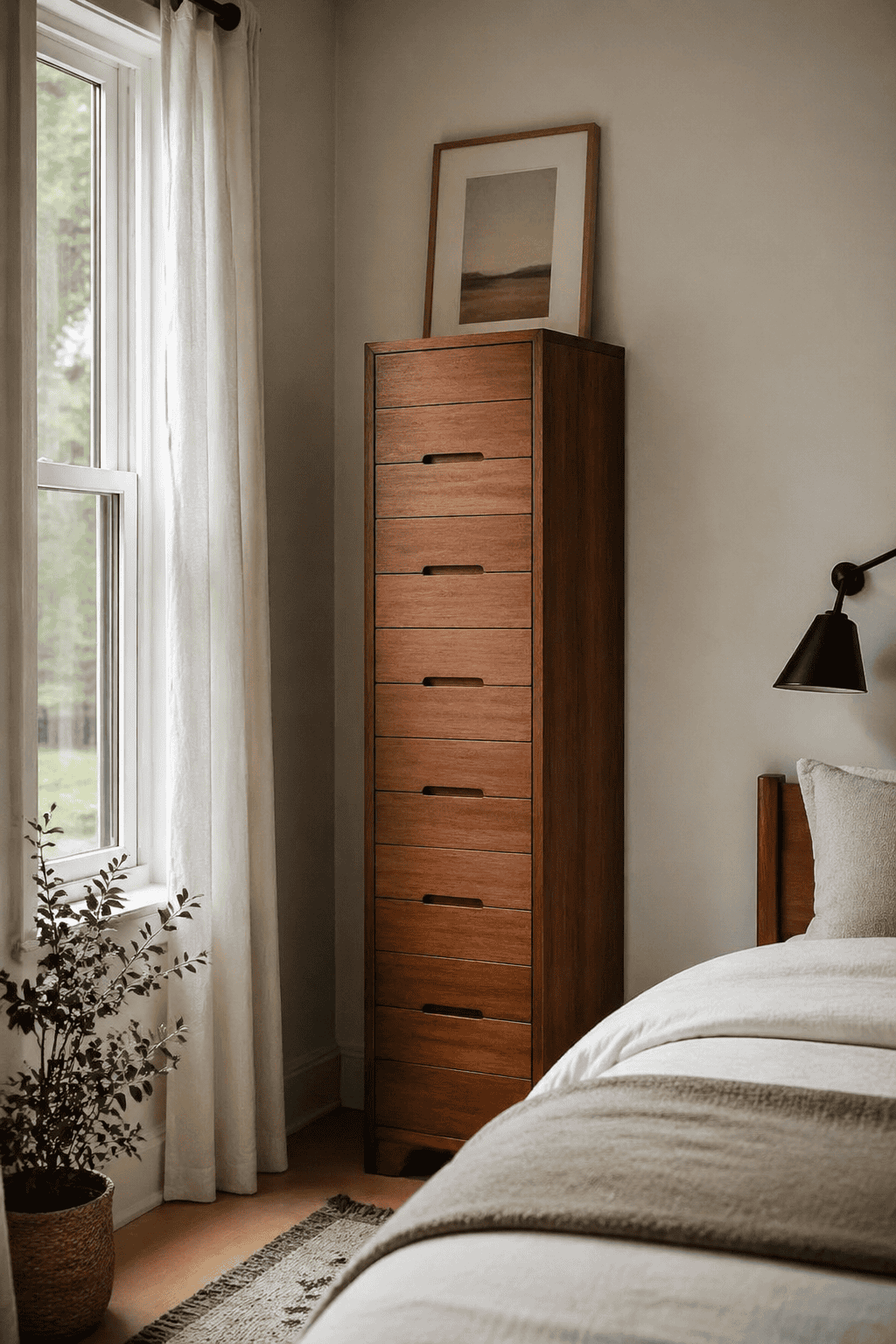
A wide, six-drawer dresser eats up a massive amount of floor space. If your room feels cramped, it's time to trade width for height.
A tallboy dresser gives you the same amount of storage but takes up half the footprint. This simple swap can open up a corner or create enough space for a small reading chair.
16. Use a Headboard with Built-In Storage
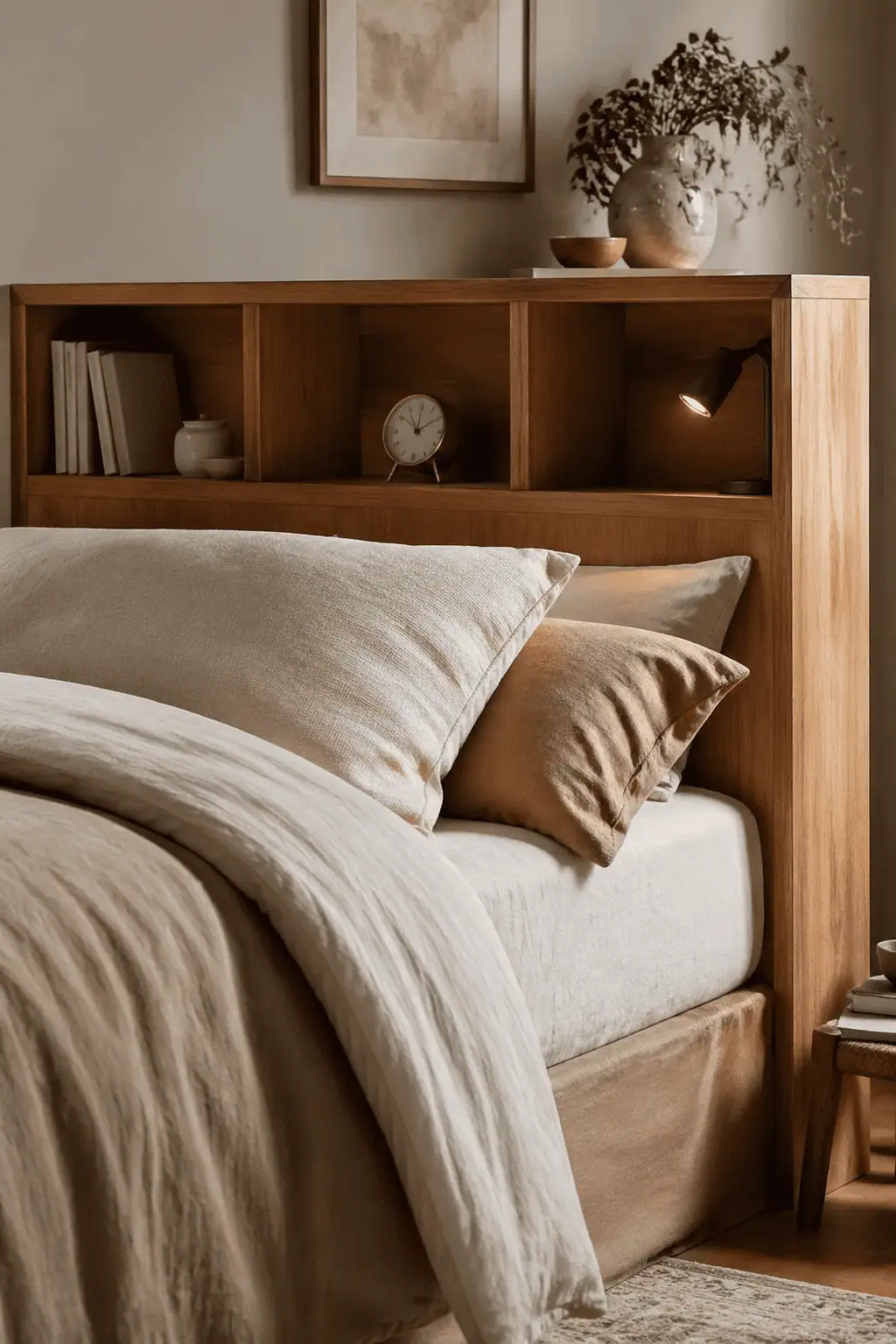
If your bedroom is so small that you literally cannot fit nightstands, a storage headboard is the perfect solution. These feature small shelves or cubbies built right into the frame.
They provide just enough space to rest your phone, a book, and a small reading light, eliminating the need for side tables entirely while keeping the room looking tidy.
17. Add Hooks to the Back of the Door
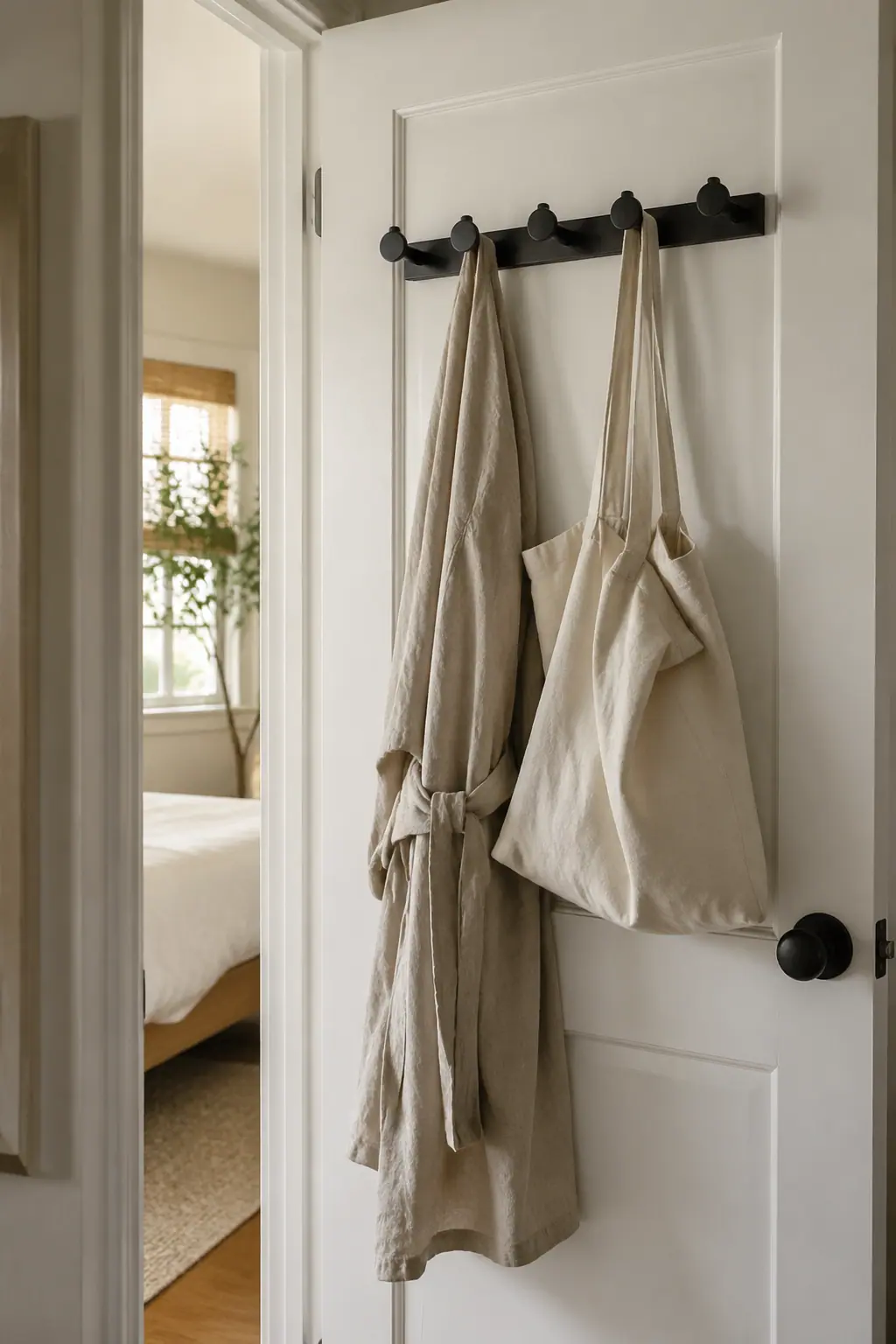
Clutter is the enemy of a small space. A single chair piled high with clothes can make a small bedroom feel instantly messy and claustrophobic.
Install a row of stylish brass or matte black hooks on the back of your bedroom door or inside your closet door. It gives you a dedicated spot to hang robes, bags, and tomorrow's outfit, keeping surfaces clear.
18. Turn a Narrow Desk into a Nightstand
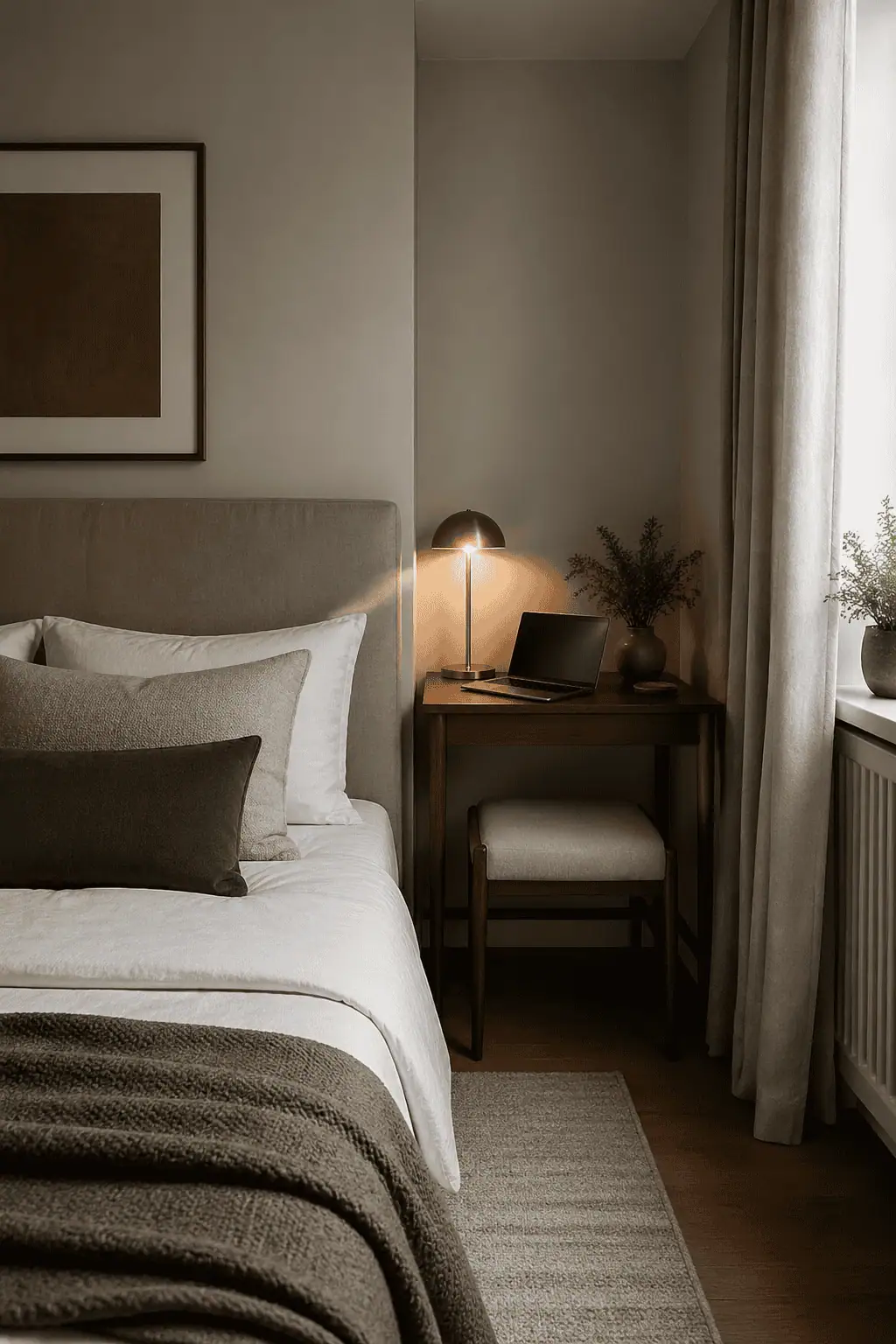
If you need a workspace but don't have room for a desk and a nightstand, combine the two. A narrow writing desk placed right next to the bed can serve double duty.
Pull up a slim chair or a stool that can tuck completely underneath when not in use. It's a highly functional layout choice that prevents the room from feeling over-furnished.
19. Hang Curtains High and Wide
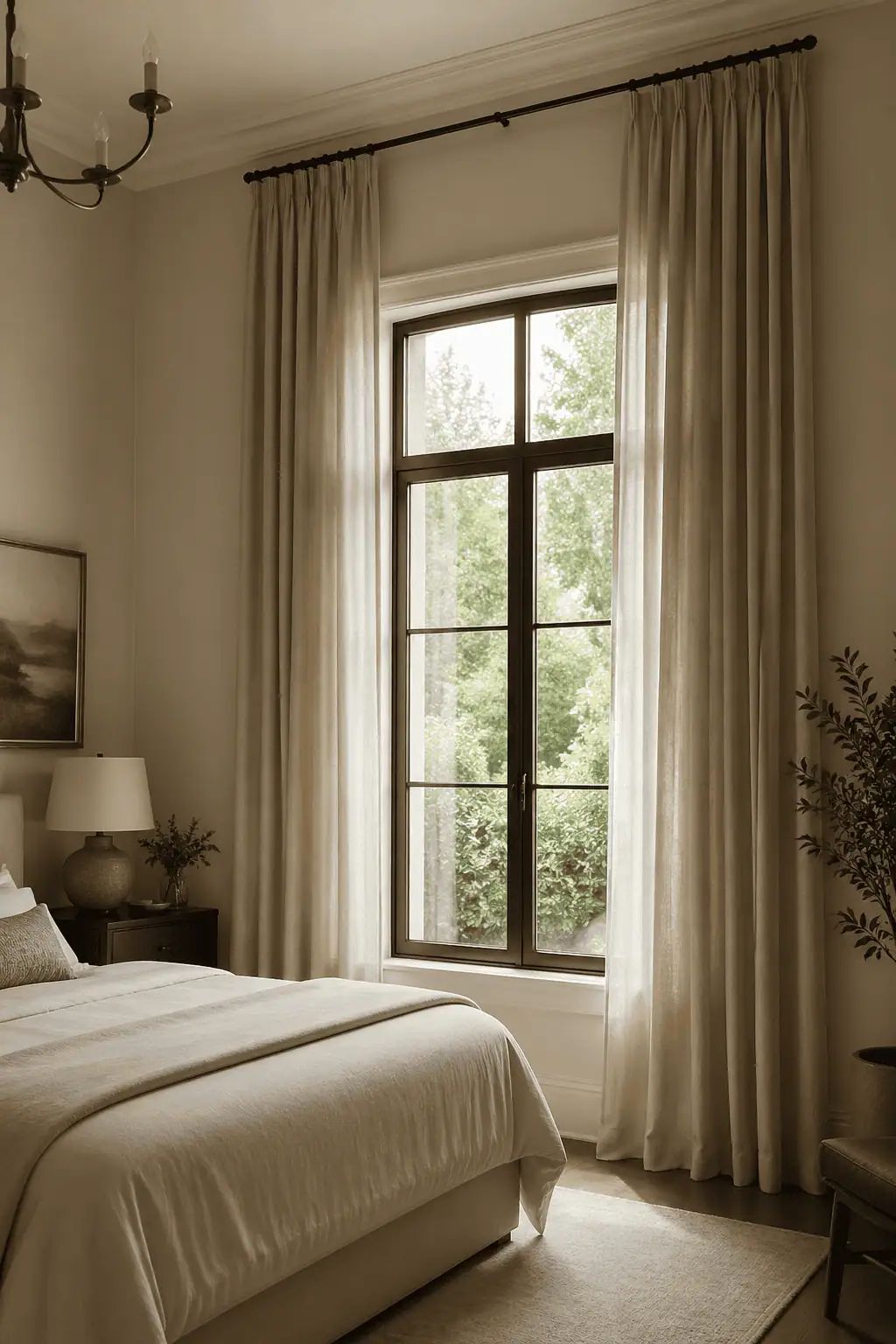
This is one of my favorite styling tricks. Don't mount your curtain rod right above the window frame. Instead, hang it just a few inches below the ceiling and extend the rod 10 to 12 inches past the window on either side.
When the curtains are open, they frame the window rather than blocking the glass. This makes the window look massive and draws the eye all the way up, making the ceilings feel taller.
20. Size Up Your Area Rug
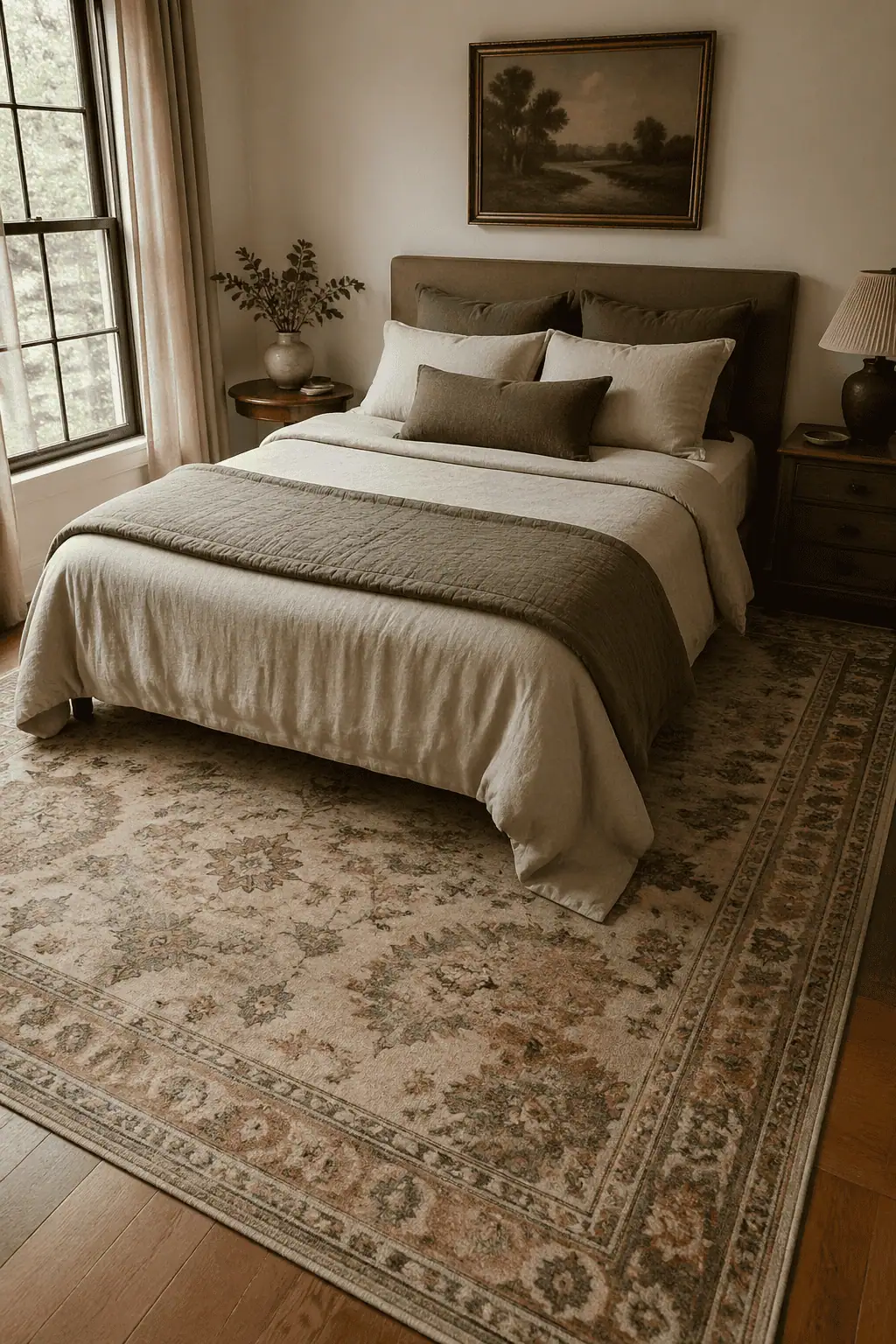
It's a common mistake to buy a tiny rug for a tiny room. A small rug floating at the end of the bed chops up the floor plan and makes the room look disjointed.
Instead, choose a rug large enough that the lower two-thirds of the bed and the nightstands can sit on it. A larger rug anchors the furniture and makes the floor space feel expansive and cohesive.
21. Keep Bedding Simple and Tucked
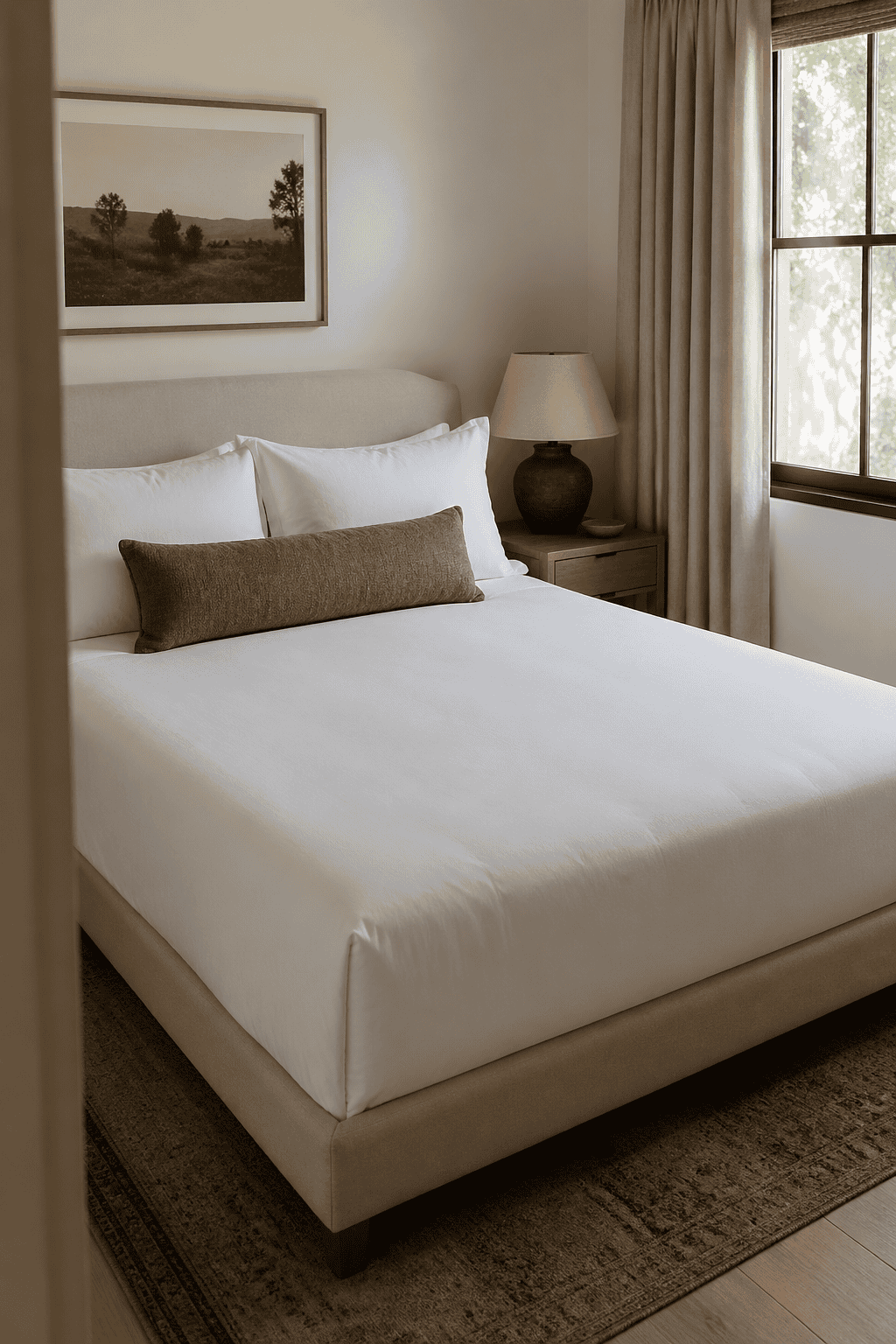
Oversized, pooling duvets and a mountain of decorative pillows can overwhelm a small room. When the bed looks heavy, the whole room feels heavy.
Opt for a tailored look. Tuck your quilt or duvet tightly around the mattress for a clean, hotel-like finish. Limit yourself to two sleeping pillows and one long lumbar pillow for a streamlined aesthetic.
22. Draw the Eye Up with Vertical Art
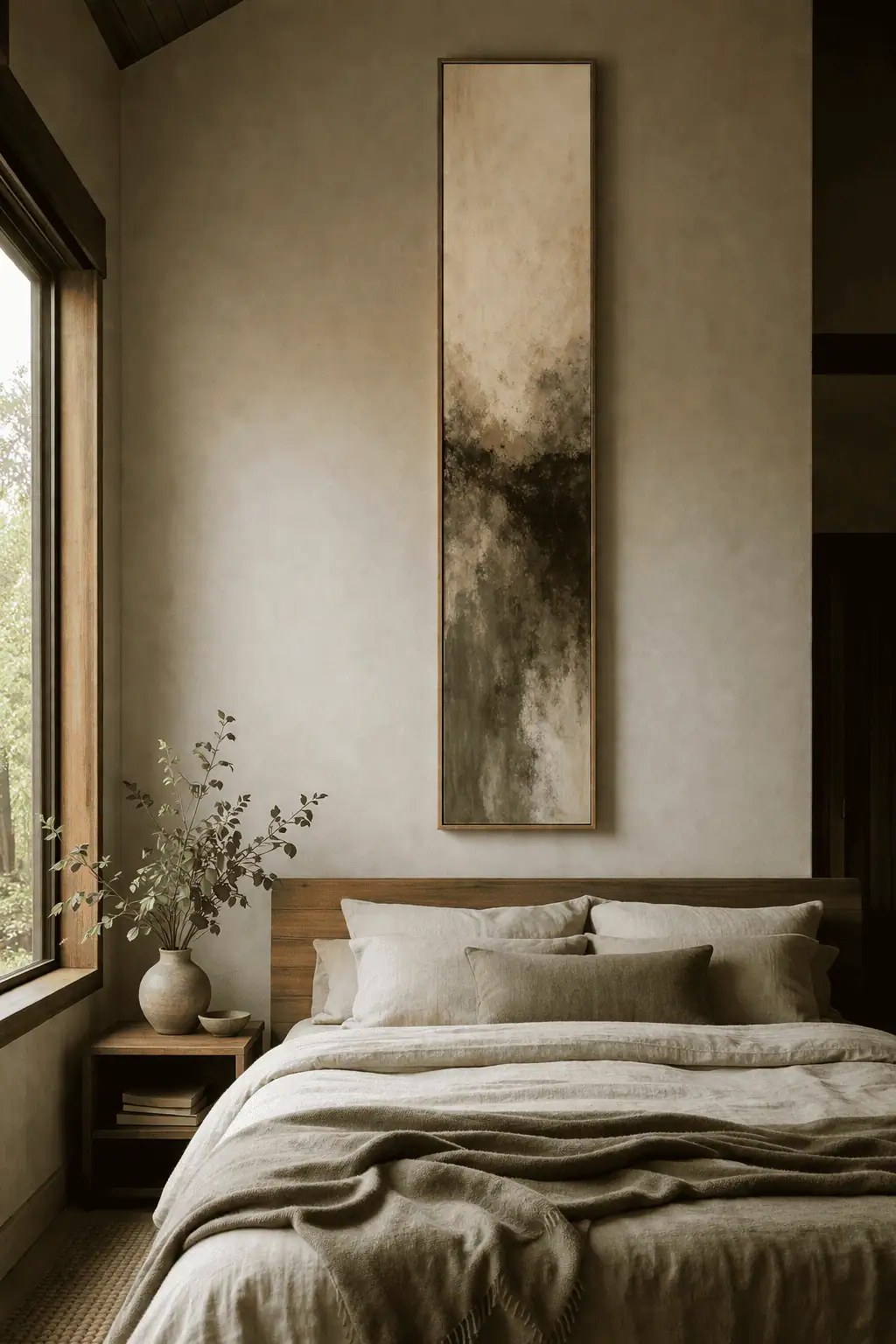
When you can't expand outward, expand upward. Using art to emphasize the height of the room distracts from the lack of square footage.
Hang a tall, vertical piece of art, or create a vertical gallery wall that reaches toward the ceiling. This forces the eye to travel up, emphasizing the volume of the room rather than the floor space.
23. Edit Down to One Statement Piece
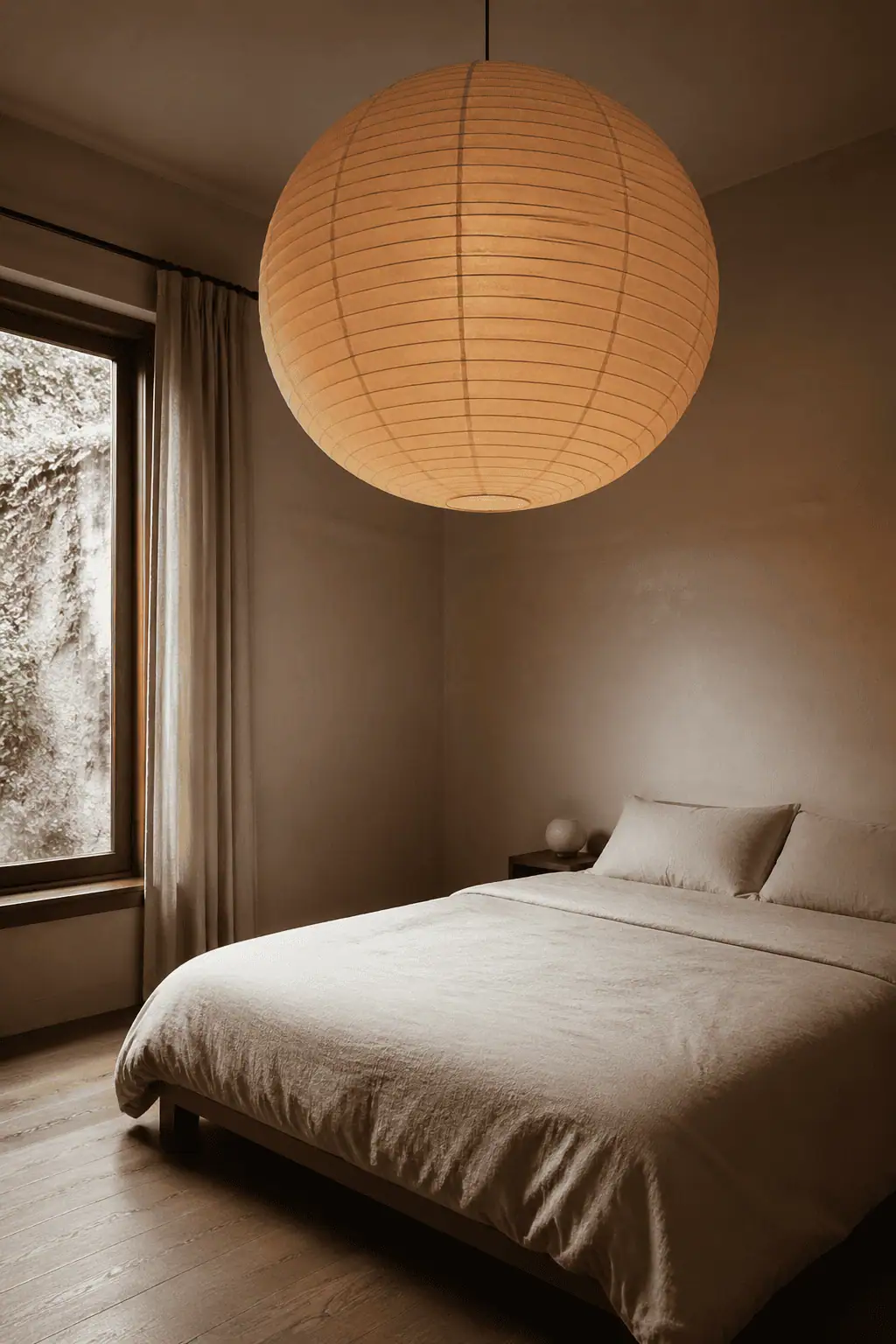
In a small bedroom, too many focal points create visual noise. If you have a bold patterned rug, an ornate chandelier, and bright wallpaper, the room will feel chaotic.
Choose one statement piece-like a beautiful oversized pendant light or a dramatic headboard-and keep the rest of the room quiet and understated. This gives the room personality without making it feel like a closet.
Your Small Bedroom Audit Checklist
Before you start buying new furniture or moving your bed, run through this quick checklist to see where you can instantly improve your space.
- Clear the floor: Are there shoes, bags, or boxes on the floor? Move them to hooks, under-bed storage, or the closet.
- Check your nightstands: Can you see the floor underneath them? If not, consider swapping for leggy or floating options.
- Audit your lighting: Are table lamps taking up too much space? Plan to swap them for wall sconces.
- Measure your curtains: Are they hung right above the window? Plan to raise the rod closer to the ceiling.
- Assess the foot of the bed: Does your bed have a bulky footboard blocking the view? Consider removing it.
- Find the dead space: Look above the door and under the bed. Are you utilizing these areas for hidden storage?
A small bedroom doesn't have to be a design limitation. By focusing on how light moves through the room, keeping the floor visible, and choosing furniture that scales upward rather than outward, you can create a space that feels intentional, relaxing, and beautifully pulled together. Start with one or two of these swaps, and you'll be amazed at how much larger your room instantly feels.