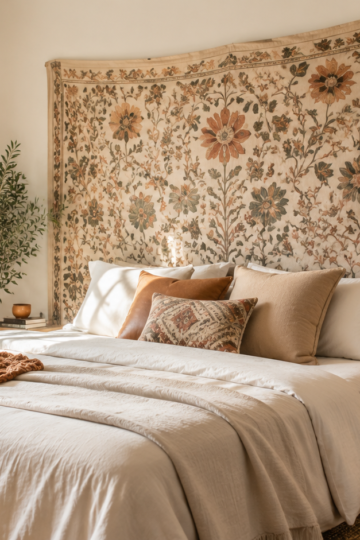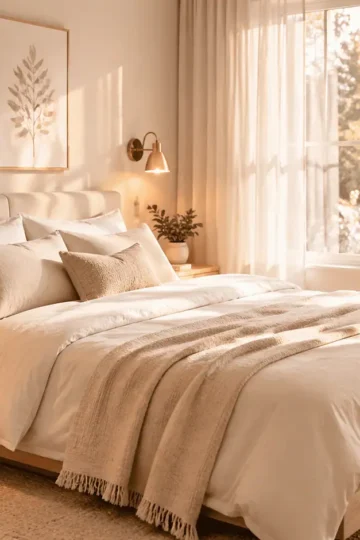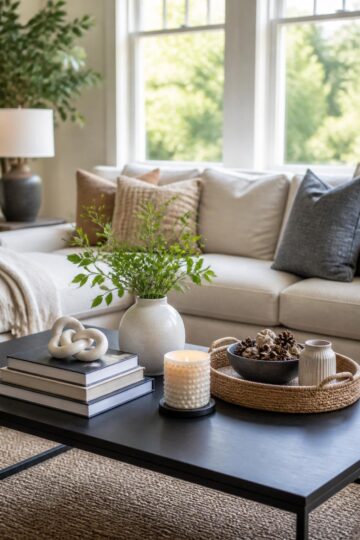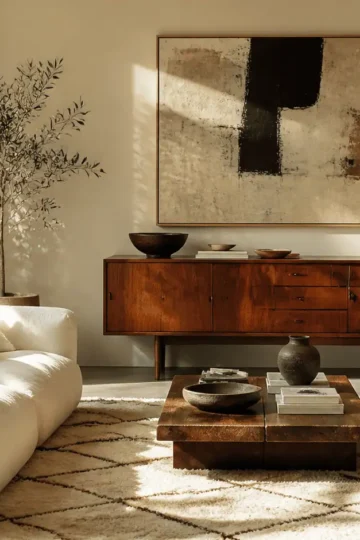
You step into a small bedroom and notice how much a few considered details change the feel of the whole space. A narrow lamp. A woven tray. A slim mirror propped behind the door. These small finishing touches make a room feel complete by adding focused texture, scale, and purpose without crowding the floor.
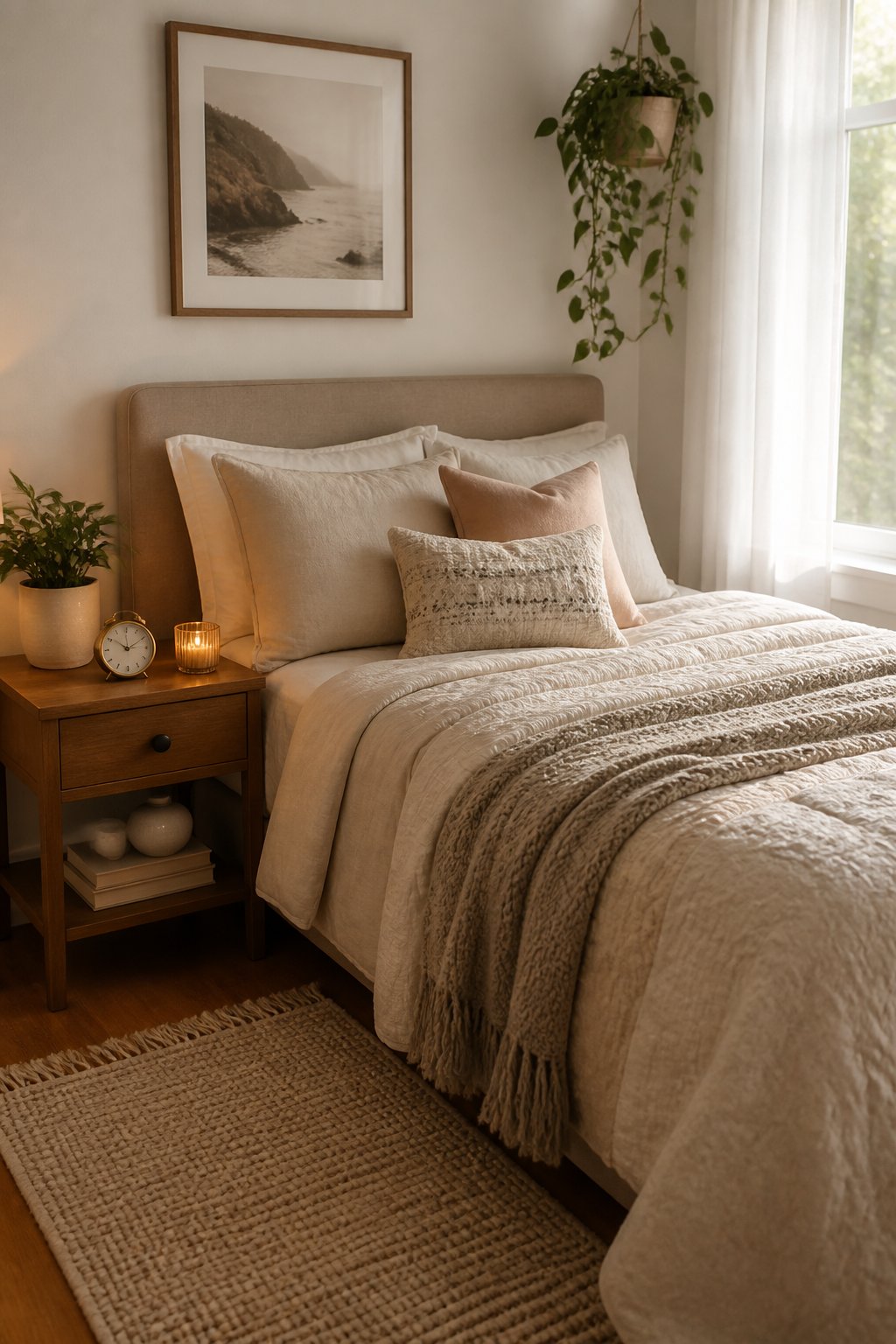
A single ceramic vase, a compact diffuser, or a thin floating shelf can shift a room's balance without requiring a full overhaul. Think of this as a walk-through: each piece is sized, colored, and placed for a reason, and understanding that reasoning helps you choose what your room actually needs rather than just adding more stuff to it.
1. A Small Woven Seagrass Tray for the Bedside
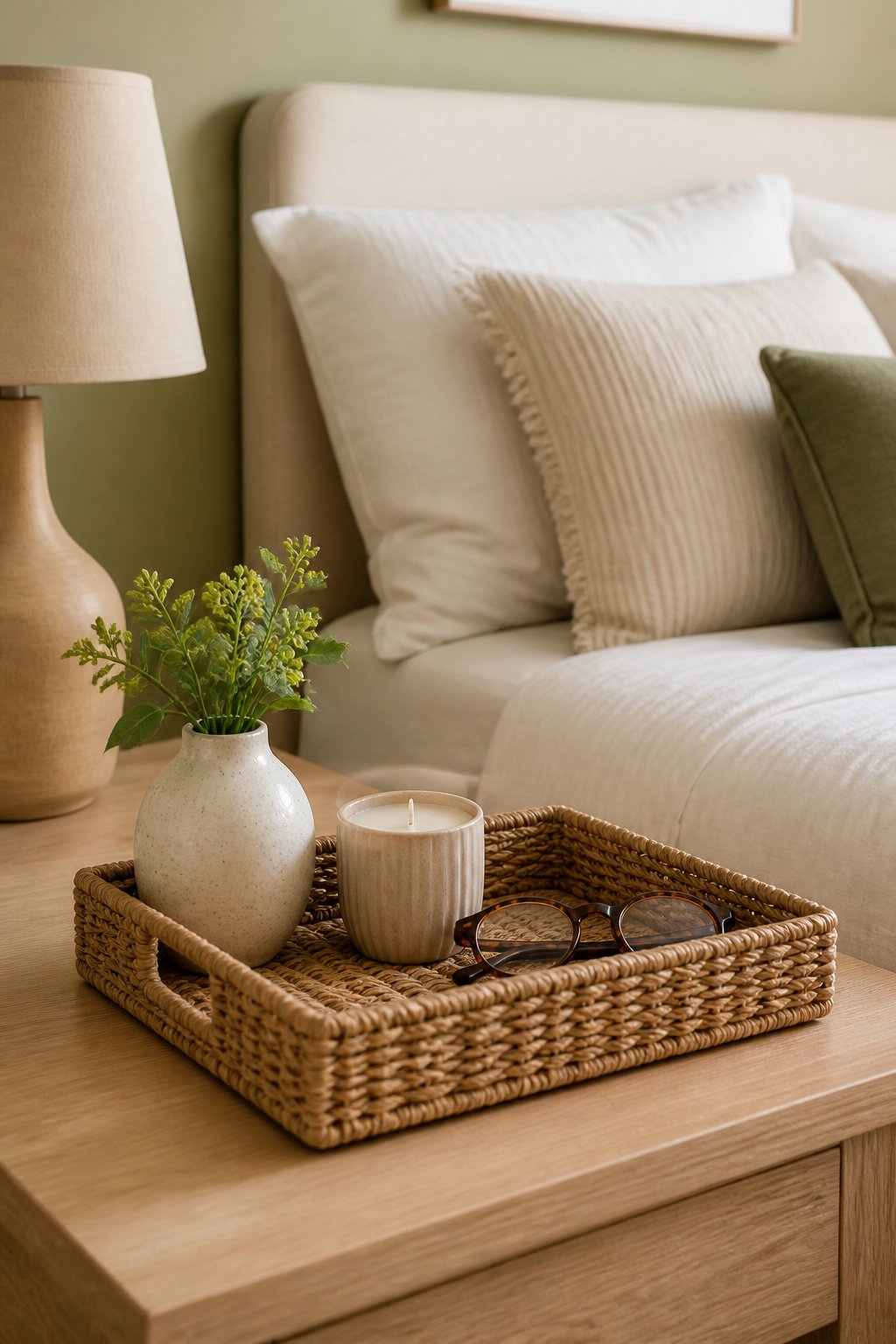
A low-profile woven tray does something subtle but effective: it turns scattered bedside clutter into a single, contained object. Your phone, glasses, and a lip balm stop reading as a mess and start reading as a moment of considered placement.
Look for natural seagrass or rattan in a flat, shallow shape, roughly 10 to 14 inches wide. A warm, light tone bounces available light back into the room. A slim rim keeps the tray from overrunning a narrow nightstand surface. This is particularly useful for renters and anyone working with very limited surface area, since it delivers visual order without installing anything.
2. A Narrow Ceramic Bedside Lamp in Matte White
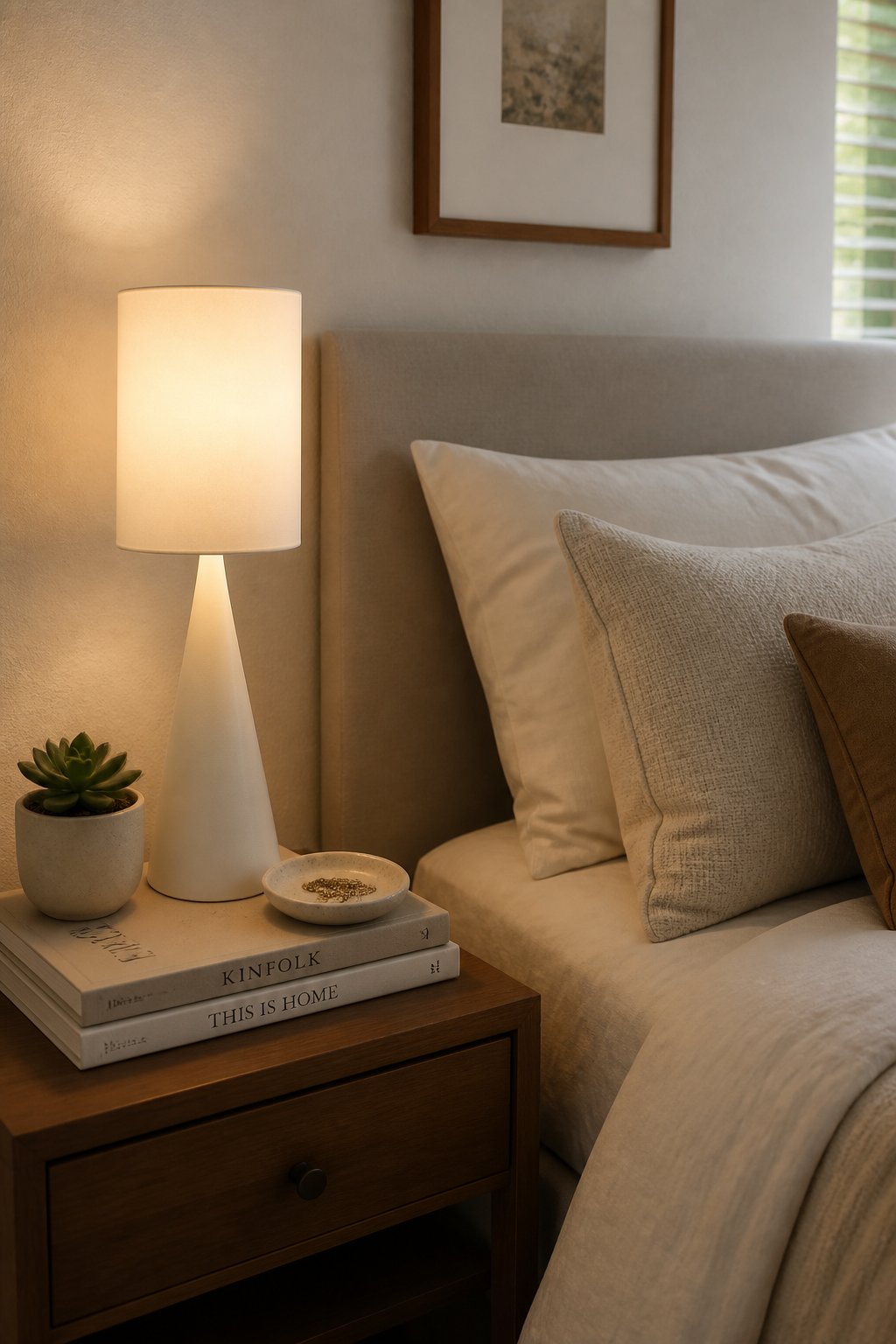
A slim matte-white ceramic lamp finishes a nightstand in a way that a generic brass or chrome lamp often doesn't. The matte surface absorbs rather than scatters light, which keeps the bedside feeling calm rather than busy.
Look for a lamp 12 to 18 inches tall with a base no wider than 5 inches. Simple forms - a cylinder or gentle taper - keep sightlines clear across a small room. Pair it with an off-white fabric shade to keep the light soft and layered rather than harsh. This suits renters and minimalists, and it's a strong choice if your room already feels visually crowded because the clean white reads as negative space rather than another object.
3. What a Wall-Mounted Sconce Actually Frees Up
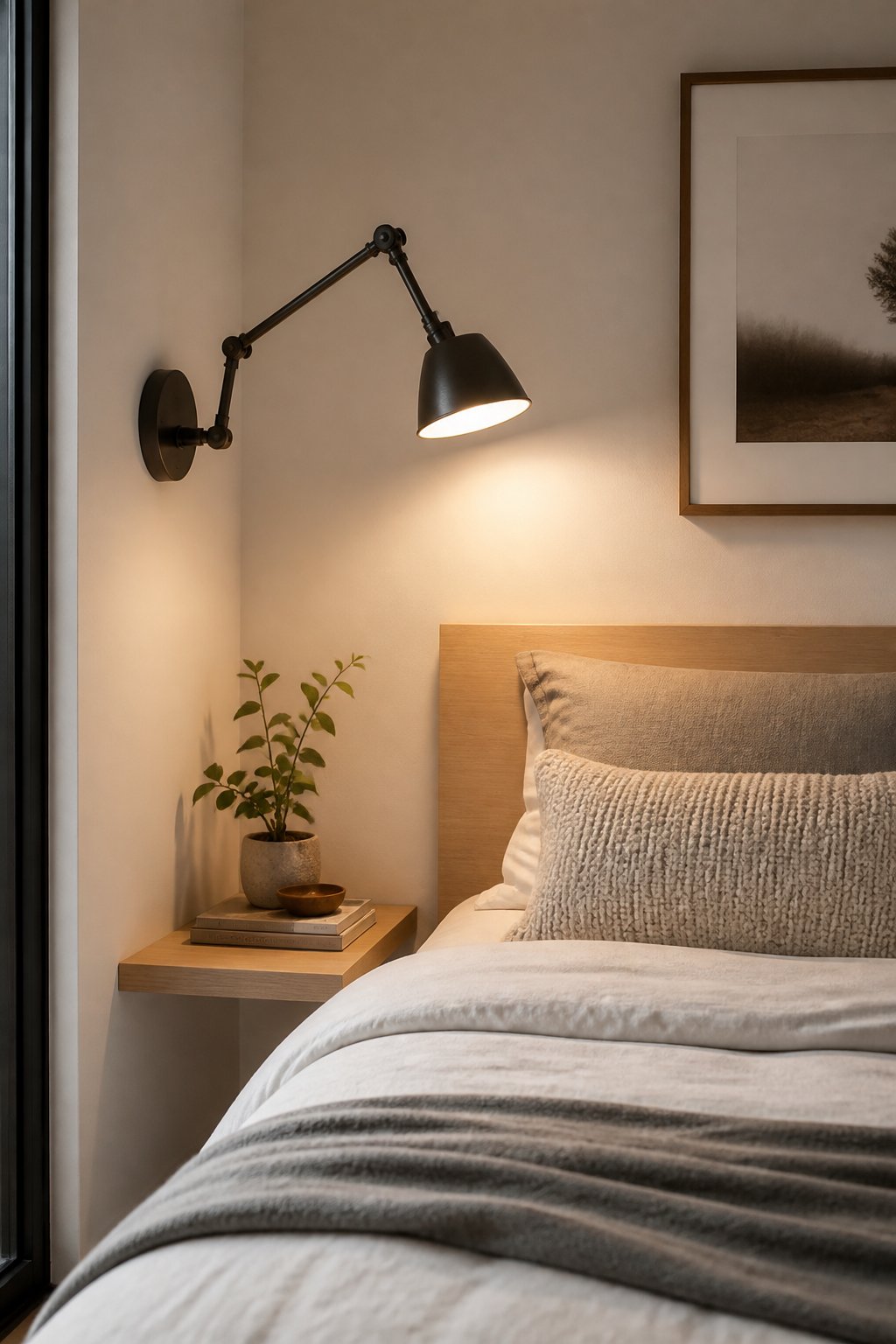
The case for a wall sconce isn't really about the light - it's about reclaiming surface space. Mounting the lamp on the wall means your nightstand top has room to breathe, and your eye travels upward, which makes the wall feel taller than it is.
Look for a low-profile backplate and an arm that pivots at least 90 degrees so you can direct it where you actually need it. Brushed metal or matte black keep the hardware unobtrusive. Warm white bulbs in the 2700 to 3000K range flatter bedding and skin tones without that cold, clinical quality. Renters can find excellent plug-in models that require no wiring and leave no permanent marks.
4. A Trio of Matching Ceramic Bud Vases
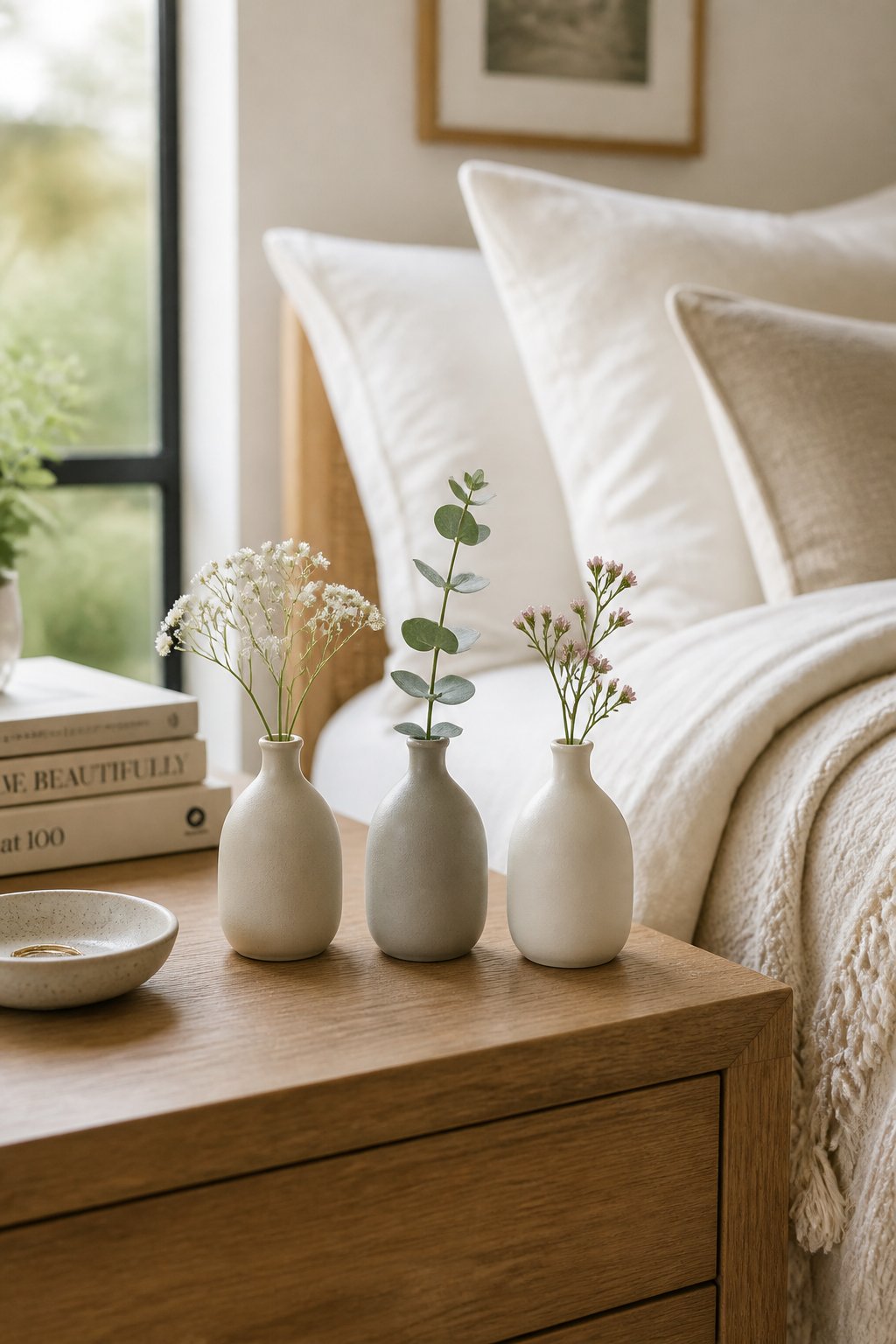
Three slim vases grouped together do something a single statement vase often can't: they create rhythm. The eye moves between them, which makes a plain dresser or nightstand read as deliberately styled rather than passively occupied.
Keep each piece 4 to 7 inches tall and choose matte or satin ceramic so light reads softly across the surface rather than glaring. Stick to one color family - warm white, soft gray, or muted sage - so they register as a set from across the room. Slightly varied silhouettes give a handmade quality; perfectly matched shapes feel more contemporary. Either works, as long as the scale stays modest.
"The pieces that make a small room feel finished are almost never the largest ones in it."
5. Try a Thin Floating Shelf Above the Headboard
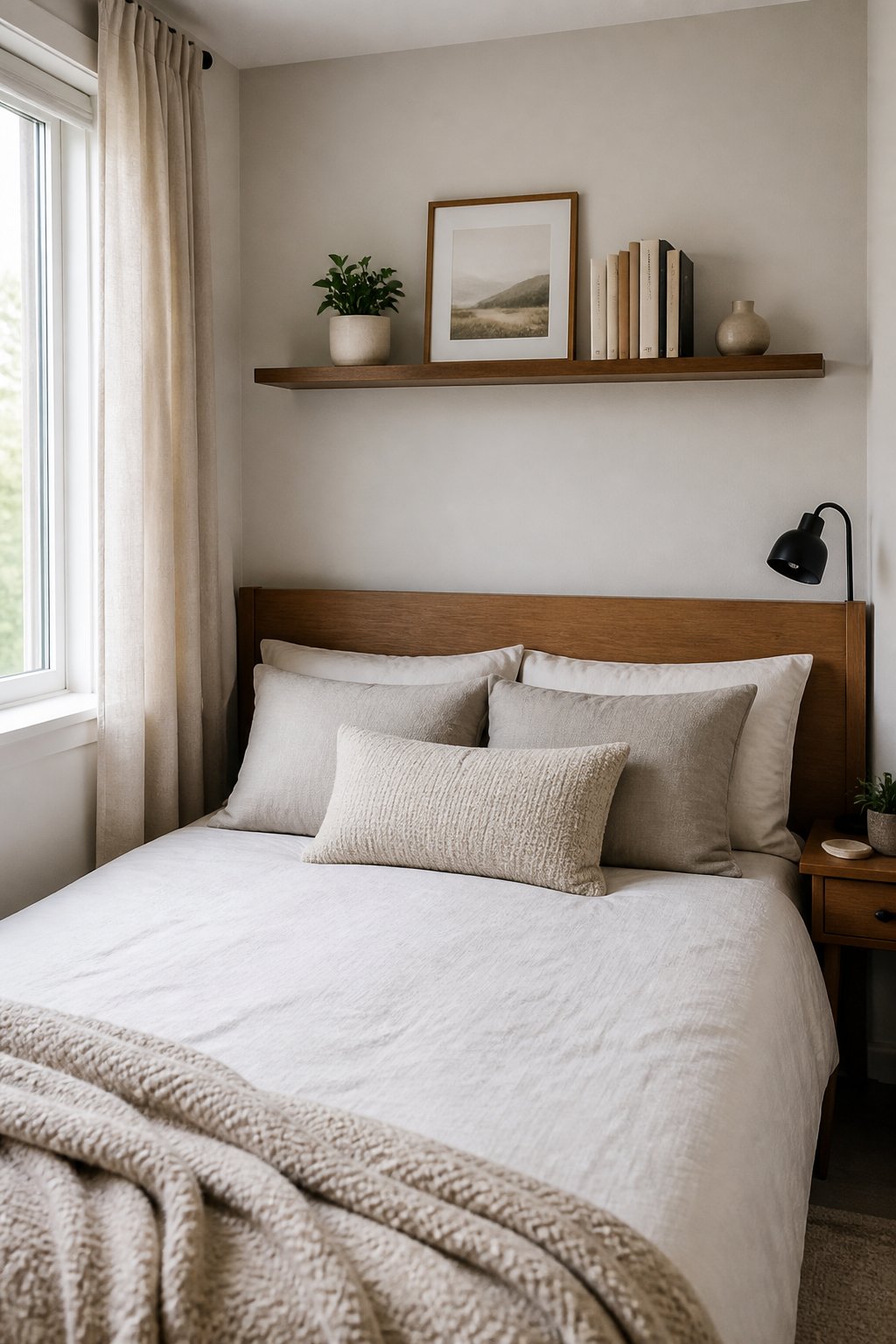
A floating shelf above the headboard frames the bed the way a painting does, without requiring you to commit to a large piece of art or drill multiple anchor points. It creates a narrow ledge that draws the eye upward and makes low ceilings feel less pressing.
Choose something 3 to 6 inches deep in veneered MDF or thin solid wood. A matte finish in warm wood tones or soft white keeps it from reading as a separate element and lets the objects on it do the work. A slim metal shelf is a solid choice if your room has an industrial or minimal lean. This is especially practical for renters who need one clear display surface without building anything permanent.
6. A Linen Lumbar Pillow in Muted Clay
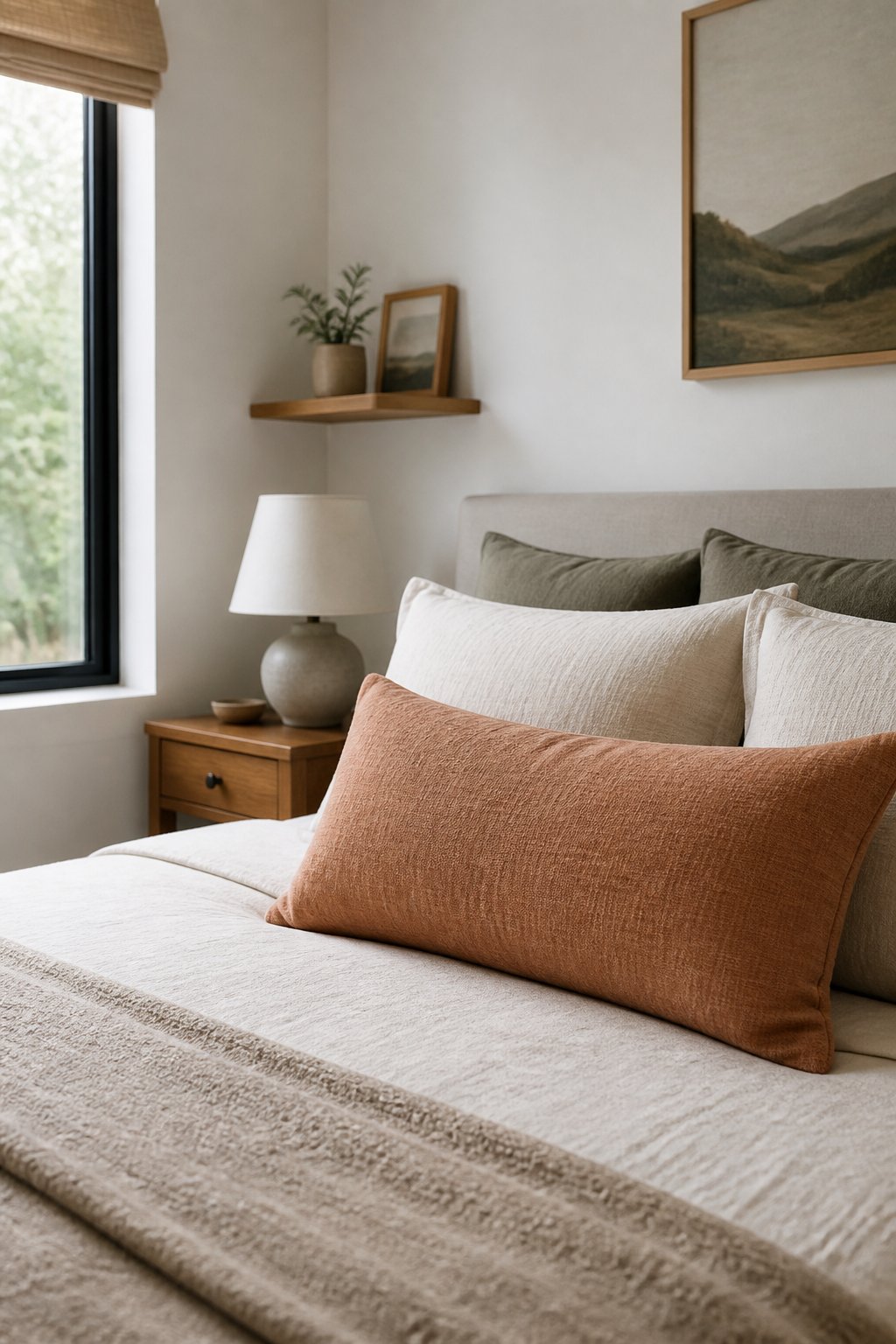
The lumbar pillow is doing more visual work than it looks like. Its horizontal shape pulls the eye across the width of the bed, which makes a twin or full feel more intentional rather than just a mattress in a room. It's one of the fastest ways to signal that someone thought about the bed rather than just made it.
Look for breathable linen with a soft slub texture and a fill that holds shape without puffing up excessively. Sizes between 12×20 and 14×22 inches stay proportional on smaller beds. Muted clay sits warmly in the neutral family and pairs naturally with off-white sheets and cool gray walls. For anyone in a room with limited natural light, it brings warmth without pulling focus away from the rest of the space.
7. A Rounded Rattan Mirror at About 18 Inches
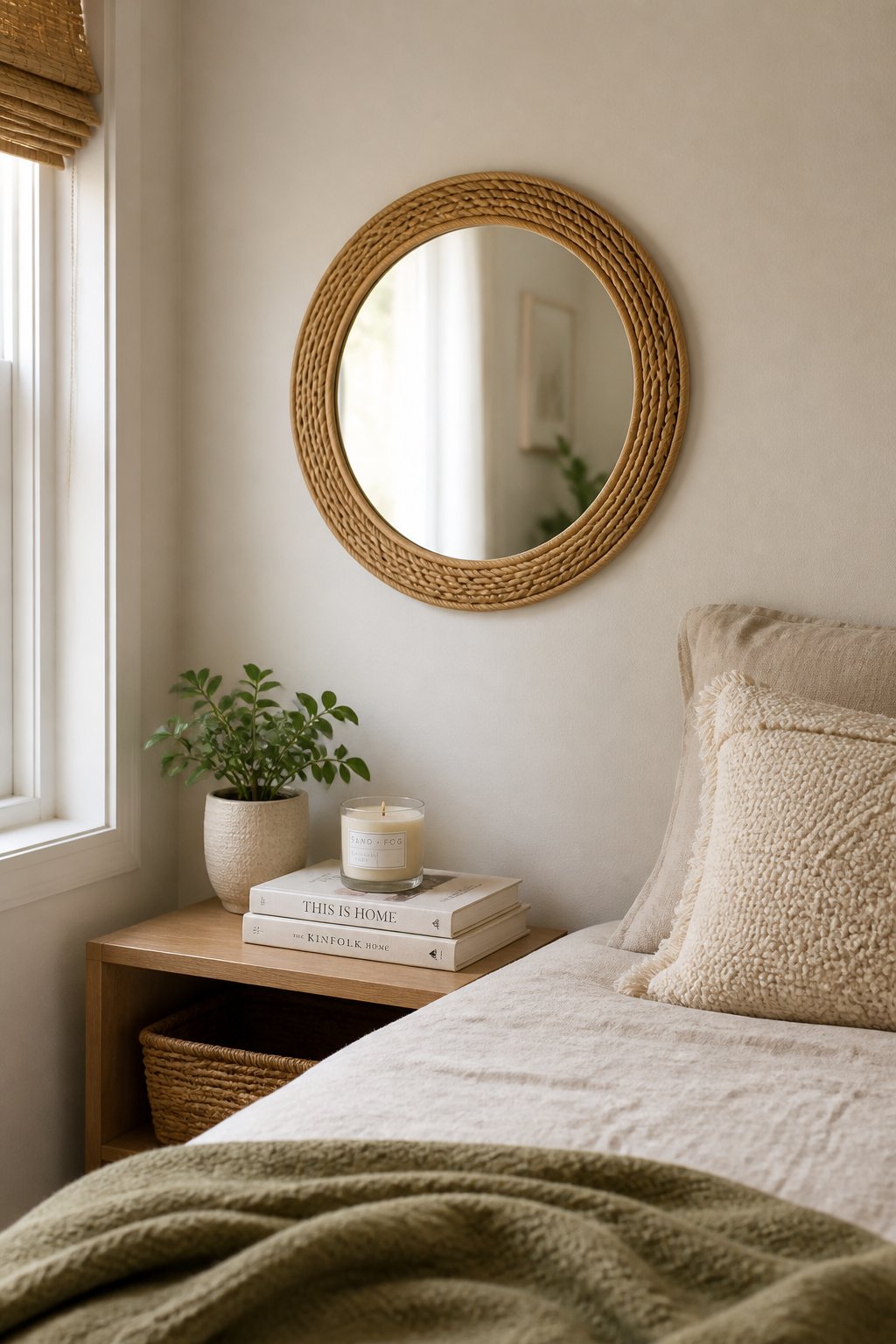
Rattan mirrors have become a staple in small bedrooms for a practical reason: they add texture and light without the visual weight of a solid frame. The open weave creates an edge that reads as soft rather than architectural, which suits rooms that need warmth rather than structure.
Look for something 16 to 20 inches wide so it fits comfortably on a narrow wall without dominating it. Untreated or lightly stained rattan in honey or tan tones naturally blends with linen fabrics and pale paint. The 18-inch glass size reflects enough of the room to visually open the space, particularly in corners with limited natural light.
8. A Compact Dresser Tray for Jewelry and Keys
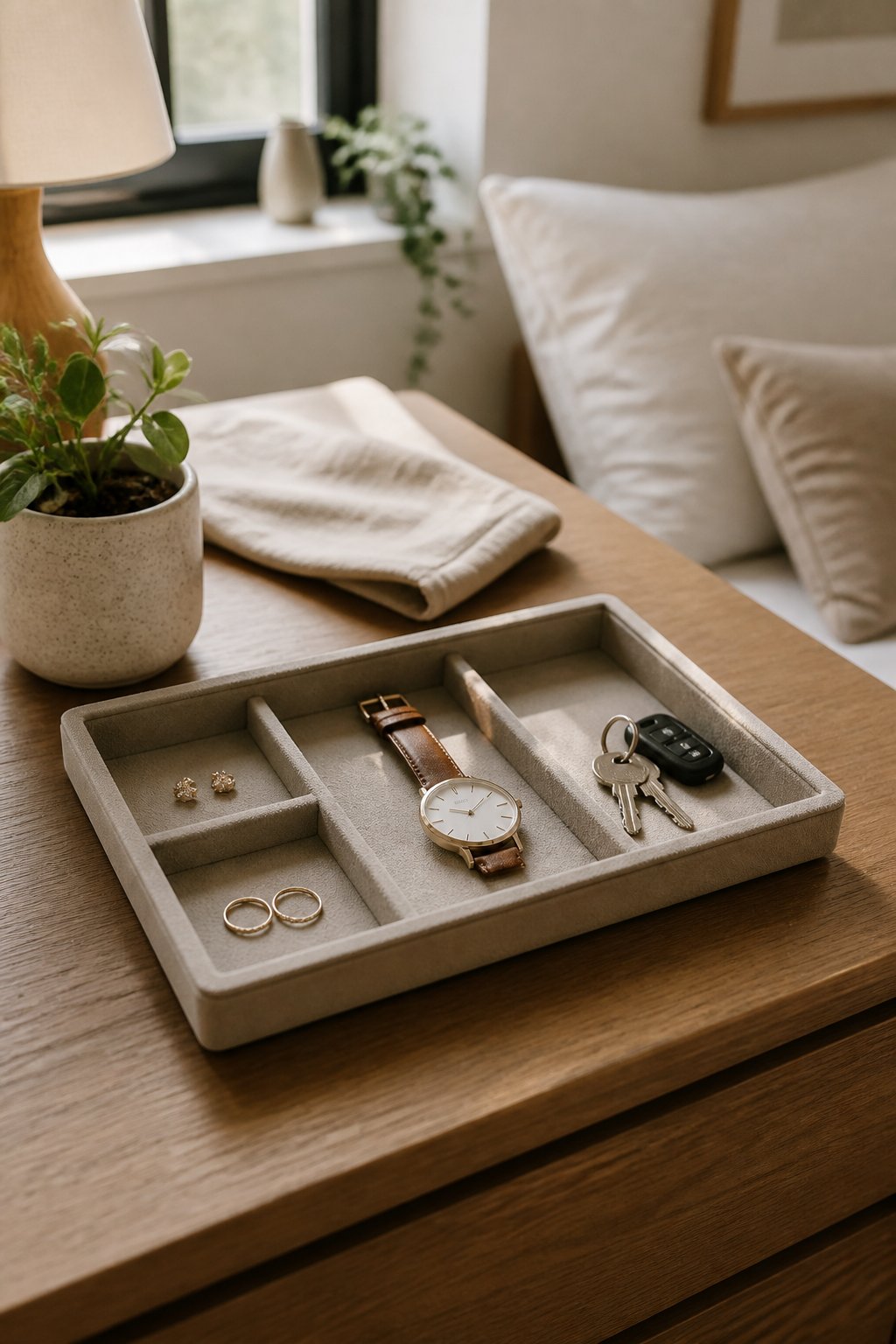
A tray on the dresser works on the same principle as the bedside version, but the dresser surface is often even more prone to becoming a catch-all. A low-profile tray gives rings, watches, and daily keys a defined home so the top reads as styled rather than whatever-got-dropped-there.
Keep it no wider than 10 to 12 inches and under 2 inches tall. Materials like brass, matte ceramic, or leather each add a small note of texture without demanding attention. The key is matching the tray's warmth or coolness to your existing palette - a bright or patterned piece makes a small surface feel agitated rather than calm.
9. Clean Lines from a Blackout Roller Shade
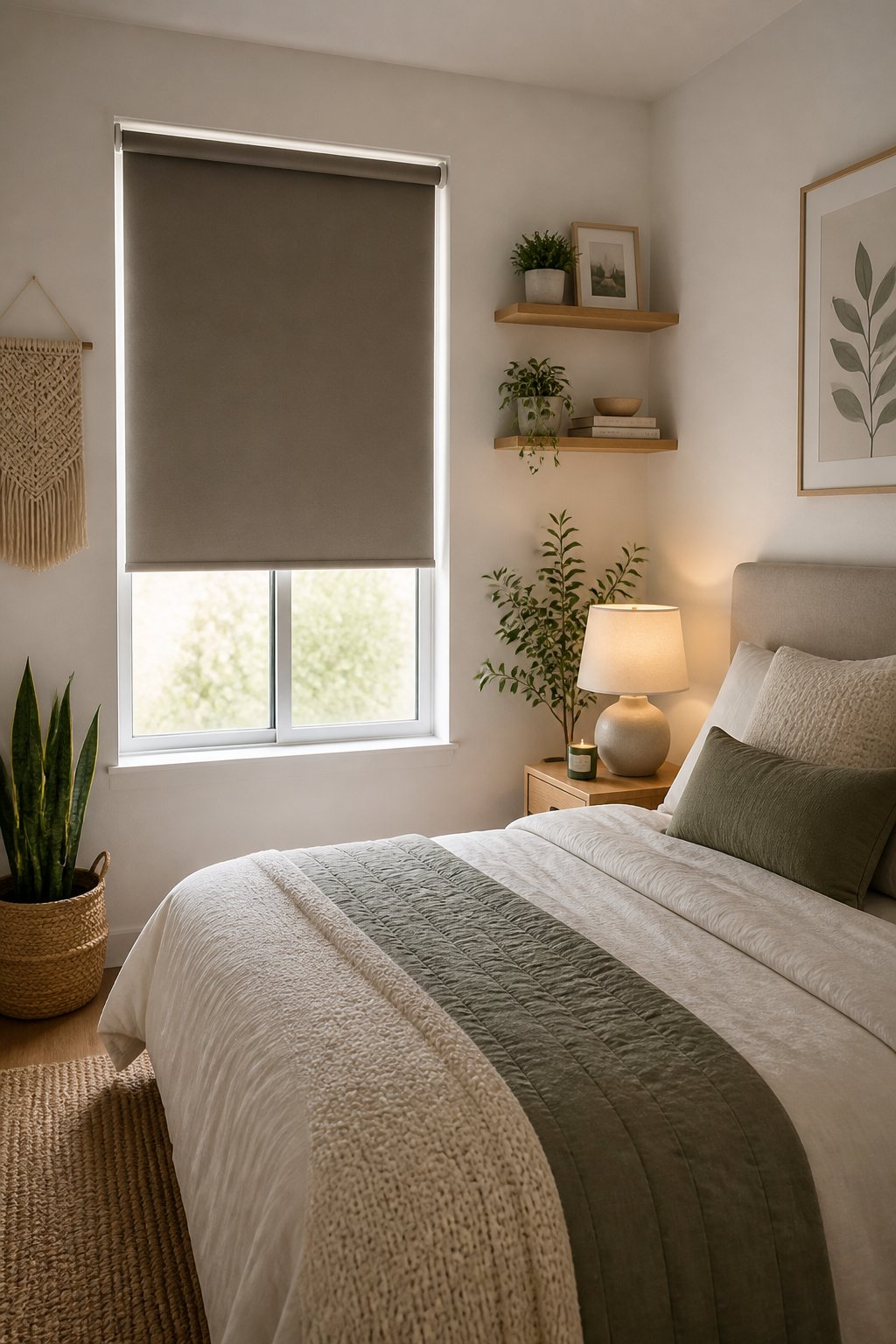
Windows in small bedrooms often go under-dressed - a bare rod, mismatched curtains left by the last tenant, or nothing at all. A blackout roller shade solves this with a single flat plane of material that makes the entire wall read as one calm surface.
Look for a tightly woven polyester or cotton blend with a matte finish and a slim cassette mount so the shade sits as close to the window frame as possible. Off-white, warm gray, or muted taupe all keep the palette light while still functioning as a genuine blackout. This is a particularly clean solution for renters, since most roller shades install with brackets rather than permanent hardware.
10. A Stack of Three Hardcovers with Neutral Spines
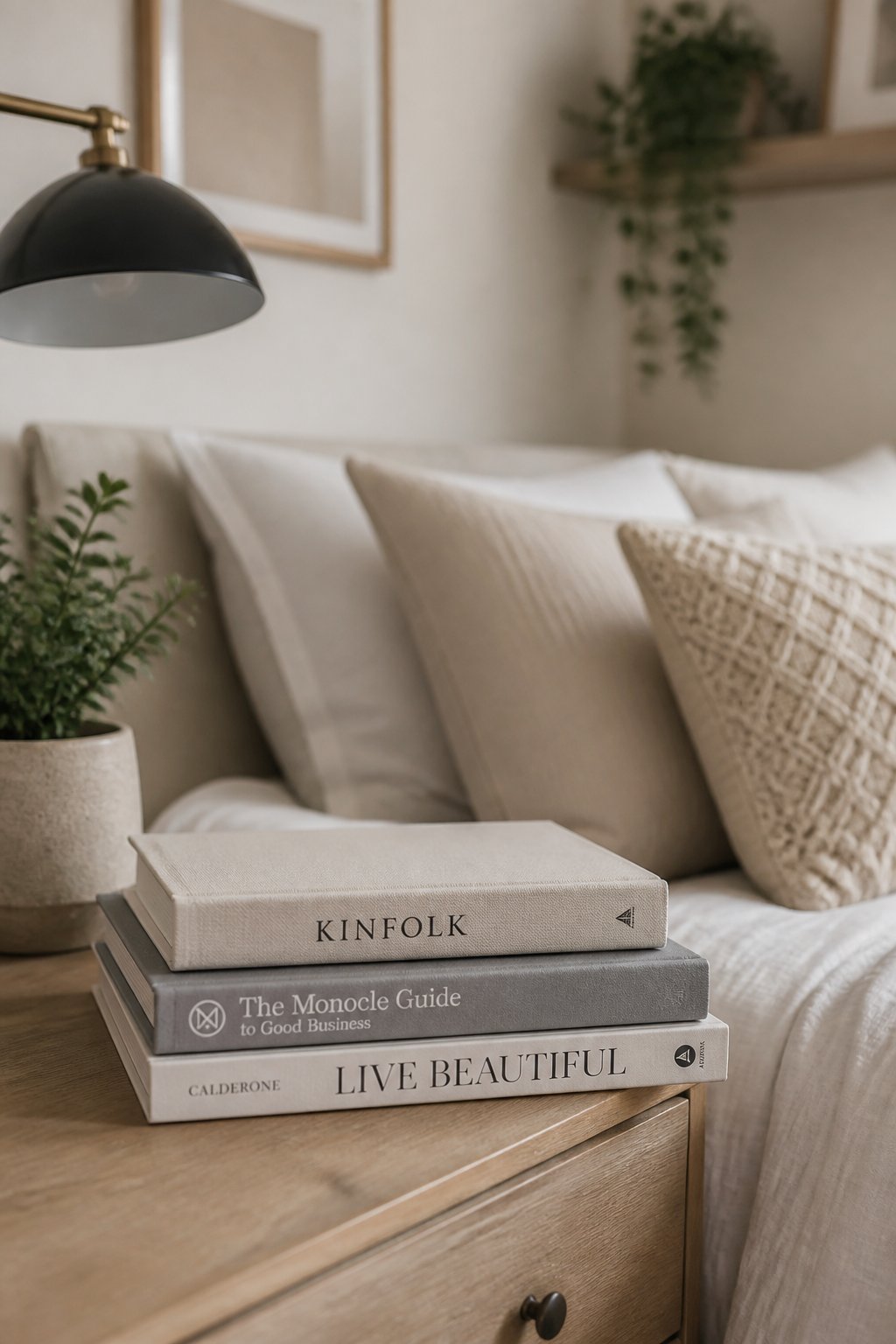
A small, neat stack of books anchors a corner of the nightstand or dresser in a way that feels inhabited rather than staged. The visual weight of three stacked volumes gives the eye somewhere to land, which makes the lamp or vase beside it feel placed rather than accidental.
Choose matte or linen covers in creams, grays, or warm tans. The bottom book should be the widest, so the stack reads as a stable single object. Bright dust jackets compete with other surfaces in a small room - spine tones that match your palette let the stack recede quietly into the composition while still contributing to it. Lighter spines also reflect available light, which helps in darker corners.
11. A Petite Snake Plant in a Tapered Pot
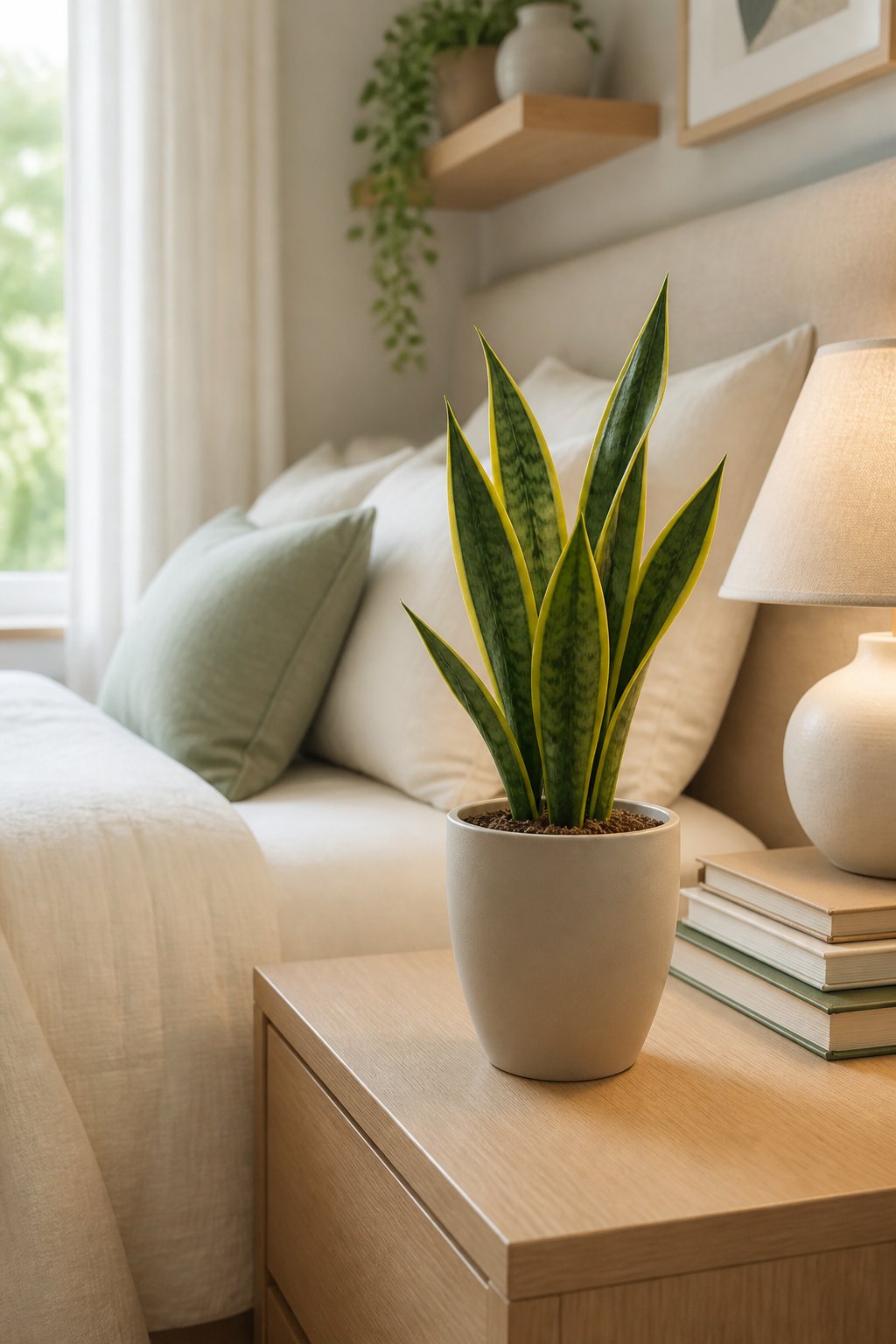
The snake plant earns its place in small bedrooms mostly through its form. The vertical leaves pull the eye upward, which does something practical: it makes the ceiling feel a little further away than it is. A single plant in the right pot reads as a deliberate design detail rather than a houseplant someone forgot to move.
Choose a tapered pot in matte ceramic or terracotta, about 4 to 6 inches across at the top. Neutral tones - warm white, soft gray, or clay - blend with most palettes and keep the look grounded. A narrow base prevents the pot from feeling bulky on a nightstand or shelf. Small snake plants also tolerate low light and irregular watering, which makes them genuinely low-maintenance rather than just marketed that way.
Did You Know
Snake plants (Sansevieria trifasciata) were studied by NASA as part of their Clean Air Study in 1989 and were found to filter several indoor air compounds. While the air-purifying effect in a normal room is modest, the research reinforced a plant that was already earning its reputation as one of the most forgiving and useful small-space choices available.
12. A Narrow Bedside Table with One Drawer
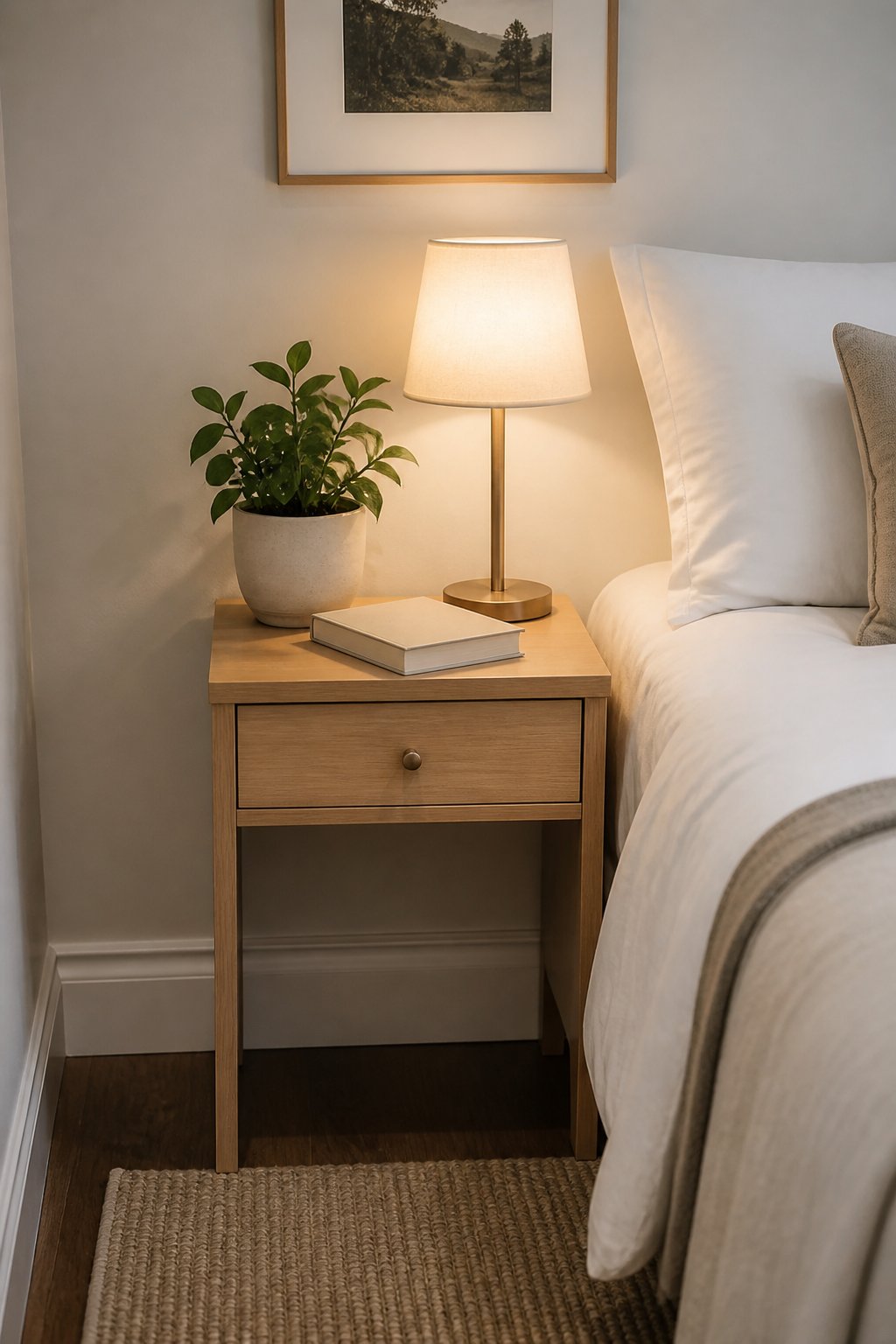
A bedside table seems obvious, but the wrong one does real damage to a small room. Too wide and it crowds the walkway. Too tall, and it interrupts the view across the bed. Too much storage and you end up filling every surface.
Aim for 12 to 18 inches wide and 20 to 26 inches tall so the table surface aligns with your mattress height. Light wood, a metal frame, or an off-white painted finish all keep the room from feeling heavy. A single drawer handles the out-of-sight items; an open lower shelf gives you visible storage without doors or drawers that add visual bulk. Simple hardware - a slim pull or recessed finger notch - keeps the whole piece from reading as furniture rather than part of the room.
13. Linen Napkins Repurposed as Cloth Coasters
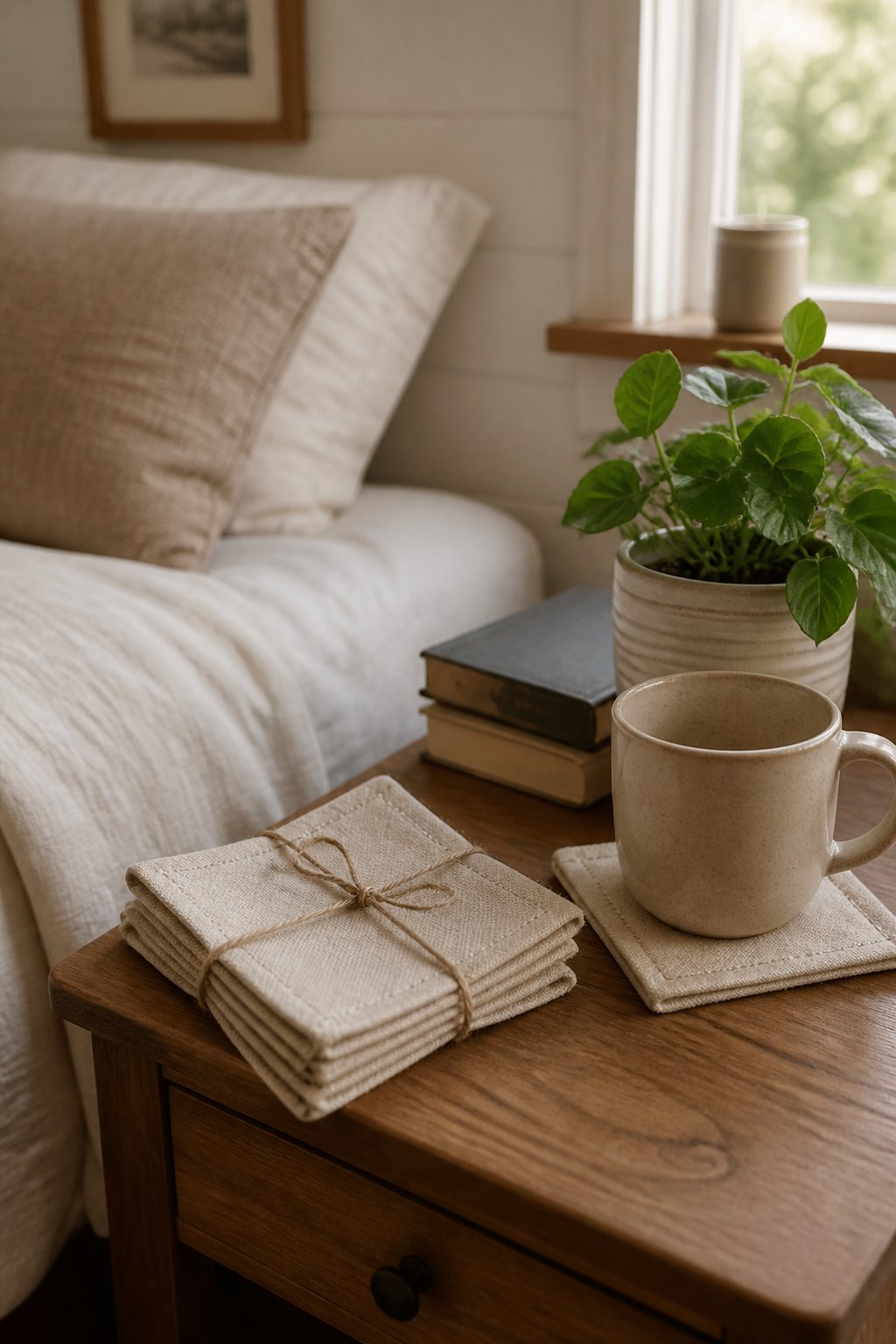
This is one of those details that reads as expensive when it costs almost nothing. A linen napkin folded into quarters softens the hard edge of a wooden or metal bedside surface and stops the clink of a glass or diffuser from seeming harsh. It introduces fabric texture at the smallest possible scale.
Look for lightweight linen or a linen-cotton blend in muted tones - warm white, soft gray, or dusty blue. Napkins about 16 to 20 inches square fold cleanly into a quarter size. Avoid busy prints; the point is quiet texture, not pattern. A simple stitched hem or natural edge reads as deliberately understated. This works especially well on wood nightstands and metal surfaces, where a layer of soft material signals care without announcing itself.
14. One Brass Hook, Thoughtfully Placed
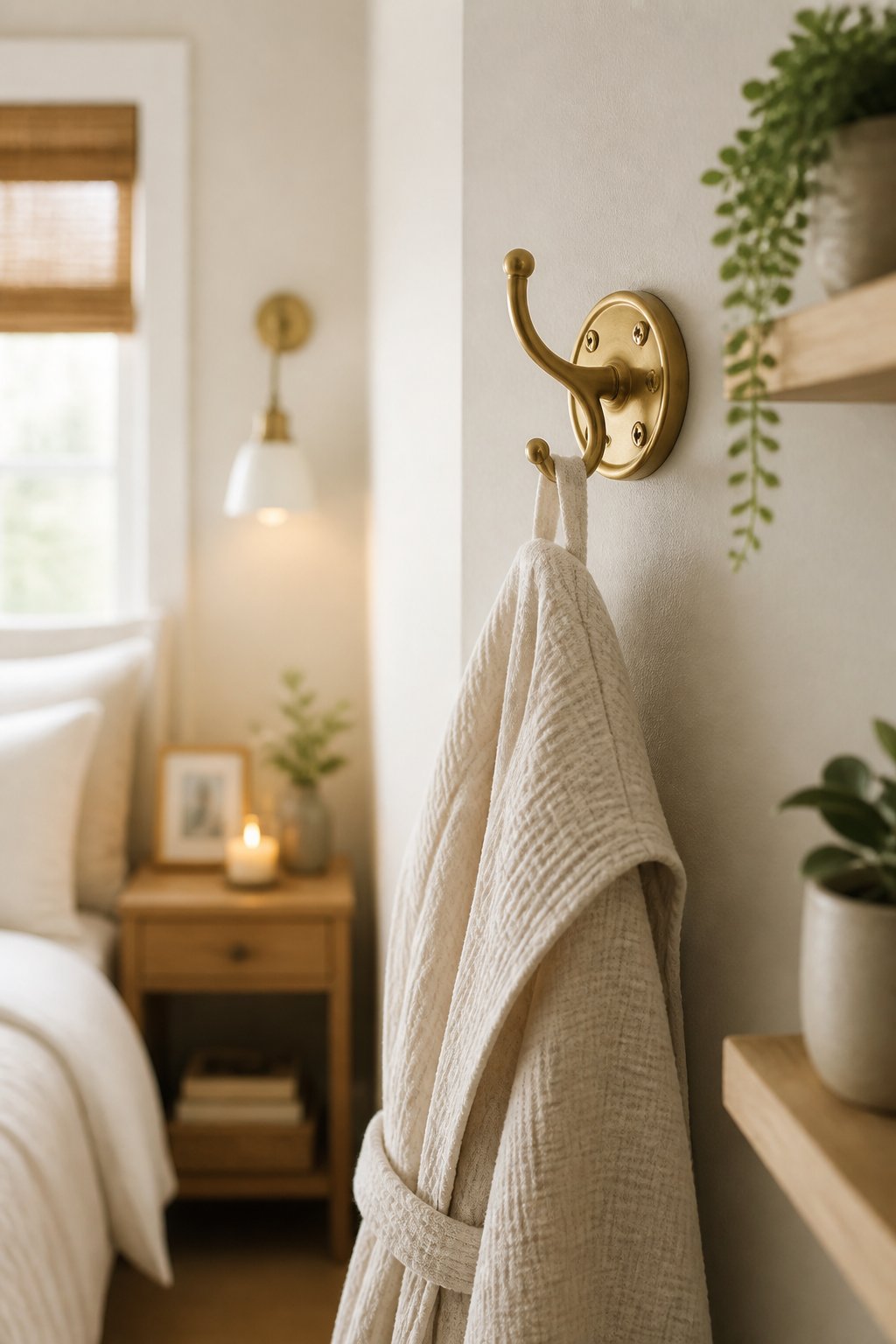
A single brass hook on an empty wall communicates something that a pile of clothes on a chair never can: that someone decided where things live. That sense of intention is exactly what makes a small bedroom feel finished.
Choose solid brass or a brass-plated metal that resists tarnish. Keep the size compact - 2 to 3 inches deep, around 1 to 1.5 inches wide - so it doesn't project into walkways. A simple, rounded, or teardrop shape reads softly against most wall colors. Warm gold tones work naturally with wood furniture and neutral palettes.
For renters, adhesive-mount options hold a robe or lightweight bag without marking the wall. The hook keeps frequently used items within reach and visible, which actually encourages tidiness rather than working against it.
15. A Woven Basket Beside the Bed for Extra Linens
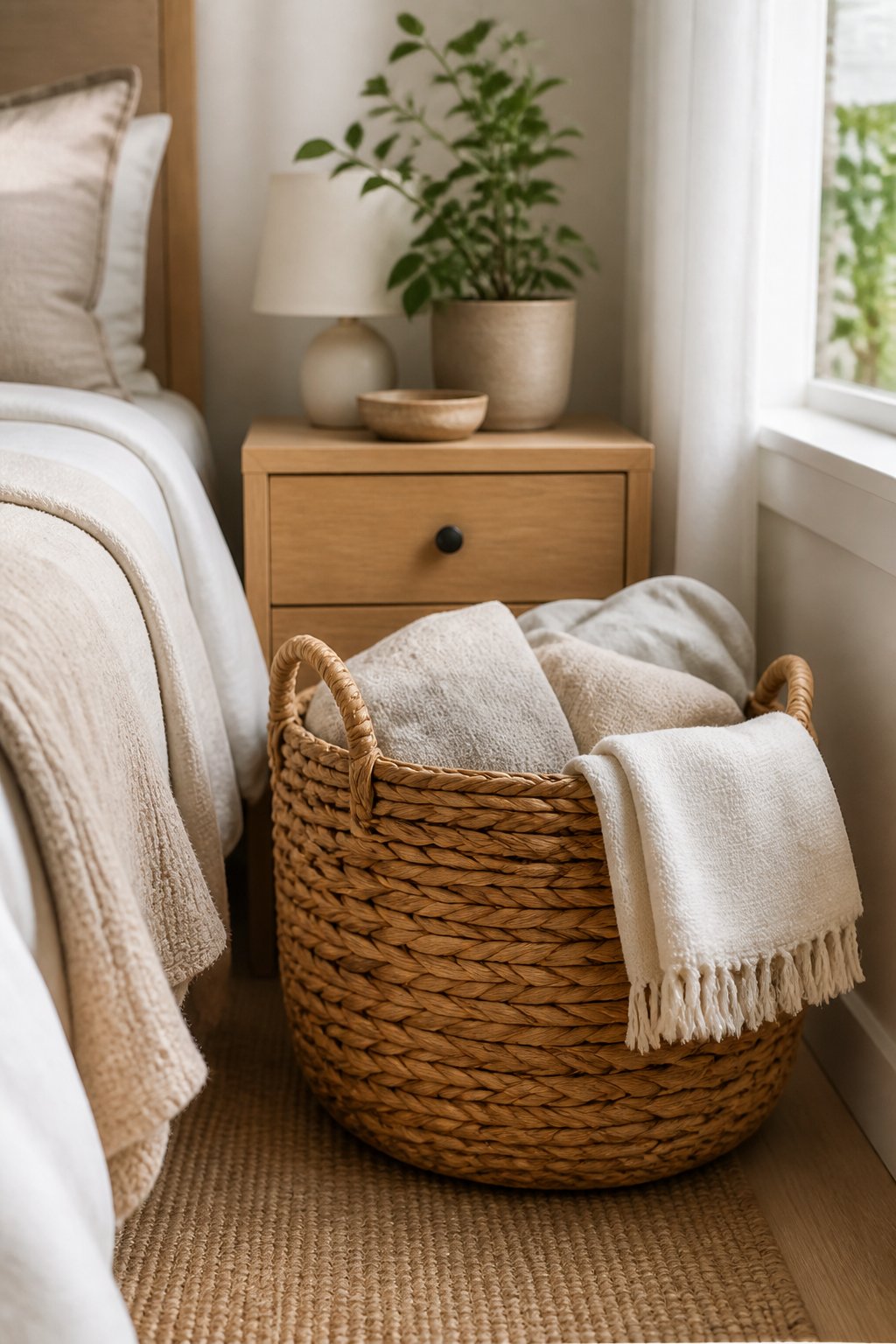
Extra blankets and folded sheets need somewhere to live that isn't the top of the closet or the end of the bed. A woven basket at the bedside or foot of the bed keeps them accessible and visible, and the natural material adds texture that reads warm without adding visual weight.
Look for seagrass, rattan, or cotton rope in a low, shallow shape - roughly 12 to 18 inches wide and 8 to 12 inches deep. A light neutral in cream, tan, or soft gray keeps it quiet; a muted black works if your palette runs darker. The basket's texture does the styling work here. You don't need to add anything else to the spot for it to feel considered.
16. A Velvet Bench at the Foot of the Bed
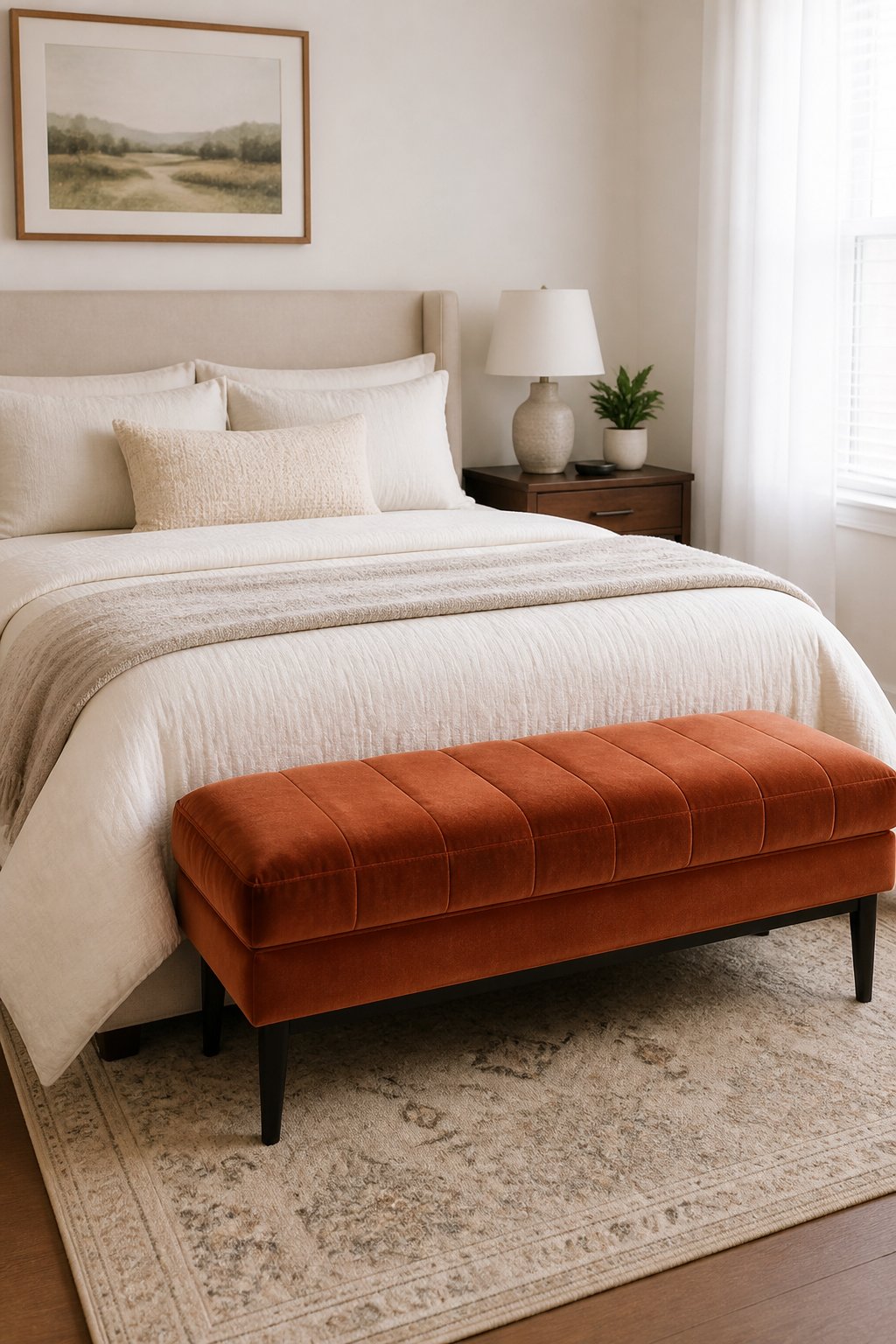
A bench at the foot of the bed finishes the room's longest sightline - the one you see when you open the door. Without it, the bed can look unanchored, like furniture placed in a room rather than a room designed around the furniture. A low bench closes that gap.
Look for a slim profile with tapered legs or a metal base so sightlines stay open rather than blocked. Crushed or matte velvet in muted tones - slate, dusty rose, or deep green - reads soft rather than fussy. Keep the cushion thin to maintain the right scale for a small space. A bench with a light shelf underneath is worth considering if you need a place for baskets or a tray without adding another piece of furniture entirely.
17. A Small Diffuser with a Light Eucalyptus Blend
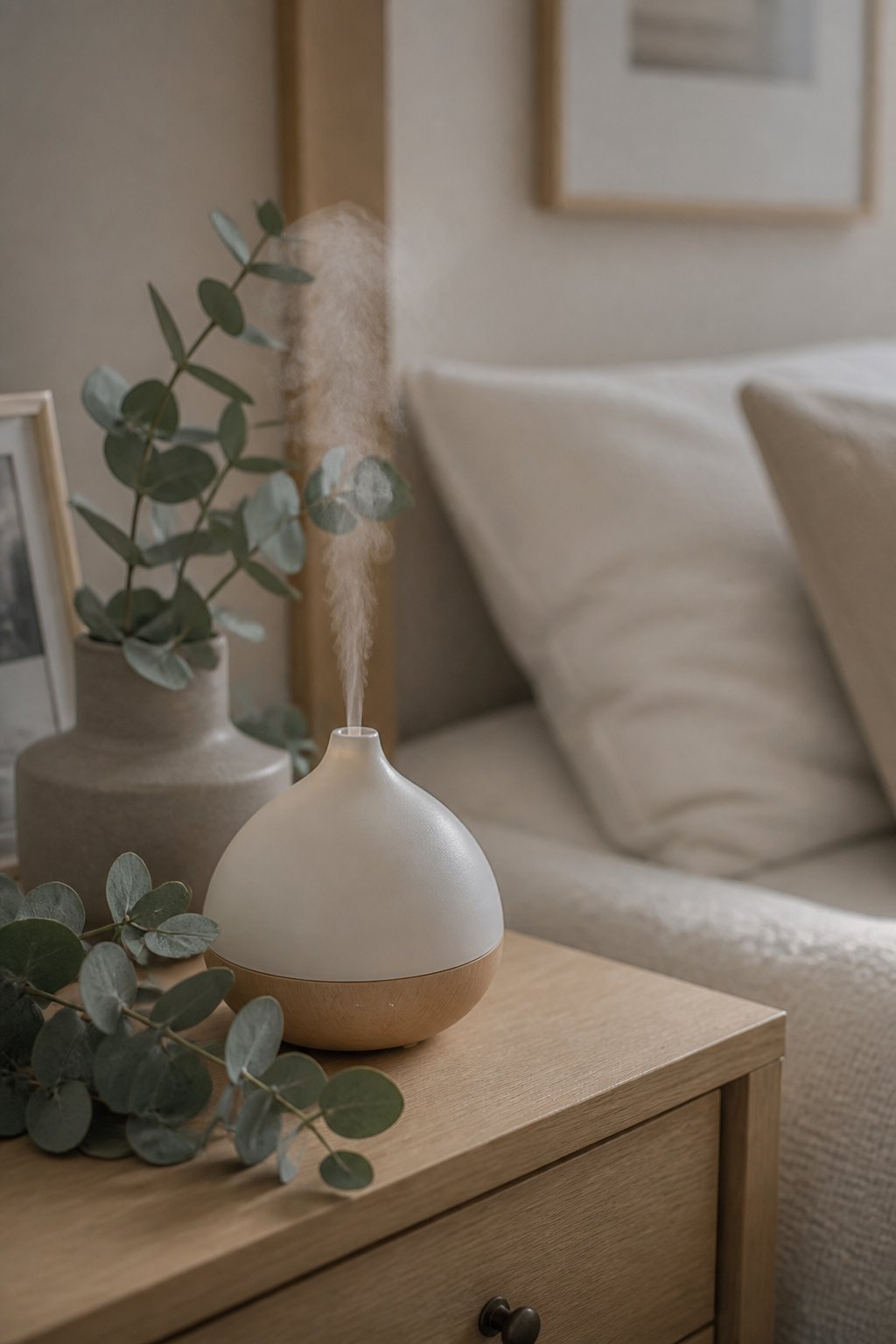
Scent is one of the most overlooked finishing touches in a bedroom. A small diffuser doesn't need to be powerful to be effective - in a compact room, a low-output unit with a gentle eucalyptus blend will reach every corner without becoming the first thing anyone notices when they walk in.
Choose a compact unit with a matte ceramic or frosted glass finish in soft neutrals. A reservoir under 150 ml running on an intermittent setting is enough for a small room and prevents the scent from becoming heavy. Place it on the nightstand or a shelf so the mist travels across the space rather than directly toward your face. Dilute the eucalyptus oil properly and use a blend rather than a single sharp note for something that reads more like atmosphere than air freshener.
18. A Folded Throw in a Complementary Contrast Color
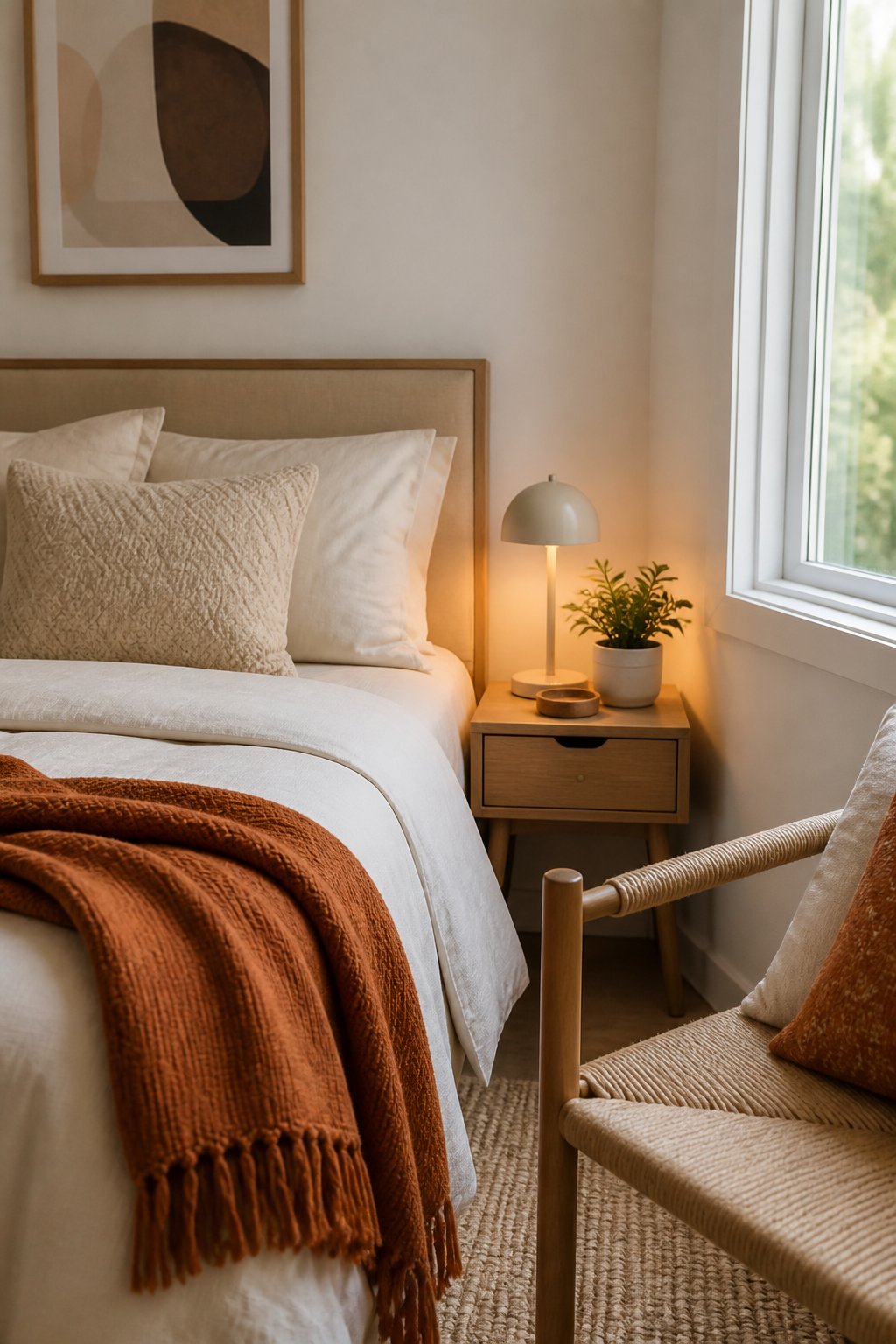
Color contrast, used at a small scale, does something a neutral scheme alone can't - it gives the eye a place to rest and then move on, which makes a room feel resolved rather than unfinished. A folded throw at the foot of the bed introduces that contrast without requiring any new furniture.
Choose a lightweight wool, cotton-linen blend, or fine knit that lies flat. At 50 to 60 inches wide, it works proportionally across most beds from twin to queen without swallowing the bedding. Warm rust against cool blue, soft teal against pale peach - pick a color that sits adjacent or opposite to your main hue on the color wheel. For rooms with limited light, a deliberate contrast here lifts the whole palette without adding anything heavy.
19. A Low-Profile Bed Skirt for a Clean Floor Line
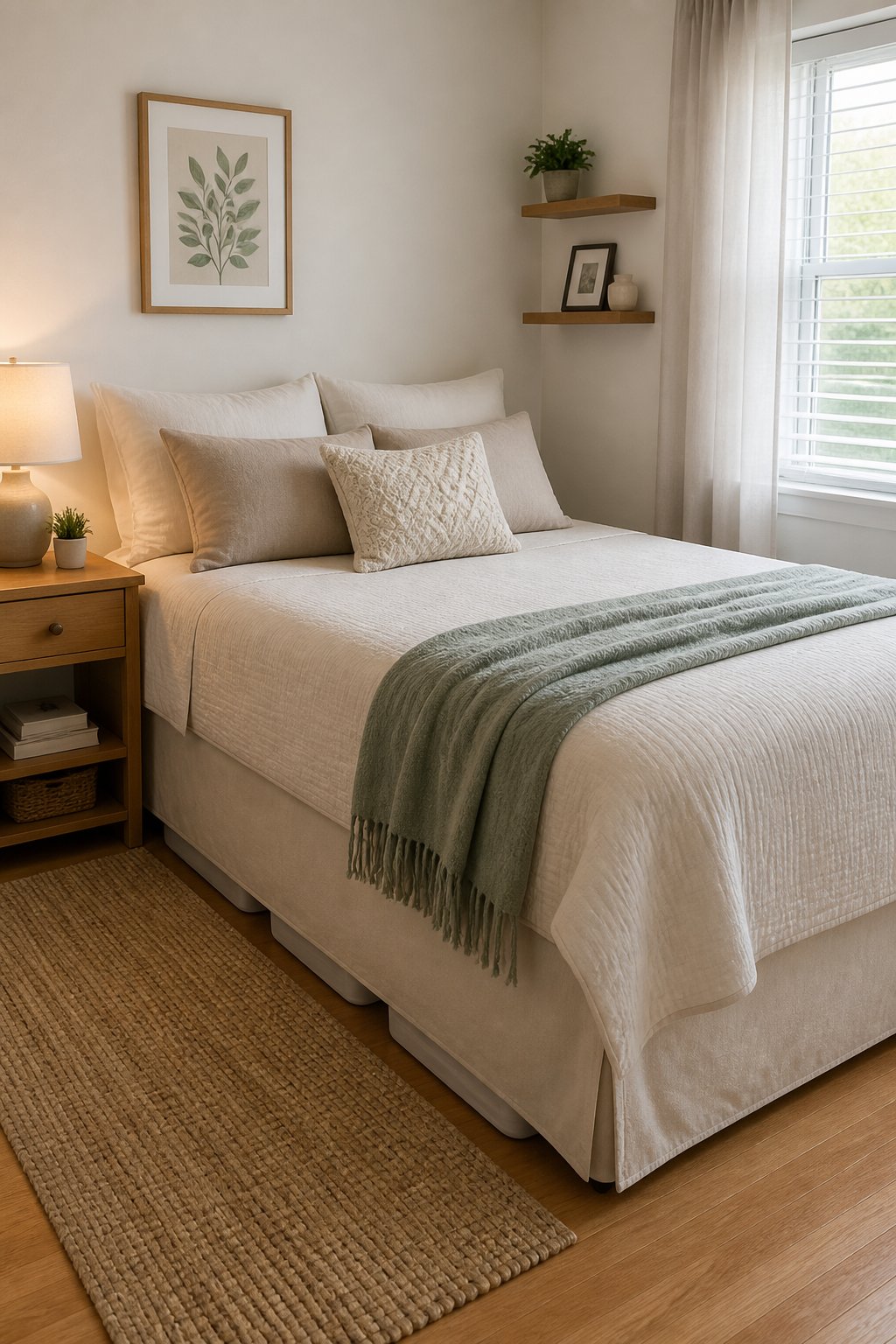
The floor line in a small bedroom carries more visual weight than most people realize. When storage bins, mismatched boxes, or a tangle of charging cables are visible under the bed, the room reads as cluttered even when every surface is tidy. A bed skirt fixes the floor line and hides the under-bed storage in one move.
Look for a short drop between 6 and 12 inches in cotton blend or linen-look polyester that hangs straight rather than gathering at the corners. Match the color closely to your bed frame or keep it neutral - the goal is for it to read as part of the bed, not a separate element. This is a genuinely useful piece for anyone using under-bed bins for extra storage, which in a small room is most people.
20. A Ceramic Saucer for Loose Change and Rings
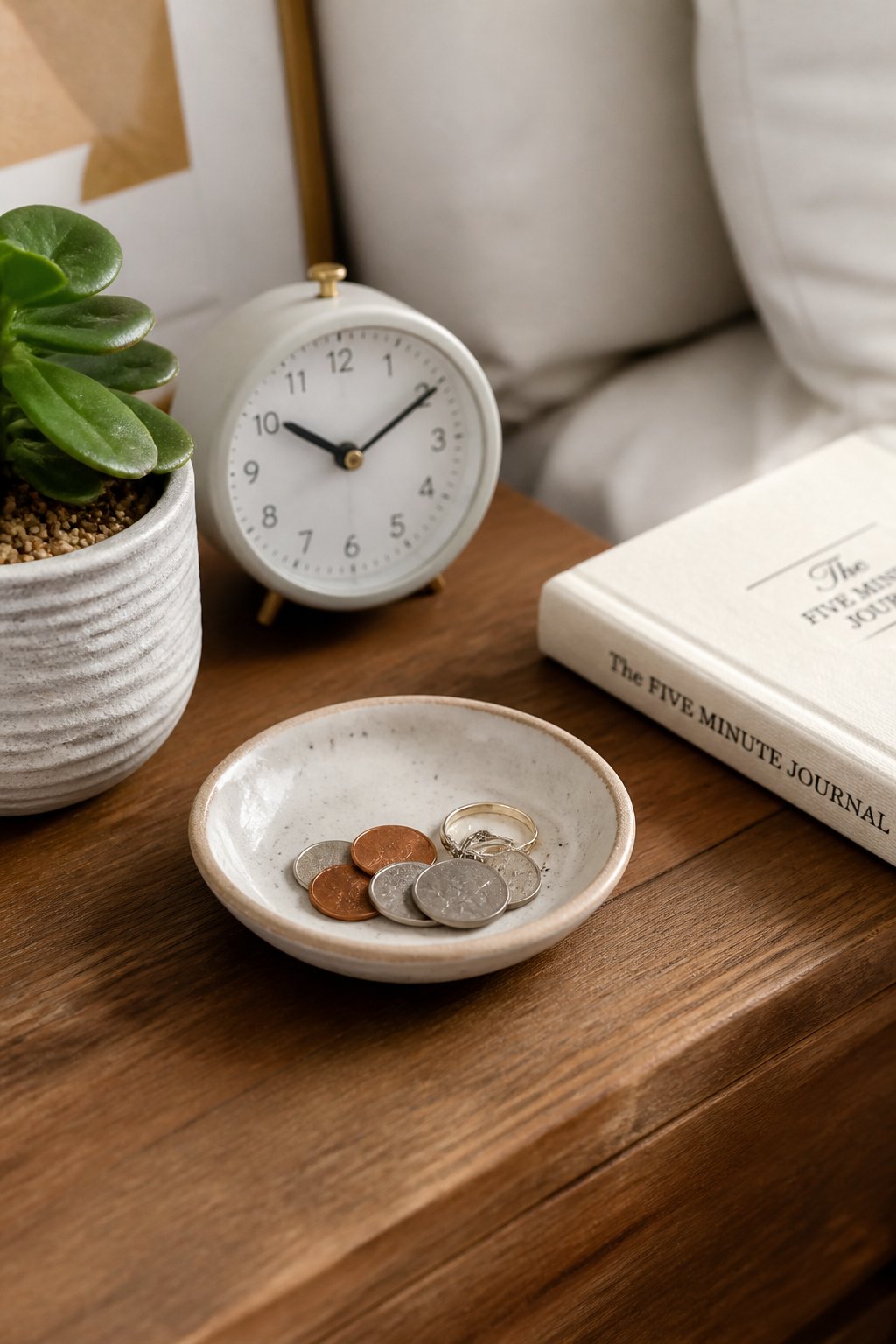
A ceramic saucer is almost absurdly small as a decor decision. It's also one of the ones that works most reliably. Coins, hairpins, and earrings that would otherwise migrate across the nightstand surface have somewhere to land, which keeps the flat surface readable as styled rather than accumulated.
Look for a saucer about 3 to 5 inches wide with a matte glaze - matte hides fingerprints better than glossy finishes. A subtle texture gives a handmade quality without making a fuss of itself. Warm neutrals or soft pastels blend with most palettes. This is the kind of piece that costs very little, installs instantly, and makes a noticeable difference to how the room reads at eye level from the doorway.
21. A Pair of Coordinating Books for Each Bedside
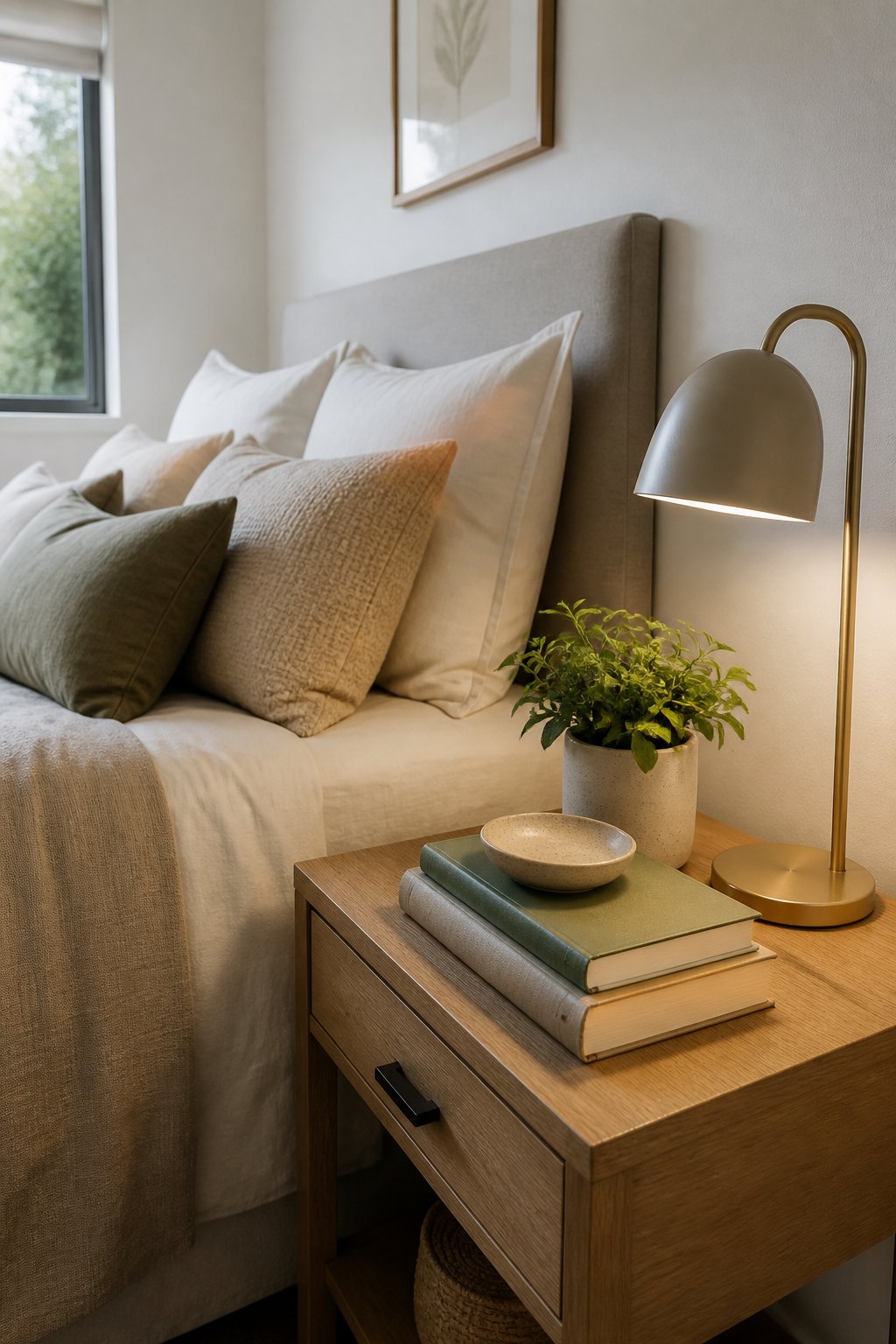
Symmetry in a small bedroom doesn't have to mean matching lamps and identical plants. A coordinating pair of books - one stacked flat, one propped upright - introduces height and balance across the nightstand in a way that feels collected rather than matched.
Pick books with similar tones and simple spines in linen, muted pastels, or warm neutrals. Slim hardcovers or trade paperbacks keep the scale right for a narrow table. One under 2 inches thick and the other at 3 to 4 inches creates a subtle stepped effect that the eye reads as intentional without drawing attention to itself. On a dark wall, mid-tone covers stop the bedside from disappearing into the background.
22. A Slim Full-Length Mirror Behind the Door
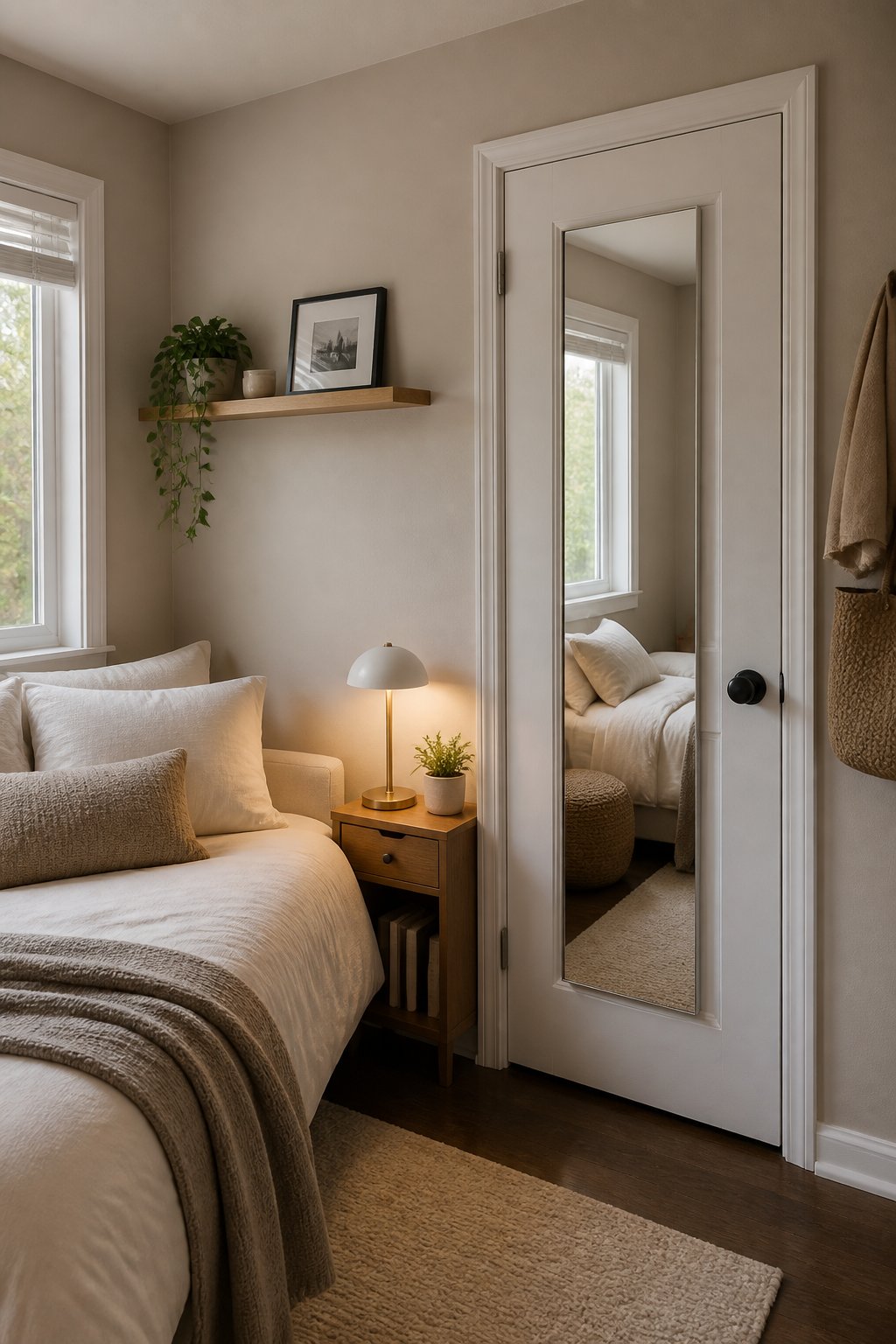
Behind the door is the most underused wall in most small bedrooms. A slim full-length mirror mounted there solves two problems at once: it gives you a place to check your outfit without taking floor space, and it reflects enough of the room to make the layout feel larger from the doorway.
Choose a narrow mirror around 12 to 18 inches wide and just under door height. A thin frame in matte black, warm brass, or light wood reads as a deliberate element rather than an afterthought. Over-the-door hangers or adhesive brackets make this genuinely renter-friendly. It's a particularly good addition to any room with a dark corner or a tight floor plan where a freestanding mirror would simply be in the way.
23. A Small Framed Botanical Print
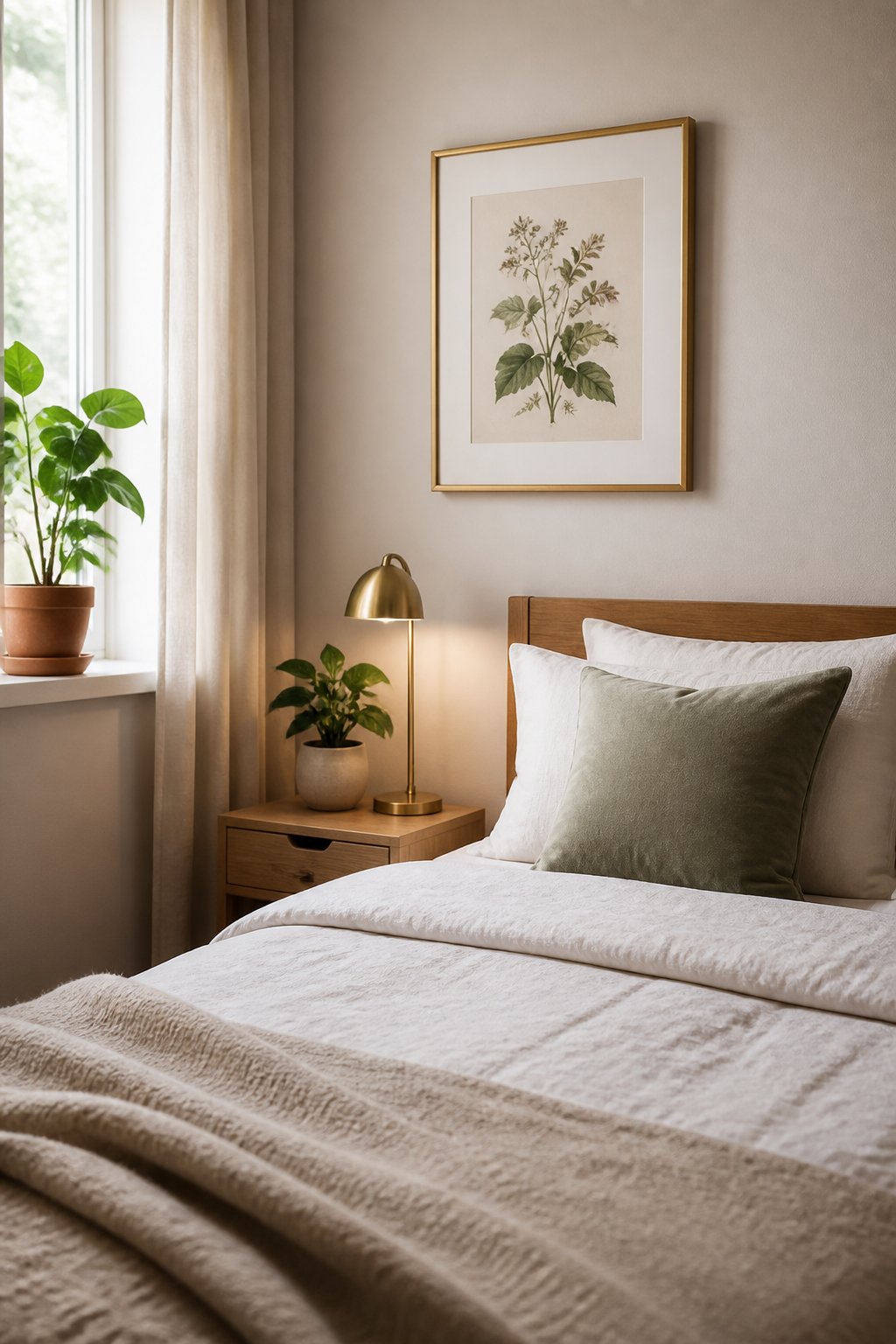
A single piece of art, properly framed and scaled, closes out a wall that would otherwise just be background. In a small bedroom, large-scale art tends to compress the space. A small botanical print, matted with generous white space, does the opposite - it creates a contained focal point that makes the wall feel considered without filling it.
Keep the print itself around 8×10 to 11×14 inches. A slim frame in matte black, warm wood, or brushed gold stays clean against most wall colors. White matting adds visual breathing room and signals that the print was chosen, not just tacked up. Muted greens, soft sage, or clean ink line drawings introduce contrast that feels gentle rather than demanding.
Renters will find it easy to hang and easy to remove. It also suits anyone who wants a nature-driven accent without committing to a gallery wall or a large canvas. A single small print, in the right spot, is often all the wall that room needs.