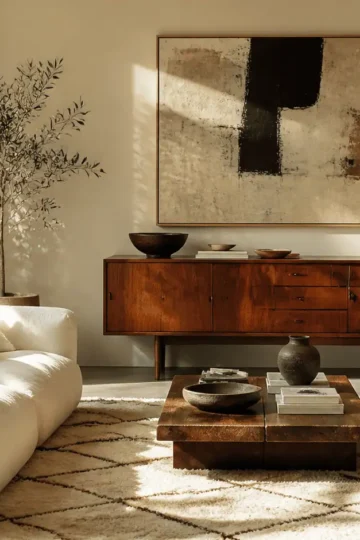
Your coffee table is the first thing people really see when they walk into your living room. Not the sofa, not the art on the wall - the table. And it tends to end up in one of two states: either completely bare and somehow sad-looking, or piled with stuff that accumulated over a Tuesday.
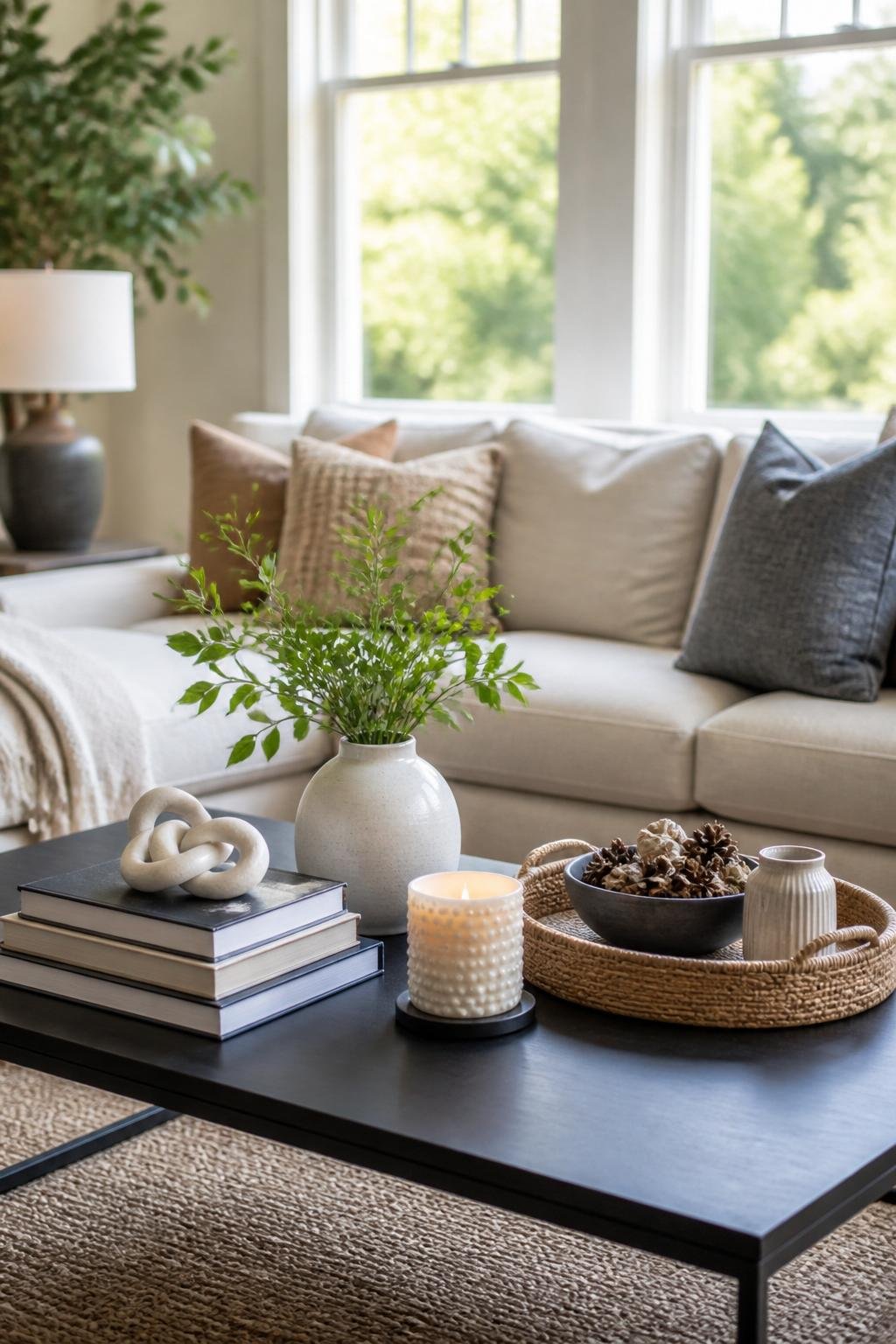
The sweet spot is a small set of repeatable combinations that feel thought-out without requiring you to start over every time someone comes to visit. These thirteen formulas give you that middle ground - real objects, real surfaces, real rooms.
1) A Low, Sculptural Ceramic Vase With a Single Stem
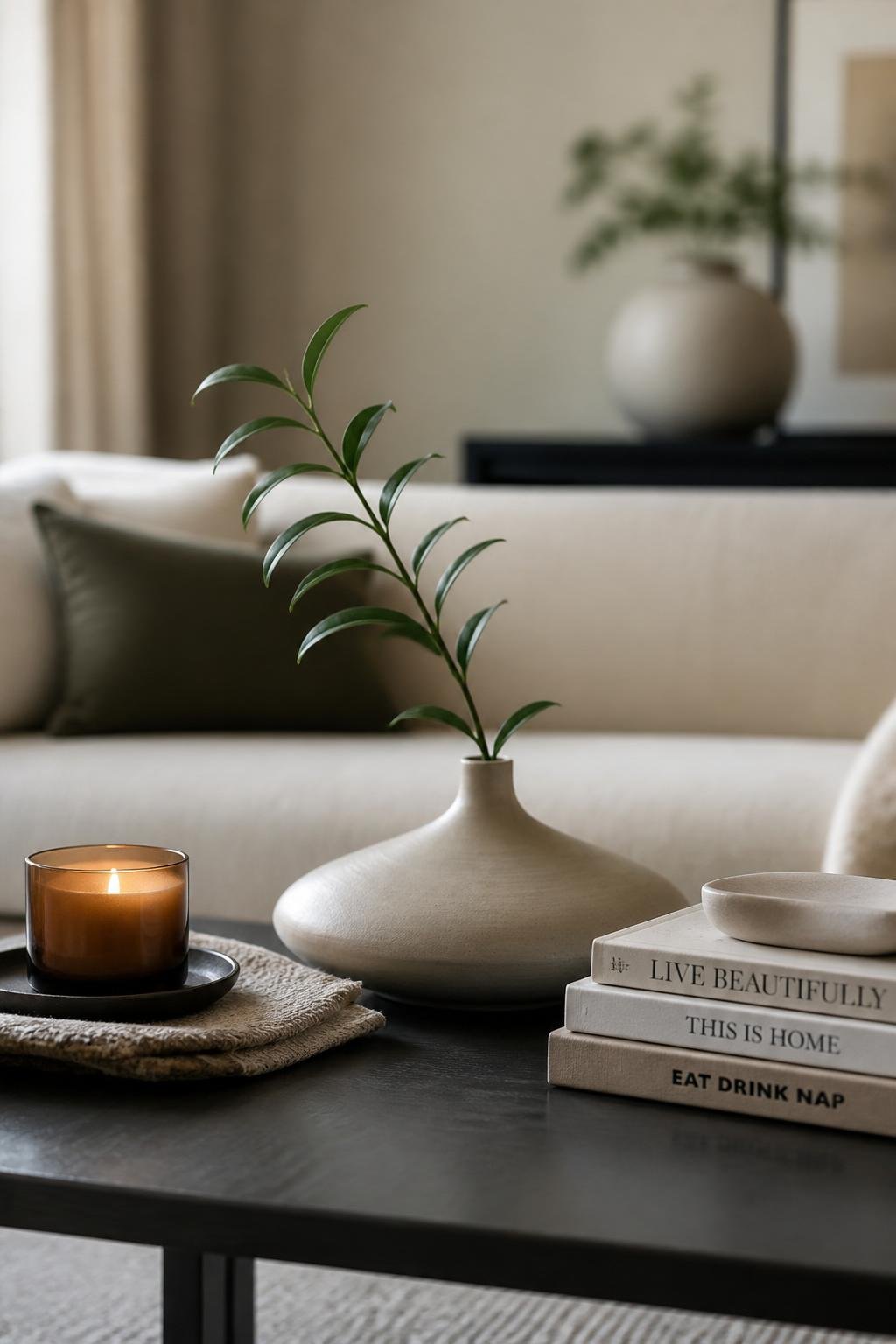
This one works because of what it doesn't do. A low ceramic vase - we're talking 4 to 7 inches tall, 5 to 8 inches wide - takes up just enough space to register as intentional while leaving the rest of the surface open to breathe. It adds shape and texture without asking for much in return.
Look for organic, slightly irregular silhouettes in matte or speckled finishes. Pebble shapes, gentle wave profiles, anything that reads as handmade rather than mass-produced. Muted tones - warm white, soft gray, terracotta - tend to sit well beside most surfaces. Skip glossy finishes and busy patterns; they'll fight with everything around them. Inside, one stem is enough: dried grass, a single bloom, a short leafy branch. That's it. The restraint is what makes it feel considered.
2) Two Hardcover Books, Stacked and Strapped
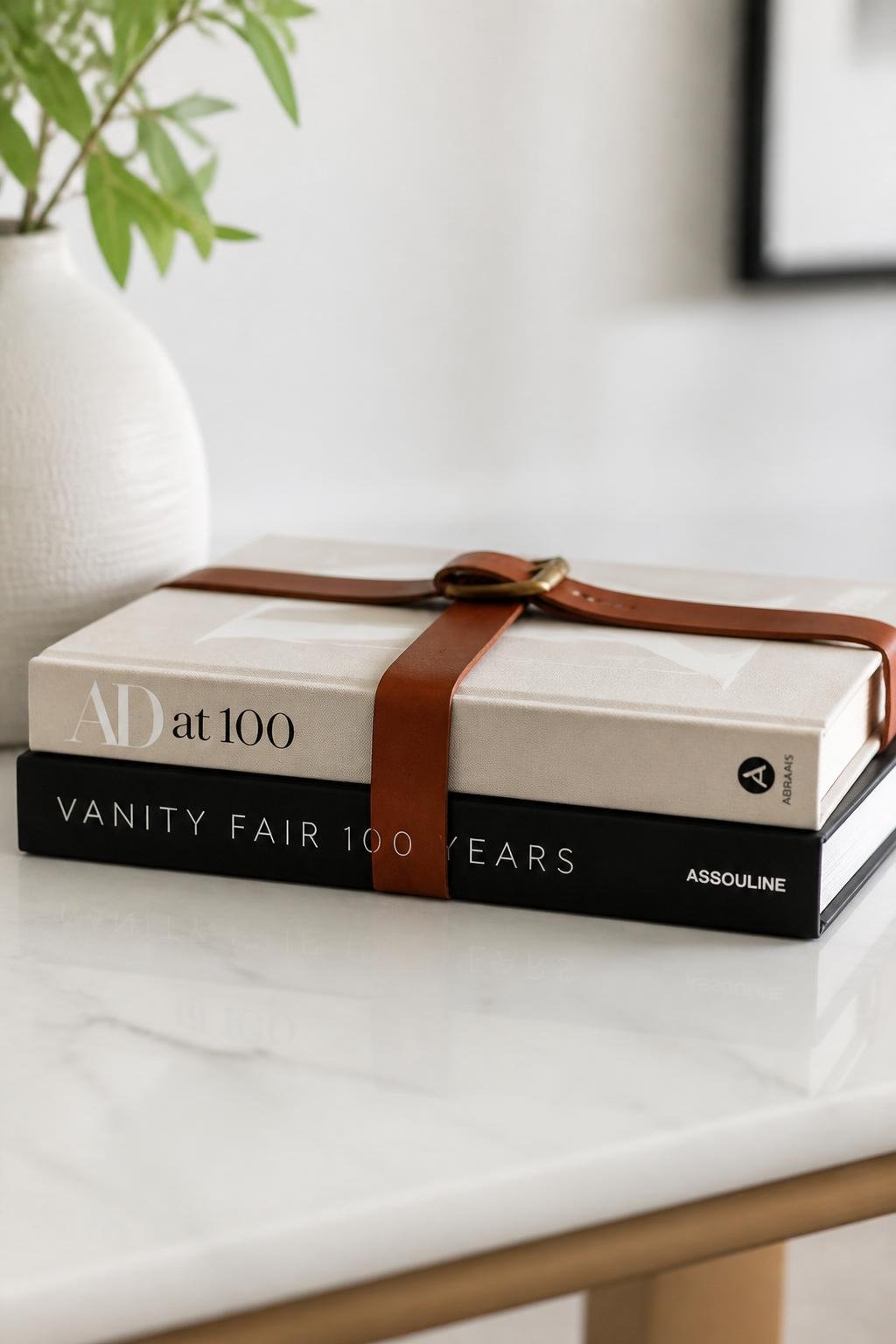
Two books, a leather strap, done. It sounds too simple, but this formula holds together better than most more complicated arrangements because the strap does something important: it turns two separate objects into one visual unit. The table reads cleaner as a result.
Choose books with covers in complementary or neutral tones, roughly 9 to 12 inches long and 6 to 9 inches wide, so they sit as a solid block rather than an awkward mismatch. The leather strap should be slim - brown or black, smooth or lightly worn - with a low-profile buckle that doesn't add extra visual noise. This pairing works especially well on medium or large tables where you want a single anchor point, and it plays nicely beside a low vase or a small object set on top.
3) A Woven Tray Corralling the Everyday Stuff
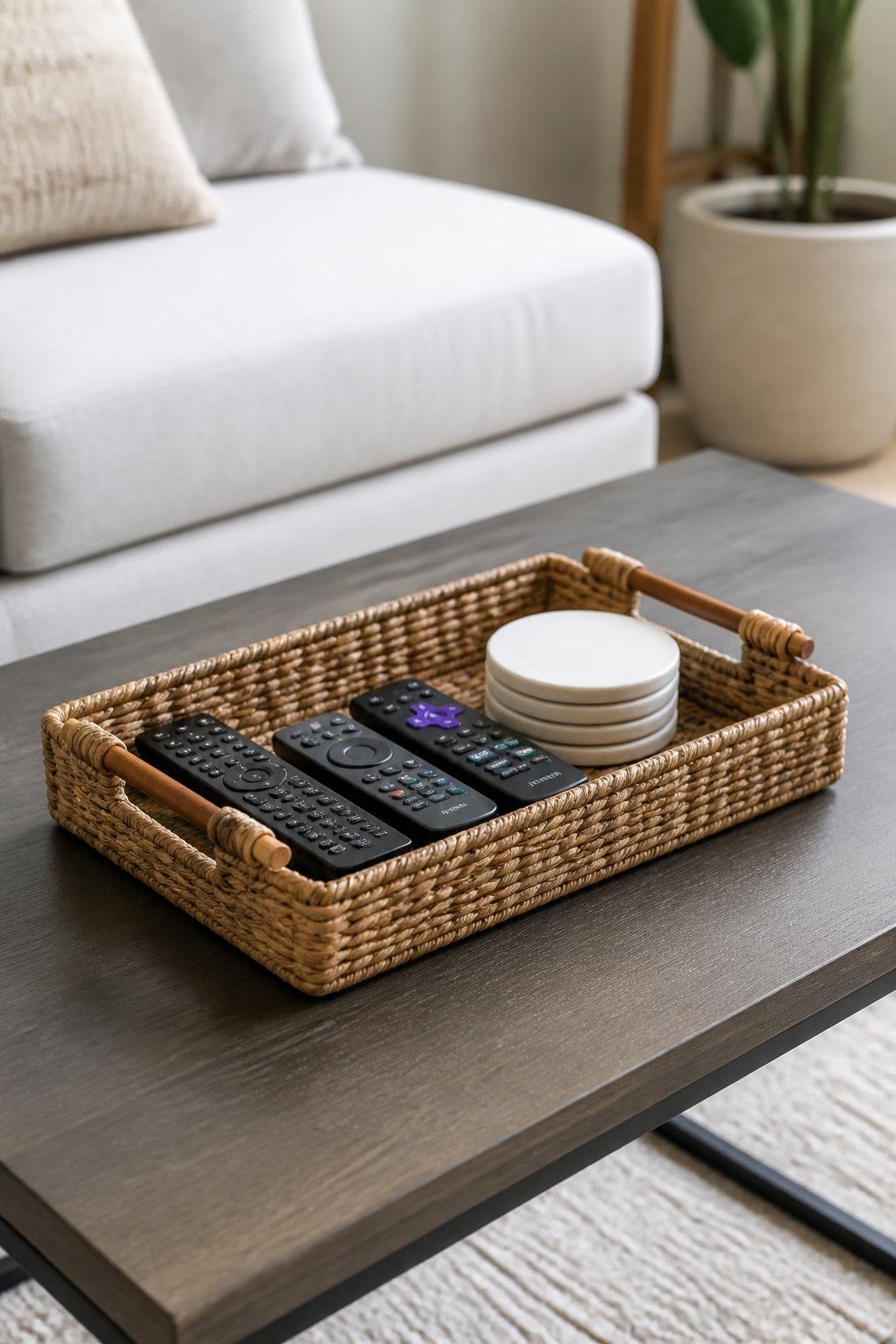
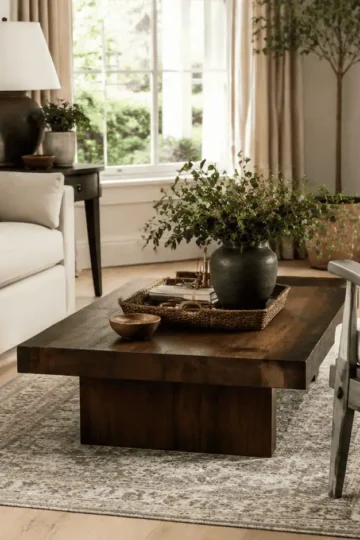
The woven tray is probably the most underrated move on this entire list. Remotes, a chapstick, a coaster - these things will always be on your coffee table. The tray doesn't pretend otherwise. It just gives them a home so they read as collected, not scattered.
Look for something about 10 to 14 inches long with shallow sides and natural fibers - seagrass, rattan, braided paper. Warm, matte finishes work best here; anything shiny tips the whole thing from casual to corporate. Round and oval shapes tend to feel softer, while rectangular trays suit very linear tables. In rooms with a mix of materials - wood and glass, metal and fabric - this tray becomes the element that ties them together without drawing too much attention to itself.
4) A Stoneware Bowl Filled With Natural Objects
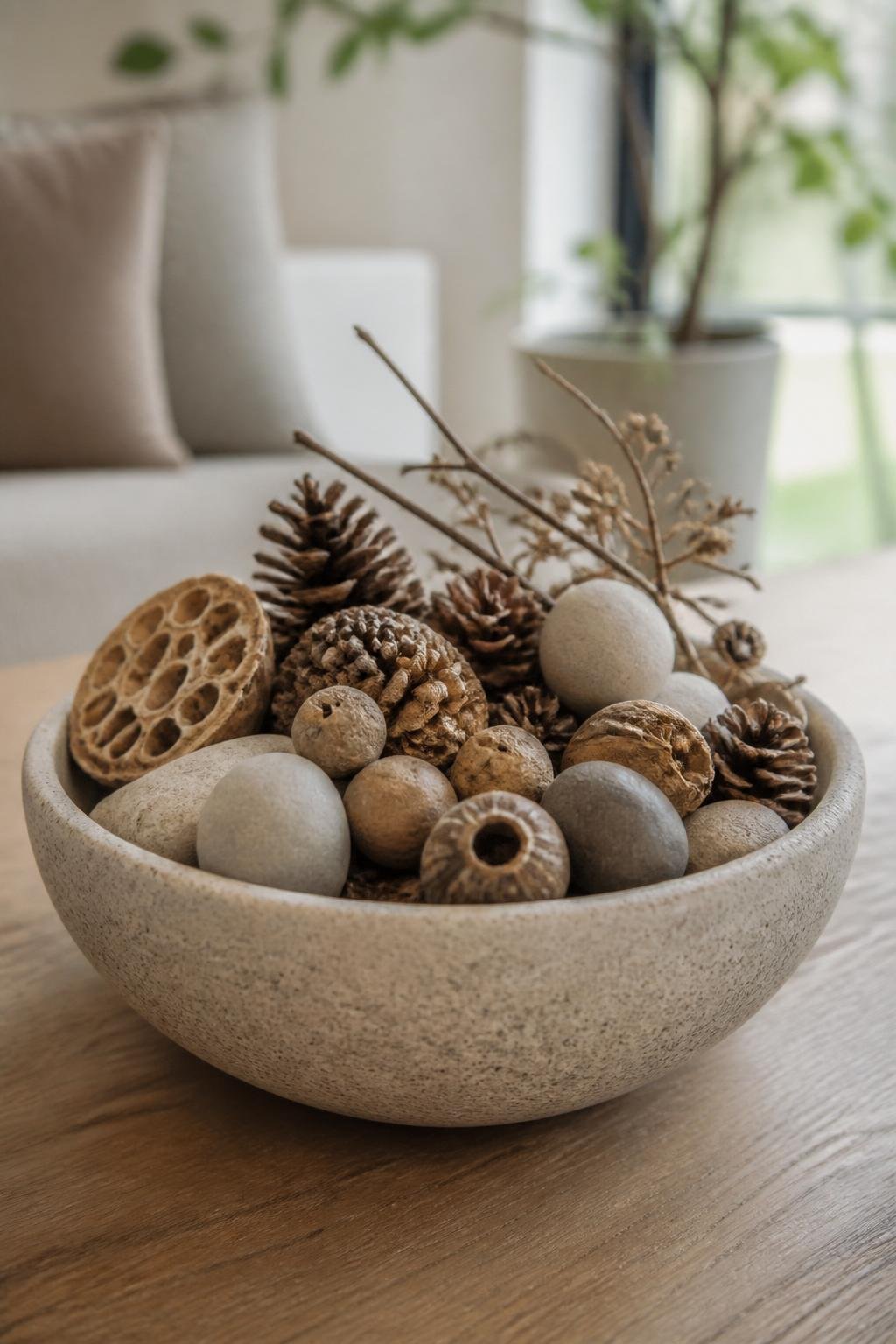
A low, rounded stoneware bowl does something a tray can't quite do - it adds a sculptural quality to the table while still functioning as a container. The contents matter here, and "natural objects" is the right brief: river stones, dried seed pods, a couple of oversized shells, a bundle of preserved moss. Keep pieces within similar color families and vary the scale so the bowl reads as a small curated moment rather than a junk collector.
Look for bowls 10 to 14 inches across in matte, speckled, or satin glazes. Earthy tones - charcoal, warm beige, muted green - sit well against glass or metal table surfaces. Thicker rims read more artisanal; thinner edges feel a bit more refined. Both work, depending on the room. This formula fits mid-century, rustic, and Scandinavian-leaning tables particularly well, and it's genuinely low-maintenance once you've set it up.
5) A Miniature Succulent in a Matte Pot
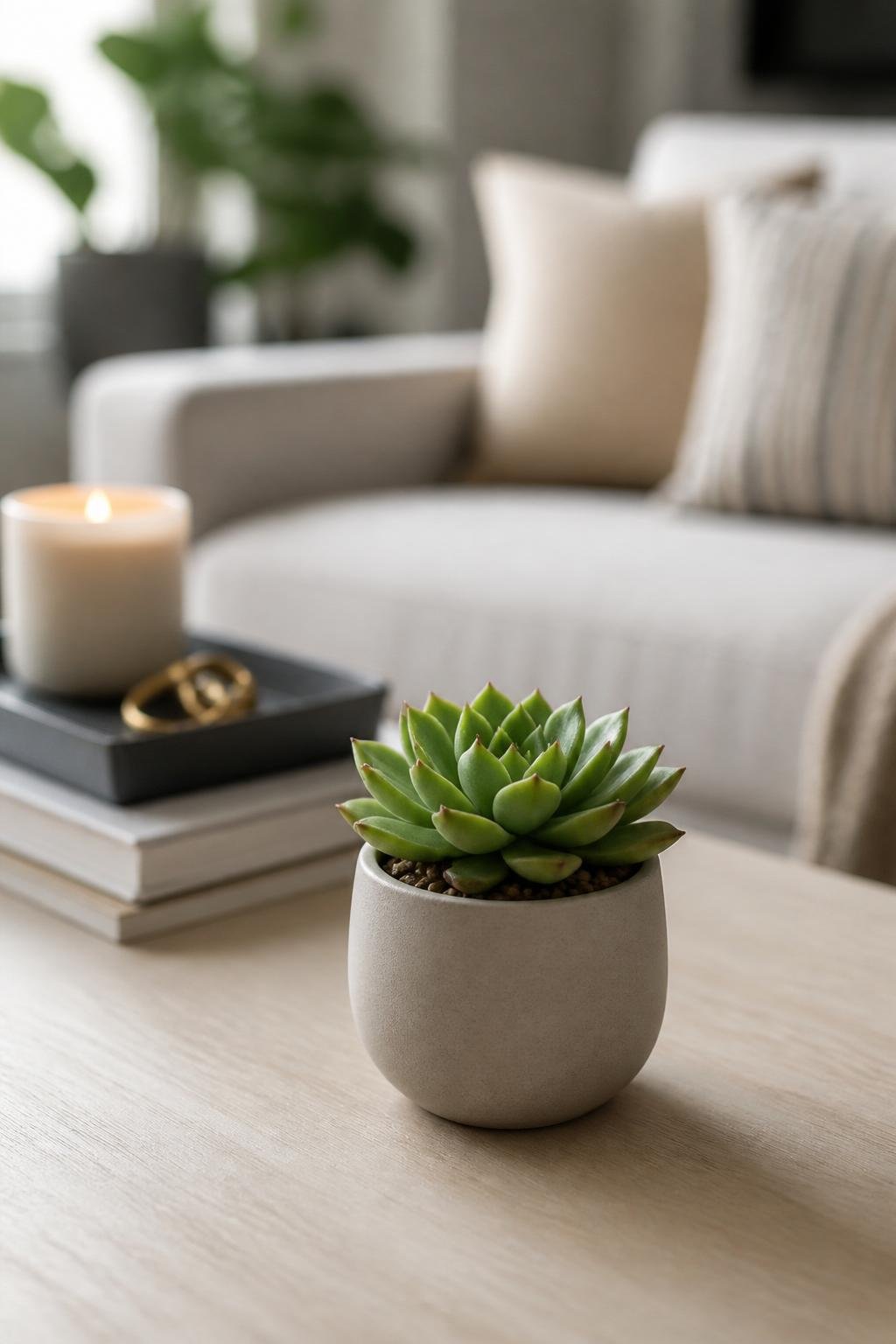
If your table feels a little flat or mono-material, a tiny succulent is often the answer. It brings something living into the mix without requiring any real commitment - no weekly watering, no wilted stems to deal with.
Keep the pot small: 2 to 4 inches wide in matte ceramic or unglazed clay. Chalky white, soft gray, warm terracotta - any of those finishes will stay quiet beside other objects rather than competing. Rosette-form succulents or small haworthias work best because their shapes stay compact and don't creep over the edges. Tuck it beside a stack of slim books or on a narrow tray next to a candle, and you've got a vignette that looks like it took thought but honestly took about forty-five seconds.
6) A Slim Tapered Candle in a Brass Holder
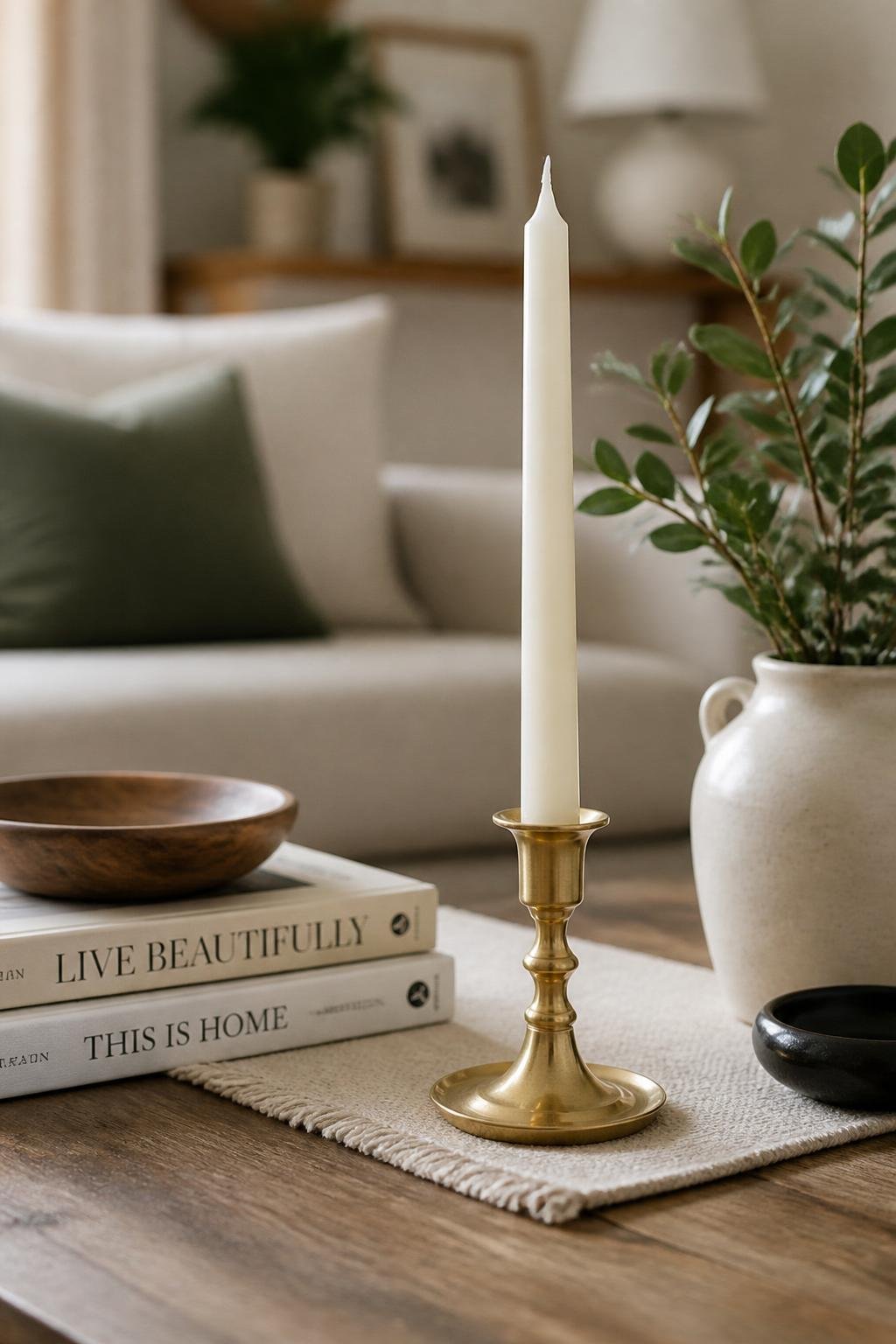
Height is the thing most coffee tables lack. Every object tends to be low and horizontal, which makes the whole arrangement feel a bit monotonous. A tapered candle in a brass holder solves that problem without adding bulk.
Aim for candles between 8 and 12 inches high so they register as a deliberate accent. The holder should be narrow, slightly tapered, and low-profile at the base - polished or satin brass both read warm and tend to pair well with wood, stone, and linen surfaces. This combination works on simple modern tables as well as mixed-material setups, and it's the rare styling element that looks good both lit and unlit.
"A styled coffee table isn't about adding more - it's about making sure each object earns its place."
7) A Glass Cloche Over One Good Object
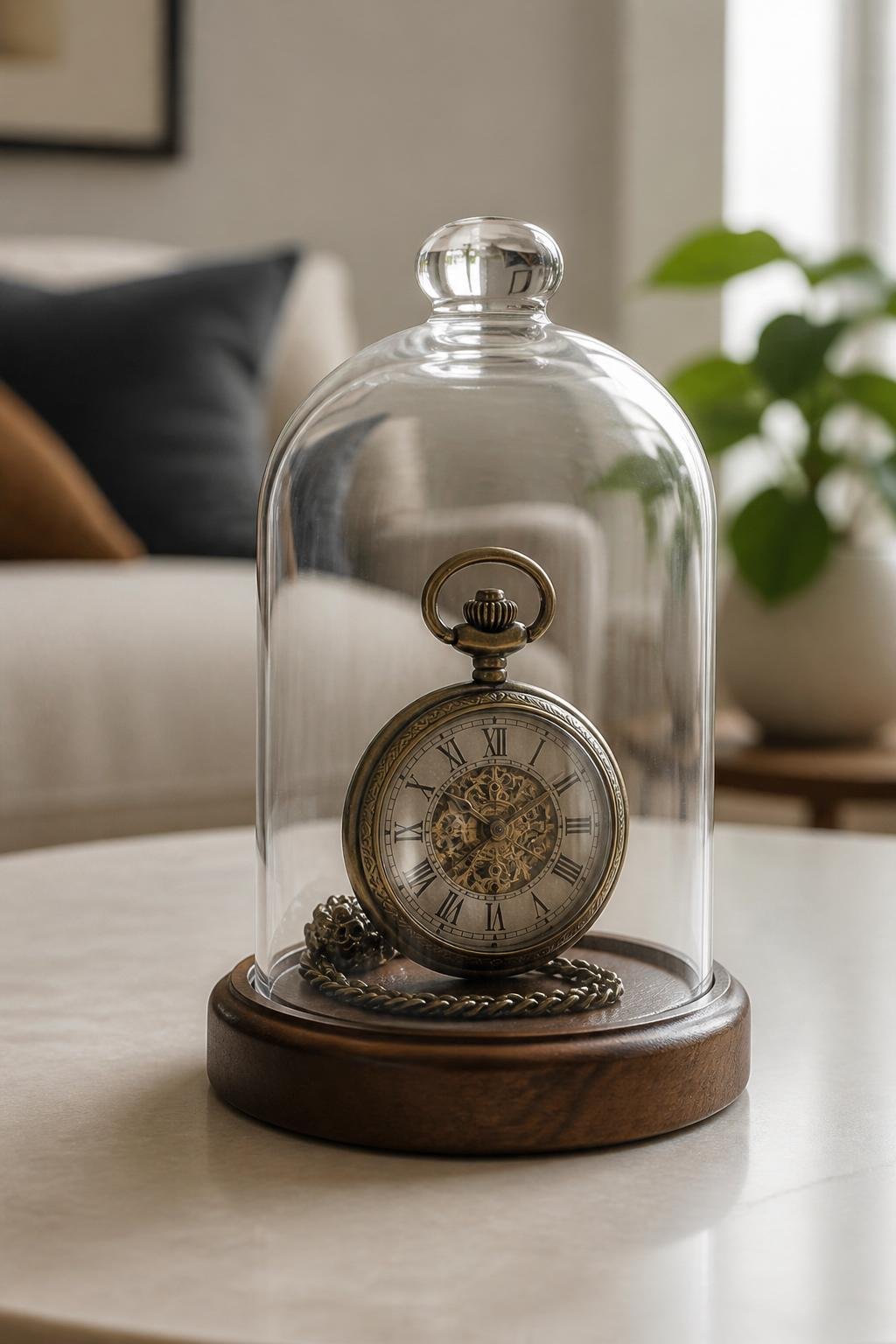
This is a formula for people who own one genuinely interesting small object and aren't sure what to do with it. A glass cloche gives a single thing the weight it deserves. It creates a contained, focused moment on the table rather than an object that just sort of sits there looking random.
Choose clear blown glass, 8 to 12 inches tall, with a simple knob and a matte or slightly aged metal base. What goes inside should be singular: a brass animal, a small ceramic figure, a vintage apothecary bottle. The cloche works because it signals that you chose this object on purpose - which is the whole point of good styling. Give it room on medium to large tables so the silhouette can breathe.
8) A Small Framed Photo in a Slim Frame
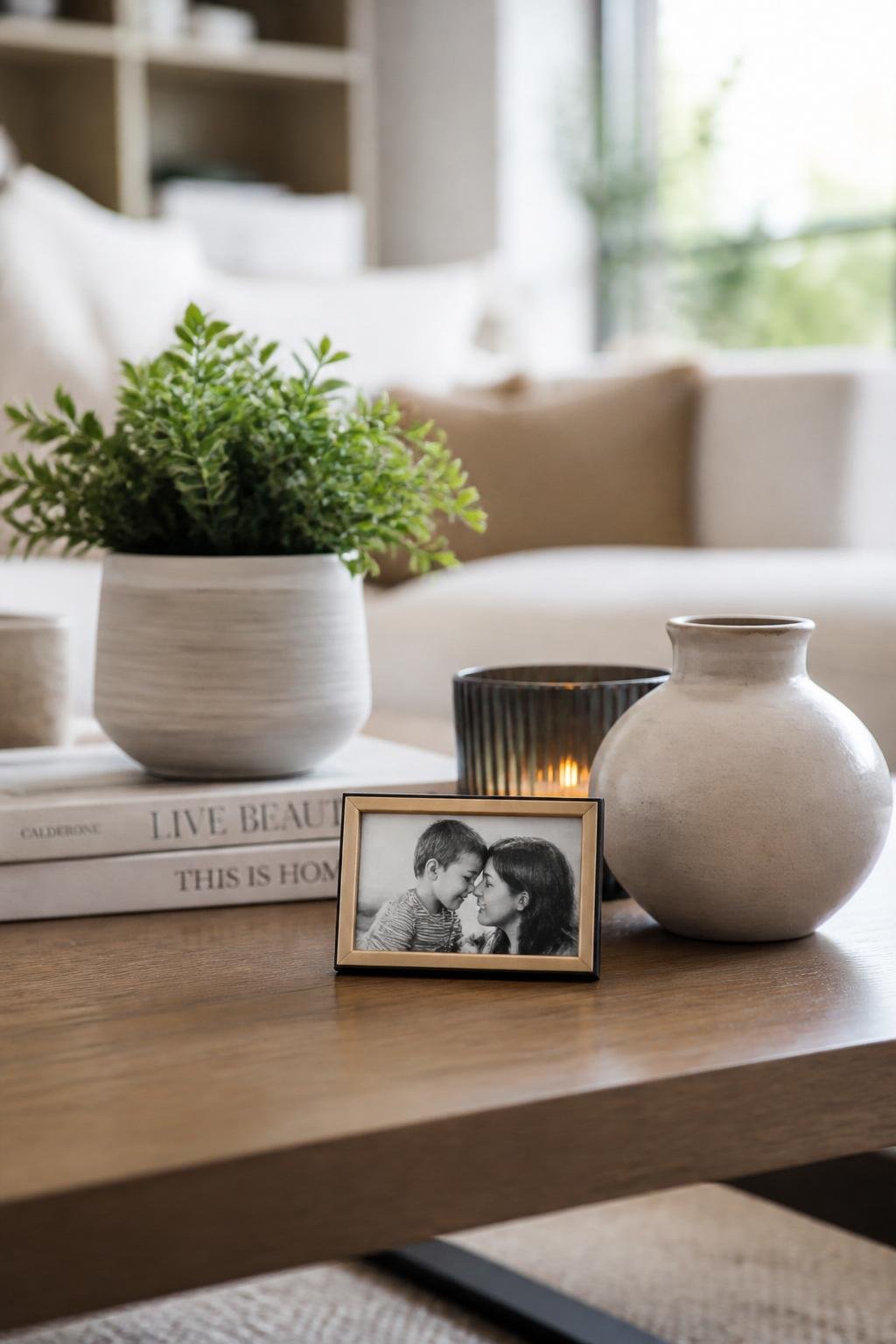
Personal touches on a coffee table can easily tip into clutter, but a single small photo in the right frame stays contained. It adds a human quality to the surface - something the candles and stones and books can't quite do on their own.
Keep frames under 6 by 8 inches with a slim profile in matte metal, thin wood, or black lacquer. Non-gloss glass helps it read quietly among other pieces. For the image itself, aim for calm content: a landscape, a portrait, a candid moment in muted tones. Position it near a book stack or a low tray so it has something to lean against or sit beside - a photo floating alone in the middle of a table tends to look like it wandered there by accident.
9) A Stack of Matchboxes and a Decorative Lighter
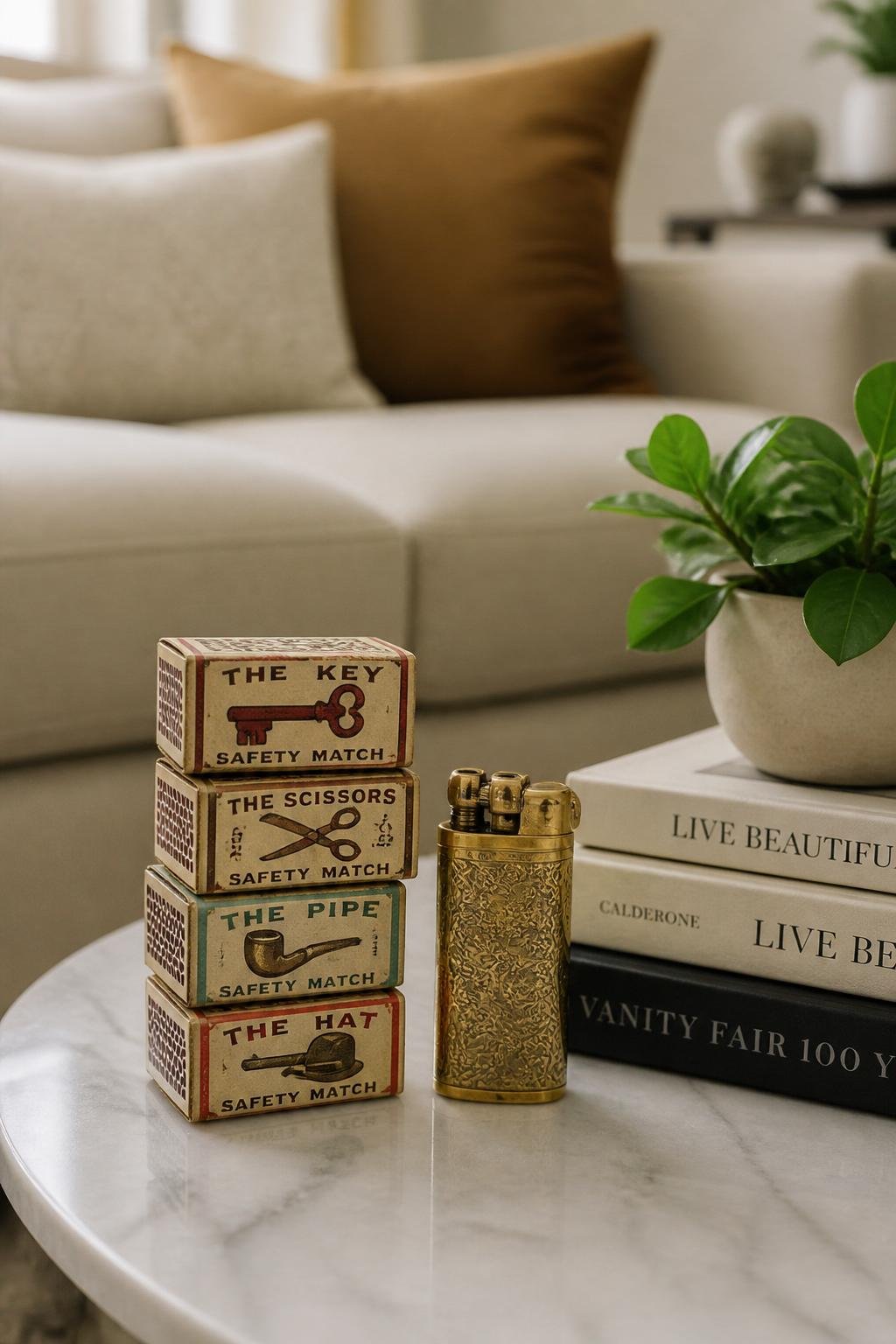
This one looks casual but it's actually doing a specific job: adding texture and personality in a very small footprint. A few matchboxes and one solid lighter give the table a layered feel while remaining genuinely functional.
Look for matchboxes in thin tactile materials - raw cardboard or linen-wrapped covers - in muted tones or subtle patterns so they read as a single block of texture rather than scattered visual noise. Stack two or three neatly, sizing around 2 to 3 inches wide and 3 to 4 inches long. The lighter goes on top and acts as the anchor: solid metal or matte finish, with enough weight to feel intentional. Position the stack on a narrow tray or beside a low vase for the most settled look.
10) A Folded Linen Napkin Beneath a Cup
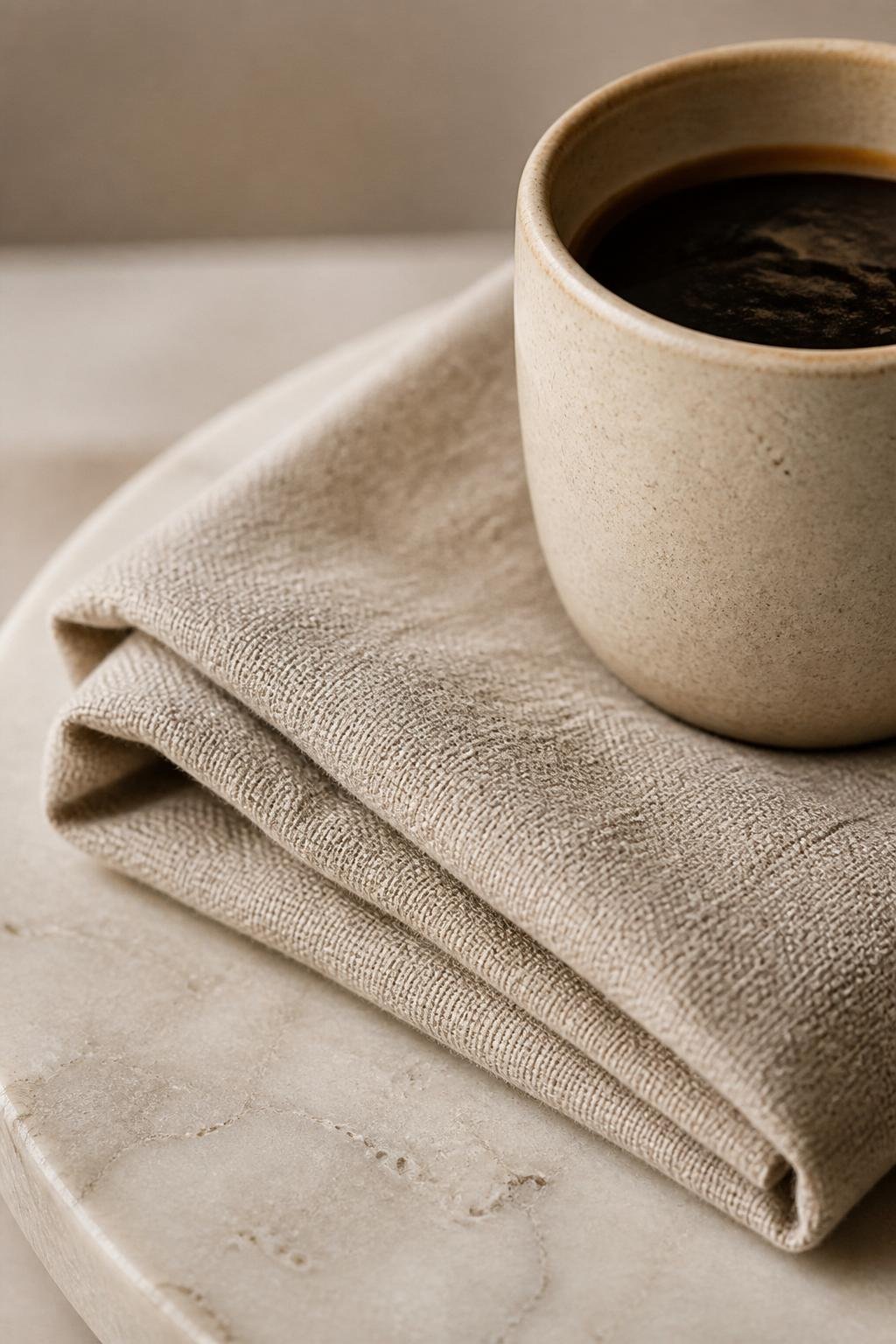
A linen napkin under a cup sounds like a small thing, and it is - but it changes what the cup communicates. Without it, a mug on a coffee table reads as left behind. With a folded napkin beneath it, the same mug reads as placed there on purpose.
Look for visible slubs and a soft hand in neutral shades - oatmeal, stone, warm gray. A napkin around 16 to 20 inches square folds down to a size that fits neatly under a standard mug without overhanging the edges. Raw hems and natural fibers keep the feel easy rather than precious. This works best as part of a small vignette: the napkin and cup, a low stack of books nearby, maybe a single stem in a small vessel. Together, those three things connect textiles and ceramics in a way that feels genuinely lived-in.
11) A Mini Architectural Sculpture or Bookend
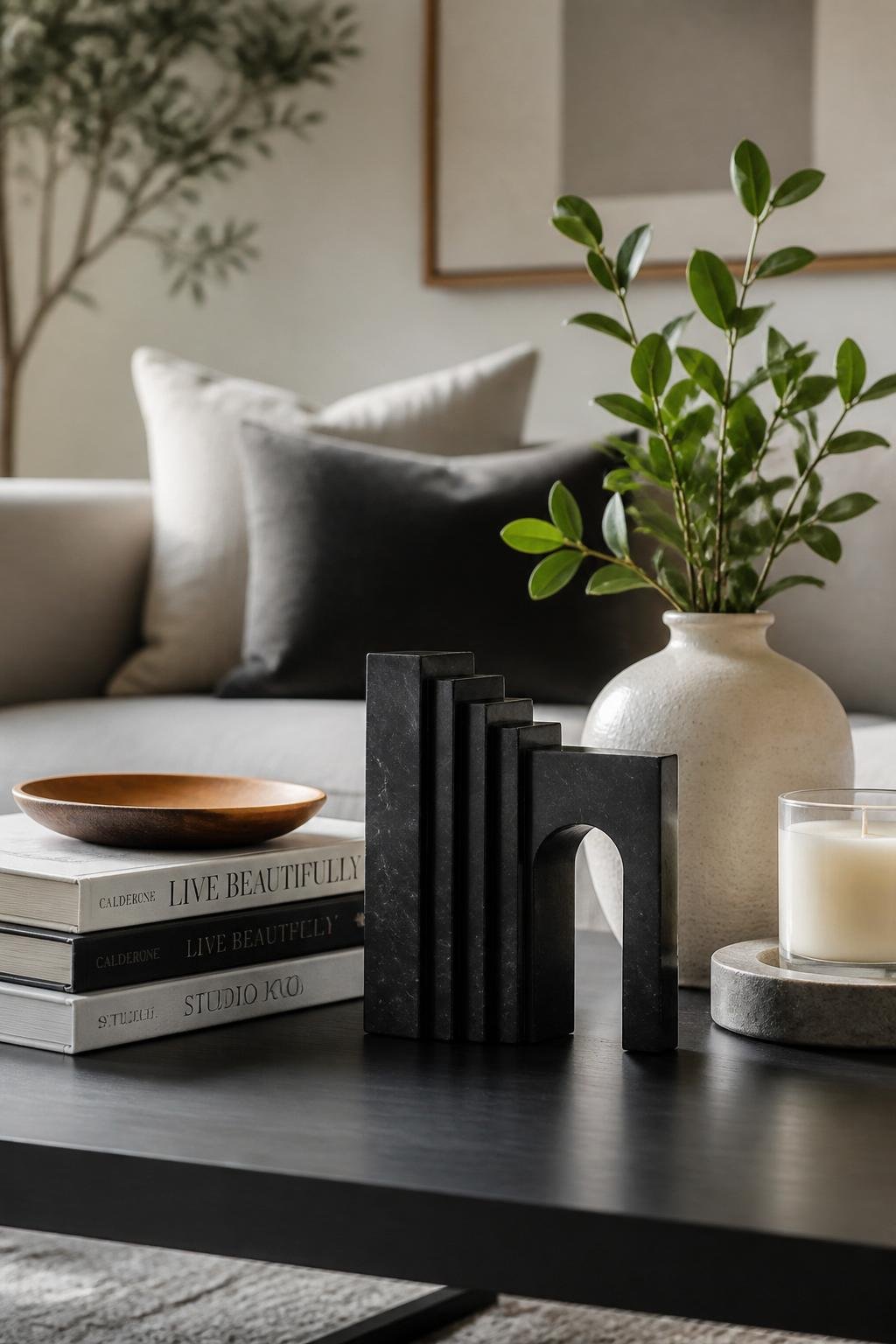
In rooms full of soft textiles - chunky throws, linen pillows, nubby rugs - a small hard-edged sculpture does a lot of work. It gives the eye something with clear geometry to land on, which makes the whole room feel more composed.
Aim for matte metal, stone, or plaster in a compact scale, roughly 4 to 8 inches tall. Simple silhouettes are the right call here: arches, stacked blocks, bent planes. Neutral finishes - black, white, warm brass - let the shape do the talking without competing with other objects on the table. Set it on top of a two-book stack or beside a low tray, and it earns its place by adding visual contrast without adding visual noise.
12) A Tray With One Candle and One Small Book
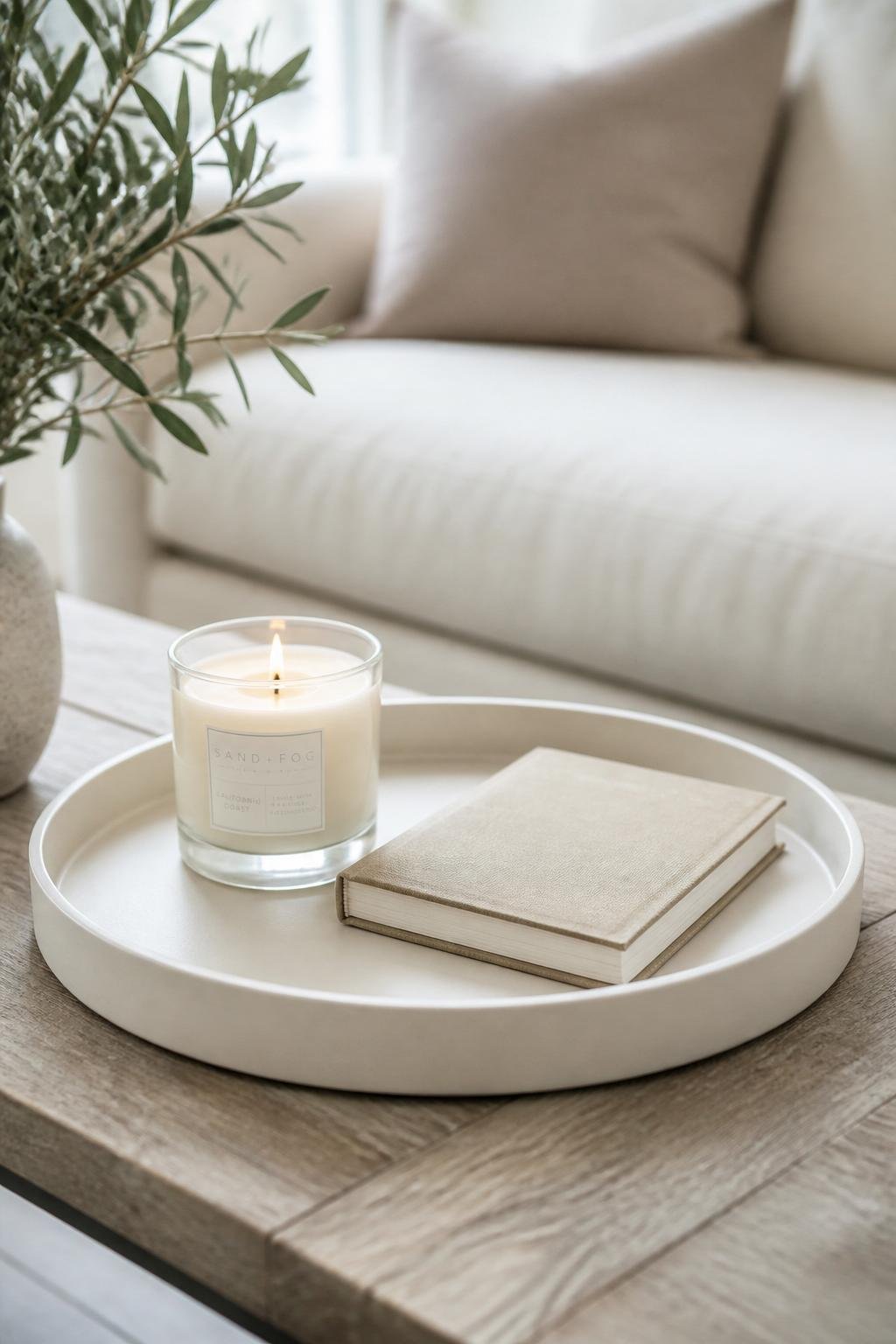
This is the formula for people who want a styled table but genuinely don't want to think about it much. A tray, a candle, a book. Three objects that make sense together and stay out of each other's way.
Pick a tray 10 to 14 inches long in wood, metal, or matte ceramic. The candle should be low and wide - 3 to 4 inches in diameter - in a concrete or neutral glass vessel so it doesn't overwhelm the book sitting beside it. Match your finishes with some intention: warm wood pairs well with a cream candle; a black metal tray reads cleanly with a white jar. The book should be small, around 5 by 7 inches, with a simple cover that doesn't shout. Set the candle slightly off-center in the tray. That small asymmetry is what keeps it from looking like a hotel room.
13) A Neat Stack of Natural Fiber Coasters
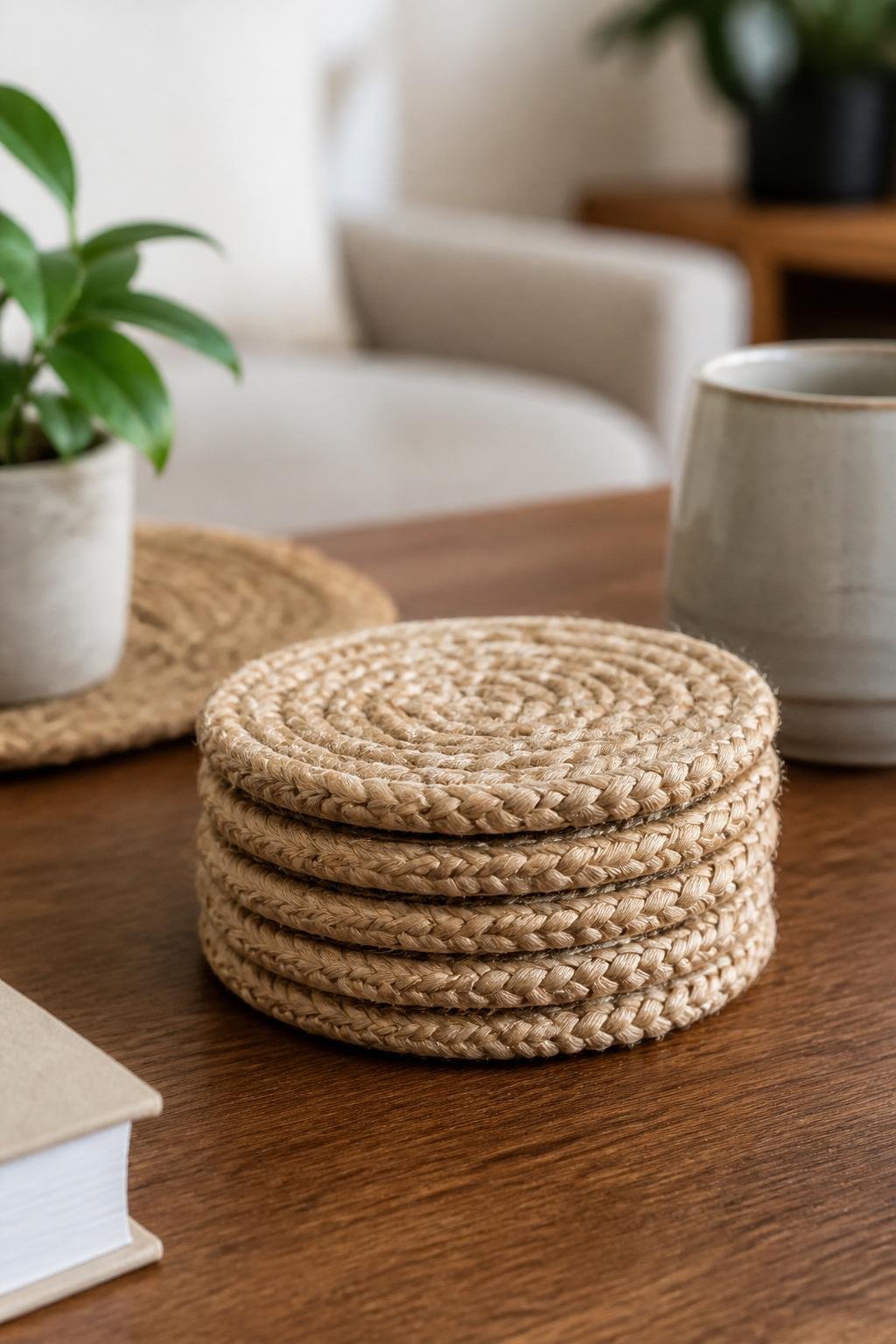
This one is easy to dismiss as too simple, but a tidy stack of natural fiber coasters is doing real styling work. It adds a quiet organic texture, it signals that the table is actually used, and it doesn't ask anything else of the arrangement.
Choose jute, seagrass, or braided rattan in 3 to 4 inch diameters. Tight weave, even edges, low profile - you want the stack to sit flat rather than wobble. Tan, honey, or soft gray tones blend with almost any surface. Keep the stack to three or six coasters and position it near a tray or a book so it reads as part of the arrangement rather than something that just hasn't been put away yet.
Editor's Note
None of these formulas require you to buy everything new. Most of them work best with a mix of what you already own and one or two pieces that feel considered. The goal isn't a showroom - it's a table that looks like someone with good instincts actually lives there.
Pick one formula and try it for a week before adding anything else. The tables that look best usually have less on them than you'd expect.