Sage green has been a popular choice for a bedroom color, with its popularity peaking in the early 2020s. Green is the color of nature, which means the receptors in our eyes are most comfortable with green among all colors, and sage green is no exception.
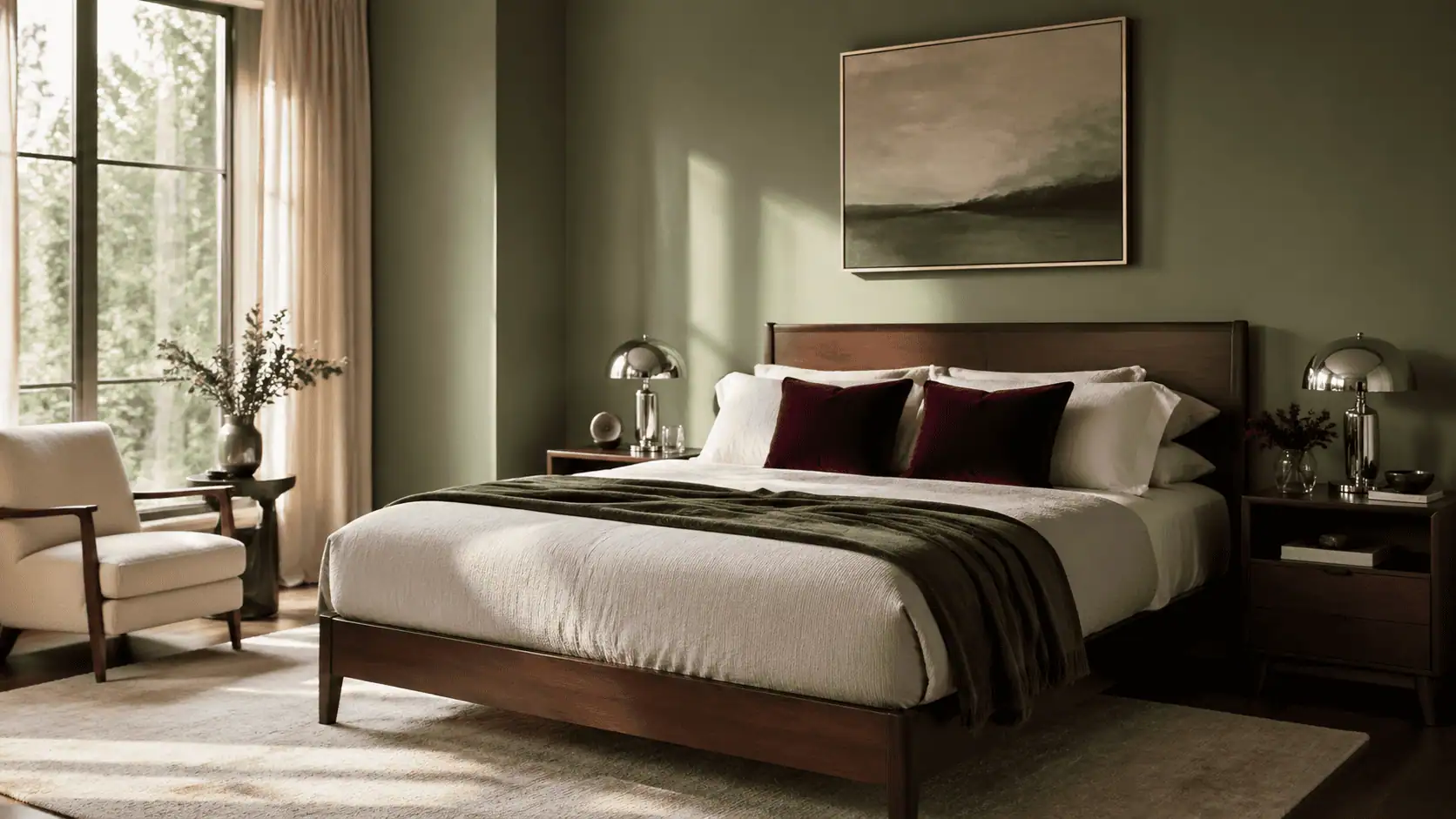
It's a versatile choice that can take on a variety of vibes, from calming and laid-back to a more grown-up feel. It also works beautifully in adult and children's bedrooms alike.
1. Color-Drenched Walls and Trim
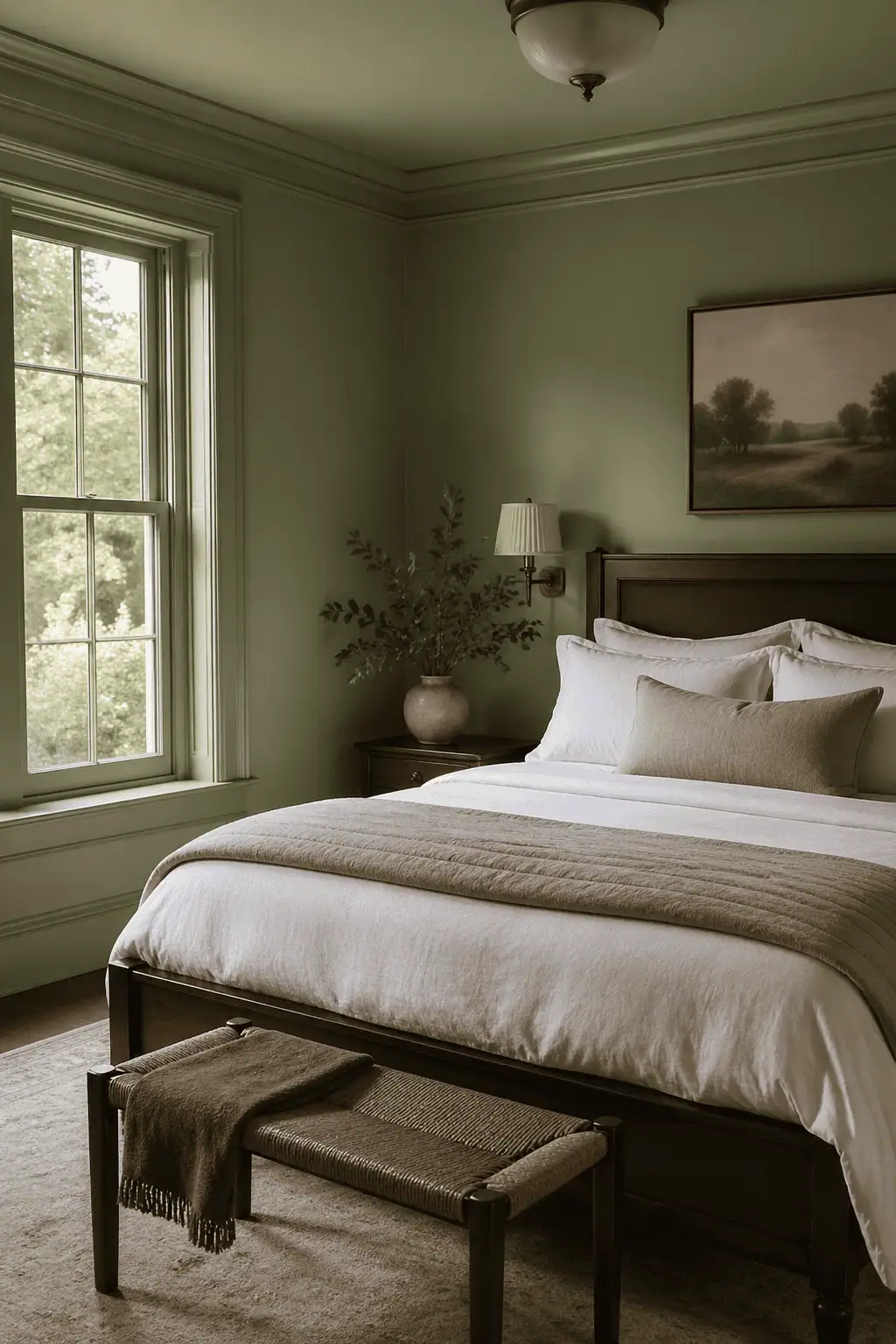
Color drenching in sage green is always a good idea! By color drenching, we mean painting walls, baseboards, and trim the exact same color. This creates a seamless look and feels far more design-led than painting just a feature wall. A color-drenched room allows the eye to travel over the space, creating a seamless, relaxed feeling, perfect for a good night's sleep.
I always encourage clients to color-drench. It feels like a brave decision, but once you commit, there really is no looking back. It works particularly well in rooms with high vaulted ceilings or awkward shapes because it creates flow and cohesion over the surfaces. The key here is to choose the correct paint finish. Anything with too much sheen will show up the imperfections in plasterwork, so I'd advise choosing a matte or eggshell finish instead.
2. Sage Paired with Deep Burgundy
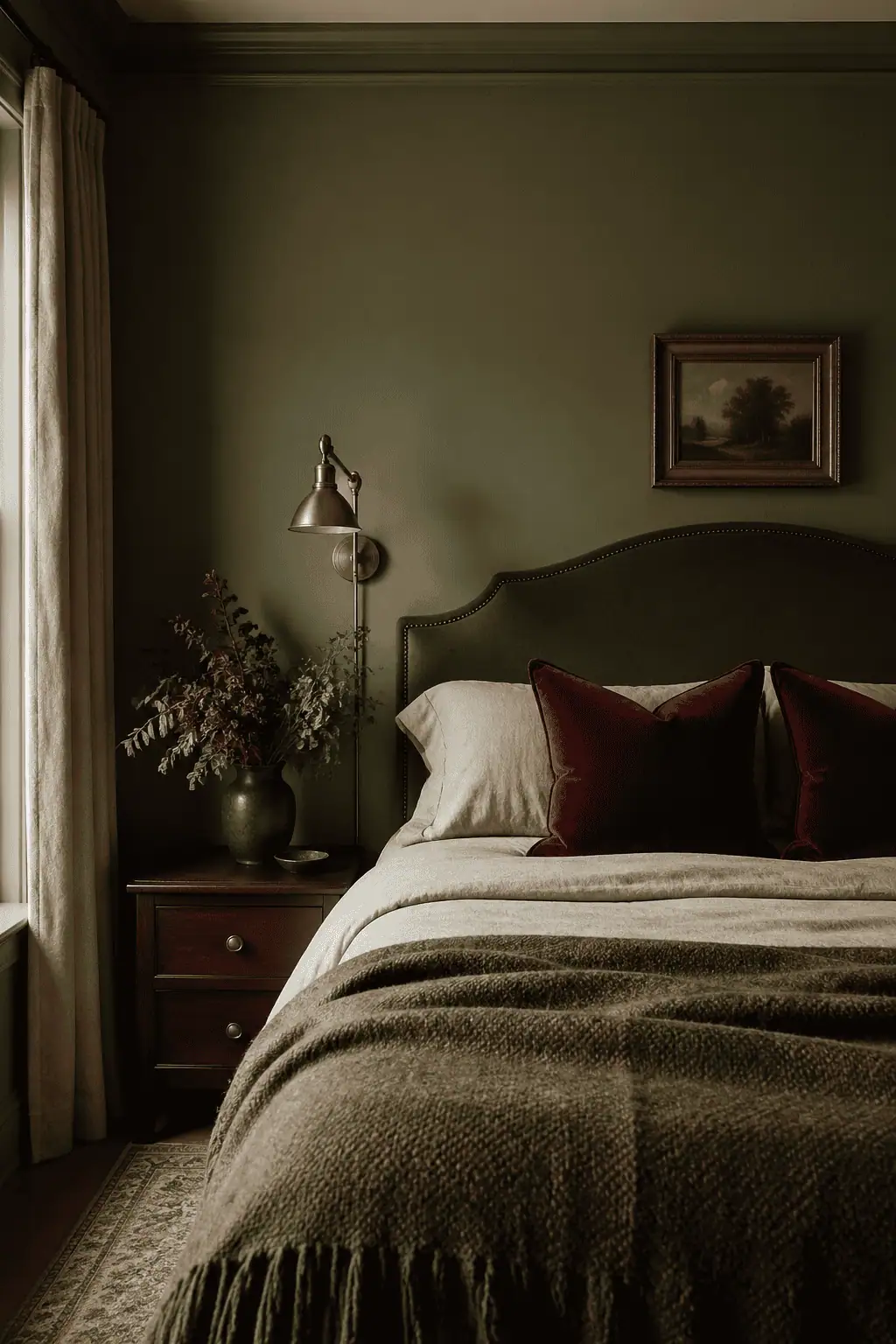
If you want to completely erase any lingering boho vibes, introduce a deep, moody burgundy. The richness of a dark red velvet pillow or a burgundy wool throw blanket grounds the airy quality of the sage green, creating a sophisticated, slightly English-heritage aesthetic.
3. The Painted Ceiling Trick
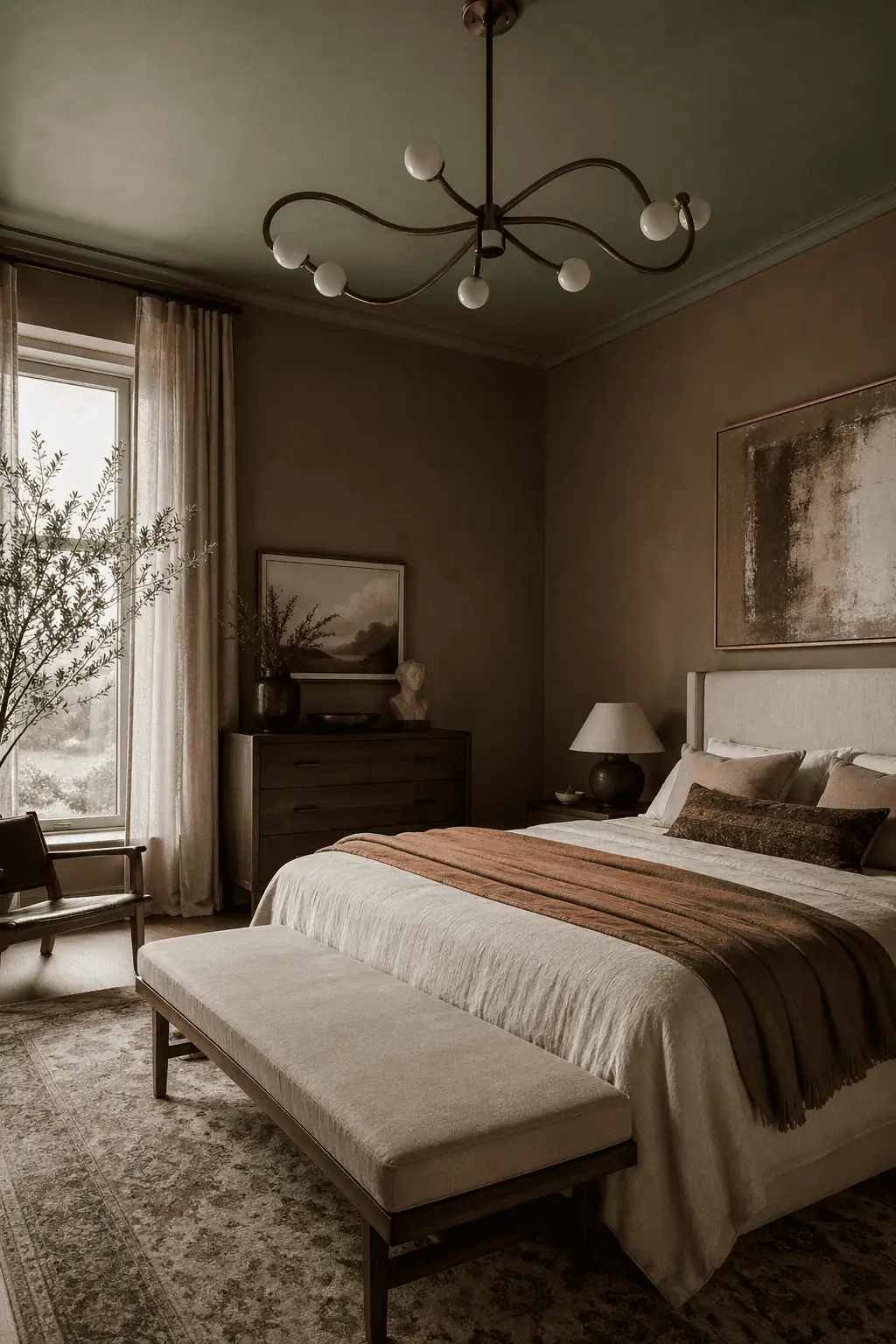
If you're worried about your low-ceilinged room, consider painting the walls an off-white or pale mushroom and pairing them with a sage green ceiling. The eye will be drawn upwards because of the variation of color, and this gives the effect of higher ceilings. Be mindful not to choose a bright white, because this can feel cold along the grey tones of a sage green.
In contrast, if you have a room with a very high ceiling, consider adding a picture rail and painting the ceiling and the wall down to the picture rail in your chosen neutral, with the added bonus of architectural detail and a place to hang your thrifted artwork.
4. Sage and Dark Walnut Wood Tones
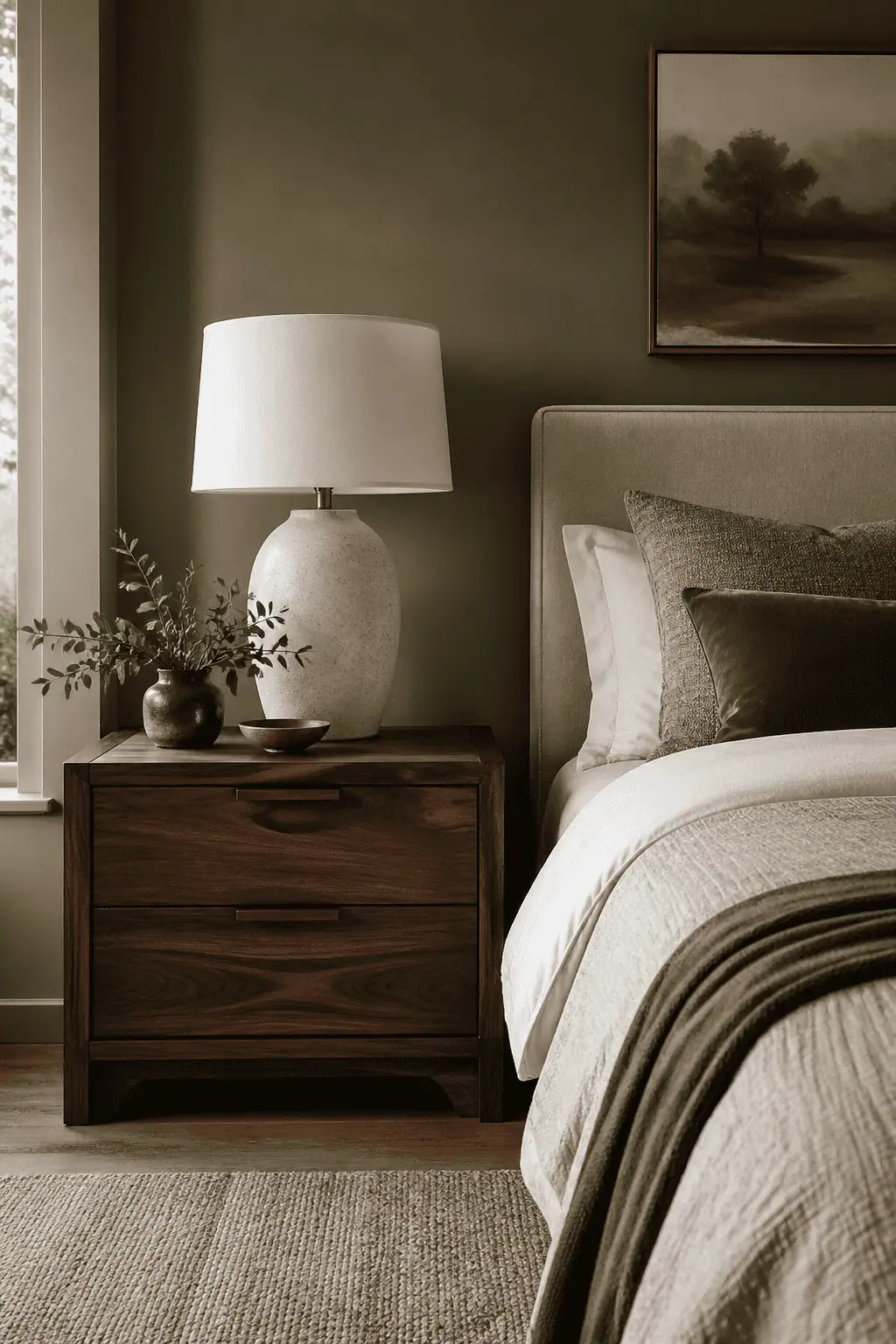
Sage and dark warm tones are a personal favorite of mine. In days gone by, sage was paired with washed oak, which gave a more boho vibe, but in my opinion, the rich tones of the walnut sit perfectly against the sage green, adding personality and a really high-end look.
The dark from the walnut helps to anchor the space, and you can incorporate these walnut tones in your flooring or a statement piece of furniture. Just be mindful not to mix too many wood tones. We want to keep things intentional and considered.
5. Moody Sage with Black Marble Accents
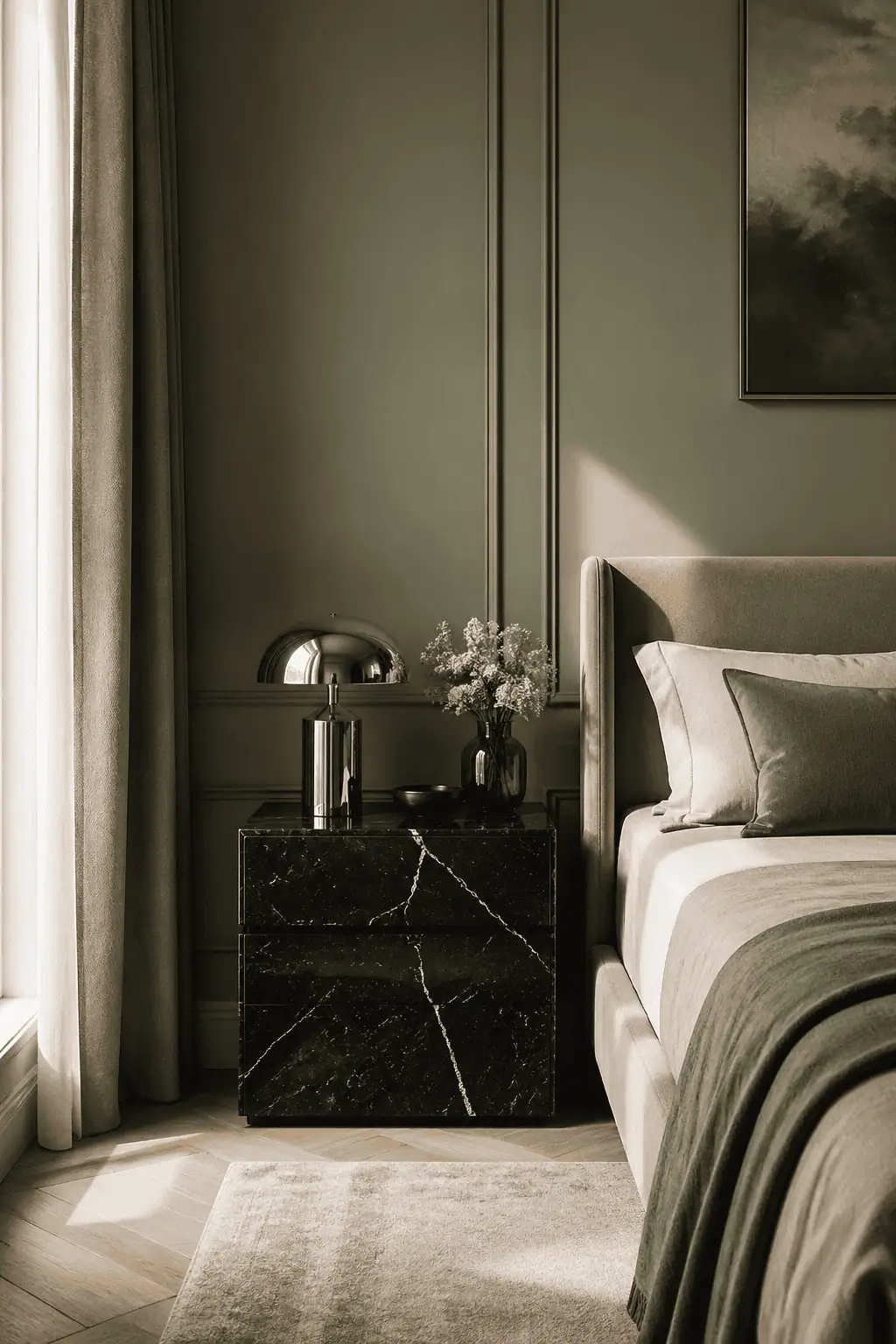
If you're after a luxurious look, try incorporating some black marble accents. The veining and organic nature of marble will give your room the edge. And while real marble can be expensive, there are plenty of places to find a good copy, and nobody will really know! Think a lamp base, a side table, or even a coaster for your nighttime drink.
The analogy I like to use when considering decor pieces is a ping-pong ball thrown into a box, bouncing off each wall. Your eye follows the ball, noticing corners and spaces that you wouldn't normally, and this is exactly what you're looking to do with the accessories in your bedroom.
6. Classic Floral Wallpapers with Sage Trim
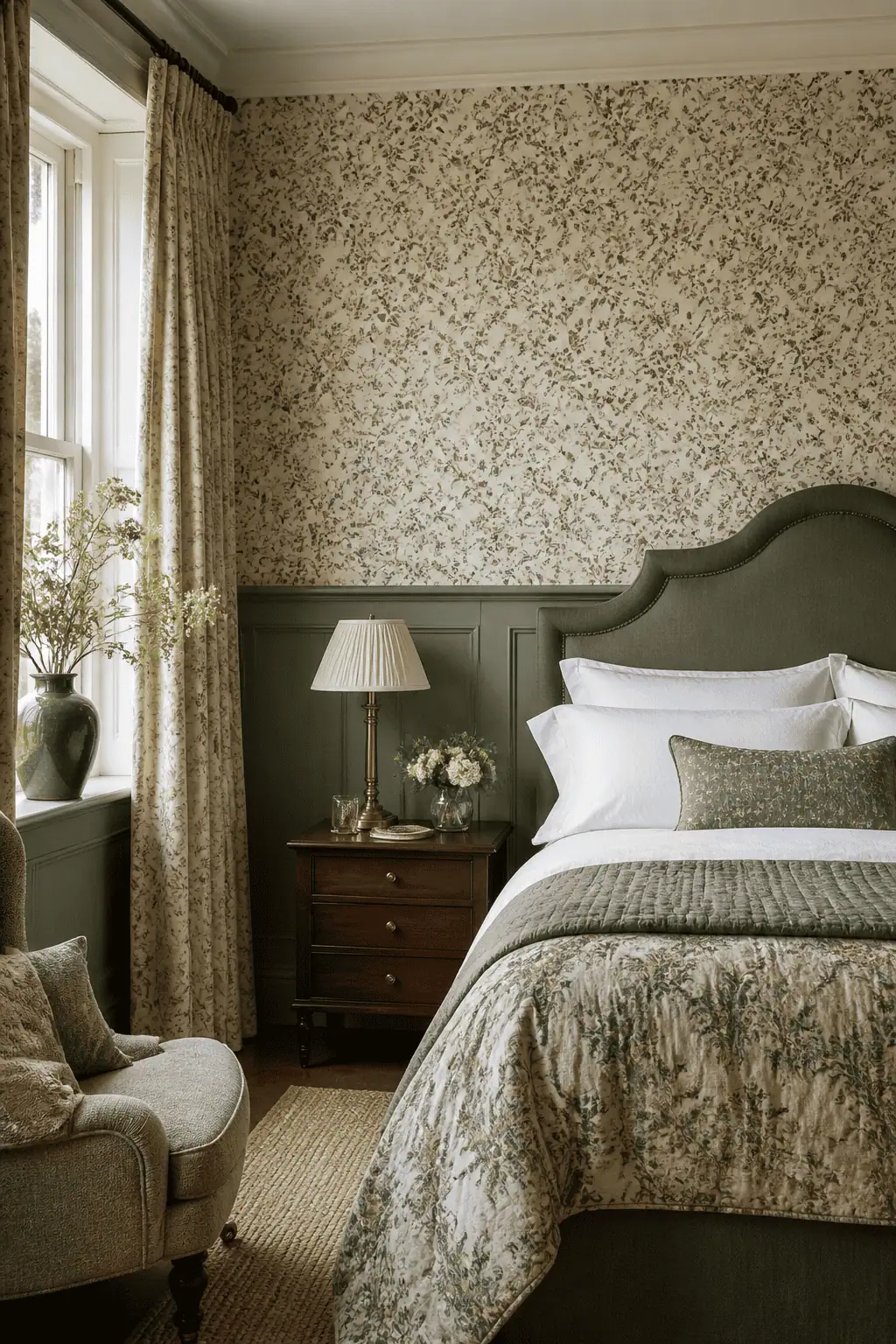
If you enjoy the classic English cottage look, how about choosing a floral wallpaper with some sage green foliage within it? Then you can use the wallpaper and color-match a paint to go with it, and use that to paint your baseboards and architrave. This is a top design-led trick rather than opting for white on your woodwork. It creates cohesion and flow and is a far better choice than opting for a stark brilliant white.
Once you've chosen the floral wallpaper, take it to the decorating store and pull out paint chips to find the closest match, or ask for an exact match to be made for you. This is a simple swap that really makes all the difference.
7. Antique Brass Sconces on Sage Walls
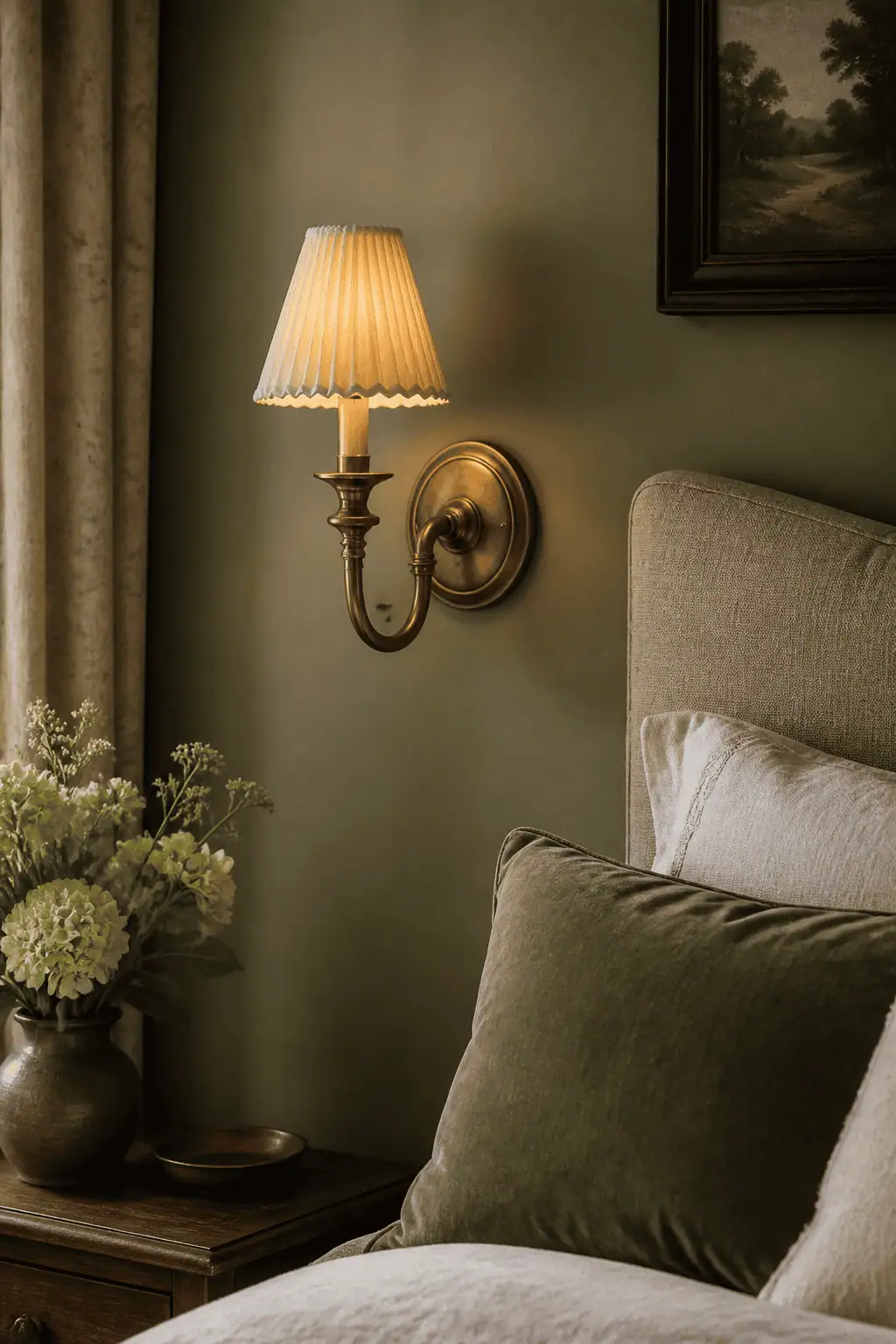
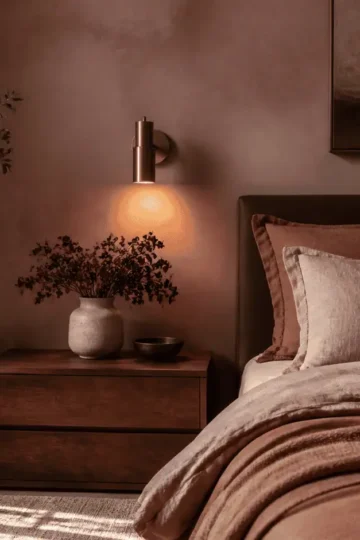
The lighting in your room really makes or breaks it and should be considered early on. Adding some antique brass sconces will give the impression of thought-out interiors. If you don't have the option to hardwire these in, there are plenty of battery-operated alternatives available. This is a lovely way of adding some history to your room and gives you an excuse to go thrifting if that is something you enjoy!
8. Structured Upholstered Headboards
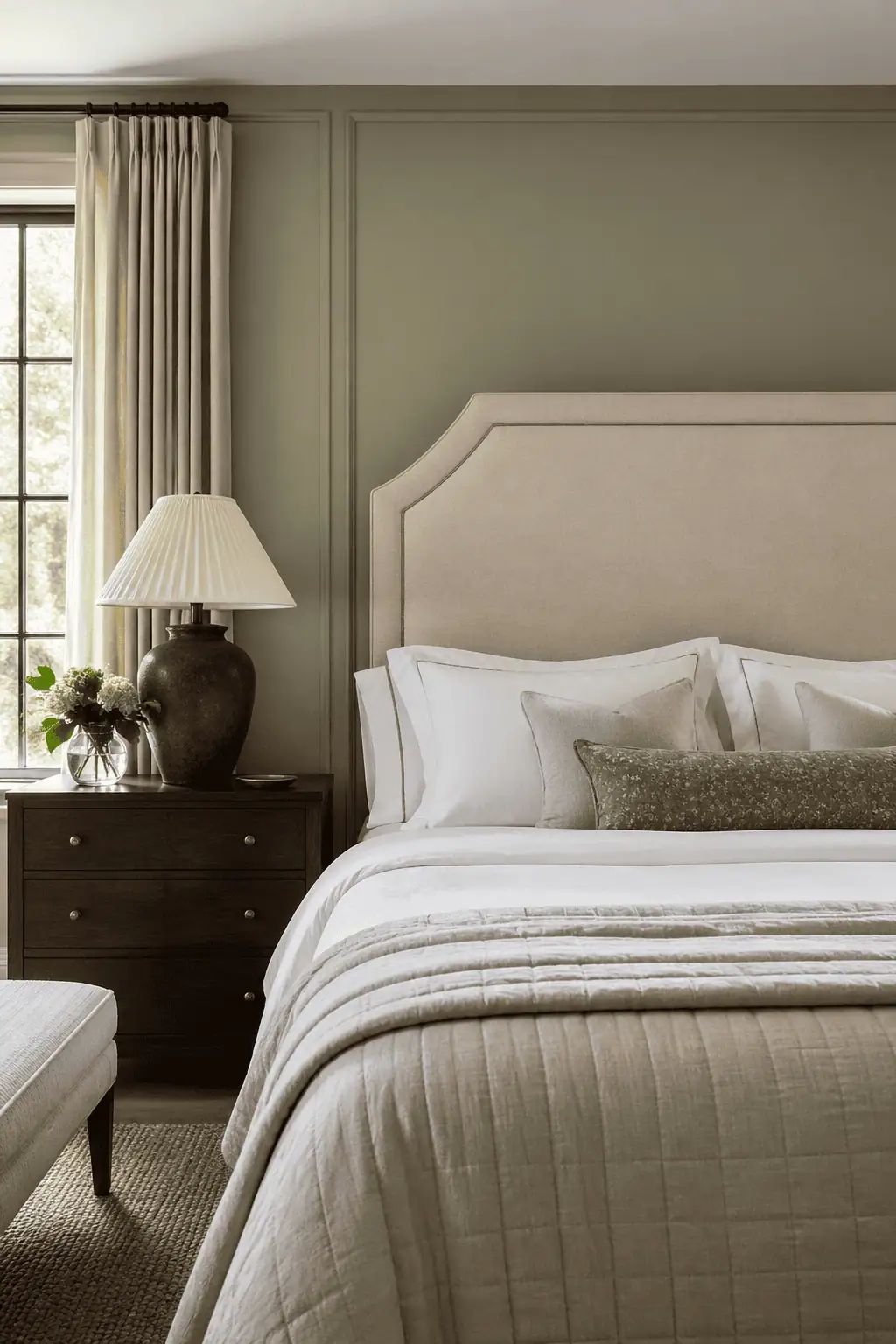
An upholstered headboard can take center stage and be the main focal point of your bedroom. Choose a contrast to the sage, such as a buttery neutral or bright terracotta. The texture here is as important as the color; a slubby linen works well, or a luxurious velvet. Choose plain, stripes, or a busier pattern. There really is no right or wrong; just choose what speaks to you!
The main thing to consider is the scale of the headboard. A large room obviously dictates a larger headboard. I like to recommend mocking up the size with an old piece of cardboard, or marking it up with some masking tape directly onto the wall, to give you a sense of scale and make sure you choose correctly before committing to the real thing.
9. Sage Green Beadboard with Warm White
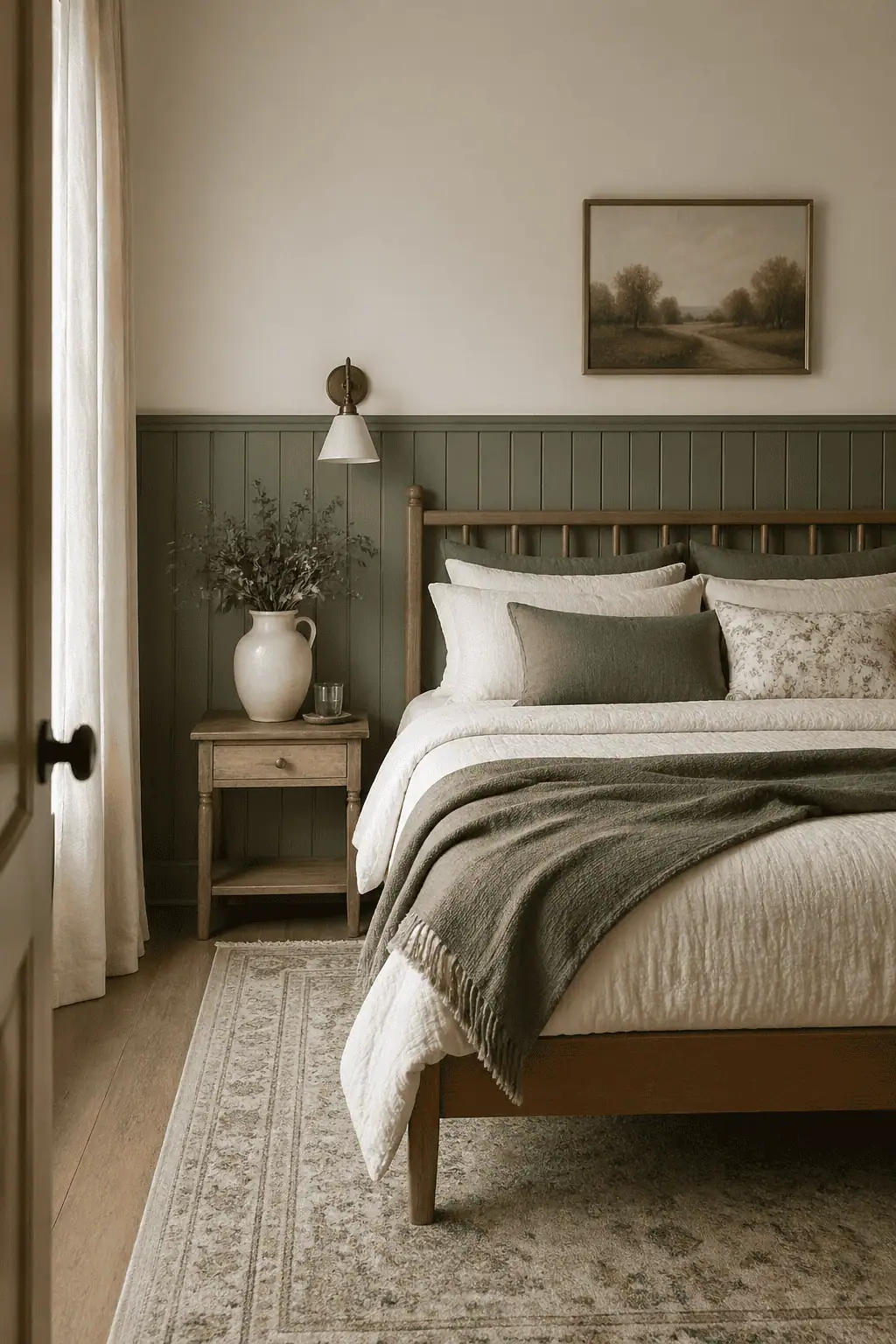
Use beadboard as wainscoting and paint the lower half of the wall sage, then opt for a creamy white on the top half to create a cottage look in a small space or a children's bedroom. You can choose a trio of artwork to hang above for a focal point.
Keep in mind that wainscoting was originally used to protect walls when chairs were pushed out, so use that knowledge to dictate the height you set the beadboard, but ultimately you're aiming for between 32 and 36 inches high. Avoid too much contrast between the two colors you choose. Keep them cohesive so the eye can travel seamlessly over the surfaces.
10. Layered Vintage Rugs over Sage Carpeting
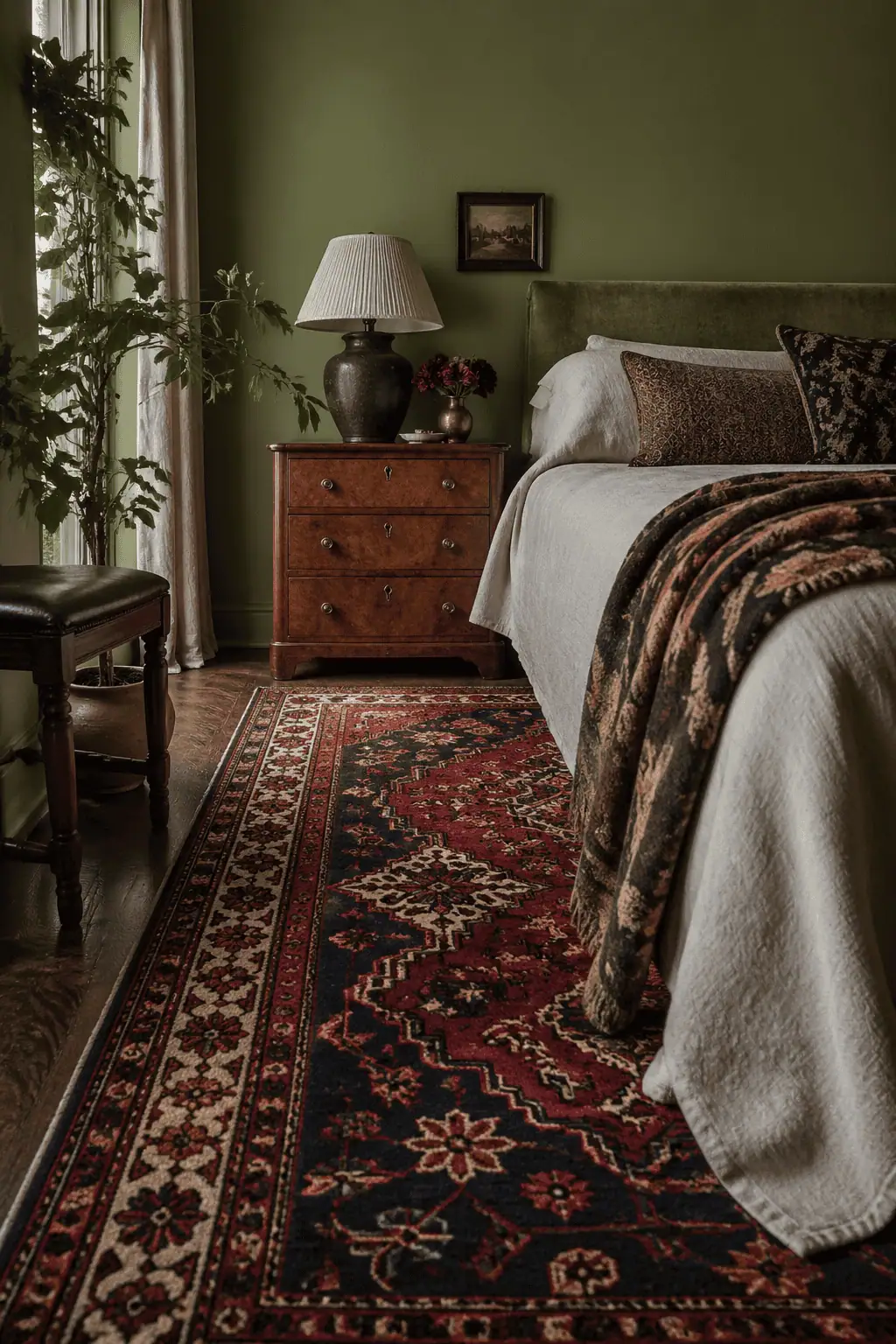
Don't forget your flooring when you're planning your interiors. A vintage Turkish rug to soften hard flooring or cover up old carpet is a must. You can layer jute rugs underneath with a border around for a layered look that feels ever so homely.
Be mindful to choose a rug big enough. If you're placing it underneath your bed, you want a border around that you can walk on easily, at least 18 to 24 inches beyond, so it feels intentional and does its job. Rugs are expensive, but don't be tempted to buy something that doesn't fit correctly. Take your time, save up, and find the right one for your space.
11. Sage Green and Polished Chrome
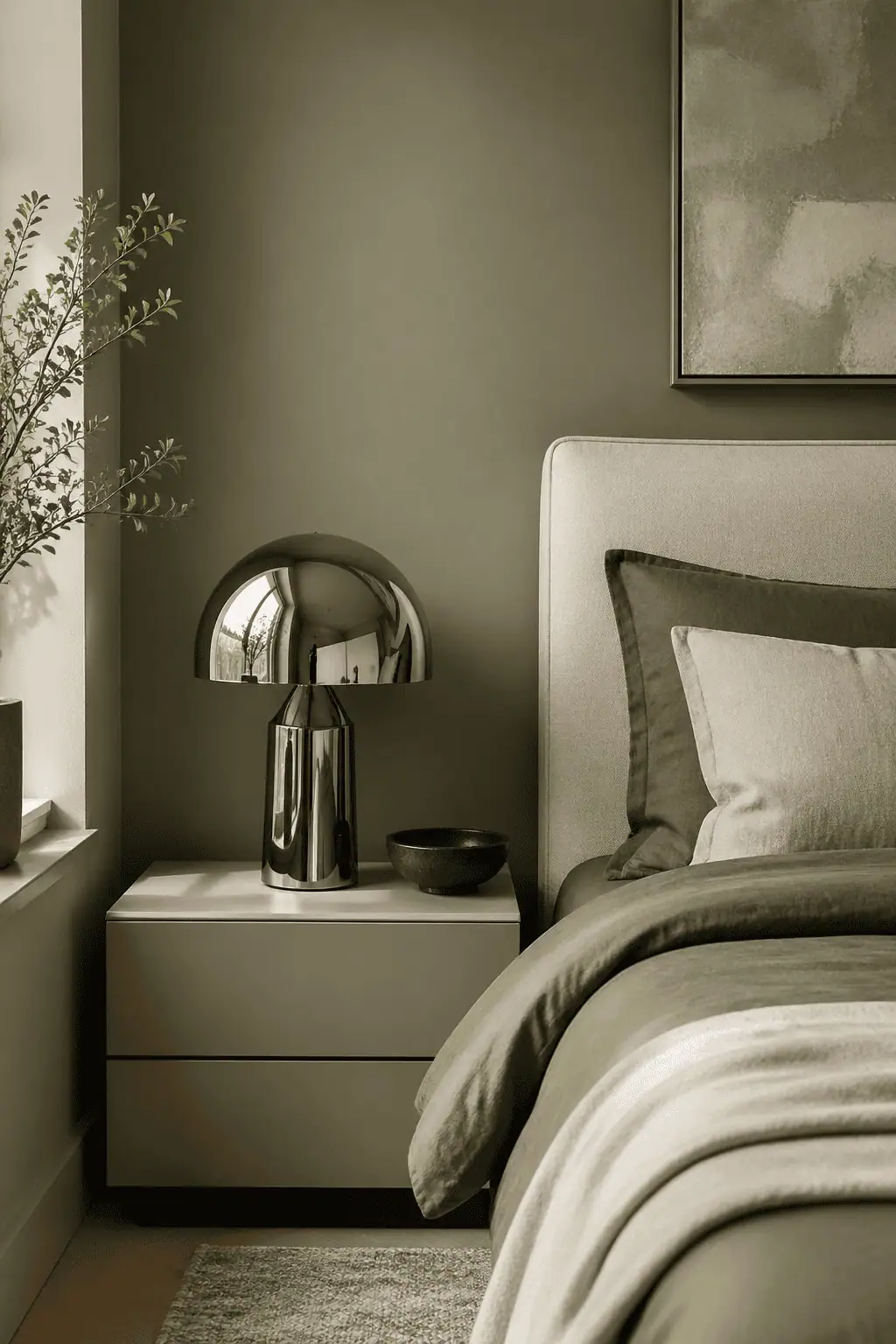
If you like a more contemporary look, introducing chrome to your scheme will do the job here. Think chrome handles, hardware, or even a mirror surround. Don't go crazy. Keep it minimal and clutter-free, as this will ensure the space feels classy and not overloaded with shine.
12. Clean Lines and Muddy Neutral Bedding
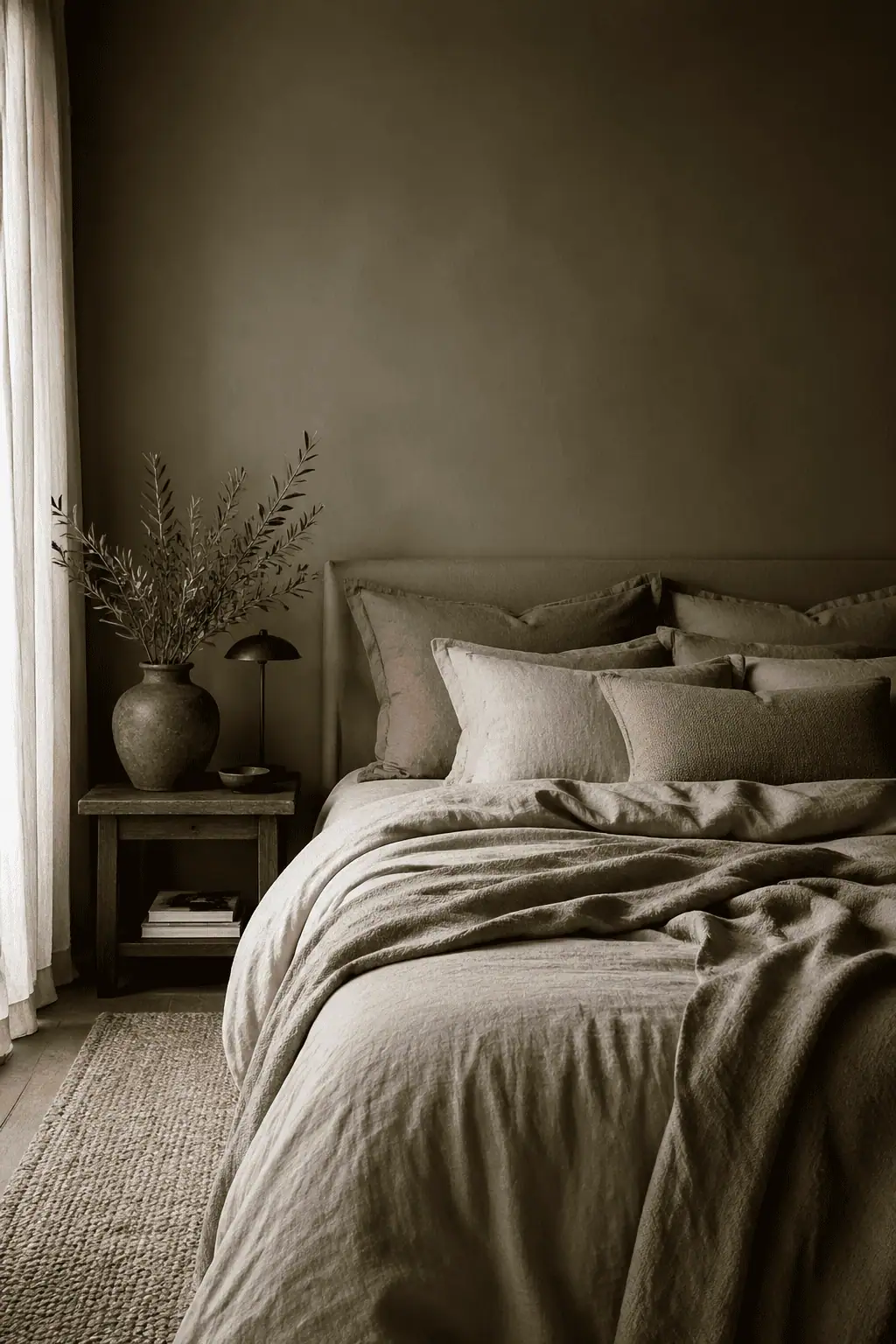
Bedding shouldn't be an afterthought, so consider it early on in your planning. How about ditching the white linen and opting for warm tones, earthy pinks, mushrooms, or clay colors? You can go pattern or keep the duvet cover plain and introduce a patterned fitted sheet in a botanical or gingham to give a little pop of interest poking out from under the covers.
The good news is that lived-in linens are popular, so don't be tempted to iron your sheets or use it as an excuse not to!
13. Asymmetrical Sage Color Blocking
If you don't feel brave enough for a full-color-drenched sage bedroom, try asymmetrical color blocking instead. Skip the accent wall and paint a large asymmetrical block behind your bedhead or an asymmetrical shape behind a gallery wall of pictures.
Don't go too dark or saturated; the sage should feel soft and natural, and flow from the other color on your walls. This is a far more interesting approach than the outdated feature wall and will look considered, rather than an afterthought or a detail adopted by a developer!
14. Minimalist Sage with Burl Wood Nightstands
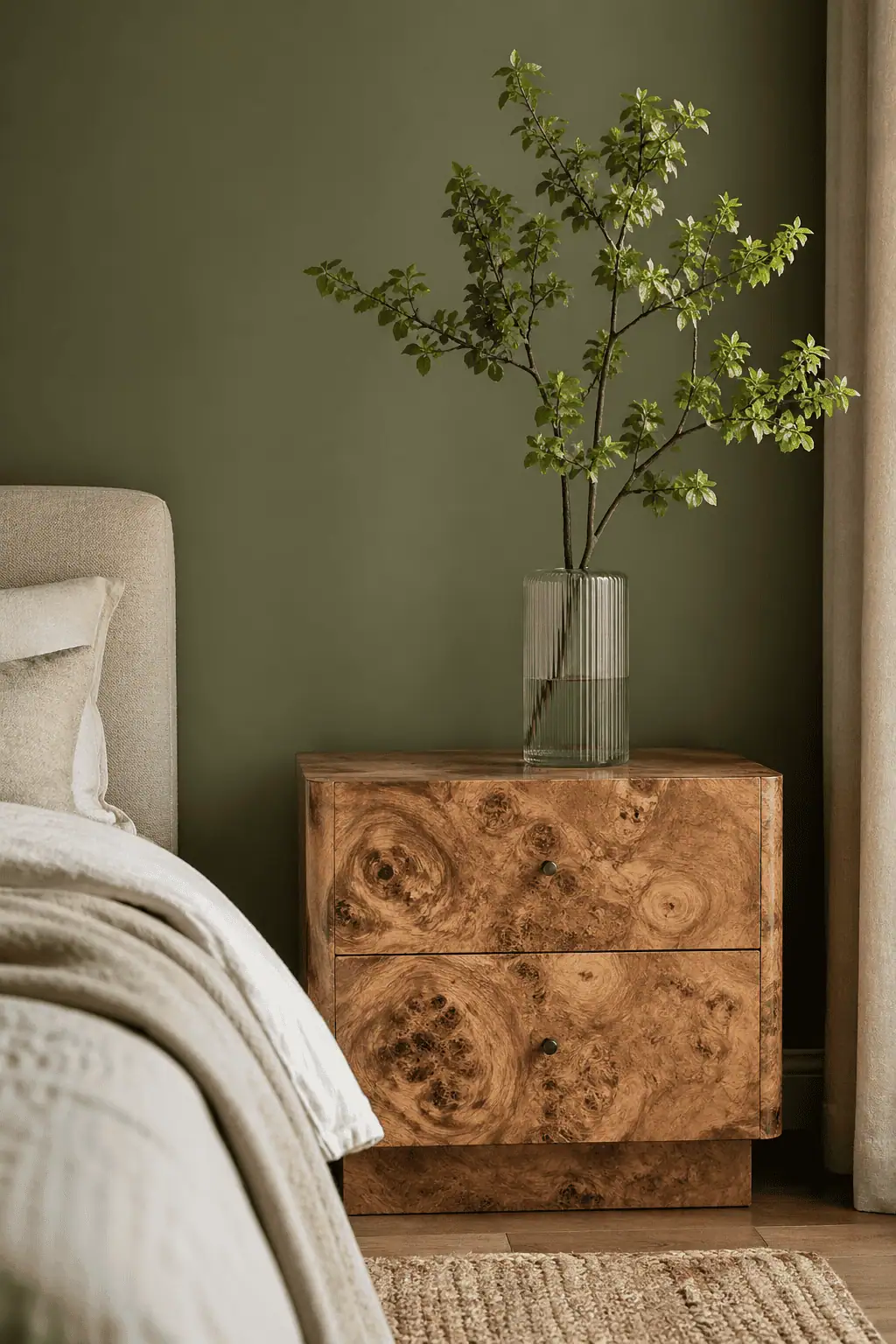
We've talked about adding organic textures and natural materials, and burl wood is another good example of doing this. Choose a burl wood nightstand or dressing table. The grain pattern will add interest and depth, creating beautiful contrast against the sage green walls. Don't go overboard, though, because it can look fussy if overused in one space.
15. Monochromatic Sage with Subtle Texture Shifts
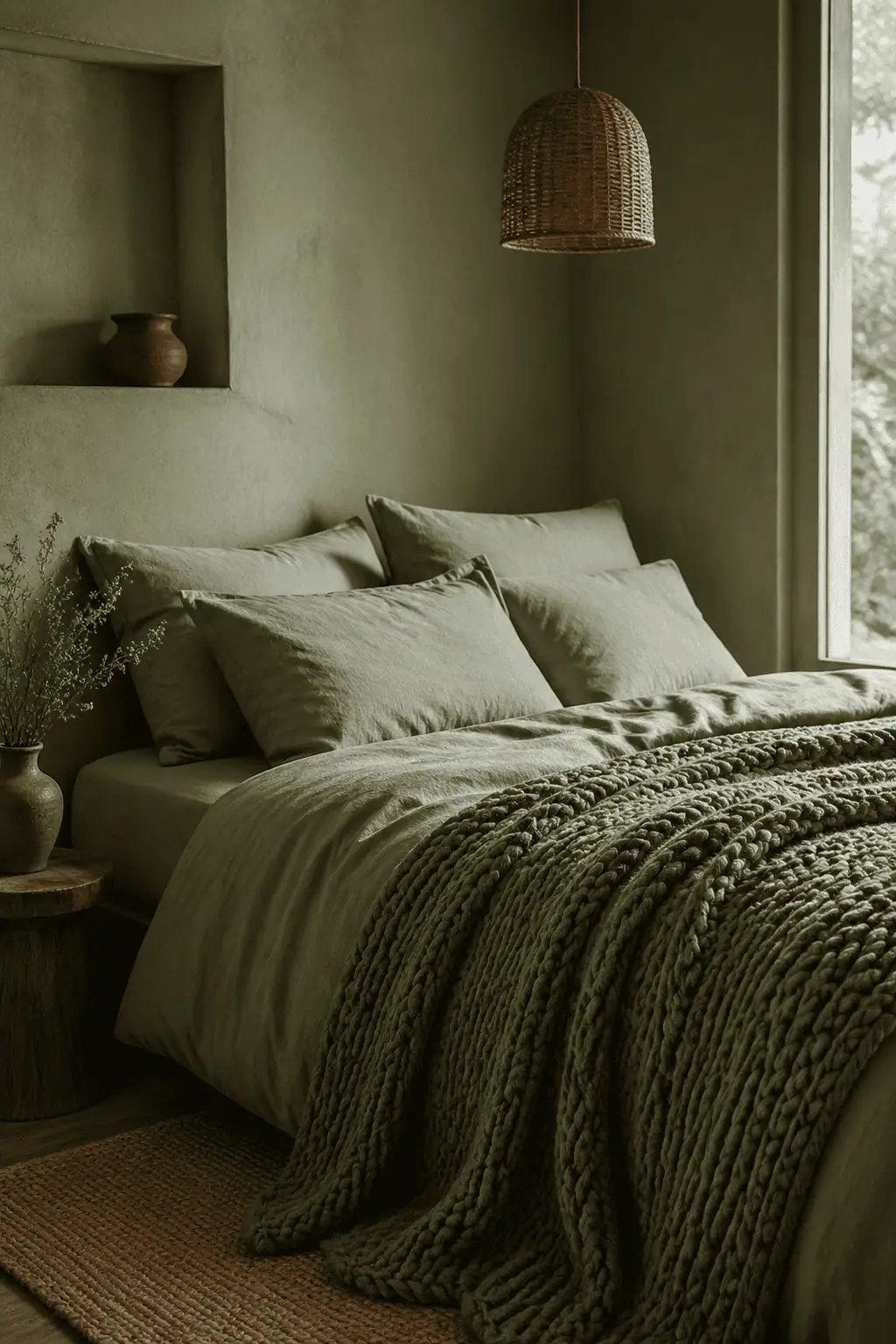
A monochromatic sage scheme is often forgotten. This is your reminder to give it a go. The trick is using one hue across surfaces and varying the textures.
Choose a trio such as a matte to absorb the light, a chunky knit to add depth and shadow movement, and percale, which is smooth and reflective. Everything presents differently under the same light, and it makes for a really interesting scheme without looking overdone or fussy.
16. Heavy Velvet Drapery in Sage
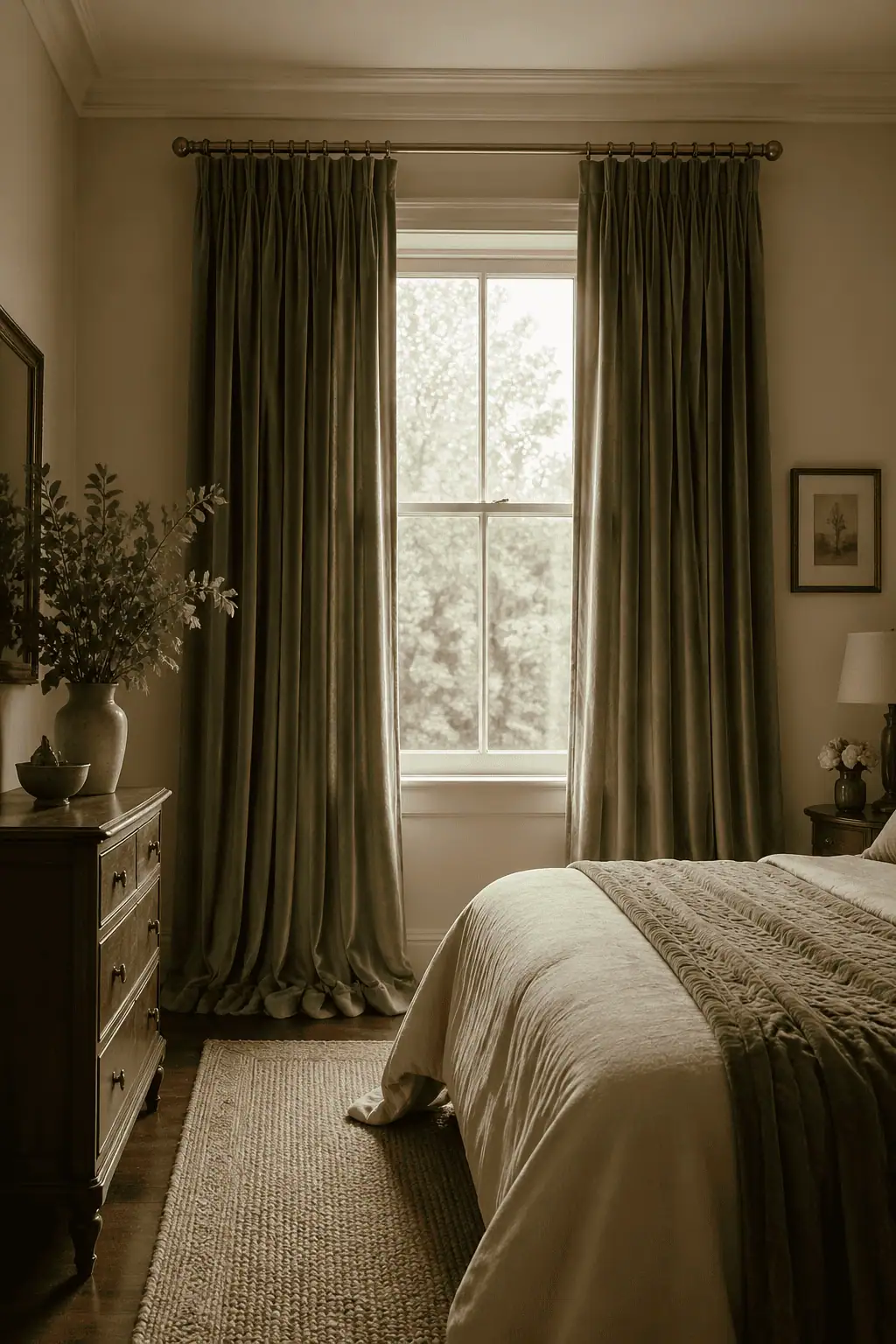
Velvet drapery is always your friend, and when it's sage, it really takes it to the next level. Velvet looks high-end and expensive, and beyond its aesthetics, it has functional qualities such as absorbing sound and light and helping keep the room warmer during the cool winter months. Add cohesion by introducing velvet cushions in the same or a tonal color so everything looks intentional.
17. Half-Wall Sage Wainscoting in a Tiny Room
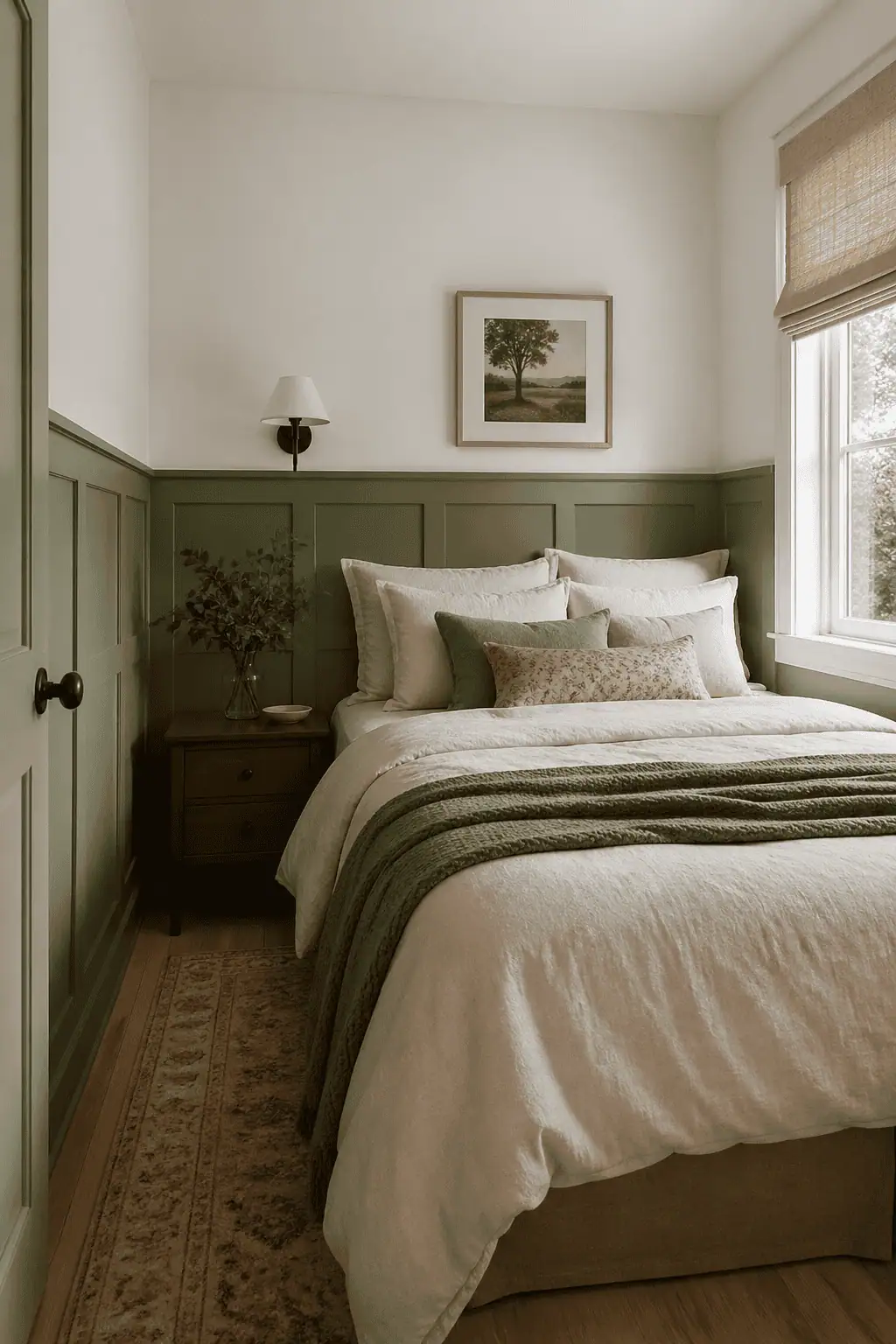
Wainscoting is a super trick if you've got a tiny space. It helps the room feel wider, not just taller. There are various options and designs available, from flat panels to more intricate moldings, and it's a great DIY option for getting a more finished look in a space. Go darker on the bottom and lighter on the top to mimic the natural light fall.
One consideration is the quality of your plaster work and the straightness of your walls. If neither is great, adding wainscoting could be problematic, so check this before deciding whether this is the right approach for you.
18. Strategic Picture Lights over Sage Walls
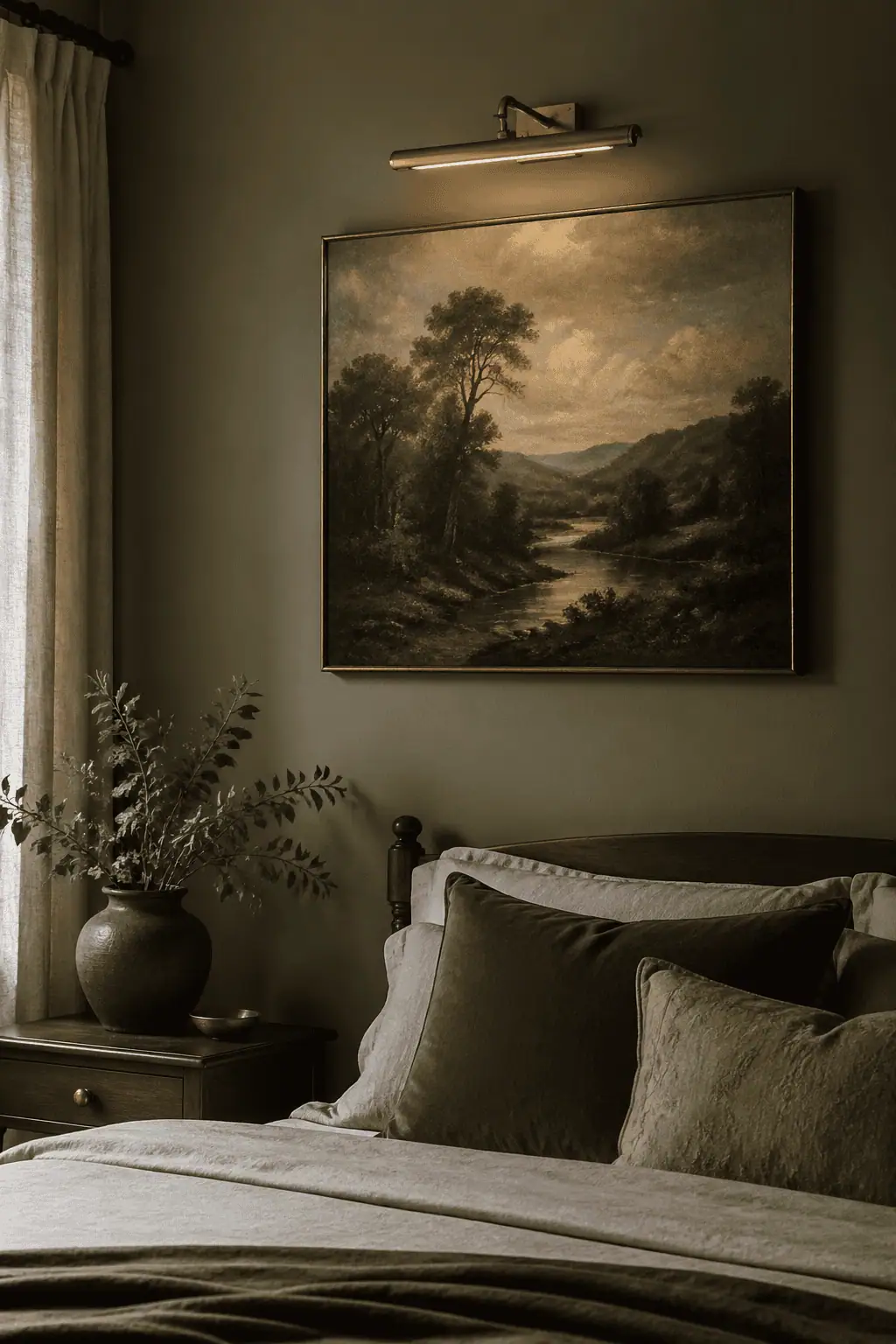
We have talked about the importance of layered lighting in your room already, and to add to that layered effect for ambiance, consider picture lights on your sage green walls. They give a moody, intimate nighttime glow and allow you to show off your treasured artwork no matter the time of day.
If hardwiring isn't an option, there are plenty of battery-powered alternatives. The choice is far greater nowadays. I would recommend choosing a metal that is already in the room, whether that's chrome, bronze, or brass.
19. Sage Green Built-In Wardrobes
Storage should be a consideration long before you're making any decor decisions, and wardrobes are a priority in any bedroom. You'll want to optimize storage space, so wardrobes can often dominate the space. To avoid this, paint the doors and the sides of the wardrobe in the same sage green as your walls so they blend into the room.
If it's an option, choose wardrobes that go right up to the ceiling for that bespoke built-in look. It also avoids an area for dust to settle on top of the wardrobes, as well as optimizing every inch of storage space.
20. Limewash Sage for Earthy Depth
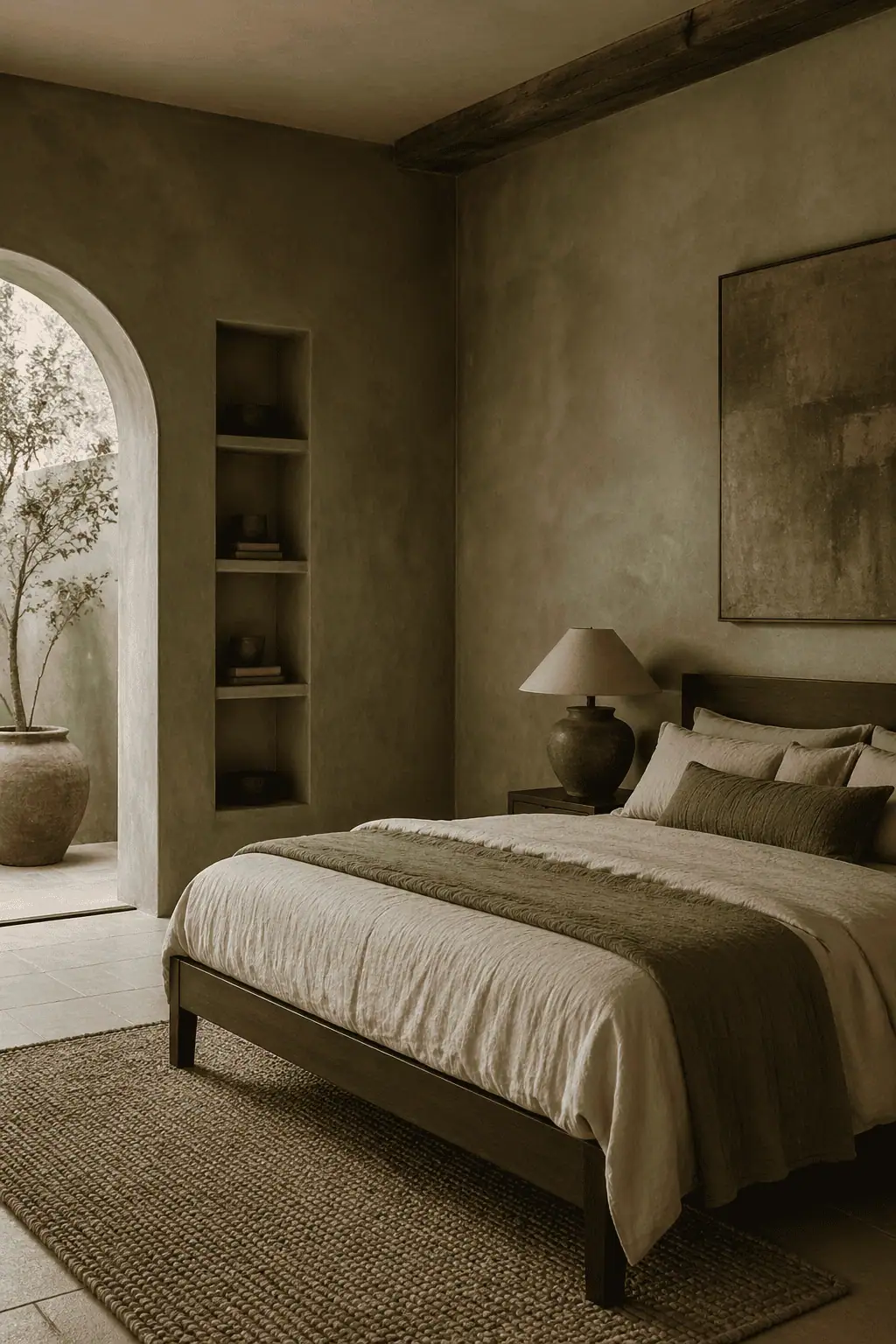
How about swapping standard flat paint for sage green limewash or Roman clay? It gives that organic look, a texture that feels architectural and adds depth to what could otherwise be quite a boring space. The mottled effect works particularly well in rooms with high ceilings because it adds interest on surfaces that would otherwise be left untouched.
The Not-2022 Styling Checklist
Want to update your current sage green bedroom without starting from scratch? Run through this quick checklist to swap out dated elements for fresh ones.
- Swap the Pampas Grass: Replace dried, fluffy grasses with structural, leafy branches (real or high-quality faux) in a heavy ceramic or dark glass vase.
- Ditch the Blush Pink: Trade out pink throw pillows for deep burgundy, rust, or chocolate brown accents.
- Mix Your Woods: If you have a matching light rattan bed and nightstands, swap the nightstands for a darker wood tone like walnut to break up the set.
- Upgrade the Hardware: Change out matte black drawer pulls on your dresser for polished chrome or unlacquered brass.
- Add Visual Weight: Bring in one heavy, structured element-like a velvet curtain, a wool blanket, or a marble tray-to balance the airy green.