Small bedrooms often feel cluttered or unfinished, no matter how many things you add, and that can be really frustrating when you just want a calm place to sleep. This article shows how to make a small bedroom feel intentionally designed rather than piled with décor, so your space looks thought-through and works for you.
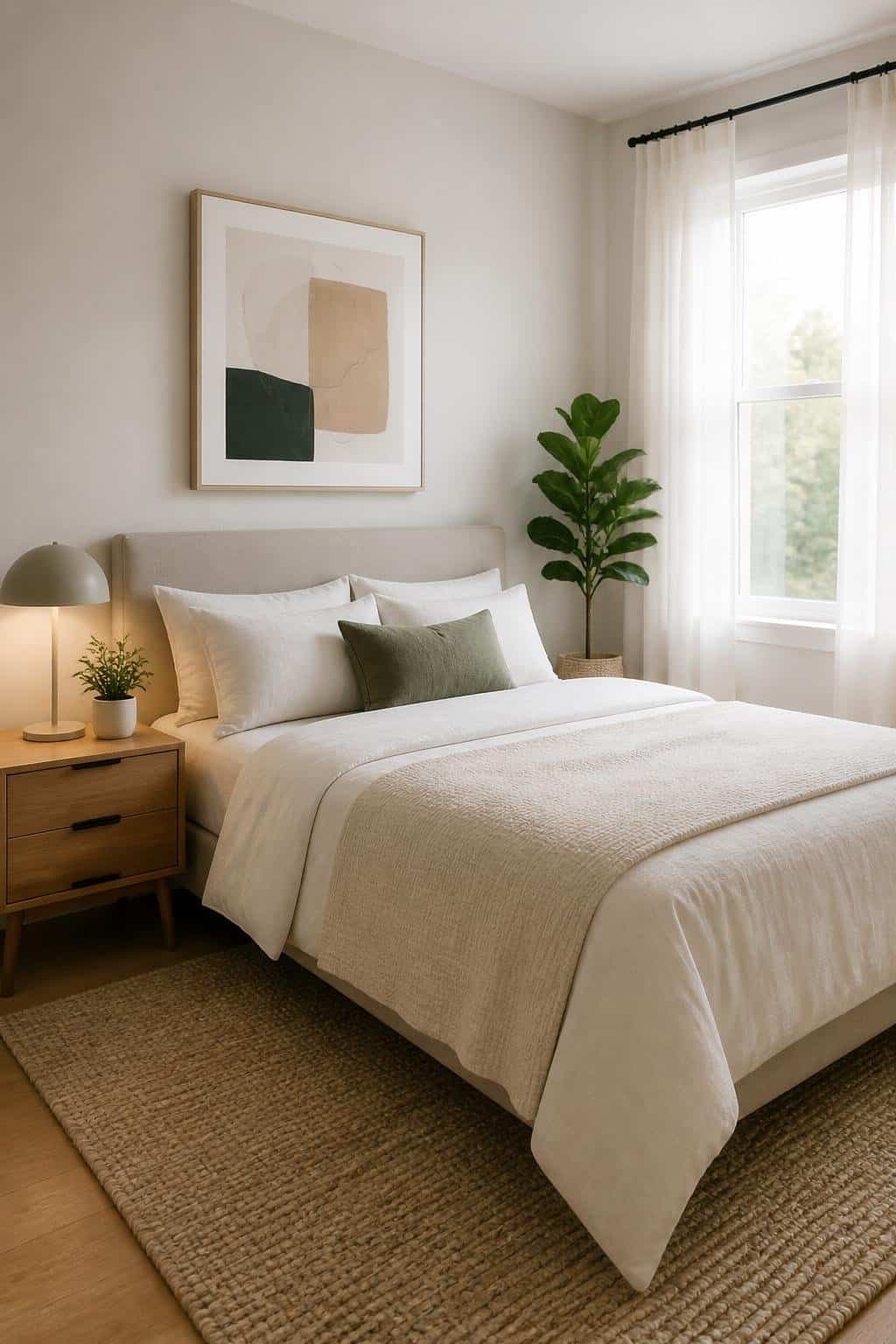
Bold choices about storage, scale, and sight lines let you keep what you love without the room looking cramped. You'll learn clear, practical moves-furniture choices, placement tips, and simple styling-that make a small bedroom feel like it was planned, not decorated.
1) Use a built-in bed with under-drawers to maximize storage
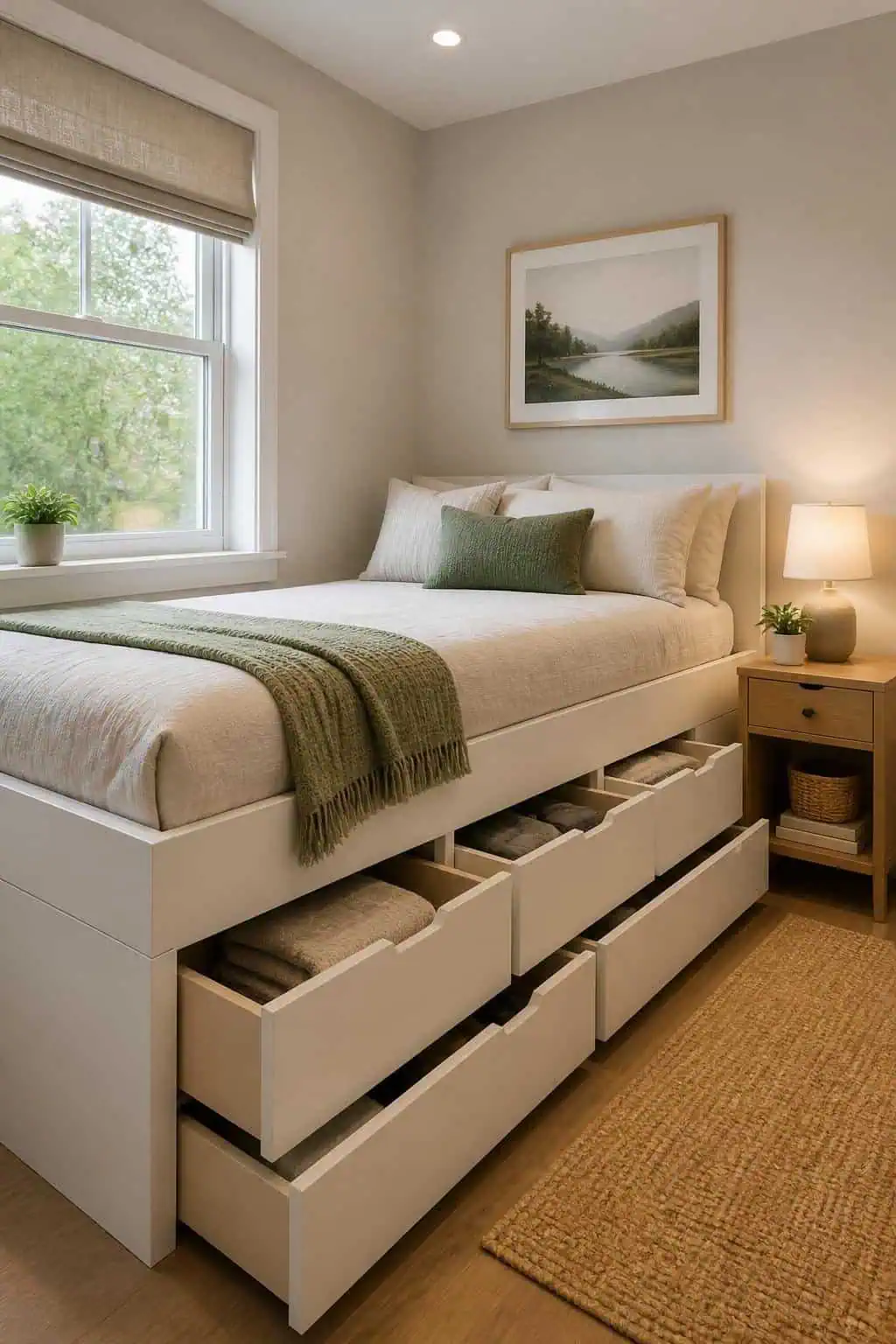
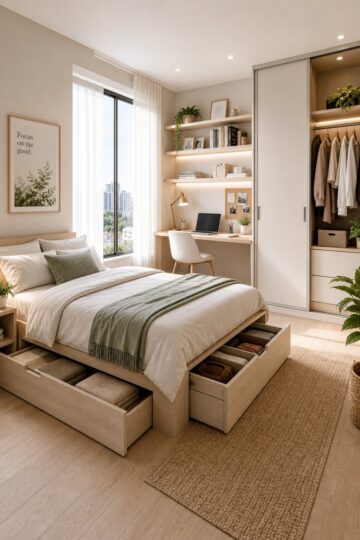
A built-in bed with drawers keeps bulky items out of sight and frees floor space for movement, which matters most in a small bedroom. Choose a bedframe depth that fits your room: 36-42 inches deep works well for single beds, 54-60 inches for doubles, and allow 24-30 inches clearance at the foot for a walkway.
Place the drawers on the long side of the bed if the room has a narrow entry, or at the foot if you need access from both sides. Opt for rolling under-bed storage drawers and shallow dividers so clothes and linens stay organized without wasting depth.
Visually, a built-in bed reads like custom furniture, so finish it in the same color as your trim or wall to reduce visual clutter. The result feels intentional and tidy rather than piled-up storage.
2) Float a narrow wall-mounted shelf as a bedside table
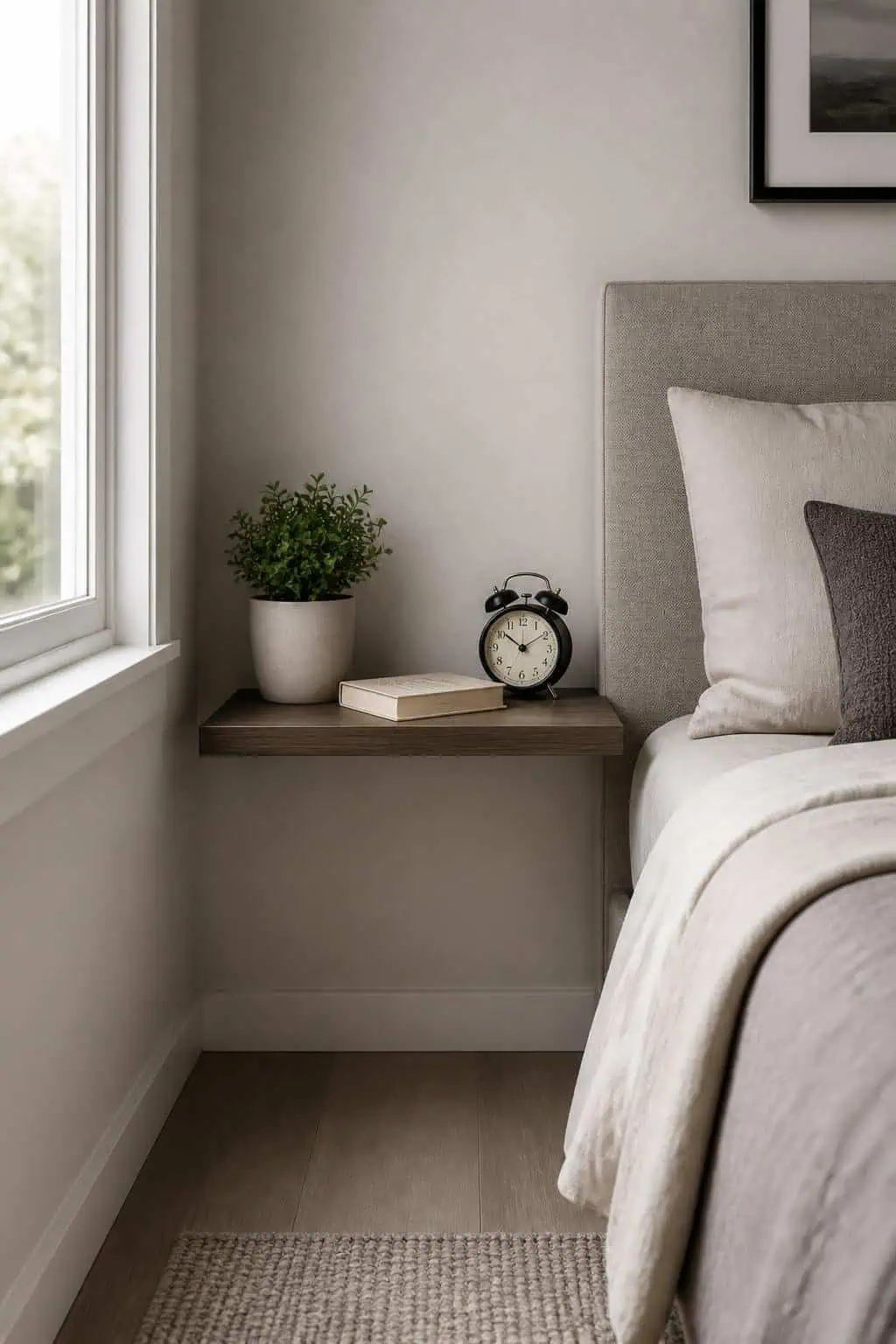
A slim wall shelf gives you a place for a lamp and phone without taking floor space, which matters when every inch counts. Choose a shelf 8-12 inches deep and mount it about 24-28 inches above the mattress top so items sit within easy reach.
Pick a wall-mounted floating nightstand or a thin metal bracket for a lighter look. Use wood or laminate that matches or softly contrasts your bed frame to keep the room calm. Anchor into a stud or use strong wall anchors if you can't find one.
Add a small lamp, a book, and a tray for keys to keep things neat and usable. Visually, the shelf keeps sight lines low and the floor clear, making the room feel planned rather than cluttered.
3) Paint the ceiling a soft, slightly lighter color than the walls
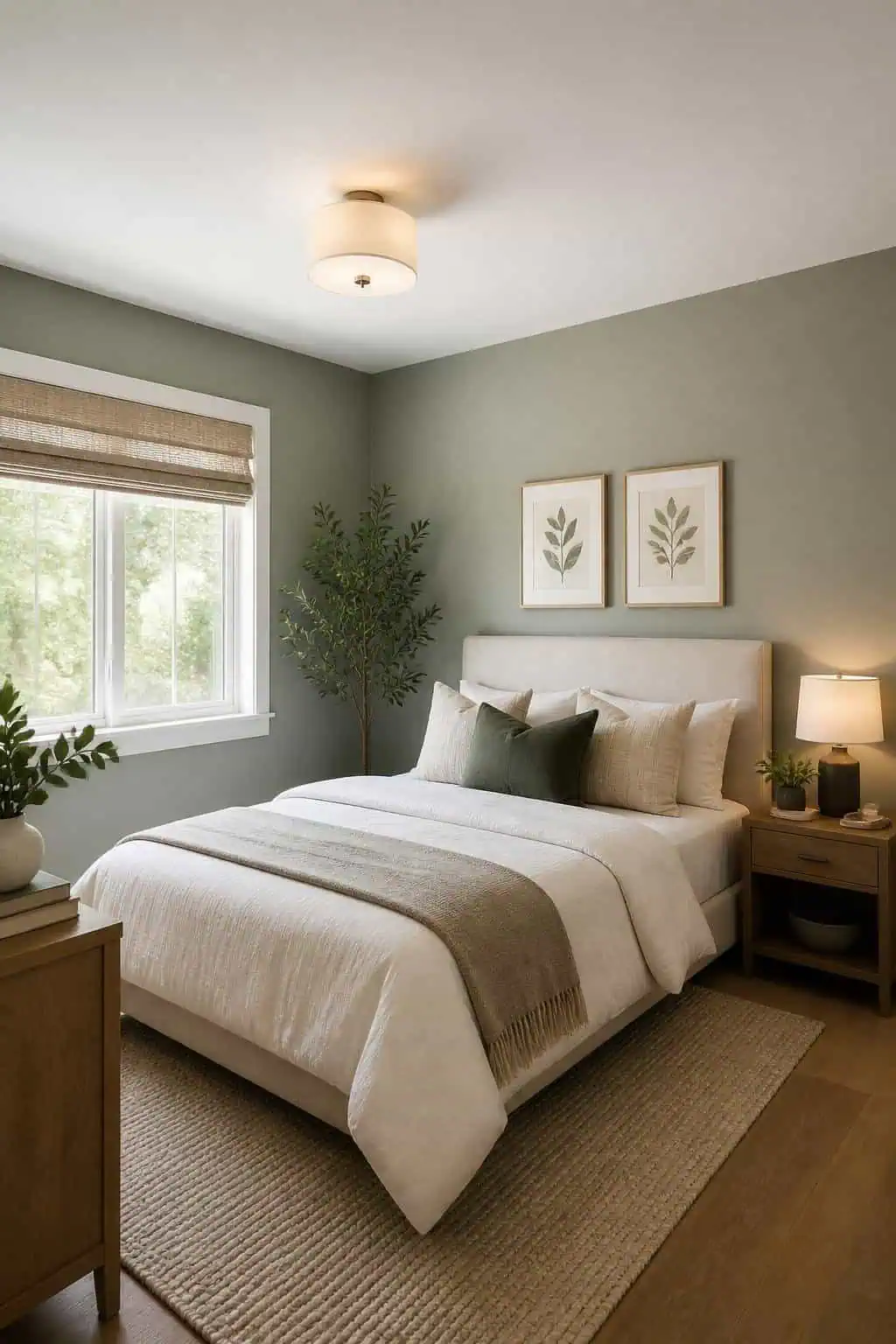
This makes the ceiling feel higher and the room airier, which matters a lot when floor space is tight. Pick a color that's one to two shades lighter than your wall tone - for example, a warm pale if your walls are mid-beige, or a cool cream if your walls are soft gray.
Use flat or matte ceiling paint for fewer glare issues and a satin finish on trim if you have it. Roll the ceiling first and cut in along the edges; keep the contrast subtle so it reads as one coordinated surface rather than a separate band.
Visually, the lighter ceiling draws the eye up and softens the room's edges. The result feels intentional and calm, not like you've painted the ceiling to hide something.
4) Install a slim, vertical headboard to draw the eye up
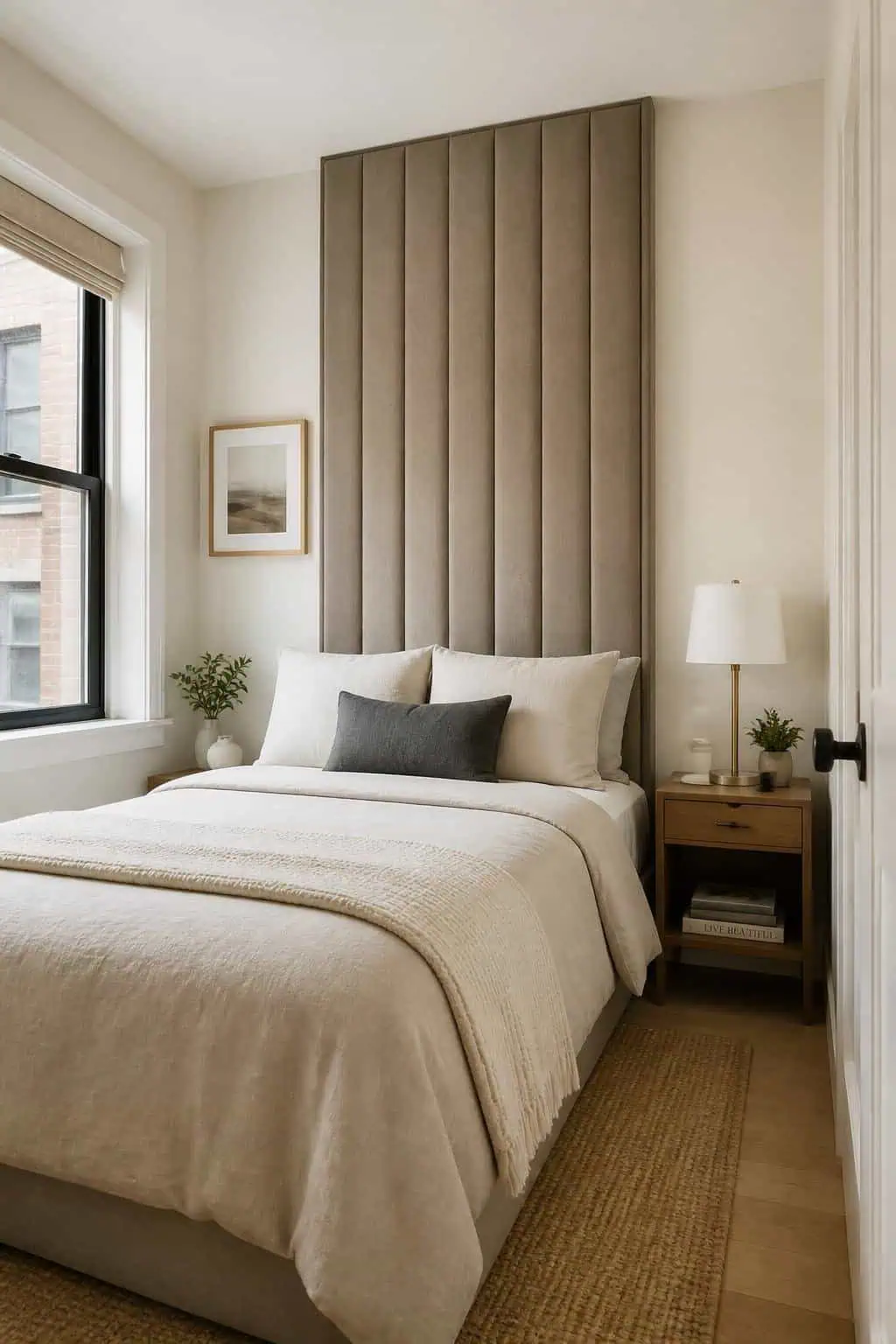
A slim, vertical headboard lifts the sightline and makes the ceiling feel taller, which matters a lot in a small bedroom. Choose a headboard no more than 4-6 inches thick so it doesn't eat space behind the bed.
Place it flush to the wall and centered on the bed; if you have a narrow room, let the headboard extend a few inches above the mattress top for balance. Use materials like upholstered panels, plywood with a fabric cover, or narrow vertical slats to keep the look light.
Visually, the tall, narrow shape draws your eye upward and adds proportion without bulk. It gives a designed feel while keeping the floor area clear.
5) Layer a single large rug instead of tiny runners
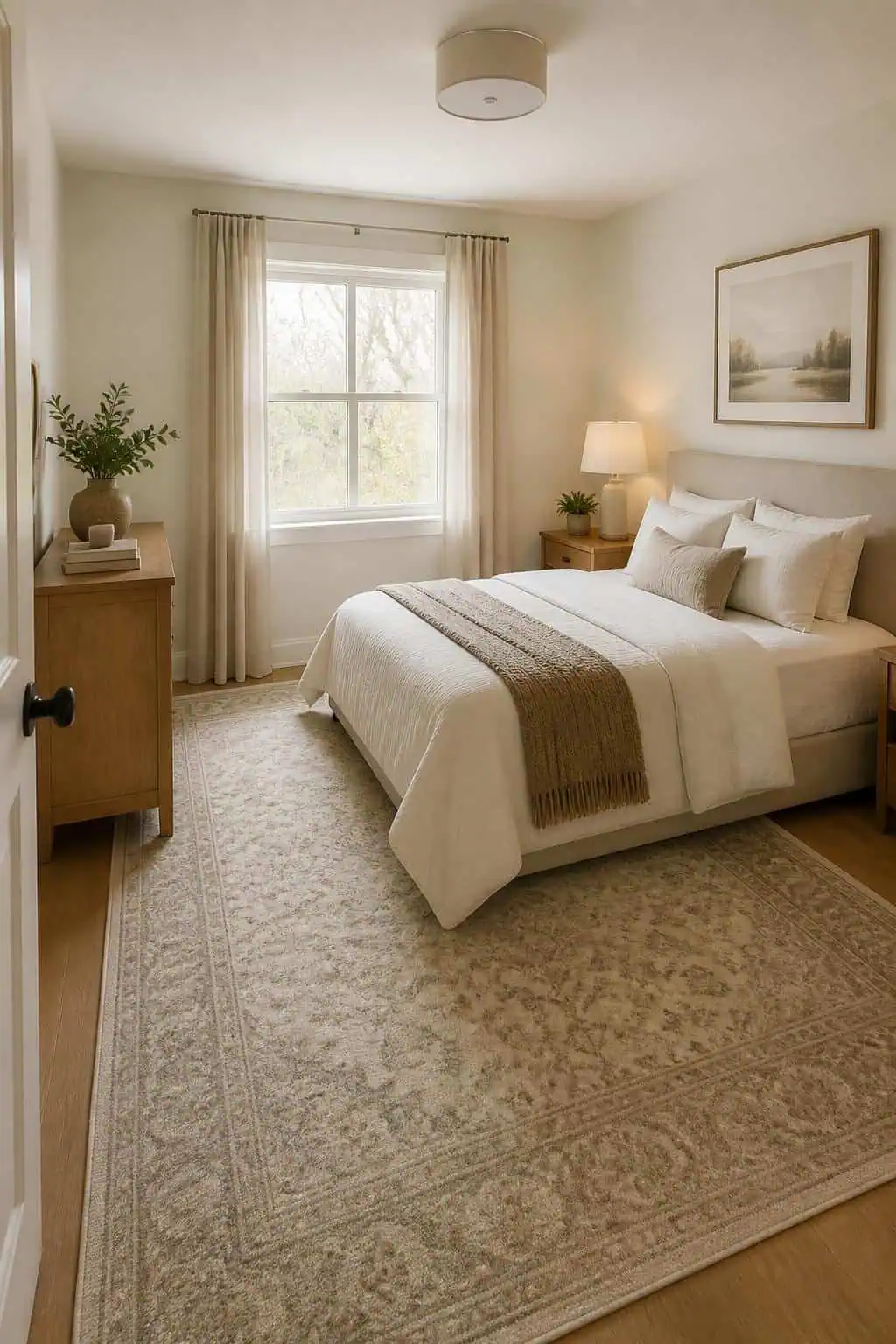
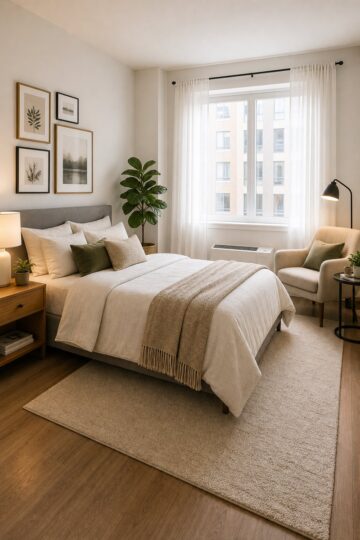
A single large rug anchors the whole room and keeps the floor from looking chopped up, which matters in a small bedroom where visual calm helps the space feel bigger. Aim for a rug that reaches under the bed at least to the bedside tables, or choose one that leaves a 12-24 inch border of floor around the edges if you want the wood to show.
Place the rug so the front two-thirds of the bed sits on it; that gives your feet a soft landing without floating furniture in the center. Pick low-pile wool or a flatweave for easy maintenance and a thin underlay to avoid raising the bed too high.
Visually, one large rug creates a single plane that reads as intentional design. The room will feel more cohesive and less cluttered, and your layout will read as considered rather than piecemeal.
6) Swap a bulky dresser for a tall, narrow armoire
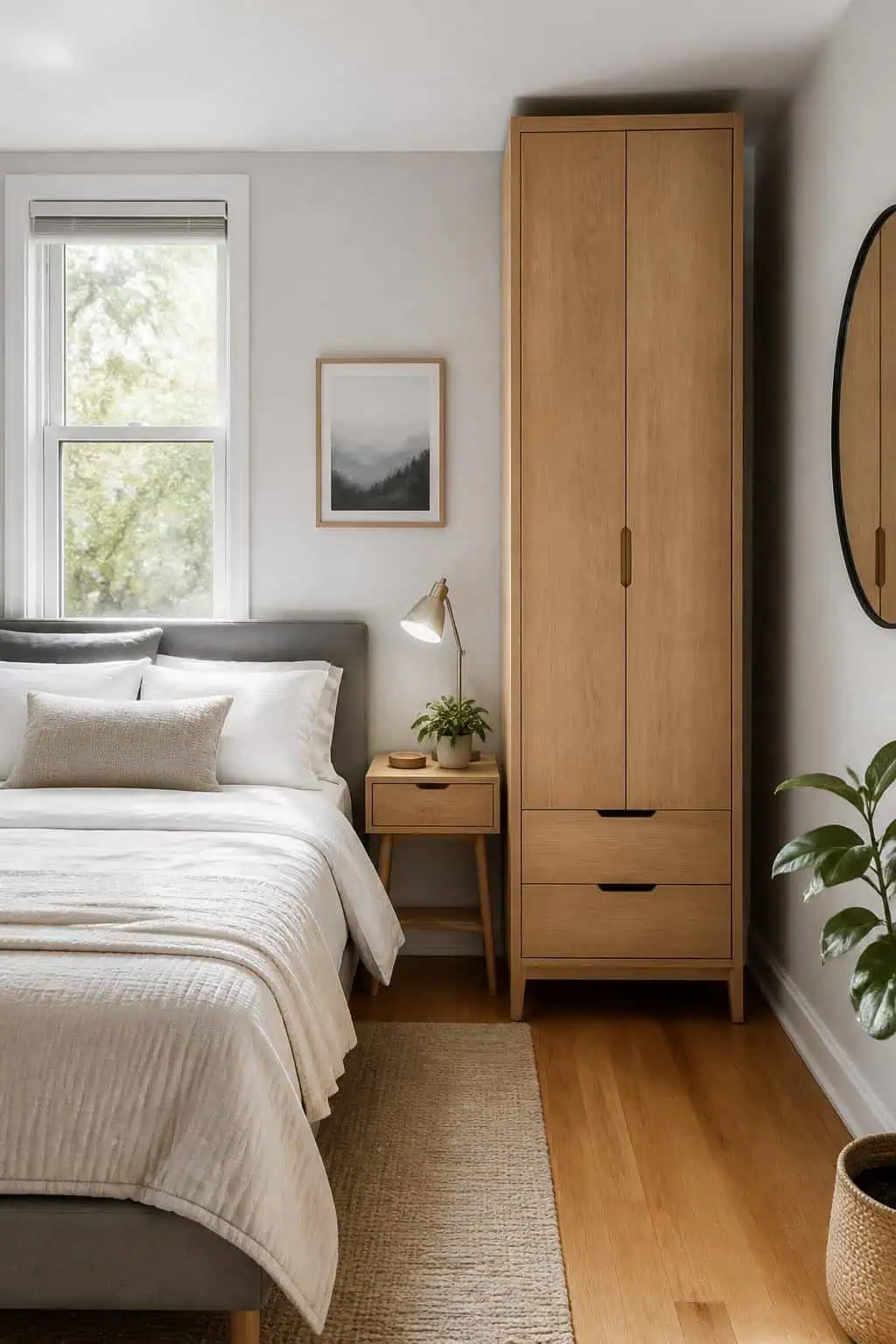
Choose a tall, narrow armoire to free up floor space and keep storage vertical, which matters in a small bedroom where every inch counts. Pick one about 72-78 inches high and 20-24 inches deep so it fits a closet-width wall without sticking into your walkway.
Place it against the longest unused wall or next to the bed to act as a soft room divider and reach-in storage. Look for internal features like adjustable shelves and a slim hanging rod so you can store folded clothes above and hang shirts below.
A slim armoire draws the eye upward and reduces visual clutter compared with a wide dresser. The room will feel taller and more intentional while still holding everything you need.
7) Mount swing-arm sconces to clear surfaces
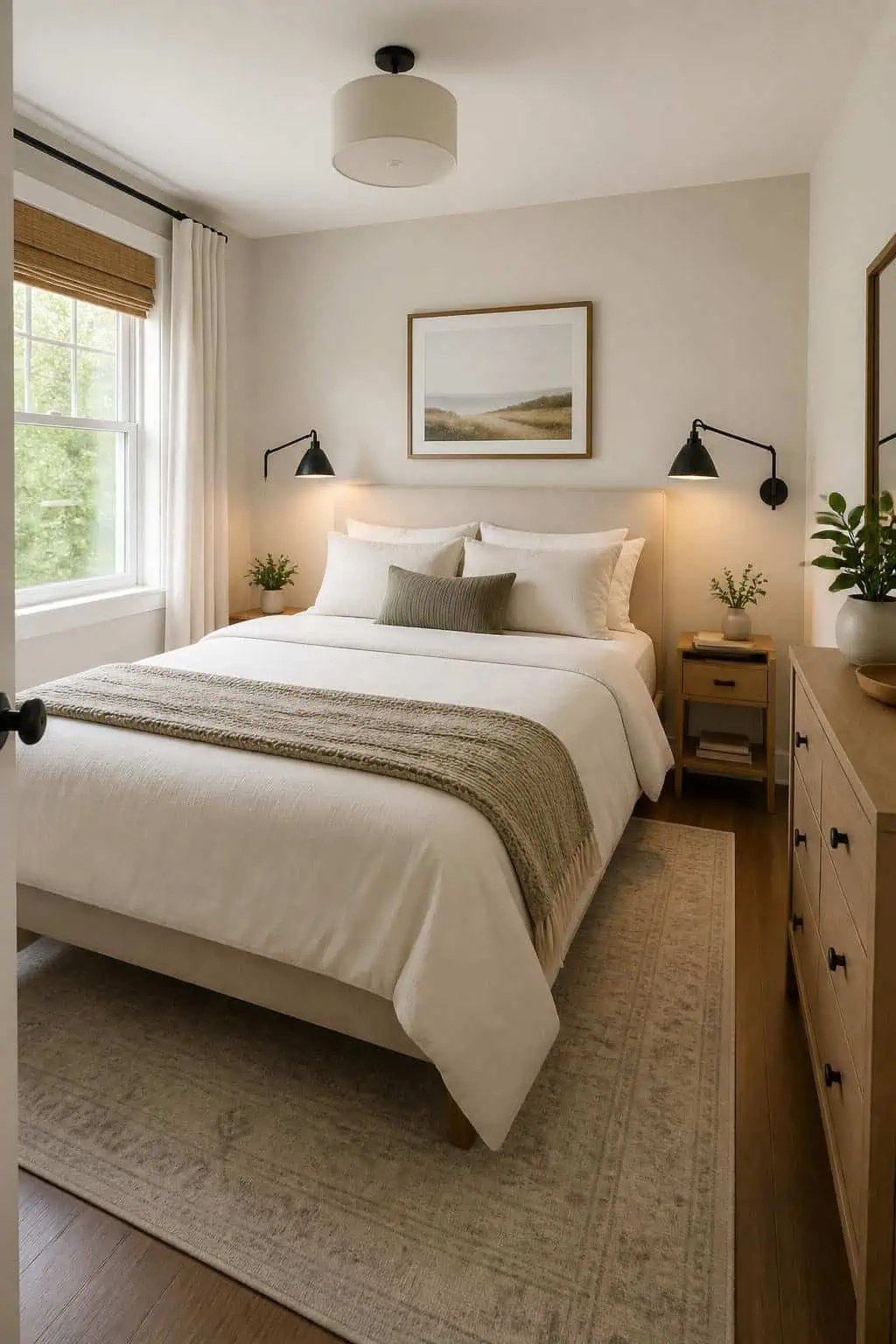
Mounting swing-arm sconces frees your bedside table and makes the room feel less crowded, which matters most in tight bedrooms where every inch counts. Aim for the sconce arm to reach about 12-18 inches over the nightstand so you can read in bed without leaning or moving the lamp.
Place the sconce base 48-54 inches above the floor for typical bed heights, or align it with the top third of your headboard for a cleaner look. Choose a swivel arm with a dimmable bulb and a downward shade to control glare and direct light where you need it.
You get an uncluttered surface for a book, glass, or an alarm without losing bedside light. Visually, the mounted light reads like architecture, not extra stuff, which helps the room feel designed rather than decorated.
8) Choose a daybed with hidden trundle for guests
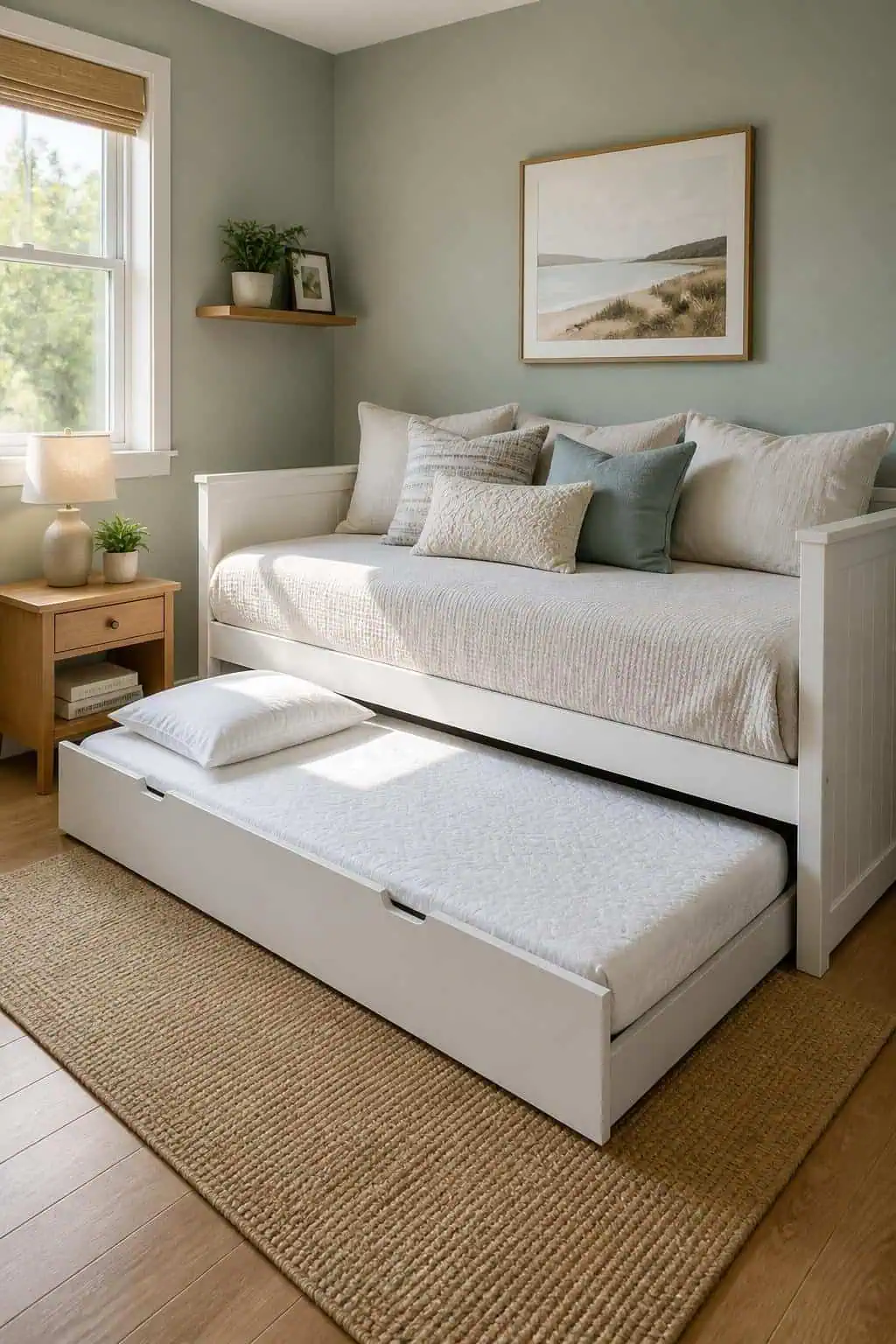
Pick a daybed with a pull-out trundle so you keep sleeping space without a full extra bed, which matters in a small bedroom because floor area is limited. Aim for a daybed frame about 75-80 inches long and 36-40 inches deep; the trundle should clear under the frame and sit on low rollers for easy access.
Place the daybed along the longest wall or under a window to free up walking space. Choose a simple frame with built-in storage or a skirt to hide the trundle and keep the look tidy.
Opt for a neutral fabric or thin slatted wood so the piece reads like furniture, not temporary bedding. Visually, this keeps the room calm and purposeful while still being ready for guests.
9) Create a shallow recessed shelf above the headboard
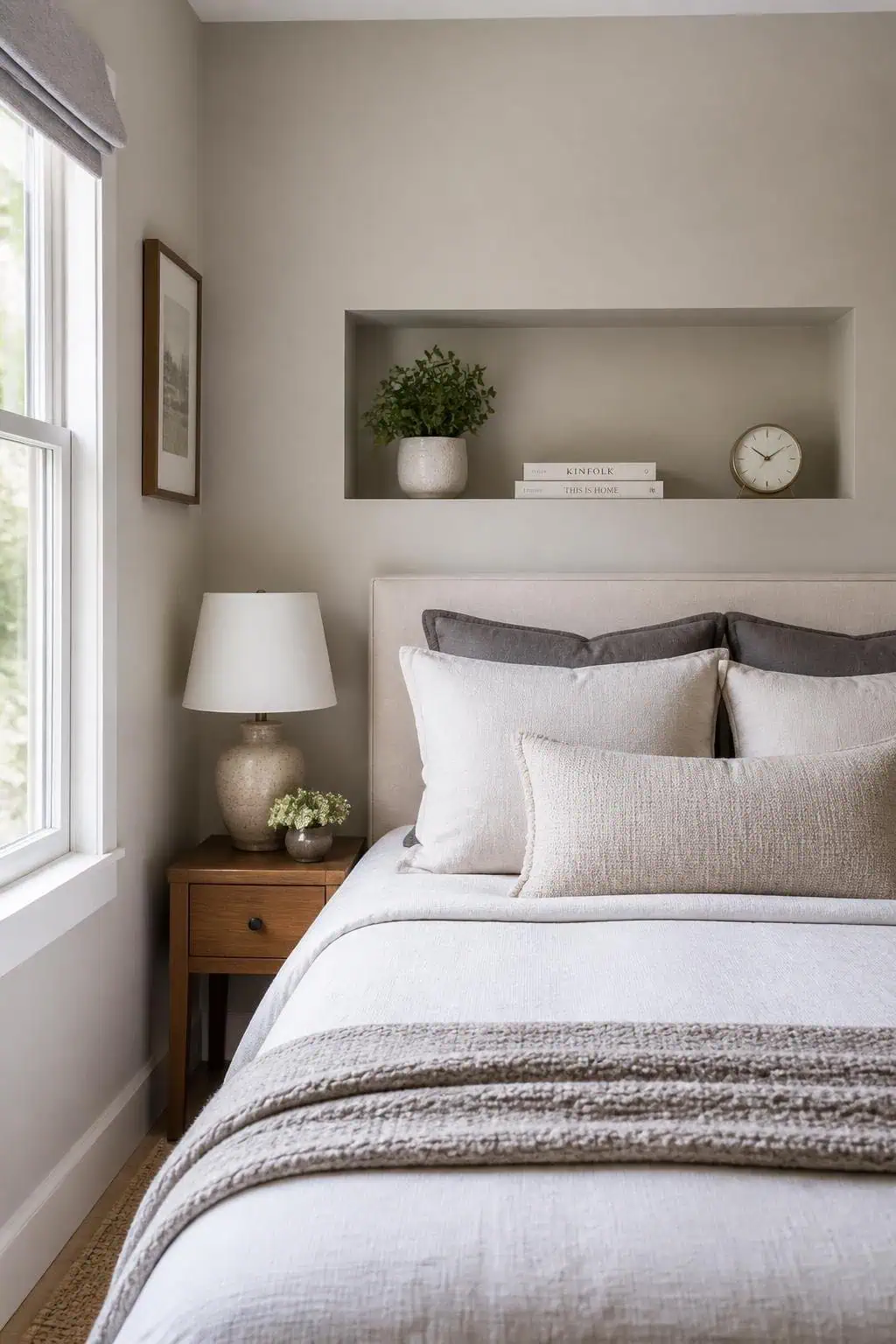
A slim recessed shelf above the headboard gives you display space without eating floor area, which matters a lot in a small bedroom. You can keep bedside surfaces clear and still have art, a lamp, or a couple of books within reach.
Build the shelf 6-8 inches deep and about 6-10 inches above the mattress top so it doesn't hit your head when you sit up. Run it the width of the bed or slightly wider; use plywood or MDF faced with paint or veneer for a neat, built-in look. Add LED strip lighting tucked under the lip for soft, even light that won't feel heavy.
Visually, the recess reads as architecture rather than clutter. It makes the wall feel intentional and pulls the headboard area together without adding bulk.
10) Anchor the room with a single statement artwork
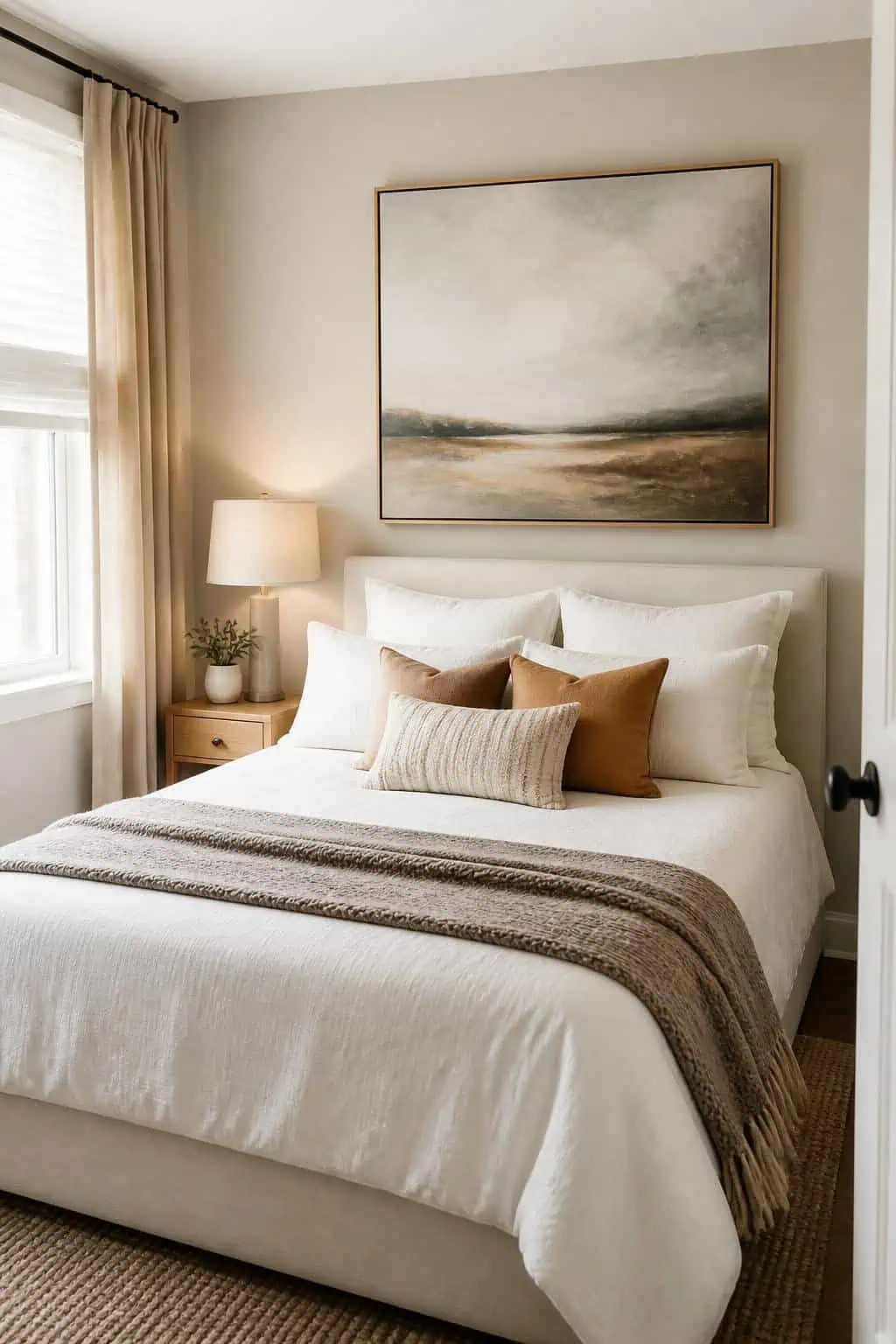
Choose one strong artwork to hang where it will read as the room's focal point. In a small bedroom, that usually means above the bed or opposite the door, centered at eye level-about 54-60 inches from the floor to the artwork's center.
Pick a piece roughly two-thirds to three-quarters the width of your bed for balance. If you don't own large art, group two slim frames with a single visual theme and treat them as one piece by mounting them close together.
Keep surrounding walls and bedside styling simple so the artwork can do the organizing. The result feels intentional: the room looks designed because your eye has a clear place to land.
11) Use full-height curtains to elongate windows
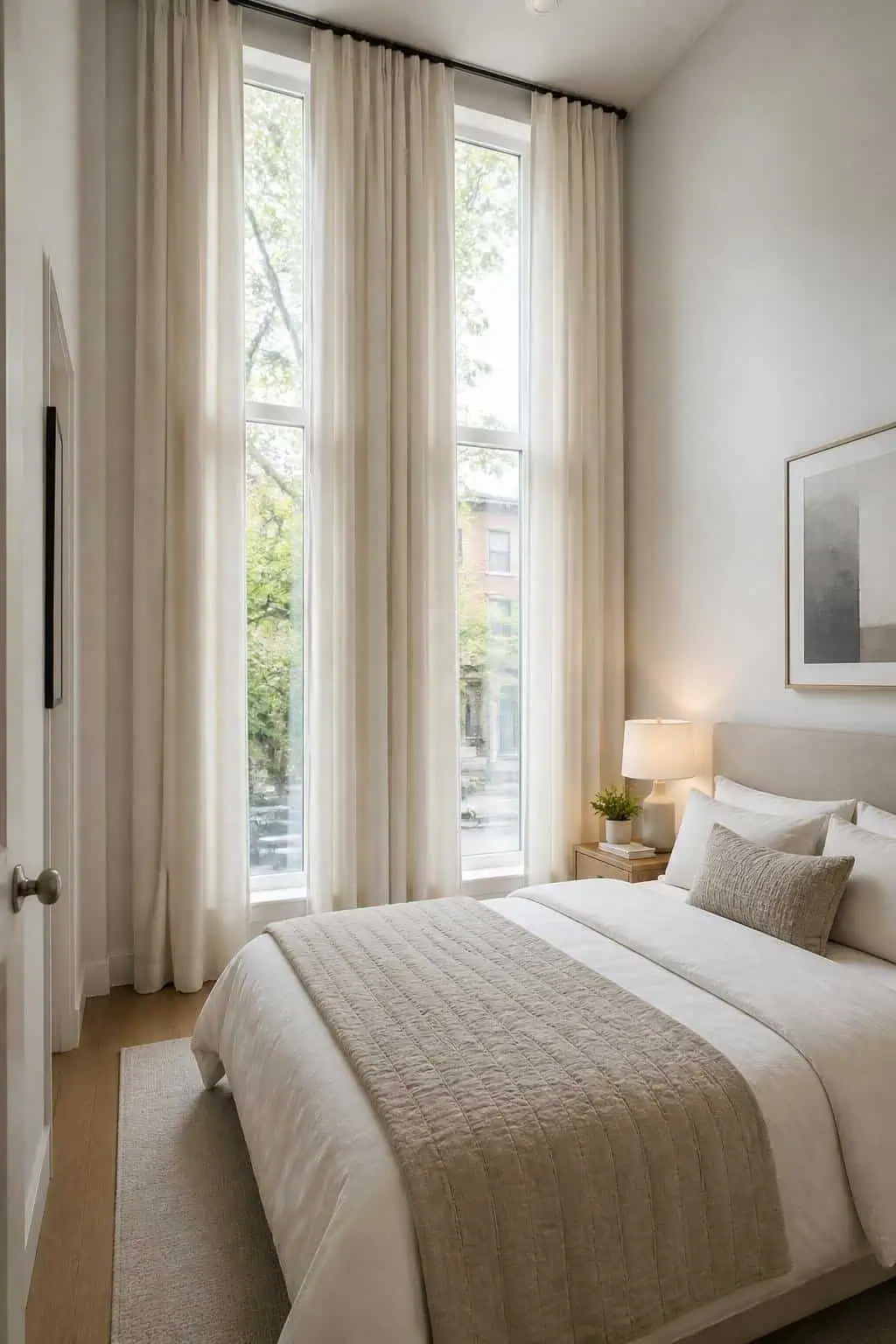
Hang curtains from just below the ceiling to the floor so the window reads taller and the room feels less cramped. In a small bedroom, that few extra inches of height tricks the eye into seeing more vertical space and makes low ceilings feel less oppressive.
Choose lightweight fabric that skims rather than puddles; aim for 1.5-2 times the window width for gentle folds. Mount the rod 4-6 inches above the trim if your ceiling is standard, or higher if you can; floor clearance should be ½-1 inch for a clean look.
If you have patterned walls, pick a neutral curtain color close to the wall tone to reduce visual breaks. The result is a calm, elongated silhouette that pulls attention upward without adding bulk.
12) Keep bedding tonal with one contrasting pillow
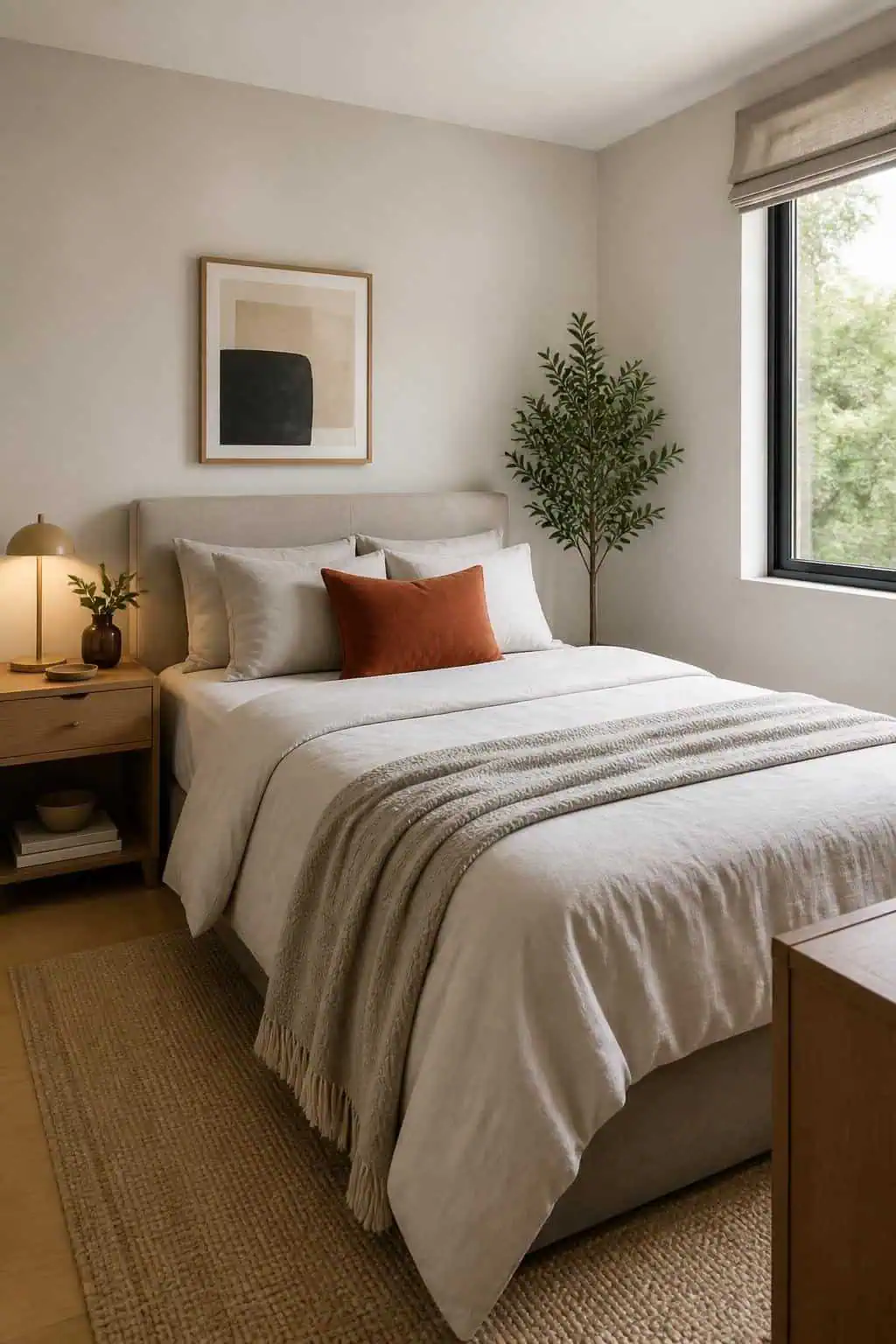
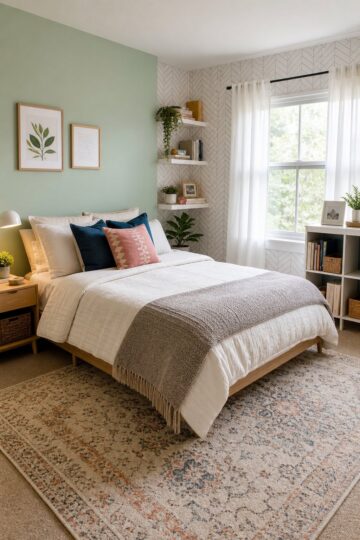
Choose bedding in one or two close shades so the bed reads as a single, calm shape, which matters in a small bedroom because cluttered patterns make the space feel busy. Stick to tones like warm beige, soft gray, or muted blue and keep sheets, duvet, and shams in that family.
Add one pillow in a different color or texture as a focal point. Make it about 18-20 inches square and place it centered or slightly off-center in front of the shams. If you use texture, pick velvet or a woven weave to add interest without more color.
This approach keeps the bed visually light and tidy, so your room looks designed instead of crowded. The single contrasting pillow draws the eye and gives the bed personality without breaking the calm.
13) Arrange furniture on a diagonal for perceived depth
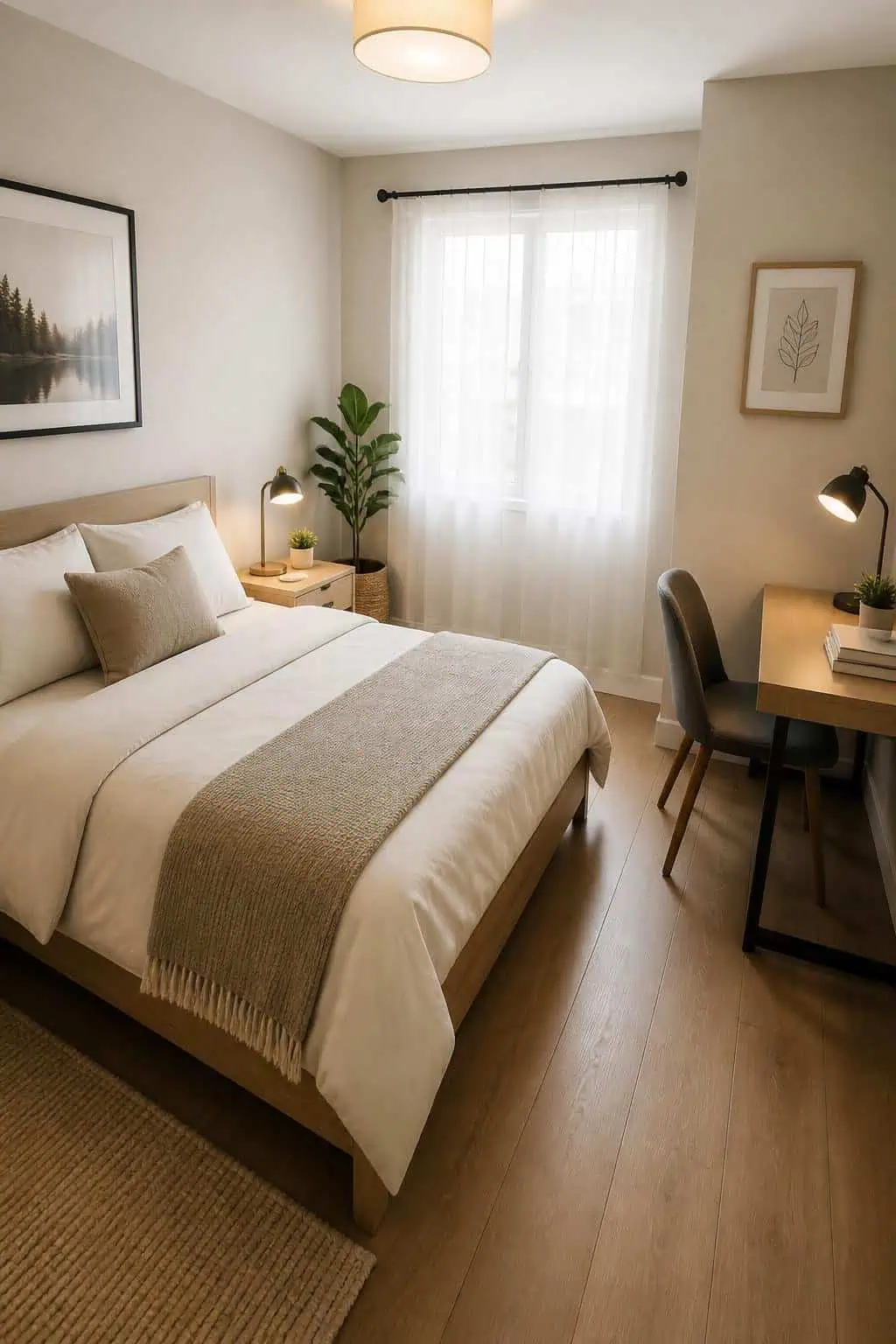
Place your bed or sofa on a diagonal to give the room more perceived depth; this matters in a small bedroom because straight lines can make the space feel flat and boxy. Aim to angle the large piece about 30-45 degrees from the longest wall, leaving at least 18-24 inches of walking space on the side you use most.
Position a narrow bedside table or slim chest opposite the angle to balance sightlines. Keep smaller items low to the floor so the diagonal stays visible and the room feels layered without clutter.
This layout draws the eye through the room rather than across it, making it feel deeper and more intentional while still easy to live in.
14) Use mirrored closet doors to bounce light
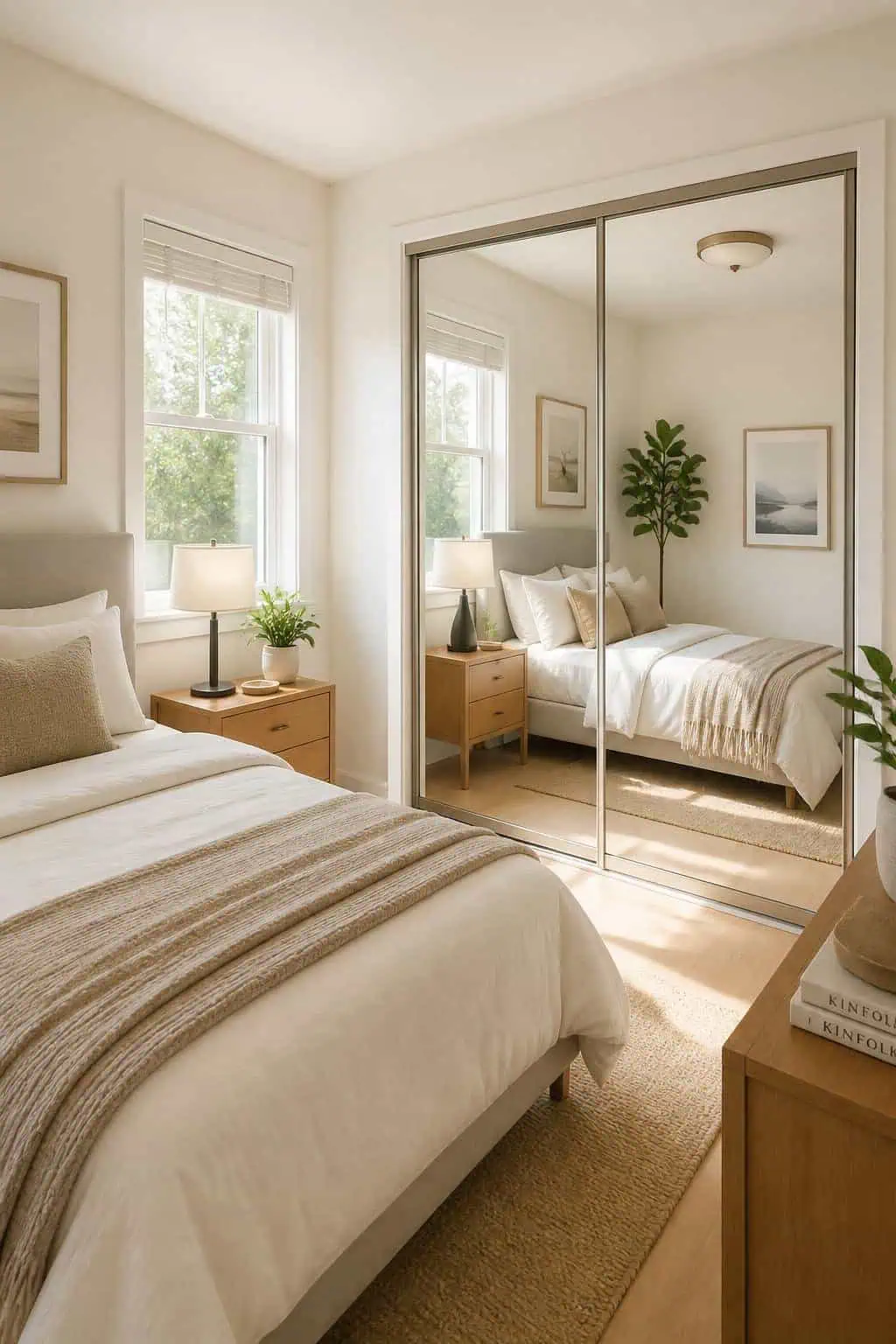
Mirrors on closet doors make the room feel brighter and larger by reflecting daylight and lamp light toward the bed and corners where you need it most. This matters in a small bedroom because every inch of reflected light reduces shadow and helps the space read as more open.
Place full-height mirrored panels on the wall opposite a window or next to a lamp. If your closet spans more than one panel, use long, vertical mirrors rather than small squares; aim for panels that reach within 6-12 inches of the floor and ceiling to avoid a chopped look.
Choose plain, frameless, or thin-framed mirrors to keep the effect calm and modern. Visually, the room will feel airier and more coherent, with reflections extending sightlines without adding clutter.
15) Opt for a platform bed with minimal legs
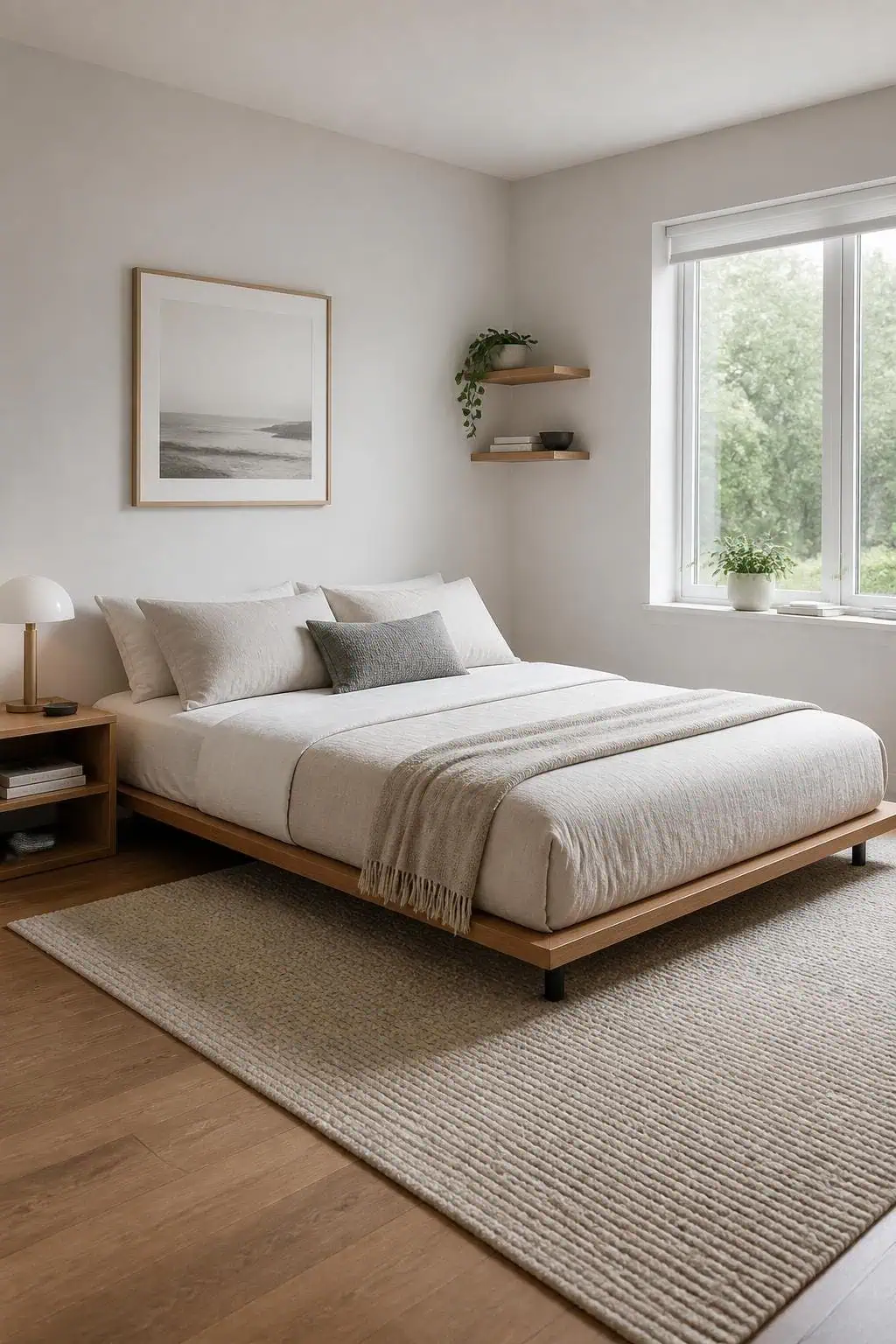
Choose a low-profile platform bed to keep the room feeling open; low height keeps sight lines clear, which matters a lot in small bedrooms. Pick a frame with slim or recessed legs so the floor remains visible under the bed. Aim for around 6-9 inches of clearance if you want a bit of under-bed storage, or go lower (2-4 inches) to emphasize horizontal lines.
Place the bed against the longest wall to give circulation space on one side. Avoid bulky headboards; a simple panel or thin upholstered headboard keeps scale light. Visually, a restrained platform bed reads as furniture not clutter, so the room feels planned rather than crowded.
16) Paint trim the same color as walls for cohesion
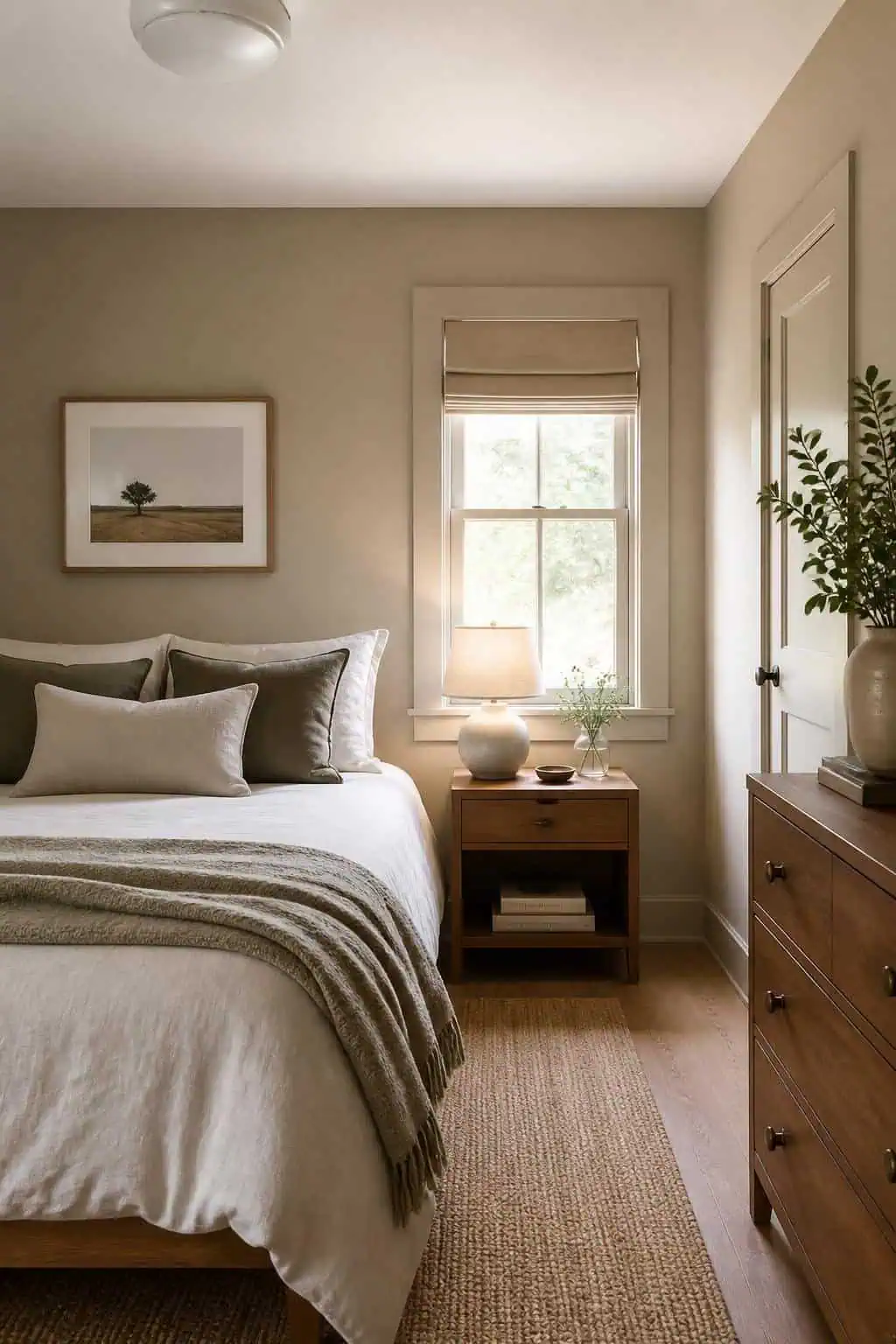
Painting trim the same color as the walls makes a small bedroom feel calm and larger because it removes harsh lines that break the space. You'll notice the eye moves around less, so the room reads as one continuous surface rather than a collection of boxes.
Use a single paint finish-usually eggshell or satin-so light reflects evenly. If the walls are a warm neutral, match the trim to that exact paint code; for darker walls, carry the same shade for doors and window frames. Cut carefully where the trim meets the wall to keep the edges clean.
This choice also hides imperfect trim details, so you don't need to replace molding to get a clean look. Visually, the room becomes softer and more unified, which helps a small space feel considered rather than cluttered.
17) Install a narrow floating desk as a vanity
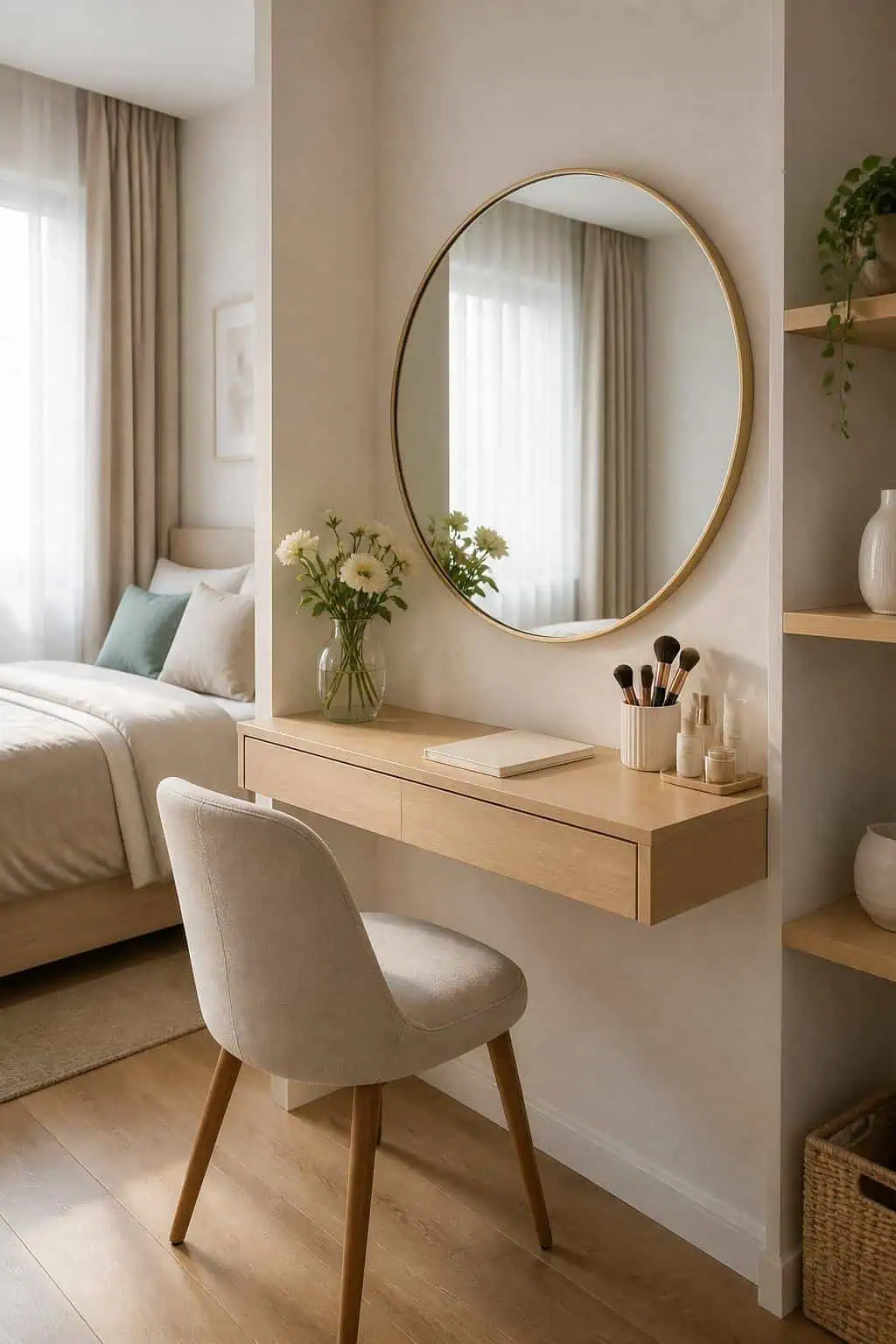
A slim floating desk gives you a real surface for getting ready without taking floor space, which matters when every inch counts. Mount one at about 28-30 inches high and pick a depth of 12-16 inches so you can sit comfortably and still have room for a mirror and a small tray.
Choose a simple, wall-mounted shelf or a narrow desk with hidden brackets for a cleaner look. Place it under a window or beside a bed to use natural light, and attach a round mirror or a small LED mirror to the wall to save tabletop space.
This setup keeps the floor clear and the room feeling open. Visually, a floating desk reads like built-in furniture, which makes the small bedroom look planned rather than cluttered.
18) Group three small framed photos at eye level
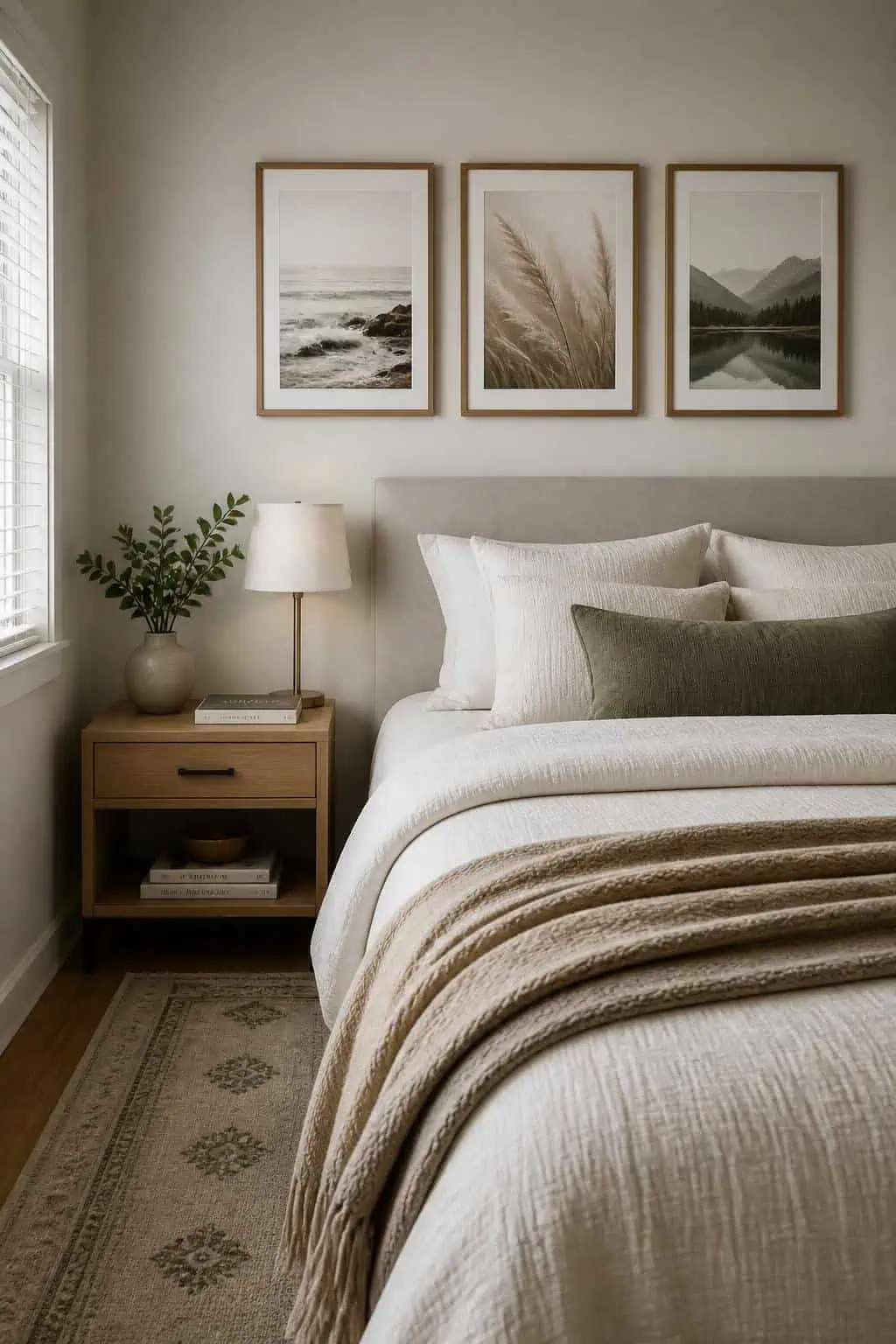
Place a tight trio of small frames at eye level so your wall reads as an intentional detail, not empty space. This matters in a small bedroom because a compact cluster draws attention without crowding the room.
Choose frames about 8×10 inches or smaller and hang them with 3-4 inches between each frame. Center the middle frame at roughly 57-60 inches from the floor; this keeps the group readable from a sitting position on the bed.
Pick photos that share a color tone or subject so the group feels calm together. The result is a neat focal point that makes the wall look planned and adds personality without using bulky furniture.
19) Choose low-profile nightstands to open sightlines
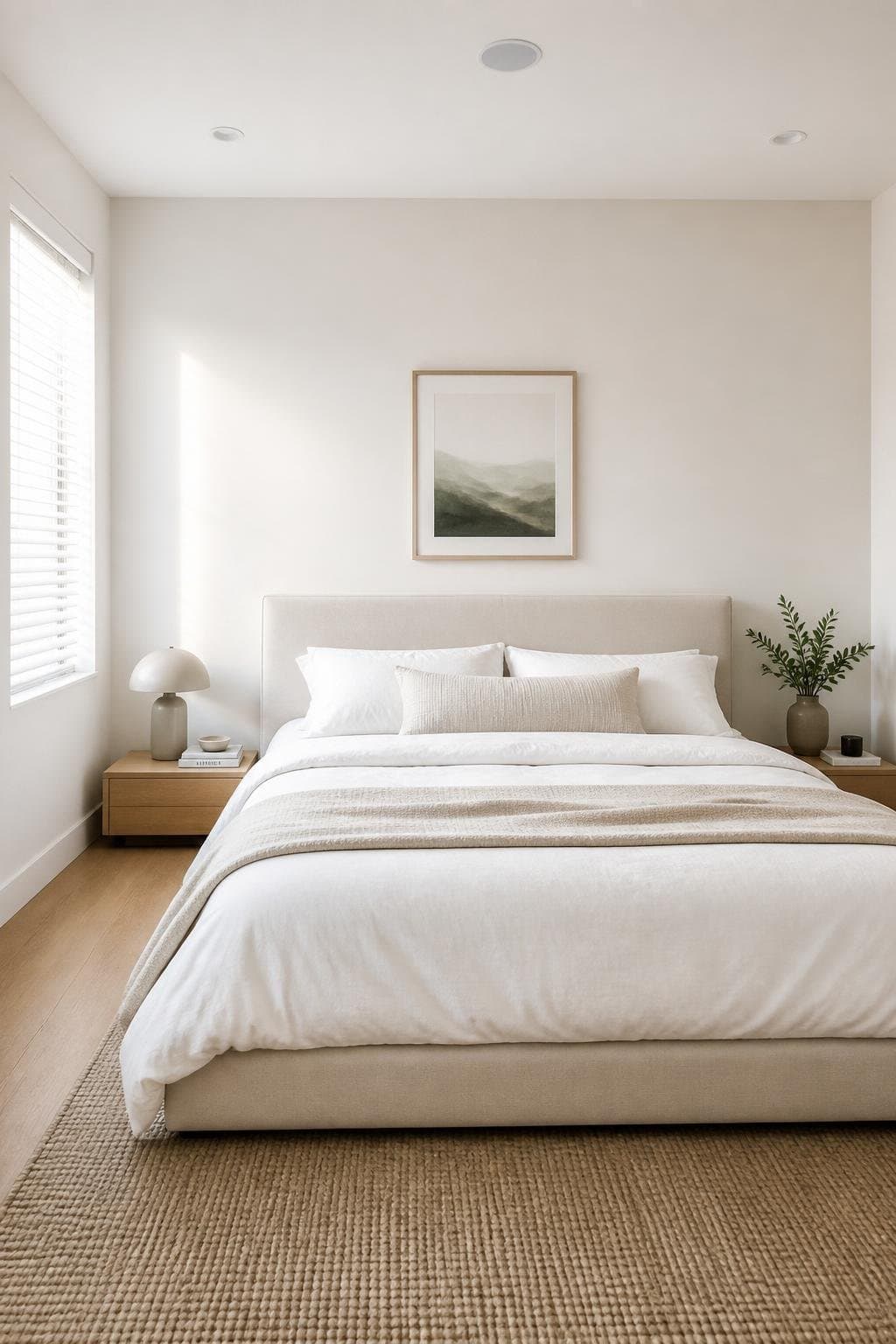
Keep the space feeling airy by picking nightstands that sit low and close to the bed. Low-profile pieces that are 18-24 inches high keep your sightlines clear when you enter the room, which makes a small bedroom read as larger and less cluttered.
Look for simple forms-slim tables, shallow drawers, or open shelves-about 12-16 inches deep so they don't block walking space. Place them flush with the mattress edge and avoid tall lamps; a wall sconce or short lamp works better for light without visual weight.
The result is a calmer, more intentional layout. You still get surface and storage, but the room keeps its lines and feels designed instead of crowded.
20) Use a slim-profile chest of drawers near the door
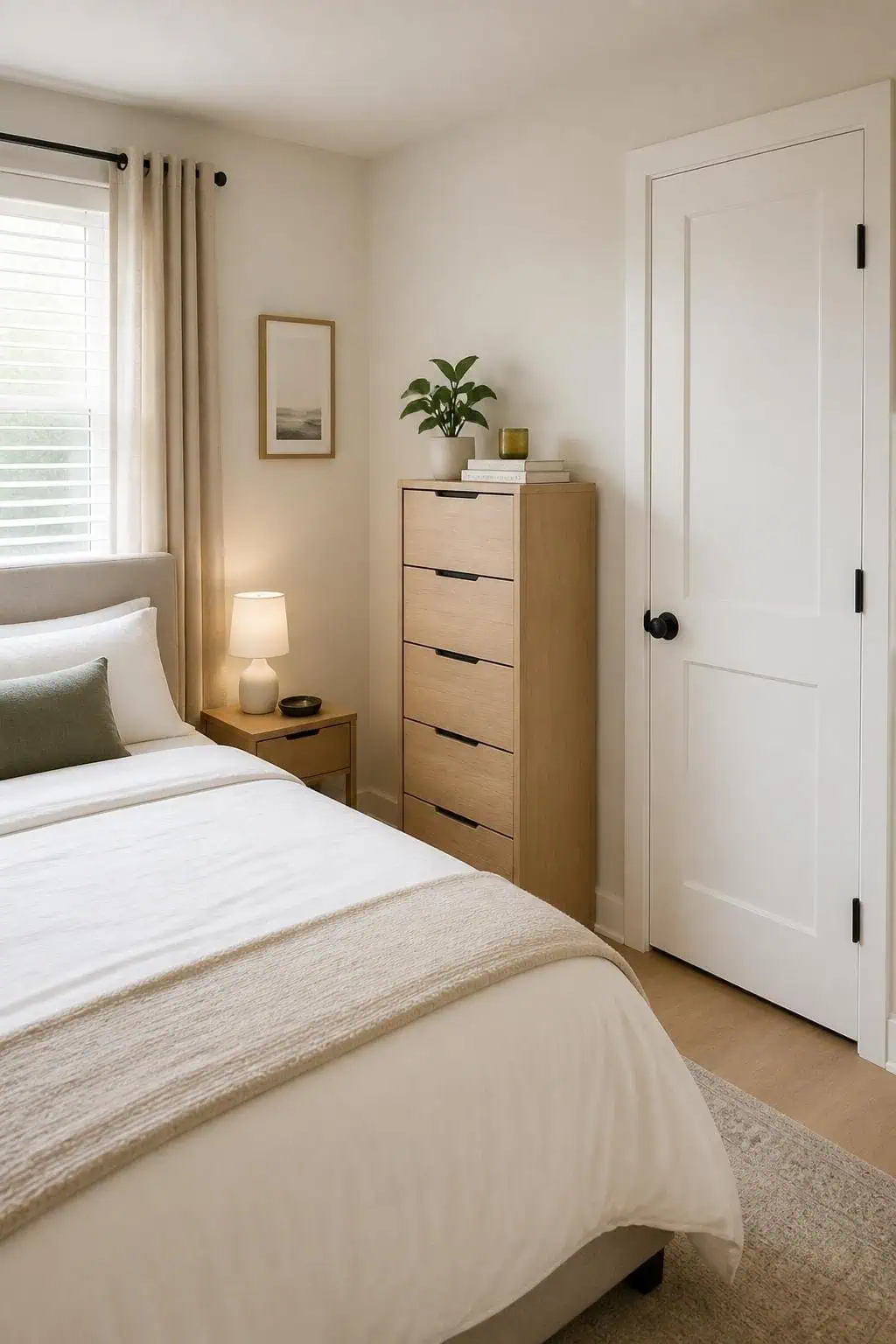
Place a narrow chest of drawers by the door so you have a spot to drop keys, mail, or folded clothes as you come in. In a small bedroom, this keeps daily clutter out of sight and stops items from landing on the bed or floor.
Choose a piece about 12-16 inches deep and 24-36 inches wide so it clears the door swing and leaves a clear path. Pick a taller option rather than a wide one to add storage without eating floor space.
Opt for simple hardware and a light finish to keep the area feeling open. Visually, the chest acts like a calm anchor at the room's edge, making the layout feel deliberate and tidy.
21) Add a slim console at the foot of the bed for display
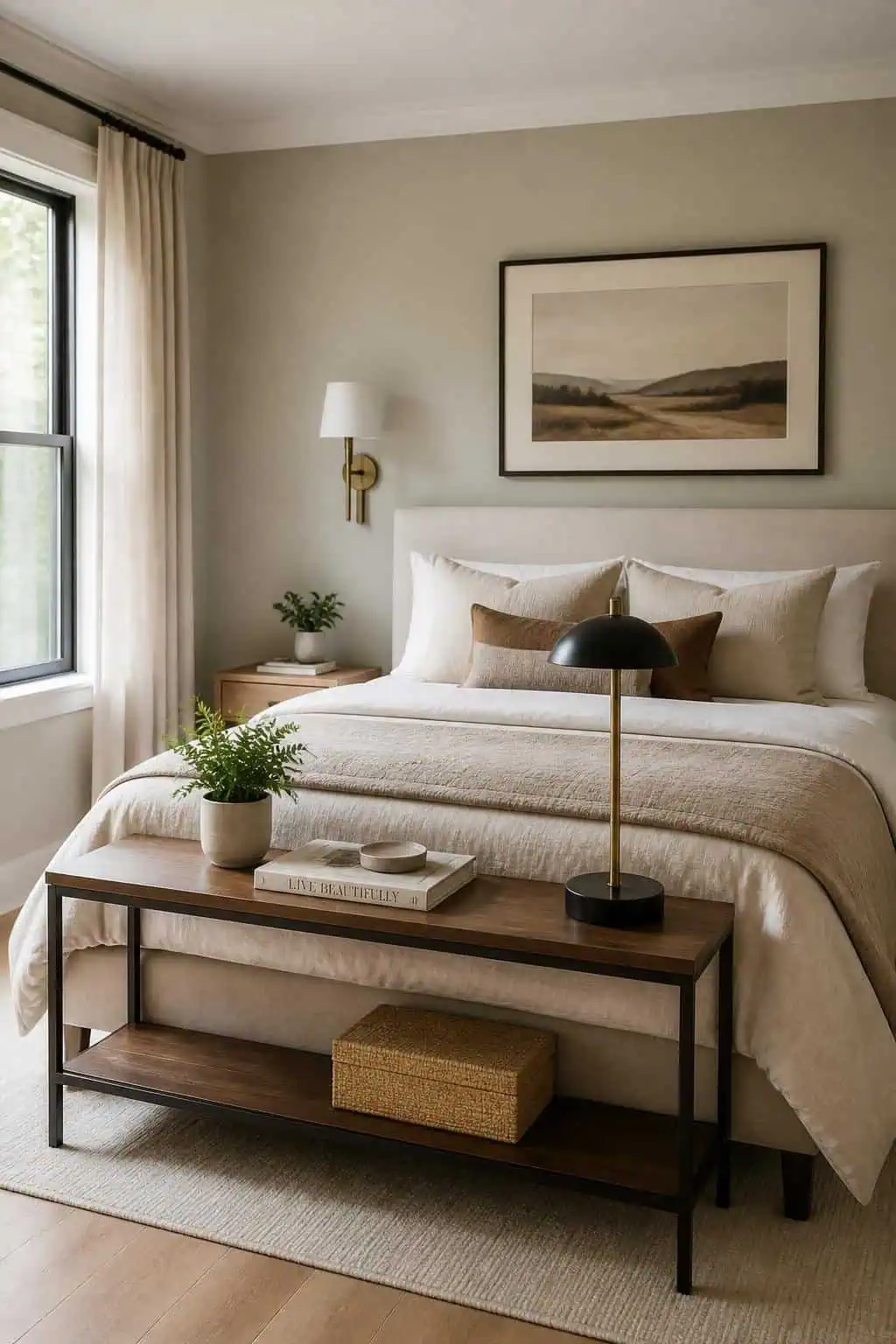
Place a narrow console at the foot of the bed to give you surface without crowding floor space. In a small bedroom, a 10-14 inch deep table keeps a clear walkway while giving you room for a lamp, a stack of books, or a vase.
Choose a console the same length or slightly shorter than your bed to keep sightlines calm. Metal or slim-legged wood reads lighter than a bulky dresser and you can tuck a low basket underneath for shoes or extra linens.
Style it simply: one lamp, one framed photo, and one small object. That restraint makes the console read as a designed pause rather than clutter, and it helps the room feel measured and intentional.
22) Select a woven pendant to add texture without bulk
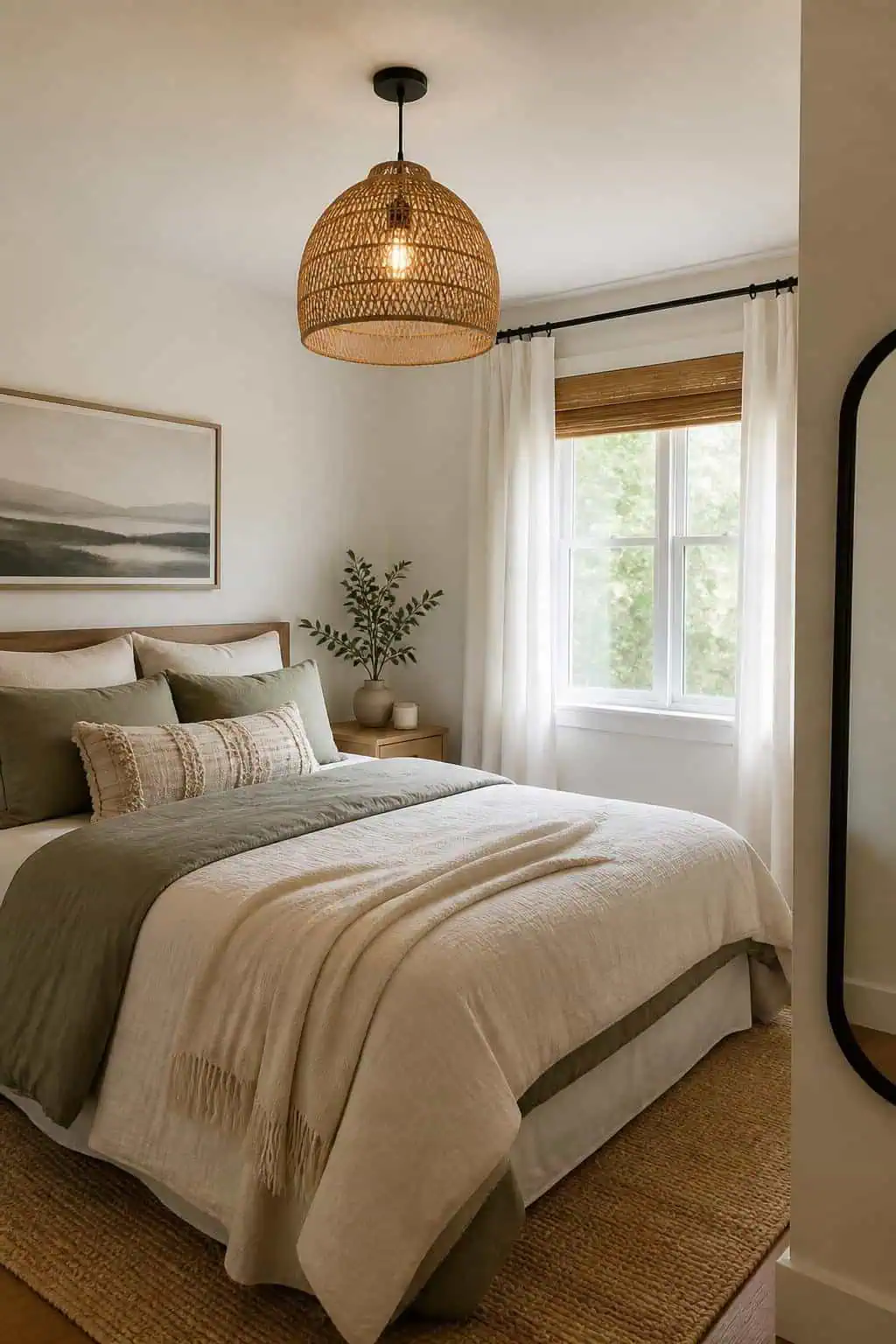
Choose a woven pendant because it brings texture without taking up floor or shelf space, which matters when every inch counts in a small bedroom. Pick a pendant about 12-18 inches wide for a single bedside or 18-24 inches if it hangs over the bed; keep the bottom 24-30 inches above a nightstand surface so it won't hit your head.
Go for open-weave materials like rattan, seagrass, or rope so light filters through and the shade feels light, not heavy. A warm bulb behind the weave softens the room and adds depth without crowding visual space. The result is a layered, designed look that feels intentional and airy rather than cluttered.
23) Use built-in alcove lighting for even, soft glow
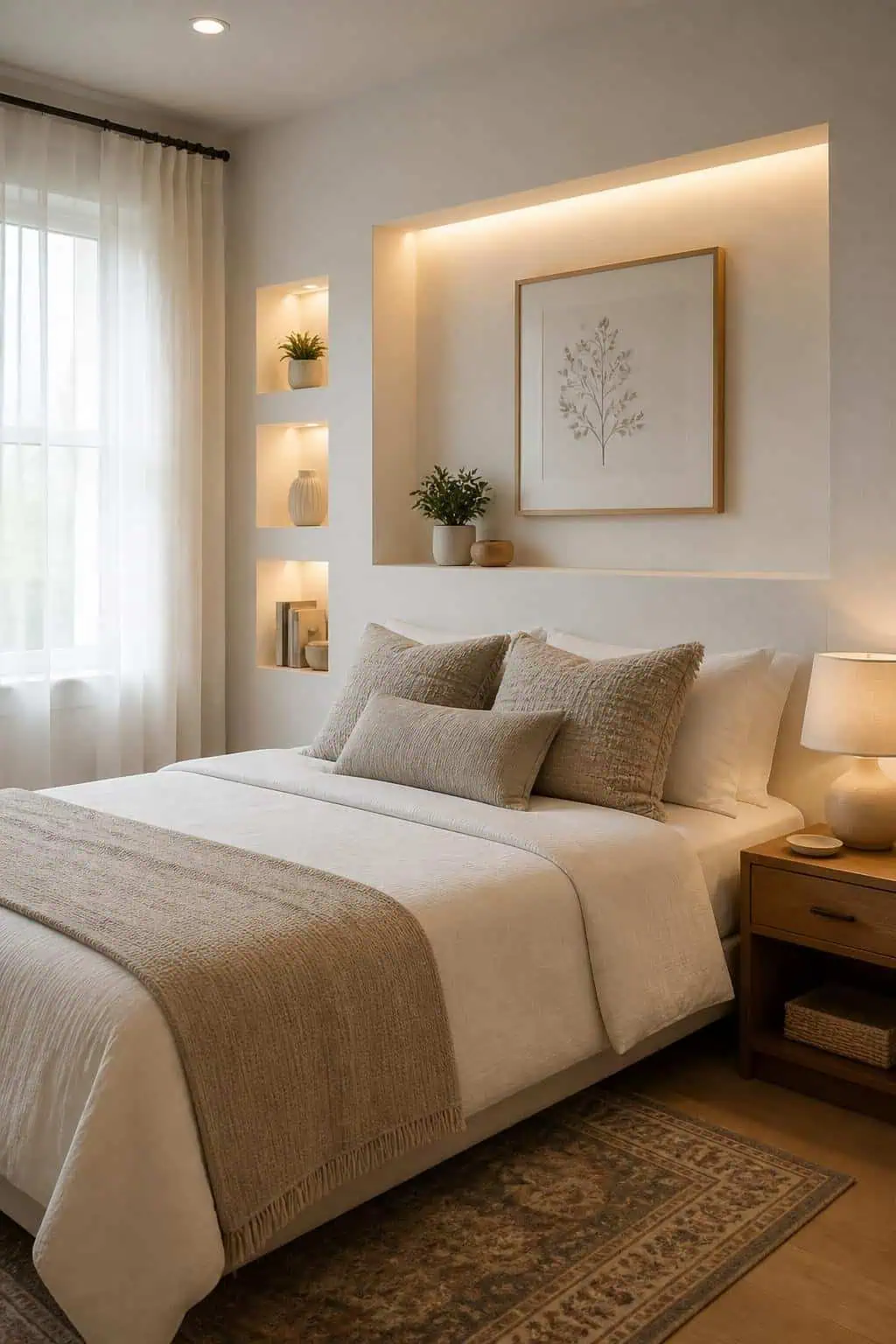
Built-in alcove lighting gives even, soft light that keeps a small bedroom calm and avoids harsh shadows that make spaces feel smaller. You want this because it spreads light low and wide, which helps walls and corners read as one continuous surface.
Place LED strip or recessed cove lights 6-12 inches back from the alcove edge so the beam washes the wall without glare. Use warm white (2700-3000K) and a dimmer so you control brightness for reading or sleeping. Aim for 150-300 lumens per linear foot in the alcove for a gentle wash.
This lighting hides fixtures and keeps sightlines simple, so the room reads as designed rather than decorated. It also makes small pieces-like a narrow shelf or bedside niche-feel intentional and built-in.
Visual Flow: Connecting Elements in a Compact Space
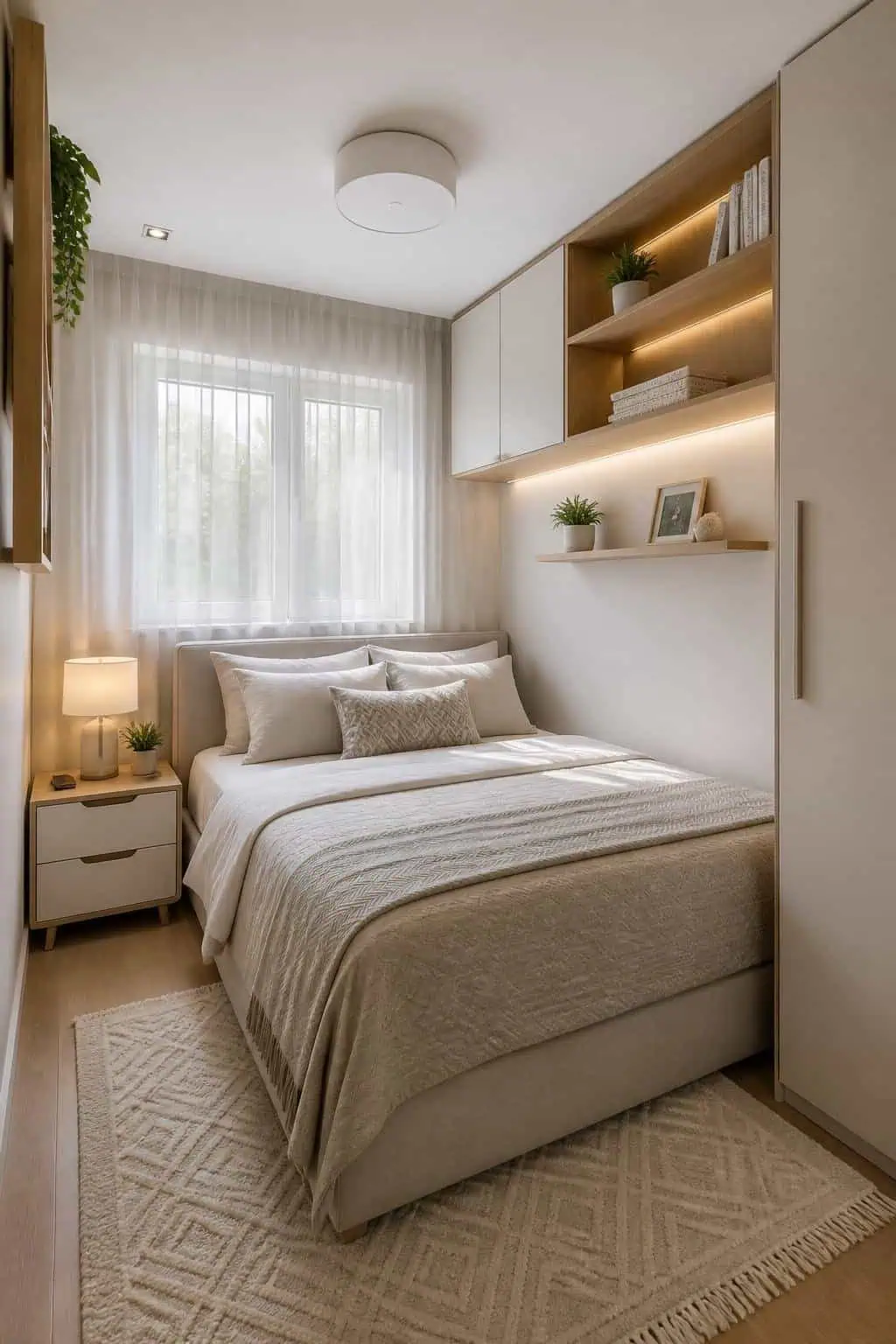
Create visual flow so your eye moves through the room without getting stuck on one object. That means repeating a few elements, balancing color and texture, and placing items so sight lines feel intentional.
Why Repetition Matters for Small Room Cohesion
Repeat two to three elements-material, color, or shape-to tie corners together. Use the same wood tone on a nightstand and a shelf, or the same brass finish on a lamp and drawer pull. Keep repeats subtle: match one large piece (like a bed frame) with two smaller echoes (a picture frame and a tray). Place repeats where they form a triangle across the room so your eye hops between them: one at the head of the bed, one near the window, one on the opposite wall.
This creates a tidy, calm feel without crowding. The room reads as one space rather than a collection of items.
Tips for Balancing Color and Texture
Pick a dominant neutral, a supporting mid-tone, and a single accent color to keep the palette small. Use texture to add interest: a woven throw, a matte lamp, and a smooth lacquered surface. Limit bold patterns to one piece-pillows or a small rug-and repeat that color in a framed print or plant pot.
Place textured pieces where you want the eye to pause: near the bed or beside a reading chair. The balance of color and texture makes the space feel designed and lived-in, not busy.
Elevating Everyday Storage
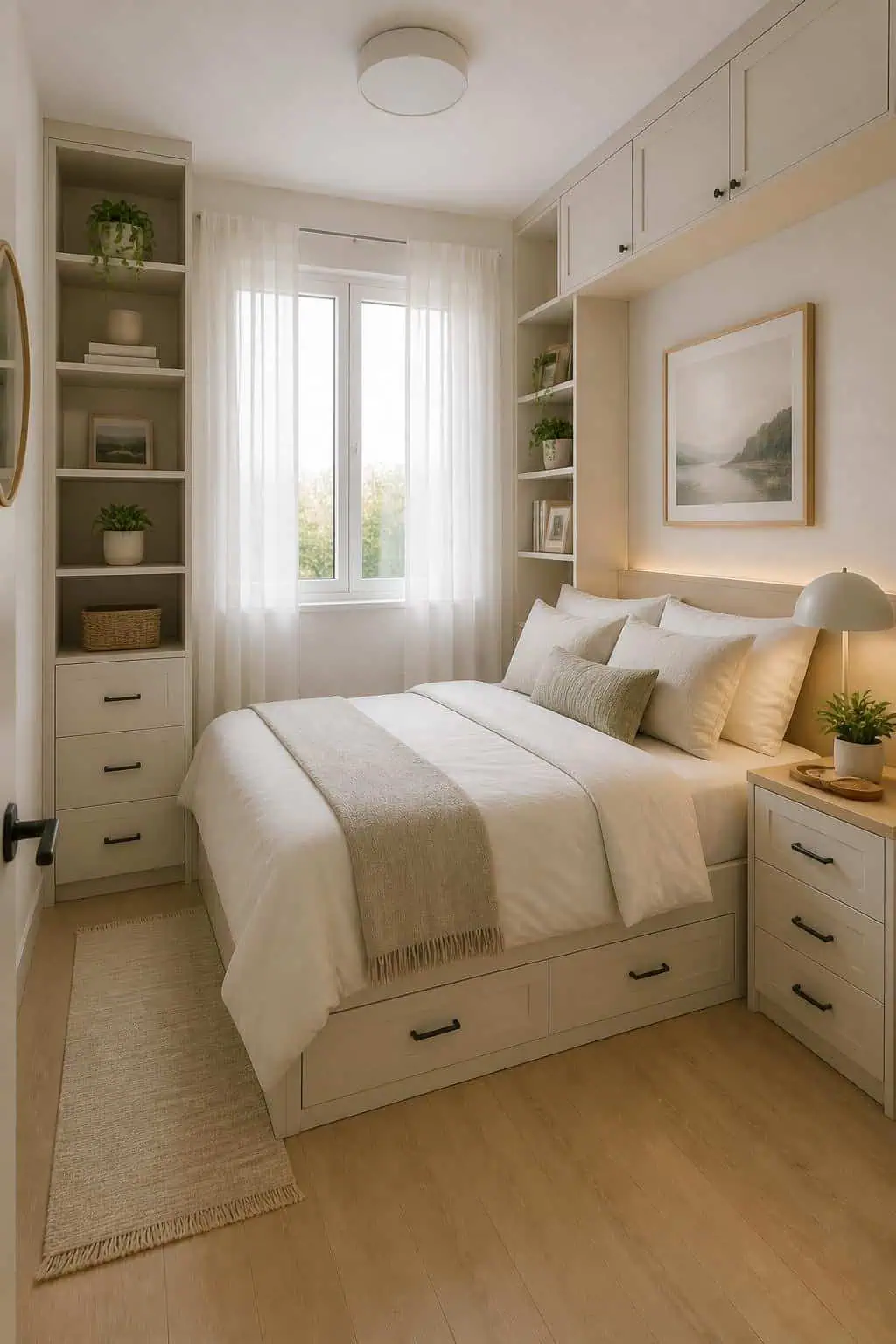
Good storage fits the room's size and your daily habits. Think about what you reach for each day, where it belongs, and how each piece can look tidy without hiding everything.
Styling Open Shelves Without Clutter
Open shelves should hold the things you use and the things that make the room feel calm. Keep shelf depth to 8-10 inches for books and small boxes so items don't stick out. Place heavier items like folded blankets or a stack of books on the lower shelves and smaller objects-like a plant or a jewelry dish-at eye level.
Group items in odd numbers and leave breathing room between clusters. Use two matching baskets or boxes on one shelf to hide chargers and loose cables; label the front with a small, neat tag. Rotate a small framed photo or a single vase to give each shelf a focal point. The result reads tidy and intentional because each shelf shows purpose without feeling crowded.
Choosing Multi-Function Pieces That Feel Intentional
Pick furniture that does two things well and looks like it belongs. A narrow dresser that doubles as a bedside table works if it's about 24-30 inches wide and 30-36 inches high so you still have surface for a lamp. A storage bench at the foot of the bed should be no deeper than 16-18 inches so it doesn't block the walkway.
Opt for pieces with consistent materials-wood, metal, or woven-to keep the look calm. Choose drawers with soft fronts or recessed pulls to avoid visual fuss. Use the top surface for a tray with daily items, which keeps them organized and readable. These choices make storage feel planned and useful, not like an afterthought.