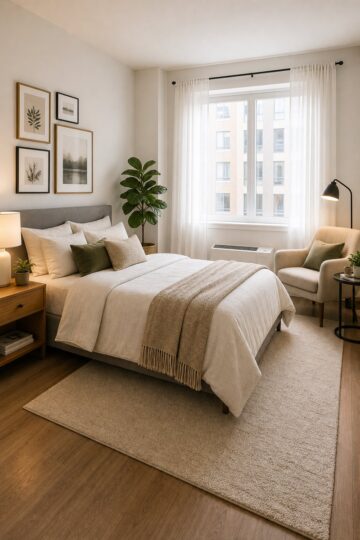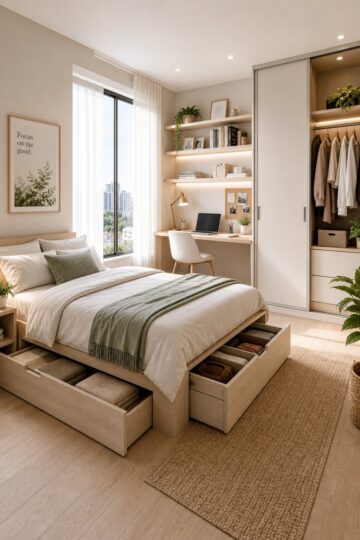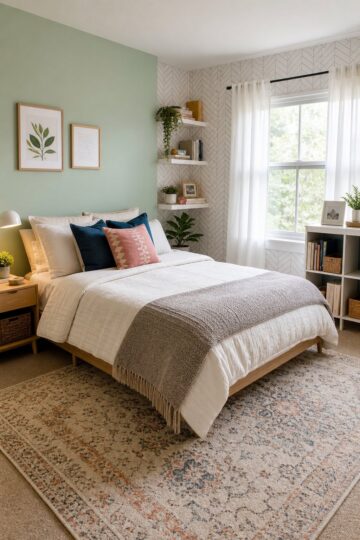
If you have spent any time looking at bedroom inspiration lately, you have probably stumbled across the Japandi aesthetic. A beautiful hybrid of Japanese minimalism and Scandinavian functionality, this style is all about creating spaces that feel incredibly calm, grounded, and intentional.
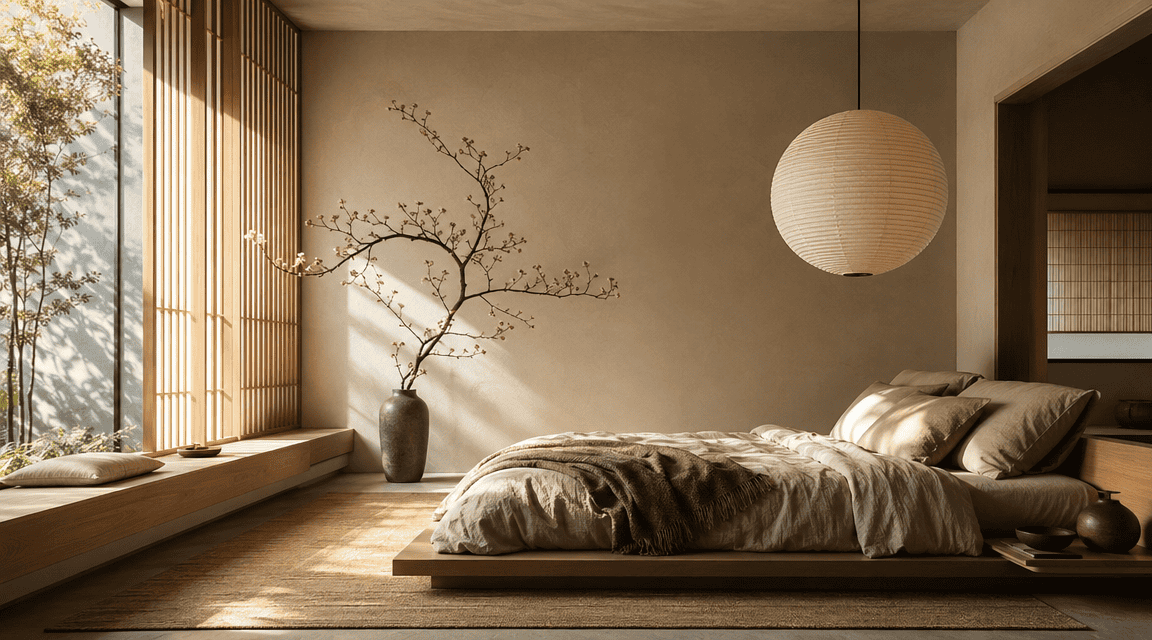
But here is the catch: most of the Japandi bedrooms we save on Pinterest feature custom shoji screens, $10,000 low-profile platform beds, and massive architectural windows. If you live in a standard house or apartment with normal drywall, standard baseboards, and furniture you already own, achieving this look can feel impossible.
The good news? You don't need to remodel your room to get the feeling of Japandi. It is entirely possible to pull off this aesthetic through thoughtful styling, intentional color choices, and a few simple layout tweaks. Before we dive into the specific ideas, let's look at the foundational color palette that makes this style work.
1. Swap Busy Patterns for Heavy, Layered Textures

In a Japandi bedroom, you won't find loud floral prints, geometric rugs, or high-contrast stripes. Because the color palette is so restrained, the room relies entirely on texture to keep it from feeling flat or sterile. The trick is to let the materials do the heavy lifting.
If you want an immediate Japandi upgrade, replace your patterned duvet with a solid, washed linen cover in oatmeal or warm white. Then, layer on the texture: drape a chunky waffle-knit blanket across the foot of the bed and add a couple of bouclé or nubby wool accent pillows. The way natural light hits these different fabrics creates a subtle, cozy visual interest that feels incredibly high-end without requiring a single pattern.
2. Ground the Room with Horizontal Lines
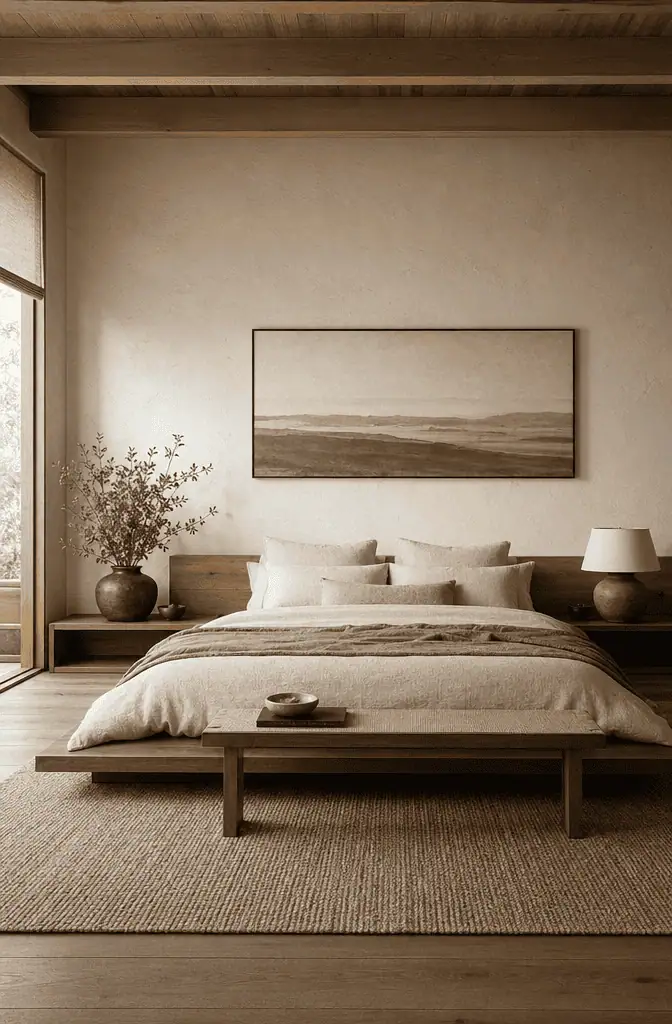
Japandi design is rooted in low-to-the-ground, horizontal planes that create a sense of gravity and calm. While a low-profile platform bed is the classic way to achieve this, you don't need to throw away your standard-height bed frame to get the look.
Instead, create the illusion of a grounded space by emphasizing horizontal lines in your styling. Place a long, low wooden bench at the foot of your bed. Choose a wide, low-slung area rug that stretches horizontally across the floor. If you are hanging art above the bed, opt for a single, wide landscape piece rather than a tall, vertical gallery wall. These horizontal visual cues trick the eye into feeling like the room is wider and more grounded.
3. Mix Light and Dark Woods Intentionally
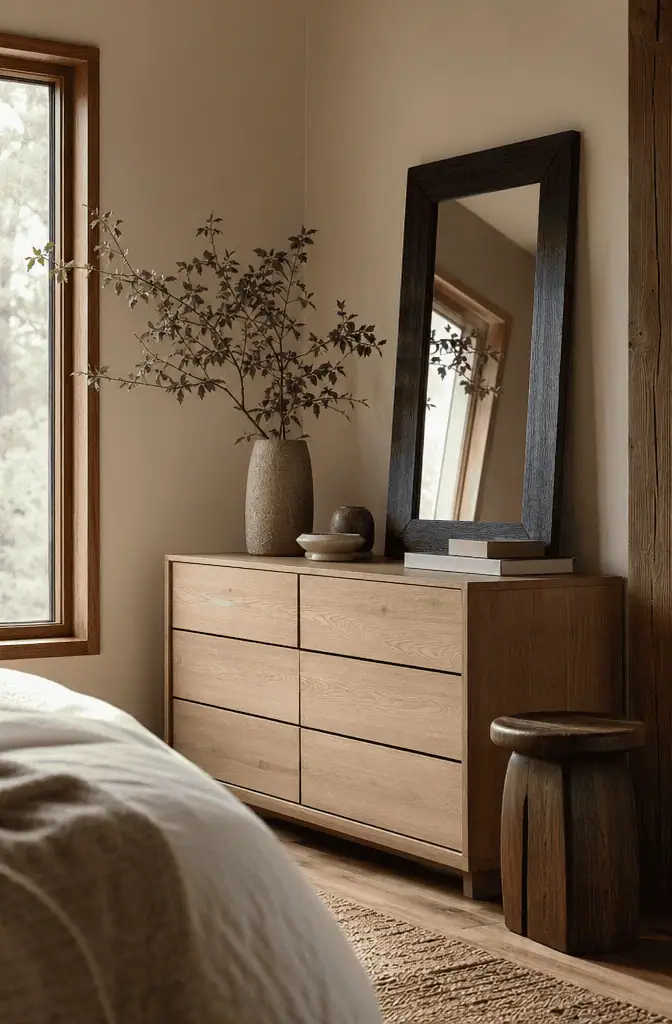
Scandinavian style loves pale ash and white oak, while traditional Japanese interiors lean into darker, richer woods like walnut, teak, or black-stained cedar. The magic of Japandi is that it gives you permission to mix them.
If you already have a light oak dresser, you don't need to buy a matching oak bed frame. In fact, pairing that light dresser with a matte black nightstand or a dark walnut mirror frame makes the room feel curated rather than bought from a catalog. The contrast between the airy Scandi woods and the grounding Japanese woods is exactly what gives this style its signature depth.
4. Soften the Lighting with Paper or Fabric
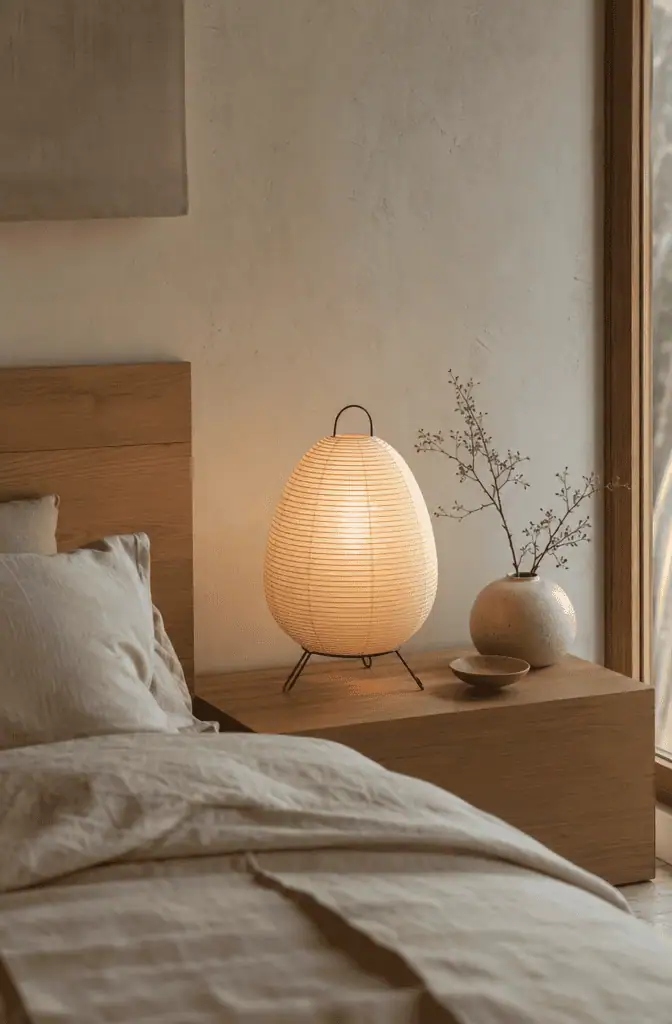
Harsh, exposed lightbulbs and glaring overhead fixtures are the enemies of a calming retreat. Japandi lighting is all about diffused, glowing ambiance that mimics the soft light filtering through traditional shoji screens.
You can easily replicate this feeling by swapping out your lampshades. Replace standard glass or metal shades with ribbed paper lanterns, slub-linen drum shades, or frosted glass globes. Make sure you are using warm-white LED bulbs (look for 2700K on the box) to cast a cozy, golden glow across your textured bedding in the evenings.
5. Follow the 'One Branch' Rule for Greenery
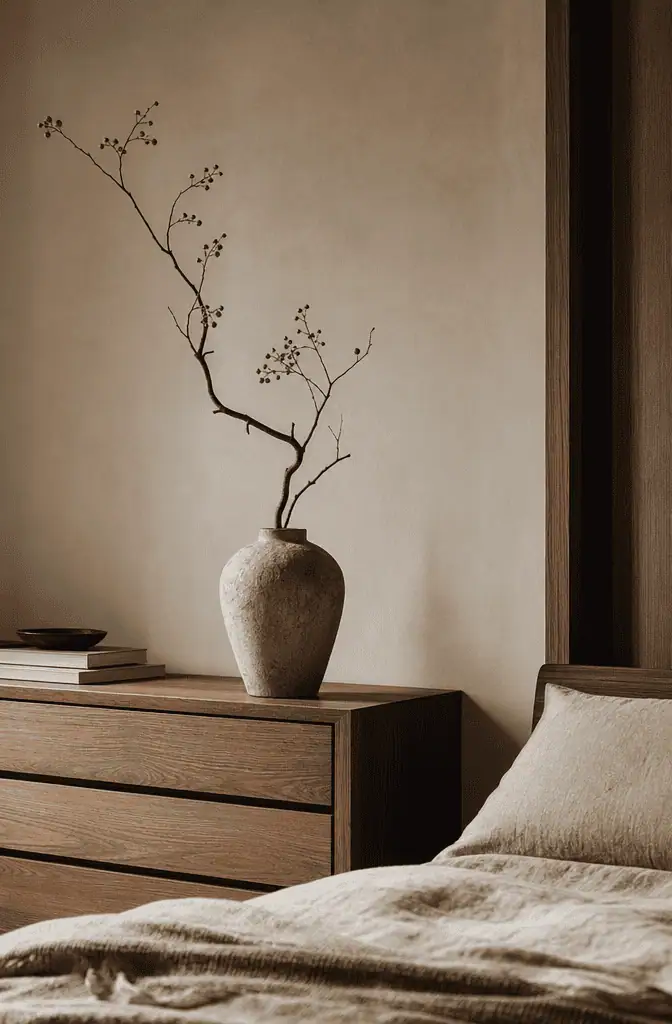
While bohemian styles love the "urban jungle" look with dozens of trailing pothos plants covering every surface, Japandi takes a much more intentional, Ikebana-inspired approach to nature. It is about celebrating the shape of a single plant rather than overwhelming the room with greenery.
Adopt the "one branch" rule: choose a single, sculptural dried branch and place it in an earthy, wabi-sabi ceramic vase on your dresser. If you prefer living plants, opt for one asymmetrical, minimalist plant-like a sparse olive tree or a small bonsai-to act as living art. This minimalist approach draws the eye to the organic shape of the plant and keeps the room feeling uncluttered.
6. Edit the Nightstand for Visual Quiet
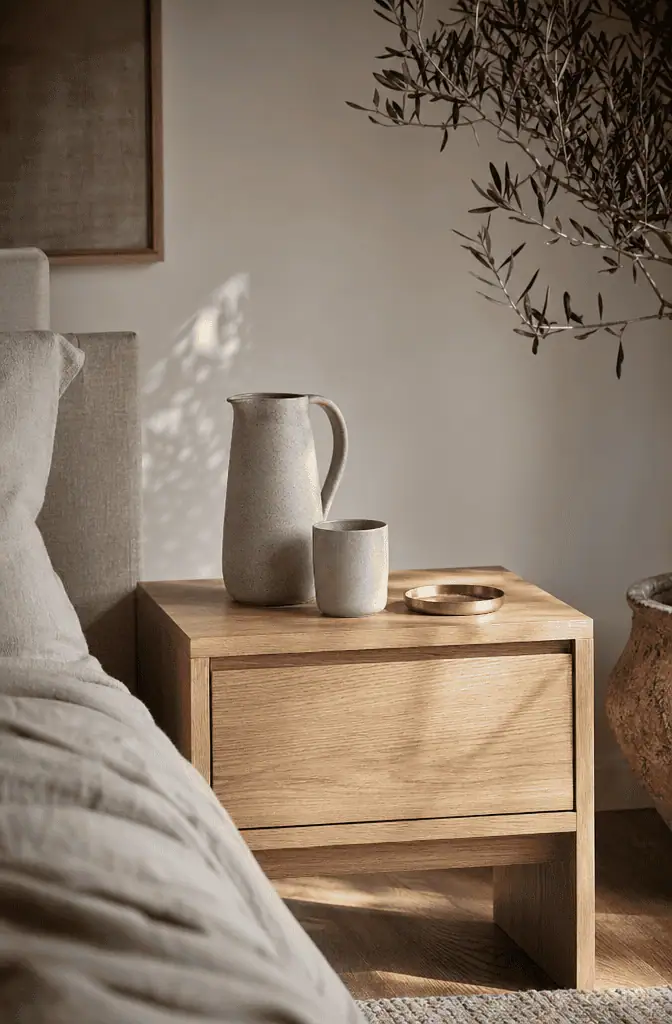
Visual clutter creates mental clutter, which completely ruins the peaceful vibe of a Japandi space. You don't have to live in an empty room, but you do need to hide the everyday chaos of charging cords, half-read books, and lip balms.
The goal is "visual quiet." If your nightstand has a drawer, use it ruthlessly to stash your utilitarian items. If you have an open nightstand, buy a beautiful lidded ceramic box or a woven basket to hide the clutter. The only things that should live on top of your nightstand are a lamp, a water glass, and perhaps a small dish for your jewelry. Giving your eye a place to rest is the ultimate Japandi luxury.
The Zero-Cost Japandi Bedroom Checklist
Ready to start? You can make your bedroom feel more Japandi today without spending a dime. Try these quick styling tweaks:
- Clear the surfaces: Remove everything from your dresser and nightstands, then put back only 3 intentional items.
- Hide the cords: Tuck lamp and phone charger cords behind furniture legs or tape them to the back of your nightstand.
- Edit your wall art: Take down one or two pieces of art to create more "negative space" (empty wall space) for the eye to rest.
- Forage a branch: Clip a single, interestingly shaped branch from your yard and place it in a simple vase.
- Ditch the loud pillows: Remove any brightly colored or heavily patterned throw pillows, leaving only your neutral sleeping pillows.
Creating a Japandi bedroom isn't about achieving architectural perfection; it is about creating a space that feels like a deep exhale at the end of the day. By focusing on texture, warm lighting, and intentional simplicity, you can turn any standard bedroom into a grounding retreat.