Picking the right bed placement gives you clear walking space, better light, and a room that feels calm and purposeful. Most people treat the bed as the last thing to position, sliding it wherever it fits after everything else is already in place. Start with the bed instead, and the rest of the room tends to sort itself out.
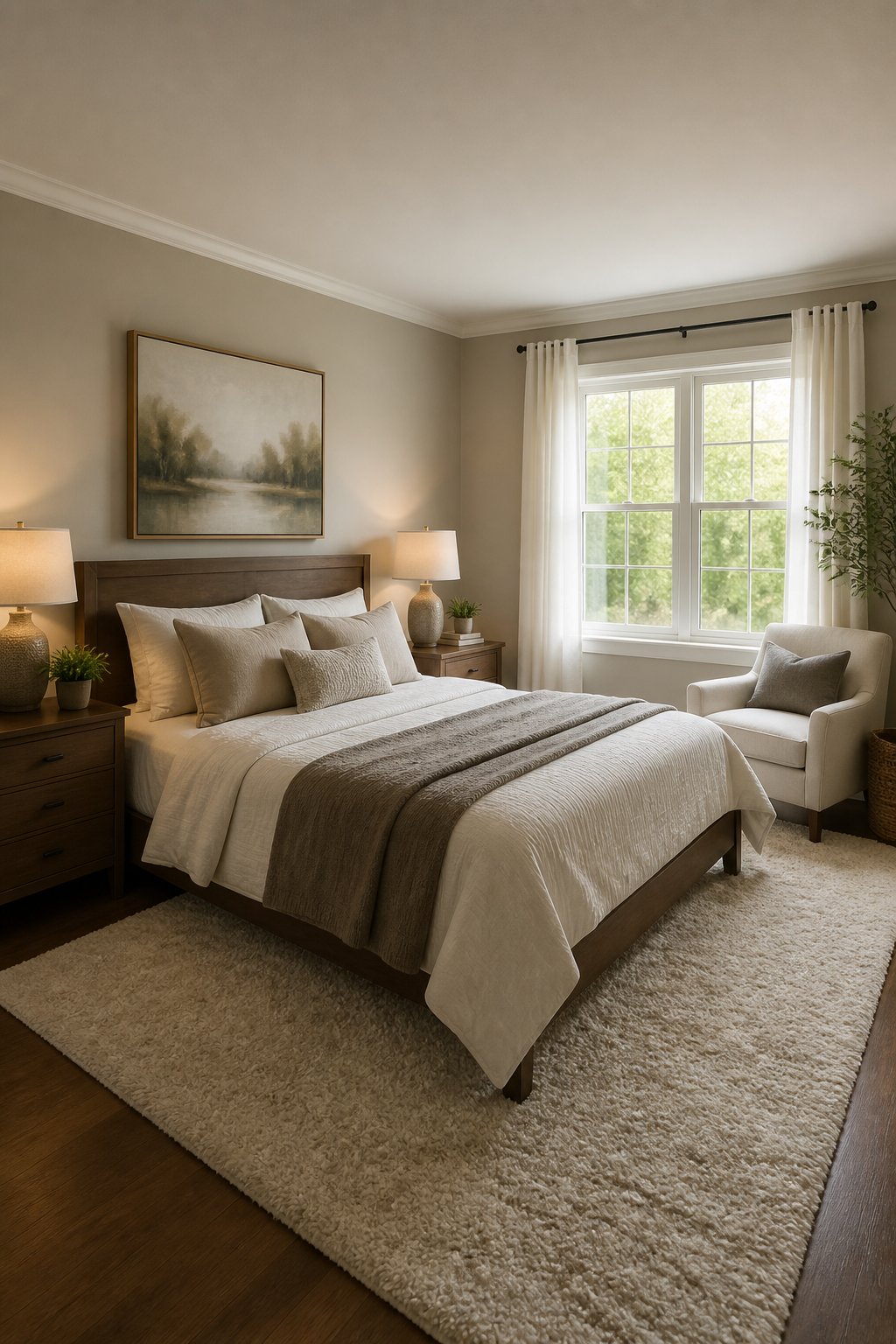
These seventeen layout scenarios cover the situations that come up most often - awkward proportions, sloped ceilings, studio walls, and small rooms with no obvious focal point. Each one explains not just what to do, but why it actually works.
1) Center the Bed on the Main Wall With Floating Nightstands
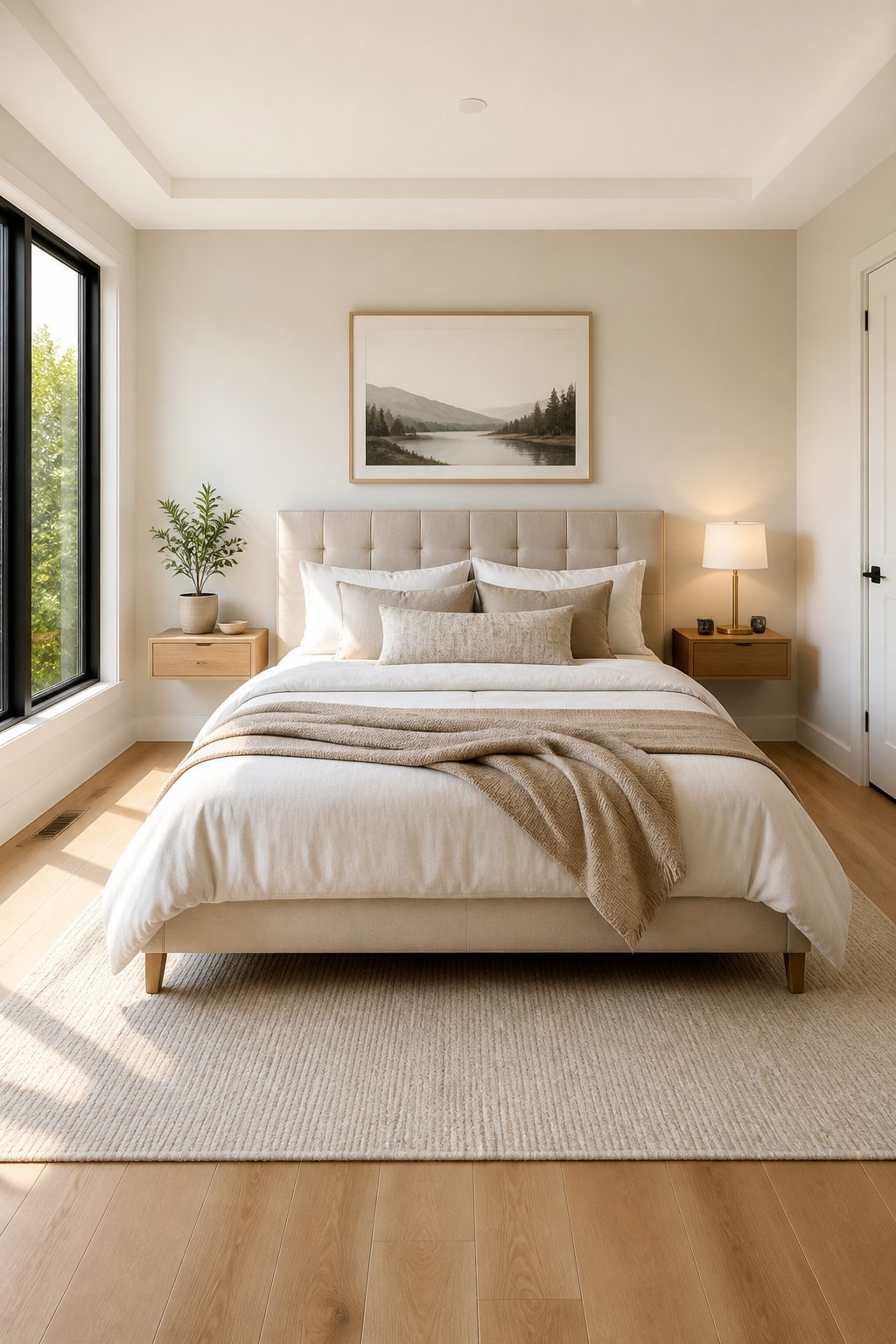
Center the bed on the main wall and mount slim floating nightstands on either side to keep the floor completely clear. This visually anchors the room and creates balanced sightlines, so the space reads as calm and orderly from the doorway.
Centered placement gives equal clearance on both sides, which helps traffic move around the bed and makes the room feel larger than it is. Floating nightstands let light reach all the way down to the rug edge and leave room underneath for a baseboard heater or just open floor, which adds to the sense of breathing space.
Pair this layout with wall sconces or swing-arm lights above each nightstand to free up surface space entirely. Leave at least 24 inches of clear walkway from the bed edge to any door or closet. A runner or narrow rug under the foot of the bed that peeks out on both sides reinforces the symmetry without crowding the pathway.Why It Works:
2) The 45-Degree Corner Angle That Opens Up the Middle
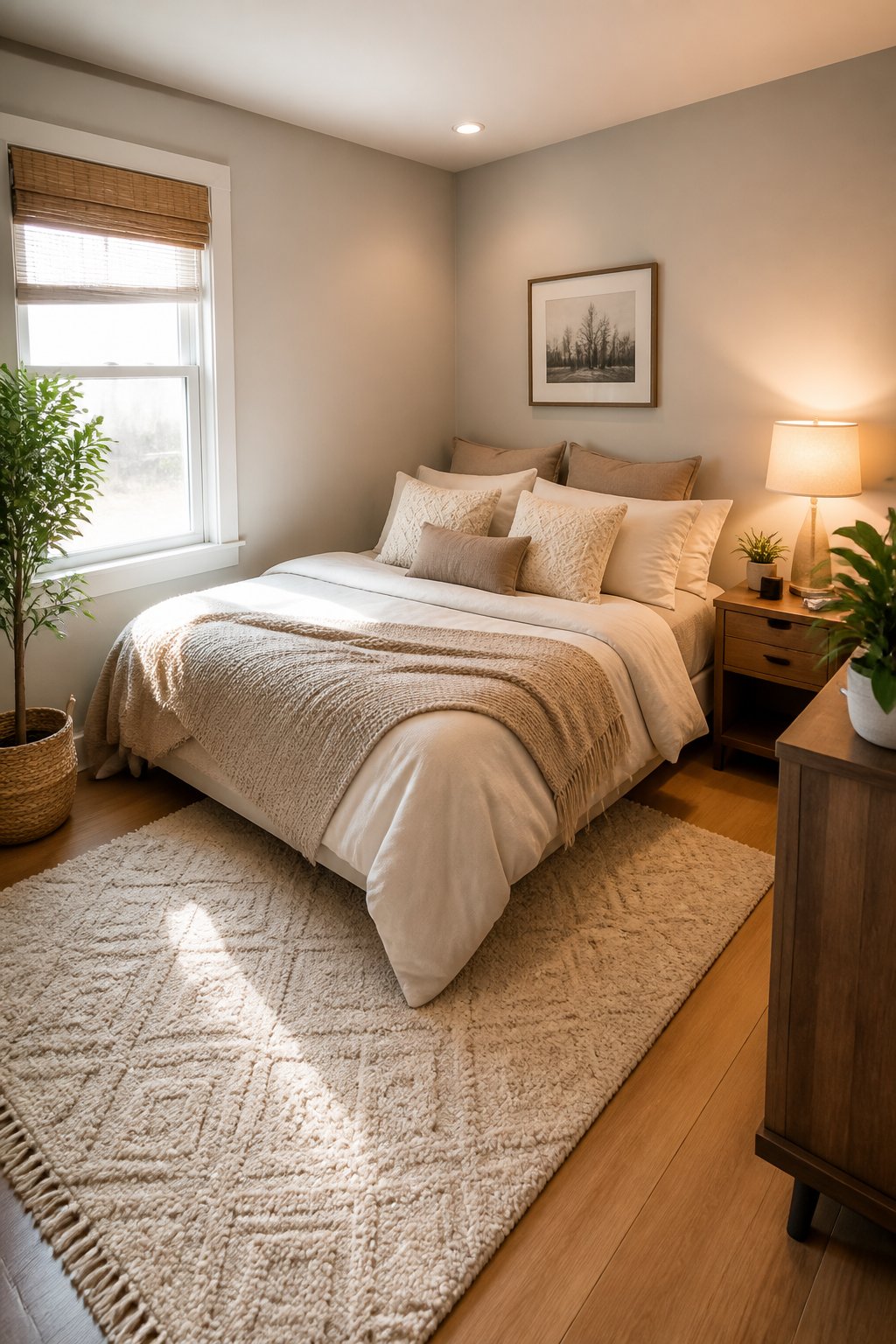
Place the bed so its head and one long side meet the walls at a soft diagonal. The angle breaks the room's boxiness and makes arriving at the bed feel intentional, like you've found a spot rather than just backed into one.
Visually, the diagonal draws the eye toward the corner and makes the rest of the floor feel larger. You gain a clear path along the open side, which helps small rooms breathe and keeps circulation smooth. It works especially well when the room has a short wall that can't fit a standard centered placement.
Keep a slim nightstand on the open side with a wall sconce above it to save floor space. A small rug angled under the lower corner of the bed anchors the spot and signals that the corner is a considered place to linger, not a furniture mistake.
3) Low Platform Beds in Rooms With High Ceilings
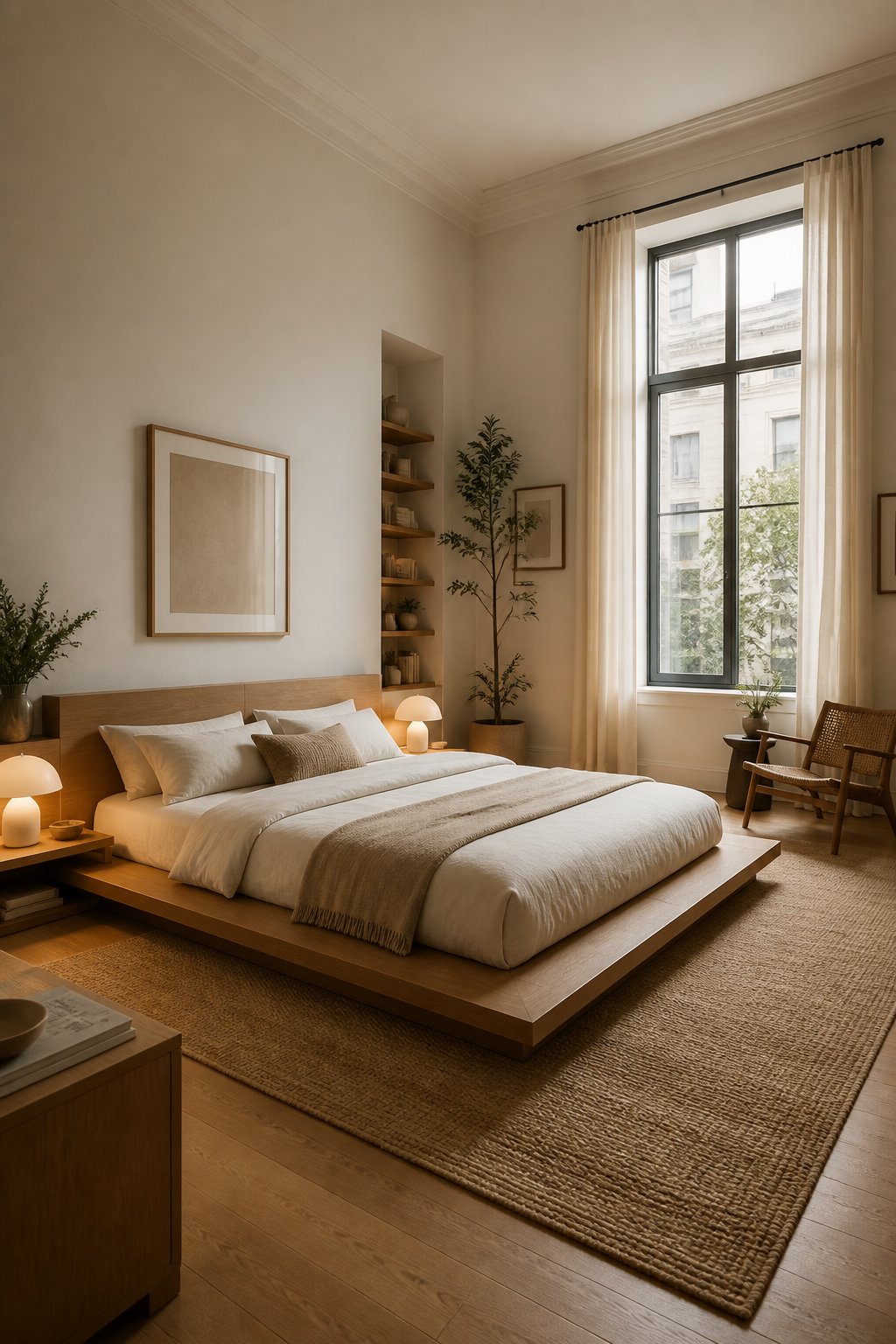
Tall ceilings are harder to furnish than most people expect. A standard bed and headboard barely registers against all that vertical space, leaving the room feeling sparse rather than airy.
A low platform pulls the visual weight downward and brings the focal point closer to eye level, which makes a tall space feel more intimate and livable. Sightlines stop lower, and the room reads as grounded. Pair this with a modest headboard or no headboard at all so the wall above stays uncluttered.
Set narrow nightstands close to the bed edge and use wall-mounted sconces to keep the floor open. A rug that extends well beyond the platform ties the bed to the floor and clarifies the sleeping zone without adding bulk to an already vertical room.
4) Float the Bed in the Middle of a Studio and Use a Console to Define Zones
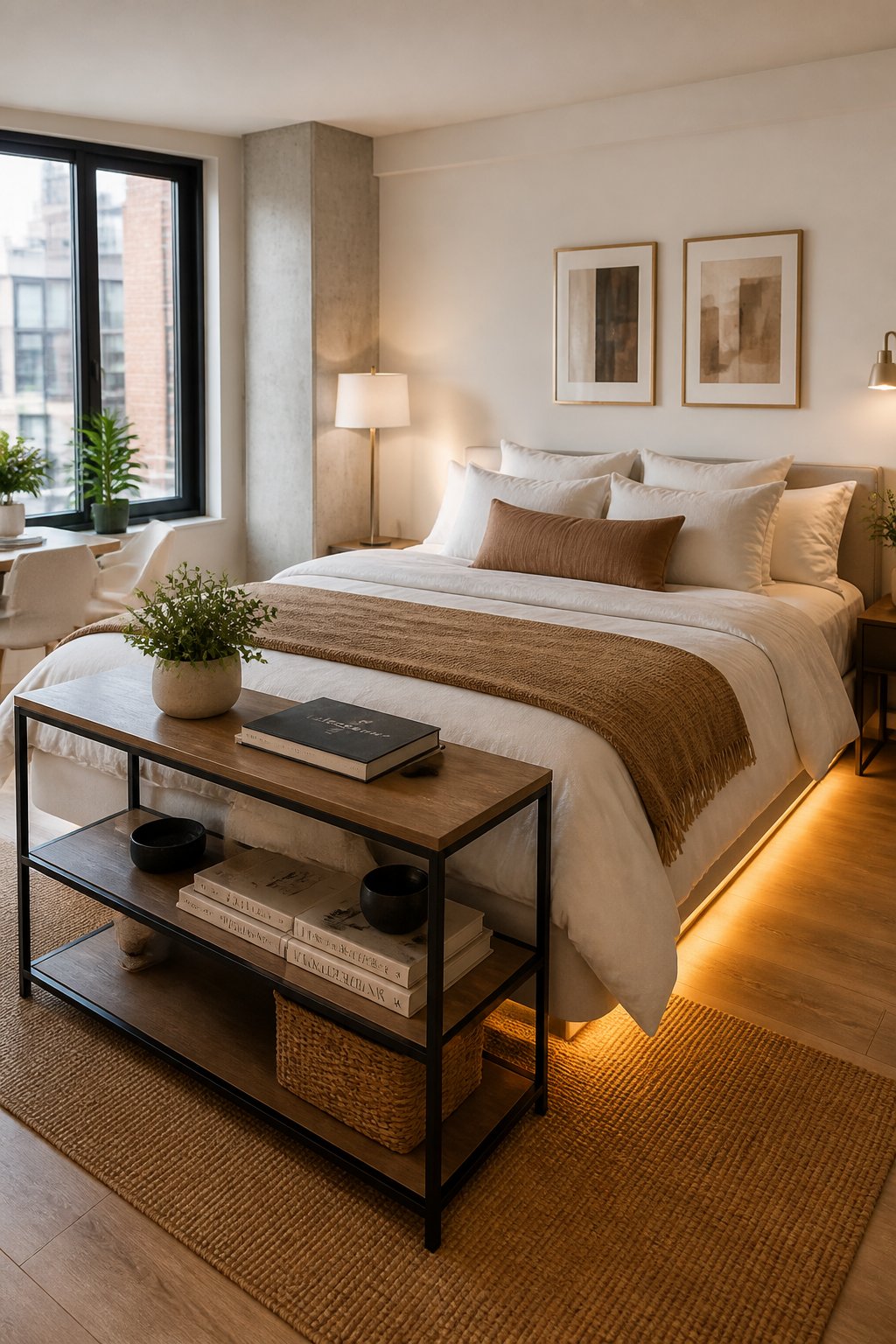
Place the bed away from the walls and use a slim console at the foot of the bed to create a soft separation between the sleeping and living areas. Each zone gets a clear edge without blocking light or closing off the floor plan.
Floating the bed opens circulation on both sides and lets sightlines run across the whole studio, which makes the space feel more organized. The console reads like a low divider and anchors the bed so it doesn't look like it's just drifting in the room.
Leave about 30 to 36 inches of clearance on the sides for easy movement, and keep the console narrow so it won't crowd the bed. Low-profile bedside lighting on each side keeps the walkway clear, and a rug that runs under the bed and extends past the console visually ties both zones together.
5) Anchor the Bed Under a Full-Width Tall Headboard
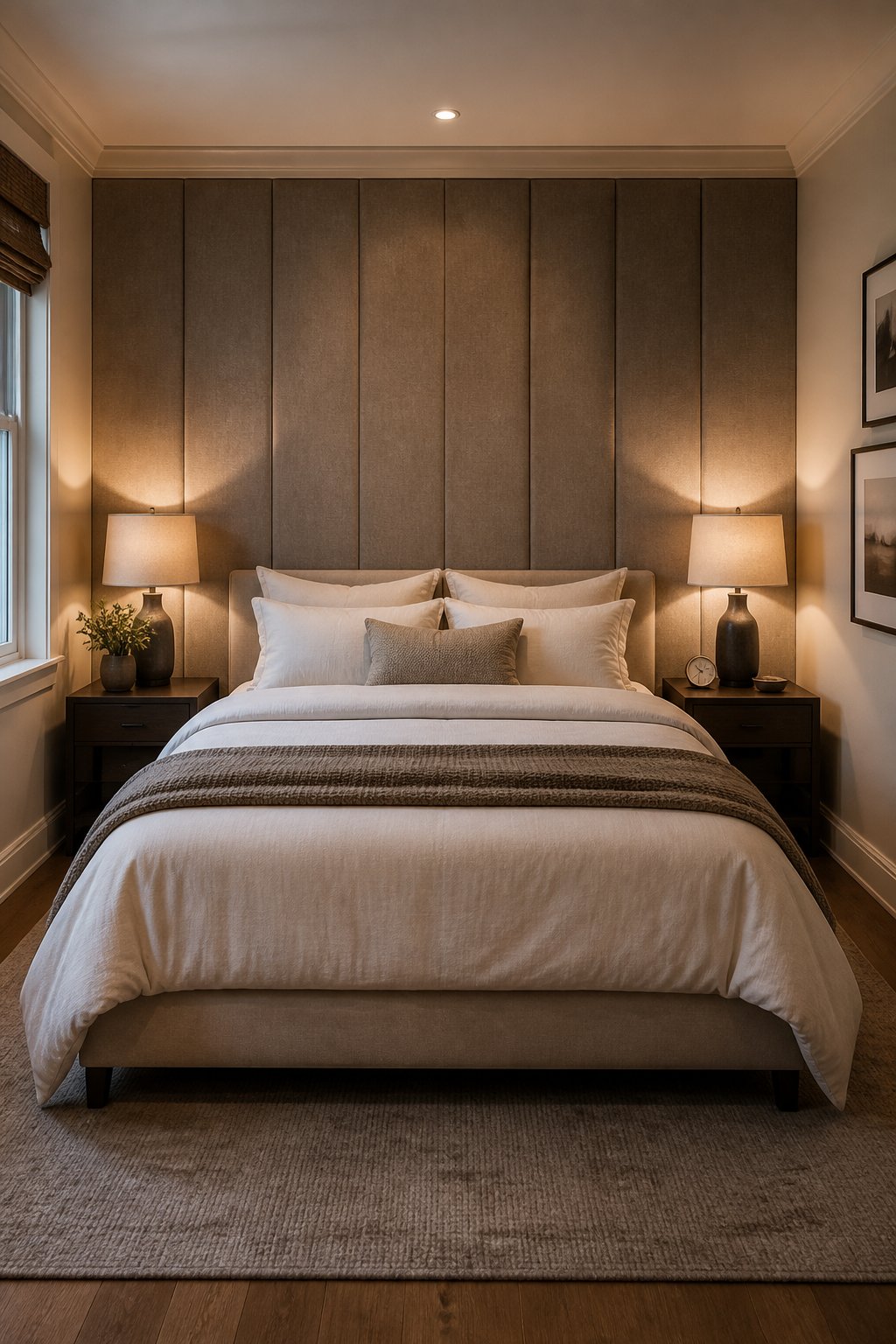
A full-width headboard that runs wall to wall turns odd proportions into a deliberate design choice. Uneven wall lengths, awkward window placement, or a room that's slightly too wide for the bed - all of these get absorbed into one continuous visual plane.
The tall headboard adds vertical weight so the ceiling feels balanced with the floor. It also shifts focus away from any architectural awkwardness and toward a strong central element, which makes the layout feel measured. Low, slim nightstands tucked under the headboard edge keep the composition clean.
Mount lamps on the headboard itself or on the wall above it to free up floor space and keep sightlines open. A rug that extends beyond the foot of the bed and reaches under each nightstand grounds the whole composition. Leave at least 24 inches of clearance on the main walking side so the room still feels easy to move through.
6) Tuck a Twin Bed Perpendicular to a Window for a Light-Filled Reading Nook
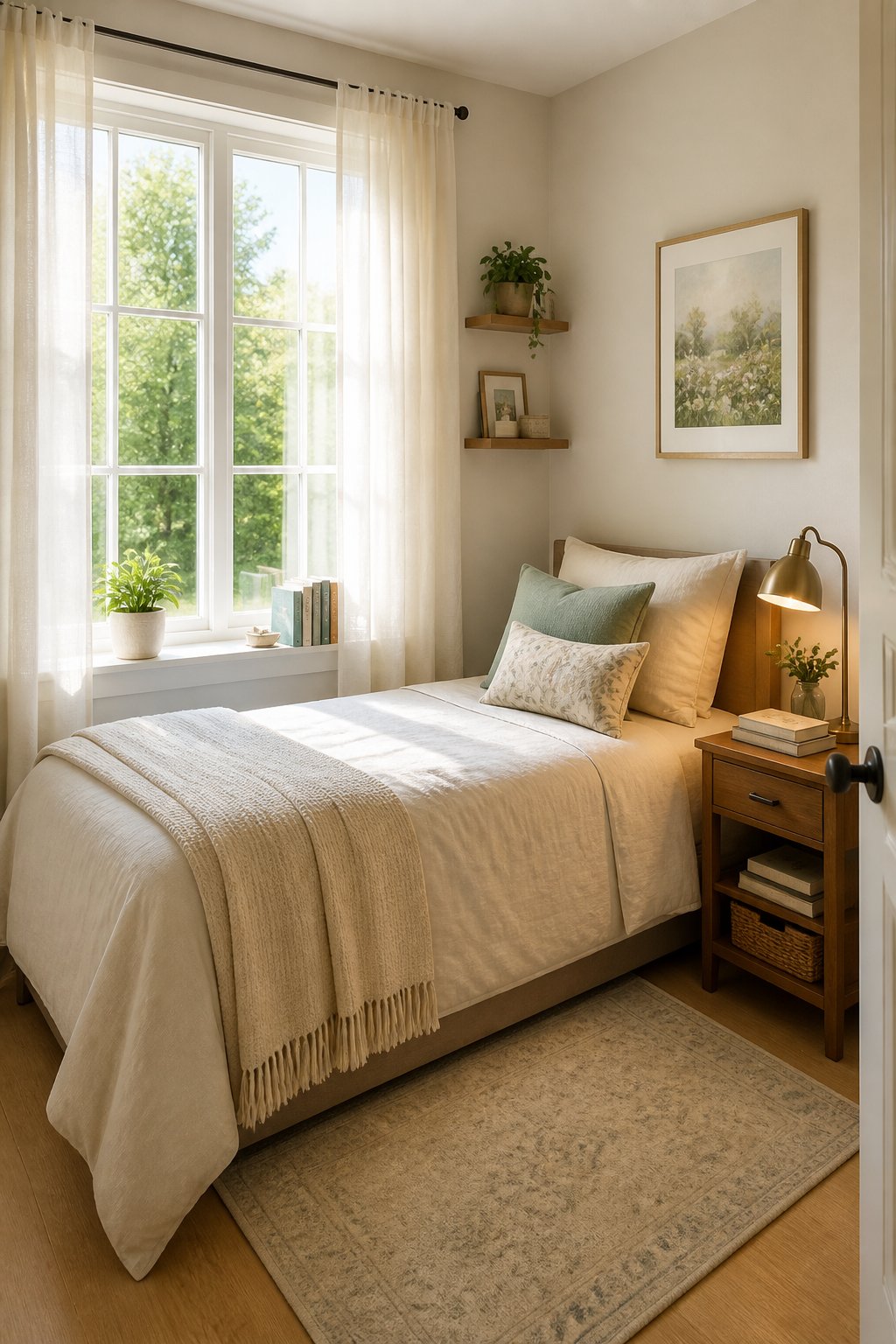
Place the twin sideways against the wall so the head sits near the window and the foot points into the room. During the day, it reads as a window seat. At night it's a bed. Small rooms benefit from furniture that does more than one thing without looking like it's trying.
The long axis of the bed balances narrow rooms and makes the window feel like a focal point. Natural light comes in from the side rather than overhead, which is softer and more useful for reading. The main floor stays open.
Put a slim nightstand or narrow console at the head end, between the bed and the wall, to hold a lamp and a cup. A small adjustable wall or clamp lamp saves surface space and directs light exactly where you need it. Anchor the arrangement with a rug that reaches under the bed by at least a third, and leave 24 to 30 inches of clearance along the outer side so the window stays easy to reach.
7) Sleep Under a Dormer or Sloped Ceiling
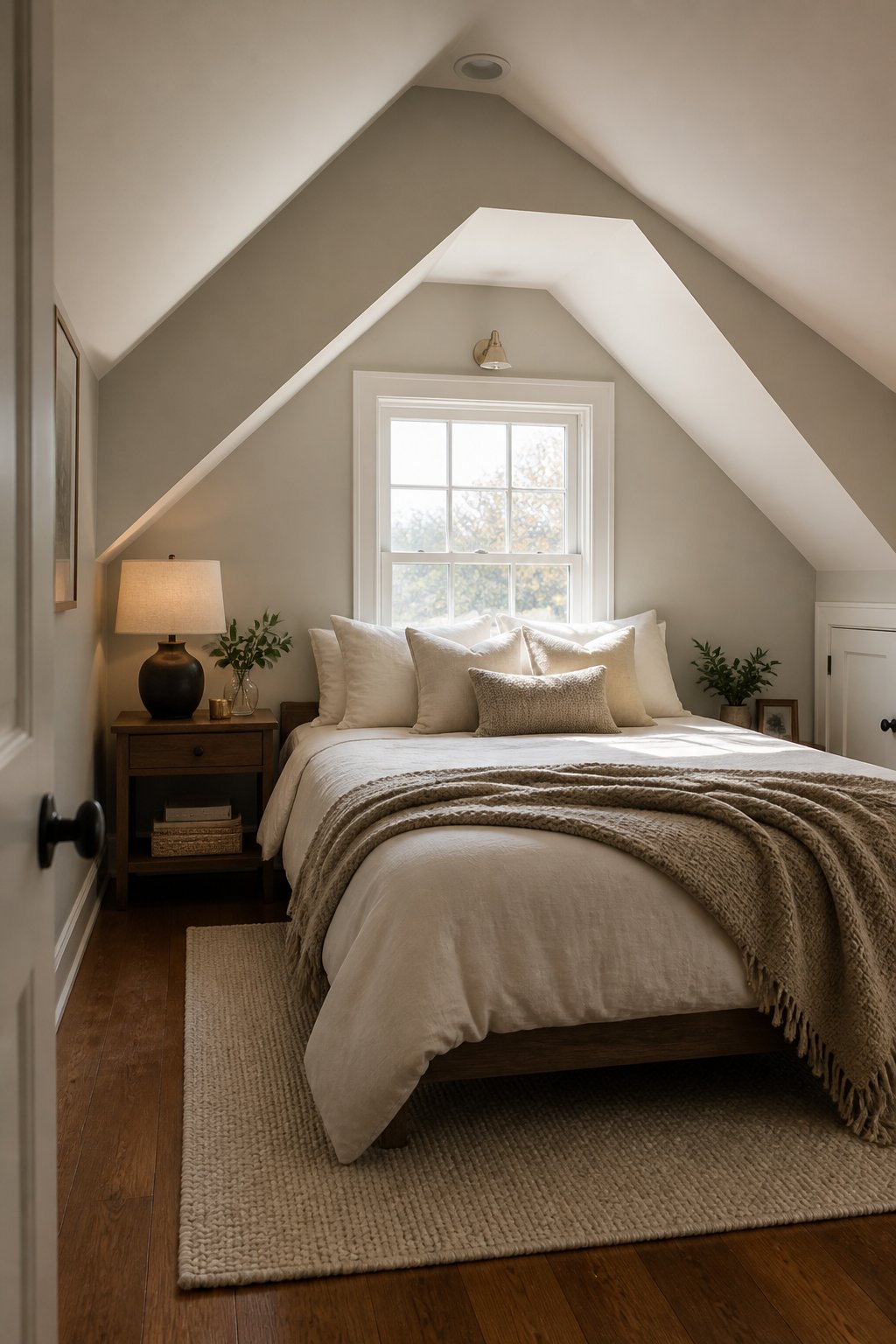
Sloped ceilings make people nervous, but they're actually one of the easiest layout problems to solve. The trick is to stop fighting the slope and put the bed directly under it.
Tucking the headboard under the low side makes the ceiling read as an intentional cozy niche rather than a spatial inconvenience. The eye follows the roofline, the lower plane gives the bed visual weight, and the taller side of the room stays open for furniture and movement. Keep clearance minimal on the sloped side and wider on the tall side so circulation feels natural.
A low nightstand or wall-mounted lamp on the sloped side keeps headroom clear. A narrow rug that runs the length of the bed anchors the sleeping zone and guides movement toward the taller space, so the room has a clear direction even if the shape is unconventional.
"The bed doesn't need a perfect wall. It needs a deliberate one."
8) Position the Bed Between Two Windows
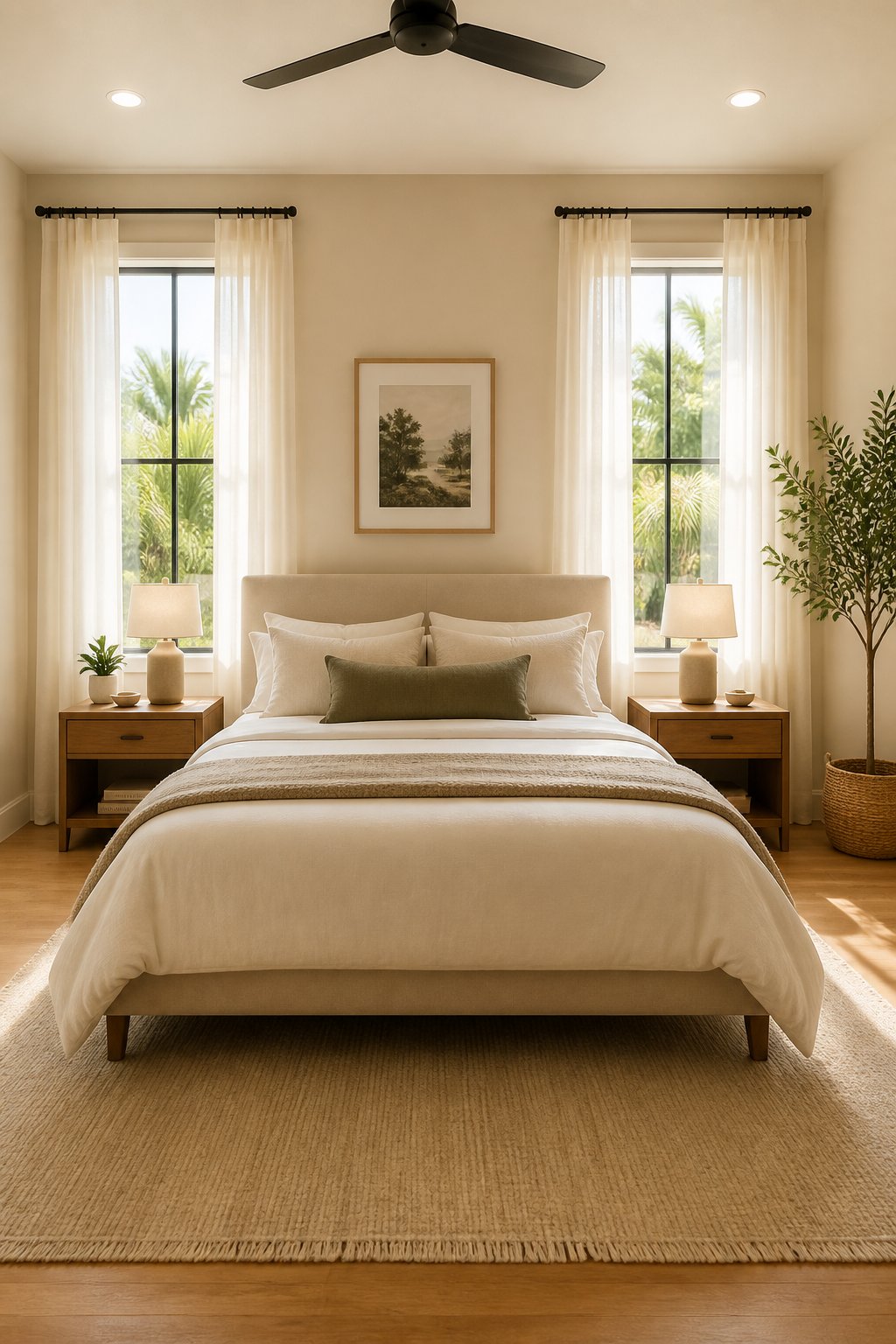
Place the bed on the wall framed by two windows so the headboard becomes a clear focal point that ties the room together. The symmetry the windows create gives the eye a resting place at the center, while the openings let air move across the bed for a fresher, cooler night's sleep.
This layout works because it anchors the bed visually and offers equal light from both sides, which reduces the harsh shadows that an off-center bed often creates. It also frees up the remaining wall space for storage or art without crowding the sleeping area.
Low-profile nightstands under each window keep sightlines open and let curtains fall evenly without bunching around furniture. Matching lamps or wall sconces mounted just above the headboard provide balanced light. A rug that extends under the lower two-thirds of the bed grounds the whole setup and ties the two windows into one composed arrangement.
9) Using a Half-Wall or Low Divider to Create a Sleeping Alcove
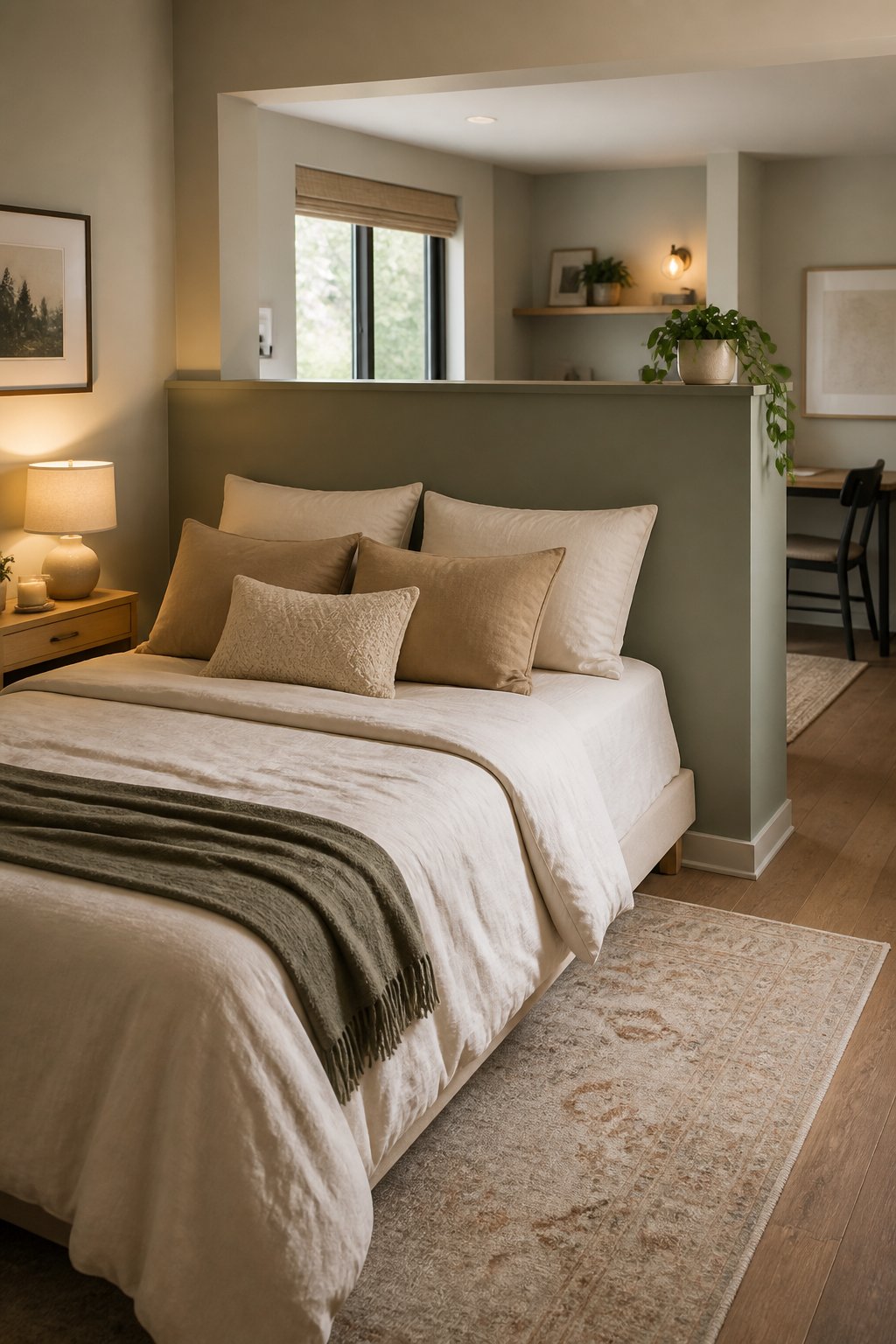
Place the bed against a half-wall or low divider to make a cozy sleeping nook that still leaves sightlines open to the rest of the room. The low barrier defines the bed area without blocking light or making things feel cramped. Your eye reads the divider as intentional architecture, which helps the whole space feel organized rather than improvised.
Visually, the half-wall gives the head of the bed a clear backdrop so linens and pillows read as a composed vignette. Spatially, you gain a sense of separation while keeping walking paths clear on at least two sides, which matters in rooms that need to feel open during the day.
A slim nightstand on the open side with a wall sconce above it keeps the floor clear and the divider side uncluttered. A narrow runner or small rug extending past the foot of the bed anchors the alcove. Aim for a minimum 24-inch clearance on the open side for easy movement.
10) Raised Platform Bed With Storage Drawers
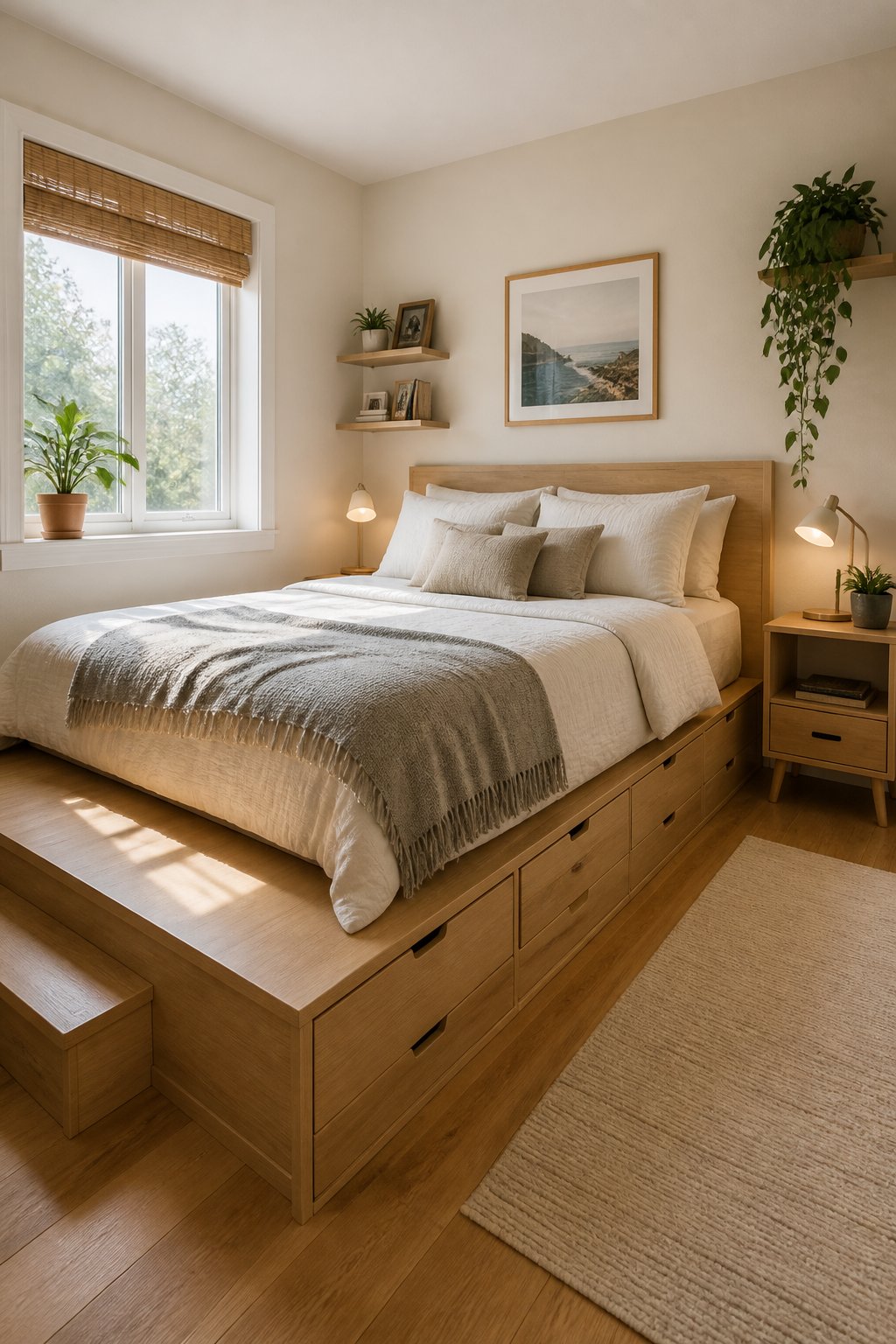
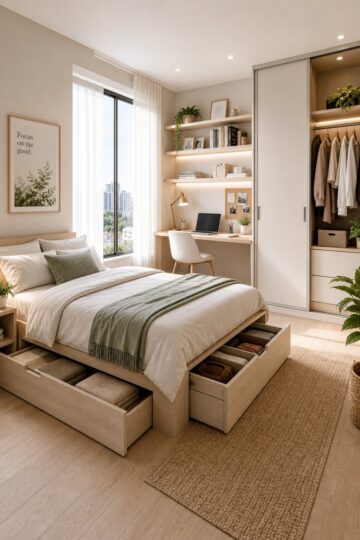
Raise the bed a few inches on a platform and you gain hidden storage for linens, off-season clothes, and everything that usually ends up under the bed in bins you never open. The platform anchors the room visually and keeps the floor clear, which makes the space feel calmer and less crowded.
The drawers tuck under the sleeping area rather than around it, so walkways stay open and furniture doesn't compete for floor space. A low platform also keeps sightlines steady, so the room reads as tidy even in a small footprint.
Place a slim nightstand flush with the platform edge, or mount a small wall shelf to keep nighttime items close without blocking drawer access. A wall sconce or small lamp highlights the platform edge softly. A small rug that sits partly under the platform defines the bed zone while leaving drawer fronts fully reachable.
11) Parallel to the Longest Wall for Maximum Walking Space
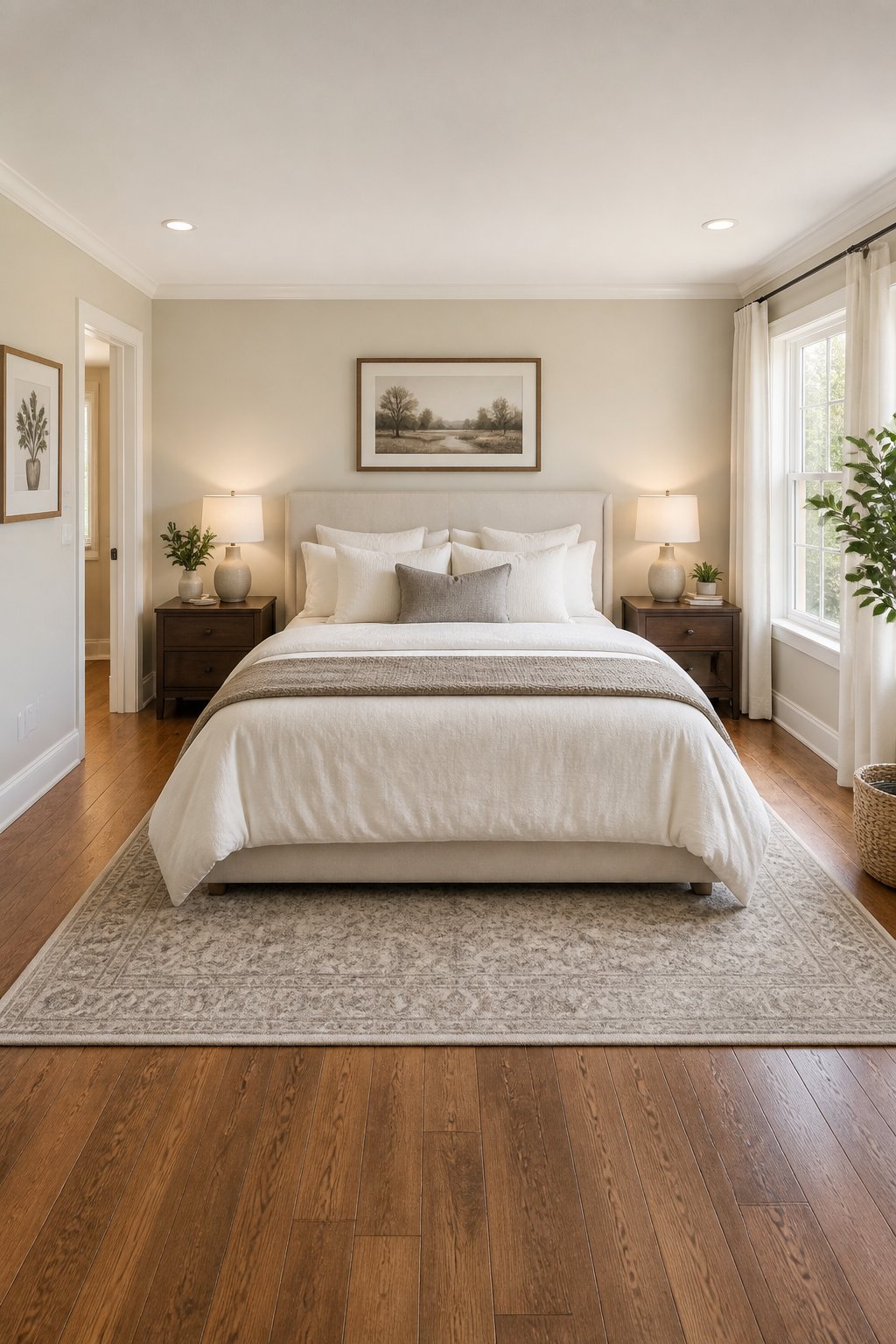
Place the bed so the headboard sits along the longest wall. Clear paths open on each side, movement feels easy, and other pieces in the room - a dresser, a chair - fall into place around the bed rather than competing with it.
The eye travels along the room's length when the bed runs parallel to the long wall, which makes the layout feel stable. It's one of the more instinctive arrangements for a reason: it distributes visual weight evenly and gives every piece of furniture a clear role.
Leave at least 24 inches of clearance on both sides and float narrow nightstands close to the headboard. Mounted wall lamps or slim table lights free up surface area. Center a rug so it runs under the bed and extends evenly on both sides, and the whole thing reads as pulled together without much effort.
12) Set the Bed on the Center of a Rug to Anchor a Compact Room
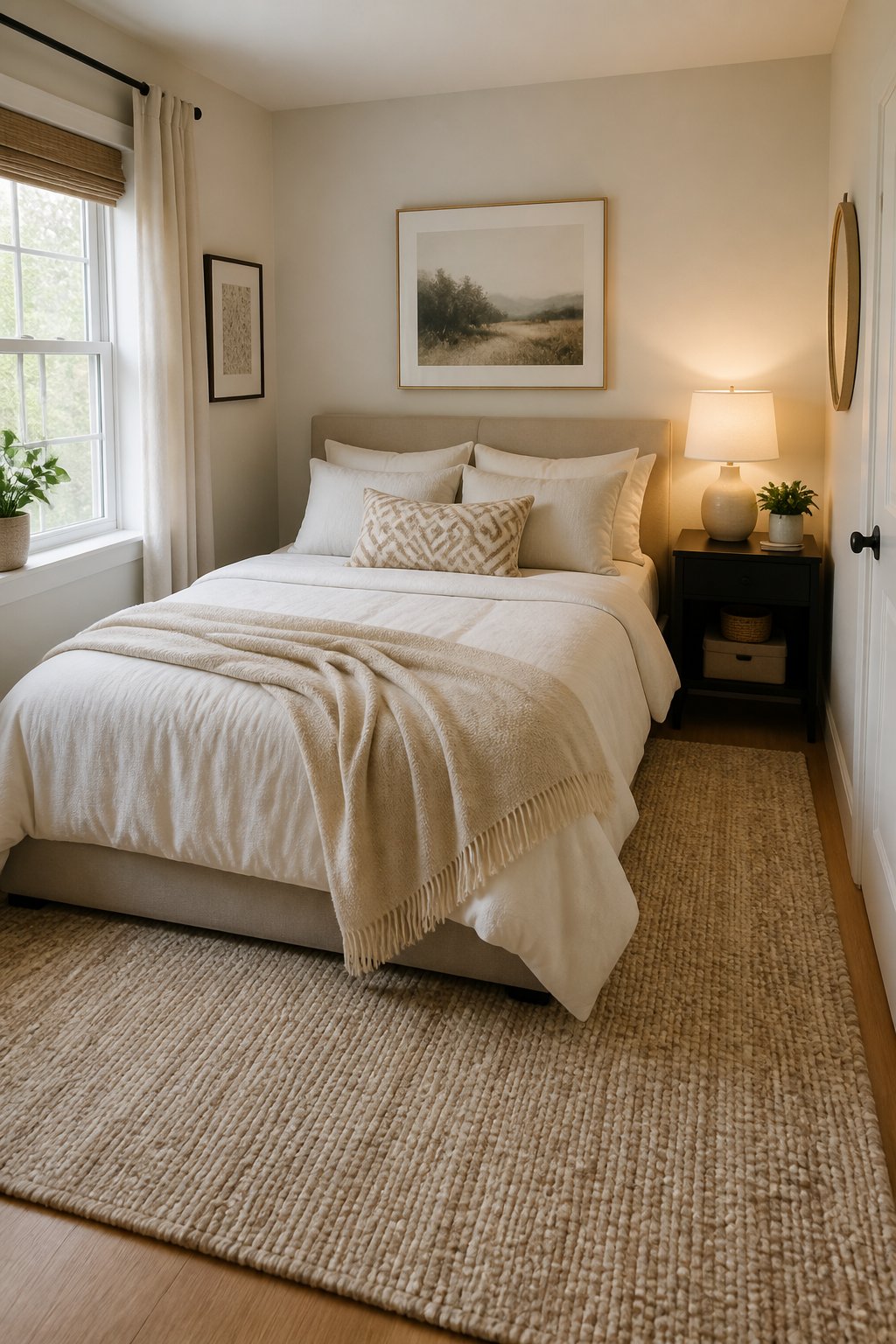
Place the bed so its legs sit on the rug while the foot and sides extend beyond it. The rug creates an anchored zone that reads larger than the actual floor area and pulls the furniture into a single composition, even in a tight room.
The rug gives the bed a deliberate place to live. In compact rooms, that clarity reduces the visual noise that comes from furniture sitting at awkward angles or floating without context. It also guides the eye across the floor, making narrow walkways feel more purposeful.
Choose a rug that leaves at least 18 inches of visible floor around the edges when possible. Center the rug under the bed so the nightstands sit partly on it. Low-profile bedside lamps frame the bed without overfilling the space, and the whole arrangement feels considered rather than squeezed.
13) Head Against the Closet Wall With Slim Nightstands
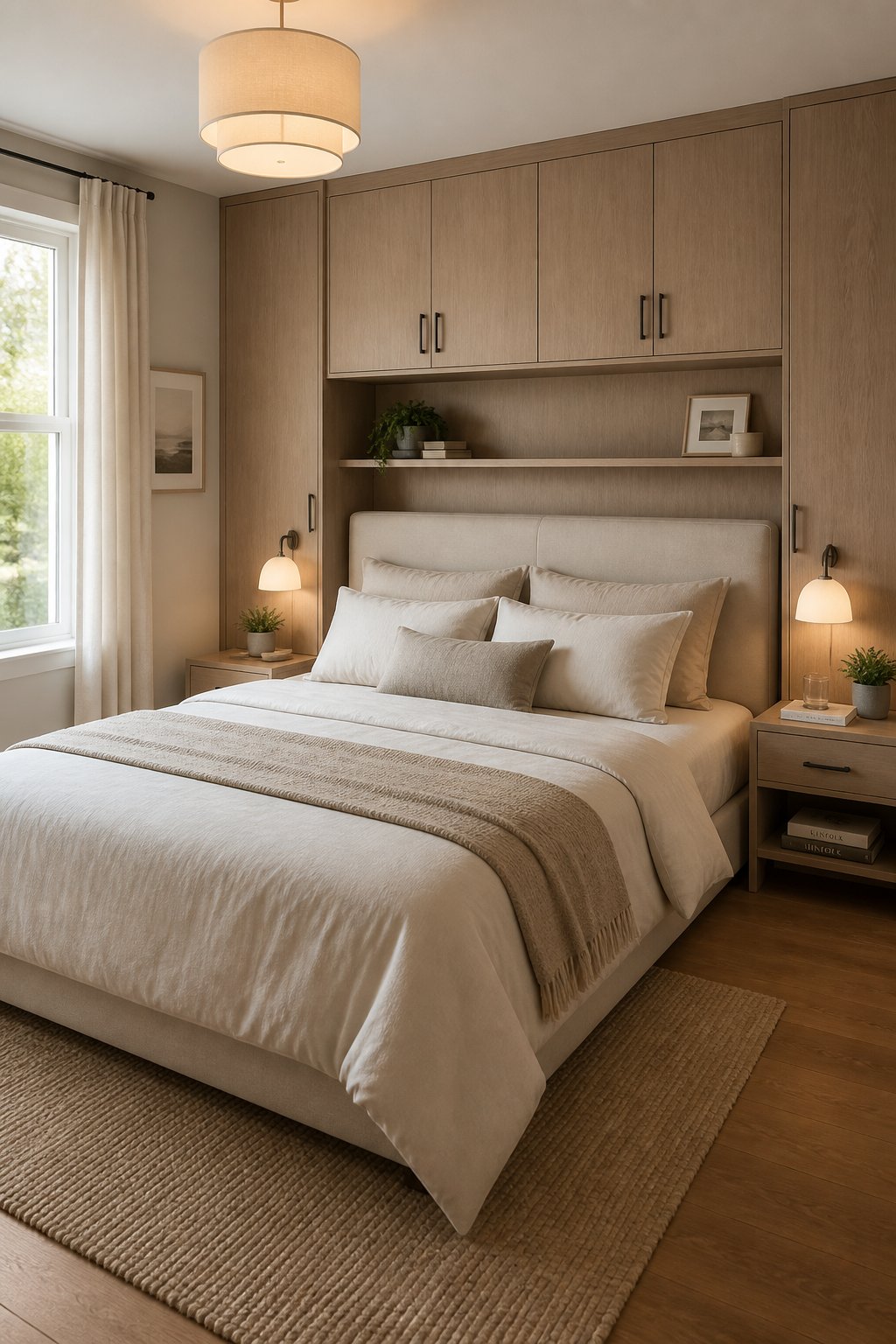
Place the bed so the headboard sits against the closet wall. This uses an existing vertical plane as a backdrop, which reduces visual clutter and lets the rest of the floor breathe.
The closet wall becomes the bed's anchor. It hides wiring and storage seams, so the eye reads the bed as part of a coordinated zone rather than something pushed against whatever was available. You gain clearance on the opposite side for walking, a chair, or a narrow dresser.
Slim nightstands tucked tight to the headboard work well here. Choose narrow models with one drawer or an open shelf - enough for a lamp and a phone without crowding the walkway. Aim for at least 24 inches of clearance from the bed's foot to any furniture opposite it. That gap is the difference between a room that feels purposeful and one that just feels full.
14) Footboard Toward the Door, Bench at the Foot
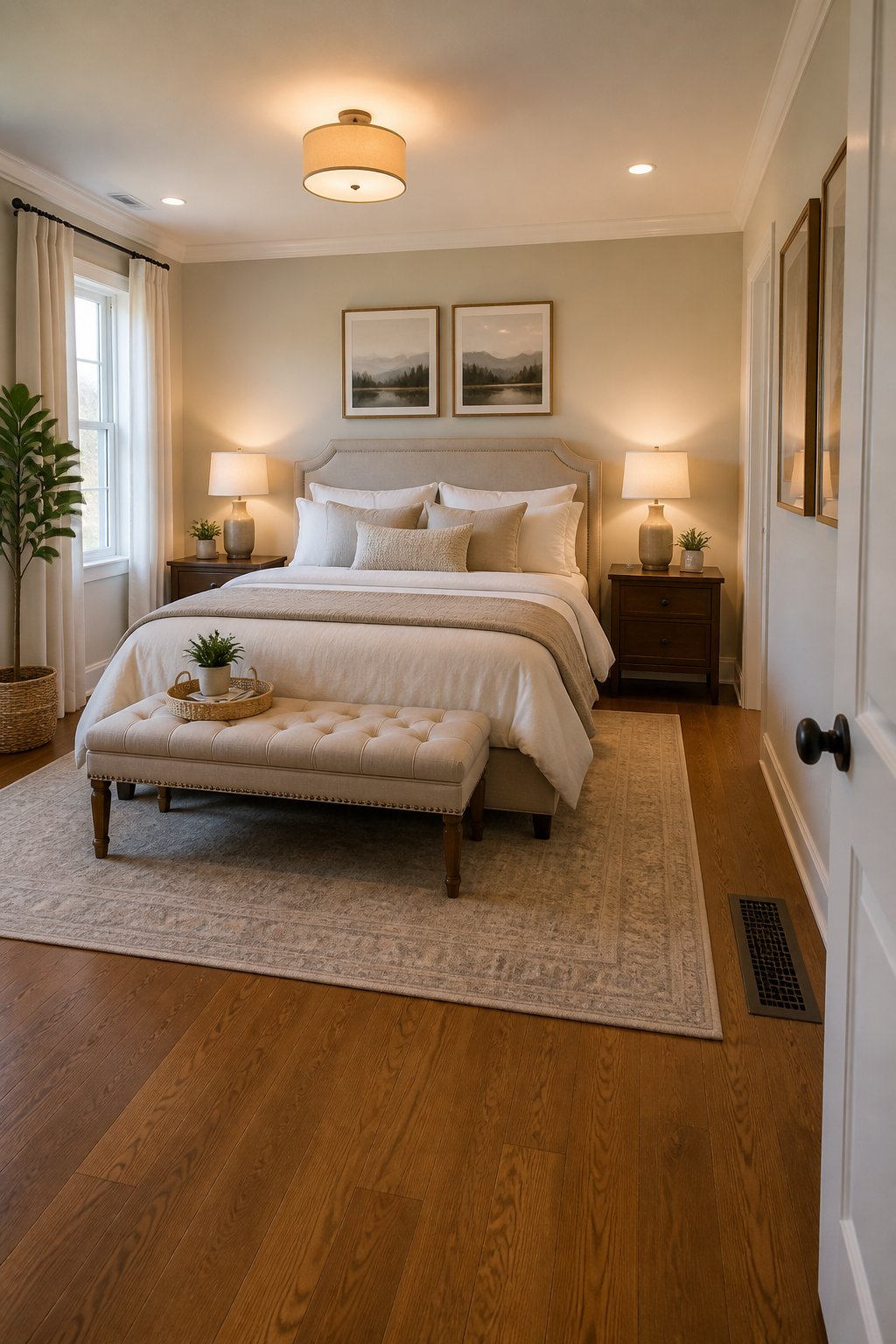
When you walk into a bedroom and the first thing you see is the bed's footboard, the room has a clear focal point. That immediate sense of orientation makes a room feel confident even when it's small.
A low bench at the foot of the bed breaks the sightline from the door without closing off the path. Choose a slim bench - upholstered or slatted - that sits about 12 to 18 inches from the footboard so you can move around it easily. It also gives you a place to sit while pulling on shoes, which sounds minor until you've lived without one.
Offset nightstands slightly toward the headboard so they remain reachable from each side. A narrow rug under the lower two-thirds of the bed ties the bench and bed together and keeps the floor space between the bench and the door clear for easy entry.
15) Bed Under Shelving or a Built-In Headwall
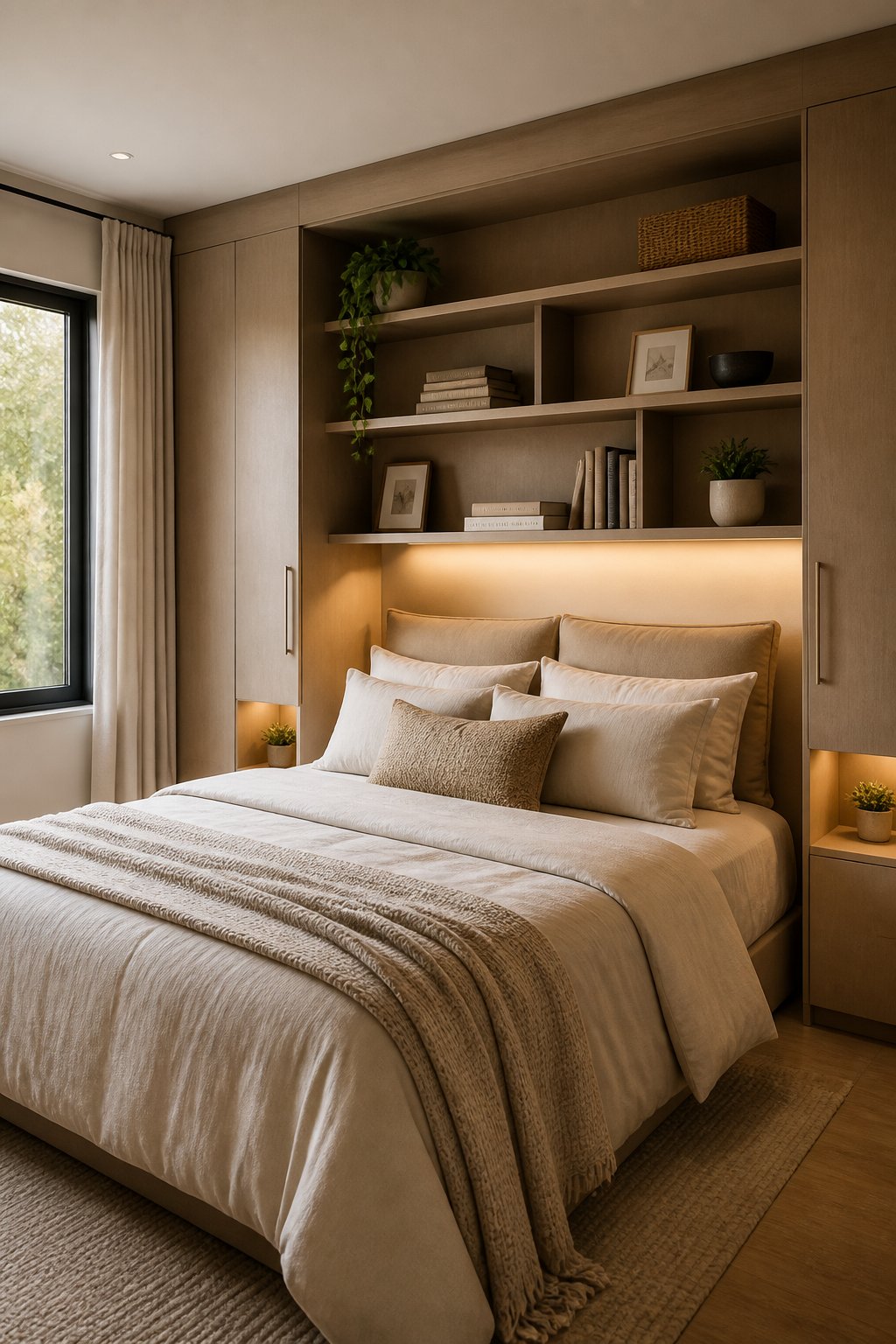
Place the bed so the headboard sits inside a shallow built-in or under a band of shelving. The wall reads as one unit, the bed feels cocooned, and vertical space gets used without crowding the floor. It's one of those arrangements that works harder than it looks.
The shelving frames the bed and draws the eye inward, which creates a restful silhouette. In small or oddly shaped rooms, you gain storage and display space without adding a single piece of freestanding furniture.
Low-profile bedside lighting mounted under the shelf or on the side of the recess keeps the setup functional without interrupting the built-in feeling. Narrow nightstands or wall-mounted floating shelves maintain clearance for walking and let the bed stay the calm center of the room.
16) Perpendicular to the Radiator, With a Narrow Shelf for Airflow
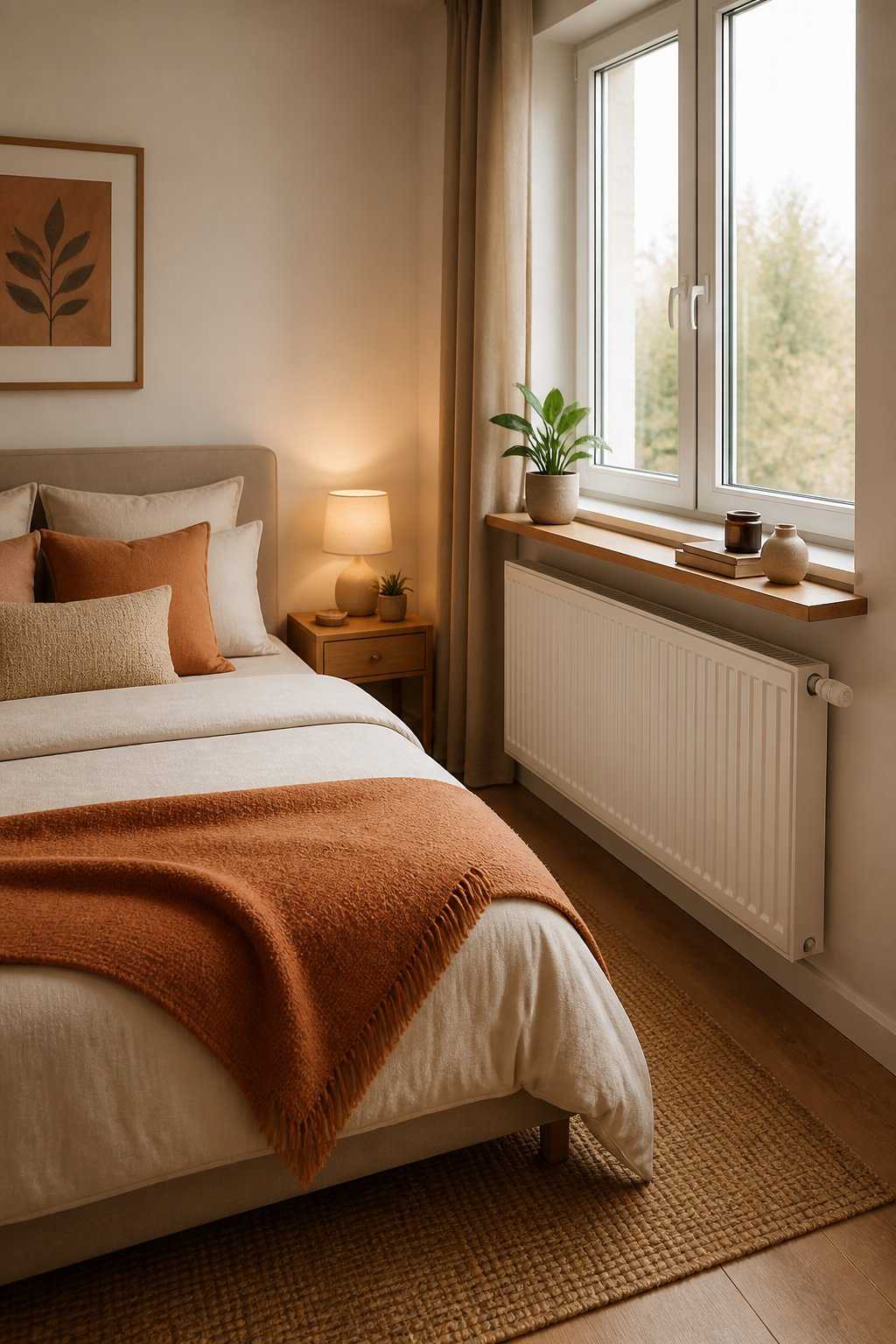
Place the bed so its foot or side runs across the radiator rather than blocking it, then add a slim shelf above the heater to keep airflow steady and the wall looking intentional. This keeps warm air circulating while the bed anchors the center of the room.
A headboard pressed flat against a radiator blocks heat and can damage both the furniture and the wall over time. The perpendicular angle sidesteps that problem, creates a clear walk zone, and gives the shelf a natural place to hold small items without adding a nightstand on that side.
Leave at least 6 to 8 inches between the shelf and the radiator surface. A narrow nightstand on the open side of the bed handles the lamp. Use a low-pile rug under the bed to protect the floor without trapping warmth near the heater.
17) Float the Bed Near a Window and Angle a Reading Chair Beside It
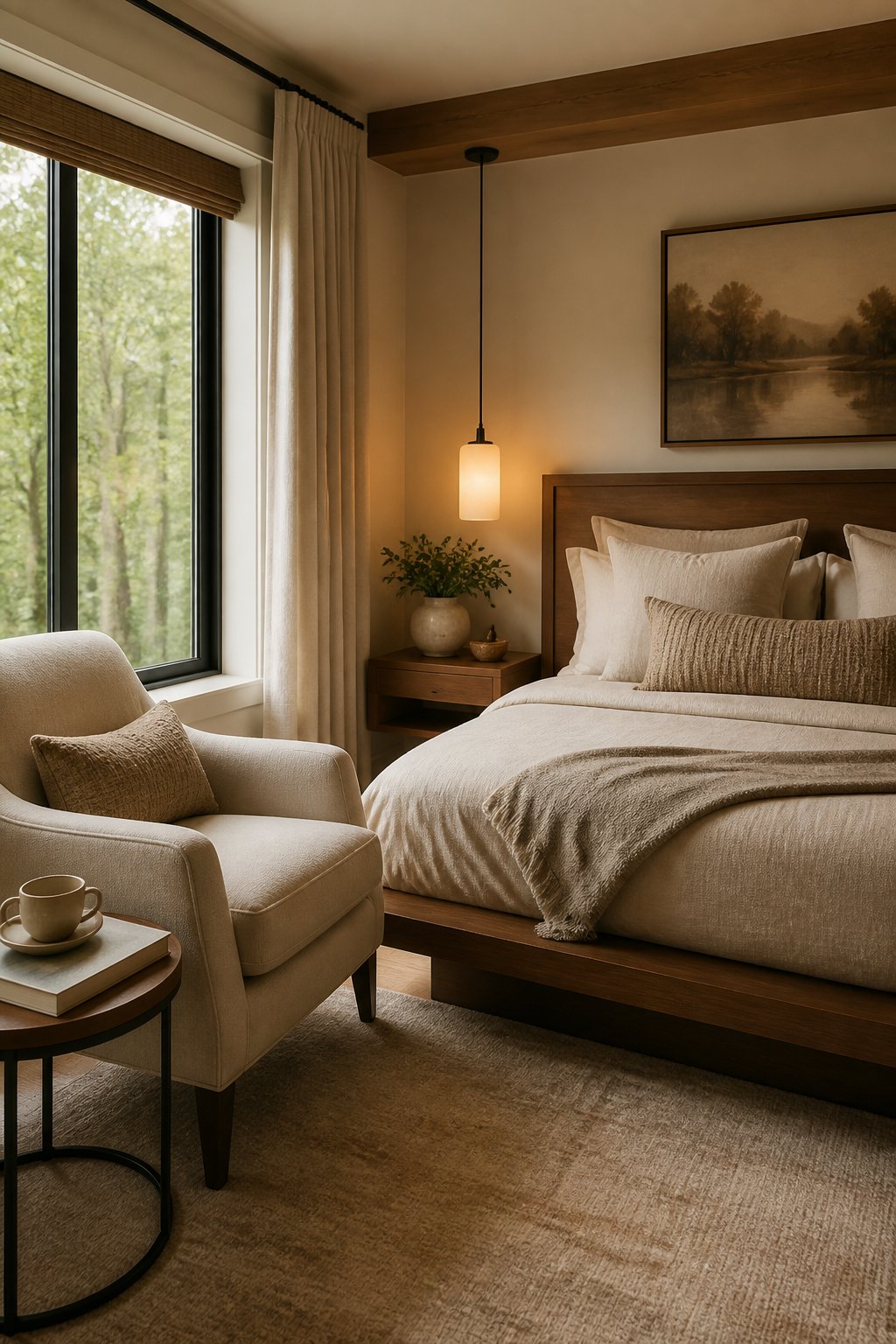
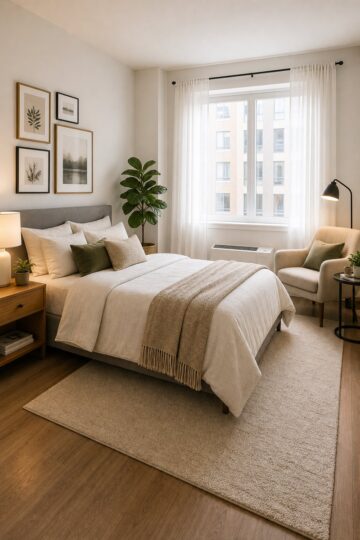
Place the bed a few feet from the window so light feels shared across the whole arrangement, not blocked by the headboard. This opens sightlines and gives breathing room along the wall, making the bed feel like part of the room rather than the entire room.
Angling a reading chair toward the bed creates a small triangle of furniture that has its own logic. Visually it balances the window's light against the bed's mass. A chair beside a bed reads like company rather than clutter, which changes the feeling of the room even when nobody's sitting in it.
Leave about 24 to 30 inches between the bed and chair for easy movement. A slim nightstand between them or beside the closest edge of the bed serves both spots. A small lamp on that table means both places read well at night, and the corner becomes somewhere you'd actually want to spend time.
The Relationship Between Flow and Bed Placement
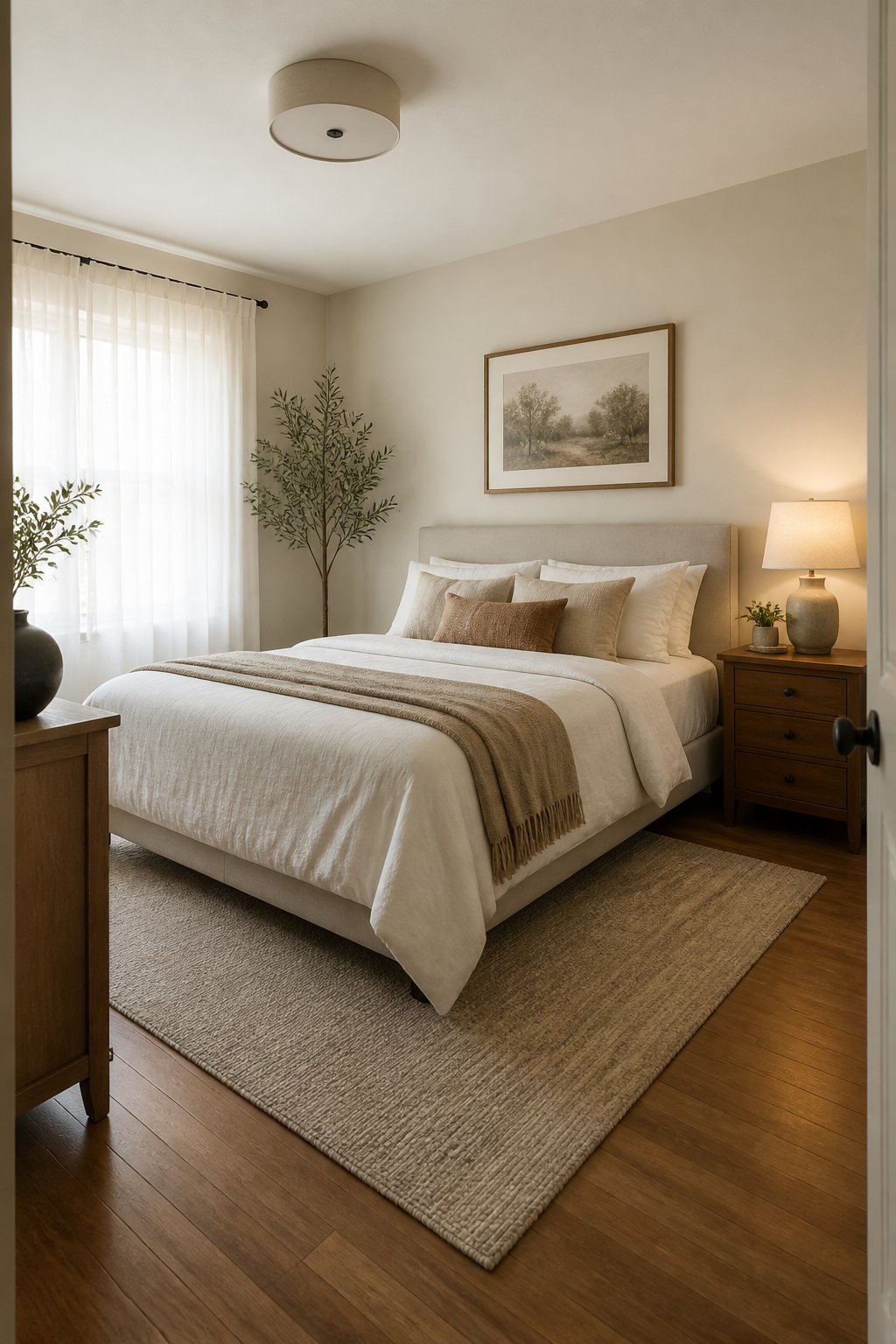
All of the layouts above work partly because of where the bed sits, and partly because of how the space around it moves. The two aren't separate decisions.
How Circulation Paths Change the Feeling of a Room
When you leave at least 24 to 30 inches of clearance on one side and at the foot of the bed, movement feels easy and the room feels considered. That width isn't arbitrary. It's roughly the amount of space a person needs to turn, bend, and move without feeling like they're navigating around furniture.
Think about how you actually use the room each day: entering, getting dressed, making the bed, reaching for something on the nightstand in the dark. Position nightstands so they don't interrupt those paths, and stagger them if the space is tight. A low bench at the foot only earns its spot if it still leaves 24 inches of clear floor in front of it. These small clearances keep the room usable and make the bed placement feel like a deliberate choice rather than a default.
Visual Anchoring Through Wall Choices
The wall behind the bed carries more visual weight than any other wall in the room. A solid wall with a centered headboard creates a clear focal point and allows equal clearance on both sides. A shorter wall can work too, as long as you leave a clear 30-inch route around the opposite side so the room doesn't feel cornered.
Paint, wallpaper, or a single large piece of art can draw attention to the bed wall without overpowering the room's circulation. If the bed sits under a window, wall sconces or a narrow shelf free up the nightstand surface and keep the silhouette clean. These choices reinforce flow rather than fighting it.
The Psychology Behind This
Research on spatial perception consistently shows that clear pathways reduce cognitive load - essentially, a room where you can move freely without thinking about it feels calmer even when you're just standing still. When the bed leaves open circulation paths, your brain registers the room as restful before you've even sat down.
Maximizing Comfort in Small Spaces
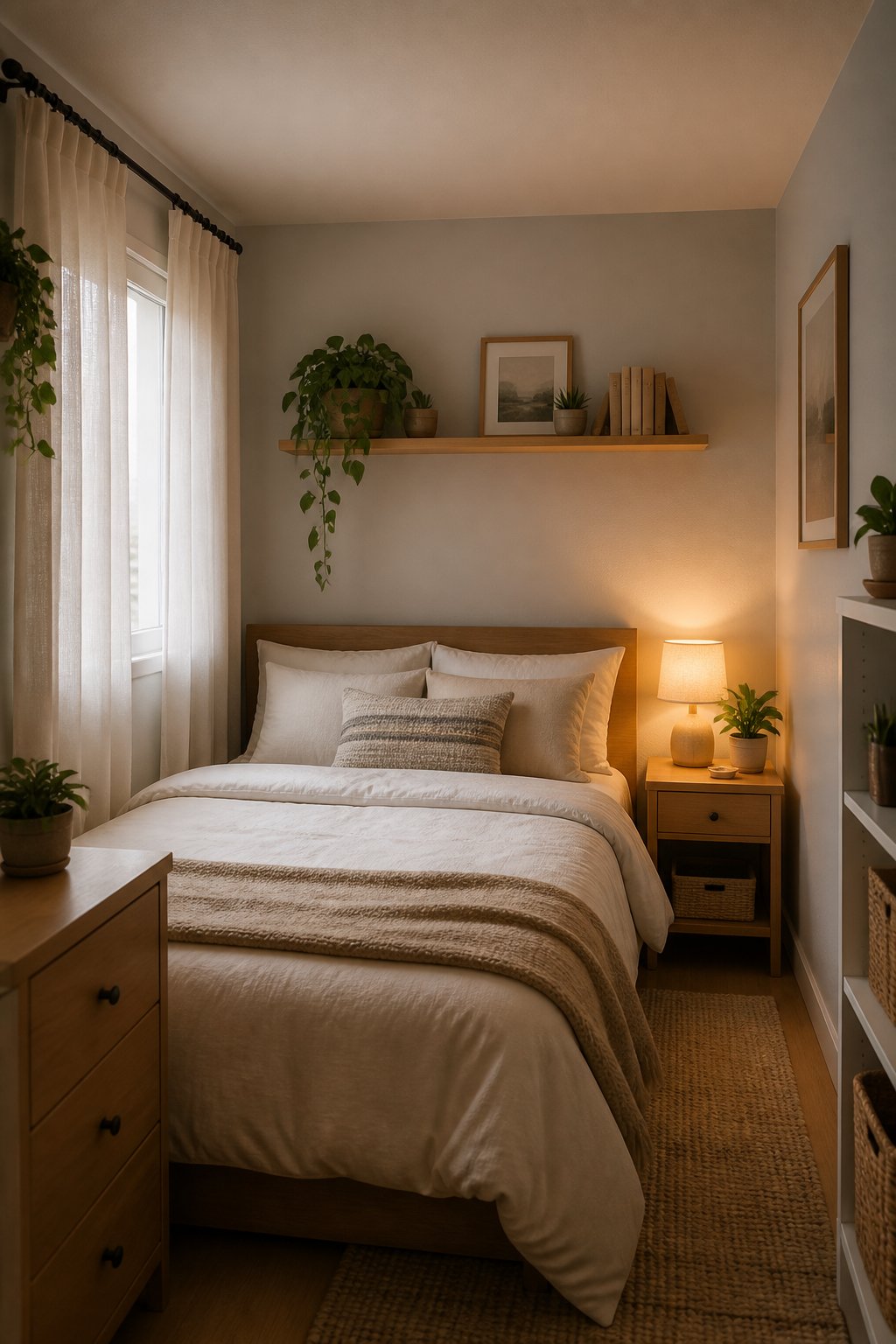
Small bedrooms have a specific set of problems: not enough wall space, storage that competes with the sleeping zone, and a constant tension between privacy and openness. Most of those problems are layout problems more than size problems.
Balancing Storage With the Sleeping Zone
Place the bed against the longest uninterrupted wall so traffic paths stay clear and predictable. That spatial choice alone gives you more room than you'd expect, because it opens the center of the room rather than cutting through it.
Go vertical with storage: slim wardrobes, wall-mounted shelves above the headboard, and peg rails keep floor space clear for movement. A low-profile dresser at the foot of the bed works if you leave 18 to 24 inches of clearance between it and the bed frame - enough to sit on the edge of the bed and open drawers without contorting. Put a narrow nightstand on the side of the bed facing the door. That placement gives you a reachable surface without blocking the natural path into the room. Soft, directional bedside lighting keeps the sleeping zone calm while storage areas remain functional.
Creating Privacy Without Extra Walls
Position the bed so it's not directly in line with the door. An offset bed creates a natural visual buffer and keeps sightlines open across the rest of the room while making the sleeping area feel tucked in. It's a small shift with a noticeable effect on how private and settled the space feels.
Low dividers work well here: a tall dresser, open shelving, or a slim console can separate the bed from the entry without closing the room. A lightweight curtain on a ceiling-mounted track shields the bed for sleep and draws back during the day without permanently dividing the space. Pair any divider with layered lighting - a floor lamp near the divider and a wall sconce by the bed - so each zone reads as its own area rather than two halves of a cut-up room. A thin rug under the front two-thirds of the bed anchors the sleeping area and makes the divider feel intentional rather than improvised.
The bed is the room. Everything else is just arranged around it.