You can tell the room was only decorated when cushions, posters, and mismatched bits sit on surfaces, but nothing seems to belong. A designed teen boy bedroom feels intentional: layouts, storage, and lighting all work together so the space looks lived-in and useful rather than just covered in stuff. You'll learn how to make choices that feel planned, not pieced together, so the room reads as a whole.You'll learn how to make choices that feel planned, not pieced together, so the room reads as a whole.
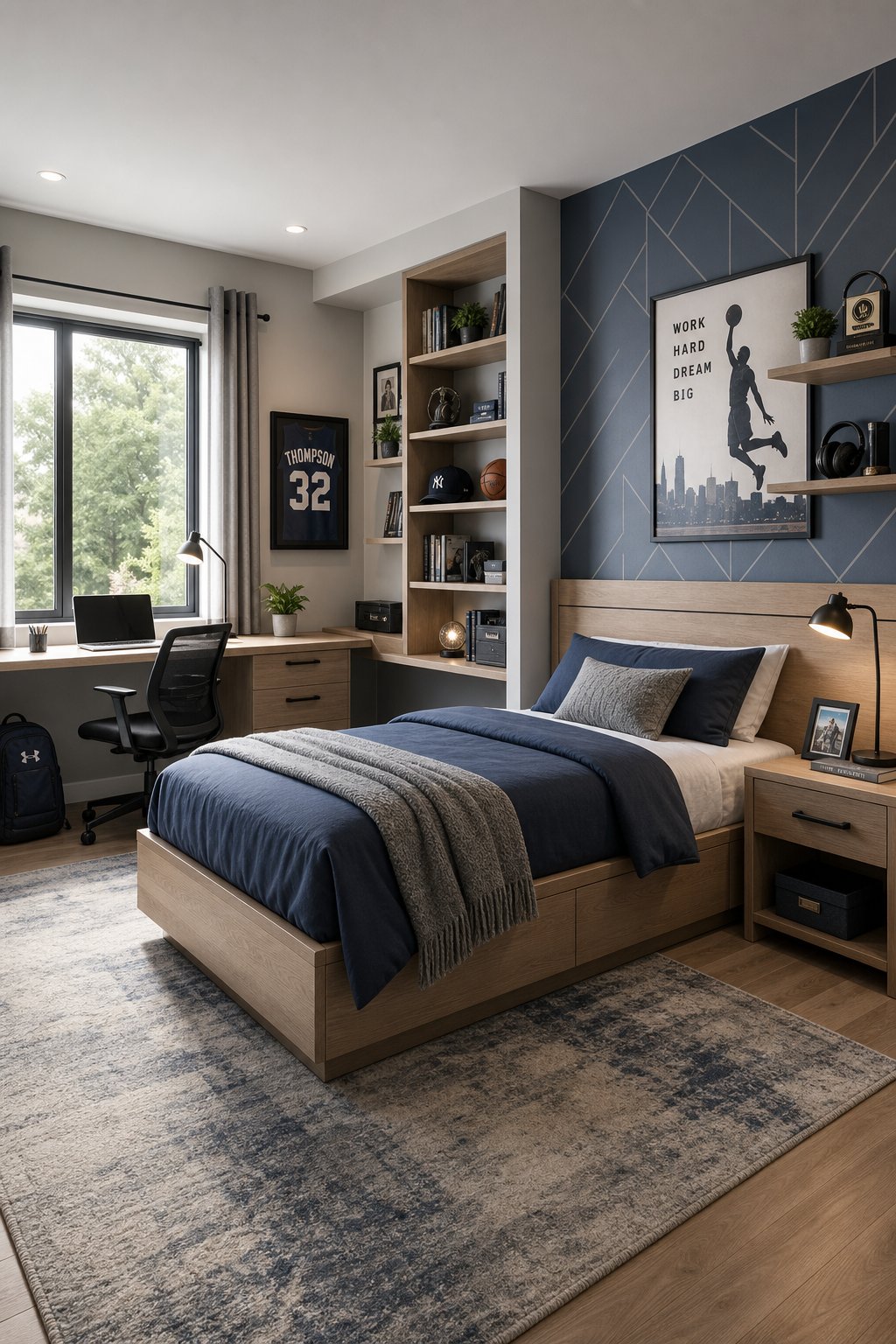
Walk through your space with a calm eye and notice what clashes or crowds. This article guides practical moves-paint, furniture placement, storage solutions, and texture choices-that help the room grow with you and actually support daily life, not just look busy.
1) Layered neutral paint palette with one moody accent wall
Choose a soft, layered neutral for three walls so the room feels calm and cohesive. Neutrals make the space read larger and let a single moody wall sit visually heavy without overwhelming the room.
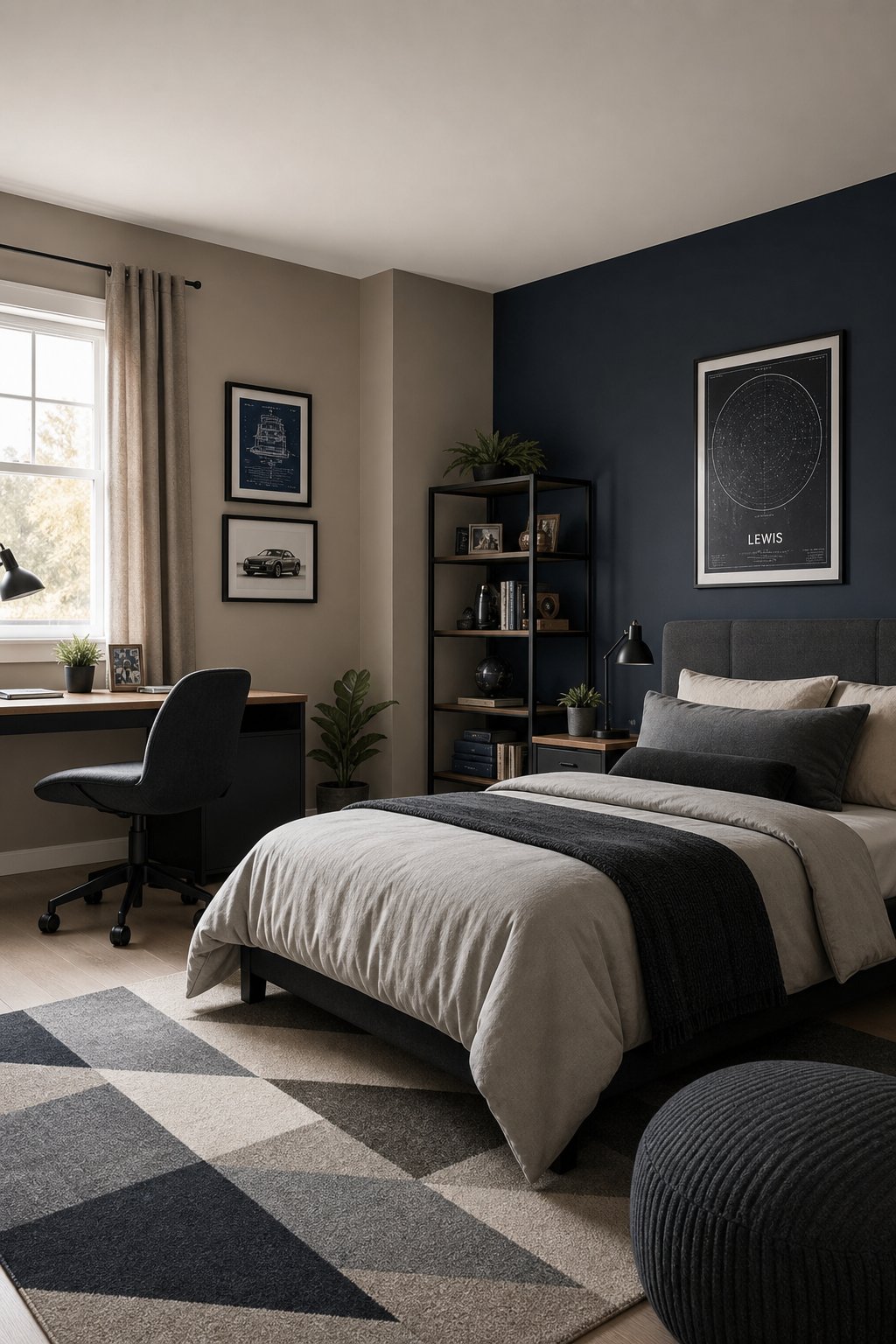
Pick a deep charcoal, forest green, or navy for the accent wall behind the bed or desk. Paint that wall full height; a 10-12-foot-wide wall looks balanced with a darker color, and keep the trim in a lighter neutral to frame it.
Use two tones on the main walls-one slightly warmer and one cooler-to add depth without clutter. Add textures like matte paint, a satin trim, or a wool headboard to keep the palette interesting and tactile.
2) Built-in wall desk with floating shelves above
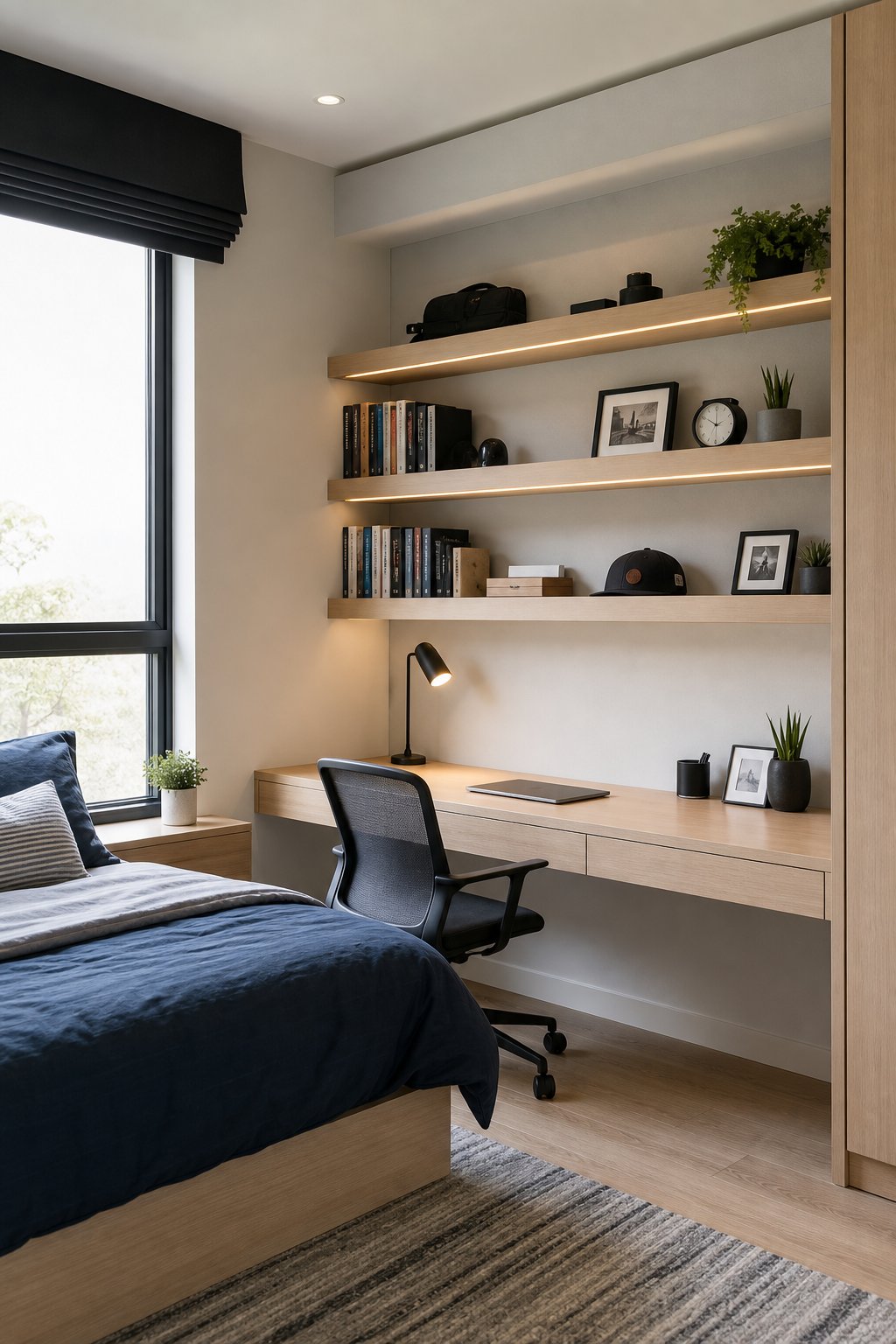
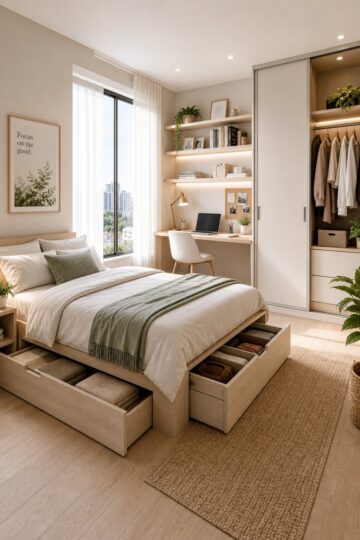
A built-in desk tucks work into the wall so the room reads as intentional, not cluttered. It keeps a clear sightline and fits tight rooms better than a freestanding desk, especially when you place it under a window or beside a closet for natural light and storage flow.
Mount two to three floating shelves above the desk for books, a lamp, and art. Aim for 10-12 inches of shelf depth and space the lowest shelf about 14-16 inches above the desktop so you can see the wall and reach items without bumping your head.
Use a 48-60 inch wide desk if you want room for a laptop and a small project area. Choose simple materials-painted plywood or a laminate top-and hide cords with a shallow raceway behind the desk for a clean look.
Keep styling minimal: one framed print, a pencil cup, and a small box for chargers. The built-in feel comes from aligned lines and consistent finishes, so match shelf hardware or paint to the desk for a cohesive result.
3) Low platform bed pushed to one corner for open floor space
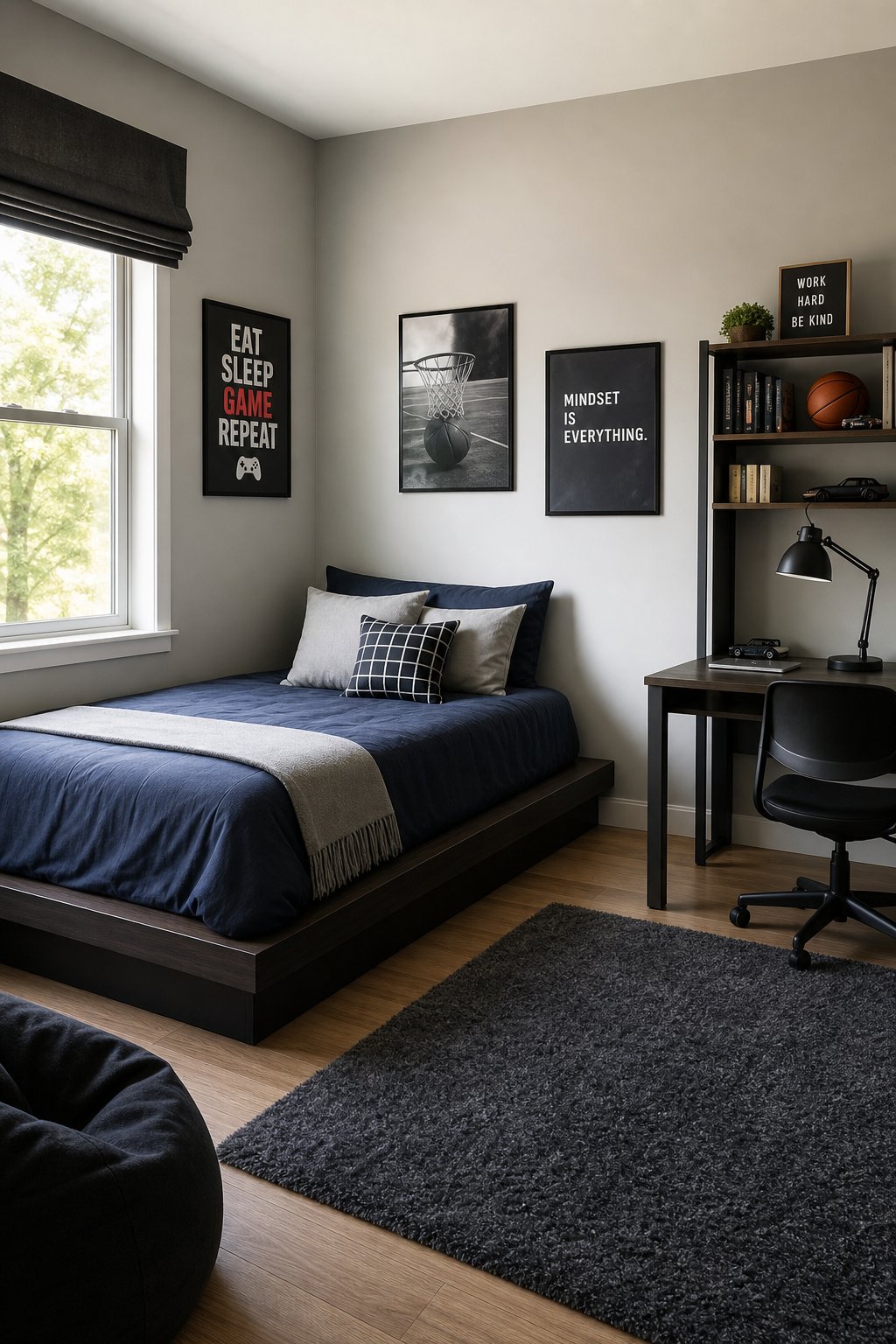
A low platform bed in a corner frees up the middle of the room so you can move, play, or add a desk. Visually, it keeps sightlines longer and makes the room feel larger because furniture stays low and out of the center.
Pull the bed flush against two walls and leave a 24-36 inch walking zone on the exposed side for easy access. Choose a 10-12 inch mattress height on a simple platform to keep the profile minimal and to keep windows and wall art readable.
Use the open floor for a rug about 5×8 or 6×9 inches shorter than the room length so the space reads intentional, not cluttered. Add a single slim bedside shelf or wall sconce instead of a bulky nightstand to preserve the open feel without losing function.
4) Modular storage cubes personalized with bins
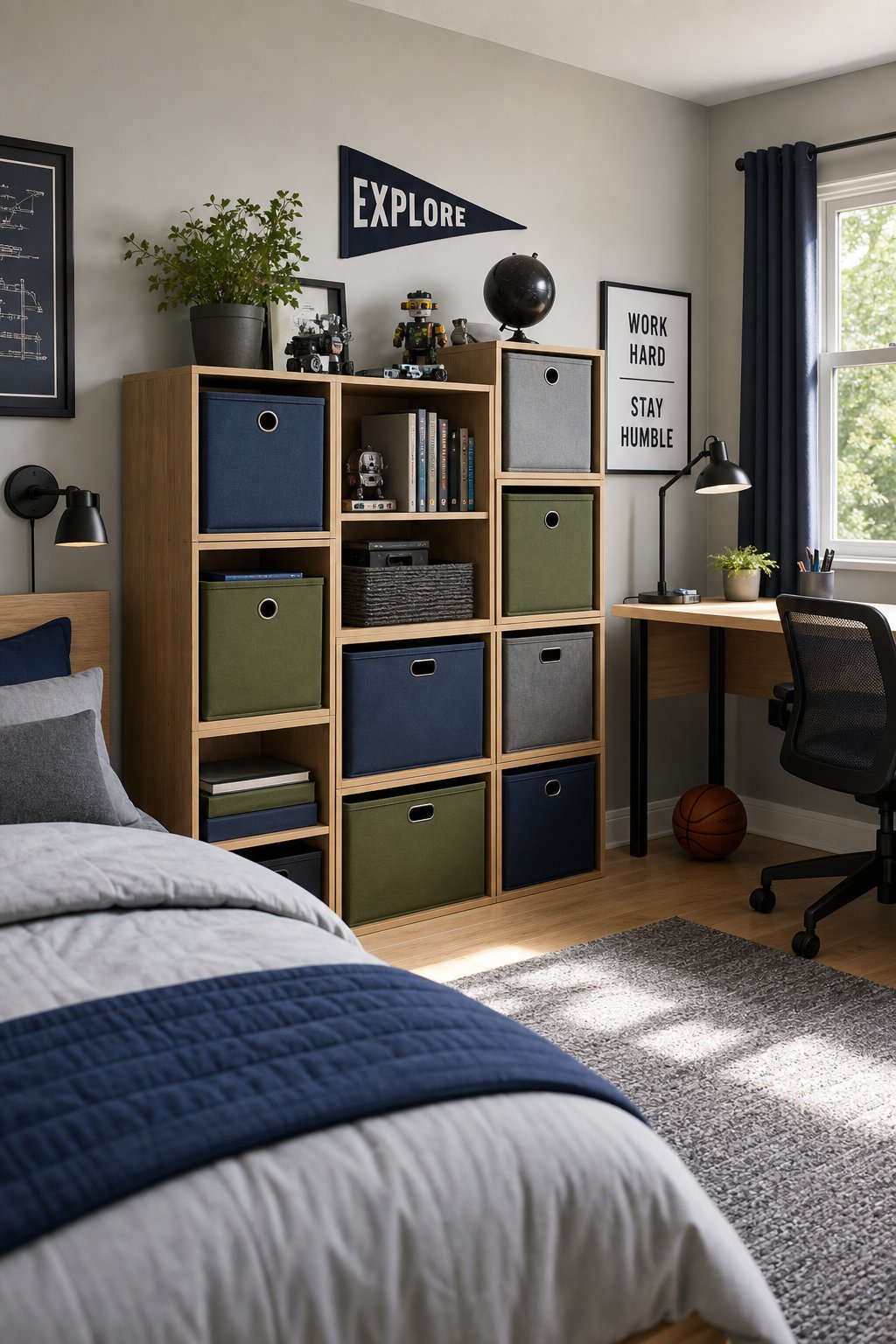
Think of a cube unit as a frame that keeps things tidy without hiding the room's style. It works visually because the grid adds order and gives you a place to repeat colors and textures, which helps the room read as designed instead of cluttered.
Choose a 4×2 or 3×3 cube unit depending on wall space; a 4×2 fits well under a long window, while a 3×3 is good beside a bed. Use a mix of fabric bins, wire baskets, and one or two open shelves for books or gear to break up the pattern.
Pick bins in two or three muted tones that tie to your bedding or rug so the storage feels intentional. Label a few bins or mix clear-front boxes for electronics so everything has a visual place and you can find things fast.
5) Track lighting with adjustable spotlights for task zones
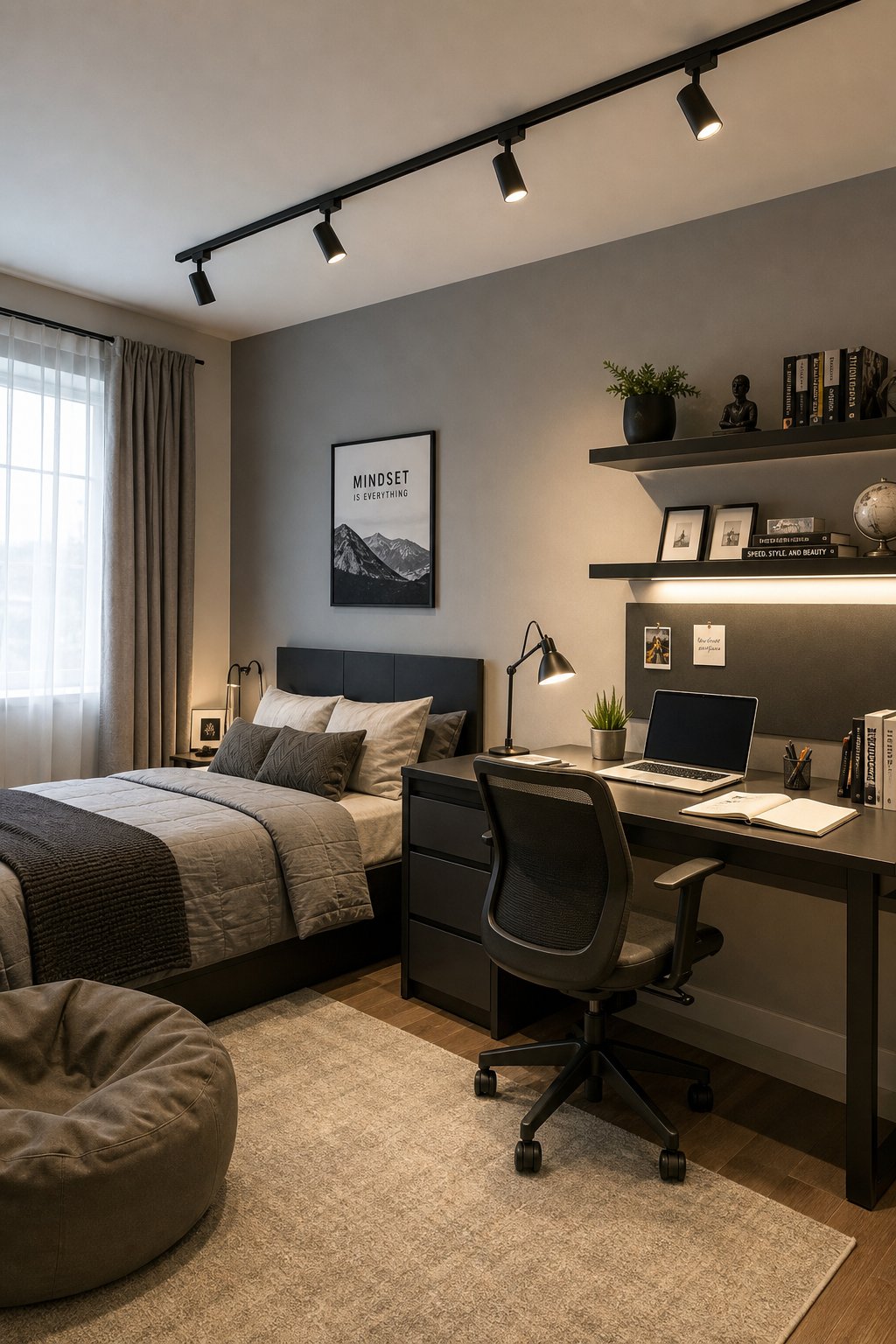
Track lighting lets you aim light where you need it, so work, hobby, and display areas read as purposeful zones. It keeps the ceiling simple while giving you flexibility to brighten a desk, bed nook, or reading chair without adding lamps everywhere.
Install a 3- to 4-foot track over a desk or along the long wall so three adjustable heads cover different tasks. Use LED spotlights with a warm 2700-3000K tint and dimmable drivers to avoid glare and to soften the room at night.
Angle one head for the desk surface, another for a shelf or pinboard, and a third for ambient fill. Mount the track 7-8 feet high if you have a standard ceiling so beams clear tall furniture and light falls evenly.
6) Black-framed industrial window mirror to visually widen the space
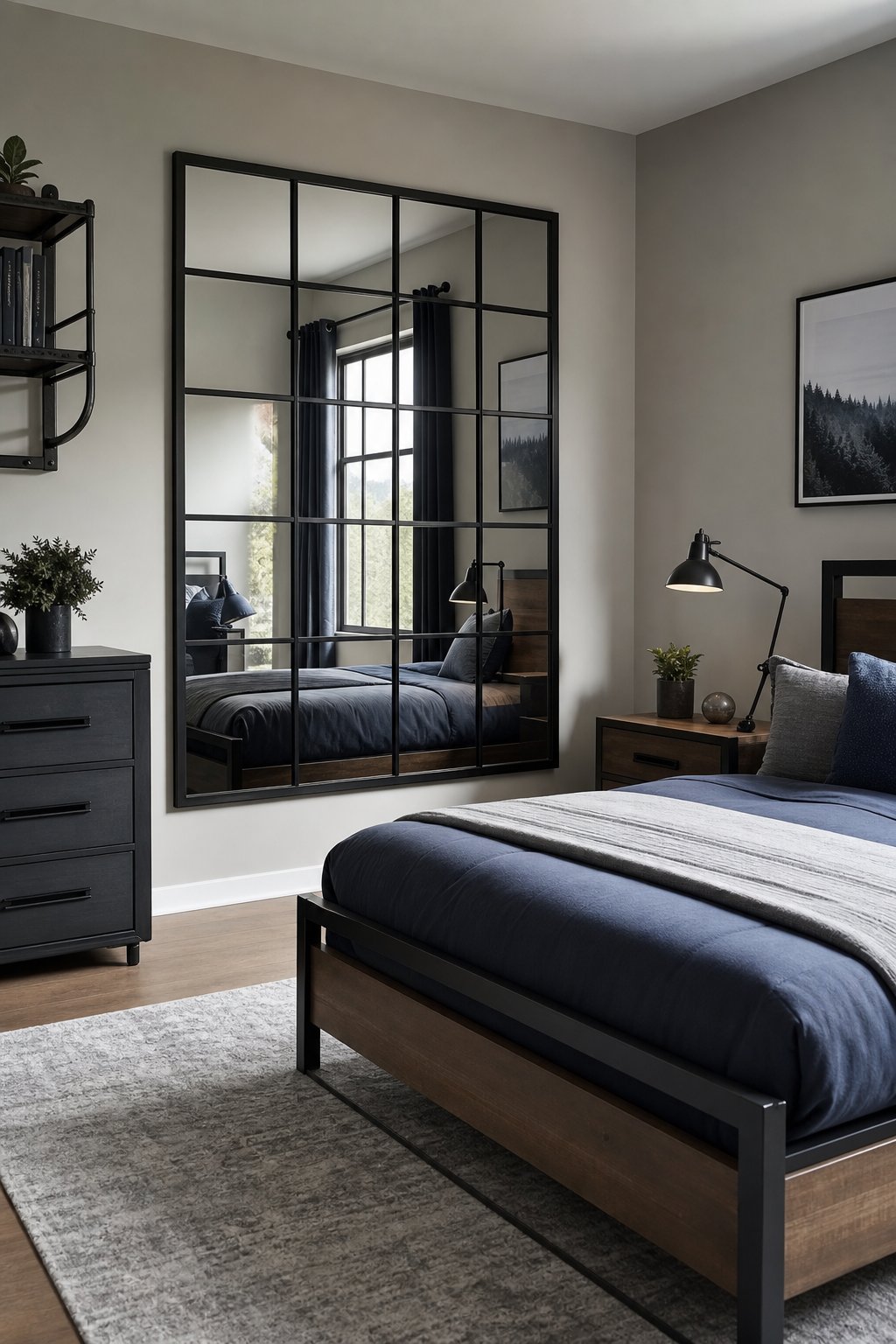
A tall black-framed mirror that looks like a factory window makes the room feel larger by reflecting light and sightlines. Place it opposite a window or next to a doorway so it doubles natural light and gives a sense of depth.
Choose a mirror about 24-36 inches wide and at least 60 inches tall for a standard teen bedroom. Lean it against the wall or mount it securely; leaning creates a casual, designed look while wall-mounting keeps it stable.
Match the frame finish to existing metal accents, like a desk lamp or bed frame, to tie the room together. Keep surrounding styling minimal - a small rug edge or a low shelf in front keeps the reflection uncluttered and intentional.
7) Pinboard gallery combining photos, postcards, and fabric swatches
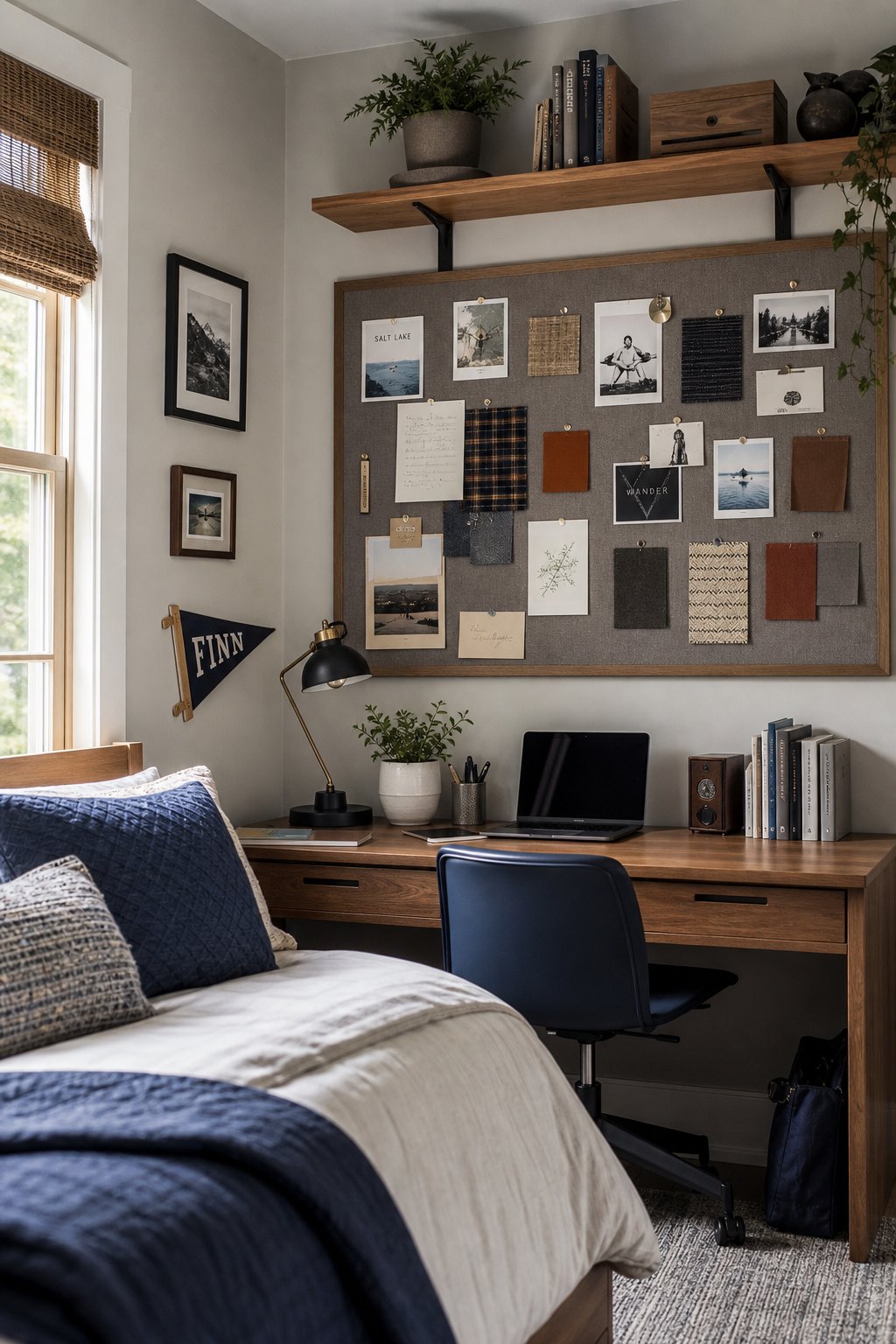
A pinboard lets you create a layered, lived-in wall that reads like a mood map rather than random posters. It works visually because mixed textures-photo gloss, paper, and fabric-catch light differently and make the wall feel planned without needing new furniture.
Start with a 30×40-inch cork or felt board mounted above the desk or bed at eye level. Arrange photos and postcards in small clusters, then weave in fabric swatches 4-6 inches square to add color and texture. Overlap items slightly and use neutral pins so the pieces feel connected.
Keep one horizontal line or a subtle grid to give the display structure. Change a single card or swatch seasonally; this keeps it fresh and prevents the board from looking crowded.
8) Under-bed drawers with labeled dividers for sports gear
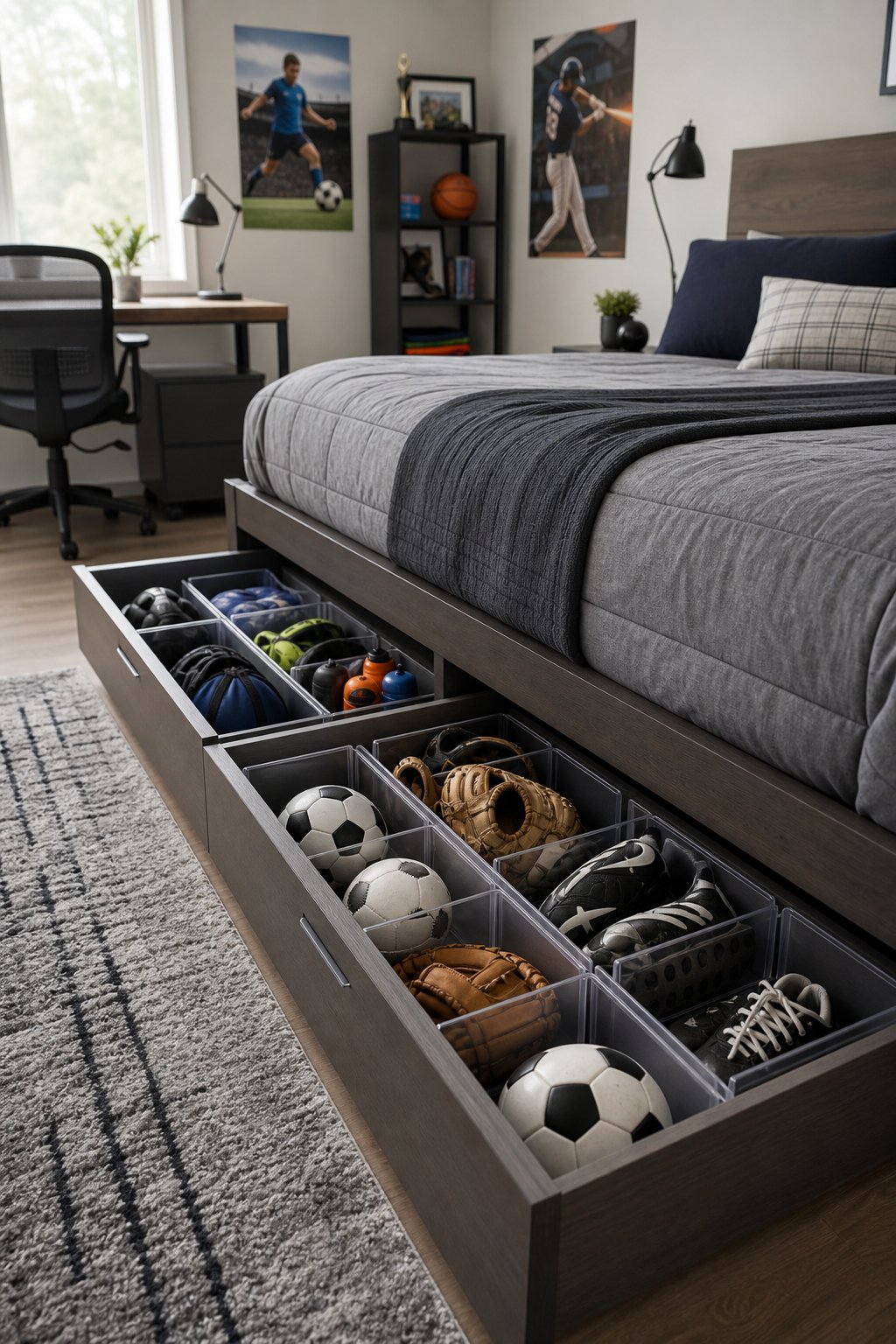
Sliding drawers under the bed keep bulky equipment out of sight and make the room read as intentional instead of cluttered. They work well in a narrow room because they use wasted horizontal space and keep the floor clear for movement.
Choose drawers about 24-30 inches deep to fit cleats, shin guards, and folded jerseys. Install dividers inside each drawer and label them by sport or item; cardboard or thin plywood dividers are cheap and sturdy. Place the drawers on smooth glides so you can pull them out from either side if the bed sits against a wall.
Use low-profile plastic bins inside the drawers for smaller items like tape, mouthguards, and socks. Keep a pictured label or color code on the outside so you can grab what you need quickly before practice.
9) Slimline loft bed with study nook underneath
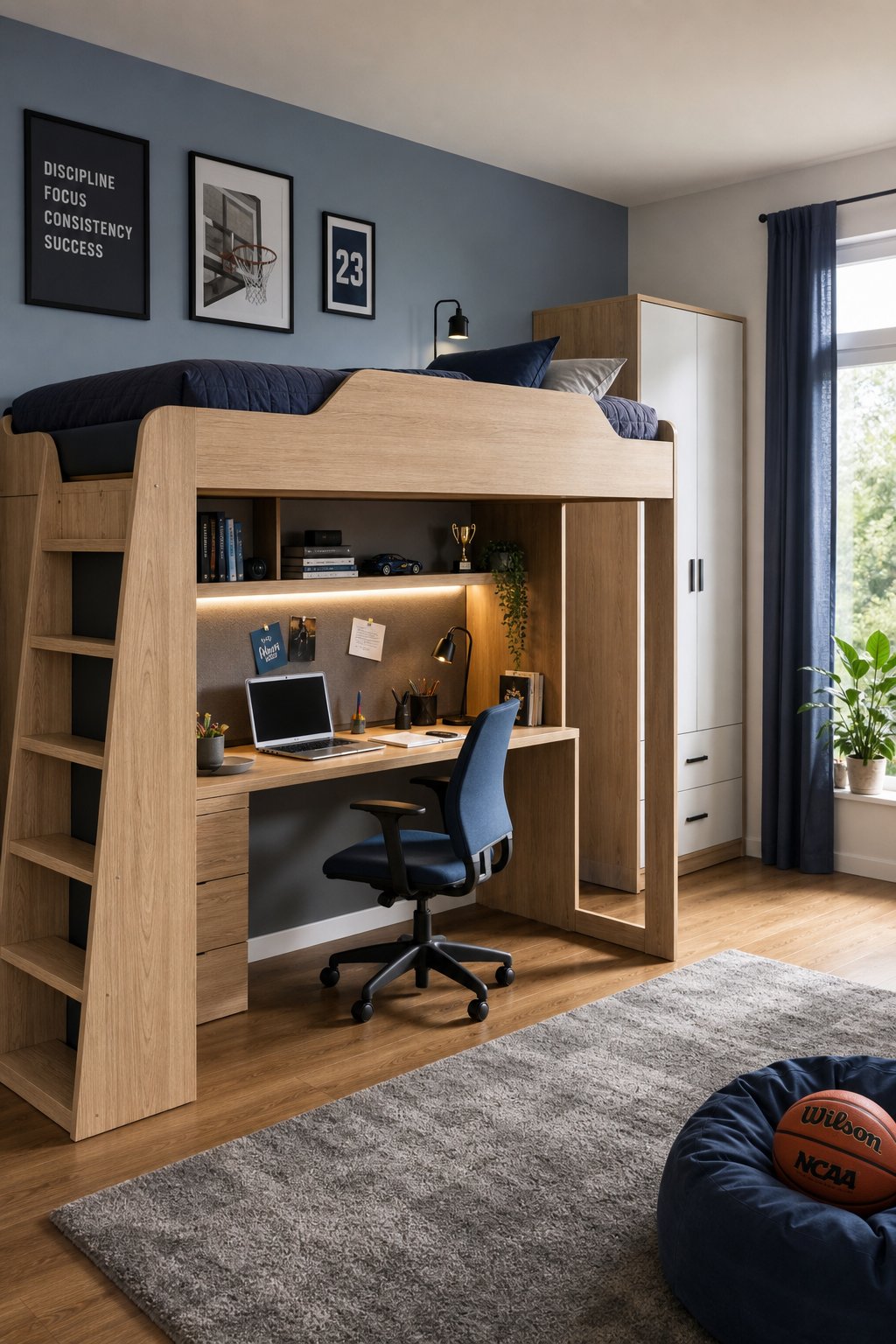
A slimline loft bed frees floor space while keeping the room feeling intentional. Raising the bed creates a clear zone beneath for a desk and shelves, which reads as designed instead of cluttered.
Place the desk along the back wall to keep the footprint narrow; a 36-48 inch deep desk fits comfortably under a 5-6 foot high loft. Choose a platform with a low-profile frame and integrated ladder to avoid bulky posts that eat into headroom.
Keep the study nook bright with a slim task lamp and a shallow shelf for books and chargers. Anchor the area with a simple rug and a comfortable chair so the space reads like a small office, not an afterthought.
10) Cork-accent pinboard wall for rotating projects
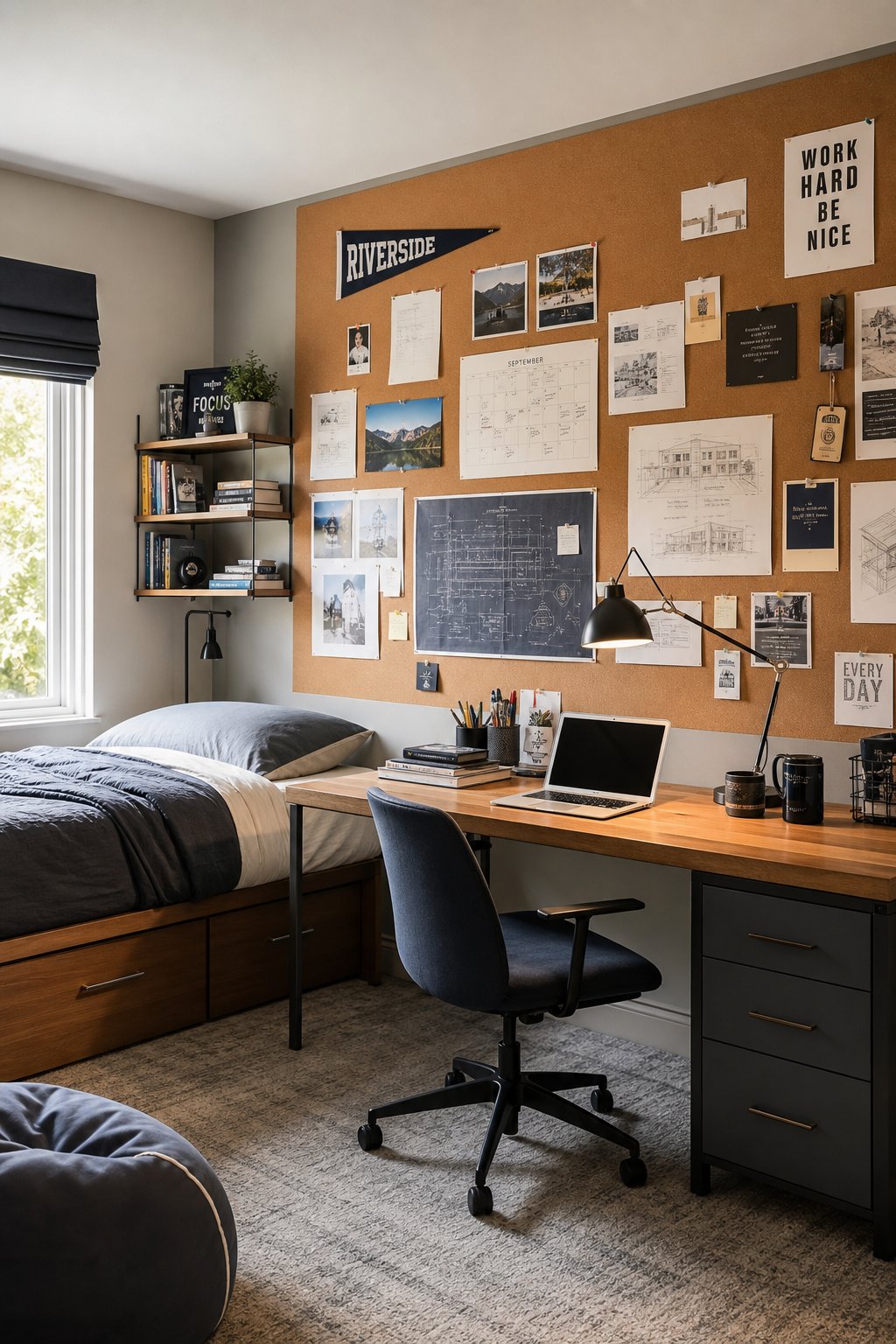
A cork pinboard wall gives you a place to show work, plans, or photos without drilling a new hole every week. It reads as part of the room's structure because it covers a whole panel or section, which keeps things tidy and visually balanced.
Install a sheet or series of 4×8-foot cork panels behind the desk or along the bed wall so it stays within reach and eye level. Use adhesive-backed panels for renters or thin-framed tiles if you want a neater edge.
Mix large pinned pieces with smaller stacks to avoid a cluttered look. Swap items regularly; that keeps the wall useful and helps you avoid visual overload while letting the room feel designed, not decorated.
11) Acoustic wall panels in textured fabric to tame noise
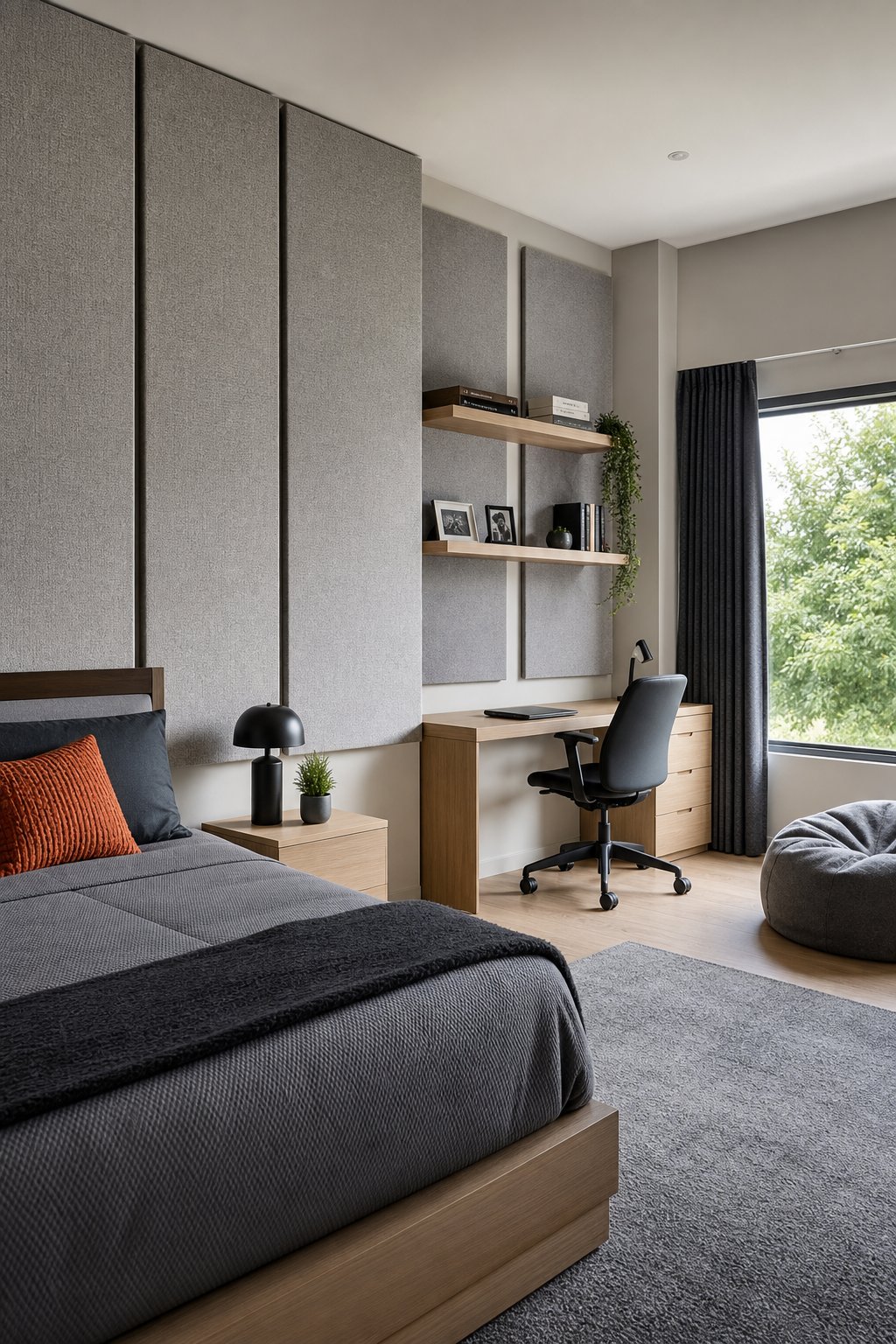
Adding soft, textured panels reduces echo and gives the room a calm, finished look. They work well on the wall behind a bed or along the longest wall to change how sound travels through the space.
Pick panels about 24-48 inches wide and cover a 4-6 foot span for noticeable effect without covering the whole wall. Mount them at ear height when seated-above a headboard or behind a desk-and stagger panels vertically for visual interest.
Choose natural fabrics like wool or linen blends in muted colors so the texture reads as design, not just soundproofing. You can DIY by wrapping insulation boards or buy pre-wrapped panels with cleats for simple installation.
If you have a gaming setup or a shared wall, increase coverage to the corners where sound builds. Keep the layout purposeful: a rectangle of panels behind key furniture makes the room feel designed rather than cluttered.
12) Hidden cable raceway behind media console
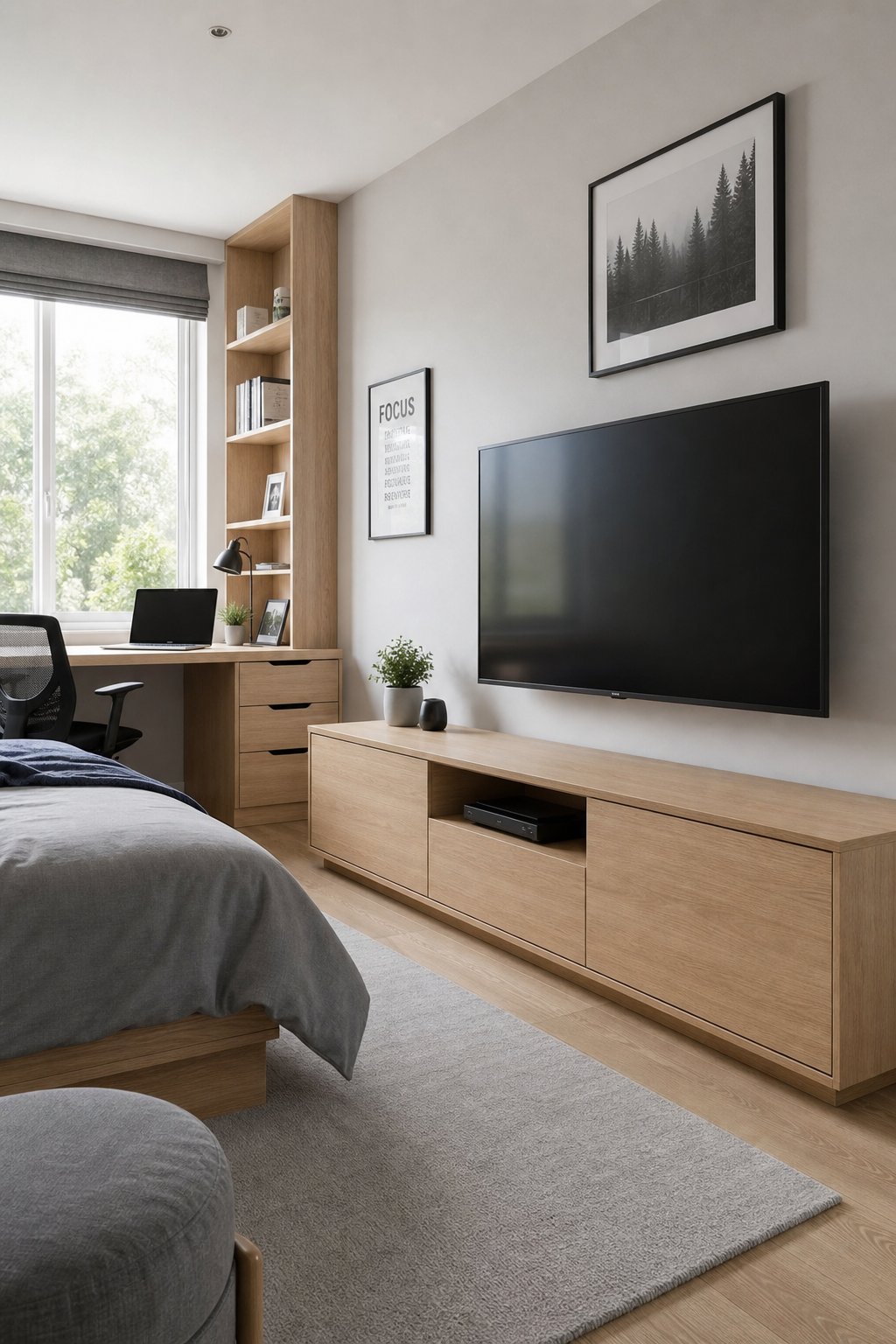
Concealing cords behind the media console makes the setup look intentional instead of messy. It keeps sight lines clean and lets the console feel like a piece of furniture, not a tangle of wires.
Measure the gap behind your console first. A 1.5-2 inch raceway usually fits behind low-profile units and gives room for a power strip and two or three cables. Run the raceway along the back wall, fasten with adhesive clips, and route power to a nearby outlet.
Choose a raceway that matches the wall color or paint it to disappear. If you need frequent access, use a raceway with a removable lid so you can swap devices without undoing the whole run.
13) Oversized floor pouf that doubles as seating and a footrest
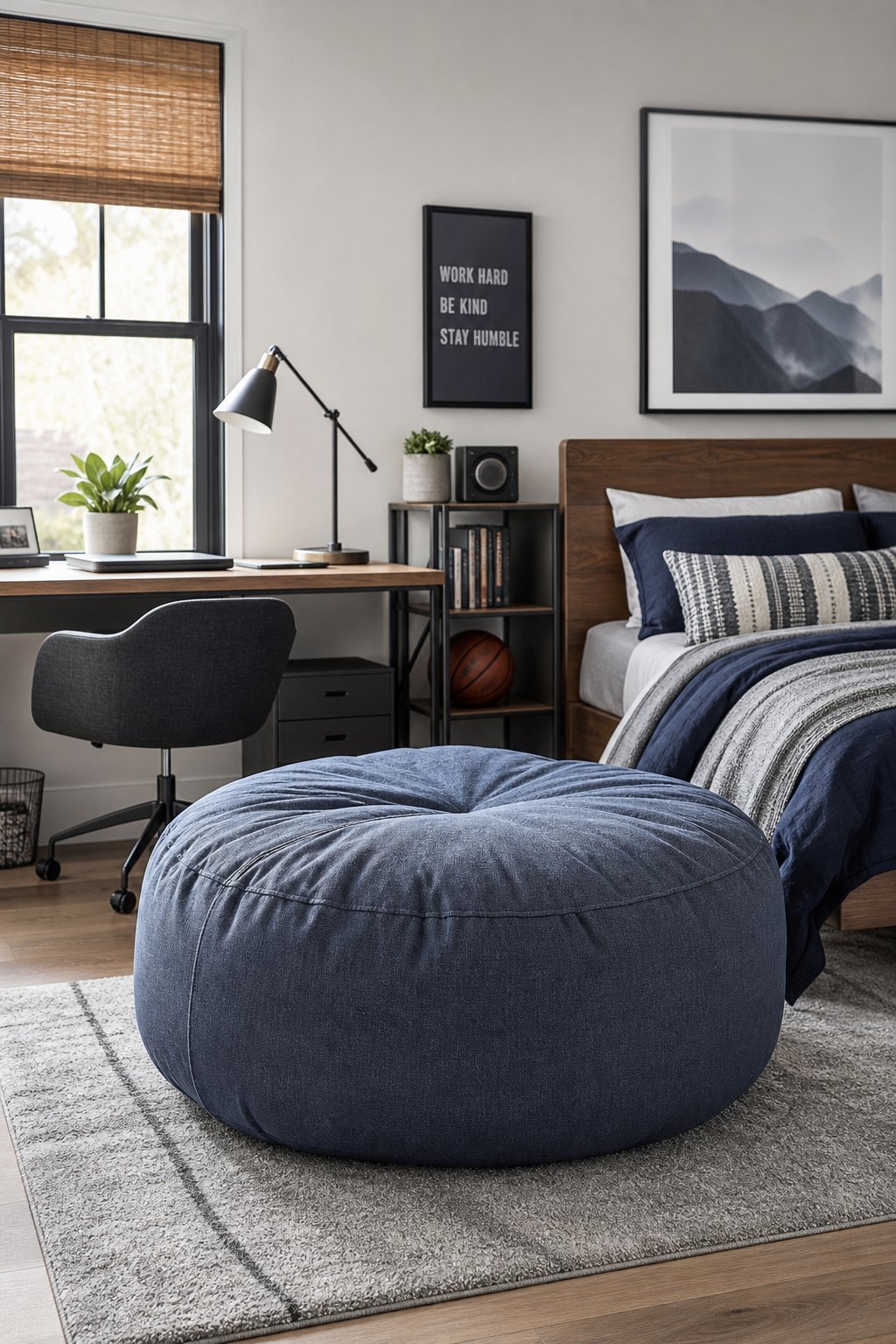
An oversized floor pouf gives you flexible seating without cluttering the room. It works visually by softening hard lines and filling empty floor space near a bed or window seat.
Choose a pouf about 30-36 inches wide so it reads like intentional furniture and not an afterthought. Place it at the foot of the bed or beside a reading chair; it can act as a casual coffee table with a tray, or pull it into the center for friends.
Pick durable, washable fabric like canvas or faux leather for easy care. Keep colors neutral or pick one accent tone from your room so it ties into the palette without competing with posters or bedding.
14) Custom closet rod at two heights for folded and hanging clothes
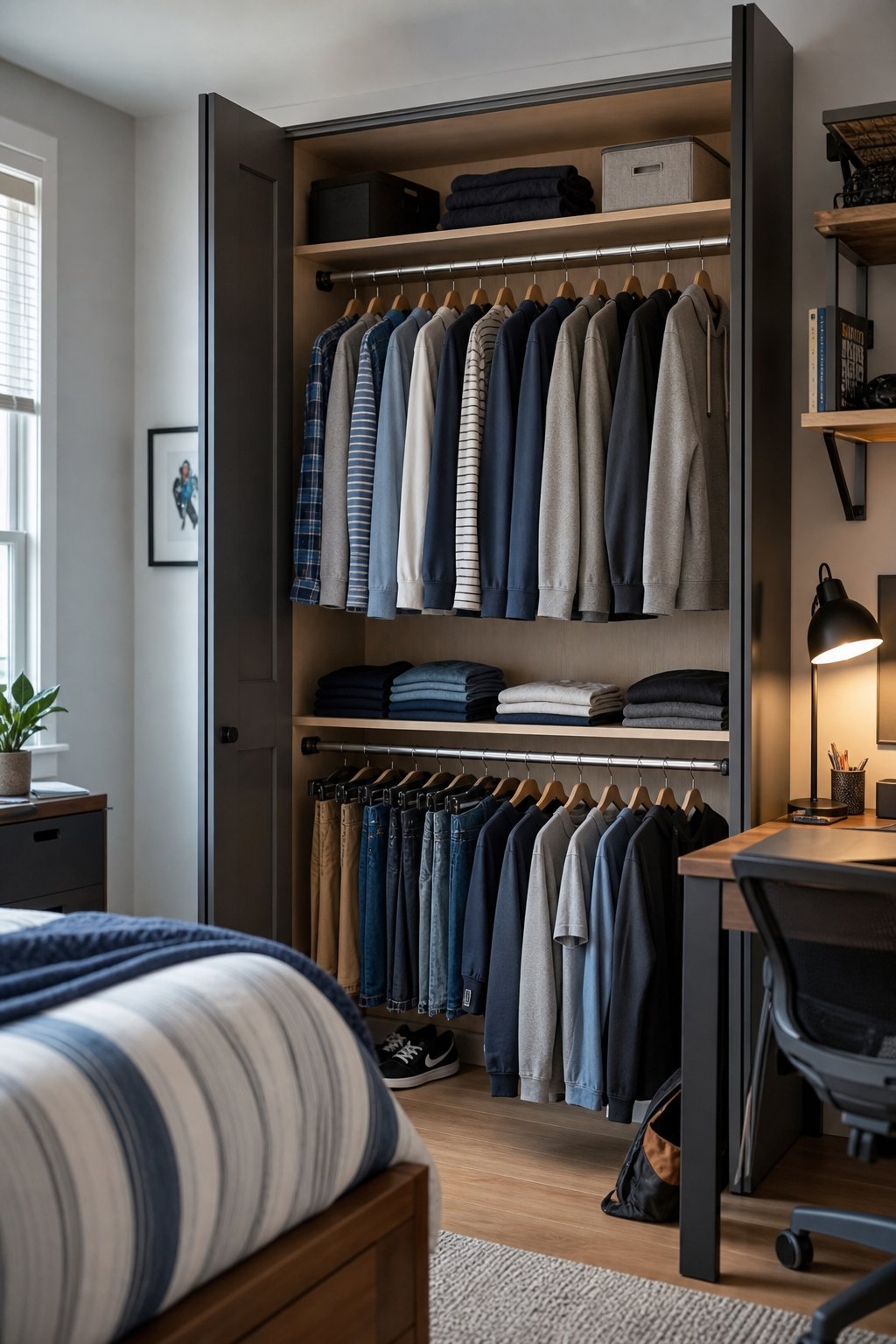
Split the closet vertically so you can hang shirts and jackets above and keep folded jeans or hoodies below. This uses the same footprint but looks neater and makes clothes easier to reach.
Install one rod at about 66-72 inches for long hanging items, and a second rod at 36-40 inches for shorter hangers and folded stacks. Use a solid metal rod and supports every 24-30 inches for sturdiness.
Leave a 12-18 inch shelf above the top rod for bins or extras. If you have a walk-in or open closet, show folded items face-forward so the space reads more organized and designed.
15) Magnetic chalk strip for schedules and rotating lists
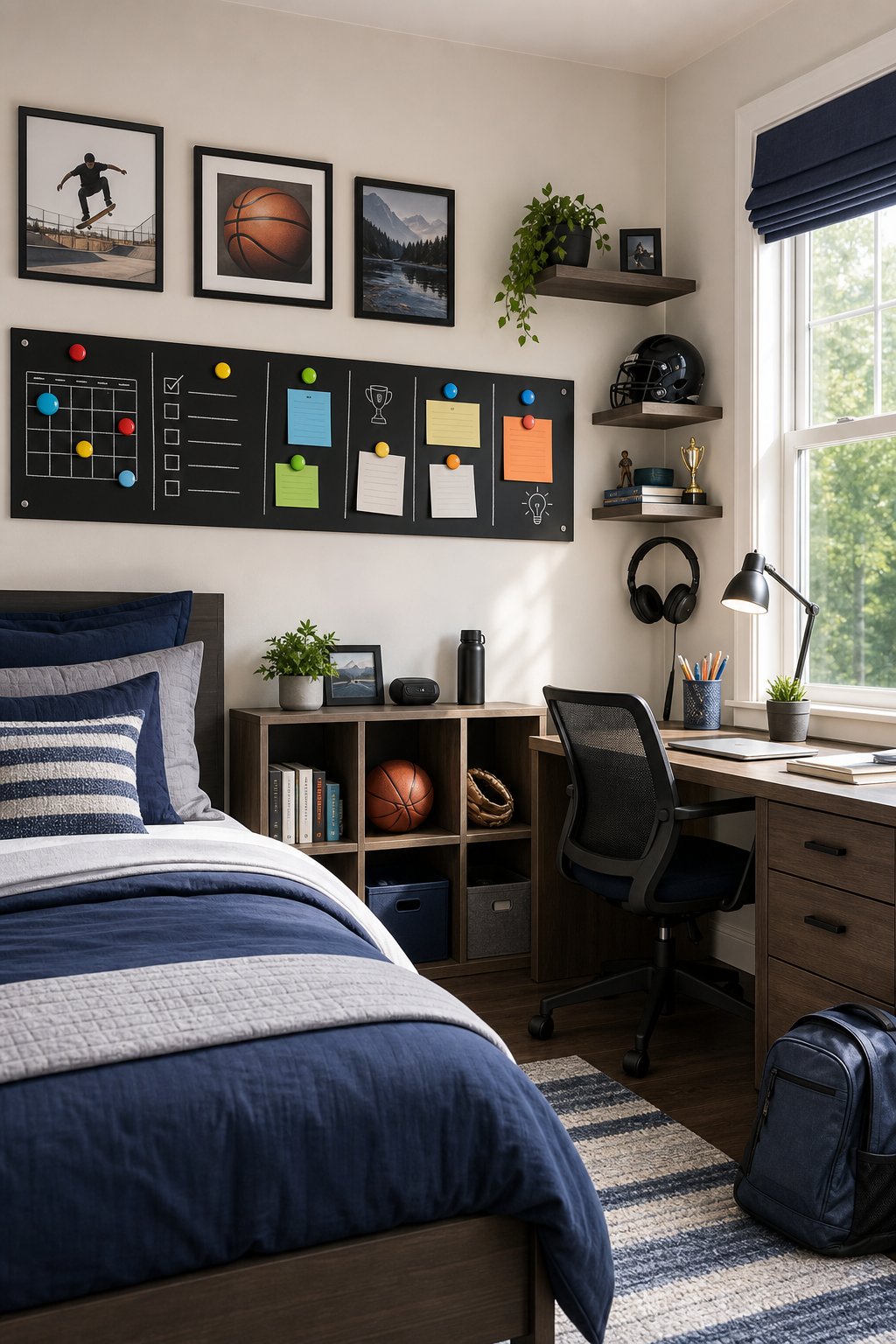
Think of a narrow magnetic chalk strip as a tidy command center that stays flat against the wall. It gives you a clear place for schedules, to-do lists, and rotating notes without taking up desk space.
Mount a 2-3-inch tall strip above the desk or beside the bed at eye level so you can grab it quickly. Use small magnetic clips for paper and a chalk marker for quick updates; a 36-48 inch length works well across most teen desks.
Keep one lane for weekly plans and another for short-term lists that change each day. The magnetic backing keeps things neat, and the chalk surface reads as casual rather than cluttered.
16) Neutral patterned area rug to anchor the bed and desk
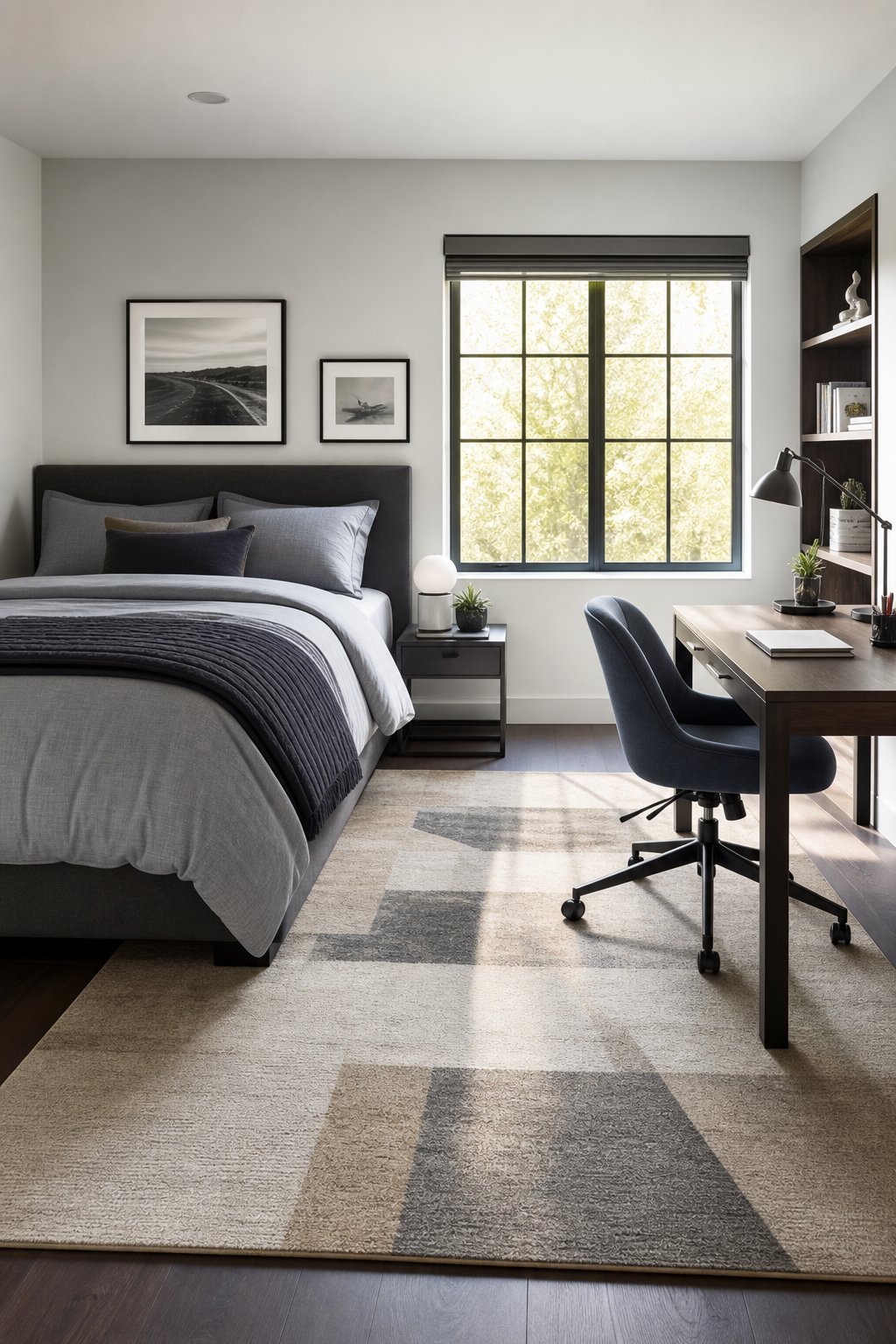
A neutral patterned rug pulls the bed and desk into one visual zone so the room reads as intentional, not scattered. It works because a low-contrast pattern adds texture without competing with posters, bedding, or gear.
Choose a rug that extends at least 18-24 inches beyond the sides and foot of the bed, or pick a 6×9 or 8×10 if the room is small. Place the desk partially on the rug so the workspace feels connected to the sleeping area and the floor plane reads as one surface.
Pick a flatweave or low-pile weave for easy chair movement and lower maintenance. Go for soft grays, warm taupes, or muted blue stripes-these hide wear and match many color schemes while keeping the look calm and tailored.
17) Corner shelving ladder to display trophies without clutter
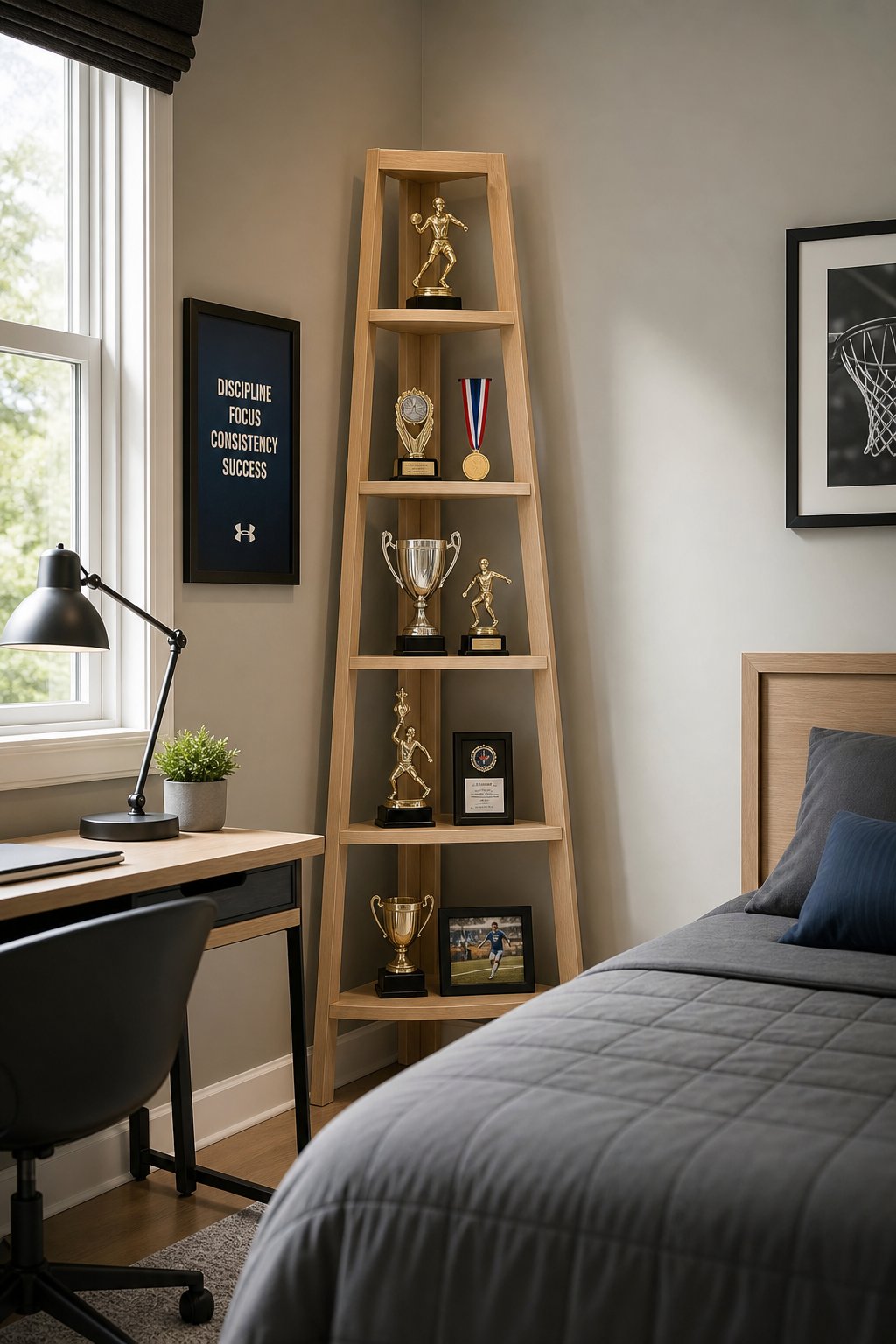
A slim ladder-style shelf fits into a corner where a bulky cabinet would block sightlines. It keeps trophies vertical and visible, so the room feels organized instead of crowded.
Pick a ladder shelf about 12-16 inches deep and 60-72 inches tall so it reads light but holds several awards. Place it at a 45-degree angle to the corner or flush against the wall, depending on traffic flow.
Group items by height and leave breathing room between trophies to avoid visual clutter. Mix a few small books or a framed photo to anchor the display and keep it from looking like a trophy rack.
Choose a matte finish or thin metal frame in a neutral tone so the shelf blends with the room. Secure the top to the wall with a simple bracket for safety on taller models.
18) Task lamp with warm-dim bulb for late-night studying
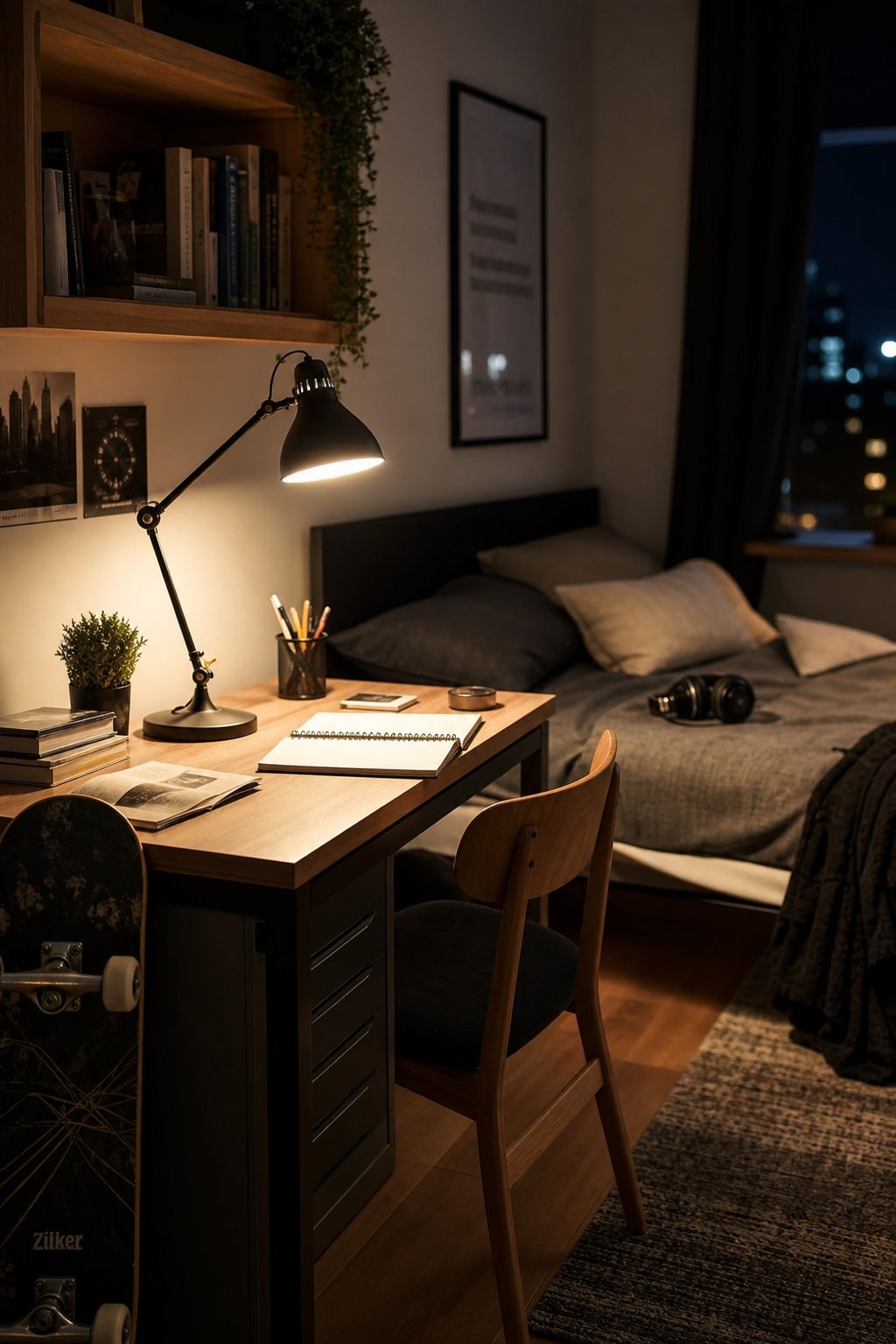
A warm-dim task lamp gives you focused light without the harsh glare that kills concentration. It works visually by creating a clear study zone and spatially by keeping light where you need it most - your desk and books.
Choose a lamp with an adjustable arm and a warm-dim LED (2700K-3000K) so you can lower the brightness for late-night work. Aim for a lamp head about 12-18 inches above your desk surface to avoid shadows while keeping the beam tight on your papers.
Pick a metal or matte finish to read as intentional, not decorative. Clamp or weighted-base designs save surface area, which helps if your desk is under 40 inches wide or squeezed against a wall.
19) Mounted wall bike rack that becomes wall art
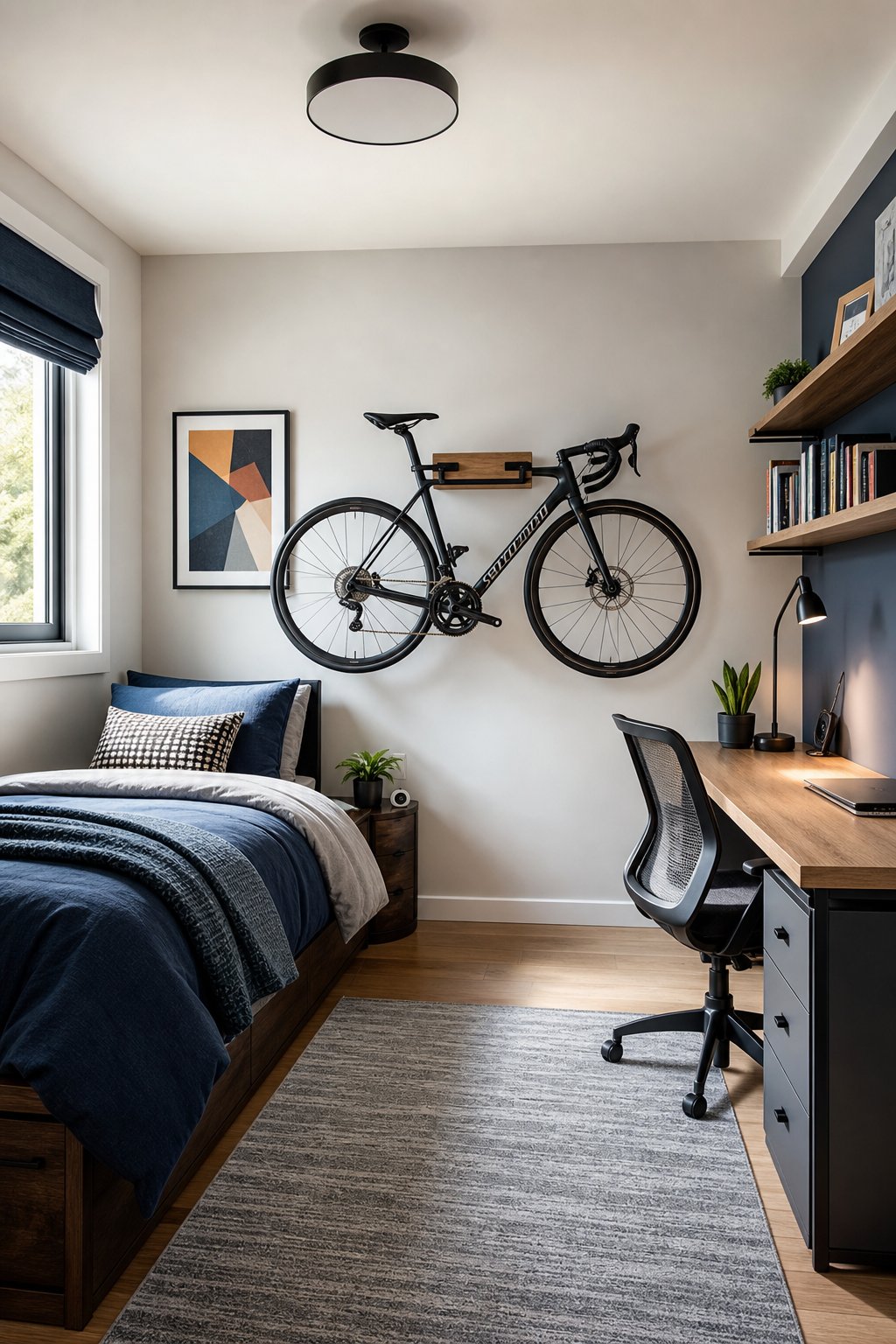
A wall-mounted bike rack shows off a bike without taking up floor space, and it reads like art when placed thoughtfully. Visually, the bike becomes a sculptural line on the wall that adds movement and personality to the room.
Mount the rack so the bike sits at eye level or slightly above-about 4-5 feet from the floor for a teen room-so the frame and wheels read as a focal piece. Choose a slim metal hook or horizontal wall rail that matches other metal finishes in the room.
Keep surrounding decor minimal: a single framed poster or a narrow shelf beneath the bike keeps the wall balanced. If you need protection, add small rubber bumpers where the frame meets the wall to prevent scratches.
20) Monochrome bedding layered with tactile throws
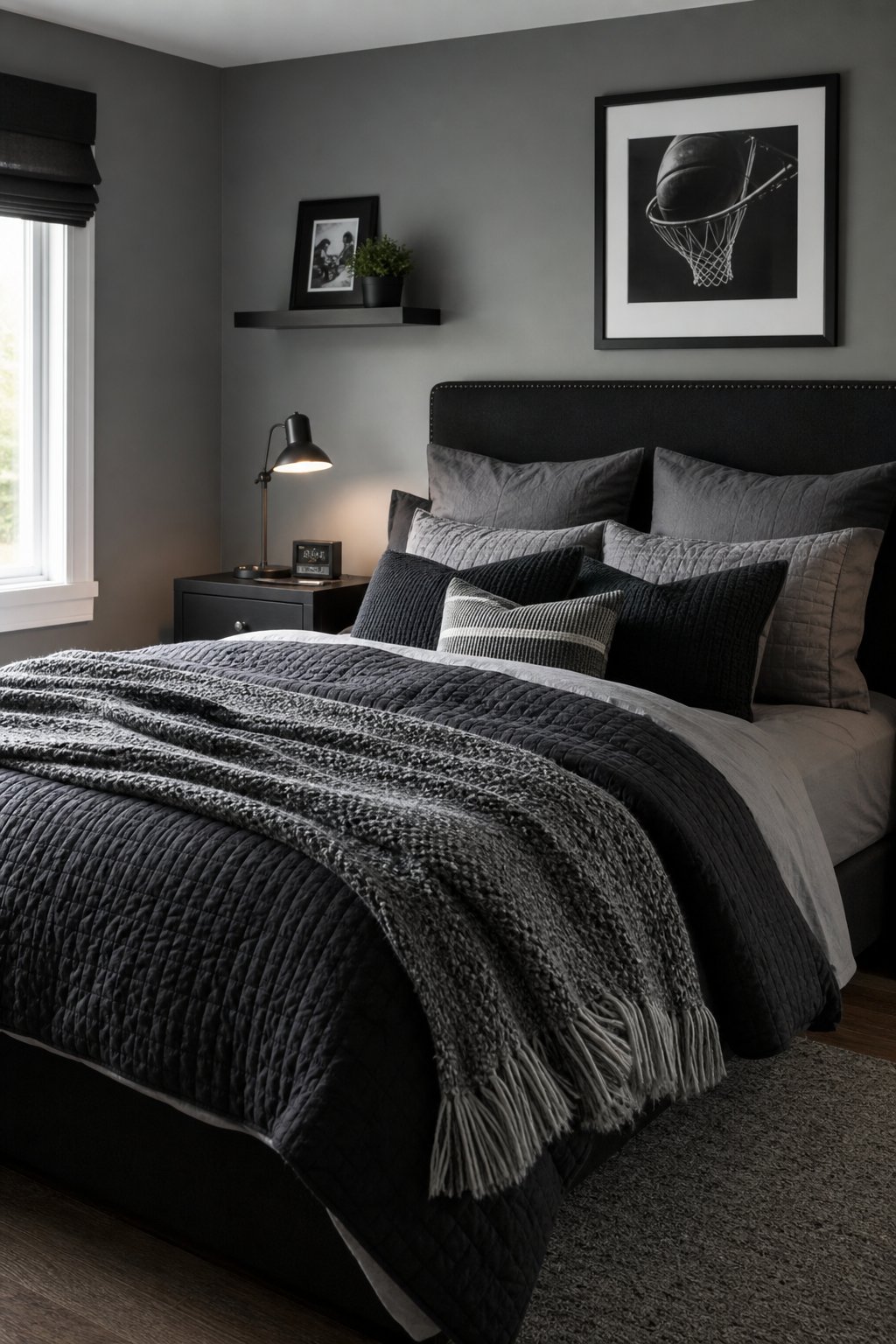
Start with a simple monochrome bedding base so the bed reads calm and cohesive from across the room. A fitted sheet and duvet in one neutral - charcoal, navy, or warm gray - keeps the color story tight and makes the bed feel designed rather than busy.
Layer tactile throws and cushions to add depth without clutter. Use a 50-60″ wide knit throw draped across the foot of the bed and a smaller 40″ square textured cushion near the head to create contrast you can see and touch.
Place the throw so it covers the lower third of the mattress; this keeps the top layers neat for sleeping. Pick fabrics with obvious texture - chunky cotton, boucle, or a low-pile wool - so the bed looks intentional even when everything's a bit rumpled.
21) Window bench with built-in storage and reading lamp
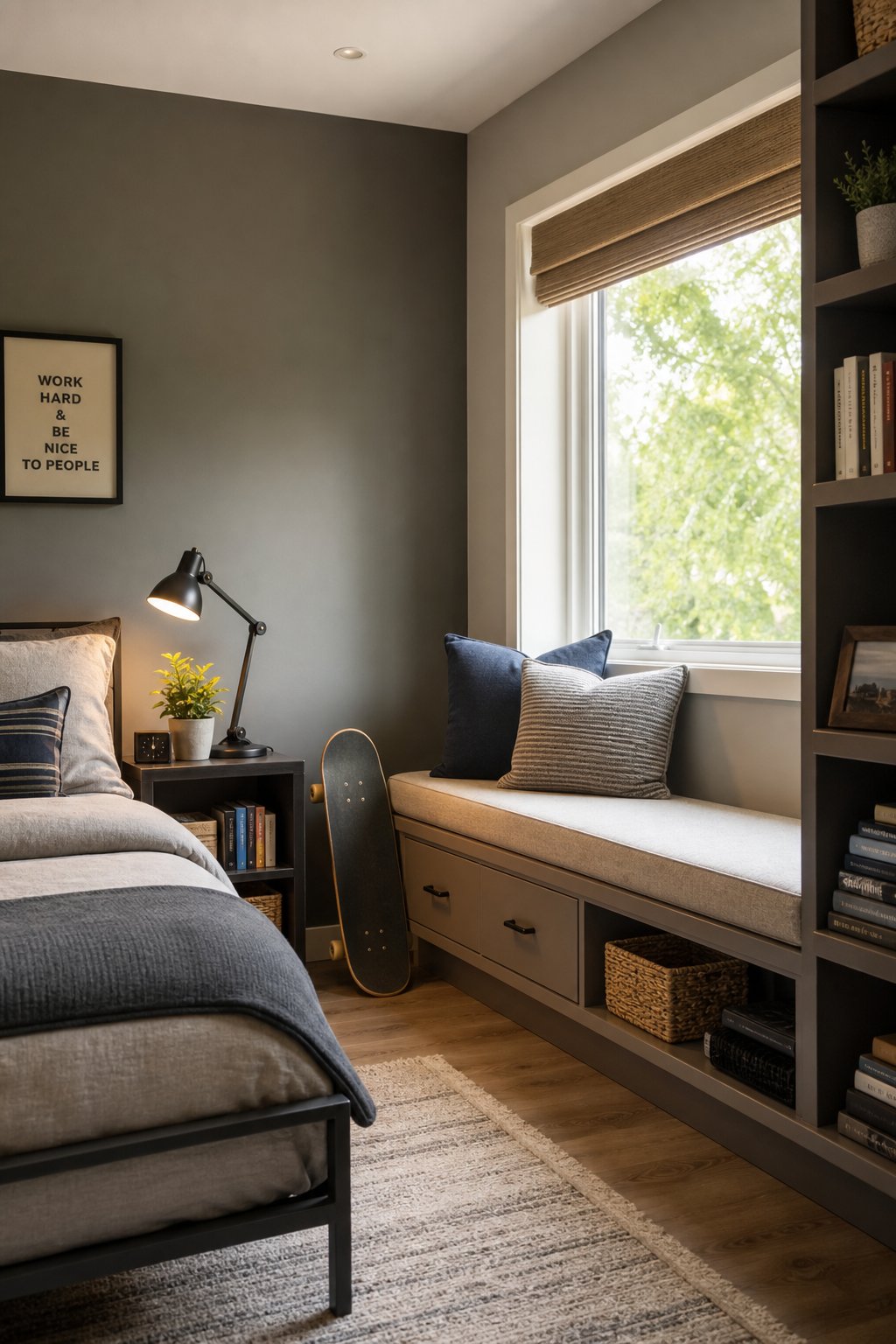
A low bench under the window gives you a cozy spot to sit and keeps the room tidy. It works visually by grounding the window and creating a horizontal line that balances taller furniture like a wardrobe.
Choose a bench about 16-18 inches high so it reads like seating, with drawers or lift-top storage beneath for clothes or gaming gear. Position it flush with the window wall and leave 2-3 inches of clearance from radiators or vents.
Add a wall-mounted or swing-arm reading lamp on one side to free up surface space. Pick a gooseneck or articulating lamp for adjustable light; aim for the bulb to sit 12-18 inches above where your head will be when sitting.
22) Floating bedside shelf instead of a traditional nightstand
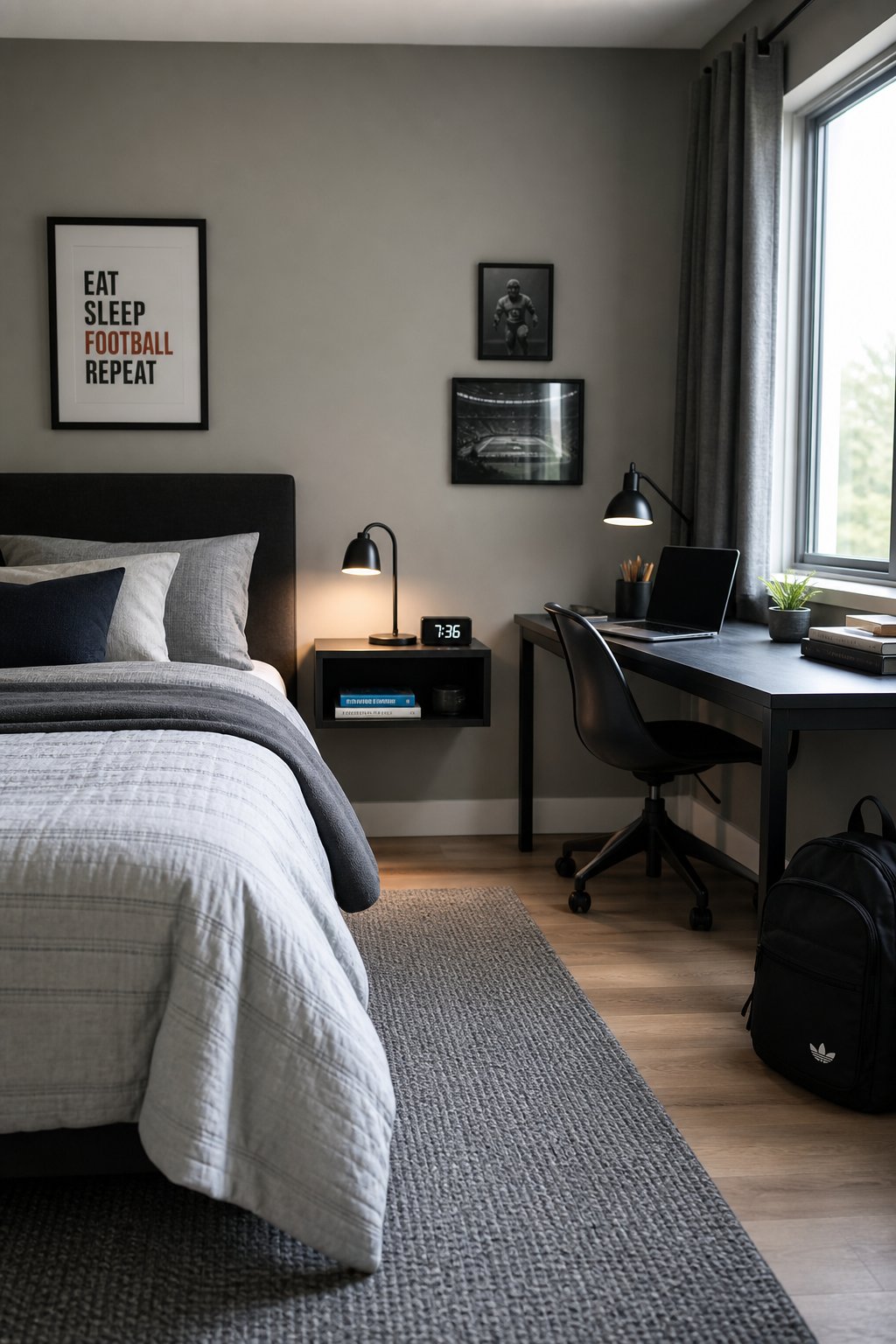
A slim floating shelf keeps the floor clear and makes the room feel more open, especially in a small bedroom. It works visually because your eye follows the wall instead of getting stuck on bulky furniture.
Mount the shelf about 24-28 inches above the mattress top so your lamp, phone, and a book sit within easy reach. Choose a shelf 8-12 inches deep; that gives space for essentials without crowding the walking path.
Use a sturdy bracket or a wall-mounted floating unit rated for at least 20-30 pounds. If you want corded lighting, route cables through a small grommet or hide them behind the shelf for a cleaner look.
Pick a material that ties to other finishes in the room - raw wood for warmth or matte metal for a streamlined feel. One shelf keeps things tidy; add a small tray or a low-profile catchall to corral loose items.
23) Canvas storage bin for laundry that fits the decor palette
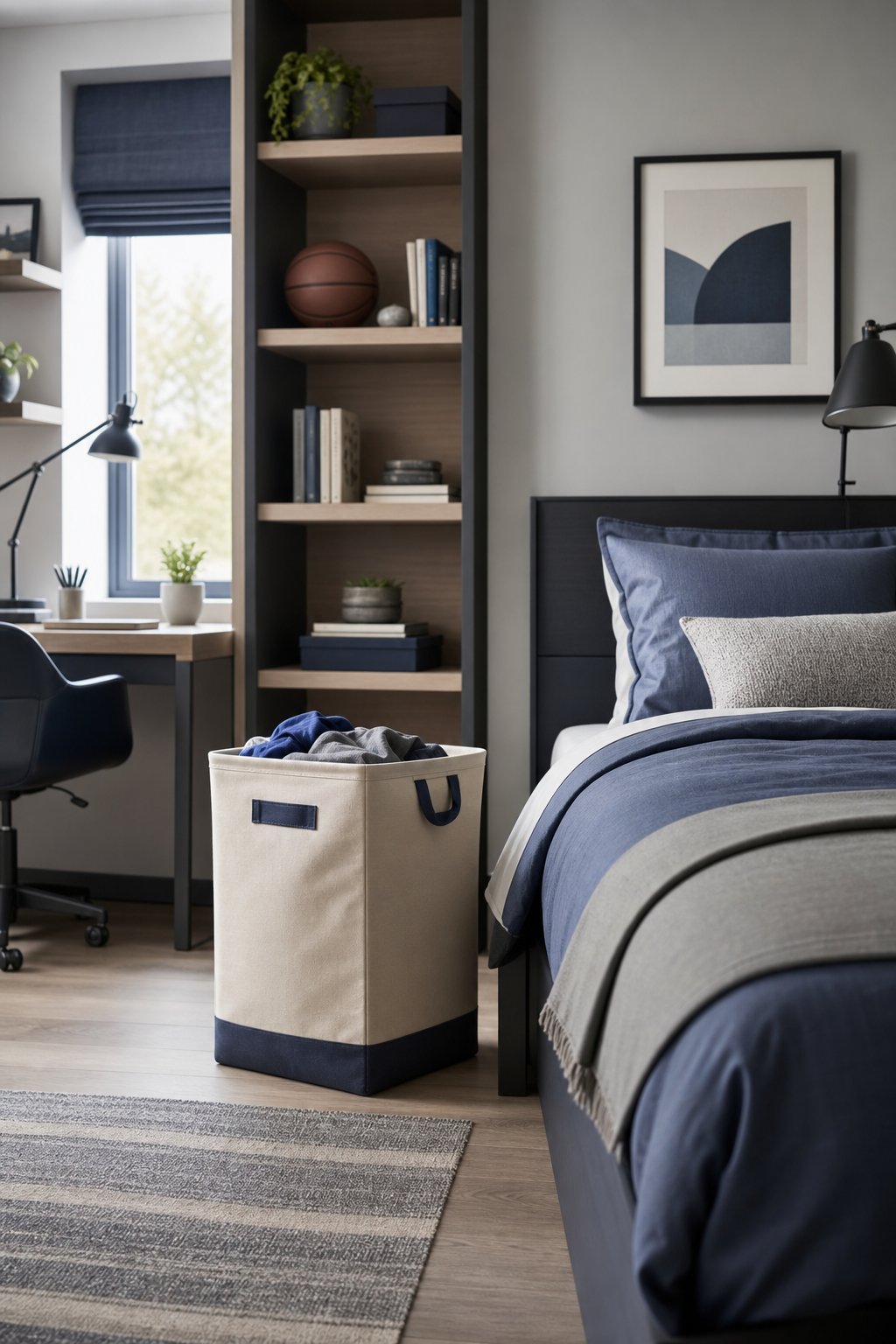
Choose a canvas laundry bin that matches your room's color story so it reads as part of the design, not an afterthought. A neutral like slate, olive, or sand keeps the eye calm and works with most bedding and rug tones.
Pick a bin about 18-20 inches tall and 14-16 inches wide so it fits under a bedside table or next to a dresser without blocking drawers. Look for one with handles so you can tuck it away or carry it to the washer easily.
Place it where it balances the room visually - near the closet or at the foot of the bed - not in the middle of the floor. A low-profile lid or an open-top style keeps the silhouette clean and avoids extra clutter.
If you want texture, choose a slightly ribbed or canvas-woven fabric rather than bright prints. That small choice keeps the piece functional while making the room feel intentionally arranged.
Layout Choices That Grow With You
Think about how you use the room now and how that use might change. Focus on zones that can shift roles over time, and use vertical storage to free floor space for future needs.
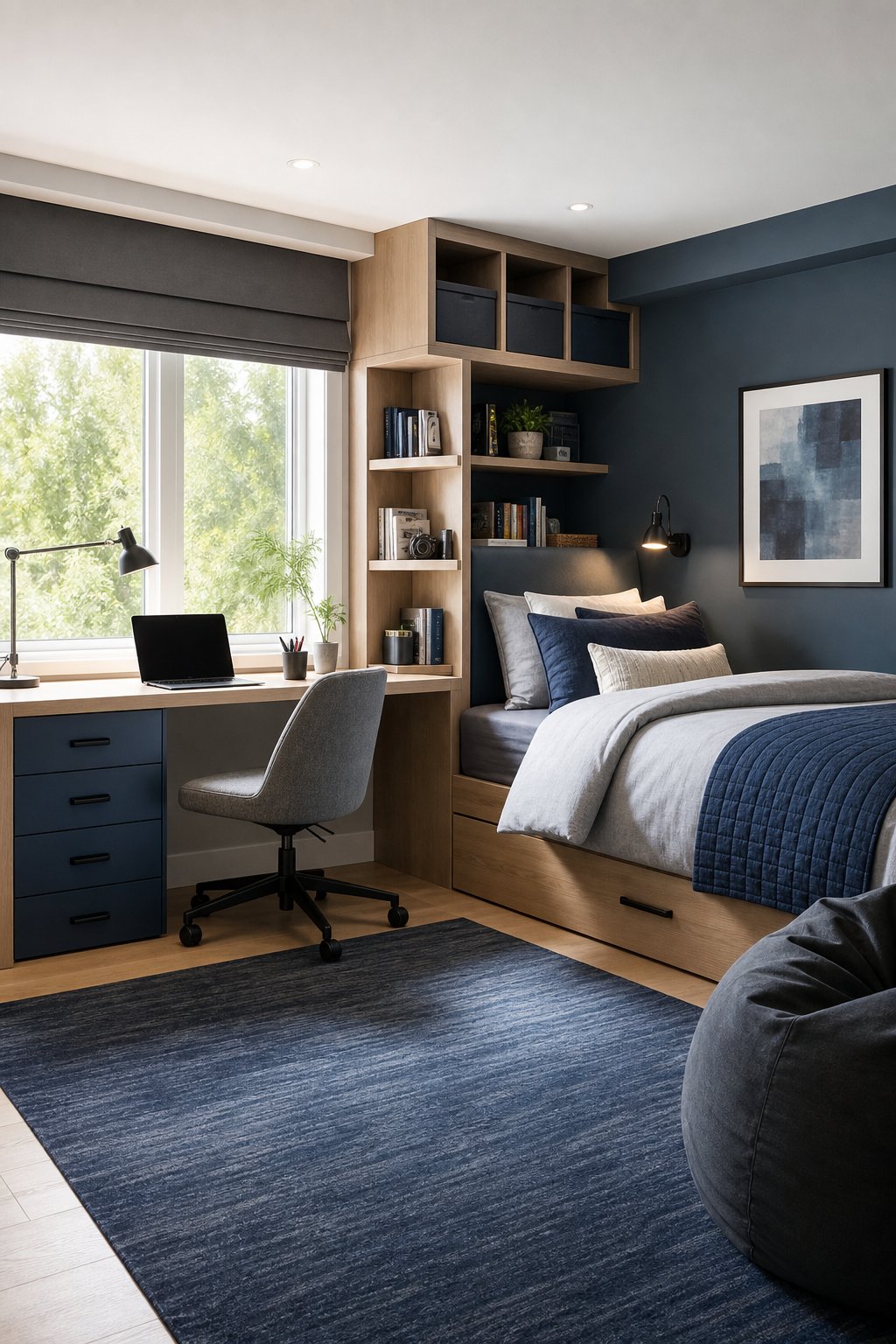
Flexible Zones for Hobbies and Downtime
Design a single zone that can switch between studying, music, and hanging out. Place a desk that is 48-60 inches wide against a wall so it can hold a laptop and still leave surface for sketching or a small MIDI keyboard. Keep the chair light and easy to move; you can pull it into the center for group work or push it under the desk to open the floor.
Use a low-profile lounge or daybed (about 75-80 inches long) instead of a full sofa. It doubles as seating for friends and a nap spot, and it won't block sightlines or make the room feel crowded. Keep surfaces clear with a small rolling cart for hobby supplies; when interests change, roll it into a closet.
Plan electrical access: put a power strip on the desk and one near the seating zone so devices don't require long cords. Use modular storage cubes (11-13 inch cubes) that you can rearrange into a shelf, bedside table, or gear stack as your needs change.
Making Use of Vertical Space
Think up, not out. Install wall-mounted shelves at eye level and higher; place frequently used items between 36-60 inches off the floor and display or storage above that. This keeps the floor clear for layout changes and makes cleaning easier.
Add pegboards or a slatwall panel above the desk for tools, headphones, and cables. They let you rearrange hooks and small bins without drilling new holes. For clothes, use a tall wardrobe or open shelving that's 72-80 inches high, so you gain hanging space and top shelves for seasonal bins.
Anchor a vertical reading light or sconce to free bedside table space and maintain useful task lighting as the room evolves. Choose hardware and shelf depths (10-12 inches) that fit books, game consoles, and small bins without sticking into the walking path.
Color, Texture, and Personality: Building a Foundation
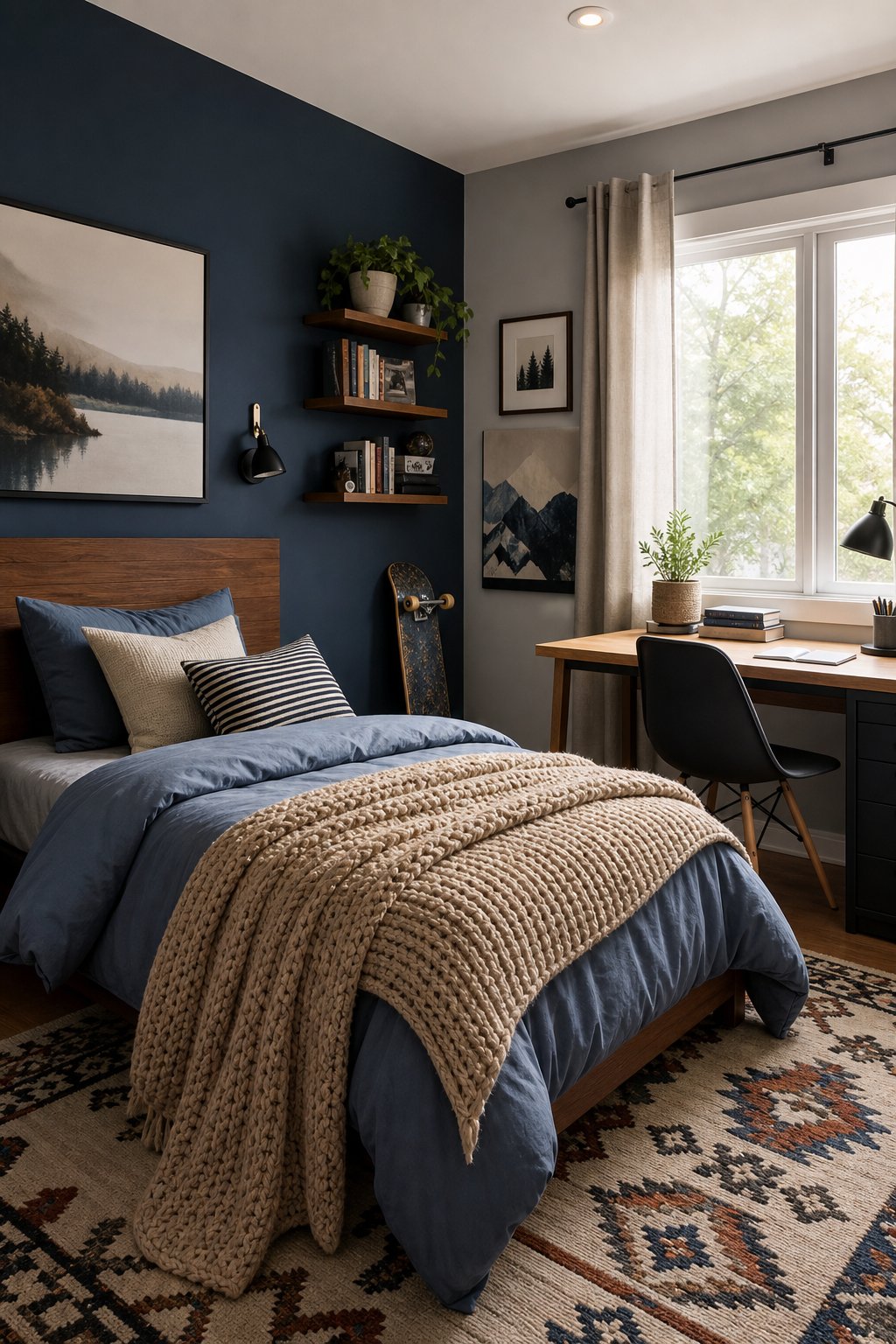
Choose a restrained base palette and add one or two purposeful touches that reflect interests. Think about how color, fabric, and small keepsakes work together so the room reads as thoughtful, not cluttered.
Layering Neutrals and Bold Accents
Start with a neutral base-warm gray walls or off-white trim-to keep the space calm and flexible. Neutrals let you change accents without repainting. Use a matte paint on walls and a slightly warmer tone on trim to create depth.
Add a single bold color in measured doses: a 36-48-inch area rug, a headboard panel, or a lacquered desk lamp. Place the accent near where the eye lands first-above the bed or beside the desk-to anchor the room visually. Textures matter: mix a woven throw, a leather chair, and a metal task lamp to avoid flatness. Keep patterns limited to one scale (large or small) so the accents read intentional.
Adding Meaningful Art and Mementos
Pick a small number of items that tell a story-sports photos, framed concert posters, or a shelf of model cars-and give them clear spots. Hang a gallery of three to five frames above the bed or desk; use identical frames or mats to unify different images.
Use shelf clusters with a consistent horizontal spacing (about 6-8 inches) to avoid a messy look. Rotate pieces seasonally so the room stays fresh without adding more stuff. Place one memento at eye level on a bedside shelf or desk surface so it feels curated, not crowded.