Moving into a bedroom without a closet often feels like a massive design hurdle. Whether you are in a historic home where closets were an afterthought, or a quirky apartment layout that skipped storage altogether, the immediate panic usually leads to buying a flimsy metal rolling rack. But relying on temporary fixes can quickly give your space a cluttered, "dorm room" feel.
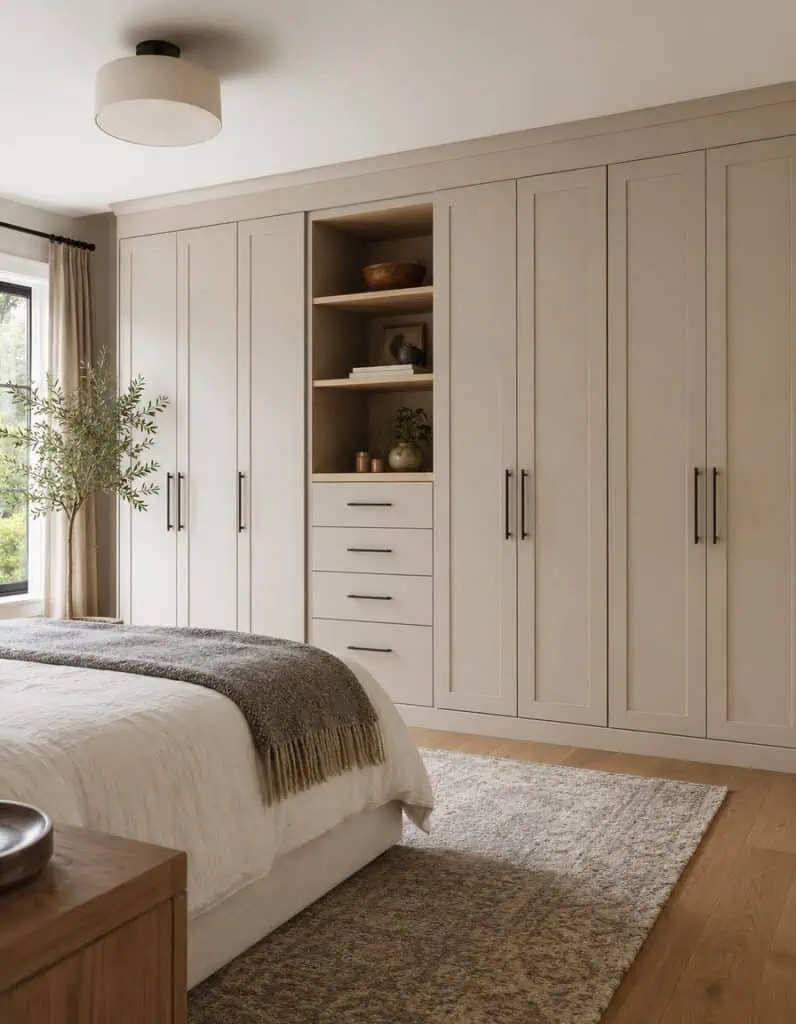
The secret to a no-closet bedroom is treating your clothing storage as a deliberate architectural or styling choice. When you stop trying to hide your wardrobe and start integrating it into the room's layout, the space feels pulled together. By paying attention to visual weight, color palettes, and furniture placement, you can create storage solutions that look entirely intentional.
Before you buy a single piece of furniture, you need to understand exactly what your space and your wardrobe require. Use this planning checklist to assess your room.
1. Wall-to-Wall Modular Systems Built to Look Custom
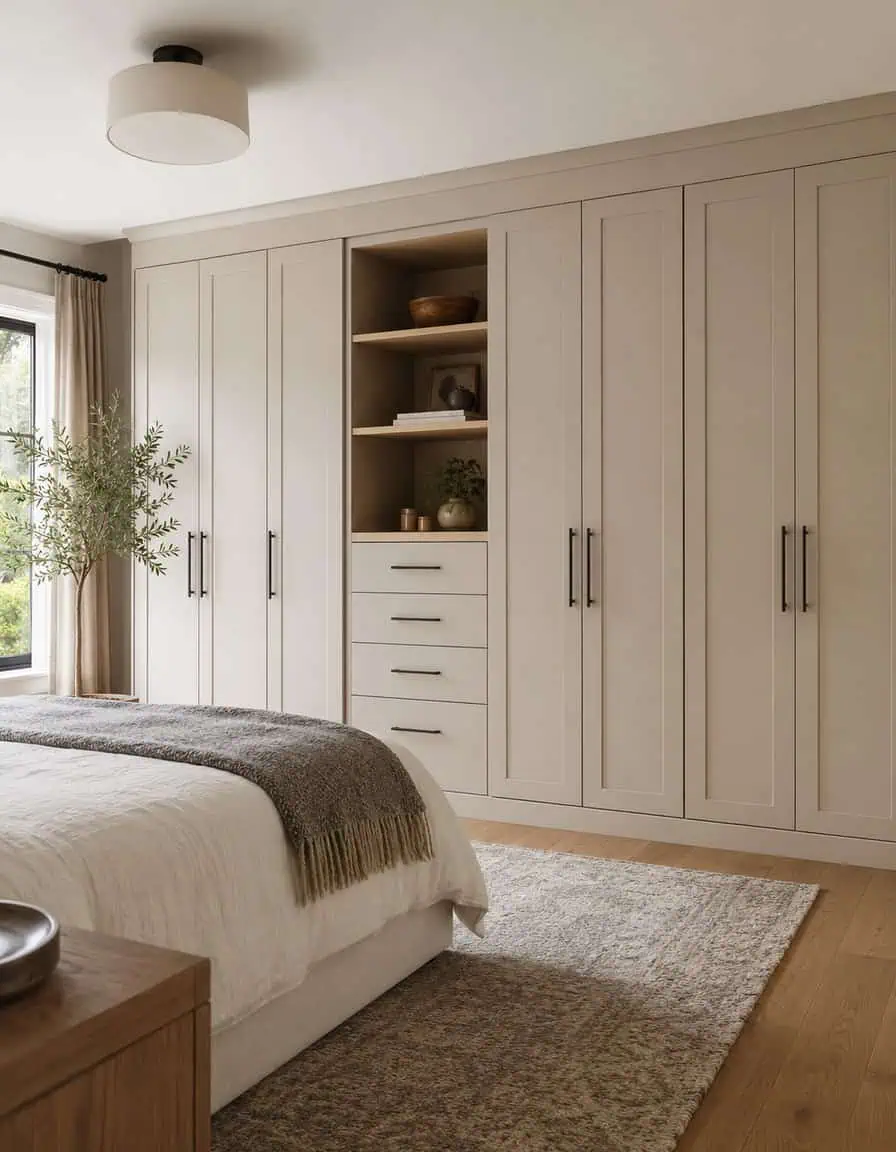
If you have one long, uninterrupted wall, a modular wardrobe system is your best friend. By running the units from corner to corner and adding trim to the top and bottom, standard flat-pack furniture suddenly looks like high-end custom millwork. This layout grounds the room and provides massive storage without feeling piecemeal.
2. Color-Drenched Armoires That Blend Into the Wall
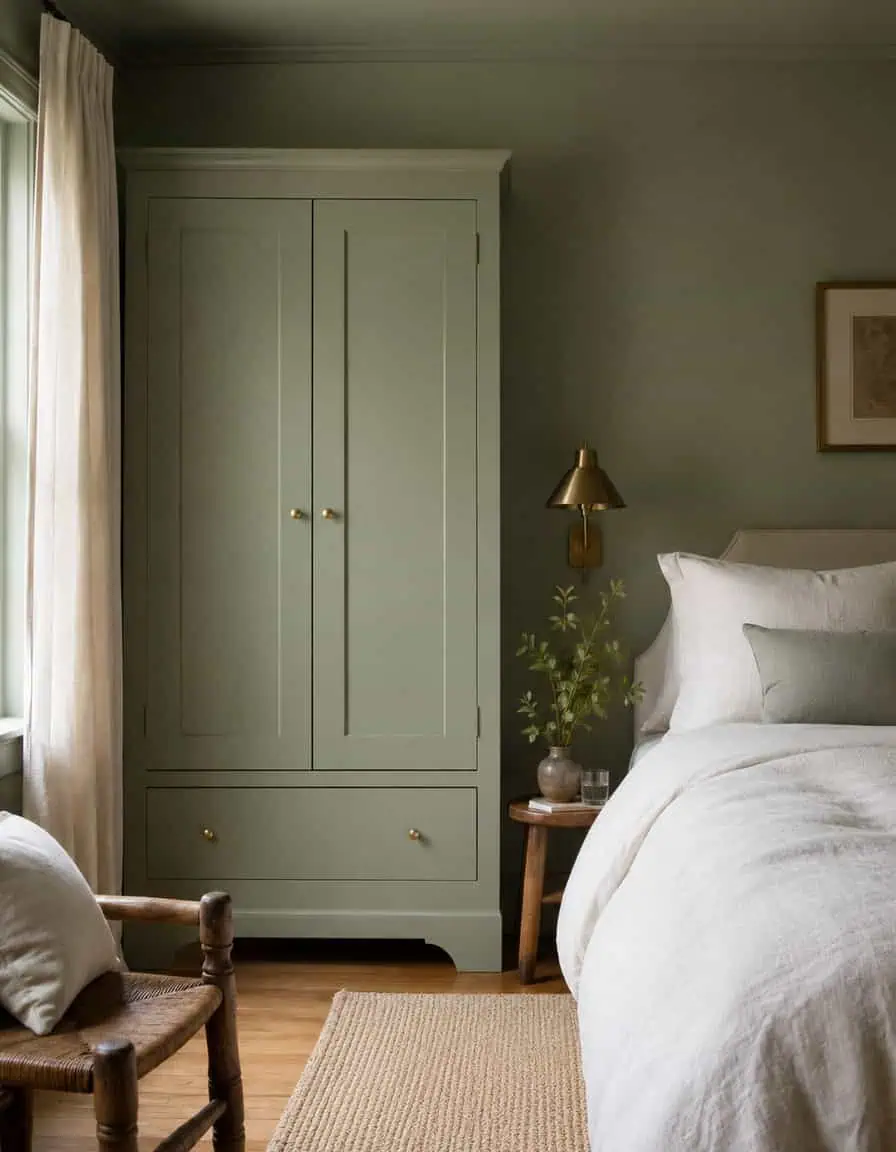
A large, freestanding armoire can feel incredibly heavy in a small bedroom. To reduce its visual weight, try "color-drenching." Paint the armoire the exact same color as your bedroom walls. This styling trick tricks the eye, allowing the bulky furniture to recede into the background rather than dominating the space.
3. The Curtained Alcove Using High-Quality Drapery
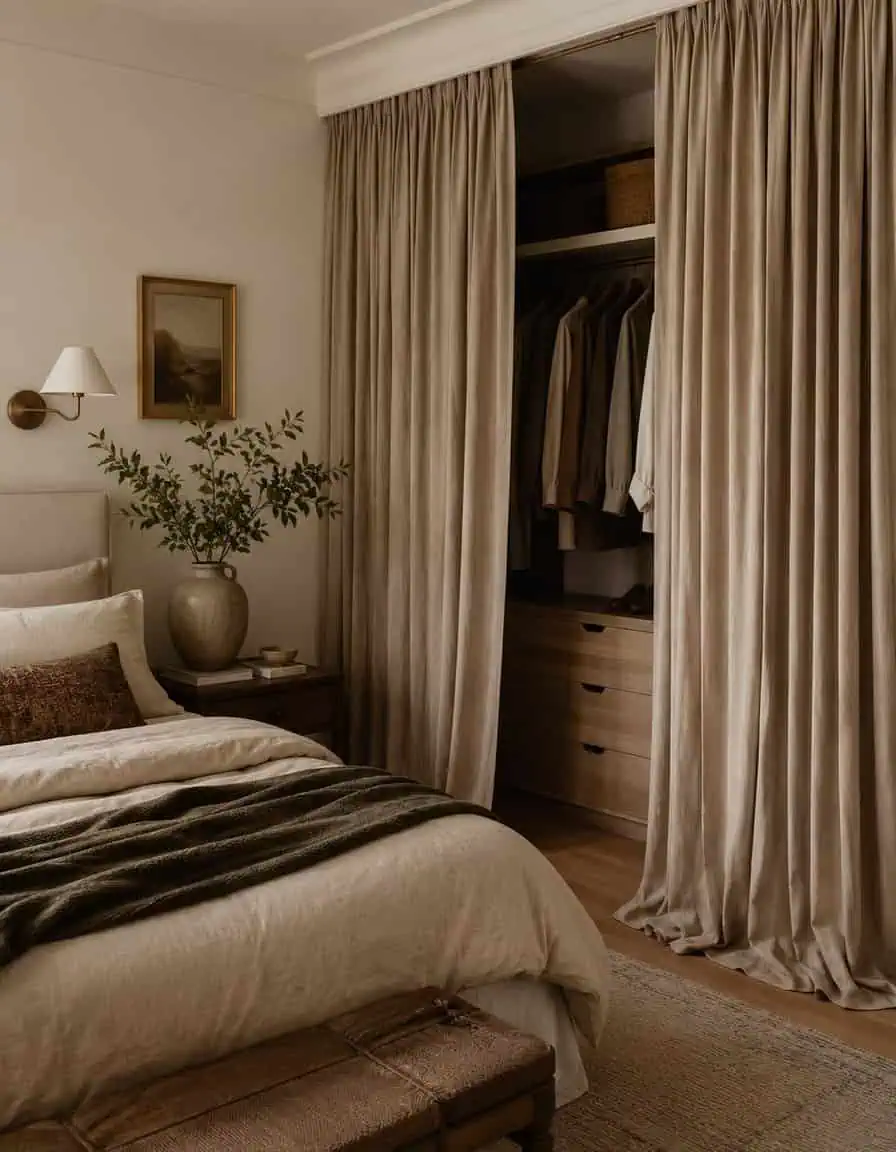
If your room has an awkward niche or a recessed wall, turn it into a closet by installing a wall-to-wall ceiling track. The key to making this feel designed rather than temporary is the fabric. Skip cheap tension rods and thin fabrics; instead, use heavy, pleated linen or velvet drapes that pool slightly on the floor for a luxurious, architectural feel.
4. Floating Wall Shelves Anchored Over a Low Dresser
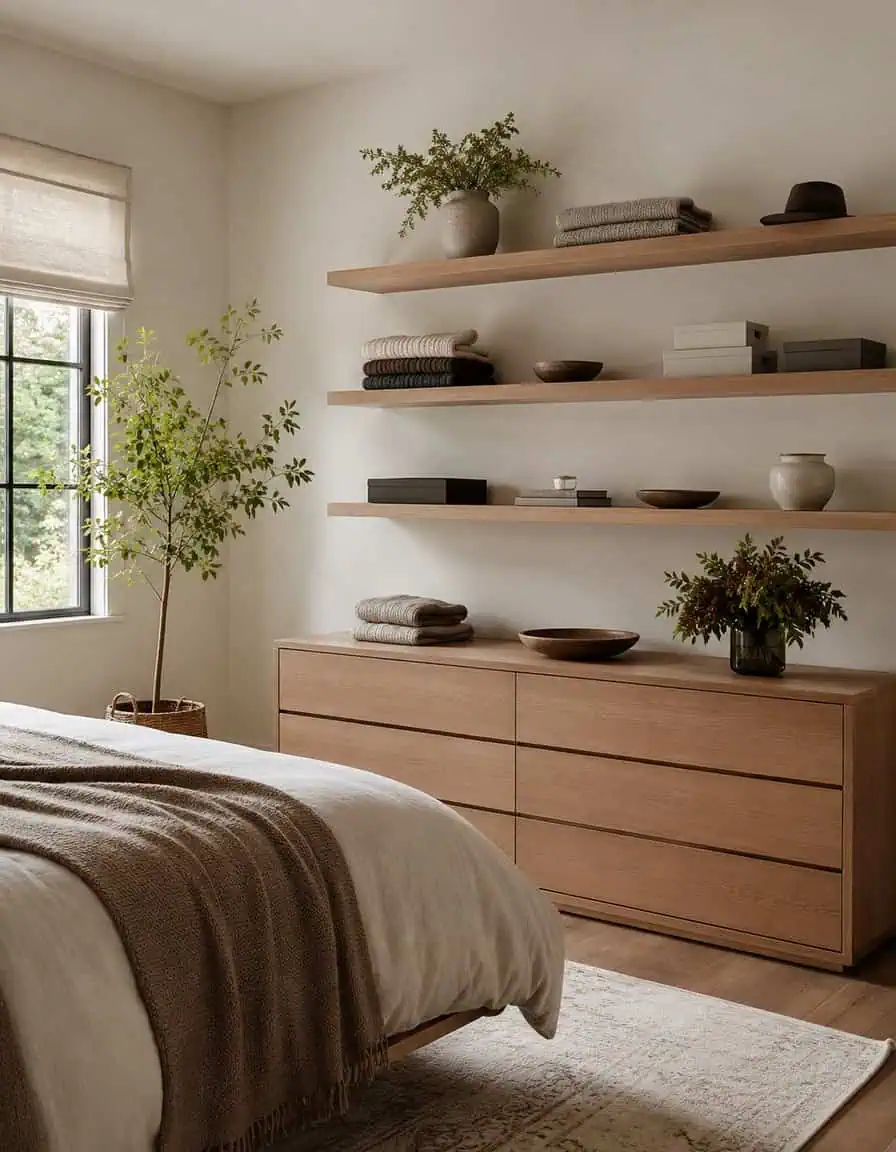
For a lighter footprint, pair a long, low dresser with a series of floating shelves mounted directly above it. The dresser handles all your folded items and undergarments, while the shelves can hold neatly folded sweaters, hats, and decorative boxes. This keeps the upper half of the room feeling open and airy.
5. Vintage Wardrobes as Room-Defining Statement Pieces
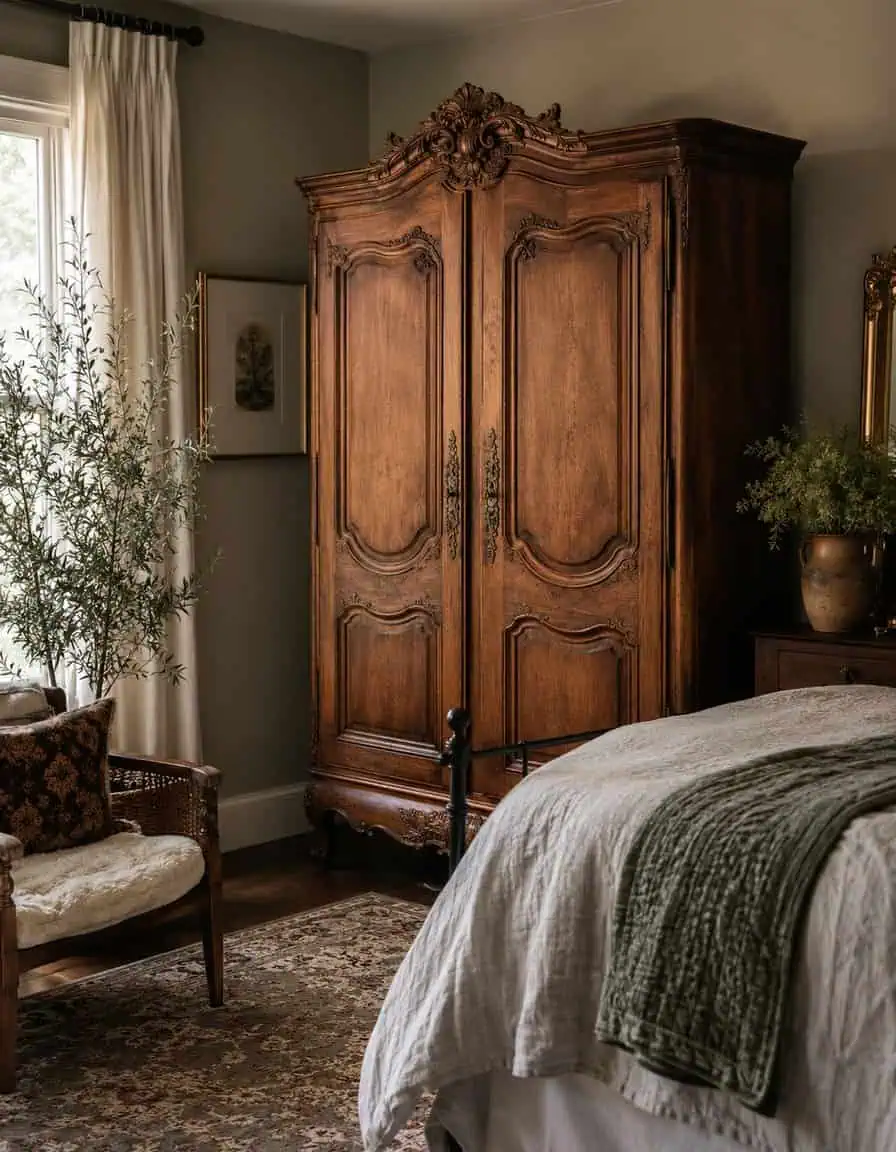
Sometimes, the best approach is to lean into the lack of a closet by bringing in a massive, beautiful antique wardrobe. An intricately carved wooden armoire or a mid-century modern gentleman's chest acts as the focal point of the room. When the piece is stunning, no one questions why it's there.
6. Industrial Pipe Racks Grounded by a Runner Rug
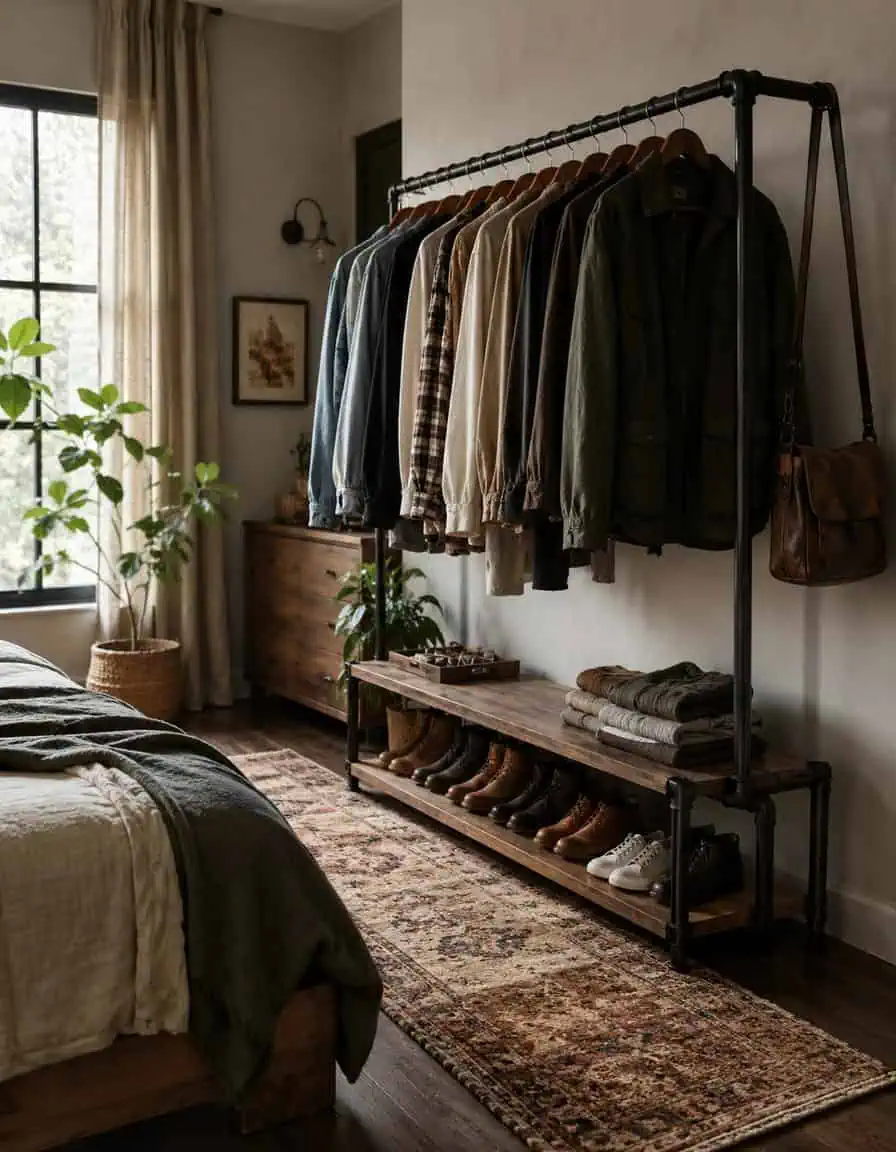
Open pipe racks can look industrial and cold if left floating on a bare floor. To make an open rack feel intentional, anchor it visually. Place a textured runner rug directly beneath the rack, and perhaps a low wooden shoe bench over the rug. This creates a defined "dressing zone" rather than just a rack pushed against a wall.
7. Behind-the-Bed Wardrobe Walls
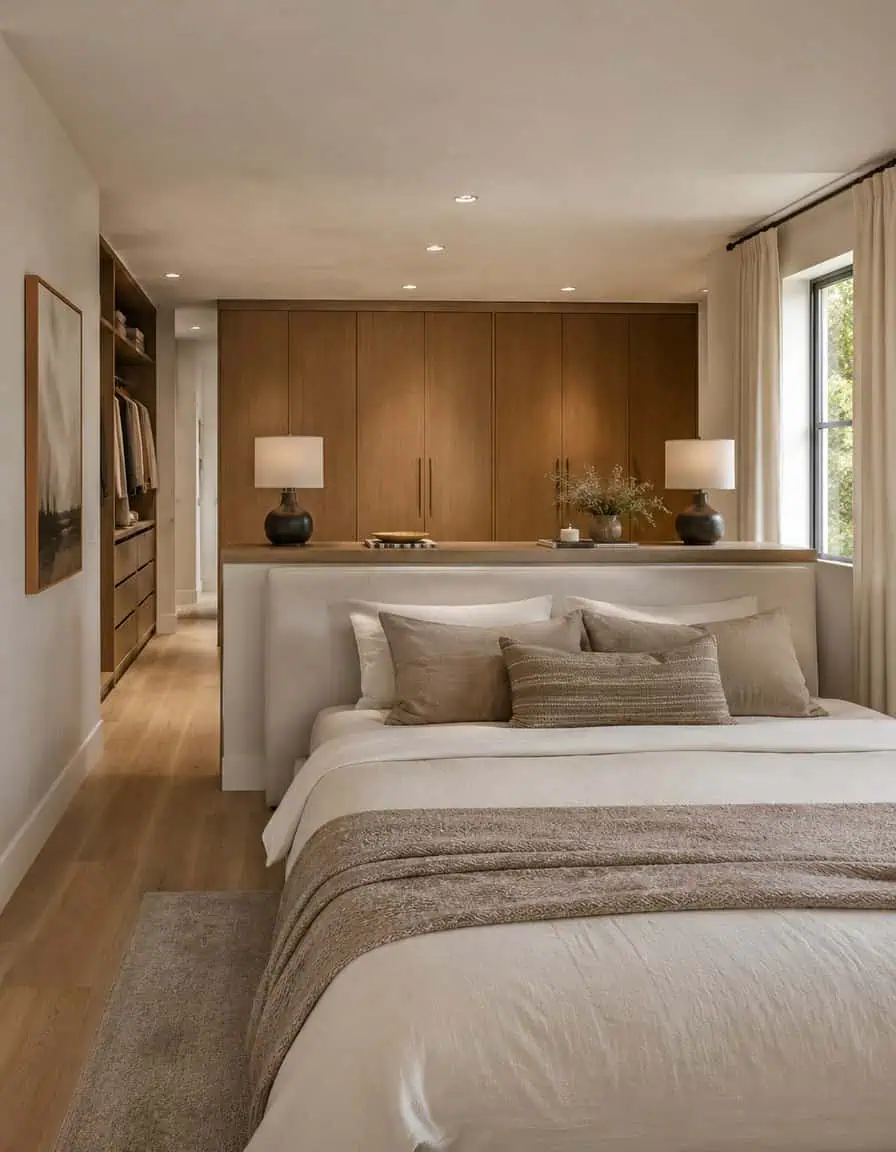
If your room is long and narrow, consider pulling your bed forward into the center of the room. You can then install a row of sleek, floor-to-ceiling wardrobes against the back wall. The back of your headboard (or a low room divider) creates a natural hallway, giving you a walk-in closet experience in a standard room.
8. Sleek Open Systems with Closed Bottom Drawers
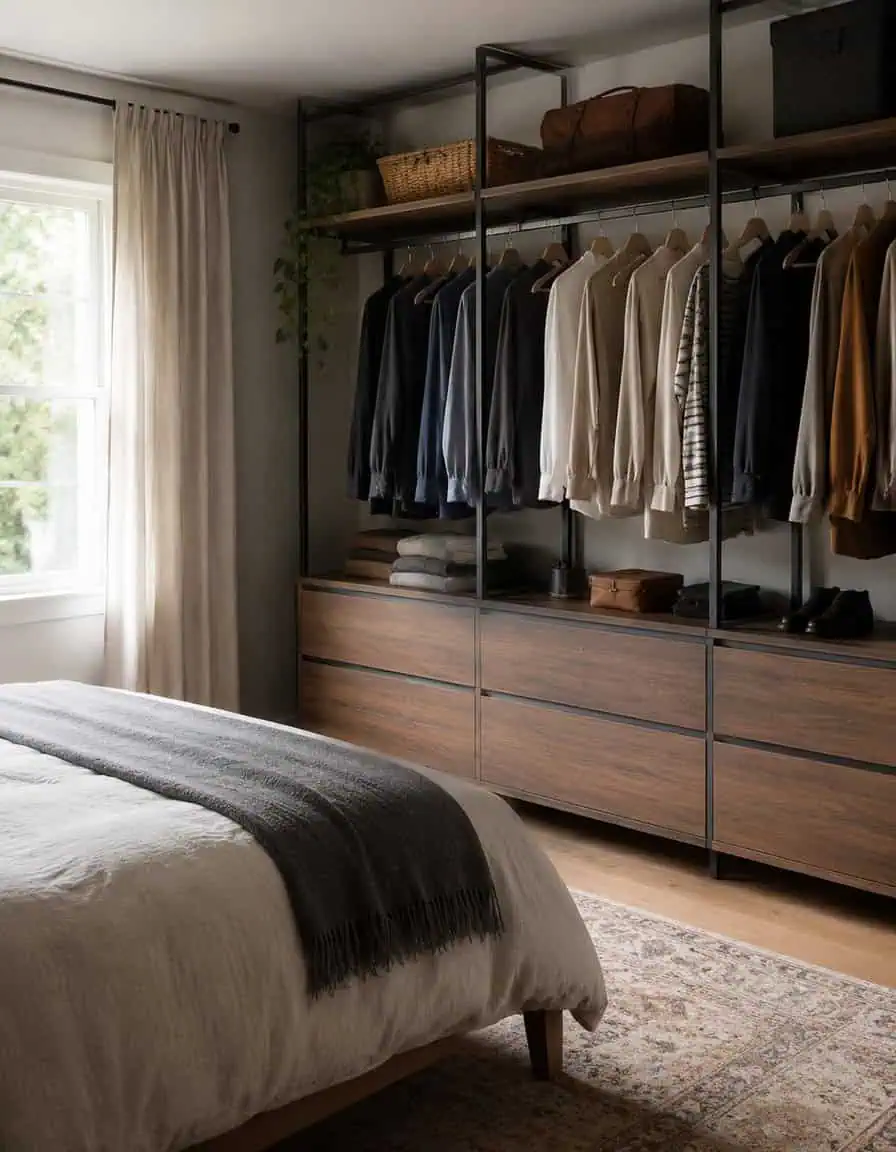
The most functional open closets mix display with concealment. Choose a system that features hanging rods at eye level but solid, closed drawers at the base. This grounds the unit visually and gives you a place to hide socks, underwear, and workout gear that never looks tidy on a shelf.
9. Mirrored Armoires to Visually Expand the Room
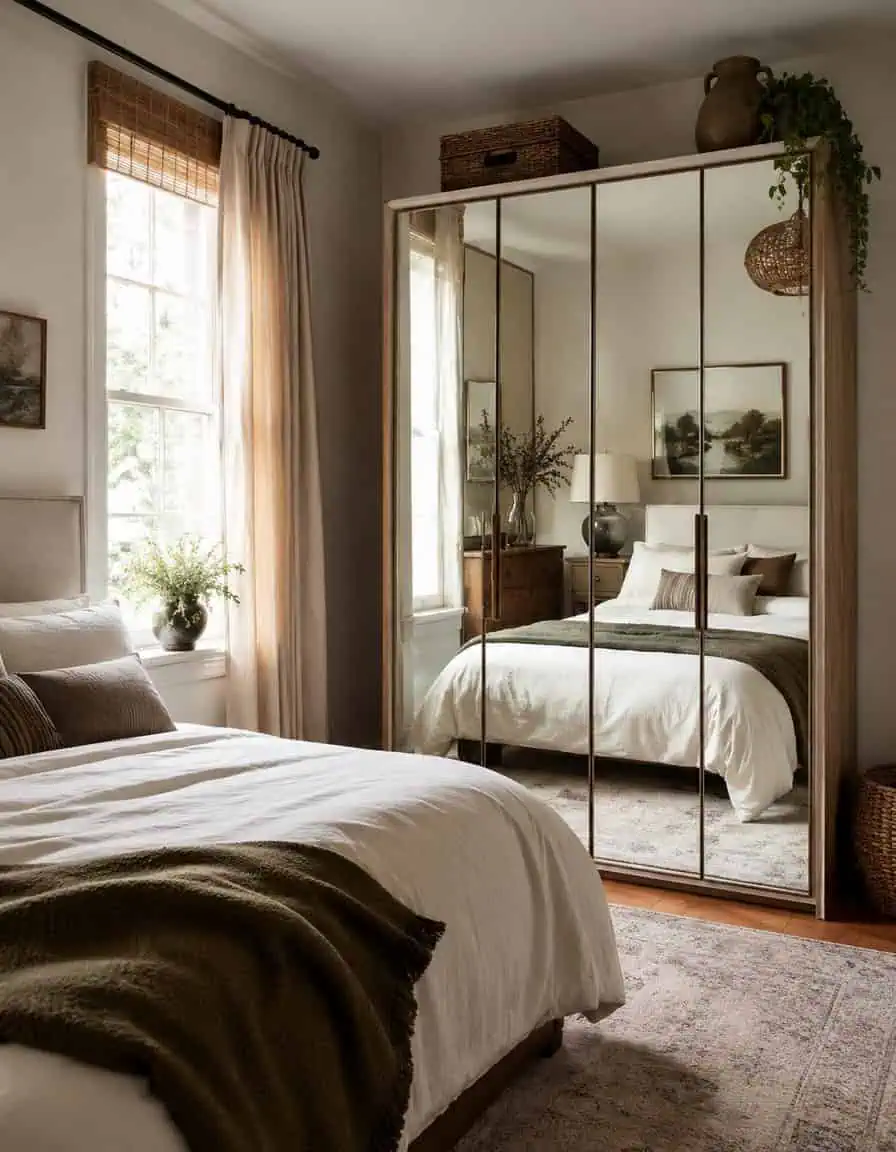
Adding a large piece of storage furniture to a small room can make it feel cramped. Counteract this by choosing an armoire with mirrored doors. The mirrors bounce natural light around the room and reflect the opposite walls, effectively doubling the visual depth of the space while hiding your clothes.
10. Corner Clothing Racks Paired with Floating Shelves
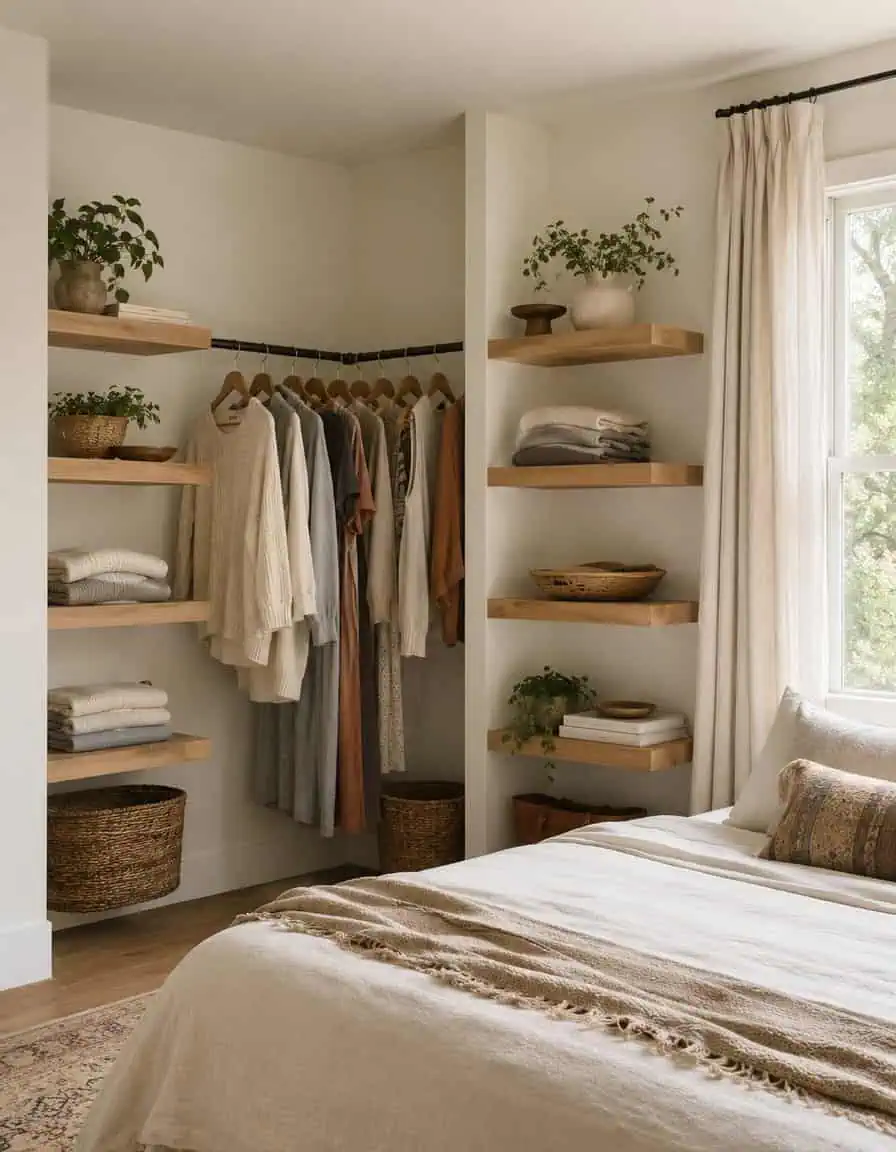
Corners are notoriously underutilized. A custom corner hanging rod makes use of this dead space. To make it look styled, flank the hanging rod with floating shelves on the adjacent walls. This creates a cohesive, wrap-around storage nook that feels built specifically for the room's geometry.
11. The 'Boutique' Display: Curated Open Rack Plus a Dresser
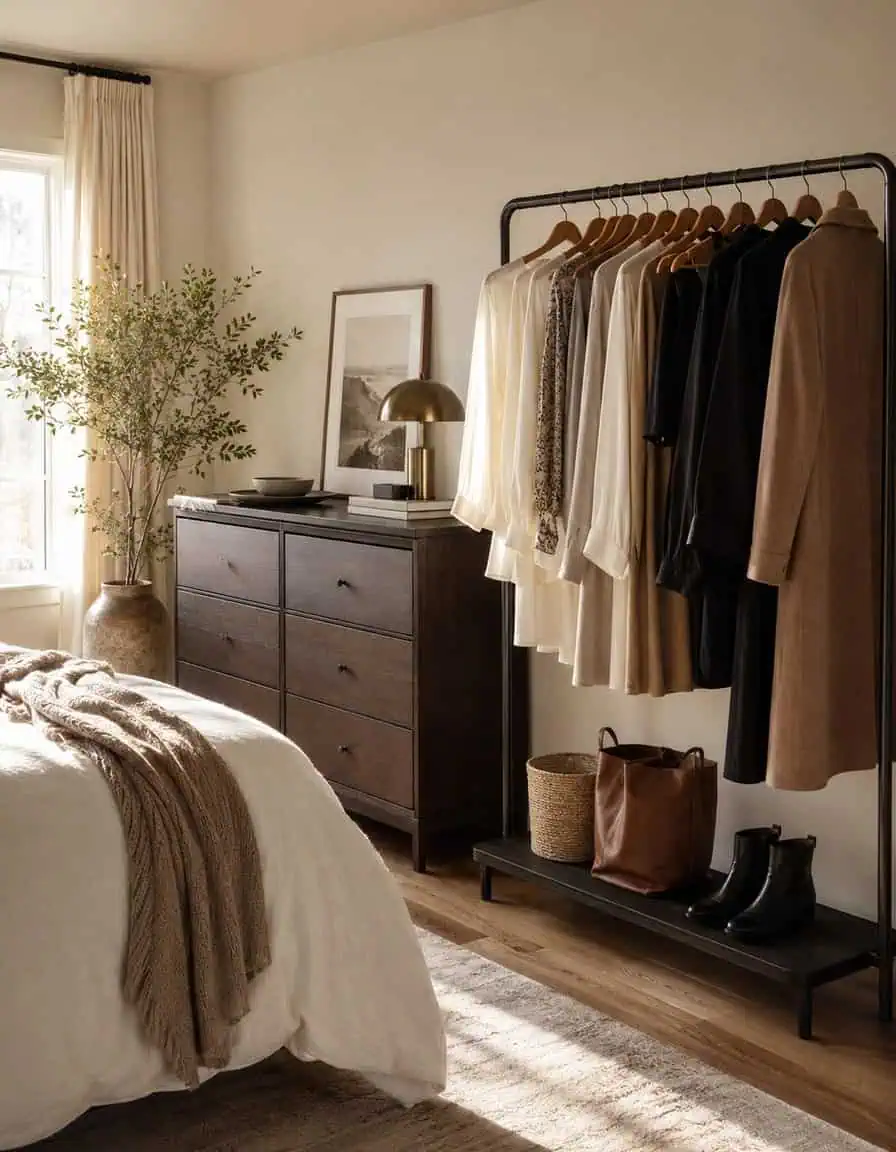
If you have a beautiful, curated wardrobe, treat it like retail display. Use a minimalist, high-quality metal rack for your best coats, dresses, and blouses, ensuring all hangers match perfectly (wood or velvet). Keep the rest of your everyday clothes hidden away in a standard dresser nearby.
12. Under-Bed Storage Drawers That Match the Frame Seamlessly
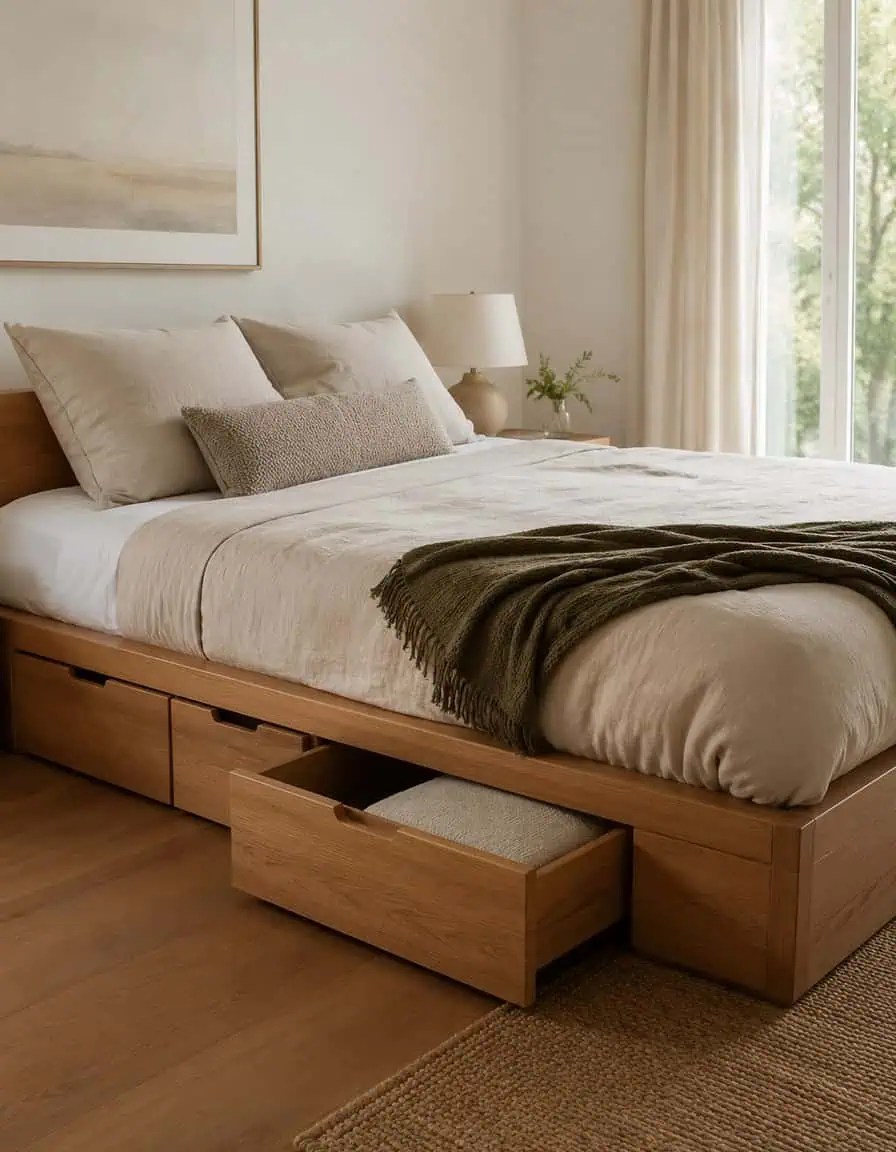
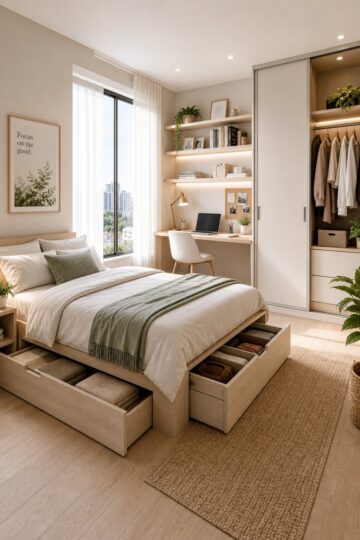
When floor space is at a premium, the area under your bed is prime real estate. Avoid plastic bins that scream "storage." Instead, invest in a bed frame with integrated, flush-mount drawers, or buy wooden rolling drawers that perfectly match the finish of your bed frame so they look like a single, cohesive piece of furniture.
13. Room Divider Wardrobes for Studio Layouts
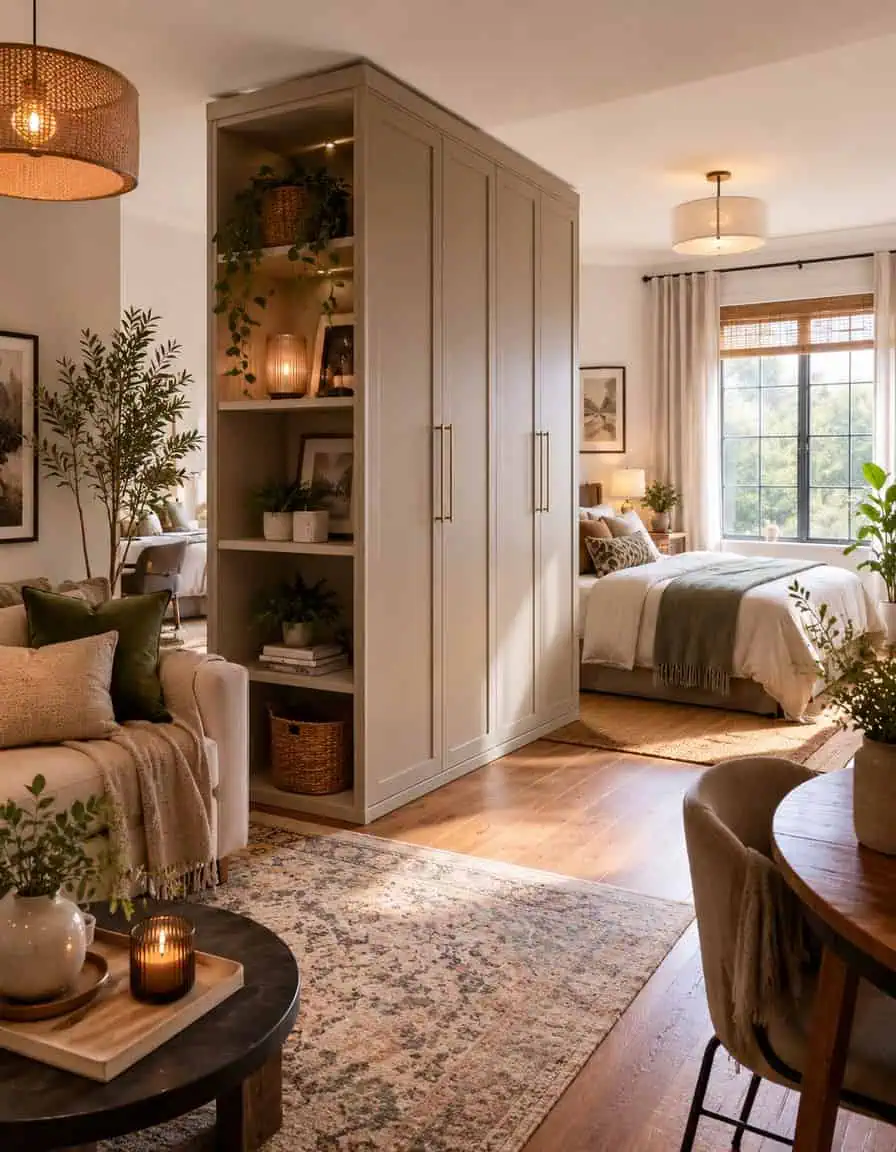
In a studio apartment or a very large bedroom, a freestanding wardrobe can double as a wall. Place a sturdy, finished-on-all-sides wardrobe perpendicular to the wall to separate your sleeping area from your living or dressing area. It provides storage while simultaneously improving the room's layout.
14. High Perimeter Shelving for Off-Season Items
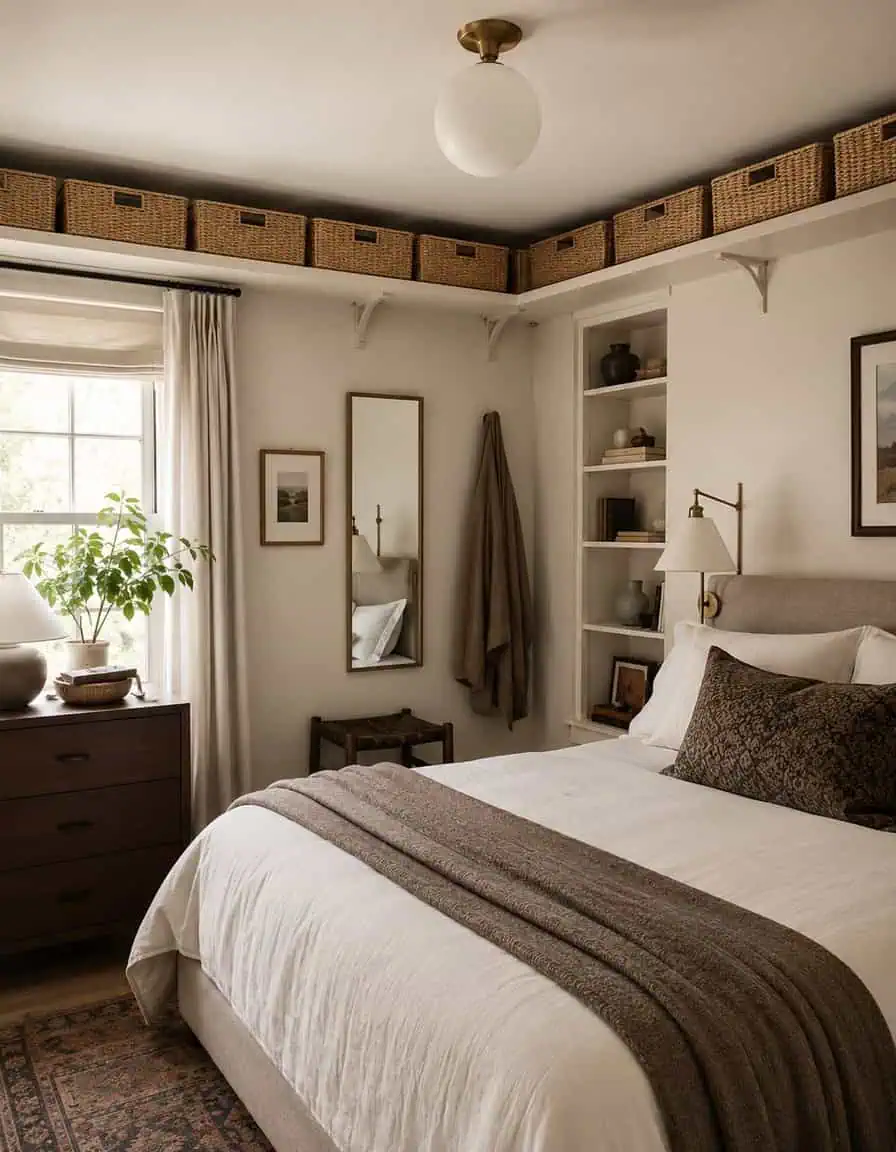
Look up. The 12 to 18 inches of space just below your ceiling is perfect for a continuous perimeter shelf. Use this shelf to store identical, high-quality woven baskets or fabric bins holding your off-season clothing. It draws the eye upward, making the ceilings feel higher while solving your storage overflow.
15. Symmetrical Flanking Armoires Beside the Bed
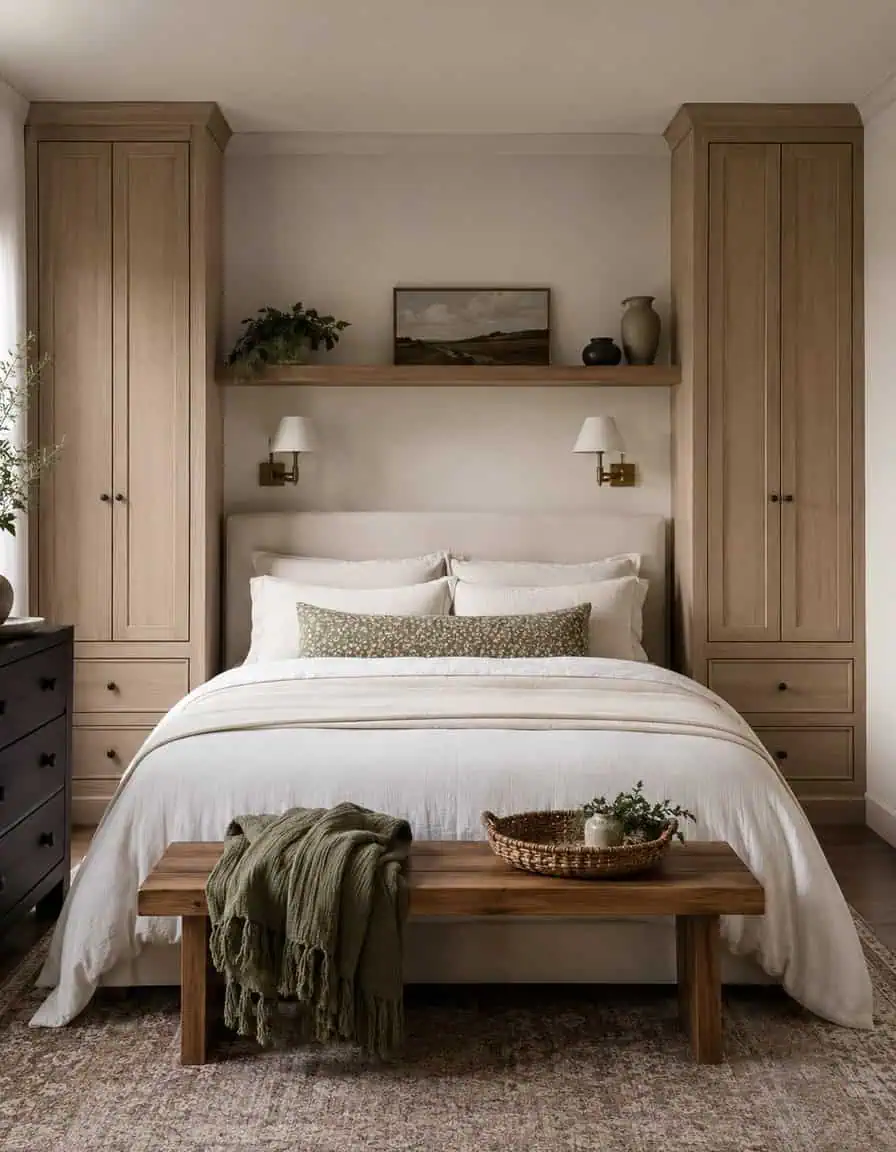
Create a stunning, custom-looking bed alcove by placing two identical, tall, narrow armoires on either side of your bed. Connect them with a floating shelf or a sconce above the headboard. This symmetrical layout frames the bed beautifully and provides balanced "his and hers" (or just extra) storage.
16. Tension-Rod Systems Hidden by a Linen Screen
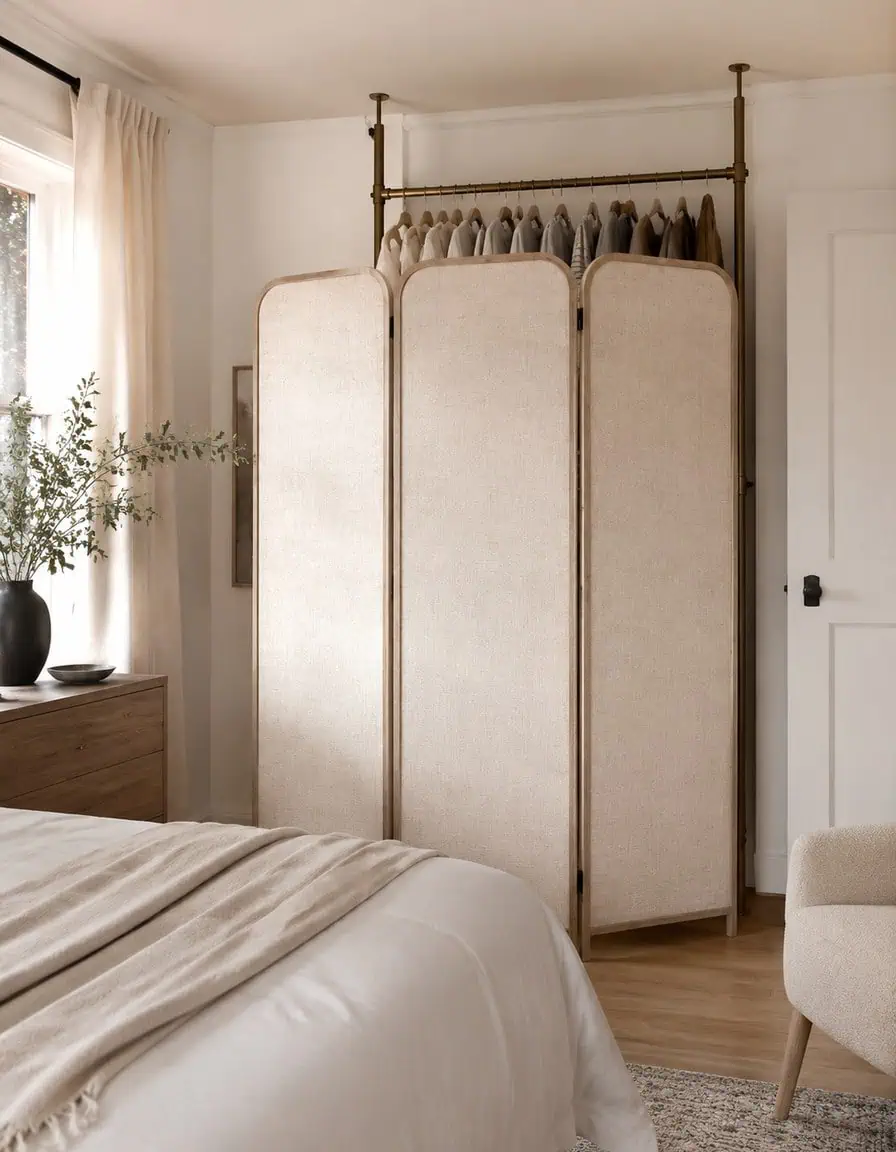
If you are renting and cannot drill into the walls, floor-to-ceiling tension rod systems are incredibly sturdy. To keep the room looking elegant, place a beautiful, three-panel folding screen (like rattan, cane, or upholstered linen) in front of the rack. It hides the visual clutter while adding texture to the room.
17. Repurposed Vintage Lockers for an Enclosed Look
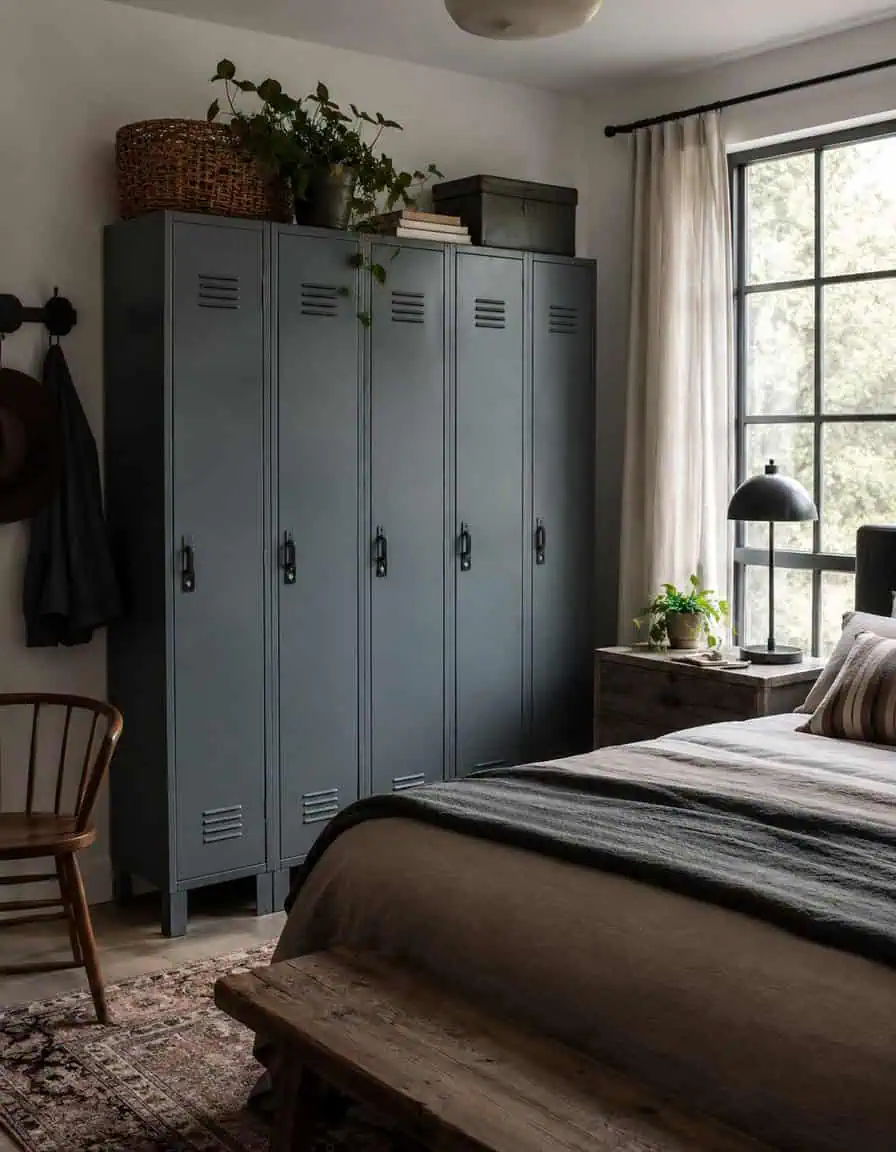
For a room with a slightly more eclectic or industrial edge, a bank of vintage metal school or gym lockers is a brilliant storage hack. They are tall, narrow, and naturally ventilated. Paint them a soft, matte color like dusty blue or olive green to elevate them from their high-school origins.
18. Built-In Window Seat Trunks for Bulky Sweaters
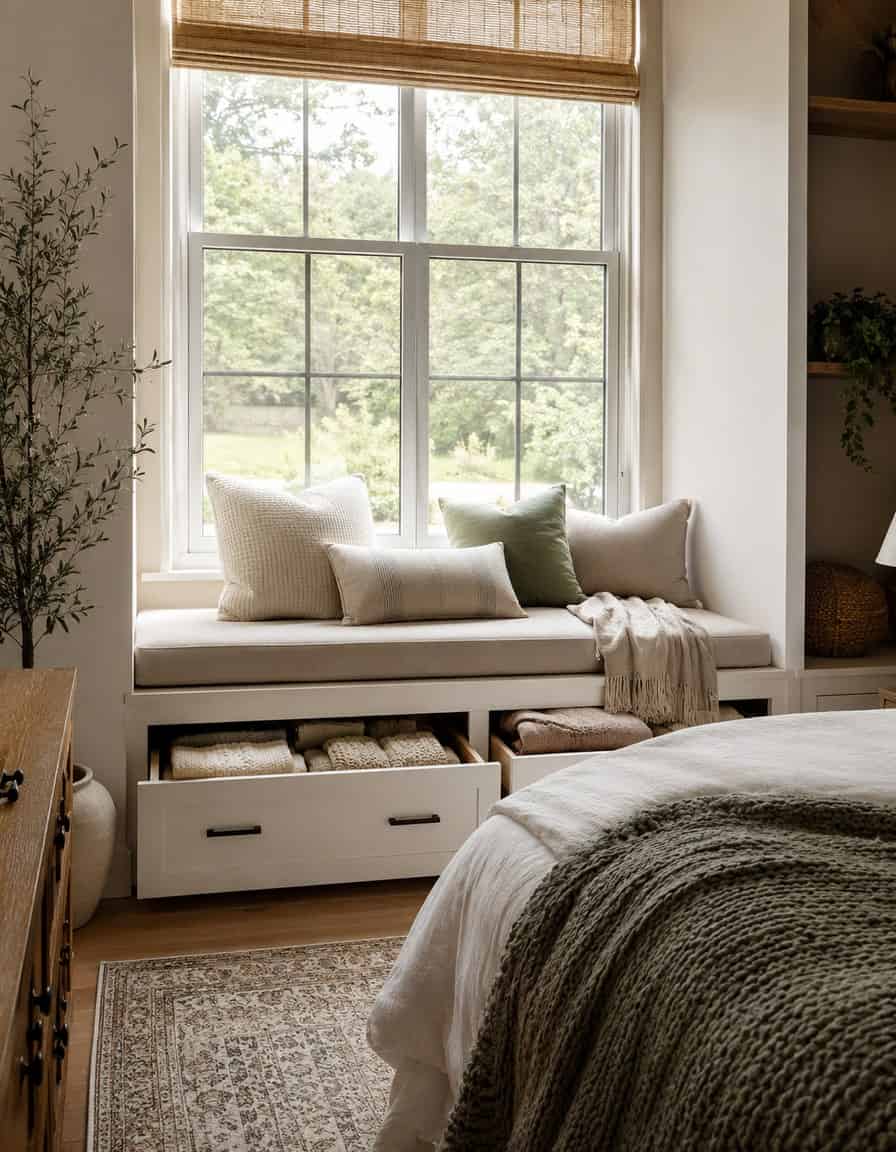
If you have a window, build or buy a sturdy bench to place beneath it. Ensure the bench has a lift-top or deep pull-out drawers. This creates a cozy reading nook while providing massive, hidden storage for your bulkiest items-like winter coats, thick wool sweaters, and extra bedding-that take up too much room elsewhere.
19. The Minimalist Wooden Garment Rack as Sculptural Art
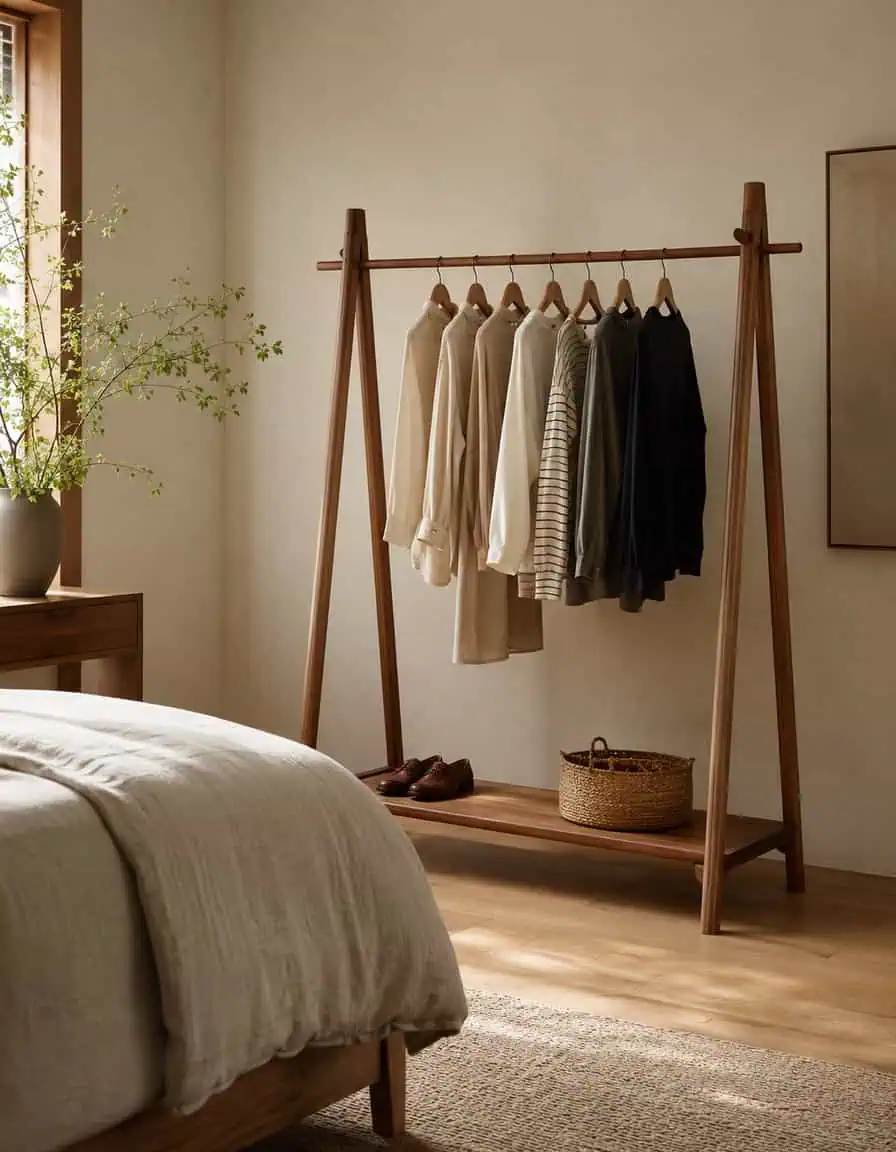
If you have pared your wardrobe down to a true capsule collection, let it breathe. A beautifully crafted, A-frame wooden garment rack can look like a piece of sculptural art. The trick is negative space: do not overstuff it. Let the wood grain and the curated colors of your clothing serve as room decor.
20. Uniform Woven Baskets on Deep Floating Shelves
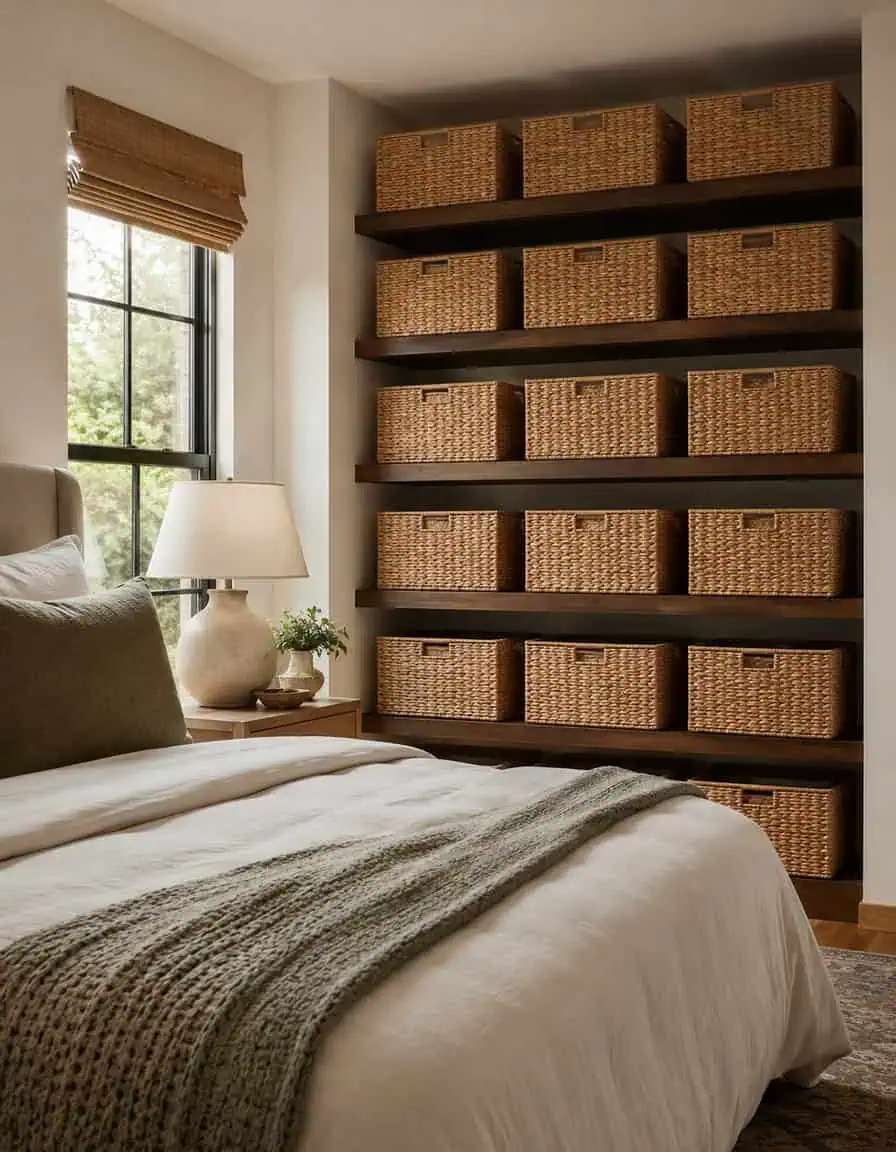
If you prefer folding to hanging, install a grid of deep, heavy-duty floating shelves. The styling secret here is absolute uniformity. Purchase identical, high-quality woven baskets (like water hyacinth or seagrass) that fit the shelves perfectly. This turns a wall of clothes into a wall of rich, organic texture.
21. A Dresser Tucked Inside a Faux Fireplace Nook
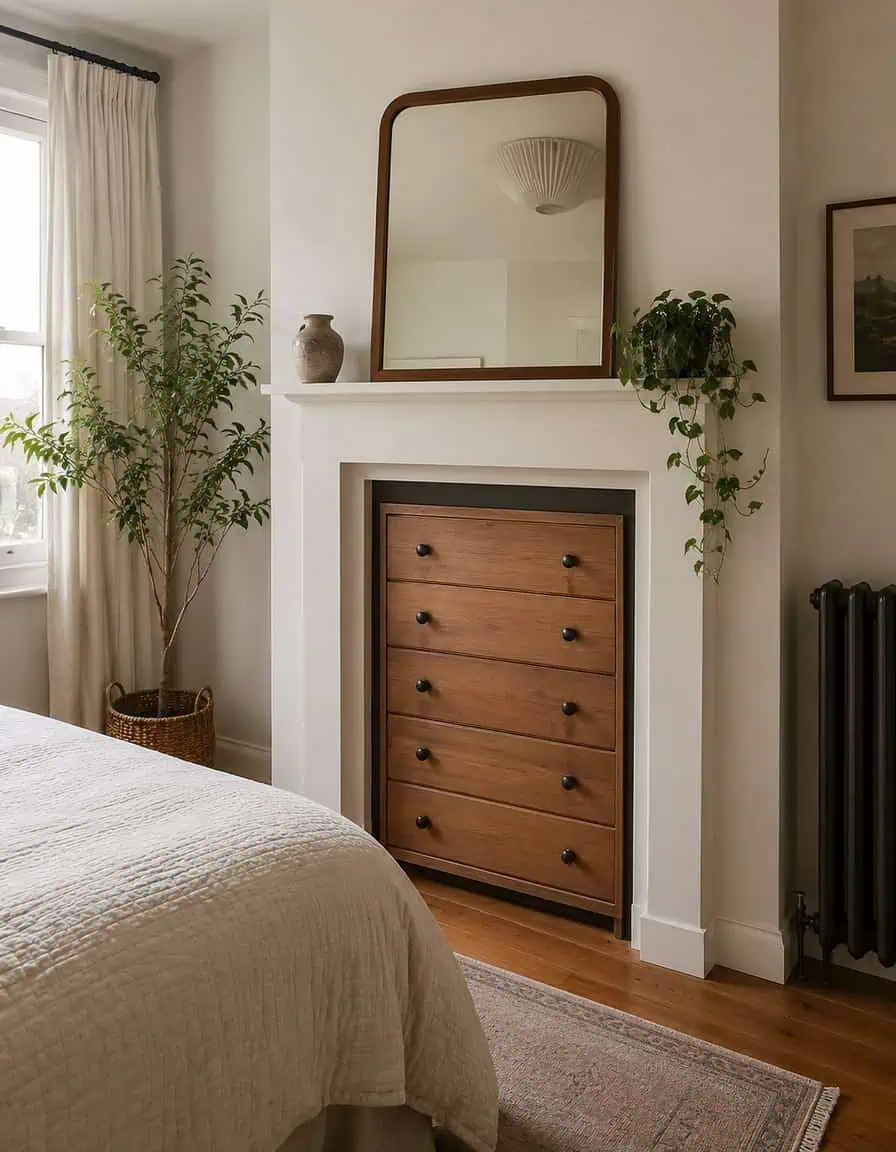
Many older homes have sealed-up fireplaces or shallow chimney breasts. Instead of leaving this space blank, find a beautiful, narrow dresser or a custom set of drawers that fits perfectly inside the hearth space. It utilizes an awkward architectural feature and turns it into a charming, intentional storage moment.
22. Floor-to-Ceiling Bookshelves Converted for Folded Clothes
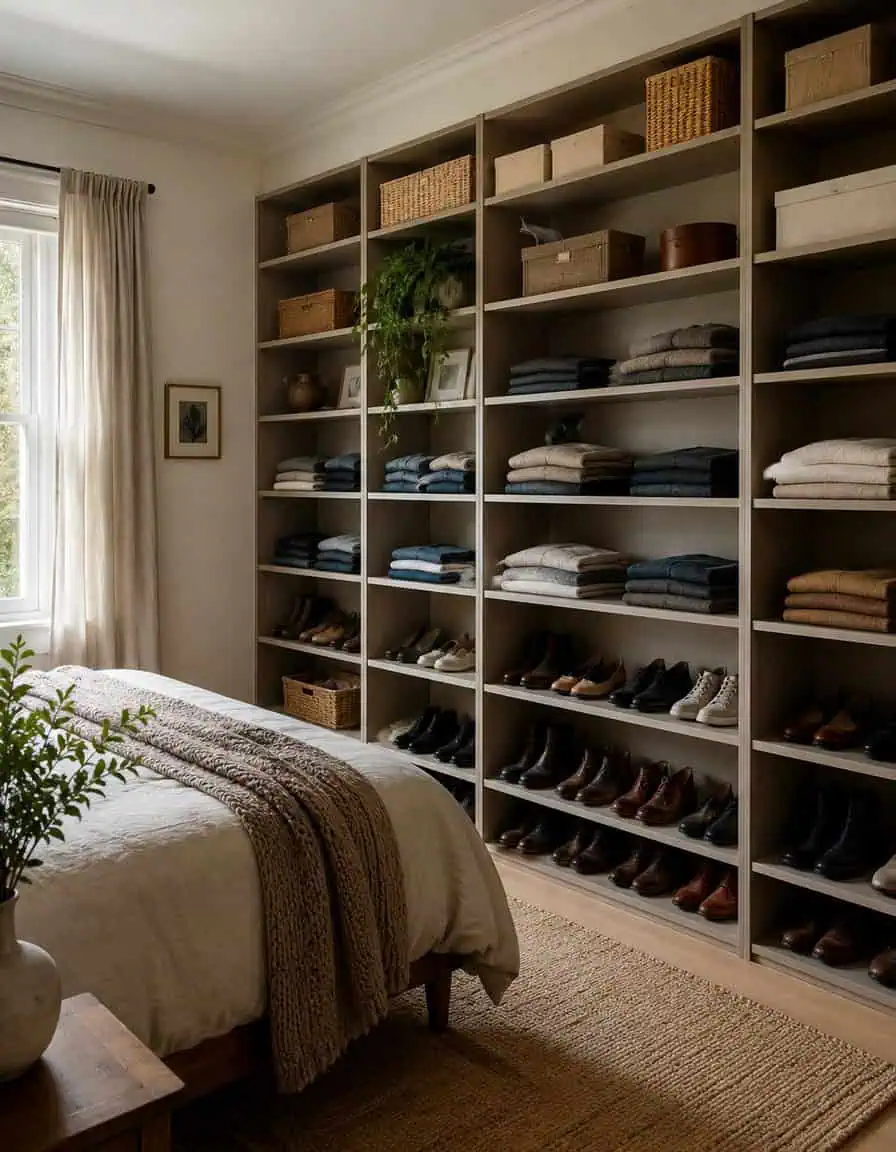
Standard bookcases are often cheaper than dedicated wardrobes. Buy tall, narrow bookcases and line an entire wall with them. Use the lower shelves for shoes, the middle shelves for neatly folded denim and sweaters, and the top shelves for decorative boxes. It gives the room a cozy, library-like feel.
23. The 'Headboard Closet' Built Directly Behind the Bed
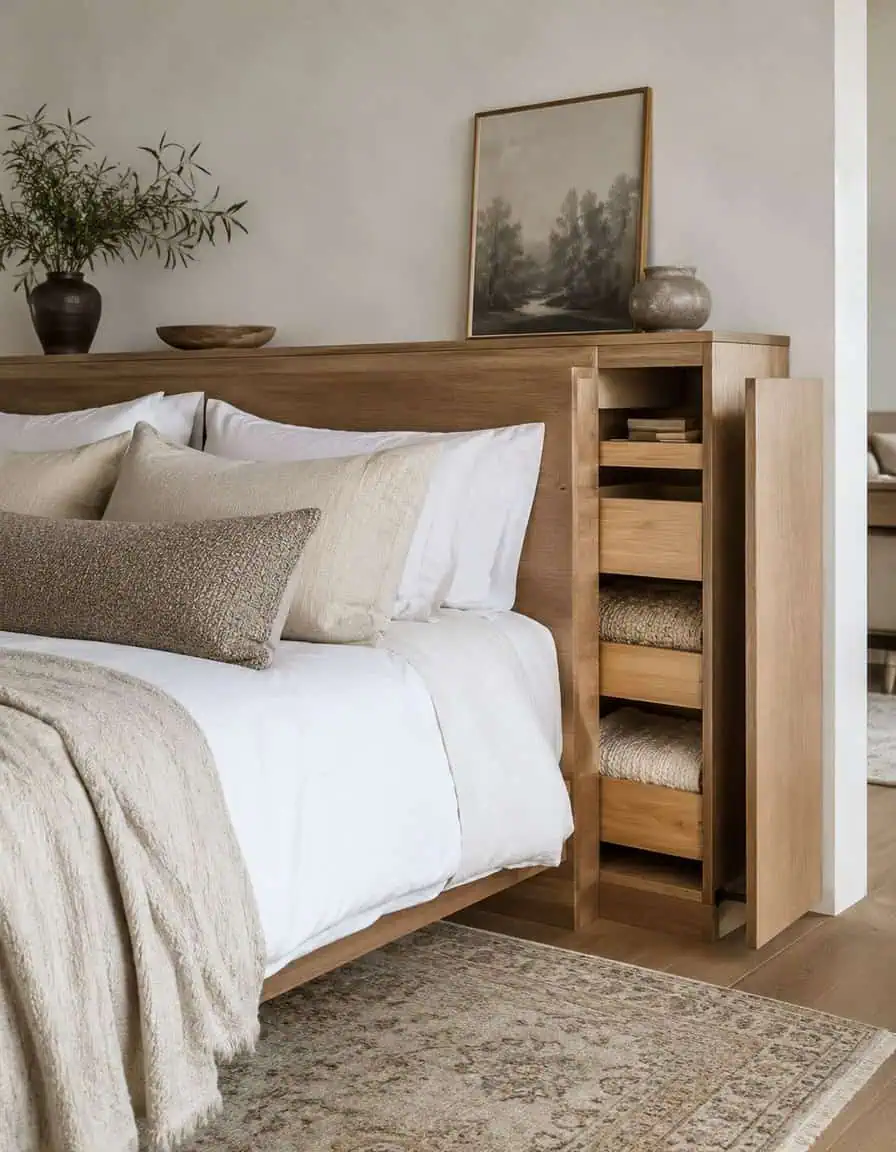
If you are handy, build a custom headboard that is extra deep (around 12 to 16 inches). The front acts as a standard headboard, but the sides pull out as vertical drawers, or the top lifts up for deep storage. It is a brilliant way to hide items in plain sight without taking up any additional wall space.
Living without a closet doesn't mean compromising on style. By choosing solutions that respect the room's layout-whether that means color-drenching an armoire to make it disappear or using a vintage piece as a focal point-you can create a bedroom that feels deeply intentional. Embrace the architecture you have, and let your wardrobe solutions add character to your space.