When you are dealing with a small bedroom, it is incredibly easy for the space to feel chaotic. Between the bed, the dresser, and the inevitable pile of laundry on the chair, a tiny room can quickly become visually overwhelming. But before you start measuring for a smaller bed or throwing out your favorite furniture, look at your walls. Color is the single most effective tool you have to shift a cramped, cluttered room into a calm, cohesive retreat.
You don't need a massive primary suite to create a restful atmosphere. By choosing the right color palette, you can manipulate how light bounces around the room, soften hard visual boundaries, and make your existing furniture feel like it belongs. Here is how to use color to make your small bedroom feel significantly calmer.
The Science of Calm in Small Spaces
Why do some colors make a room feel like a deep breath, while others make the walls feel like they are closing in? In a small space, it comes down to three things: contrast, light reflectance, and undertones.
Low Contrast: High-contrast rooms (like stark white walls with dark black trim) chop a small room up into even smaller visual boxes. Low-contrast palettes allow your eye to glide smoothly around the room, making it feel larger.
Low Contrast:Light Reflectance Value (LRV): This measures how much light a paint color reflects. In a small room with decent natural light, a higher LRV helps bounce that light around. In a dark room, trying to force a high-LRV white can just look dingy.
Light Reflectance Value (LRV):Undertones: Colors with cool undertones (blues, greens, grays) naturally recede, meaning the walls literally look further away than they are. Warm undertones advance, which can be used strategically to make a windowless room feel cozy rather than cavernous.
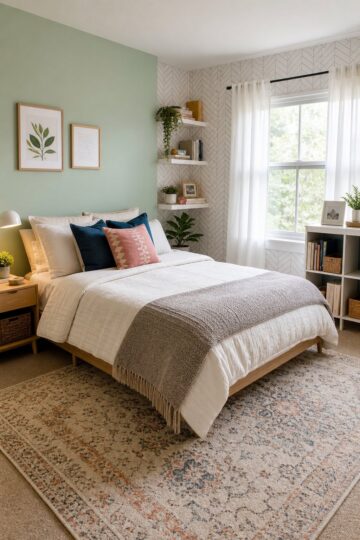
Palette 1: Soft Sage & Warm White
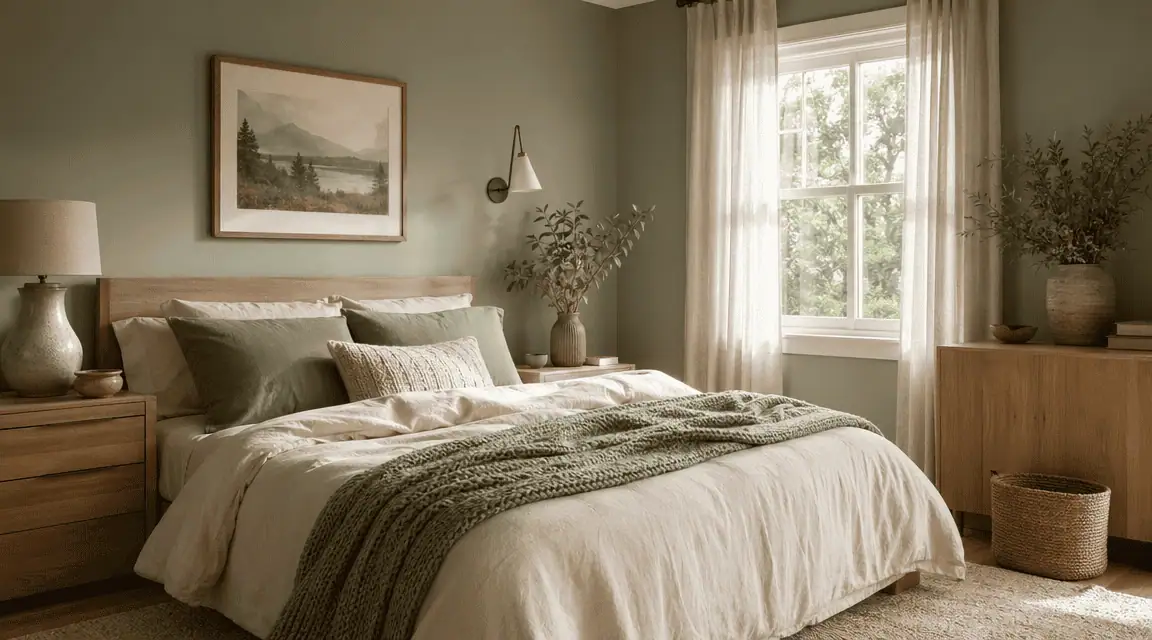
Green is nature's neutral. A soft, muted sage green has enough gray in it to keep it from looking like a pastel nursery, but enough color to give the room personality. Because green sits in the middle of the color spectrum, it requires very little effort for our eyes to process, making it inherently restful.
Why it works in a small room: The cool undertones of sage make the walls recede, giving the illusion of more space. Pairing it with a warm white on the trim and ceiling prevents the room from feeling chilly. This palette is incredibly forgiving if you have a mix of light wood furniture or mismatched vintage pieces.
Palette 2: Dusty Blue & Greige
If your bedroom gets a lot of hot, direct afternoon sunlight, a dusty blue can cool the space down visually. The trick here is to avoid pairing blue with stark, hospital-white trim, which creates too much contrast and can make the blue feel icy.
Why it works in a small room: Instead of white, use a soft greige (a blend of gray and beige) for your trim and doors. This lowers the contrast between the walls and the woodwork. The result is a soft, cloudy, expansive feeling that blurs the edges of the room.Why it works in a small room:
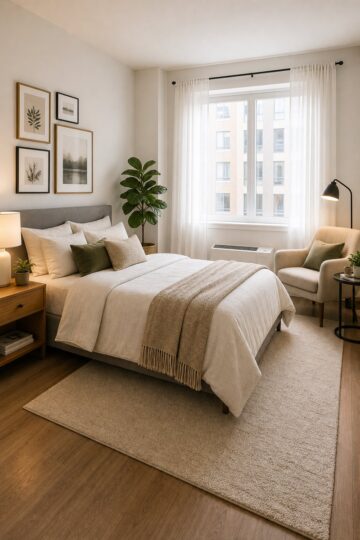
Palette 3: Monochromatic Warm Beige
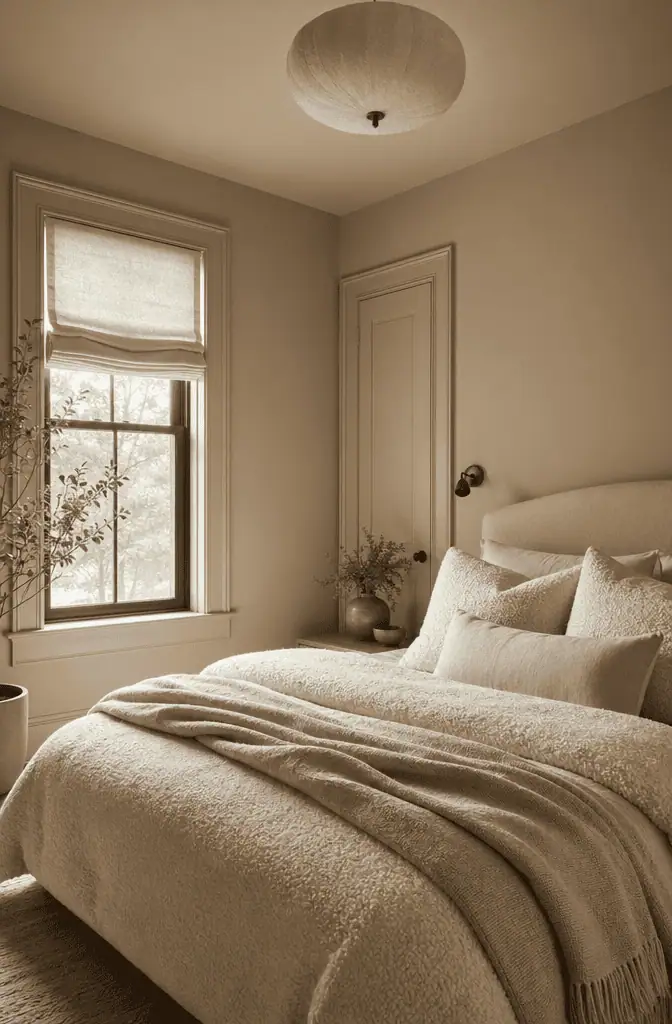
When a room is tiny, sometimes the best strategy is to erase the visual boundaries entirely. This is where "color drenching" comes in. Color drenching means painting your walls, baseboards, window trim, and even your bedroom door the exact same color.
Why it works in a small room: When the trim is a different color than the walls, your eye stops at every doorframe and baseboard, constantly reminding you of exactly how small the box is. By painting everything a soothing, warm beige, those lines disappear. The room feels taller, softer, and infinitely more cohesive. To keep it from looking flat, layer in lots of texture with your bedding-think chunky knit throws and rumpled linen sheets.
Palette 4: Muted Terracotta & Cream
Not every small bedroom has glorious, oversized windows. If your room is tiny and dark, painting it white will just make it look like a dingy closet. Instead of fighting the lack of light, lean into it.
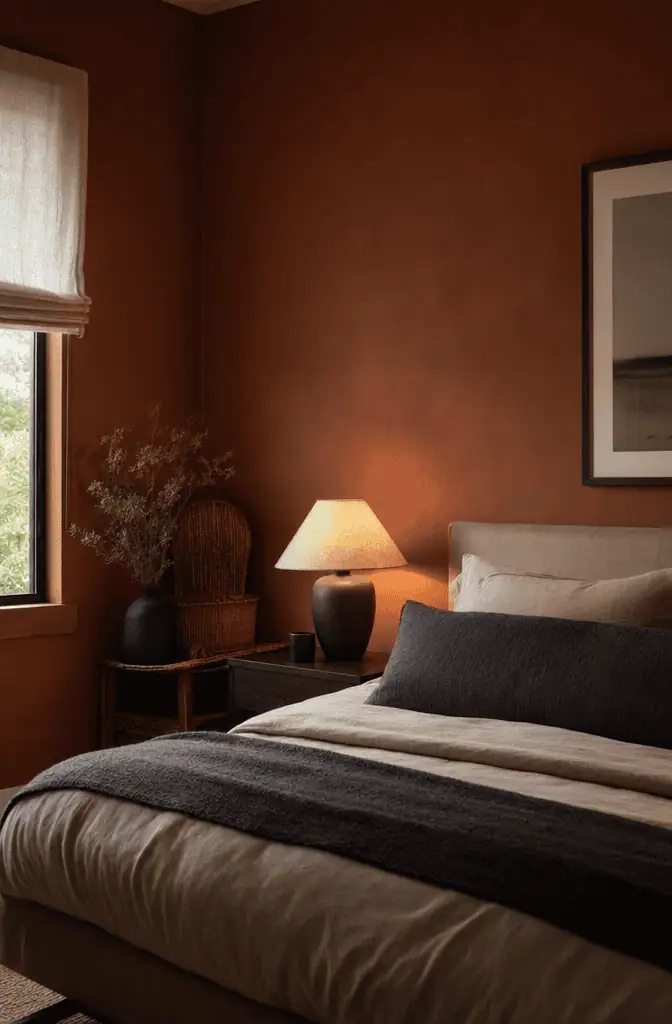
Why it works in a small room: A muted, earthy terracotta embraces the small footprint, turning the room into a cozy, enveloping den. It feels intentional and rich. Pairing it with creamy, off-white textiles (like curtains and bedding) provides just enough lightness so the room doesn't feel heavy, while dark wood or charcoal accents ground the space.Why it works in a small room:
Styling Your Palette Without Starting Over
The goal is to make your room feel pulled together without having to buy a whole new bedroom set. Once you choose your wall color, look at your largest piece of furniture (usually the bed or a large dresser).
If you have dark, heavy cherry wood furniture, the Soft Sage or Muted Terracotta palettes will complement those red undertones beautifully. If you have light, Scandinavian-style oak, the Dusty Blue or Warm Beige will make those pieces sing. Tie your existing furniture into the new wall color by adding one or two small, inexpensive elements-like a throw pillow, a lampshade, or a piece of wall art-that feature both the wood tone and the new paint color.
Transforming a small bedroom isn't about magic tricks or expensive renovations. It is simply about choosing colors that work with the size of the room rather than against it. By softening the contrast and paying attention to undertones, you can turn even the tightest quarters into a space you genuinely want to unwind in.