There is something undeniably magnetic about a dark, moody bedroom. Deep navies, rich forest greens, and soft charcoals have a way of blurring the corners of a room, making the space feel like a cozy, sleep-inducing retreat. But if you have ever stared at a dark paint swatch and panicked that your room will end up looking like a windowless cave, you are not alone.
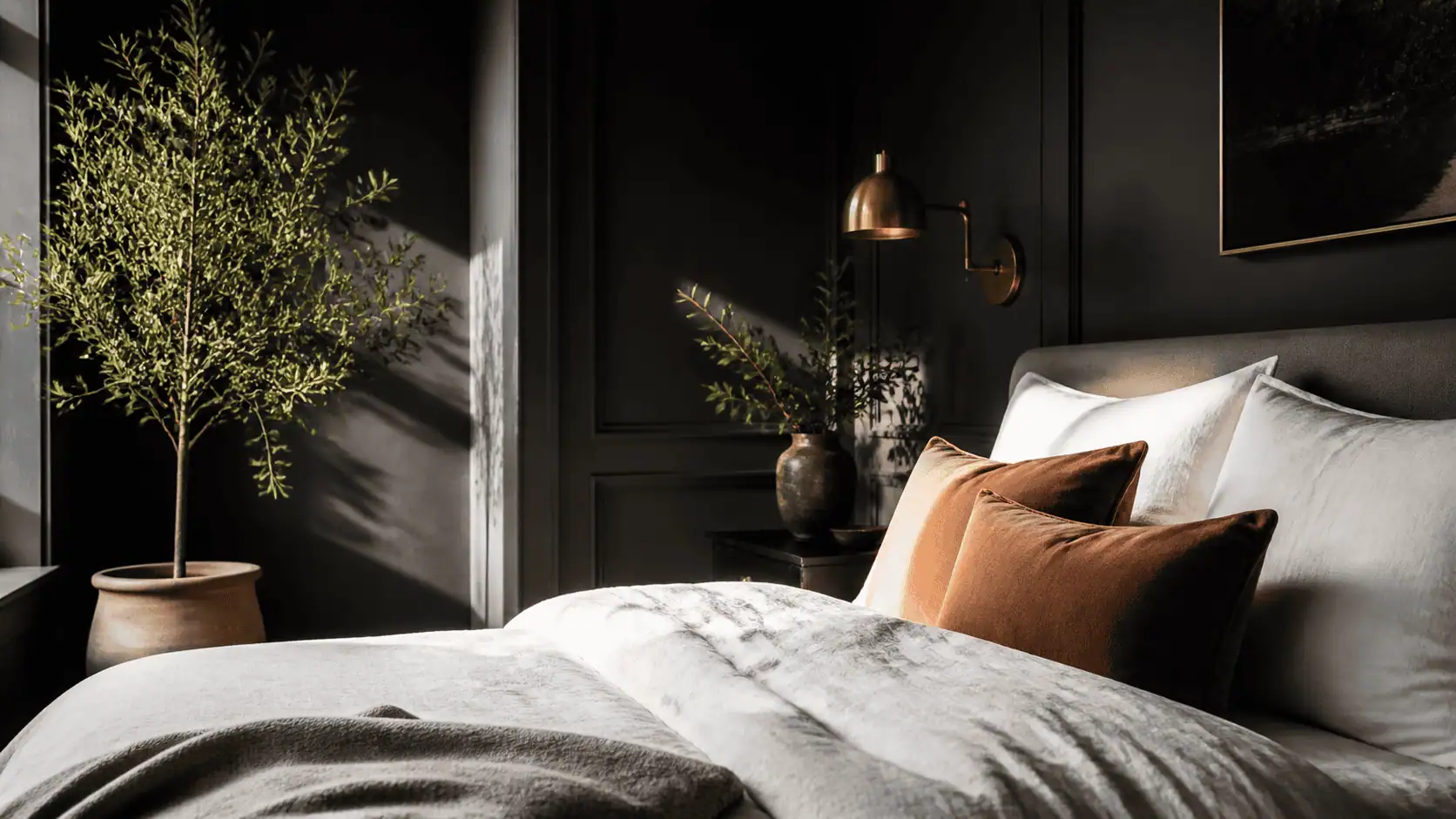
The secret to a moody bedroom isn't having massive floor-to-ceiling windows or a sprawling floor plan. It all comes down to how you balance the darkness. When you pair deep wall colors with the right styling choices-like high-contrast textiles, warm metals, and strategic lighting-the room feels intentional and sophisticated, not depressing.
Before we dive into the inspiration, here is a quick checklist of the styling rules that keep dark rooms feeling alive.
1. Crisp White Bedding Against Charcoal Walls
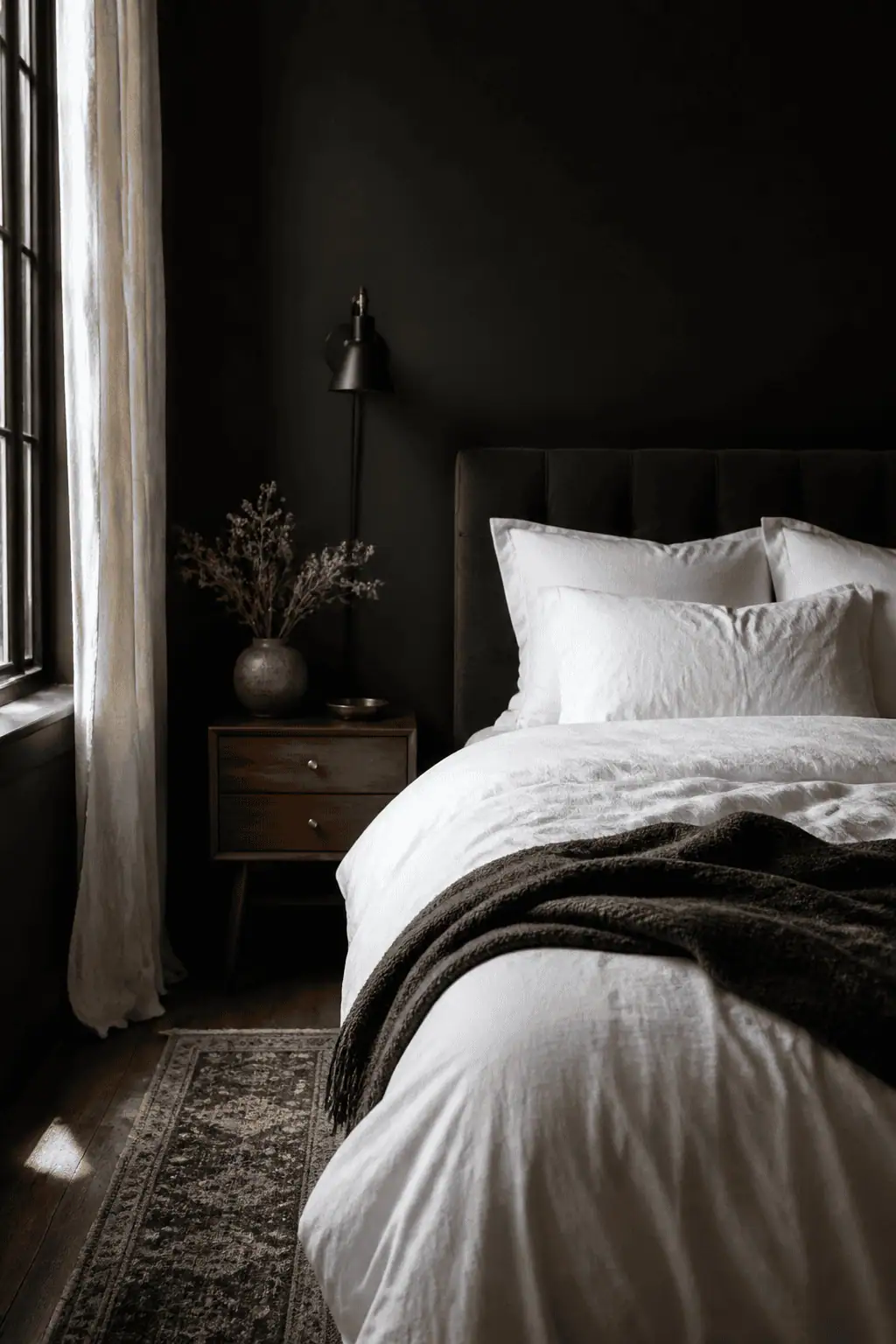
The easiest way to keep a dark room from feeling heavy is to anchor it with a massive block of bright white. Your bed takes up the most visual real estate in the room, making it the perfect tool for contrast. A fluffy, crisp white duvet against deep charcoal walls instantly makes the space feel like a high-end boutique hotel rather than a dungeon.
To keep the white from feeling too stark, layer in a few textured throw pillows in a mid-tone gray or soft beige. This bridges the gap between the bright bed and the dark walls.
2. An Oversized Cream Area Rug
Dark floors paired with dark walls can quickly swallow all the light in a room. If you are painting your walls a moody shade, lay down an oversized cream or light beige area rug. It acts as a giant reflector on the floor, bouncing light upward and grounding the room in softness.
Make sure the rug is large enough to extend at least two feet on either side and at the foot of the bed. This creates a light, airy perimeter that visually expands the floor space.
3. Bright White Ceilings and Trim
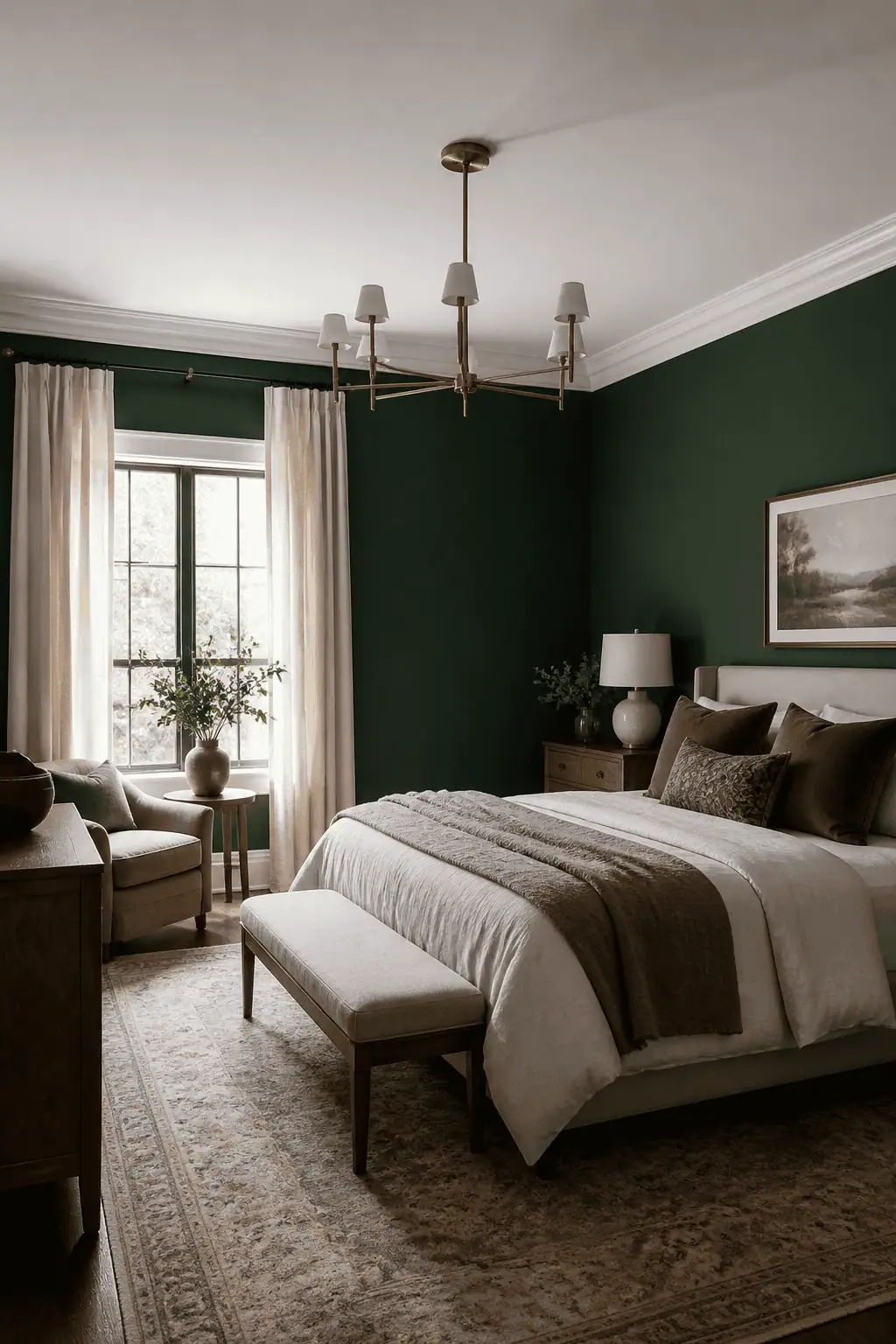
While color-drenching (painting the walls, trim, and ceiling the same color) is popular, leaving your ceiling and crown molding a crisp, bright white is a foolproof way to maintain a sense of height. The sharp line where the dark wall meets the white ceiling draws the eye upward.
This technique works exceptionally well with deep forest greens and navy blues, giving the room a traditional, tailored finish.
4. Light Upholstered Headboards
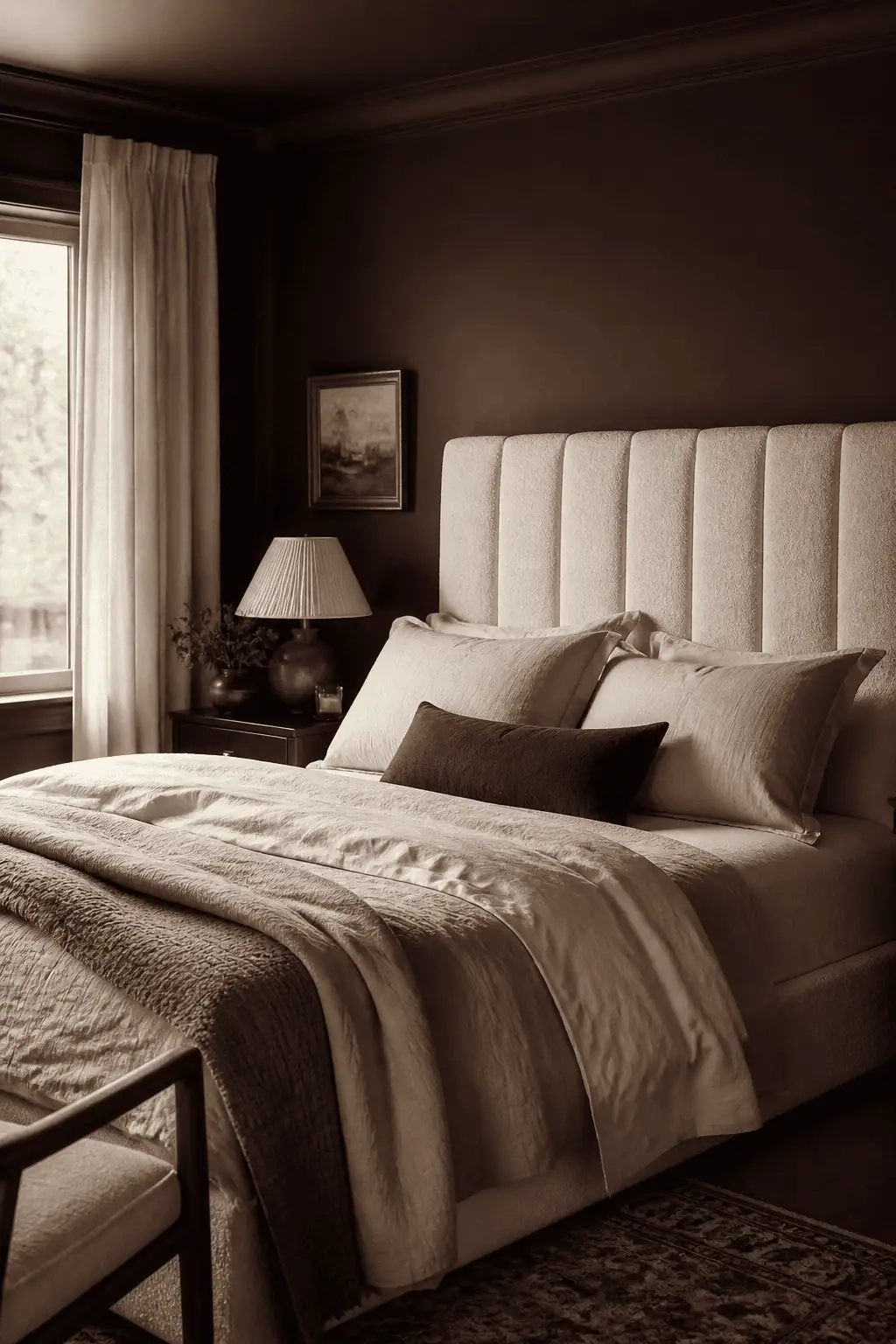
If you prefer moody, dark bedding to match your walls, you need a visual break between the bed and the paint. A light-colored upholstered headboard-think cream bouclé, pale gray linen, or soft tan leather-provides that necessary separation.
The headboard acts like a halo, highlighting the bed as the focal point and preventing your furniture from disappearing into the dark background.
5. High-Contrast Art Mats
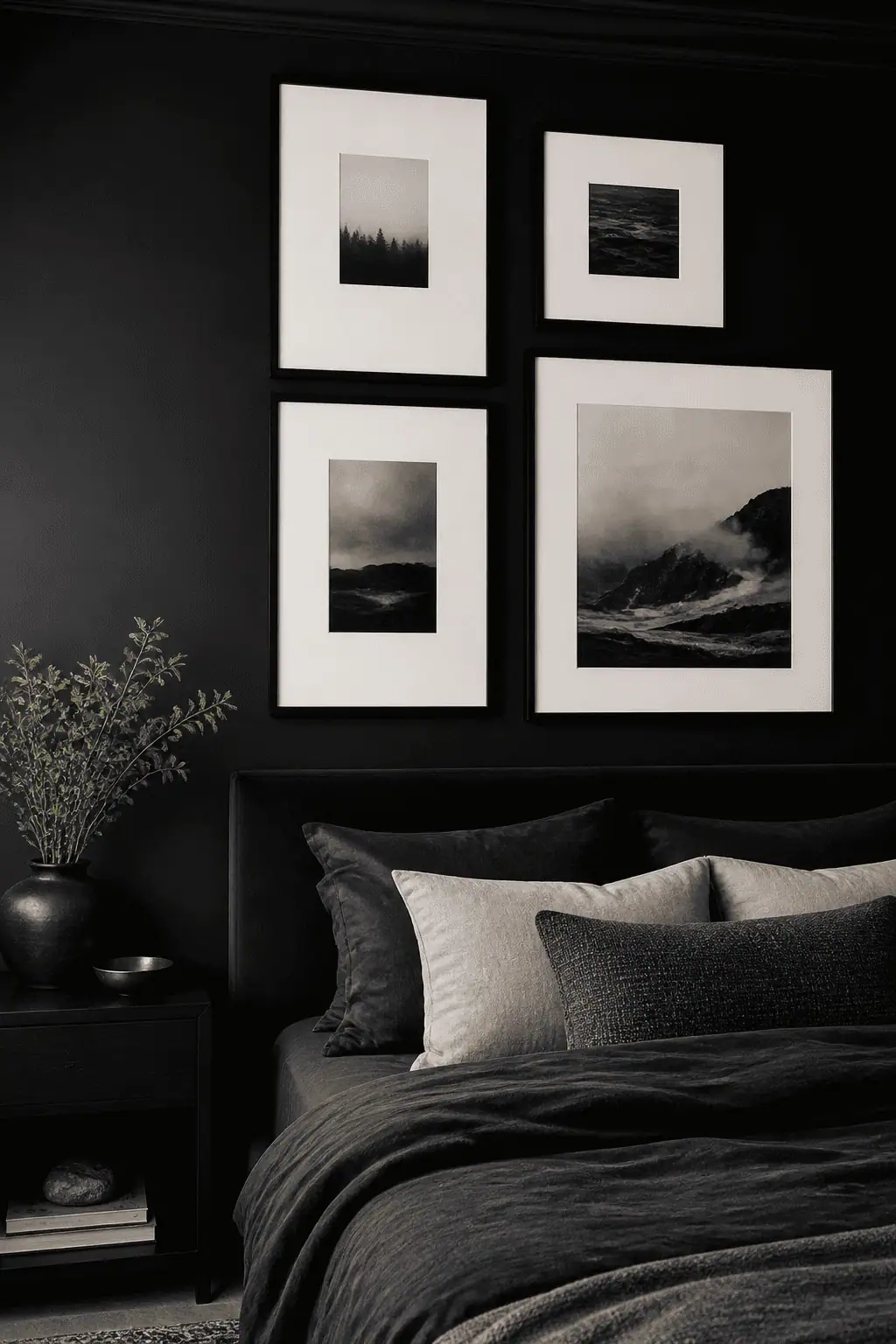
Artwork is a secret weapon in dark rooms. Instead of hanging dark, moody canvases, opt for art framed with oversized, bright white mats. The white mats pop aggressively against dark walls, acting like little windows of light.
A gallery wall of black-and-white photography with thick white mats can entirely change the energy of a dark hallway or bedroom wall.
6. Rich Walnut Furniture
Dark colors, especially blues and grays, naturally lean cool. If you don't introduce warmth, the room can feel chilly and uninviting. Mid-century modern walnut furniture is the perfect antidote. The rich, reddish-brown undertones of walnut wood sing against dark, moody paints.
Whether it is a pair of nightstands or a long dresser, the natural grain of the wood adds a layer of organic warmth that paint alone cannot achieve.
7. Unlacquered Brass Hardware
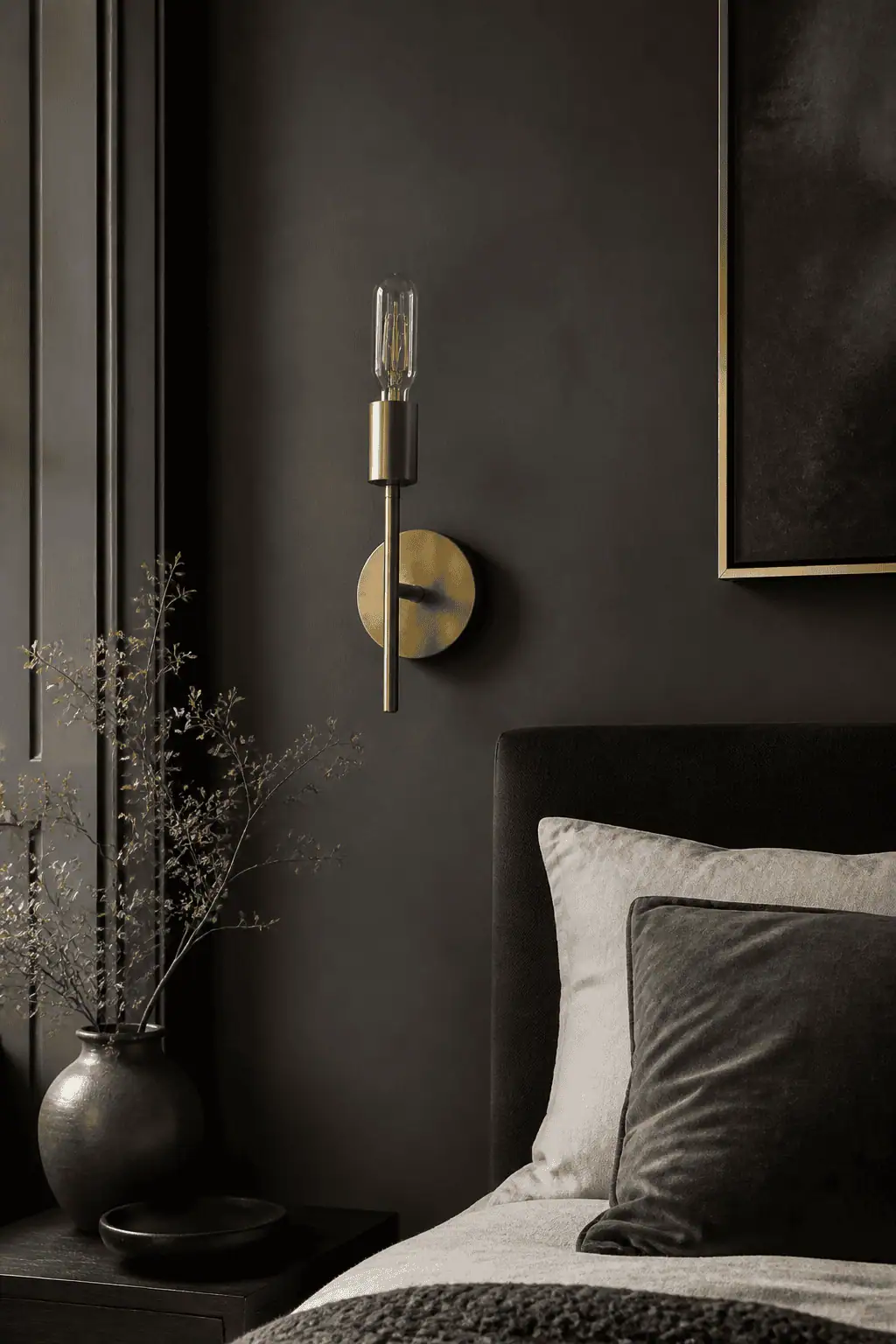
When you have dark walls, matte black or dark bronze hardware simply gets lost. Instead, swap your door knobs, drawer pulls, and curtain rods for unlacquered brass. The golden tones of the brass catch the light and add a subtle, jewelry-like sparkle to the room.
Over time, unlacquered brass develops a beautiful patina that feels lived-in and historically rich, pairing beautifully with deep plum or hunter green.
8. Rust and Mustard Throw Pillows
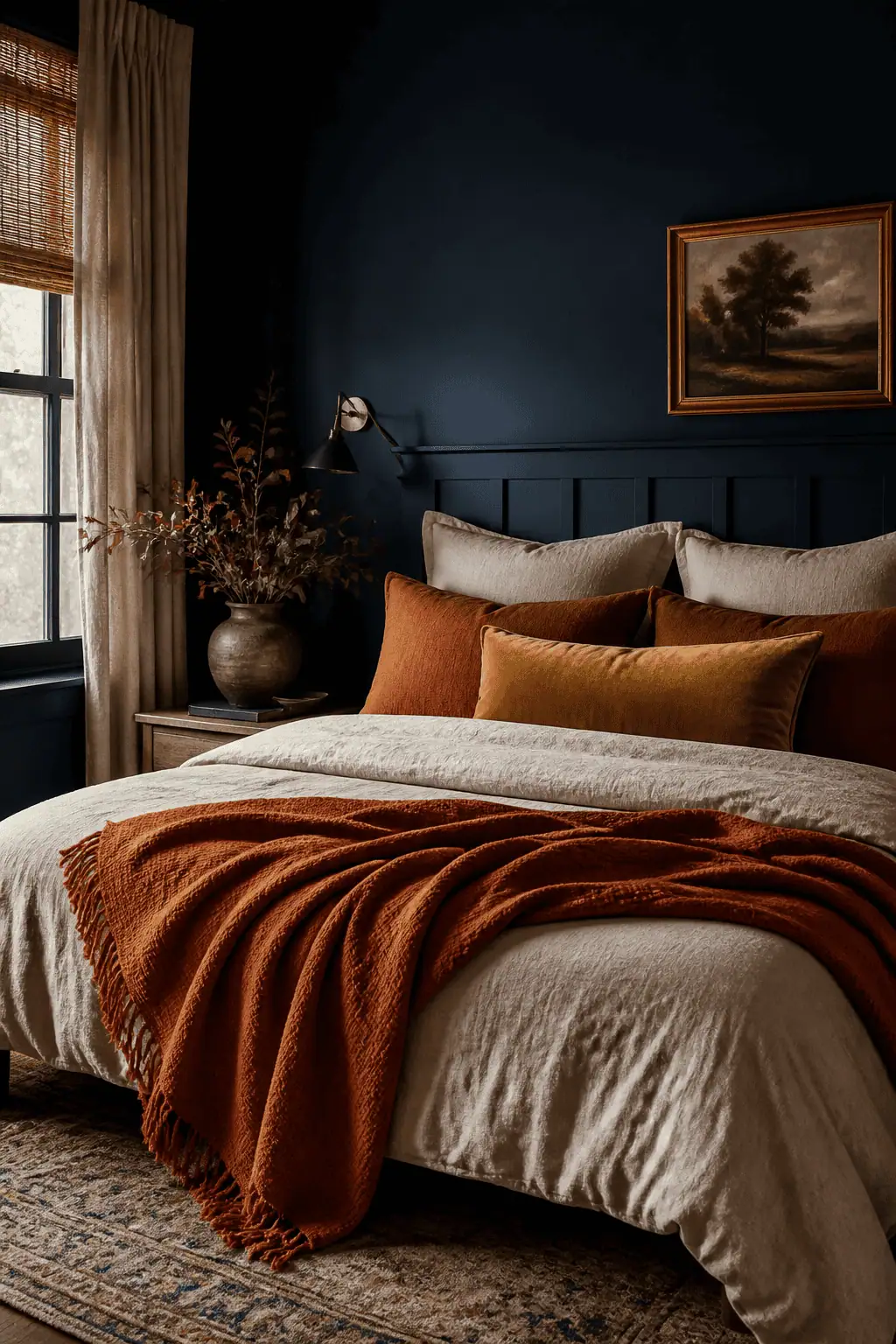
Injecting a small dose of a warm, saturated color is a great way to liven up a moody palette. Rust orange, mustard yellow, and deep terracotta are excellent accent colors for dark bedrooms.
You don't need much-just a single lumbar pillow or a linen throw blanket draped across the foot of the bed is enough to warm up the entire space.
9. Woven Rattan Accents
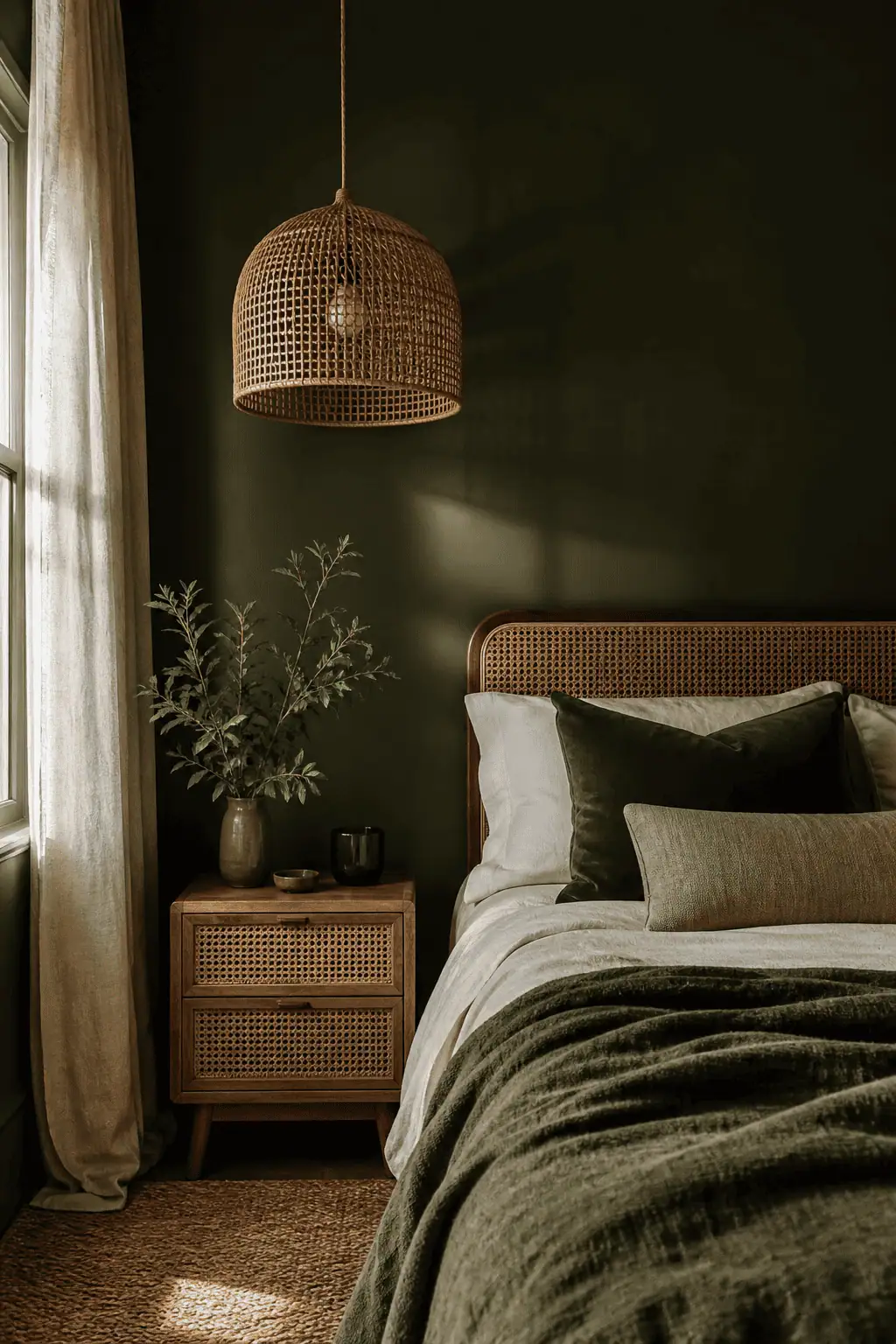
Dark rooms can sometimes feel a bit too serious or formal. Introducing natural, woven materials like rattan, cane, or wicker adds a casual, tactile element that brings the room back down to earth.
A rattan pendant light or a cane-front nightstand introduces a light, airy texture that contrasts beautifully with heavy, saturated wall colors.
10. Terracotta Pots and Greenery
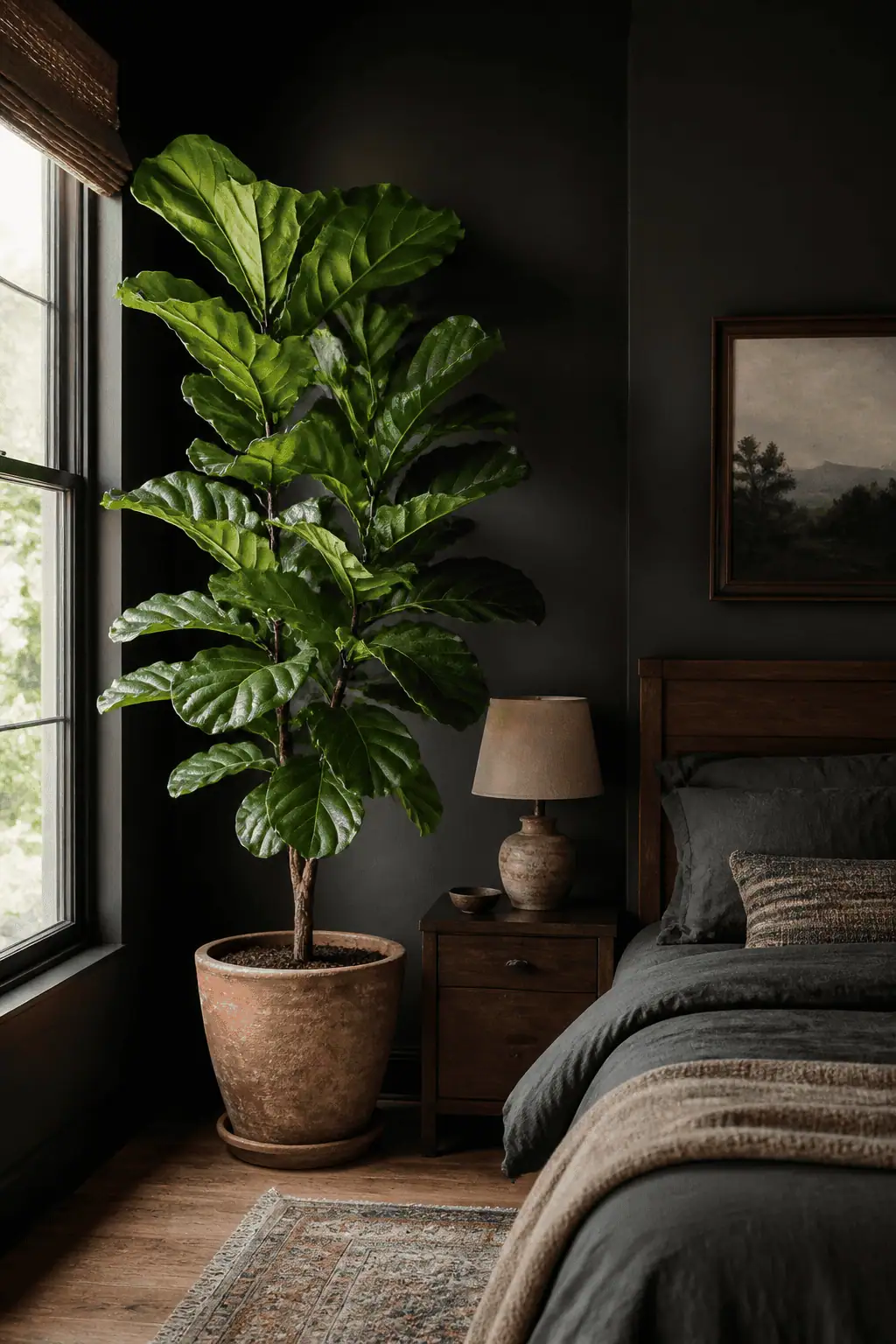
Plants are essential in a moody bedroom. The vibrant green leaves pop against dark backgrounds, bringing literal life into the space. To double down on the warmth, house your plants in natural terracotta pots.
Place a tall floor plant, like a fiddle leaf fig or a rubber tree, in an empty corner to soften the shadows and add organic shape to the room.
11. Plug-In Brass Sconces
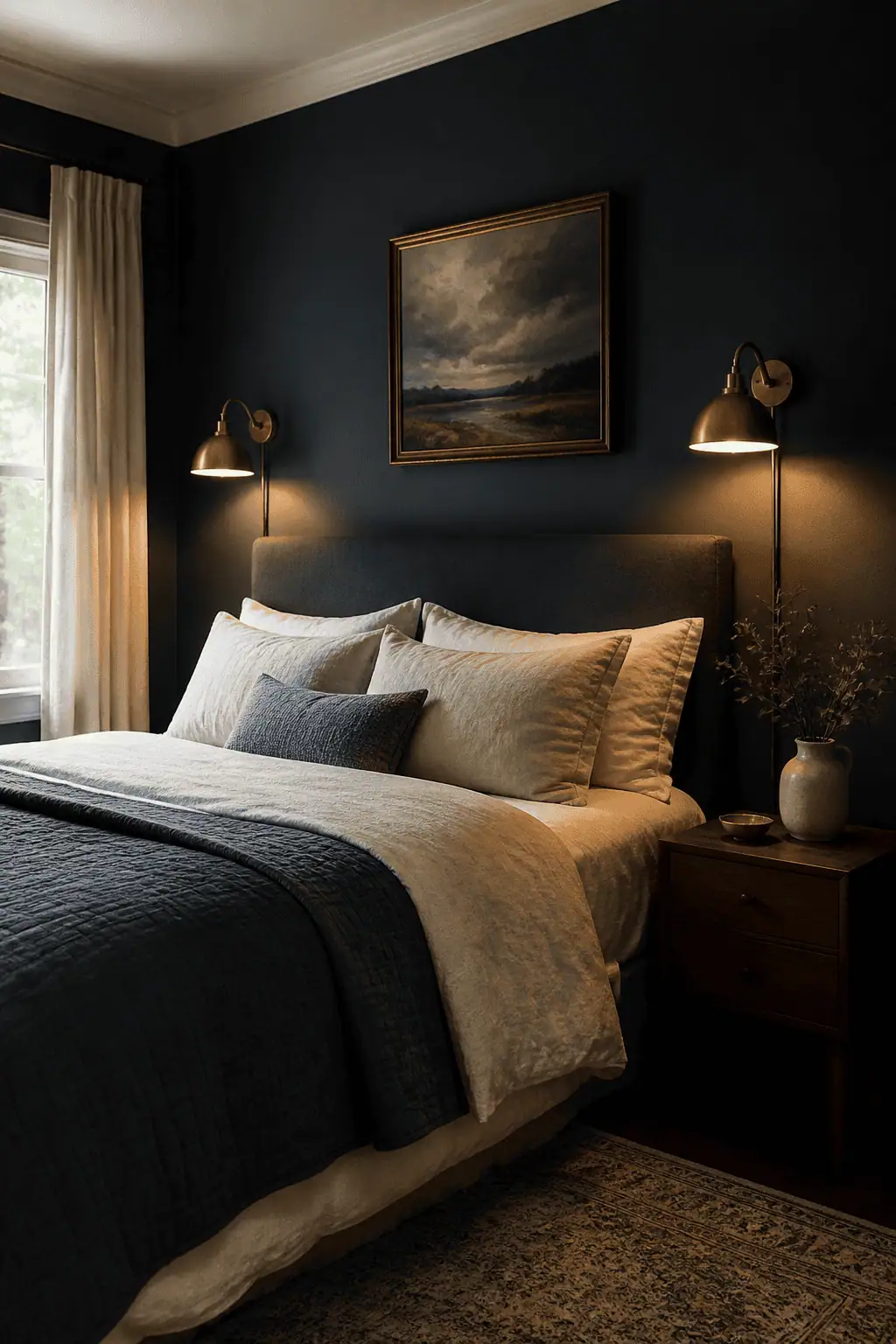
Lighting is the make-or-break element of a dark bedroom. Relying on a single overhead light will cast harsh, unappealing shadows. Instead, flank your bed with brass wall sconces. They create a warm, localized glow right where you need it.
If you don't want to deal with hardwiring, plug-in sconces with cord covers are a fantastic, renter-friendly alternative that looks just as custom.
12. A Statement Chandelier
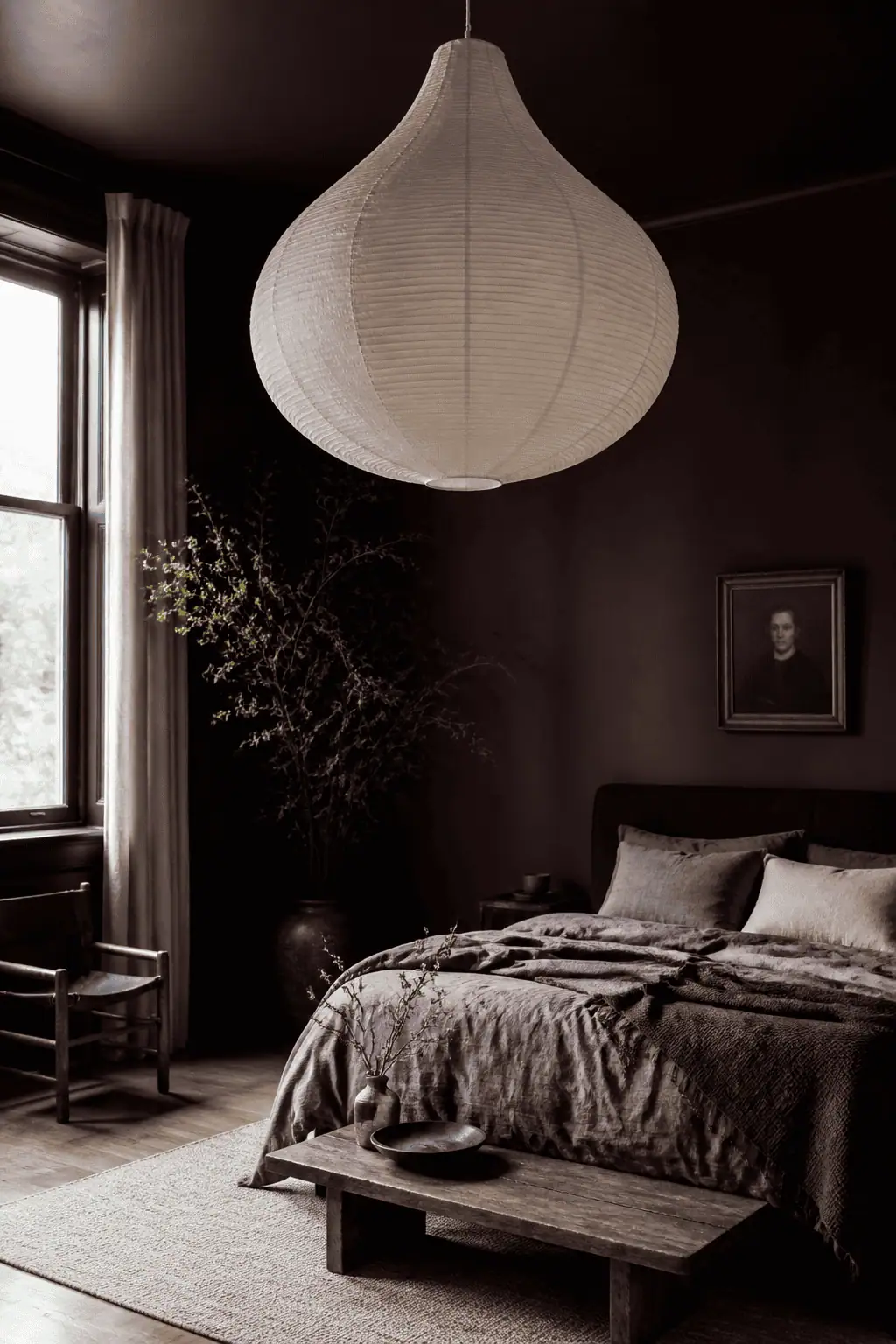
Because dark walls absorb light, you want your light fixtures to be visually light and airy. Swap out heavy ceiling fans or flush mounts for a statement chandelier made of glass, paper, or delicate metal.
An oversized paper lantern or a modern sputnik chandelier draws the eye up and adds a sculptural element to the ceiling without weighing the room down.
13. Sheer Linen Curtains
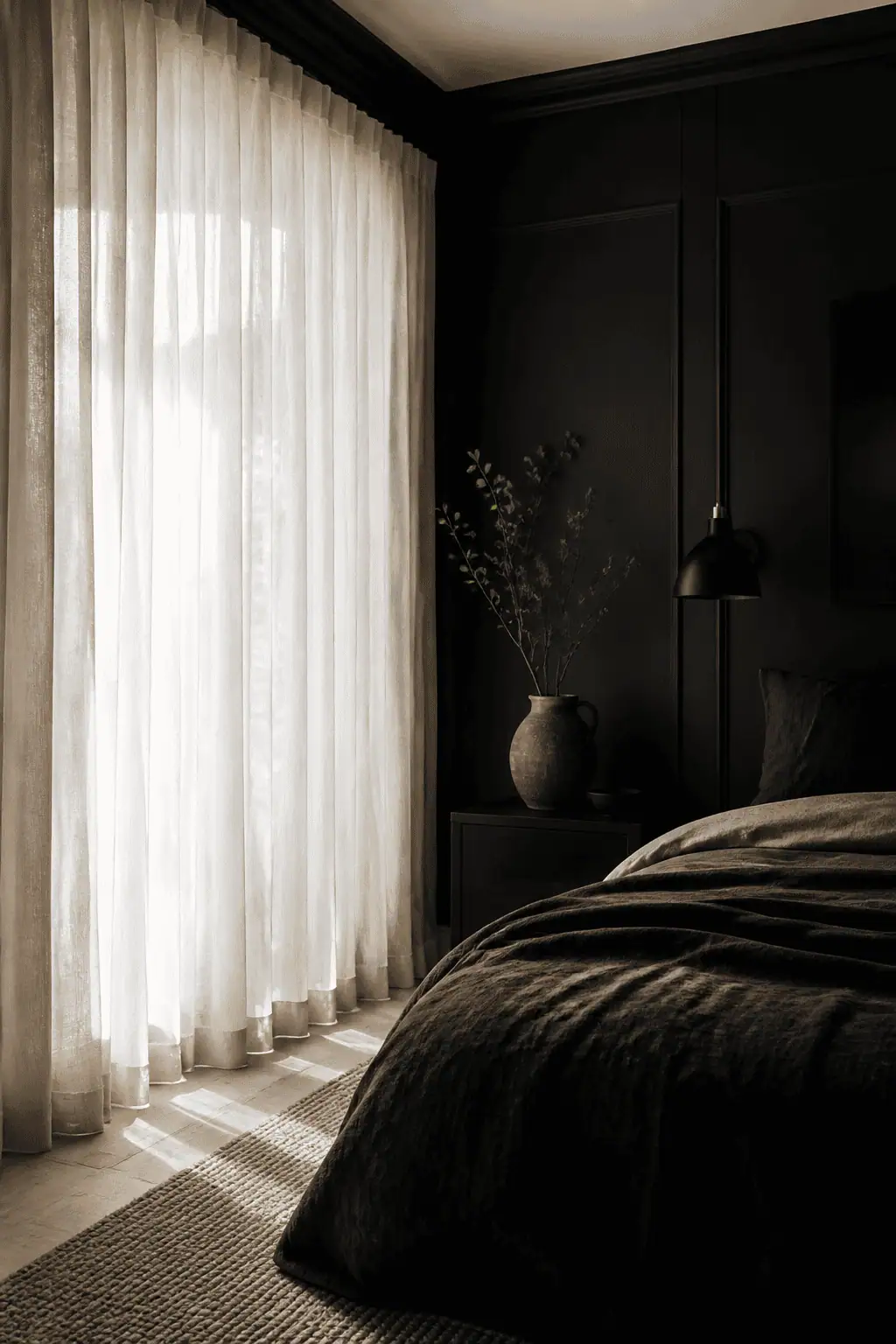
If you are painting your walls dark, you want to maximize whatever natural light you have during the day. Heavy, dark drapes will only make the room feel smaller. Instead, hang sheer or semi-sheer white linen curtains.
They filter the sunlight beautifully, creating a soft, diffused glow, while the white fabric provides another vertical break in the dark wall color.
14. Low-Level Floor Lamps
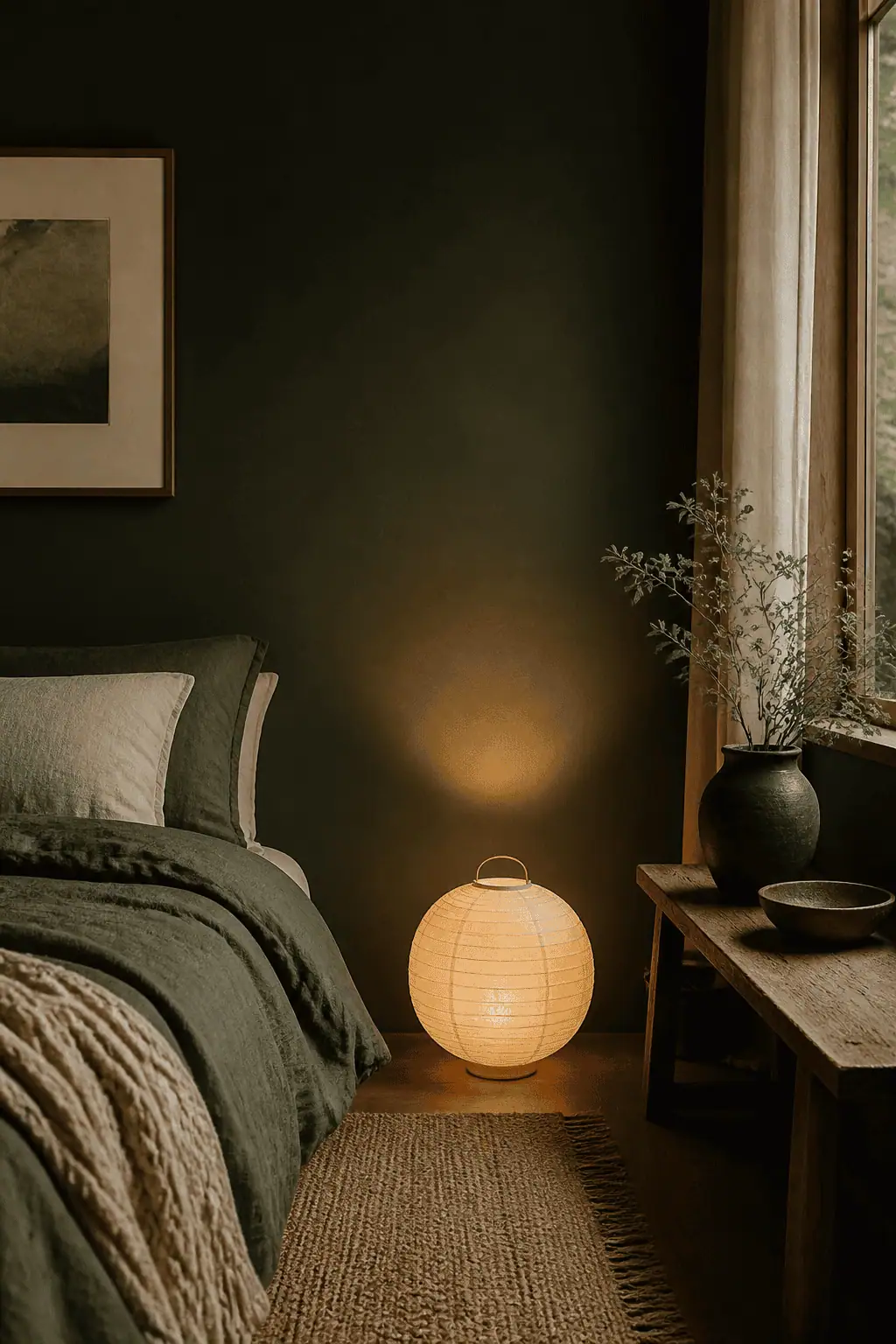
To avoid the cave effect at night, you need multiple points of light at different heights. A low-level floor lamp tucked into a corner casts light upward, washing the dark walls in a warm, ambient glow.
Look for lamps with fabric or paper shades that diffuse the light softly, rather than harsh, exposed bulbs.
15. Strategically Placed Floor Mirrors
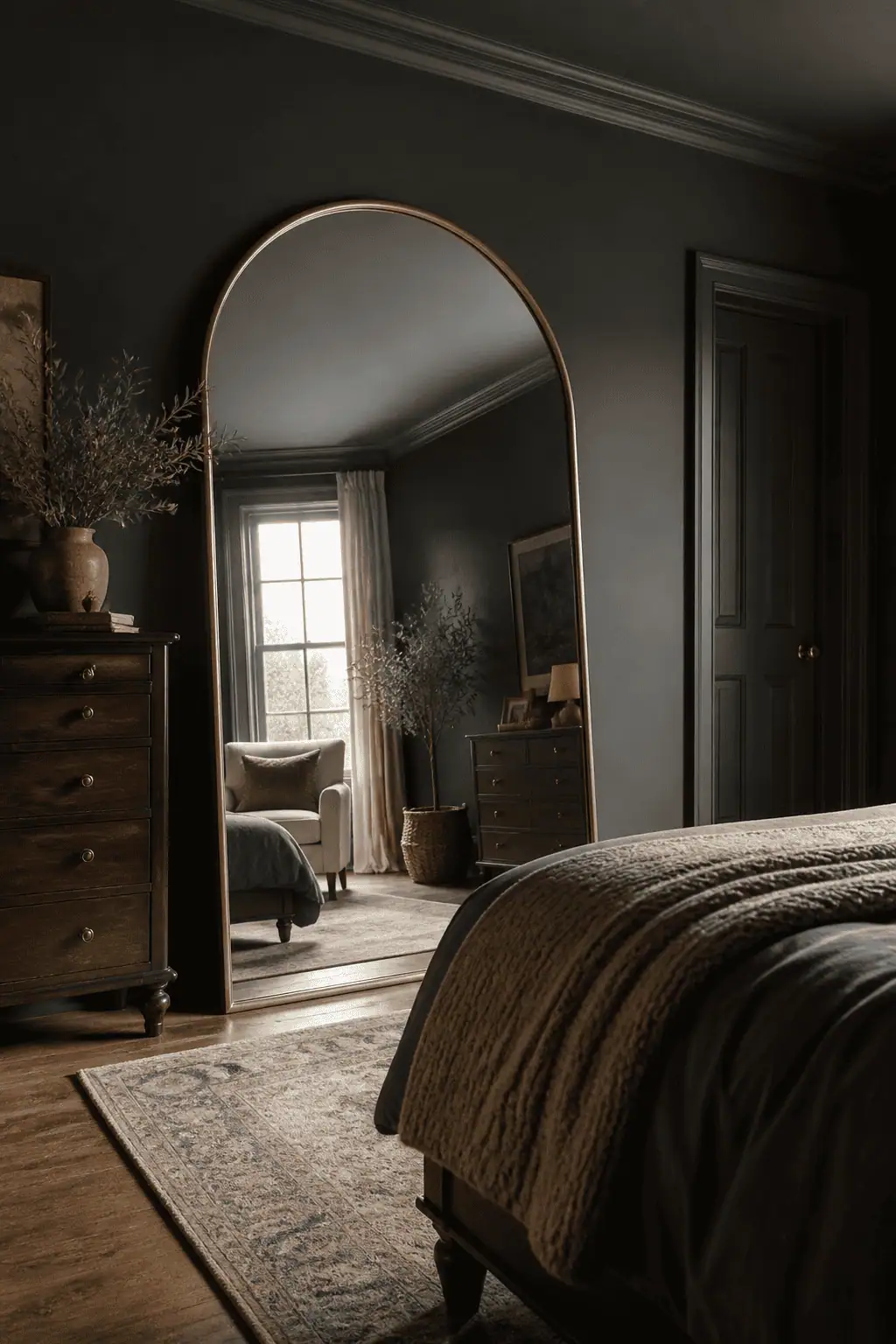
Mirrors are a moody bedroom's best friend. A large, oversized floor mirror leaning against the wall acts like an extra window, reflecting both light and movement back into the space.
Place the mirror opposite or adjacent to your actual window to maximize the amount of natural light it catches and bounces around the room.
16. Glossy Painted Trim
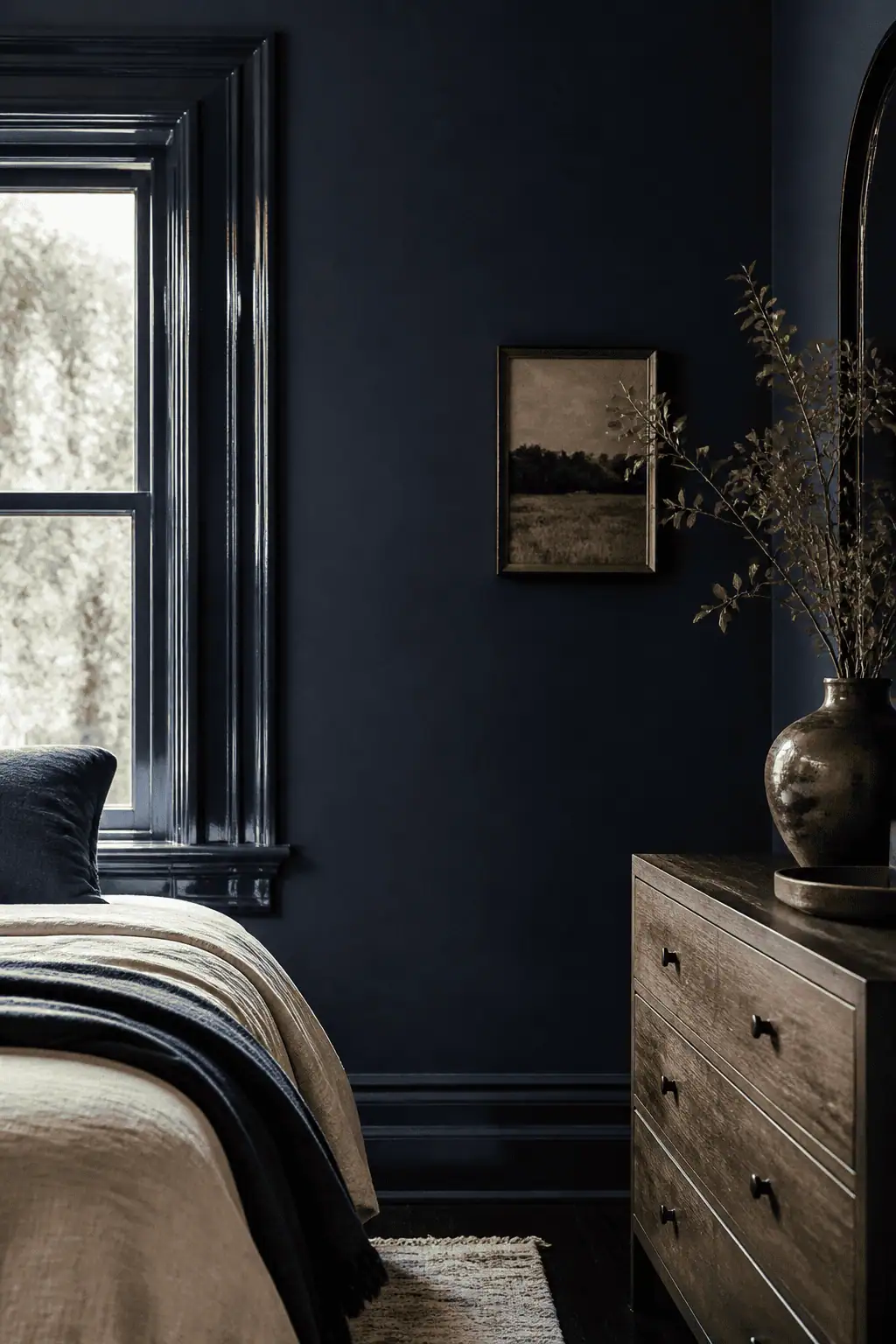
If you want to paint your walls and trim the same dark color, play with the finish. Paint the walls in a flat or matte finish, but use a high-gloss or semi-gloss finish on the baseboards, window casings, and doors.
The glossy trim will catch the light and create a subtle, sophisticated contrast against the velvety matte walls, adding depth so the room doesn't feel flat.
17. Tonal Grasscloth Wallpaper
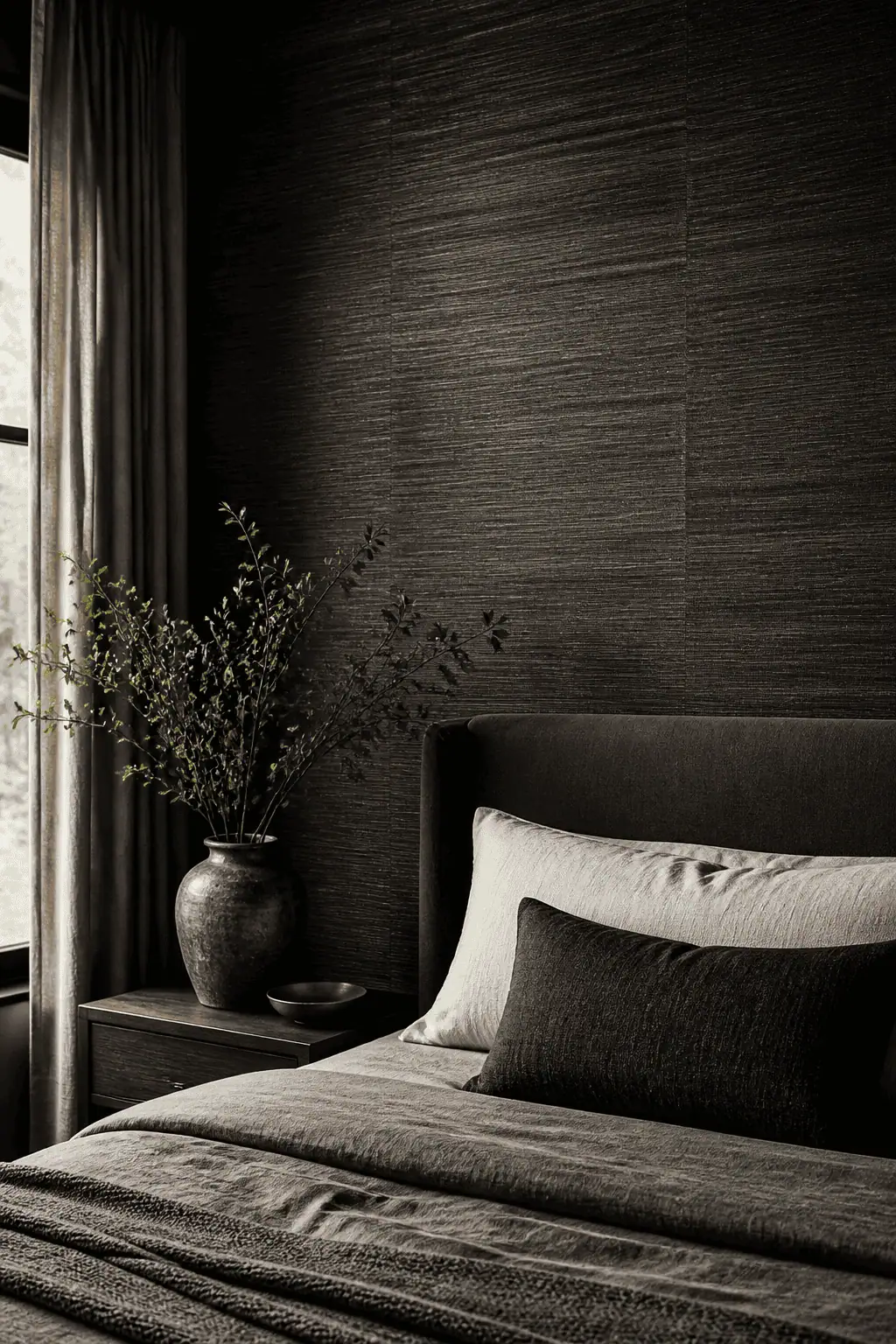
Dark paint can sometimes feel one-dimensional. If you want a moody space with more character, consider a dark grasscloth wallpaper instead of paint. The natural fibers woven into the paper create incredible texture.
Even in a deep charcoal or navy, the subtle variations in the grasscloth catch the light differently throughout the day, making the walls feel dynamic rather than heavy.
18. Crushed Velvet Curtains
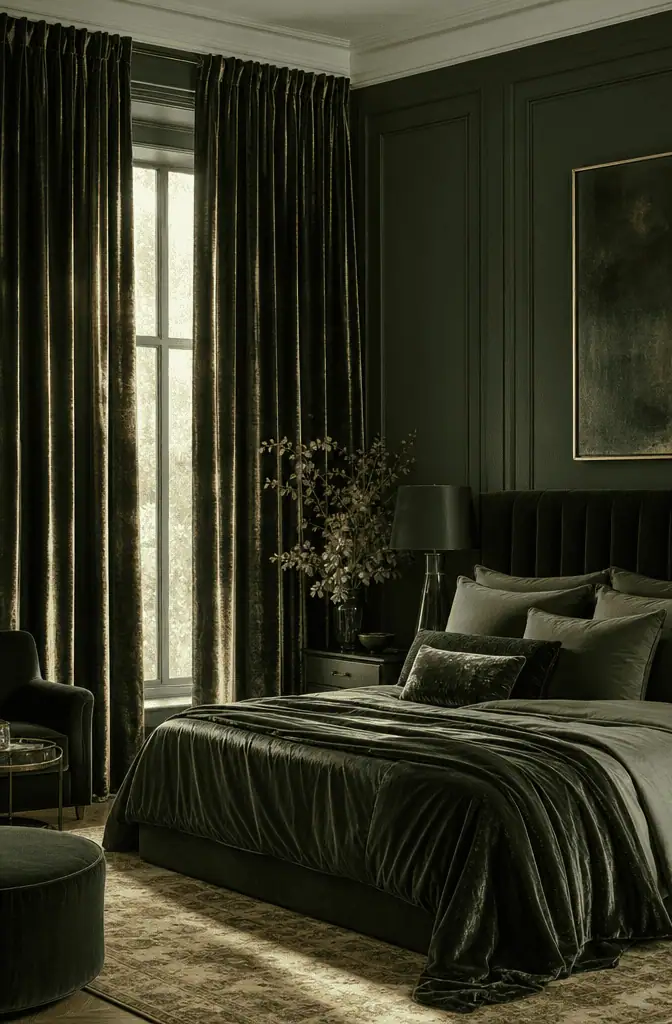
If you prefer a truly enveloping, dramatic space, lean into rich textures. Floor-to-ceiling crushed velvet curtains in a color that matches your walls add a luxurious, tactile element.
Because velvet has a sheen, it reflects light differently than flat drywall, creating vertical stripes of subtle highlight and shadow that make the room feel taller.
19. Layered Linen Bedding
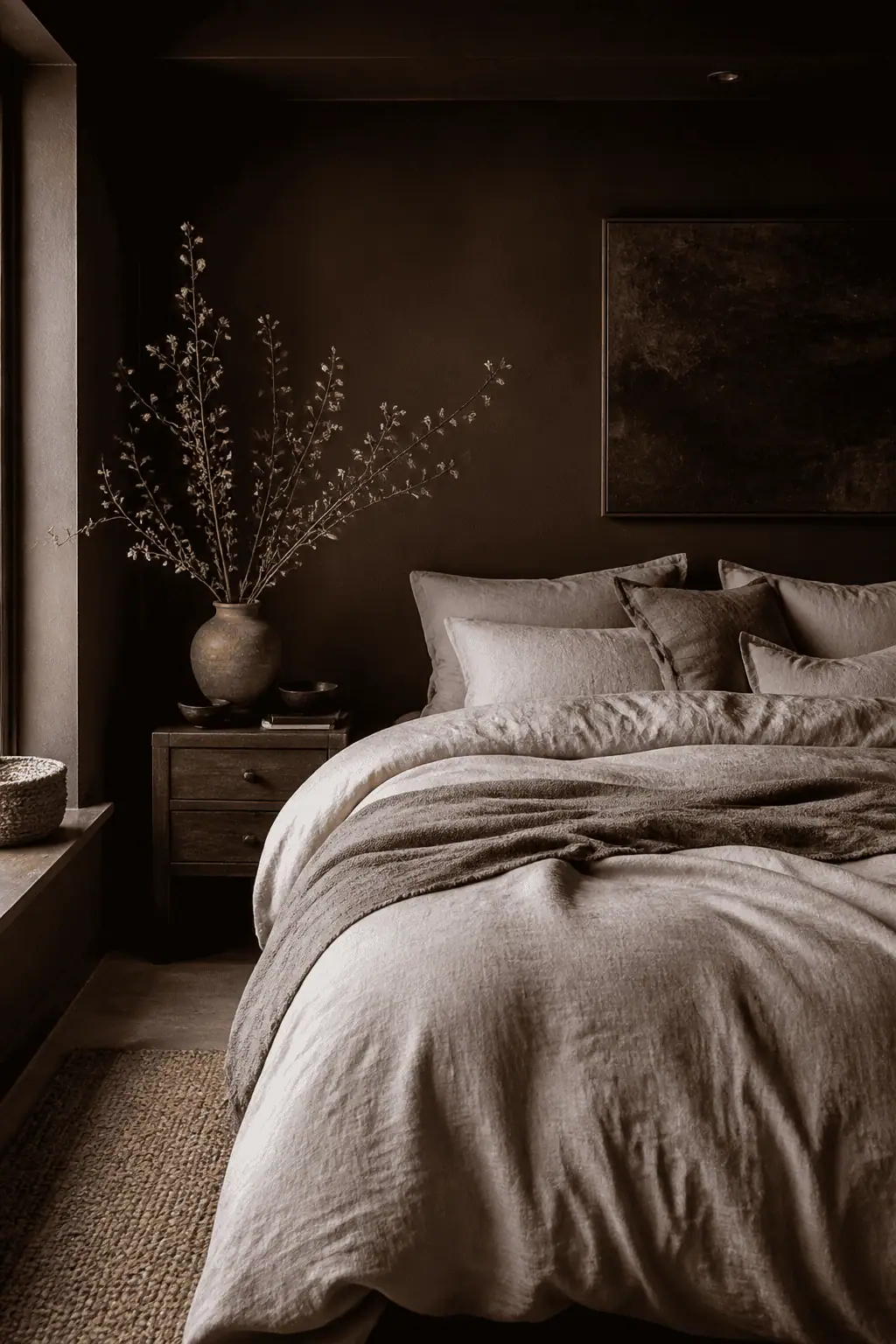
To keep a dark room from feeling too formal or stiff, dress the bed in layers of relaxed, washed linen. The slightly rumpled texture of linen feels effortless and inviting.
Mix two or three tonal colors-like oatmeal, soft gray, and charcoal-to create a bed that looks incredibly plush and comfortable against the moody backdrop.
20. Dark Beadboard Half-Walls
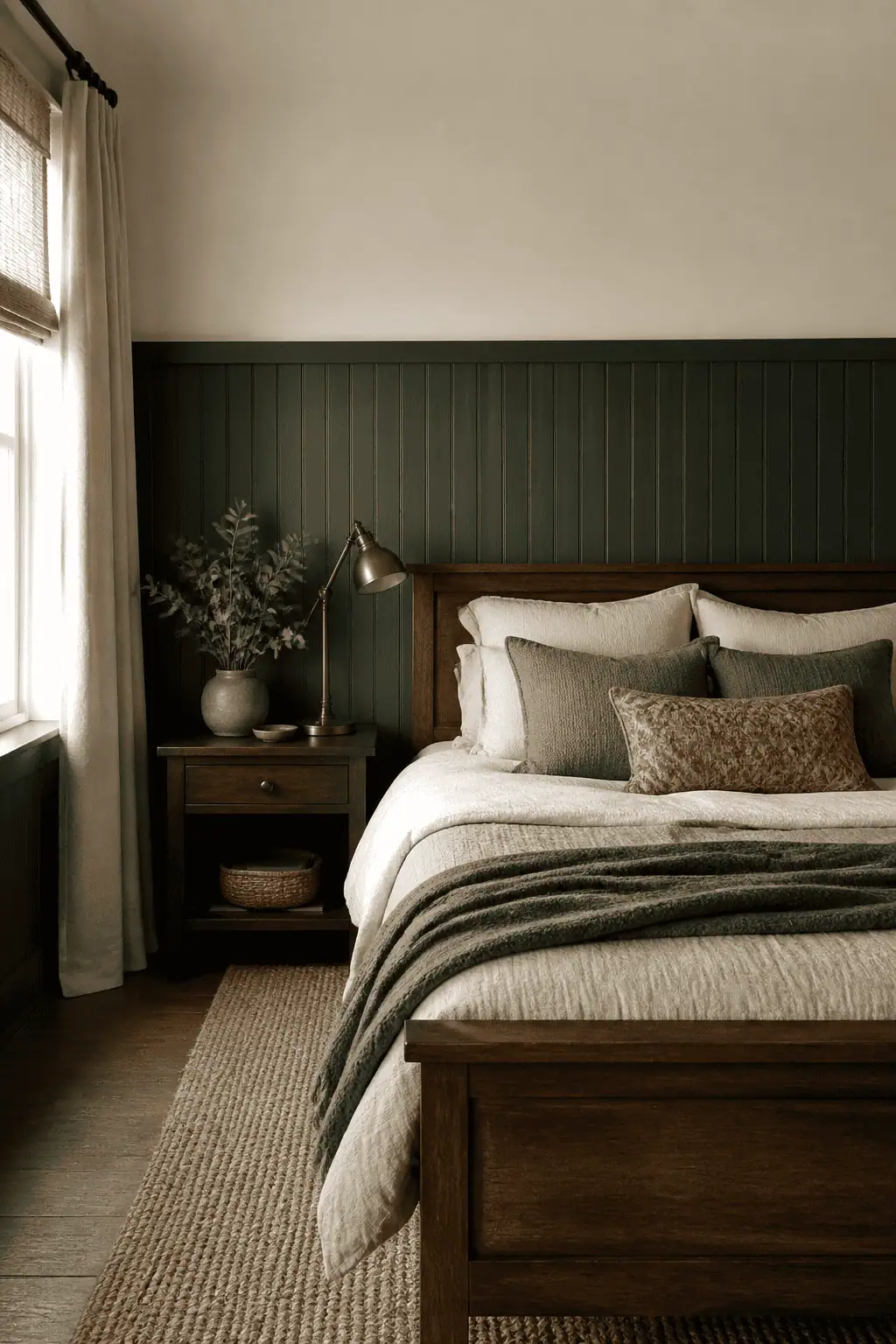
If you love the idea of a dark color but aren't ready to commit to the whole room, try a beadboard or wainscoting half-wall. Paint the lower two-thirds of the wall a deep, moody shade, and leave the top third a soft cream or white.
This gives you the grounding, cozy effect of a dark color while keeping the upper half of the room bright and airy.
21. Color-Drenched Ceilings with a Satin Finish
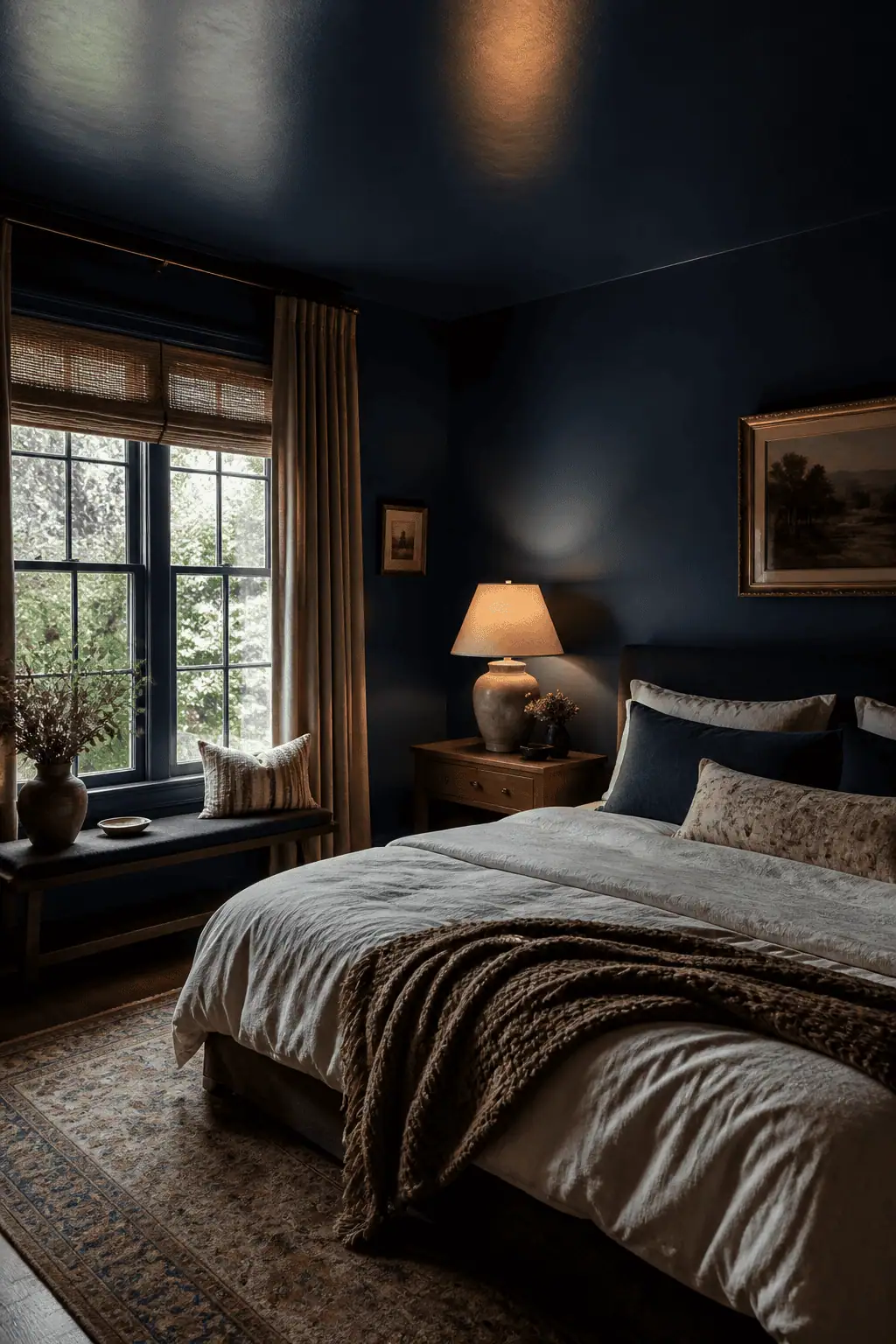
For the ultimate moody retreat, paint the ceiling the same dark color as the walls. To keep it from feeling like the ceiling is pressing down on you, use a paint with a slight sheen, like an eggshell or satin finish, for the ceiling.
The subtle sheen will reflect the light from your lamps and windows, creating a soft glow overhead that actually makes the ceiling feel higher and the room more expansive.
Committing to a moody bedroom can feel intimidating, but it is one of the most rewarding design risks you can take. Grab a few dark swatches, tape them to your wall, and watch how the light hits them throughout the day. With the right styling, you'll have a cozy, sophisticated retreat that feels anything but cave-like.