Brown couches can feel heavy or stuck, but the couch itself rarely causes the problem - the room around it does. You can make a brown sofa read intentionally and light by adjusting color, texture, and the pieces you place nearby.
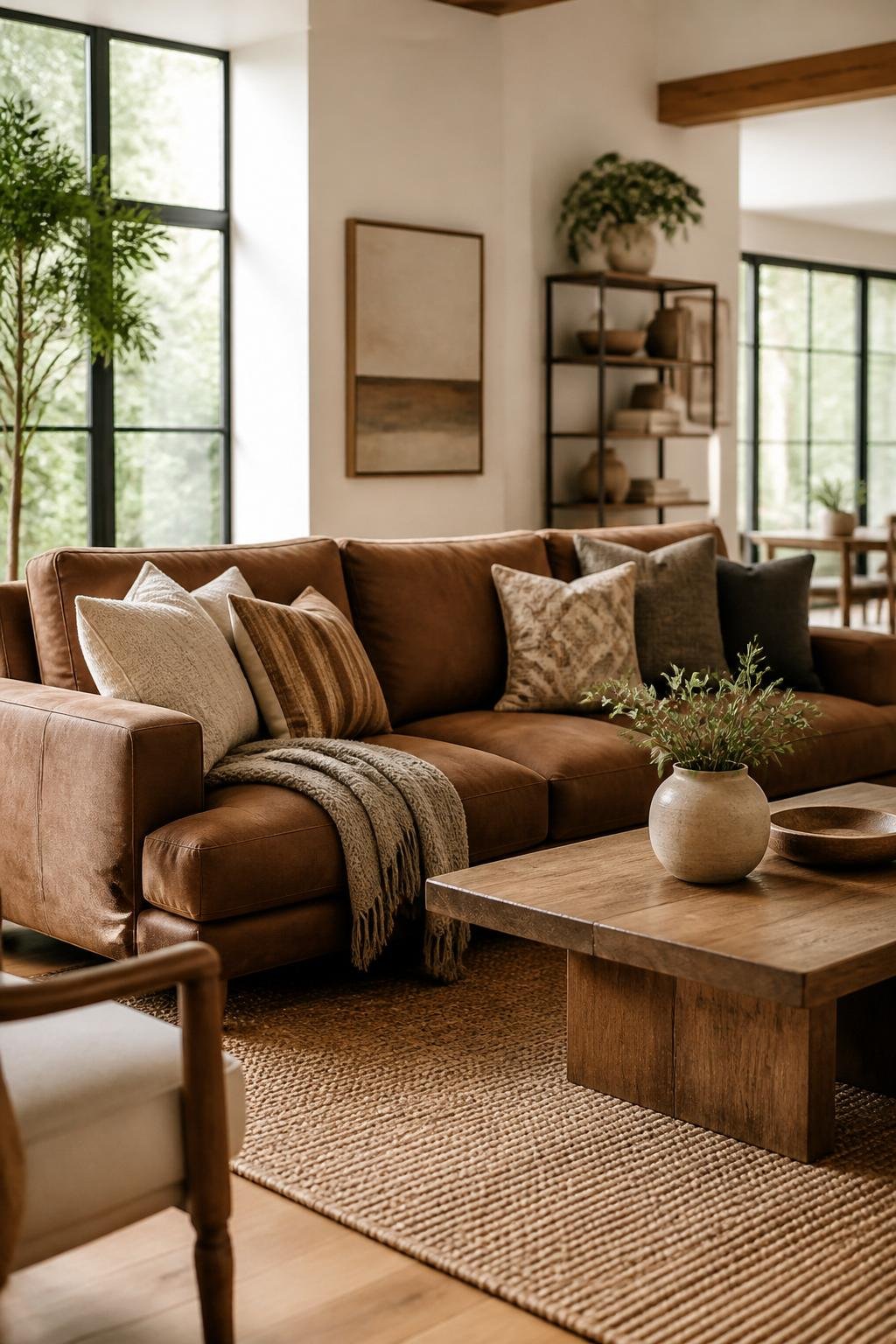
What you'll find here are simple moves that open the space, add contrast, and pull everything together so the sofa feels like a designed choice. Small, practical steps that work with what you already own - no replacing the whole room required.
1) Anchor the room with a deep chocolate leather sofa and warm oak media console
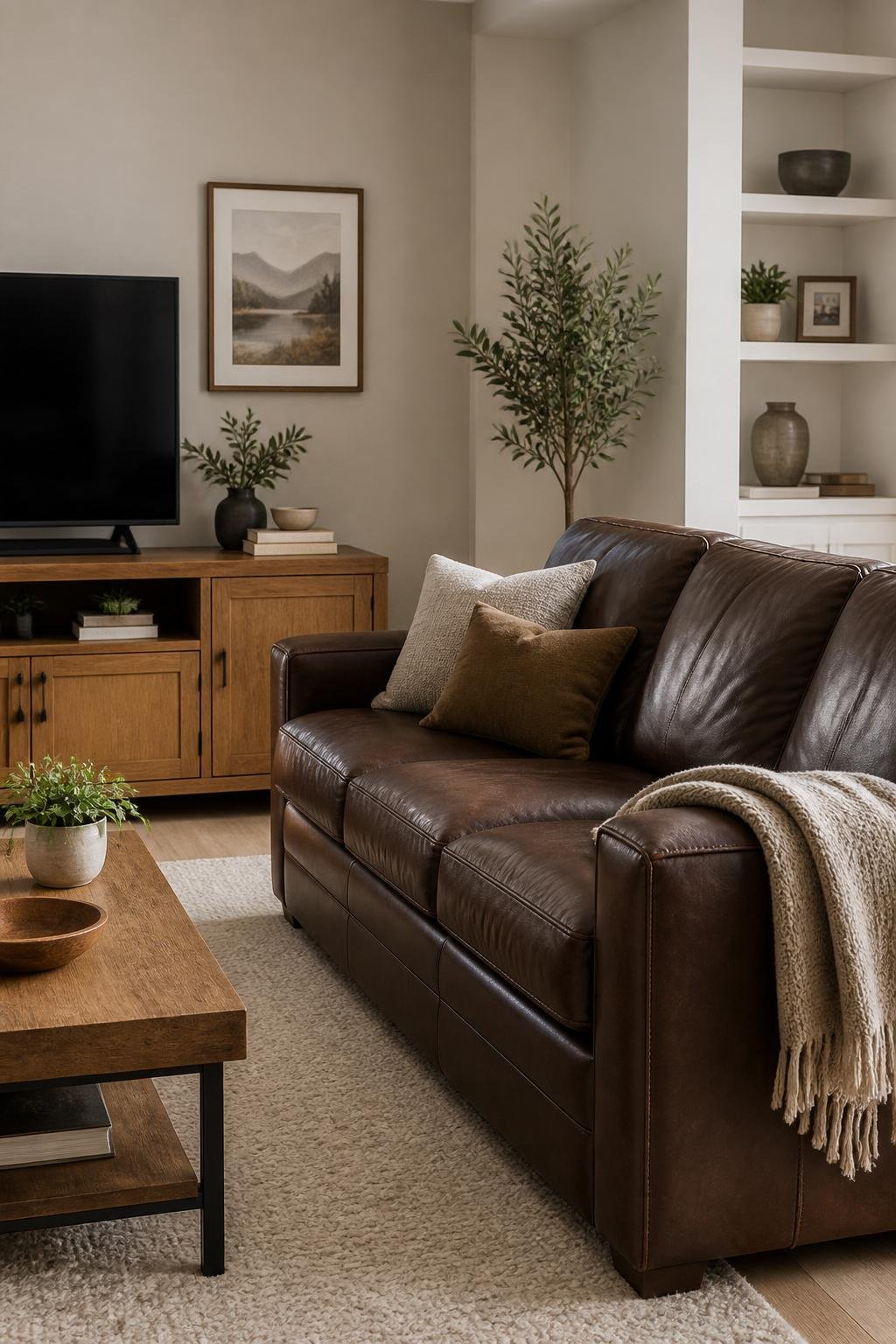
A room like this feels grounded and a little grown-up. The chocolate leather sofa gives weight and surface texture, while a warm oak media console adds a softer, natural counterpoint without matching the sofa exactly.
The leather's rich tone becomes the focal point. The oak brings warmth through a completely different material, which stops the space from feeling flat. Two brown things that don't match - that contrast is exactly what makes the room feel layered rather than monochromatic.
Place the console opposite the sofa and add low, horizontal decor: books, a ceramic bowl, or a woven tray to echo the sofa's length. For cushions, keep colors neutral with one accent in rust or olive to link the leather and wood without overcomplicating the palette.
2) Layer rust and terracotta throw pillows for sun-warmed contrast
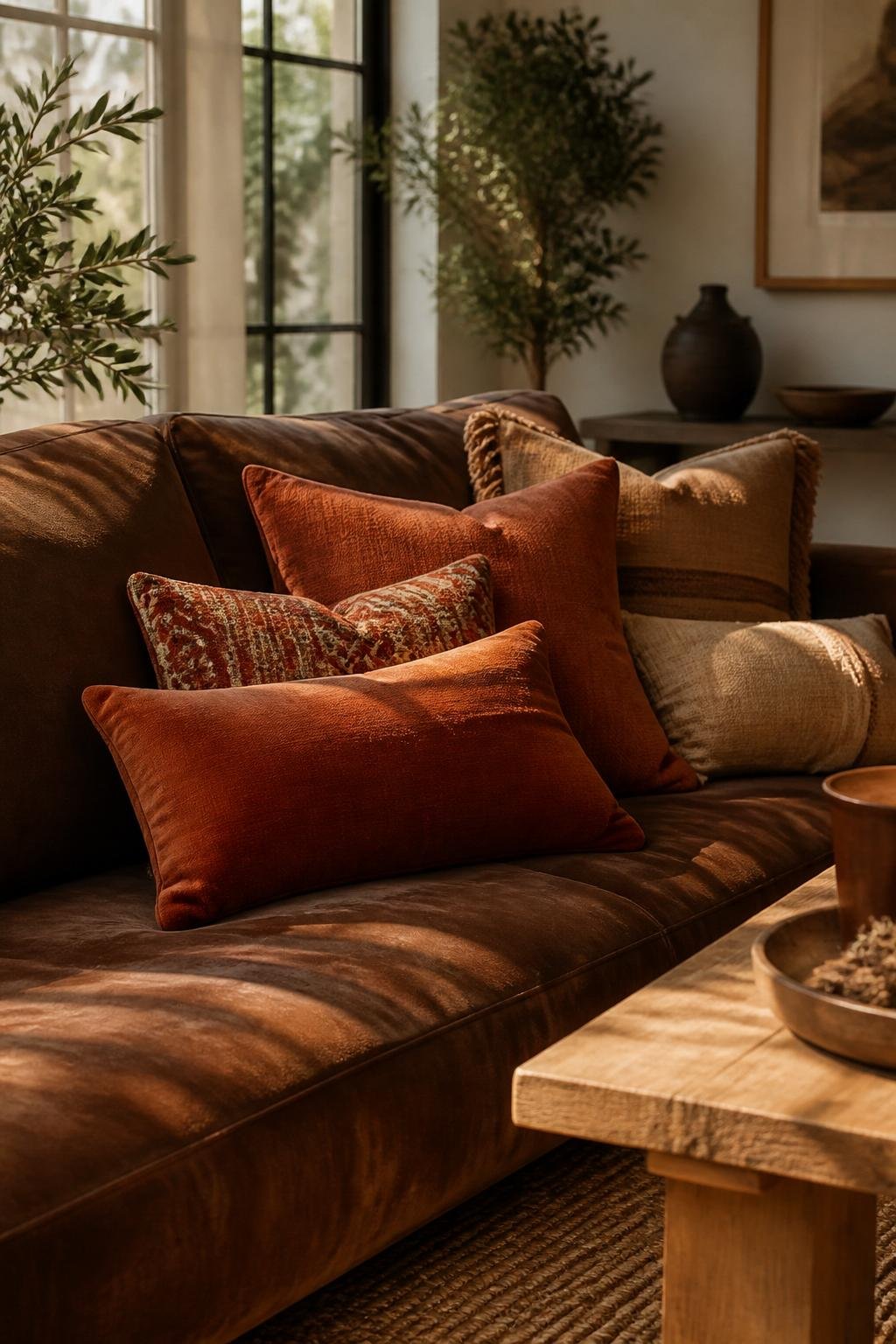
A cluster of rust and terracotta pillows reads like late-afternoon sun on a brown couch. The warm orange tones sit next to the brown and make the couch feel brighter without any sense of clashing.
Rust and terracotta share warm undertones with brown while offering higher chroma - meaning more color saturation. Those tones lift the couch visually and create depth by separating the seat plane from the cushion plane. Your eye gets something to move between.
Start with two sizes: a large terracotta lumbar and a smaller rust square. Mix matte linen with a soft wool or knit for texture contrast. Keep one neutral pillow - cream or warm beige - in the mix so the eye has somewhere to rest.
3) A jute rug under the front legs grounds the seating without swallowing the floor
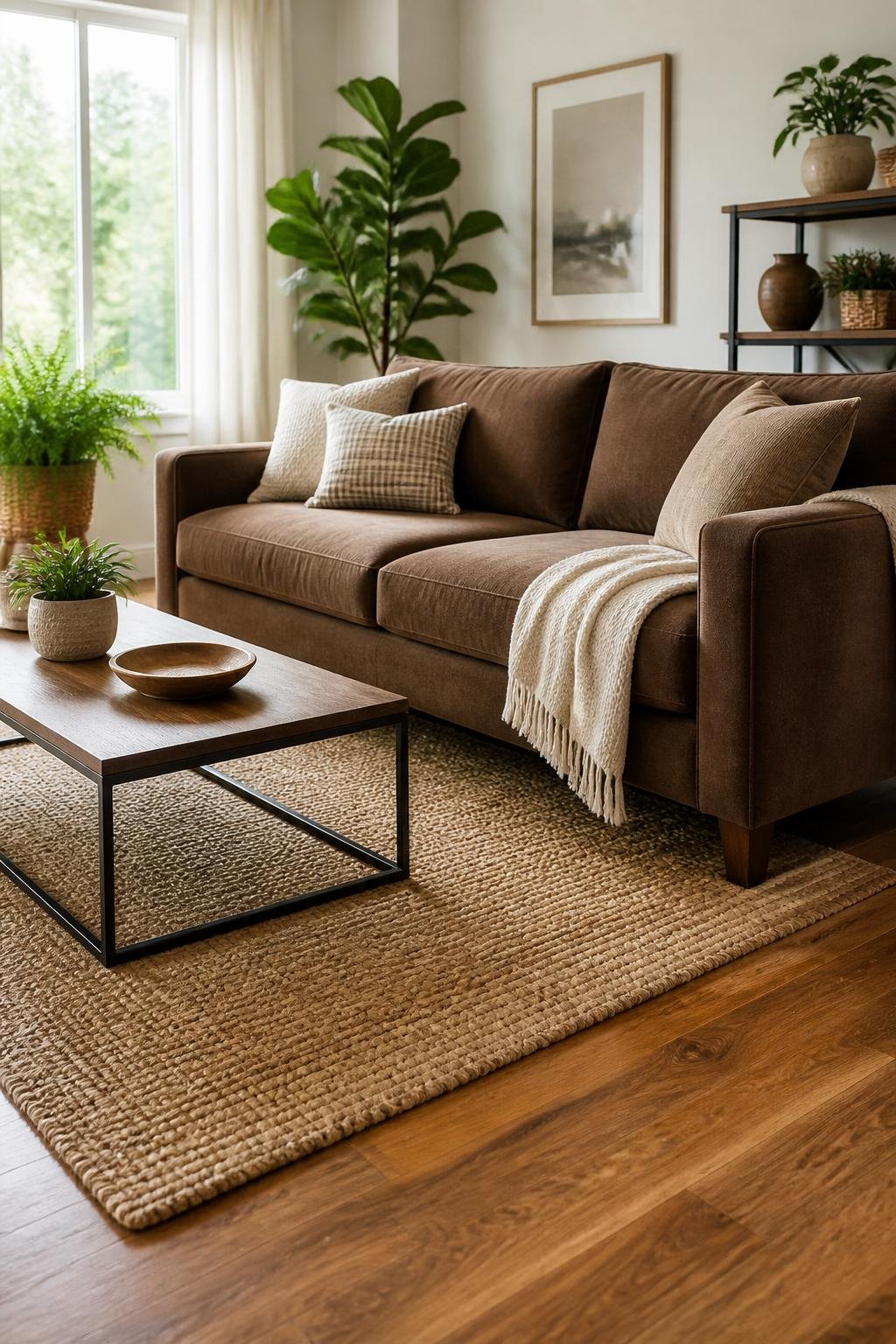
A narrow strip of natural jute tucked under the front legs of your brown couch keeps the seating area defined while leaving most of the floor visible. The texture reads warm against brown upholstery and adds a subtle border that keeps the room from feeling heavy.
Brown already anchors a space with color and mass. Jute brings a lighter tone and a woven grain that balances that weight without competing. It creates a visual zone so your sofa reads as a deliberate placement, not just a large piece sitting somewhere in the room.
Try a 4×6 or runner size that reaches under the front legs and coffee table only. Choose a low-contrast jute - warm beige or honey - so the rug lifts the couch without masking nice wood or tile floors beneath it.
4) Pair a mid-century walnut coffee table to echo the couch's wood undertones
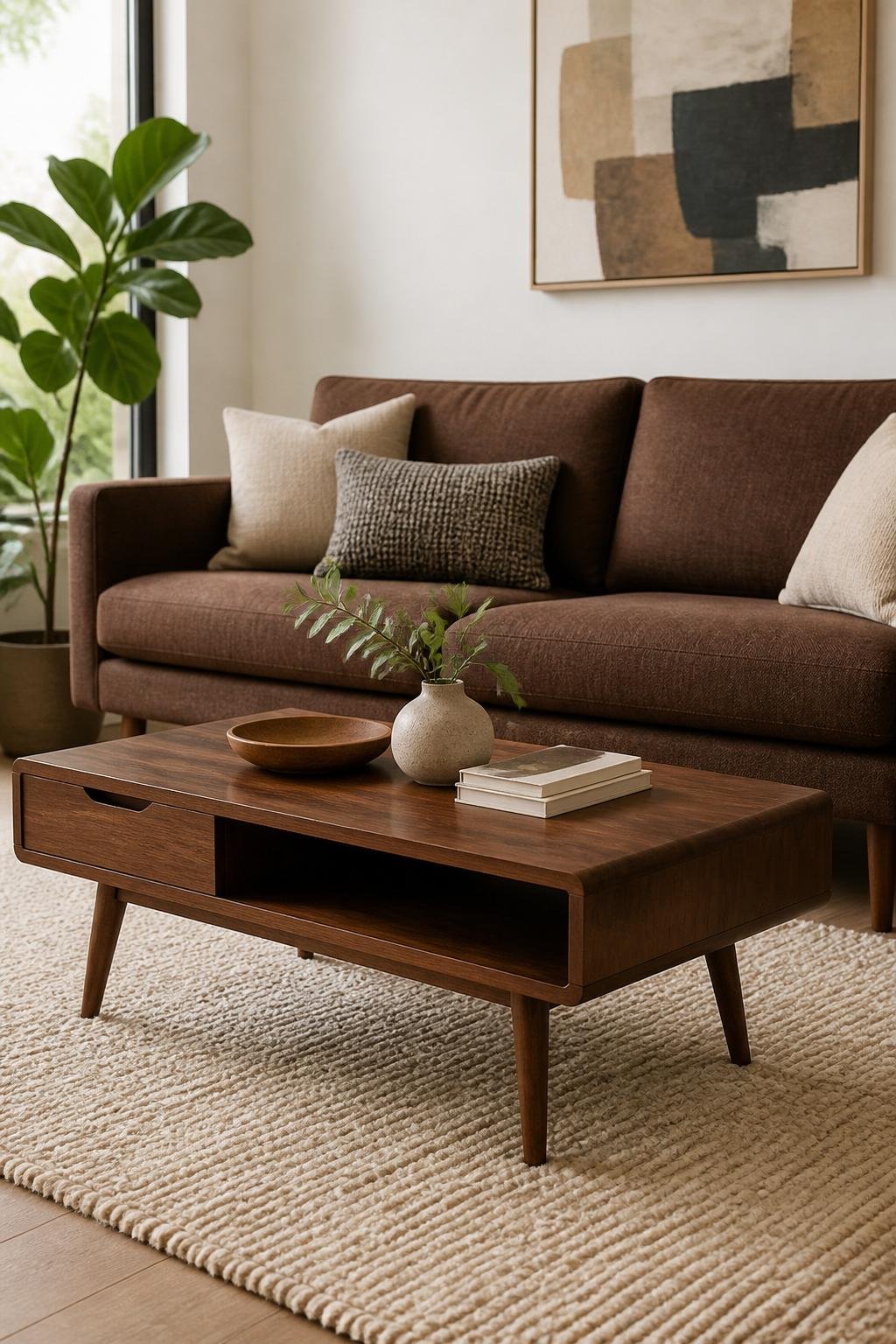
A low walnut table with rounded edges sitting in front of a brown couch is one of those pairings that works quietly. The table's warm grain mirrors the undertones the sofa already has, keeping the palette calm and focused rather than busy.
Place the table so its longest side runs parallel to the couch - that alignment reinforces the visual link between the two pieces. Add a small brass tray and a book with a muted cover to introduce a tiny contrast without disrupting the walnut's warmth.
5) Balance a dark couch with high white trim and pale plaster walls
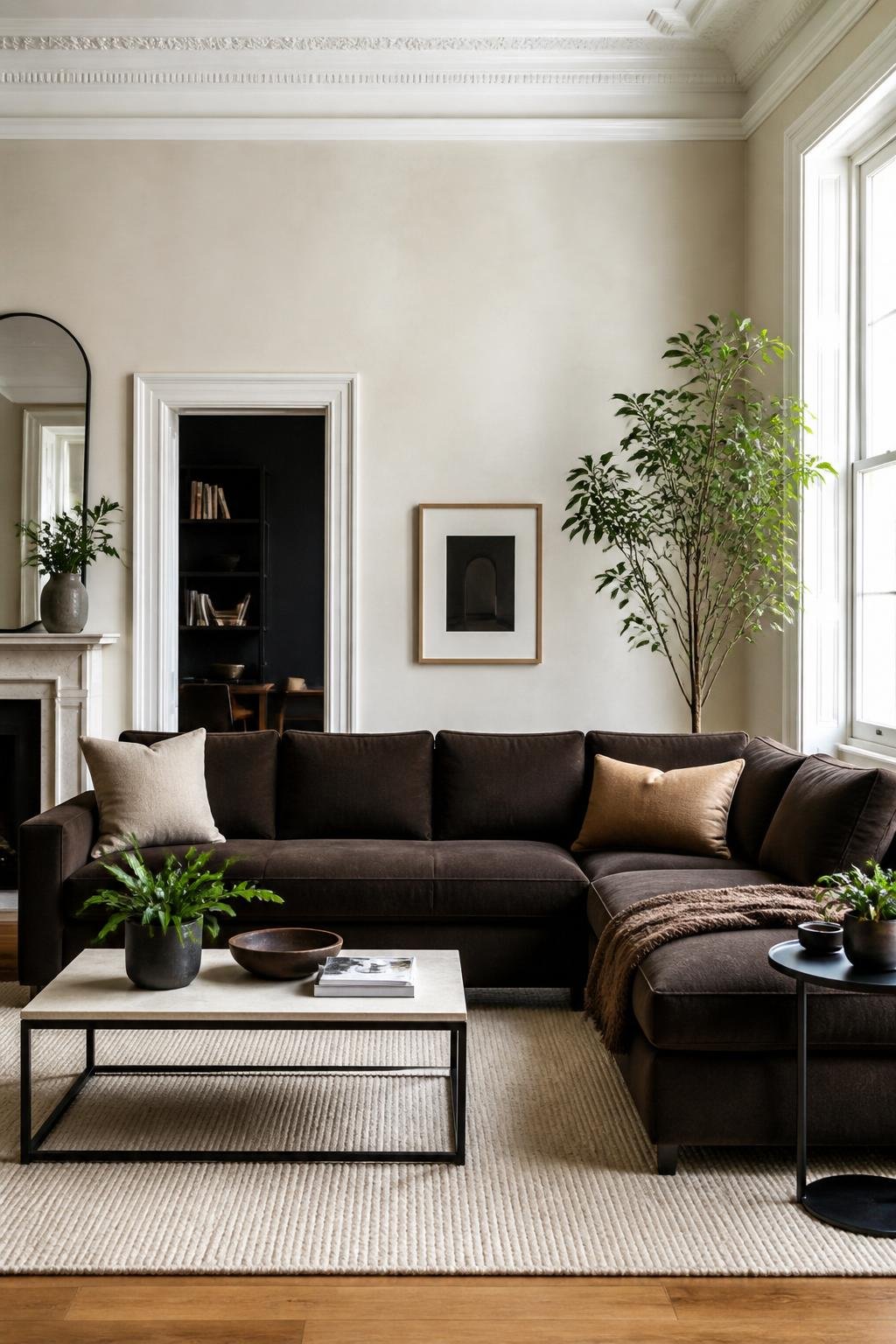
A deep brown sofa framed by tall white baseboards, crown moldings, and soft plaster walls is a classic architectural play. The white trim creates clean edges. The plaster adds a quiet, slightly textured backdrop that keeps everything from feeling stark.
The bright trim reads as a defined line that separates the couch from the room. Pale plaster lowers the contrast between wall and trim, so the brown couch feels anchored rather than overwhelming. It's worth noting: this same principle is why dark furniture tends to look better in rooms with some architectural detail rather than completely flat walls.
Use slim, light-colored window treatments so the trim stays visible and the room keeps that crisp edge. Add a low-contrast rug in warm neutrals and one or two brass or wood accents to connect the couch to the pale palette around it.
6) Add a large leafy plant in a woven basket to soften edges and bring in green
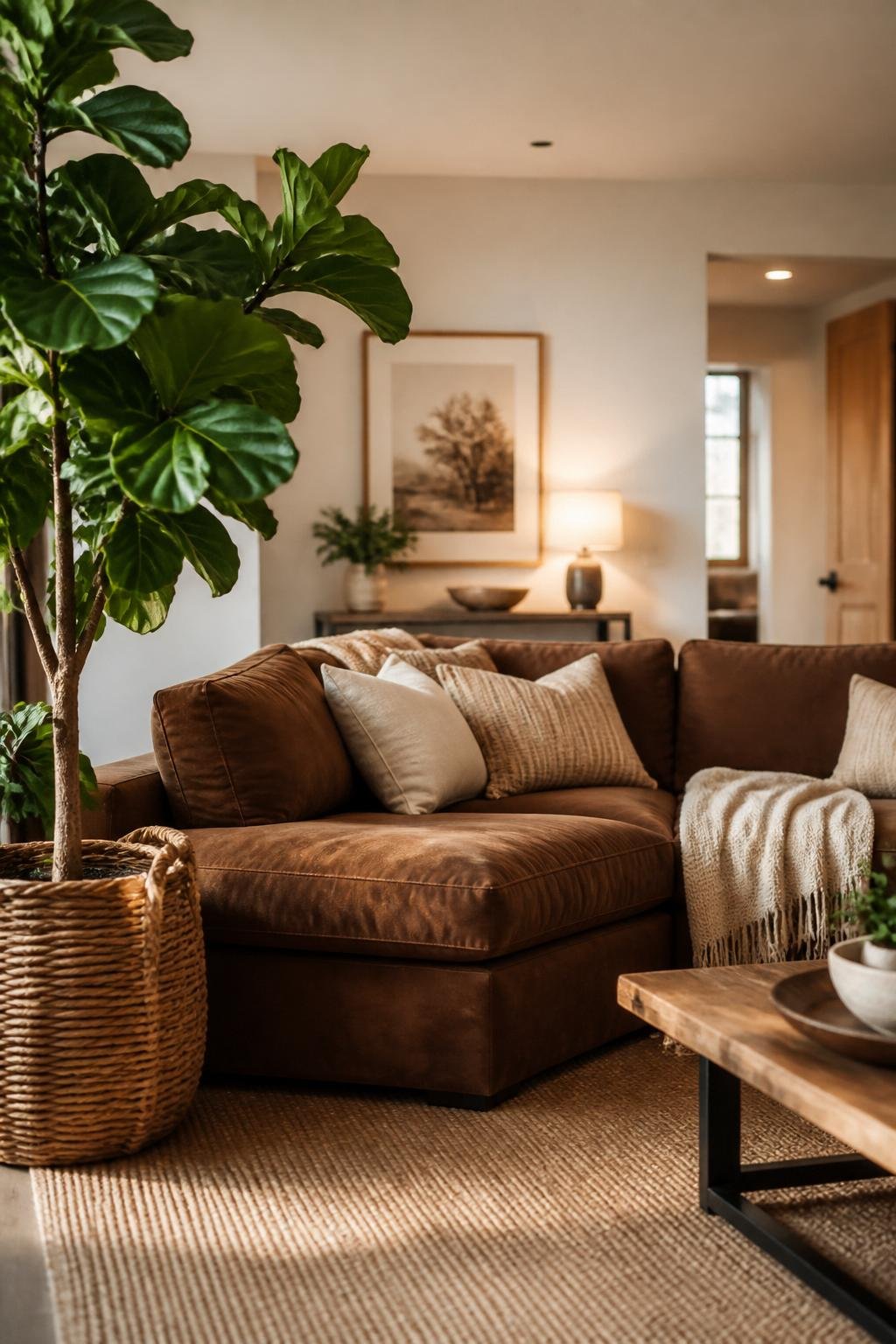
A tall, leafy plant in a woven basket placed beside a brown couch breaks the straight lines of the room in the best way. The basket's texture and the plant's height add movement and a relaxed, genuinely lived-in feel that's hard to get from furniture alone.
Green and brown sit in natural opposition on the visual spectrum, which is exactly why it works. The plant brightens the sofa without clashing, and the basket's natural fibers echo the warm tones in the couch - tying floor and seating together without any extra effort.
Place the plant where it can peek over the arm or back of the couch to create a layered look. Choose a basket slightly wider than the pot and add a saucer underneath to protect your floors. Larger leaves, like a fiddle leaf or philodendron, give you a bold shape with low fuss.
7) Position a floor lamp behind one arm to create a reading corner and reveal the fabric
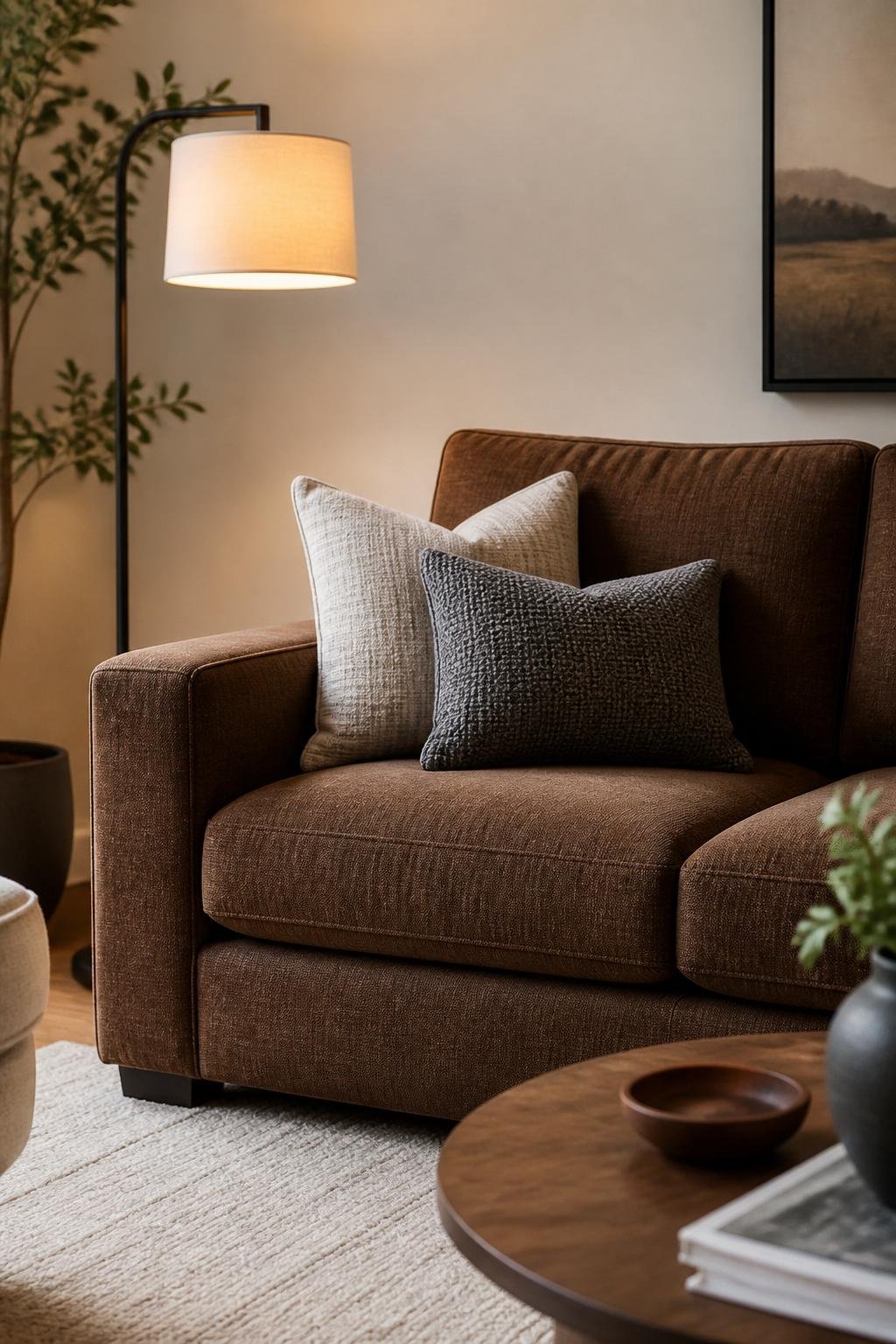
A slim floor lamp tucked behind one arm throws light across the couch at an angle, showing the weave or nap of the fabric in a way overhead lighting never does. The warm pool of light creates a small, readable corner while keeping the rest of the room softer.
Angled light brings out warm undertones and surface detail that flat ceiling fixtures wash out entirely. When the texture and color of your couch read clearly, the piece looks considered rather than just functional. It's a small change with a disproportionate visual payoff.
Place the lamp so the shade clears the arm by a few inches, and aim the bulb toward the back cushion to highlight the fabric rather than create glare. A warm 2700K bulb gives you the cozy color temperature brown upholstery needs to look its best.
"The most underused tool in a living room isn't a new piece of furniture - it's the angle of a lamp."
8) Use a pale linen cushion on one seat to lighten the visual weight without committing to a change
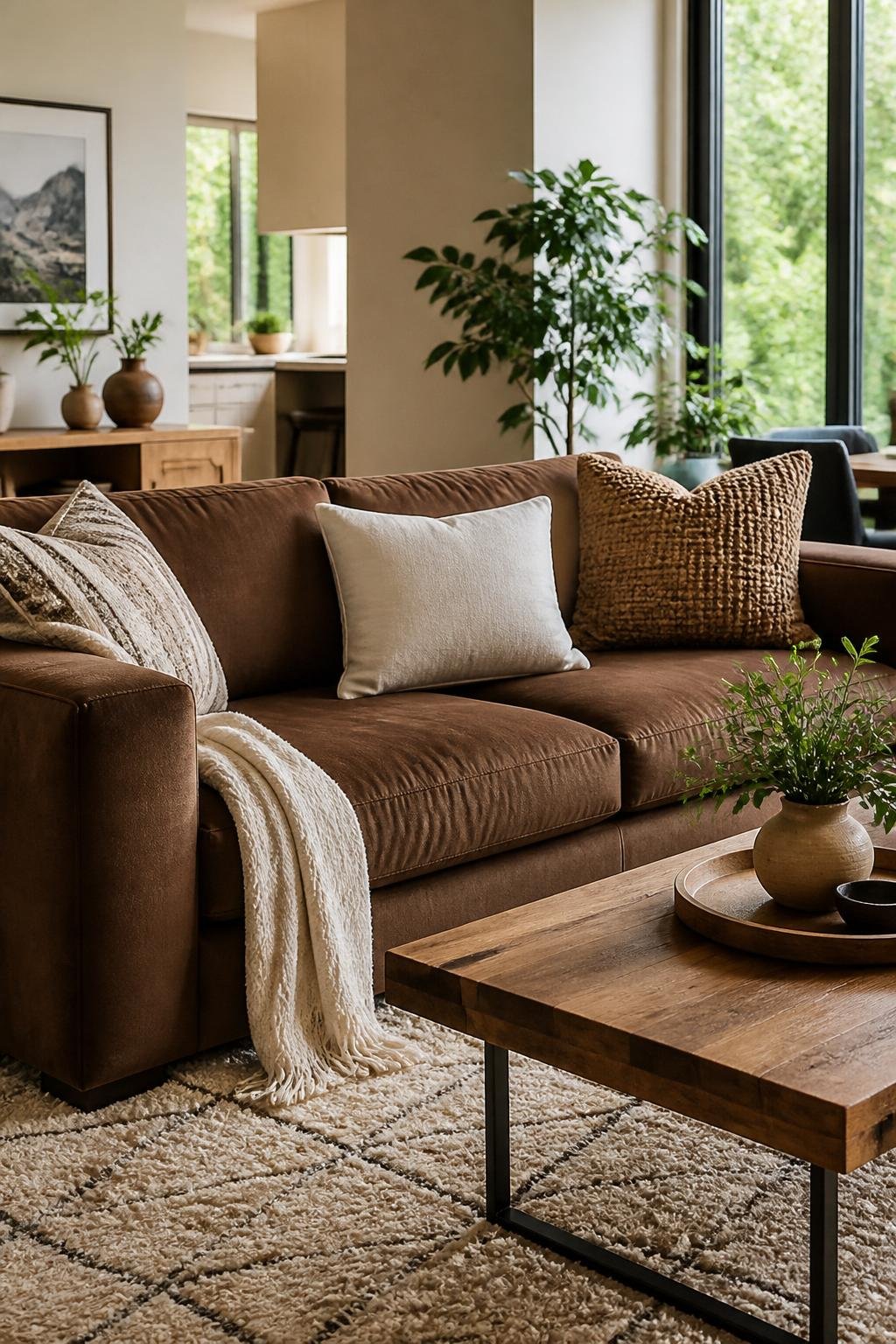
A single pale linen cushion on a brown couch reads like a small patch of daylight on the sofa. The couch feels less heavy without changing anything structural about it.
Your eye anchors to contrast. The pale cushion breaks the continuous dark mass and creates one spot of lightness that makes the rest of the sofa look airier by comparison. Linen's slight texture keeps the switch from feeling jarring - it's soft enough to belong, different enough to matter.
Place the pale cushion on the side where light enters the room to mimic natural highlights. Keep the other cushions in similar tones or muted patterns so the pale piece reads as a deliberate accent rather than a mismatched leftover.
9) Hang a low shelf with small ceramics above the couch to draw the eye upward
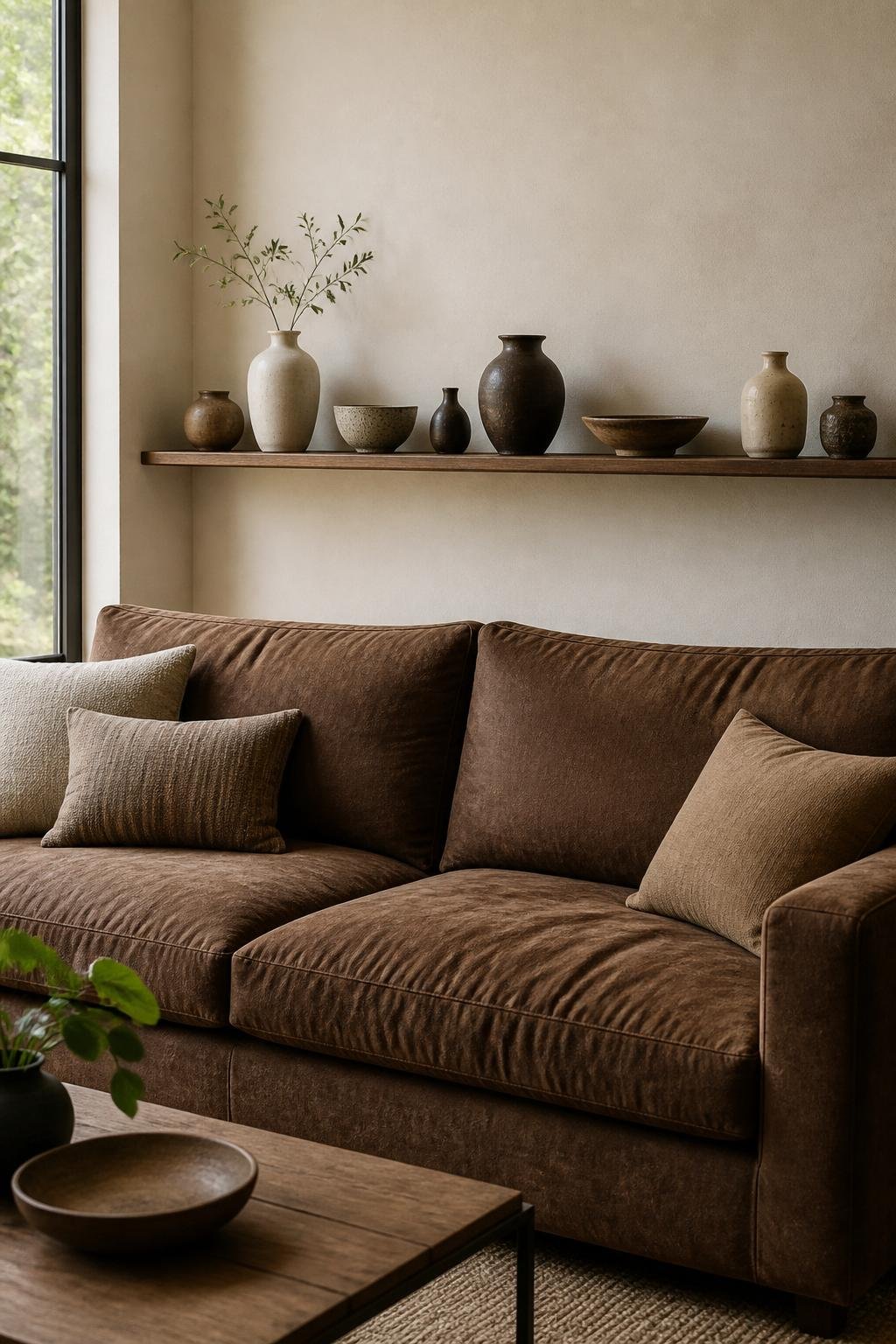
A narrow shelf sitting about 6 to 12 inches above the couch back, lined with small ceramics and a low stack of books, does something useful: it leads the eye along the wall instead of stopping at the sofa. The room reads taller and more layered without anything being moved.
The shelf creates a lighter horizontal counterpoint to the sofa's visual weight. Small ceramics add texture and breaks in color that prevent the brown from feeling monolithic. Place it slightly off-center and vary the heights - a tiny vase, a low bowl, one framed photo lying flat. Keep the ceramics in a limited palette: two neutrals and one accent color so the arrangement feels collected, not cluttered.
10) Bring in a velvet emerald accent chair for a color moment that holds its own
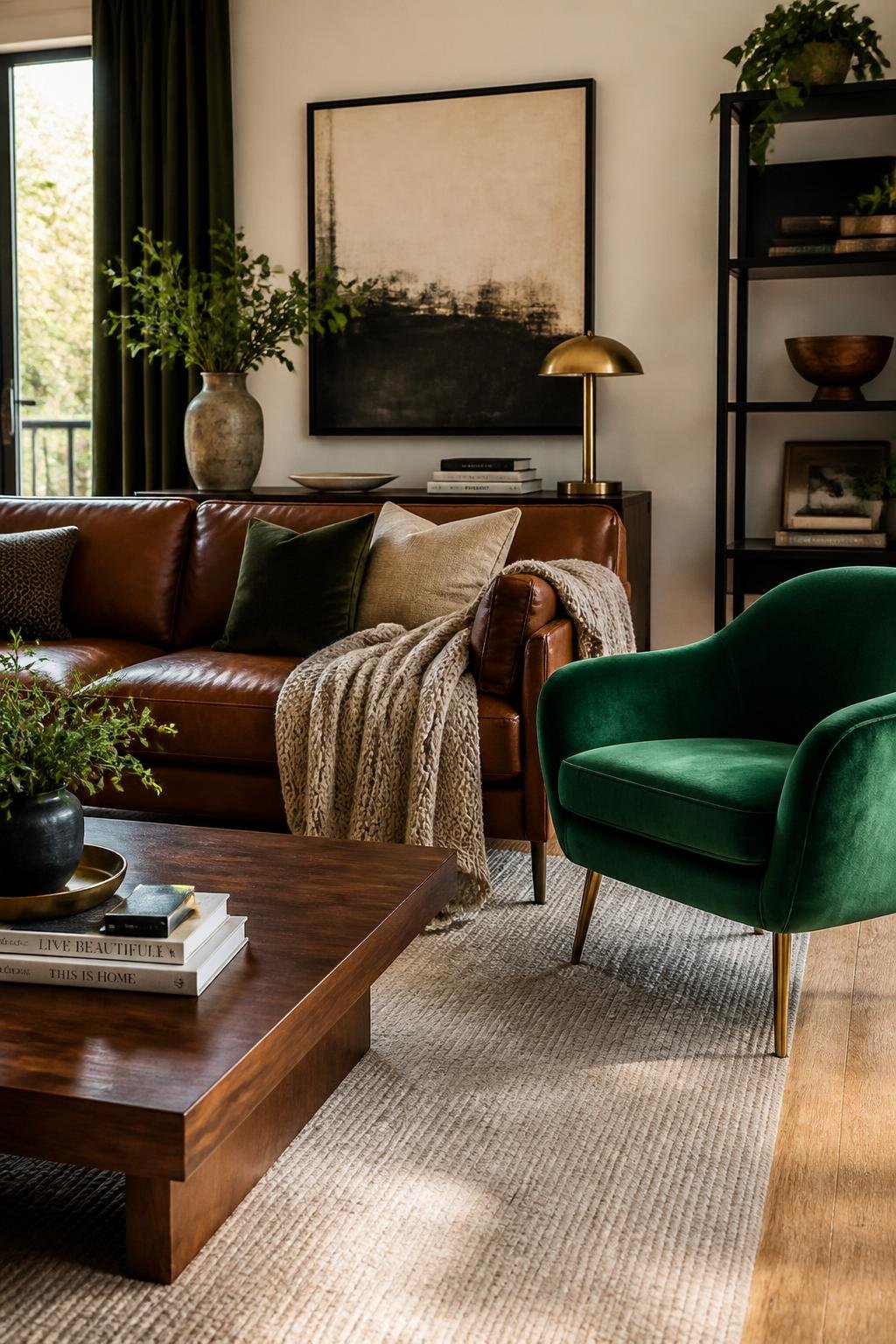
A velvet emerald chair beside your brown couch reads like a deliberate color decision. The deep green feels rich against warm chocolate tones and gives the room a jewel-like quality without fighting the sofa for attention.
Brown is a warm, grounded base. Emerald has cool depth but warm enough undertones that the two coexist naturally. The velvet surface reflects light differently than leather or linen, which adds texture that visually separates the two pieces - so they feel like a considered pairing rather than a collision.
Choose a chair with slim brass or black metal legs to keep visual weight light. Anchor the pairing with one green-accented pillow or a small rug that picks up the emerald, so the color reads intentional across the room rather than isolated to one corner.
11) Swap in brass hardware on nearby cabinetry to pick up the leather's warm tones
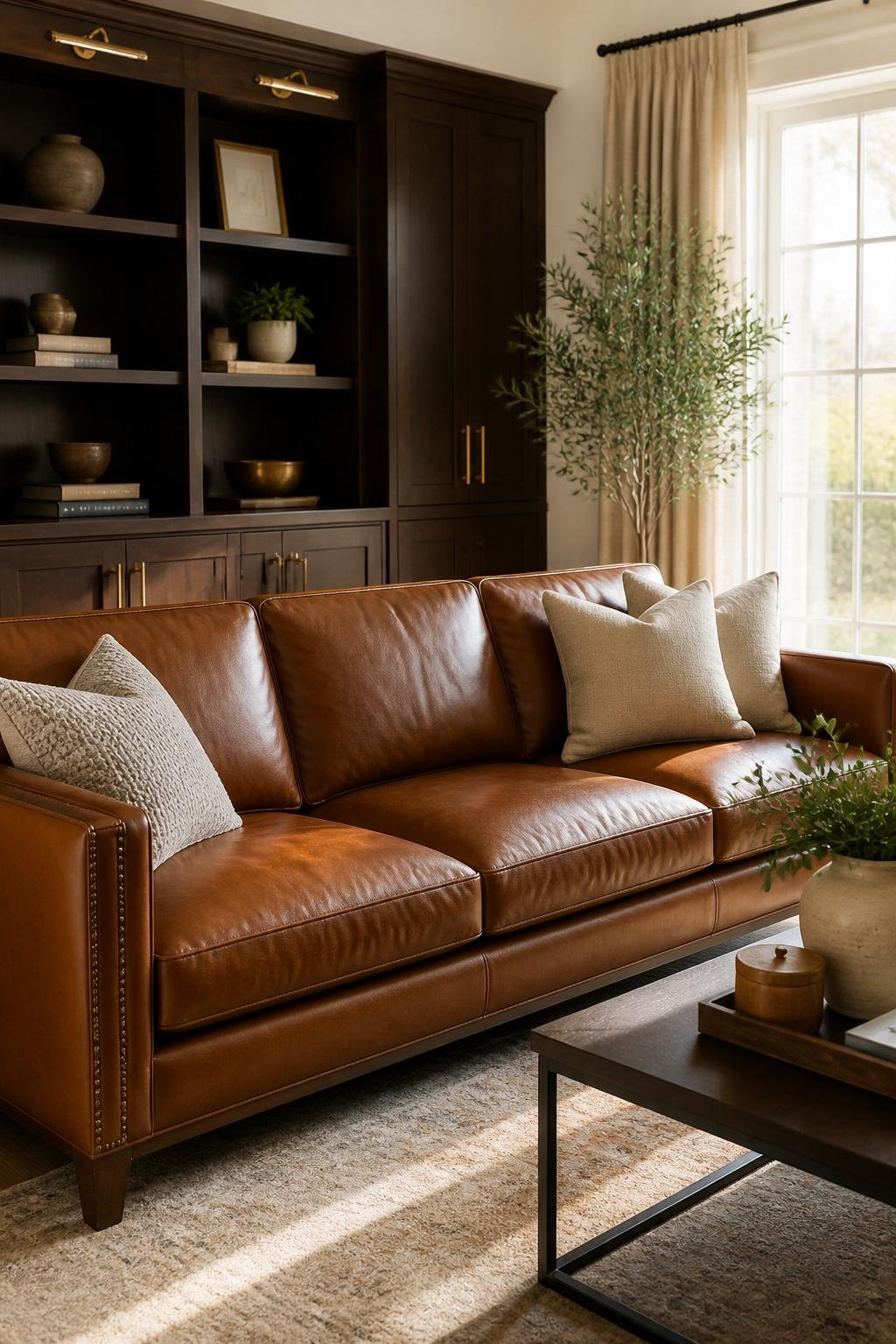
A row of brass knobs on a media console catches the same honey undertones as a brown leather couch. The small shine and warm color tie the sofa into the room without requiring any large-scale change - it's one of the cheapest ways to make a space feel more cohesive.
Brass reflects the leather's undertones and adds a metallic highlight that reads as intentional. That repeat of color and finish creates a quiet thread between upholstery and built-ins, so the space feels like it was planned rather than assembled over time.
Choose hardware with a simple shape, so it reads as an accent, not a competing style statement. Match finish warmth to your leather's depth - lacquered brass for a more golden sofa, unlacquered or brushed brass for deeper, richer brown leather.
12) A narrow console table behind the sofa adds height and a break in the layout
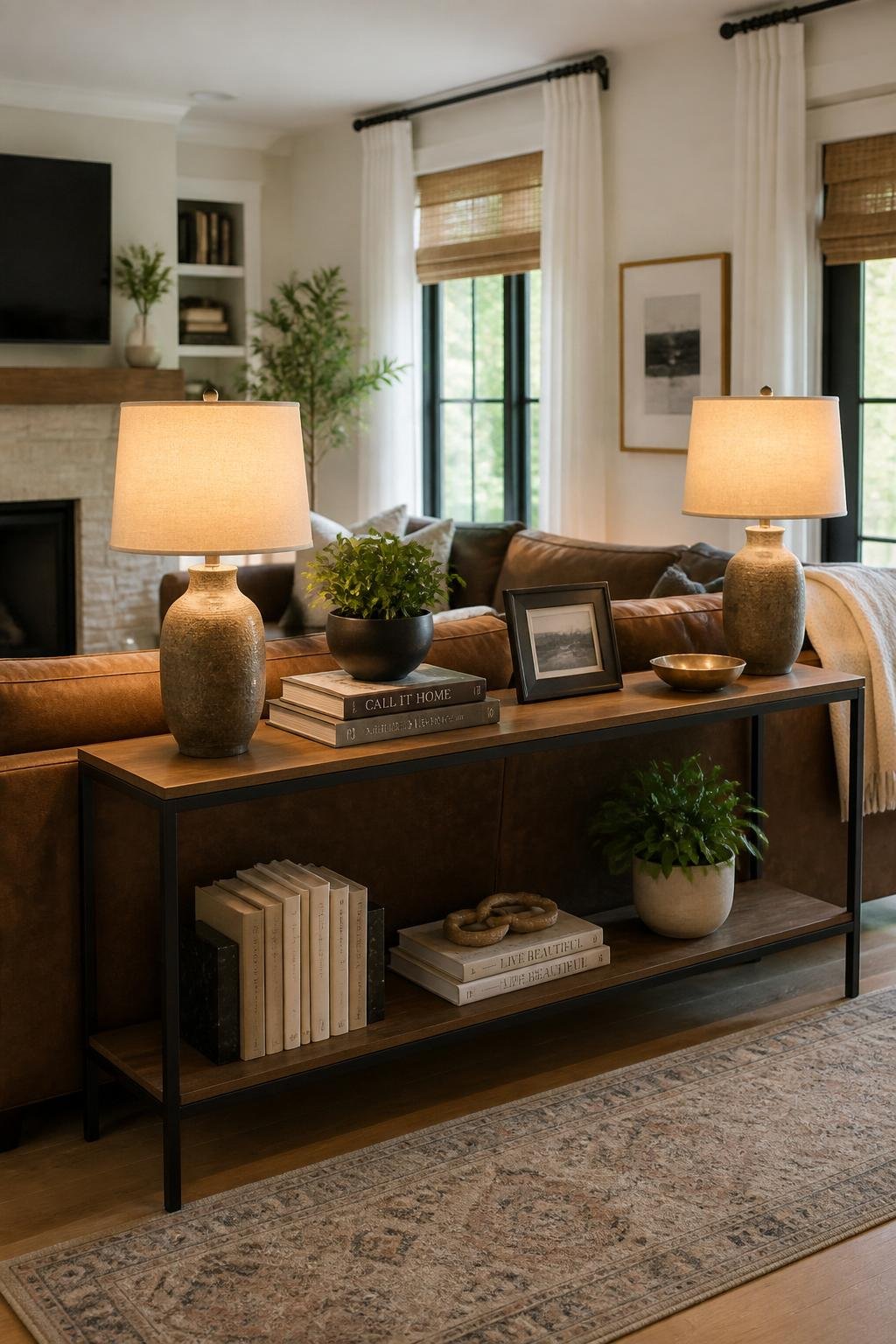
A slim console fits snug behind a brown couch with two low-profile lamps and a shallow tray. The table adds height and a visual break between the seating area and the rest of the room, so the couch stops reading as a single heavy block of color.
Brown can sit heavily in a room when there's nothing above it to provide contrast. A narrow table introduces vertical lines and a lighter plane just above the sofa. The lamps throw light onto the wall and reveal the couch's tone and texture instead of letting both disappear into shadow.
Keep lamp proportions in check - nothing taller than the couch back, which keeps sightlines open across the room. Layer small objects on the console surface: a low planter, a folded throw, and one framed photo. Tidy but not bare.
Setting the mood with color
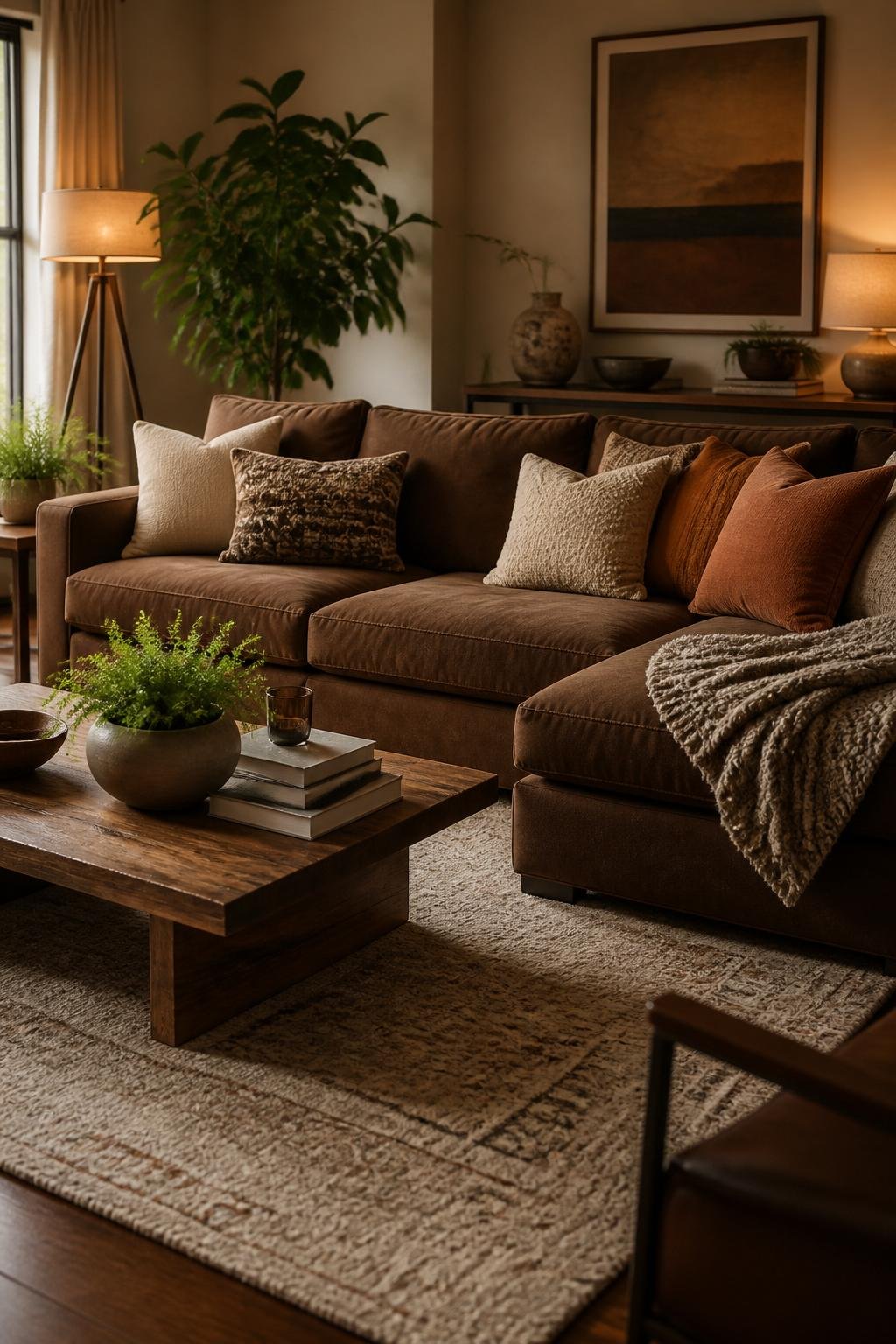
A brown couch can read cozy, smart, or modern depending entirely on the colors you place around it. Small changes - pillows, a rug, a wall shade - shift the room's feel more than replacing big pieces ever does.
Pairing brown with neutrals
Picture a medium brown couch against warm white walls, a low-pile gray rug, and linen curtains. The scene feels calm because each neutral plays a clear role: walls add light, the rug grounds the seating, and curtains soften the edges. Brown sits naturally between light and dark neutrals, so it reads like a bridge between them rather than a heavy anchor.
Cooler neutrals - gray, taupe - keep the look modern. Warm neutrals - cream, beige - make it feel softer and more relaxed. Pick your direction, then stay consistent.Use two neutral tones plus one texture: cream walls, charcoal rug, leather ottoman.Add one patterned pillow that mixes those neutrals to tie the palette together without introducing a new color.
Adding touches of greenery
A tall potted fiddle leaf fig at one end of the sofa and a small trailing plant on the side table. The green breaks the brown visually and adds life without touching the furniture at all. Plants bring out warm undertones in the couch and introduce a focal point that feels genuinely organic rather than styled-for-a-photo.Place a 4 to 6-foot plant where it's visible from the couch, not behind it. That positioning creates depth instead of just filling a corner.Use two types: one tall sculptural piece and one small, leafy pot to layer scale.
Balancing warm and cool tones
Think of a brown couch paired with a navy throw, a brass lamp, and a clay vase. That combination keeps the room from skewing too warm or too cold. Brown contains both warm and cool undertones depending on the dye and fabric, which makes it unusually flexible - you can push it in either direction depending on the accents you choose.Pick one cool accent and one warm accent, then repeat each twice in the room: once on a pillow and once on a small decor object.Swap one accent seasonally - navy for summer, rust for fall - to shift the mood without any large changes.
Making the space feel pulled together
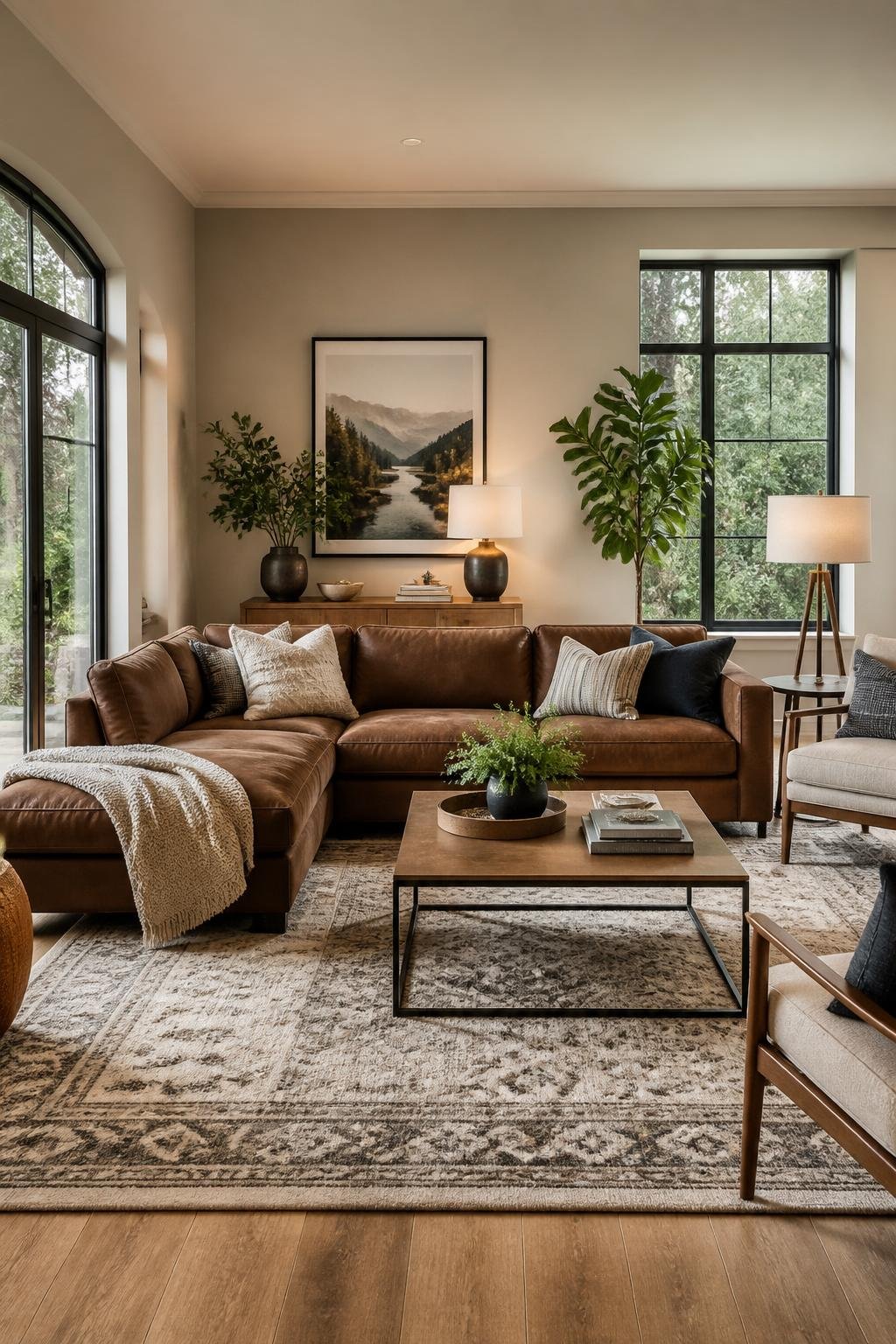
A cohesive brown-couch room ties floor, textiles, and small accents back to the sofa's tone. Use scale, texture, and a repeat of one or two colors to make everything read as a single, calm scene rather than a collection of separate purchases.
Choosing the right rug
Place a low-pile rug that reaches under the front legs of the couch so all the furniture reads as one group rather than floating objects. A rug with warm undertones - taupe, rust, or faded ochre - echoes the brown in the couch and keeps the palette from fragmenting.
Choose a pattern with medium-scale motifs, not tiny busy repeat. Medium patterns sit comfortably next to a solid couch and hide small stains without shouting. If your couch is dark chocolate, pick a rug one or two shades lighter, or one with a pale field and darker accents, to lift the seating visually.
Match the rug's texture to the room's energy. Wool or wool-blend feels grounded and holds its shape well. A flatweave suits casual rooms where easy cleaning matters. The layout rule worth committing to: at minimum, the front legs of all seating should sit on the rug. That single choice makes almost any arrangement feel intentional.
Layering throw pillows thoughtfully
Start with two pillows that pick up a color already present in the rug or curtains. Use one patterned pillow and one solid in the same hue to create visual depth without chaos. The connection to existing colors is what makes new pillows feel like they belong rather than like additions.
Vary shapes and sizes: one 24-inch square, one 18-inch square, and a lumbar. Larger squares anchor the corners. A lumbar adds a horizontal line that echoes the couch's form. Keep pillow fabrics mixed - linen for a matte look, velvet for a soft sheen - so the contrast reads as intentional.
Limit the palette to three colors total, including the couch. Arrange asymmetrically: two pillows on one side, one plus a lumbar on the other. The slight imbalance makes the sofa look relaxed and used rather than staged for a showroom.
Did You Know
Brown was one of the last colors to be named in the English language - languages tend to develop color terms in a predictable order, and brown comes late in that sequence. Which might explain why it gets treated as a default rather than a deliberate choice. It isn't.
A brown sofa that reads as designed usually comes down to one thing: treating it as the starting point of a palette, not an obstacle to work around.